Connecticut Agreement for Sale of Sole Proprietorship Law Practice with Restrictive Covenant

State:
Multi-State
Control #:
US-02608BG
Format:
Word; 
Rich Text
Instant download

Description

The sale of any ongoing business, even a sole proprietorship, can be a complicated transaction. The buyer and seller (and their attorneys) must consider the law of contracts, taxation, real estate, corporations, securities, and antitrust in many situations. Depending on the nature of the business sold, statutes and regulations concerning the issuance and transfer of permits, licenses, and/or franchises should be consulted.


A sale of a business is considered for tax purposes to be a sale of the various assets involved. Therefore it is important that the contract allocate parts of the total payment among the items being sold. For example, the sale may require the transfer of the place of business, including the real property on which the building(s) of the business are located. The sale might involve the assignment of a lease, the transfer of good will, equipment, furniture, fixtures, merchandise, and inventory. The sale may also include the transfer of the business name, patents, trademarks, copyrights, licenses, permits, insurance policies, notes, accounts receivables, contracts, cash on hand and on deposit, and other tangible or intangible properties. It is best to include a broad transfer provision to insure that the entire business is being transferred to the buyer, with an itemization of at least the more important assets to be transferred.
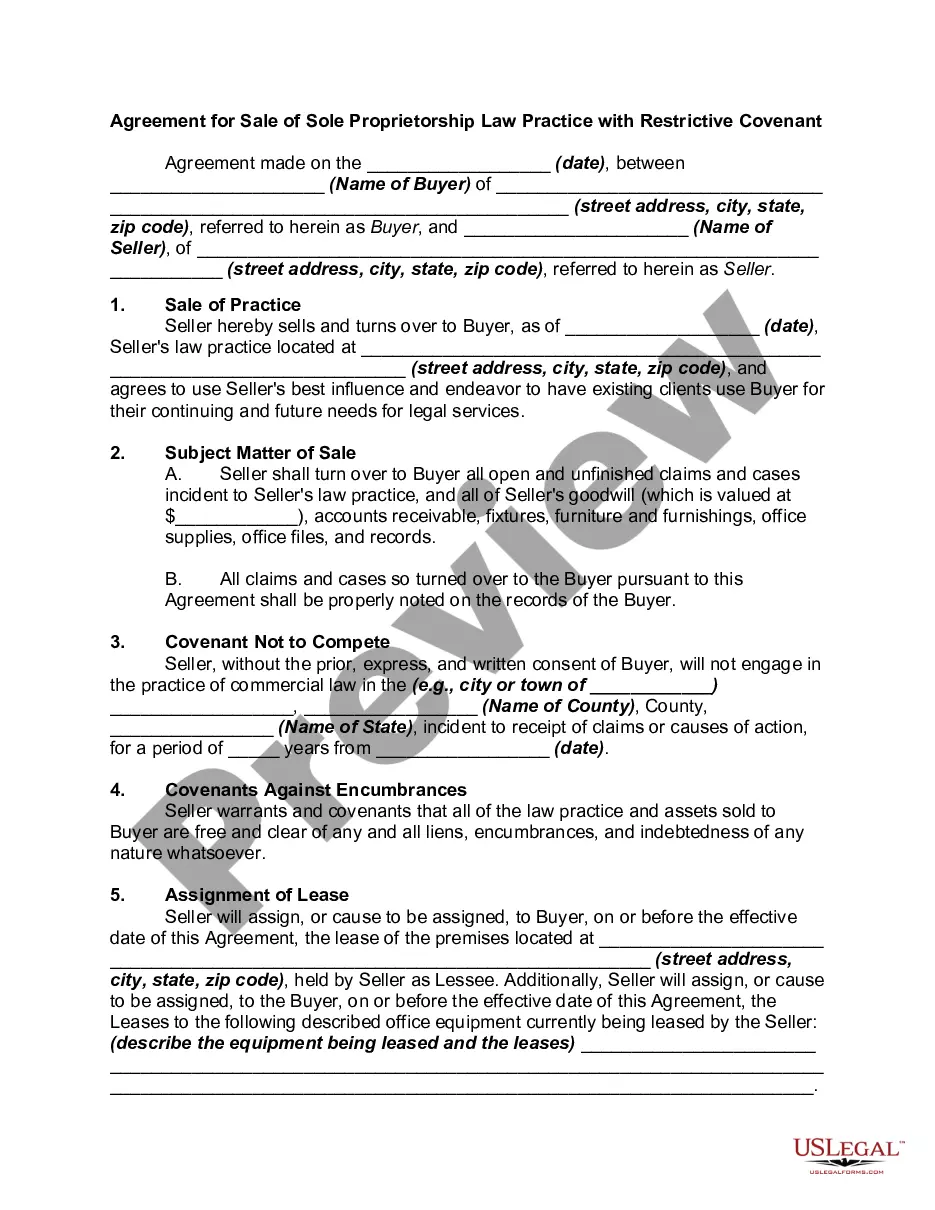
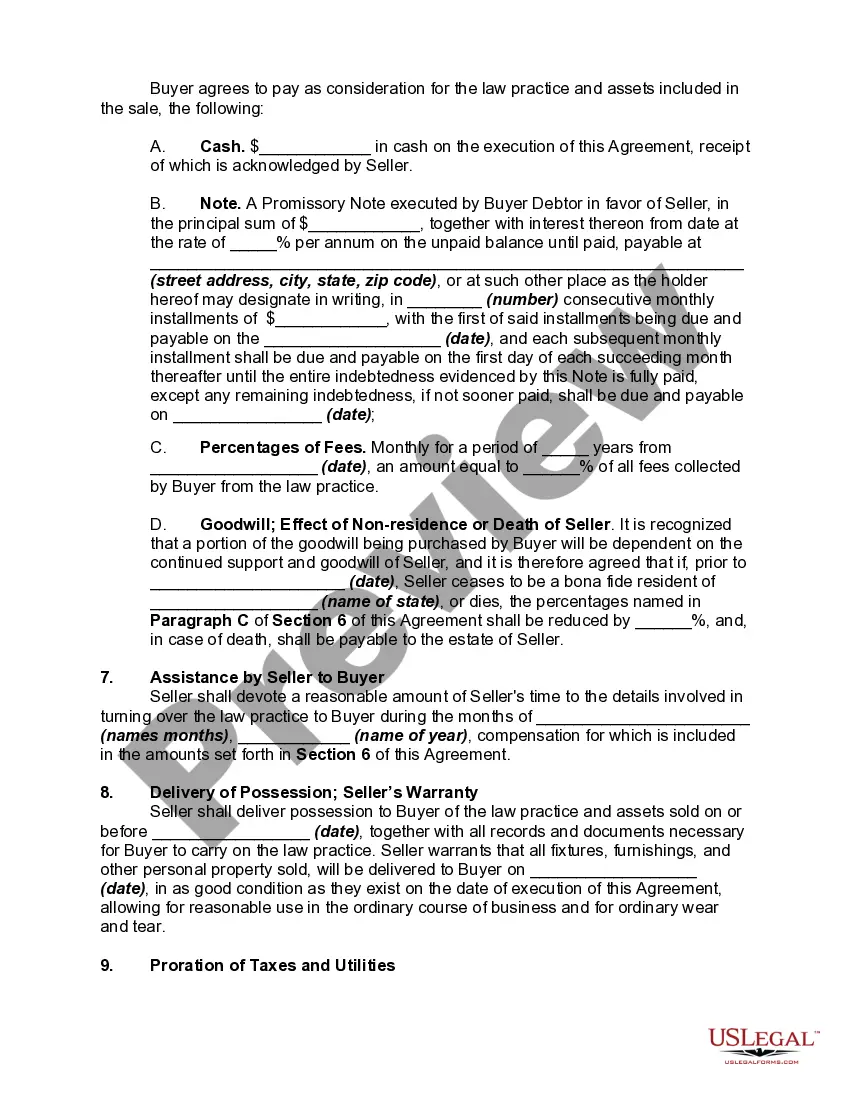
Free preview
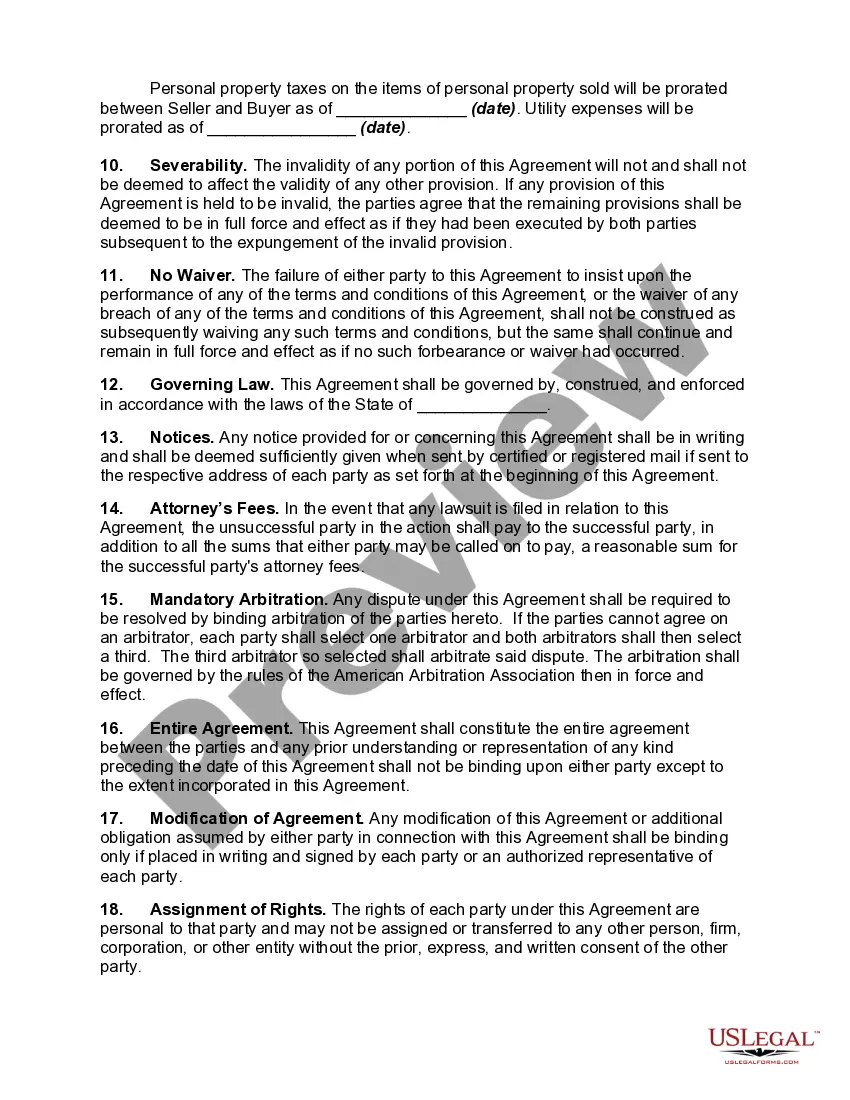
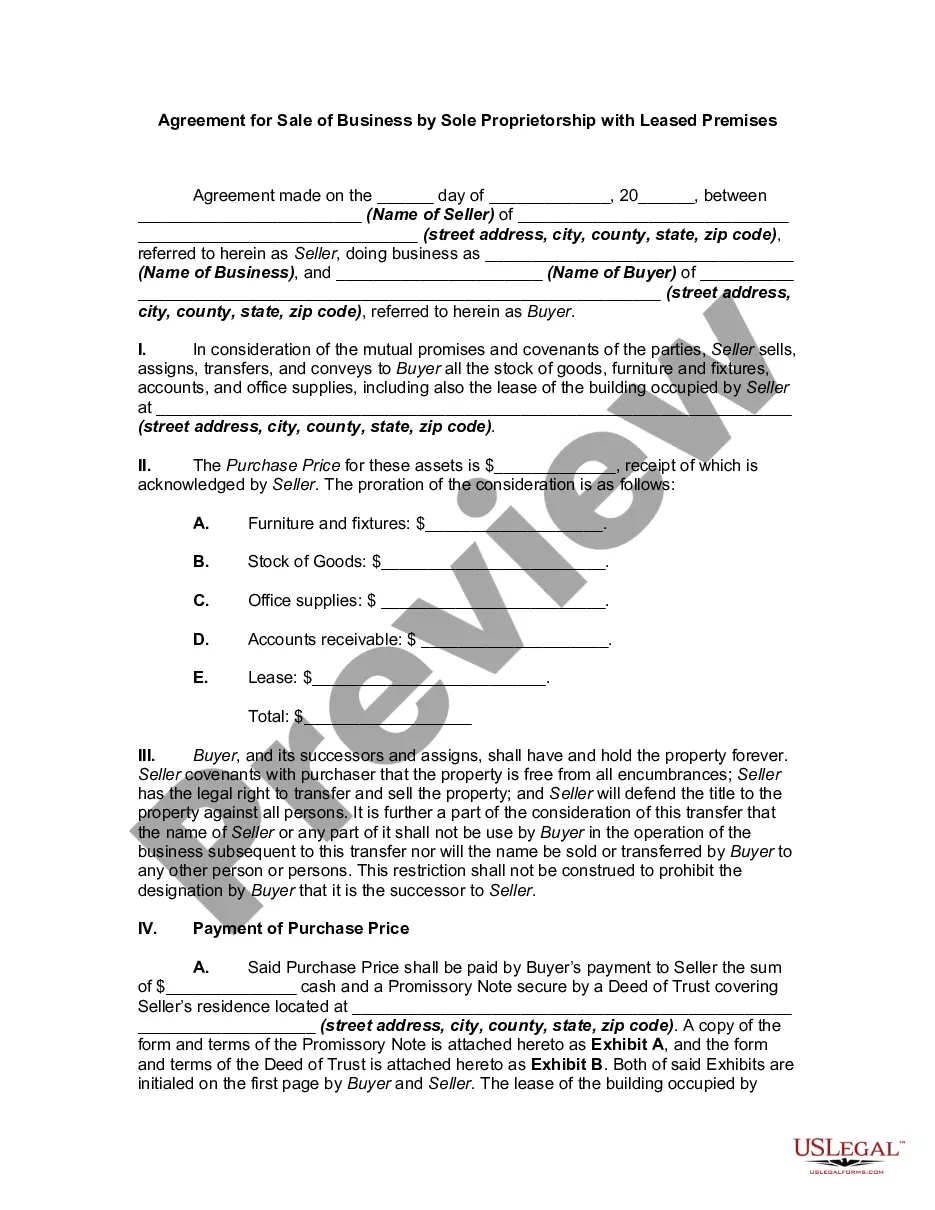
  • Preview Agreement for Sale of Sole Proprietorship Law Practice with Restrictive Covenant
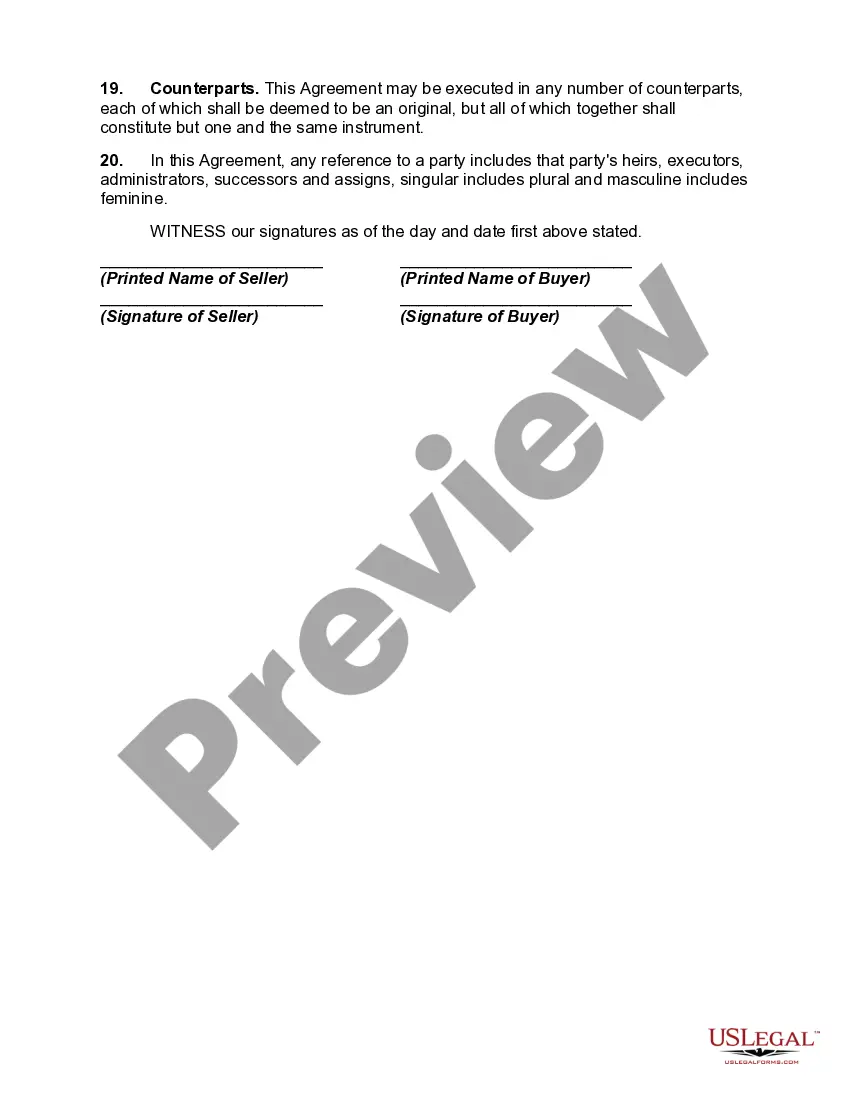
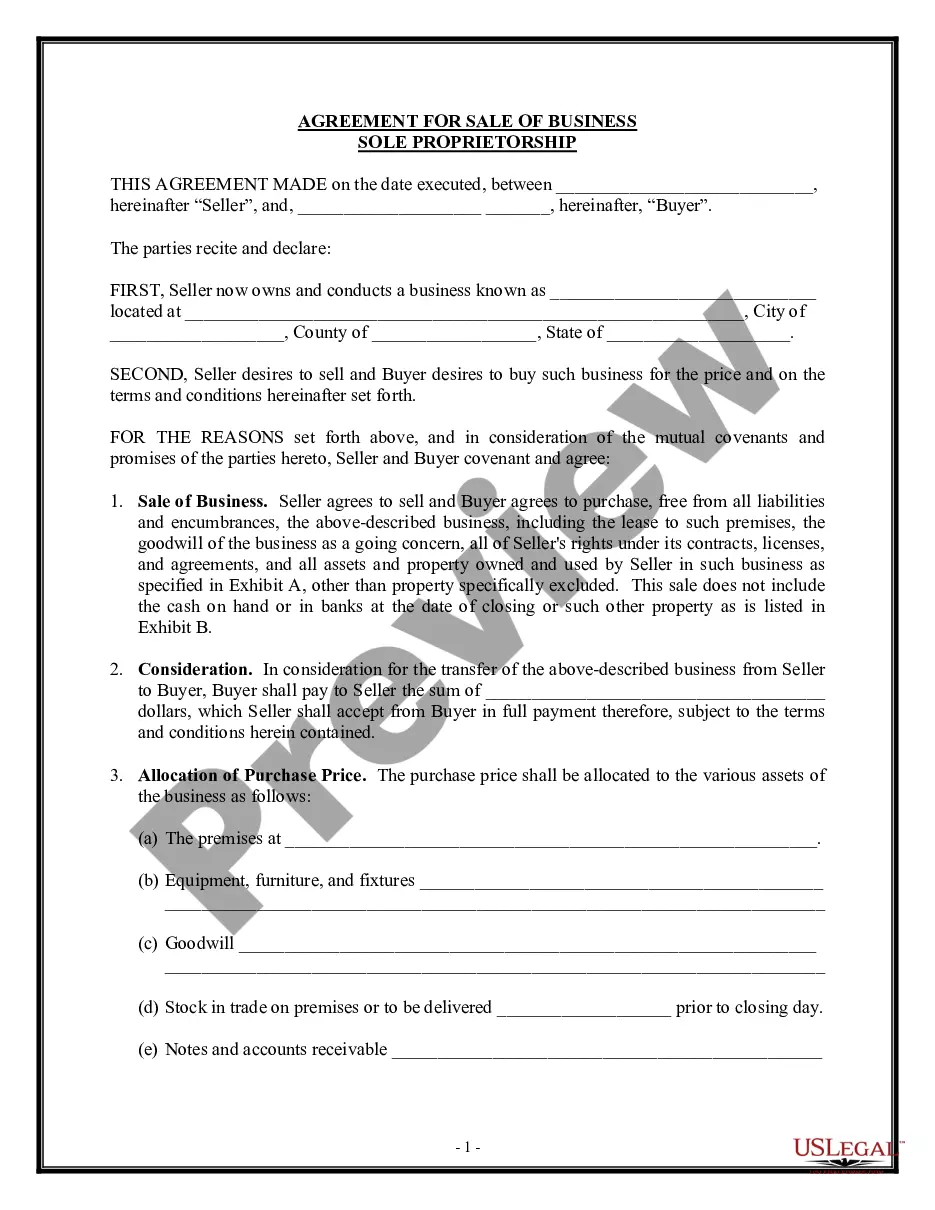
  • Preview Agreement for Sale of Sole Proprietorship Law Practice with Restrictive Covenant
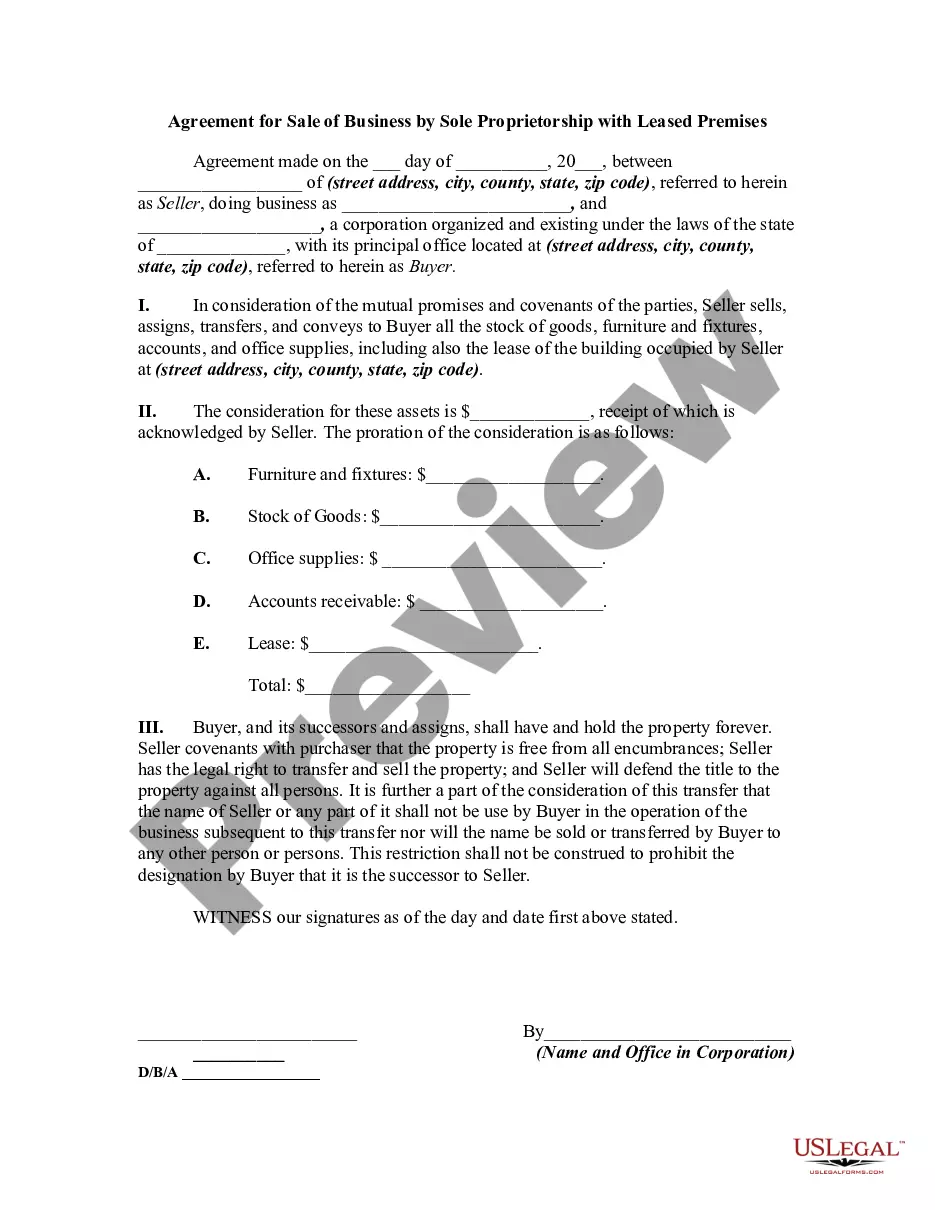
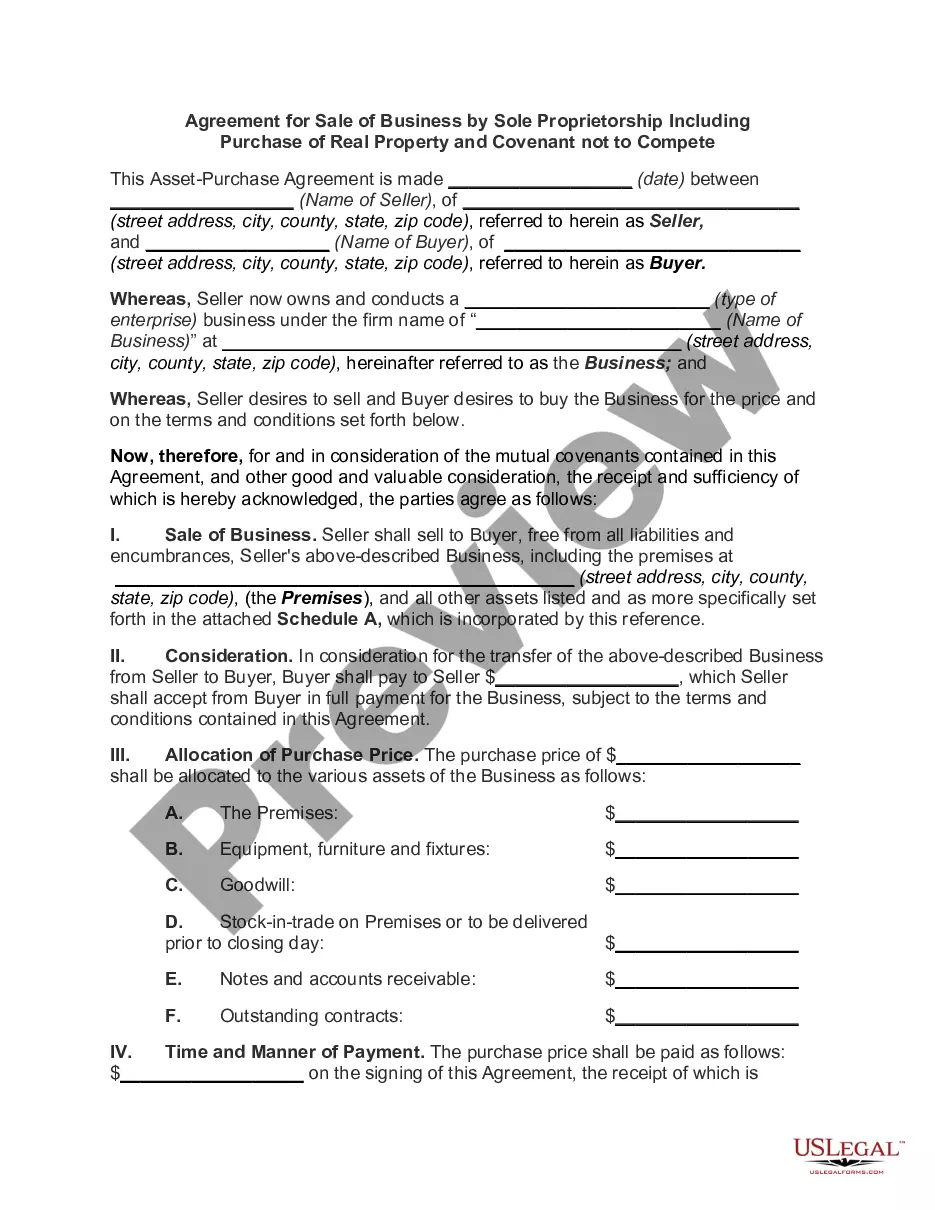
  • Preview Agreement for Sale of Sole Proprietorship Law Practice with Restrictive Covenant
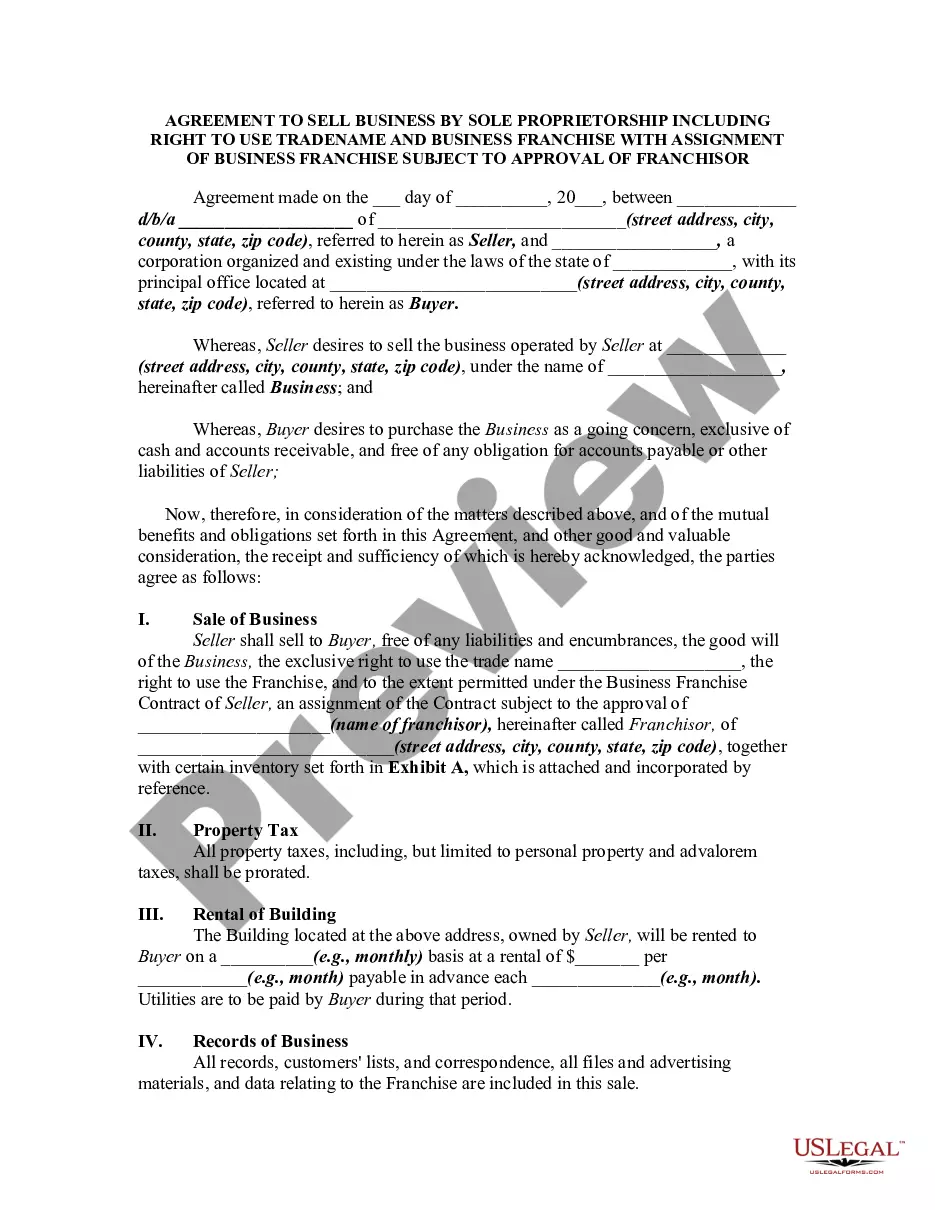
  • Preview Agreement for Sale of Sole Proprietorship Law Practice with Restrictive Covenant

How to fill out Agreement For Sale Of Sole Proprietorship Law Practice With Restrictive Covenant?

US Legal Forms - one of the largest repositories of legal documents in the United States - offers a diverse selection of legal form templates that you can download or print.

By using the website, you can access thousands of forms for business and personal purposes, categorized by sections, states, or keywords.

You can find the latest versions of forms such as the Connecticut Agreement for Sale of Sole Proprietorship Law Practice with Restrictive Covenant within minutes.

Review the form description to make sure that you have chosen the right document.

If the form does not meet your needs, use the Search field at the top of the screen to find one that does.

  1. If you have an account, Log In and download the Connecticut Agreement for Sale of Sole Proprietorship Law Practice with Restrictive Covenant from the US Legal Forms library.
  2. The Download button will be visible on each form you view.
  3. You can access all previously downloaded forms in the My documents section of your account.
  4. If you are using US Legal Forms for the first time, here are simple instructions to get started.
  5. Ensure you have selected the correct form for your city/state.
  6. Click on the Preview button to check the form’s details.

Form popularity

FAQ

A covenant is a promise or agreement between parties, while a restriction limits certain actions or behaviors. In a Connecticut Agreement for Sale of Sole Proprietorship Law Practice with Restrictive Covenant, a covenant may require the seller to maintain confidentiality, whereas a restriction could prevent them from opening a competing practice. Understanding these differences is crucial when drafting agreements to ensure effective legal protections.

A restrictive covenant agreement often includes provisions that prevent a seller from opening a competing law practice within a specific geographic area for a defined period. For instance, in the context of a Connecticut Agreement for Sale of Sole Proprietorship Law Practice with Restrictive Covenant, the seller might agree not to serve clients from their previous practice or not to solicit former clients. This helps protect the buyer's investment and ensures a smooth transition.

The tax treatment of a noncompete agreement can vary, but generally, payments made for such an agreement are considered ordinary income. A Connecticut Agreement for Sale of Sole Proprietorship Law Practice with Restrictive Covenant can involve substantial payments, which may affect overall tax liabilities for the seller. Proper classification is essential to avoid unintended tax consequences. For clarity, it's wise to work closely with a tax expert during the transaction.

Yes, Connecticut does enforce non-compete agreements, but they must adhere to certain standards. Such agreements must protect legitimate business interests and remain reasonable in their duration and geographical restrictions. In the context of a Connecticut Agreement for Sale of Sole Proprietorship Law Practice with Restrictive Covenant, it's important for both parties to understand these parameters. Legal guidance can help ensure that the agreement is crafted effectively to withstand scrutiny.

A covenant not to compete in Connecticut will be enforced if it meets specific legal criteria, including reasonableness in duration and geographic scope. Courts often look for evidence that the covenant protects legitimate business interests, like trade secrets or customer relationships. An effective Connecticut Agreement for Sale of Sole Proprietorship Law Practice with Restrictive Covenant should clearly articulate these terms. This legal groundwork can contribute to a more secure transaction.

For a seller involved in a Connecticut Agreement for Sale of Sole Proprietorship Law Practice with Restrictive Covenant, the taxation of a covenant not to compete typically falls under ordinary income tax rules. If the seller receives upfront payment, that payment may not qualify for capital gains treatment. This becomes essential to consider during the sale process, as it can significantly affect net proceeds. Always consult with a tax advisor to ensure proper understanding and planning.

Getting around restrictive covenants can be complicated, especially with a Connecticut Agreement for Sale of Sole Proprietorship Law Practice with Restrictive Covenant in play. Individuals often seek legal counsel to explore breathable terms or negotiate modifications to the agreement. Alternatively, understanding the specific conditions under which the covenant was drawn can sometimes present avenues for relief. Make sure to evaluate all your options carefully.

The sale of business exception allows for a non-compete clause to be enforced even after a business is sold in Connecticut. This means that sellers may be restricted from opening a similar business within a certain timeframe and geographic area. This exception aims to protect the goodwill of the business being sold. Understanding this aspect is crucial for both buyers and sellers during negotiations.

The tax treatment of covenants not to compete in a Connecticut Agreement for Sale of Sole Proprietorship Law Practice with Restrictive Covenant can be quite specific. Generally, if a seller receives a lump sum for a non-compete agreement, that payment may be taxed as ordinary income. However, specific circumstances of the agreement can affect this treatment. Consulting a tax professional can help clarify these nuances.

Trusted and secure by over 3 million people of the world’s leading companies

Connecticut Agreement for Sale of Sole Proprietorship Law Practice with Restrictive Covenant