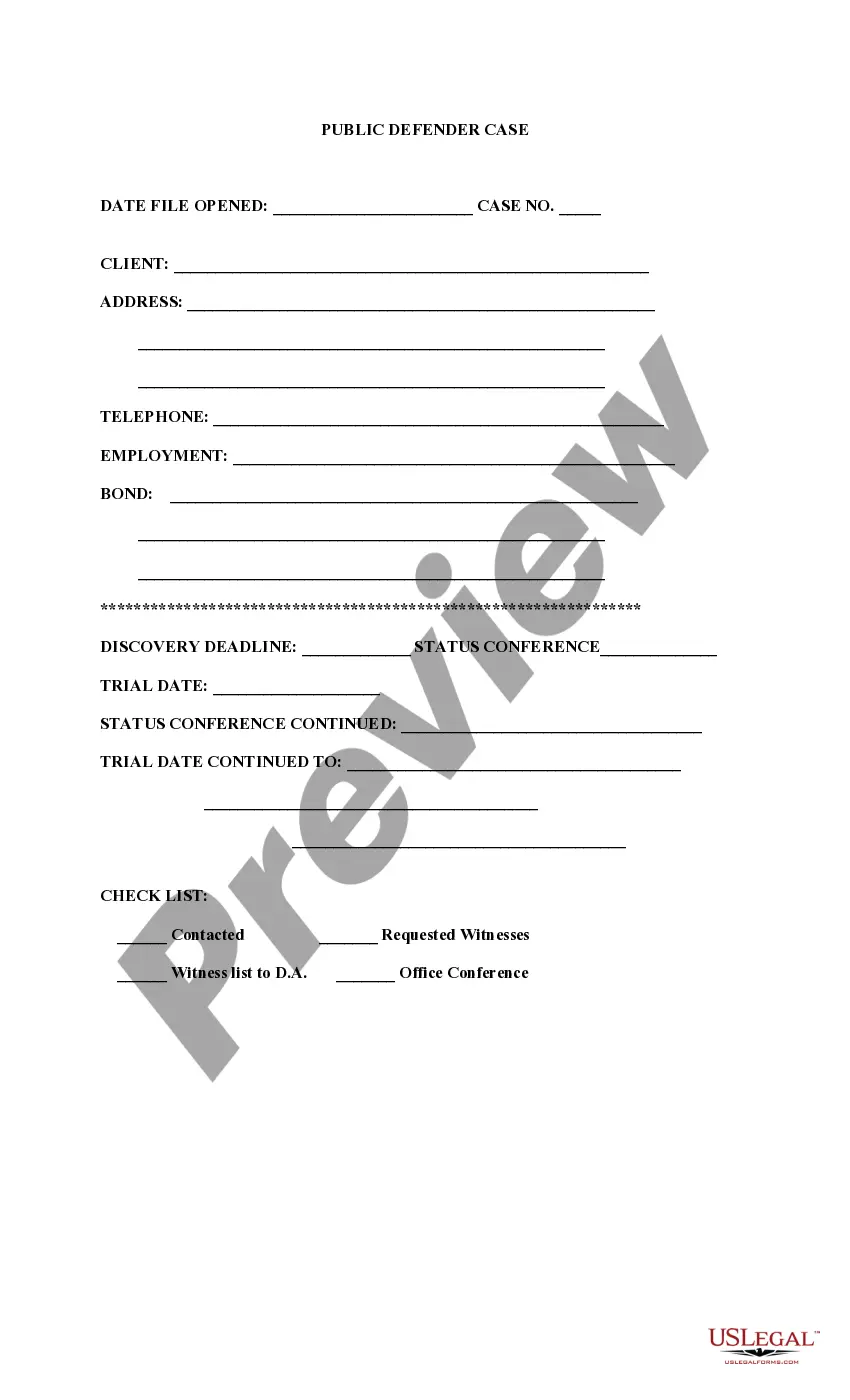
Connecticut Public Defender Case
Description
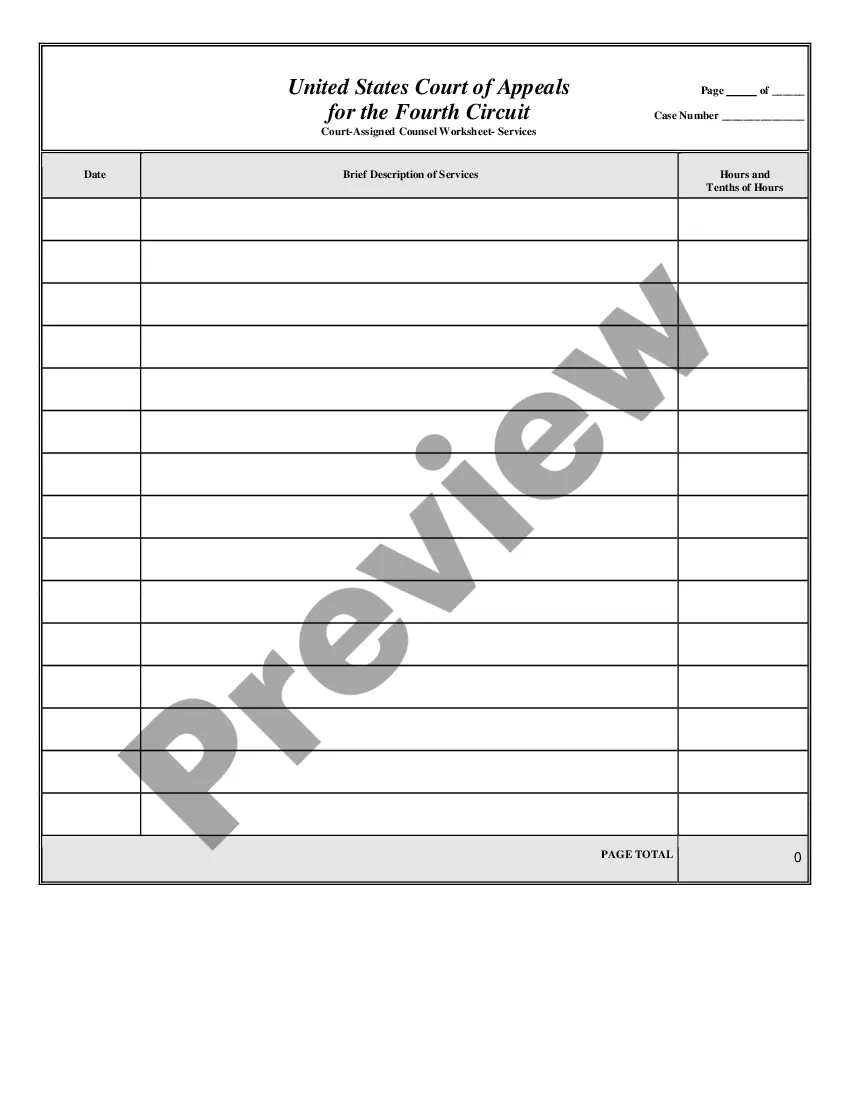
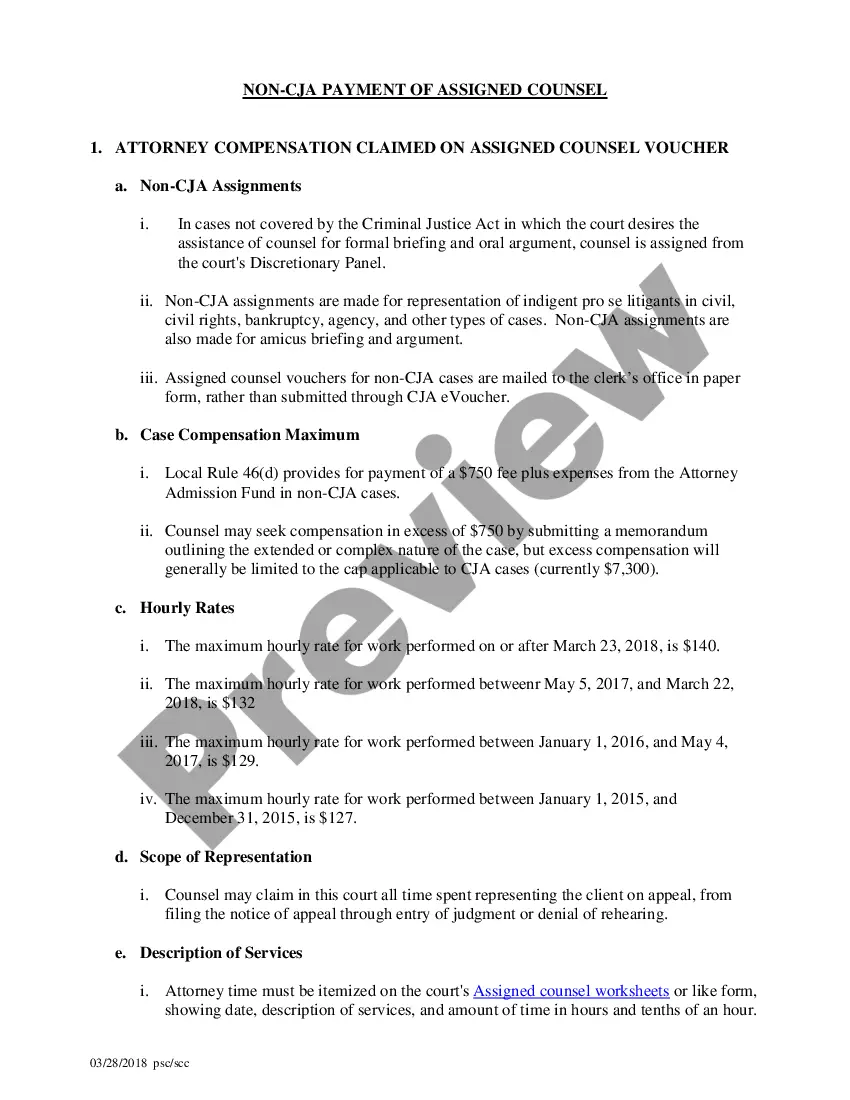
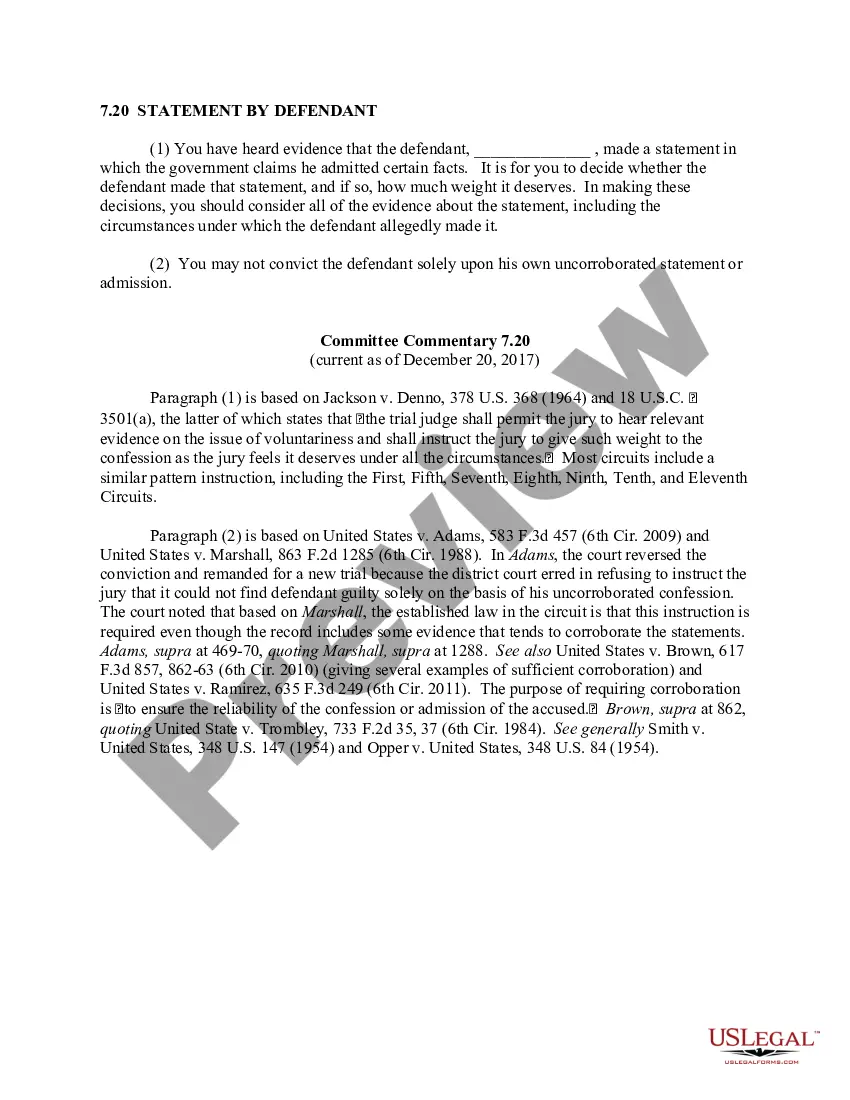
Get your form ready online
Our built-in tools help you complete, sign, share, and store your documents in one place.
Make edits, fill in missing information, and update formatting in US Legal Forms—just like you would in MS Word.
Download a copy, print it, send it by email, or mail it via USPS—whatever works best for your next step.
Sign and collect signatures with our SignNow integration. Send to multiple recipients, set reminders, and more. Go Premium to unlock E-Sign.
If this form requires notarization, complete it online through a secure video call—no need to meet a notary in person or wait for an appointment.
We protect your documents and personal data by following strict security and privacy standards.

Make edits, fill in missing information, and update formatting in US Legal Forms—just like you would in MS Word.

Download a copy, print it, send it by email, or mail it via USPS—whatever works best for your next step.

Sign and collect signatures with our SignNow integration. Send to multiple recipients, set reminders, and more. Go Premium to unlock E-Sign.

If this form requires notarization, complete it online through a secure video call—no need to meet a notary in person or wait for an appointment.

We protect your documents and personal data by following strict security and privacy standards.
Looking for another form?



How to fill out Public Defender Case?
US Legal Forms - one of the largest collections of legal documents in the USA - provides a broad selection of legal document templates that you can download or print.
By utilizing the website, you can access thousands of forms for both business and personal use, organized by categories, states, or keywords. You can find the latest types of forms such as the Connecticut Public Defender Case in mere seconds.
If you are already a subscriber, Log In and obtain the Connecticut Public Defender Case from the US Legal Forms library. The Download button will appear on each document you view. You can access all previously downloaded forms in the My documents section of your account.
Make modifications. Complete, edit, print, and sign the downloaded Connecticut Public Defender Case.
Every template you added to your account does not have an expiration date and is yours indefinitely. Therefore, to download or print another copy, simply go to the My documents section and click on the form you need. Access the Connecticut Public Defender Case with US Legal Forms, one of the most extensive collections of legal document templates. Utilize thousands of professional and state-specific templates that meet your business or personal needs.
- If you are using US Legal Forms for the first time, here are simple instructions to help you get started.
- Ensure you have chosen the correct form for your city/state. Click on the Review button to examine the form’s content. Check the form summary to confirm that you have selected the right document.
- If the form does not meet your requirements, use the Search box at the top of the screen to find the one that does.
- If you are satisfied with the form, confirm your selection by clicking the Get now button. Then, choose the pricing plan you prefer and provide your credentials to register for an account.
- Complete the transaction. Use your Visa or Mastercard or PayPal account to finalize the transaction.
- Select the format and download the form to your device.
Form popularity
FAQ
Accused without any dependents$25,600Accused with one dependent$34,840Accused with two dependent$43,920Accused with three dependent$53,000Each additional dependent$ 9,080
In Gideon v. Wainwright, the U.S. Supreme Court held that this means the State must provide an attorney to any criminal defendant who cannot afford to hire one.
Wainwright, 372 U.S. 335 (1963), was a landmark U.S. Supreme Court decision in which the Court ruled that the Sixth Amendment of the U.S. Constitution requires U.S. states to provide attorneys to criminal defendants who are unable to afford their own.
Chief Public Defender TaShun Bowden-Lewis.
Final answer: The idea of a public defenders program was first put forth in 1893 at the Congress of Jurisprudence and Law Reform in Chicago. It promotes fair justice by aiding those who can't afford a private attorney. The US Congress embodied this theory in the 1963 Criminal Justice Act.
1963 ? The United States Supreme Court decides Gideon v. Wainwright, ruling that the Sixth Amendment creates a right to court appointed counsel in felony cases in all criminal proceedings.
If you qualify for the public defender, the court will appoint the public defender as your defense attorney. You are more likely to get a free lawyer to represent you at your first court appearance if you apply for the Public Defenders at least five days before your scheduled court date.
Sixth Amendment Right to Counsel The right to an attorney has applied in federal prosecutions for most of the nation's history, but it did not extend to all state-level felony cases, based on the Fourteenth Amendment, until the U.S. Supreme Court decided Gideon v. Wainwright, 372 U.S. 335 (1963).