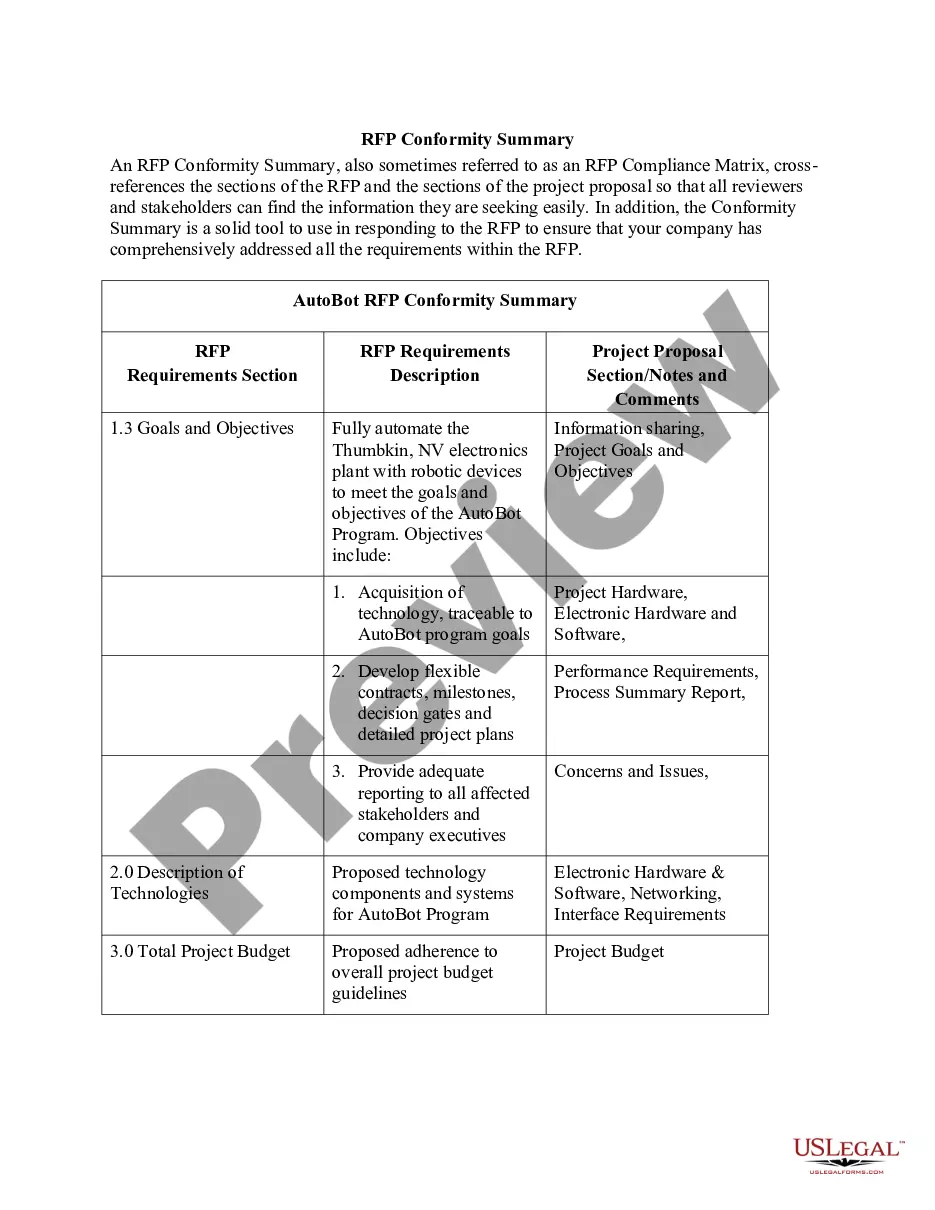
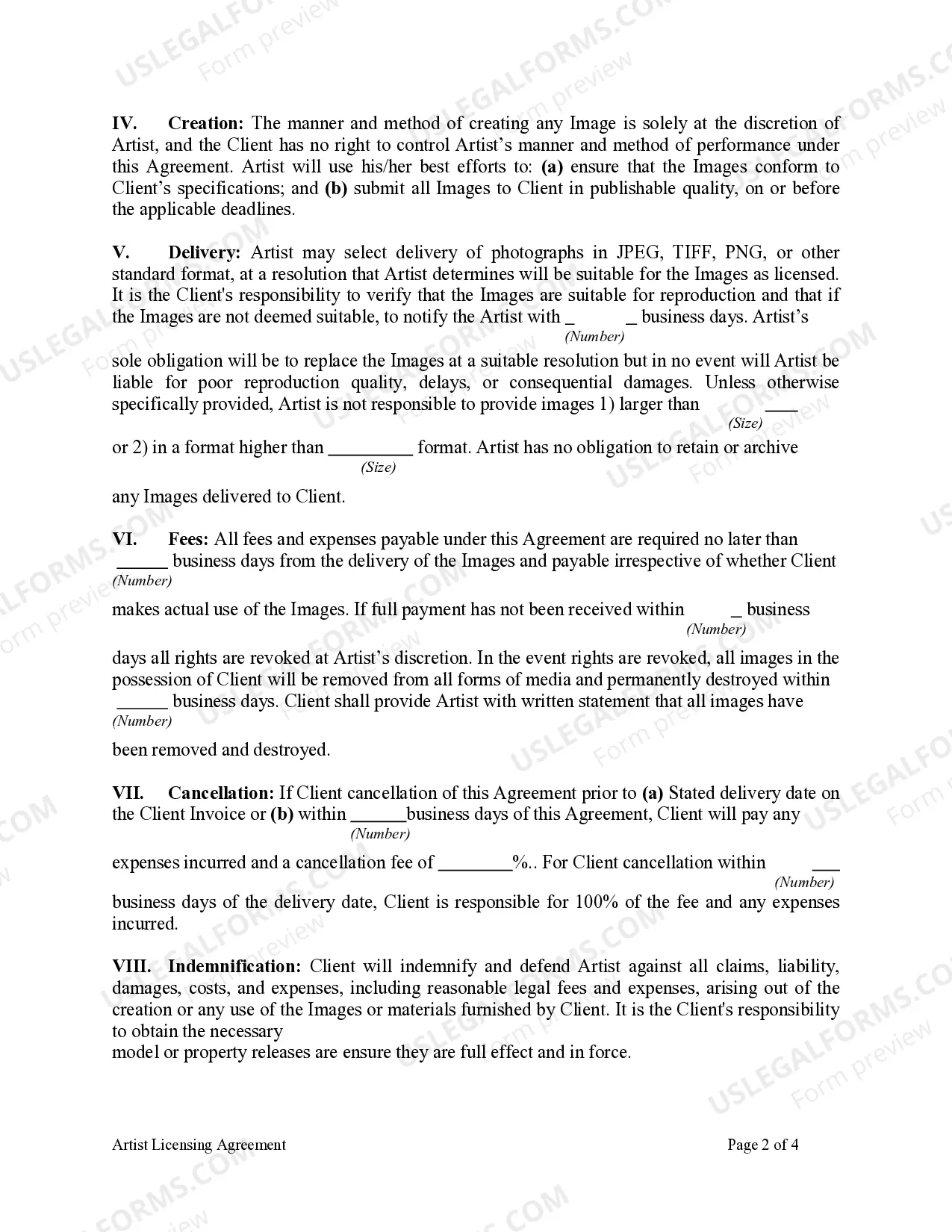
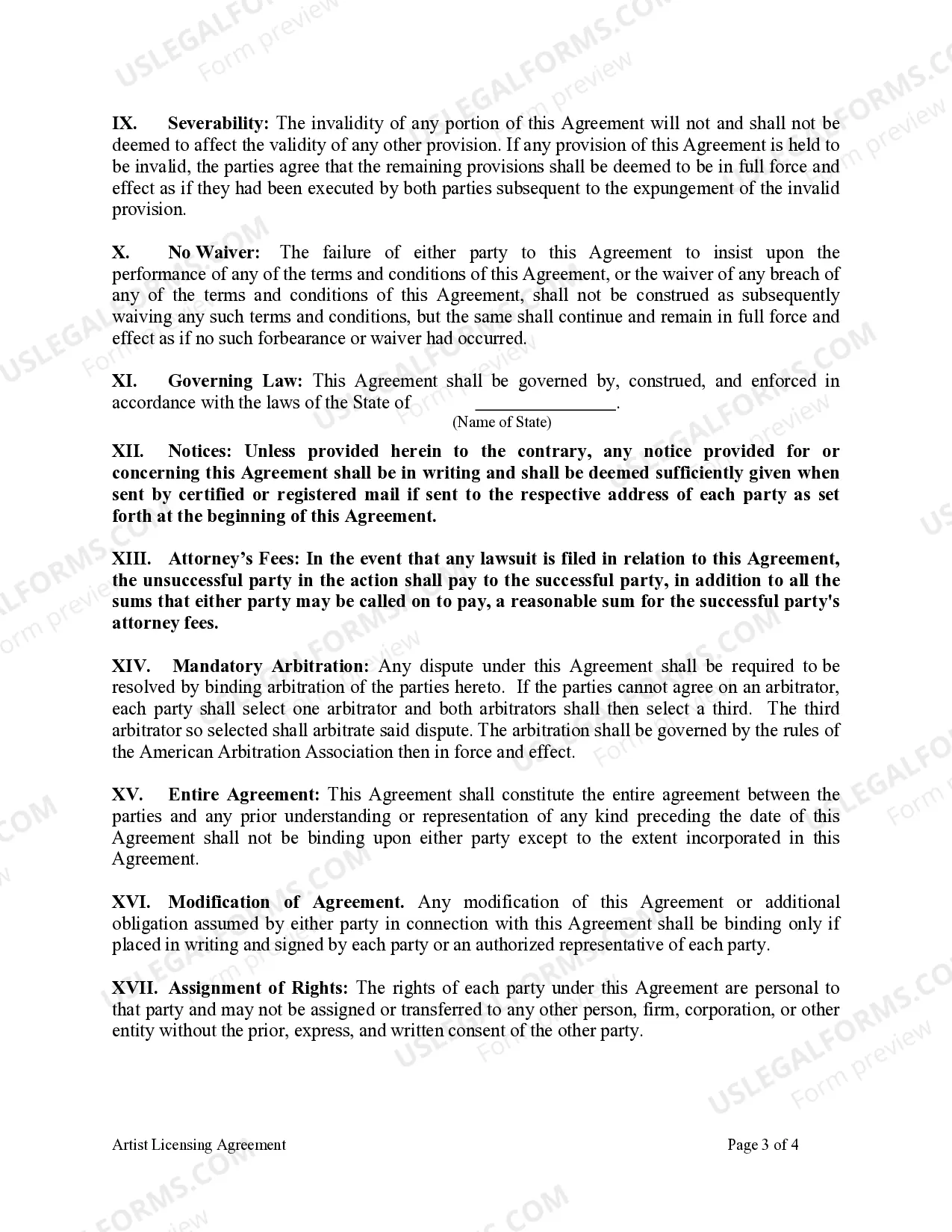
Connecticut Artist Licensing Agreement
Description
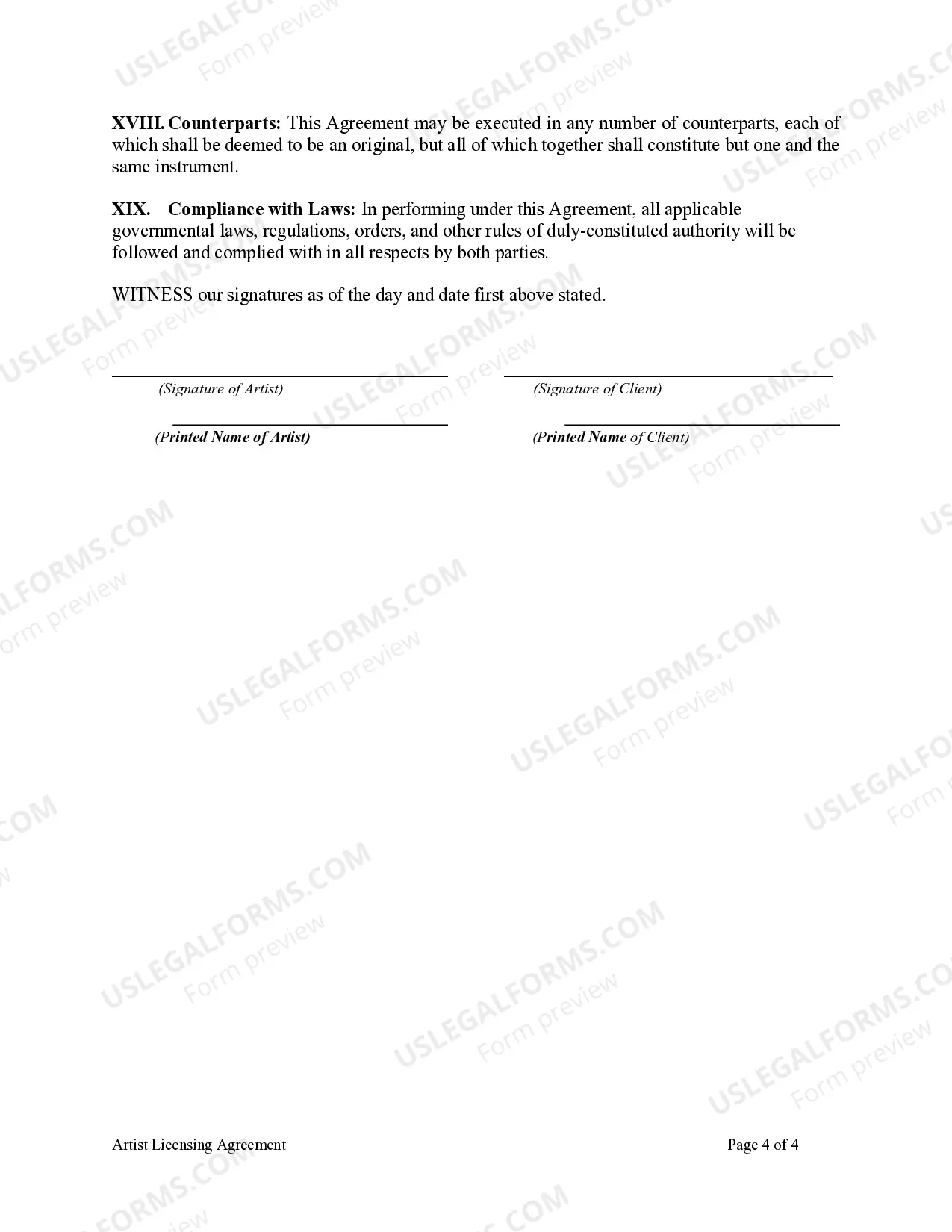
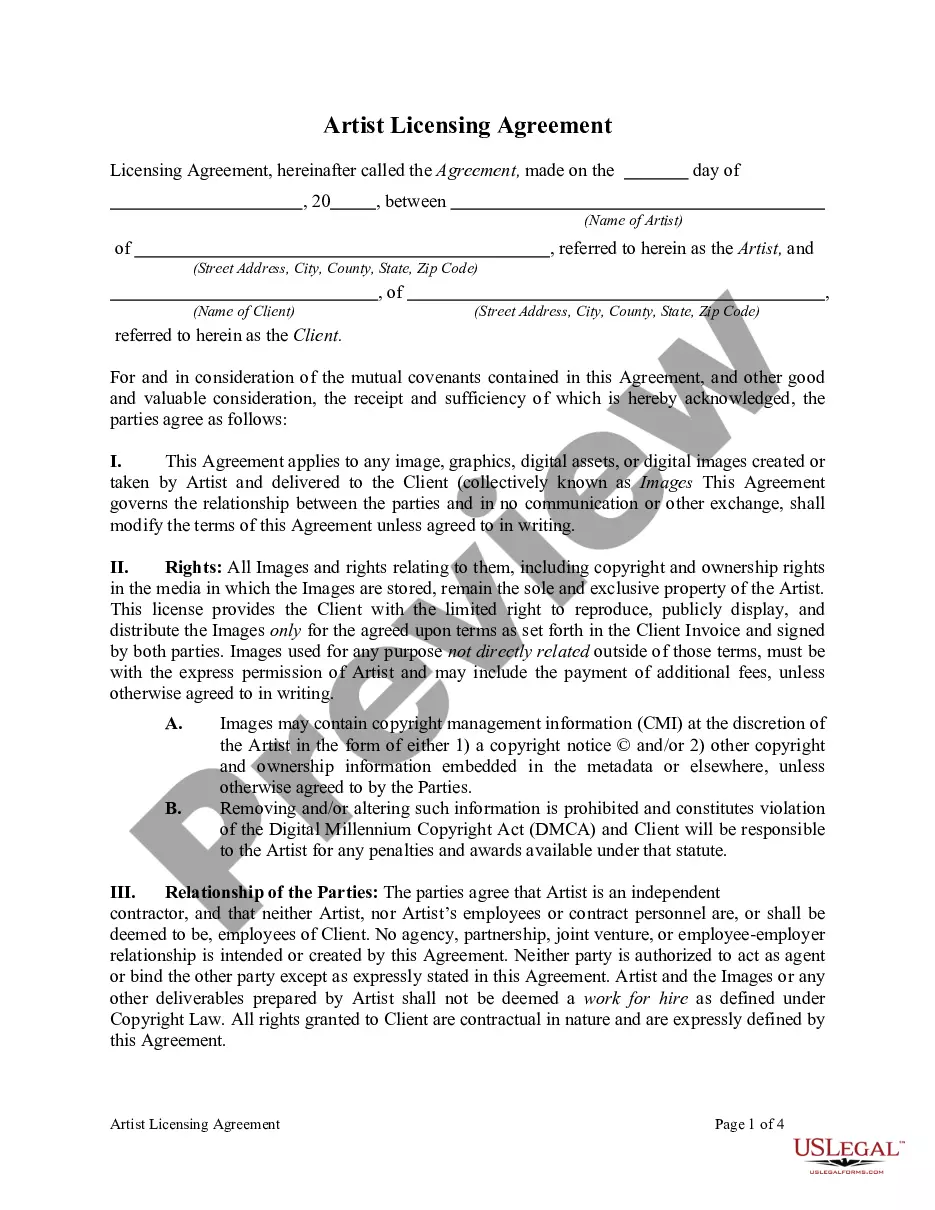
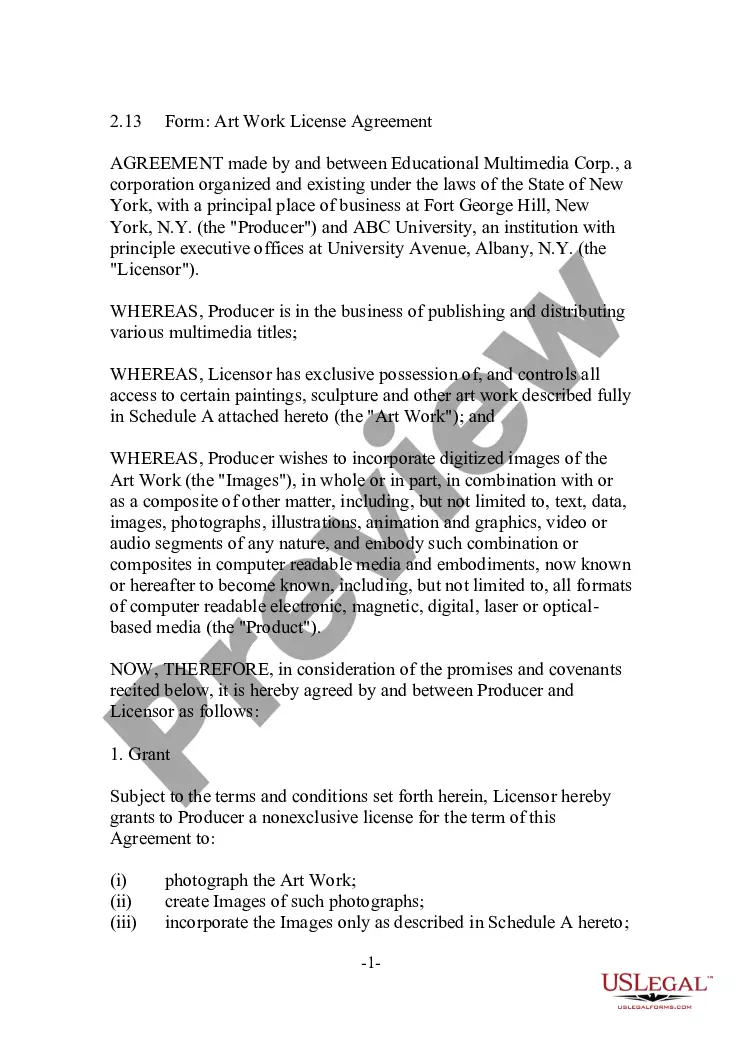
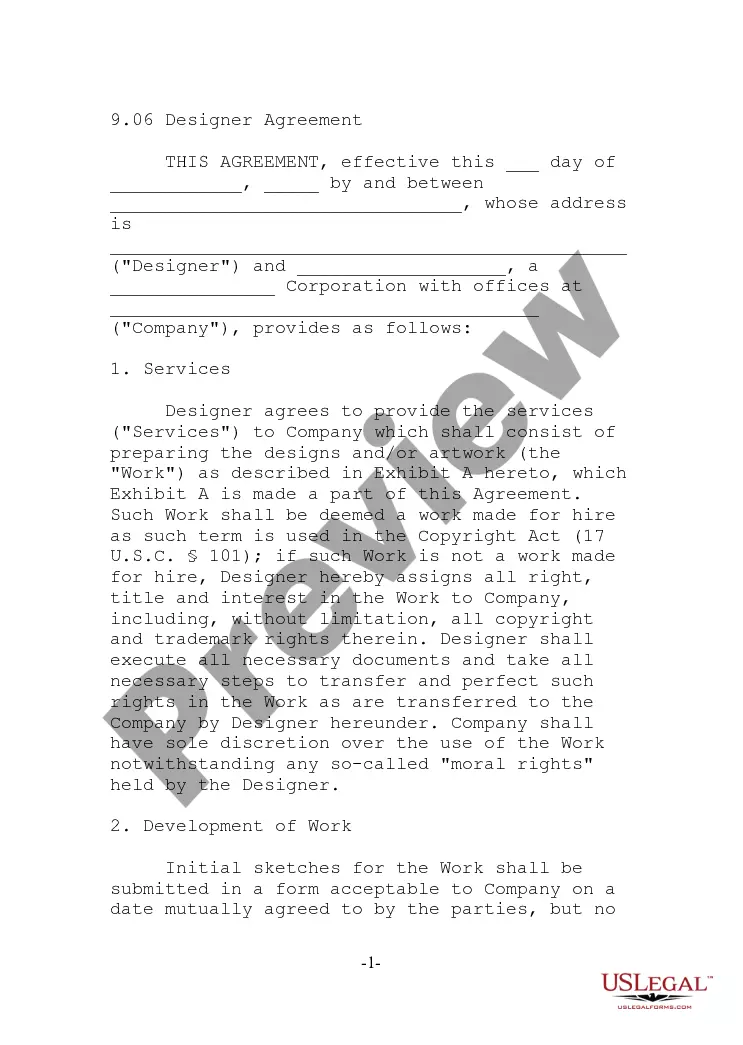
Get your form ready online
Our built-in tools help you complete, sign, share, and store your documents in one place.
Make edits, fill in missing information, and update formatting in US Legal Forms—just like you would in MS Word.
Download a copy, print it, send it by email, or mail it via USPS—whatever works best for your next step.
Sign and collect signatures with our SignNow integration. Send to multiple recipients, set reminders, and more. Go Premium to unlock E-Sign.
If this form requires notarization, complete it online through a secure video call—no need to meet a notary in person or wait for an appointment.
We protect your documents and personal data by following strict security and privacy standards.

Make edits, fill in missing information, and update formatting in US Legal Forms—just like you would in MS Word.

Download a copy, print it, send it by email, or mail it via USPS—whatever works best for your next step.

Sign and collect signatures with our SignNow integration. Send to multiple recipients, set reminders, and more. Go Premium to unlock E-Sign.

If this form requires notarization, complete it online through a secure video call—no need to meet a notary in person or wait for an appointment.

We protect your documents and personal data by following strict security and privacy standards.
Looking for another form?



How to fill out Artist Licensing Agreement?
If you wish to complete, acquire, or print legal document templates, utilize US Legal Forms, the largest assortment of legal forms available online.
Leverage the website's straightforward and user-friendly search to find the documents you require.
Various templates for commercial and personal purposes are categorized and organized by themes or keywords.
Step 5. Complete the transaction. You may use your credit card or PayPal account to finalize the purchase.
Step 6. Select the format of your legal form and download it to your system.
- Utilize US Legal Forms to locate the Connecticut Artist Licensing Agreement in just a few clicks.
- If you are already a US Legal Forms user, Log In to your account and select the Download option to obtain the Connecticut Artist Licensing Agreement.
- You can also access forms you previously downloaded from the My documents section of your account.
- If you are using US Legal Forms for the first time, adhere to the following steps.
- Step 1. Ensure you have chosen the form for the correct region/country.
- Step 2. Use the Review option to examine the form’s content. Remember to read the description.
- Step 3. If you are unsatisfied with the form, utilize the Search field at the top of the screen to find alternative templates for your legal form.
- Step 4. Once you have located the form you need, click the Purchase now option. Select the pricing plan you prefer and enter your information to create an account.
Form popularity
FAQ
The 3 P's of licensing are Property, Permission, and Payment. Property refers to the intellectual property being licensed, while Permission involves granting rights to use that property. Payment outlines the financial arrangement between parties involved. A Connecticut Artist Licensing Agreement should clearly define these elements to ensure a smooth and professional transaction.
Yes, you can draft your own legal contract, but it’s crucial to ensure that it covers all necessary elements to be enforceable. A Connecticut Artist Licensing Agreement template can provide a solid foundation, guiding you through the essential clauses and terms. However, seeking legal advice can strengthen your contract and ensure it meets all legal standards.
Setting up a licensing agreement involves outlining the terms that both parties agree upon, including payment structures and usage rights. It’s beneficial to use templates or legal resources to ensure your Connecticut Artist Licensing Agreement covers all necessary aspects. You may want to consult with a legal professional to tailor the agreement to your specific needs and protect your creative work.
The three common types of licensing agreements include exclusive, non-exclusive, and sole licensing. An exclusive license grants one party the sole rights to use your artwork, while a non-exclusive license allows multiple parties to use it simultaneously. A sole license provides rights to only one party but retains the original creator's rights, making a Connecticut Artist Licensing Agreement vital for defining these terms.
Yes, selling crafts in Connecticut may require you to obtain a sales tax permit and other necessary licenses, depending on your business structure. A Connecticut Artist Licensing Agreement can also help you clarify the terms of your sales and protect your creative rights. It’s wise to consult legal resources to ensure you meet all requirements while promoting your crafts effectively.
In Connecticut, you do not need a specific license to be recognized as an artist. However, engaging in certain business activities may require a Connecticut Artist Licensing Agreement to protect your work and define your rights. It’s essential to understand local regulations, especially if you plan to sell your artwork or collaborate with other businesses.
Generally, royalties will be a percentage of the net sales of the licensee's products. The percentage will vary, but it is usually 10 percent or less unless the licensee is selling posters or prints of the artwork.
The percentage will vary, but it is usually 10 percent or less unless the licensee is selling posters or prints of the artwork. Sometimes royalties are calculated not ing to net sales but ing to the total number of products that are sold or manufactured. This is known as a per unit royalty.
Art licensing is a way of making money wherein, as licensing expert Tara Reed puts it, you ?rent? your artwork to companies to put on their products. An artist who chooses to license their art may not sell any originals at all, but simply license the images for use on commercial products.
A license contract, also known as a license agreement or licensing agreement, is a type of contract where one party (the licensor) grants another party (the licensee) the right to produce, use, sell, and/or display the licensor's protected material.