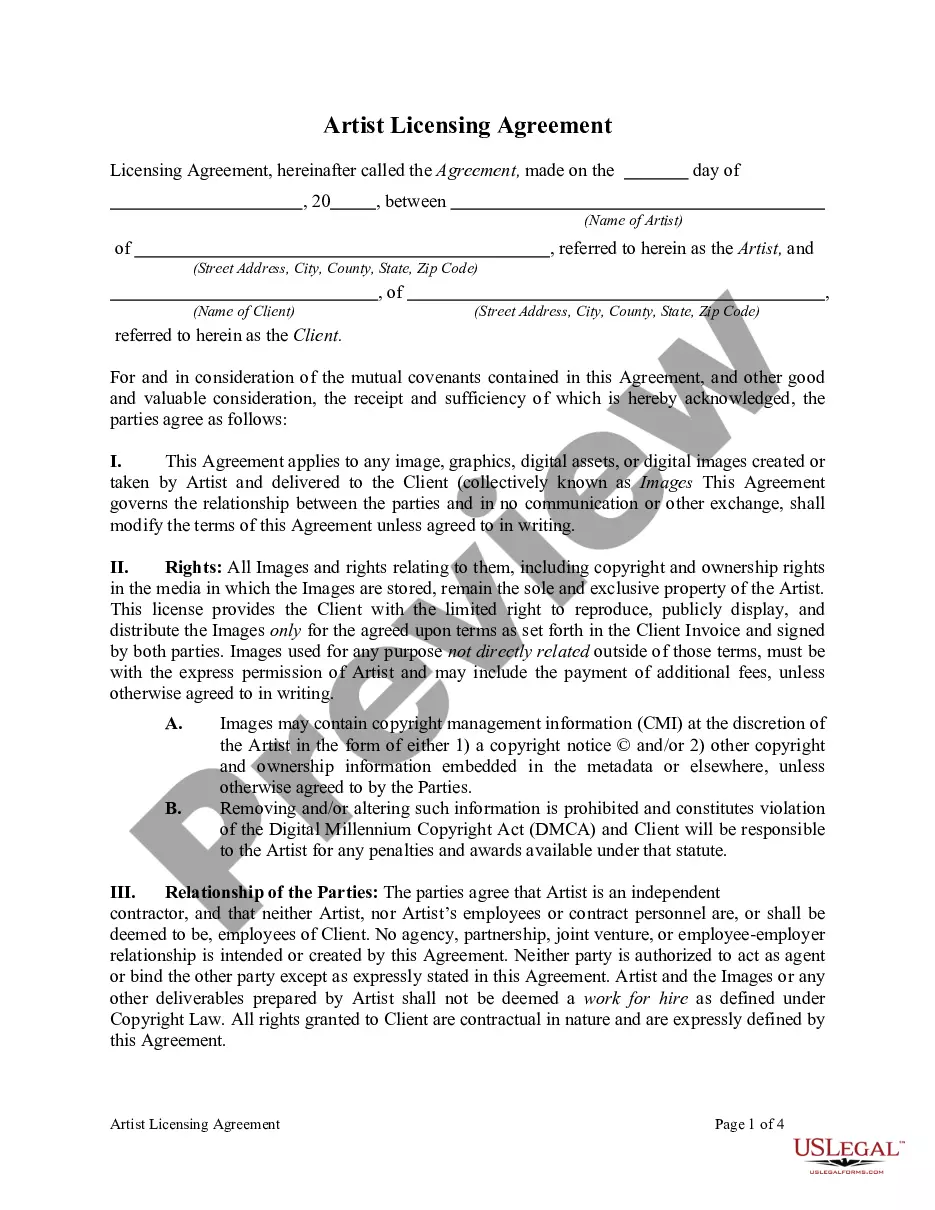
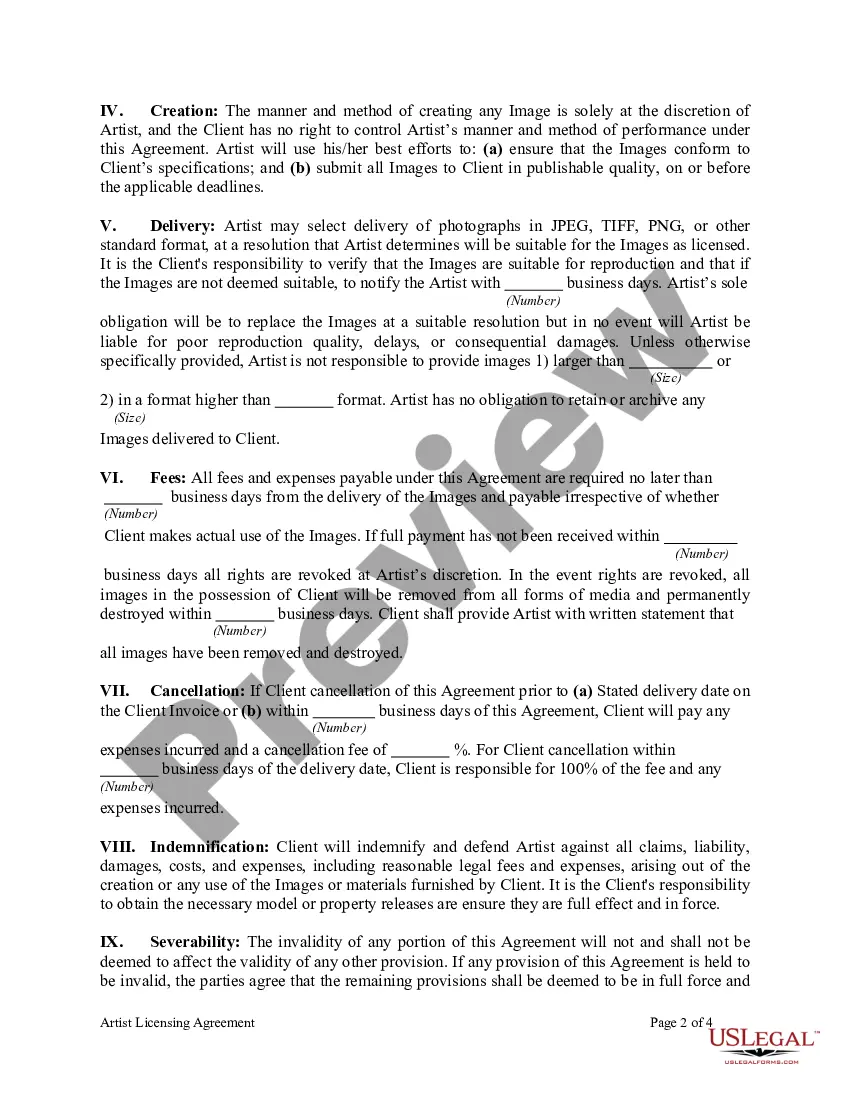
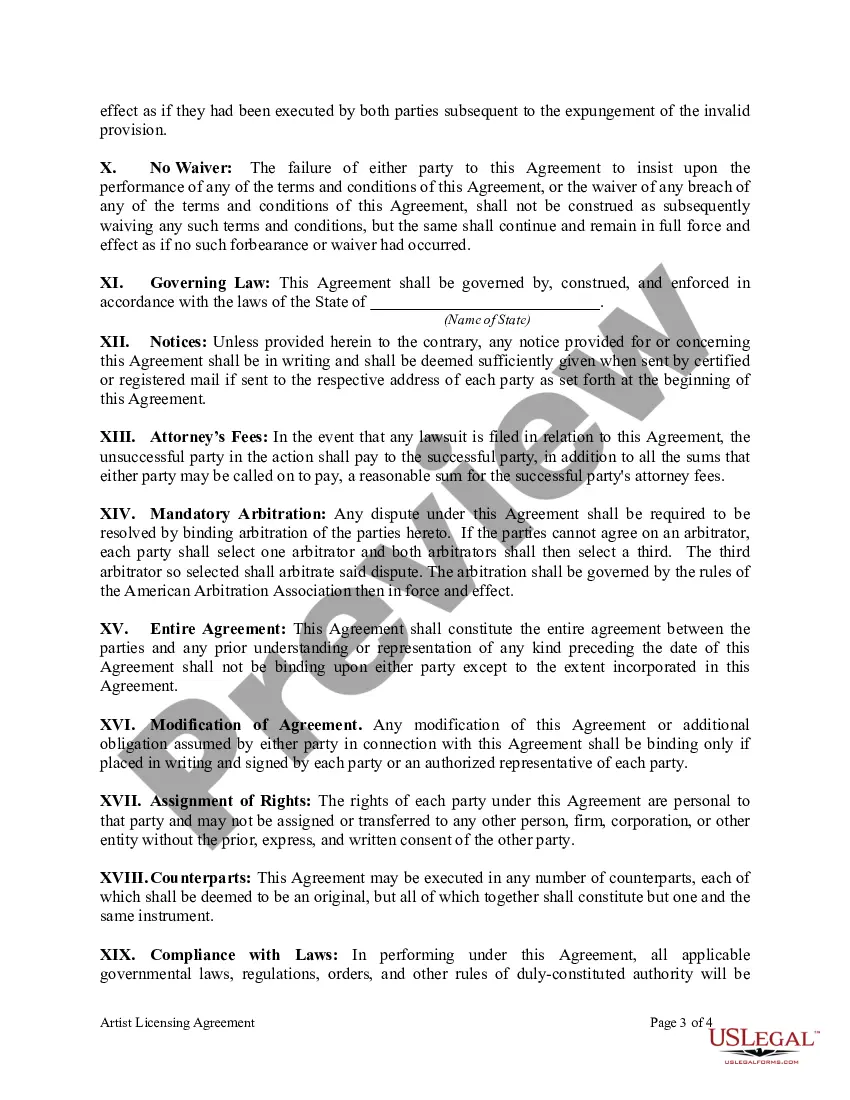
Connecticut Artist Licensing Agreement
Description
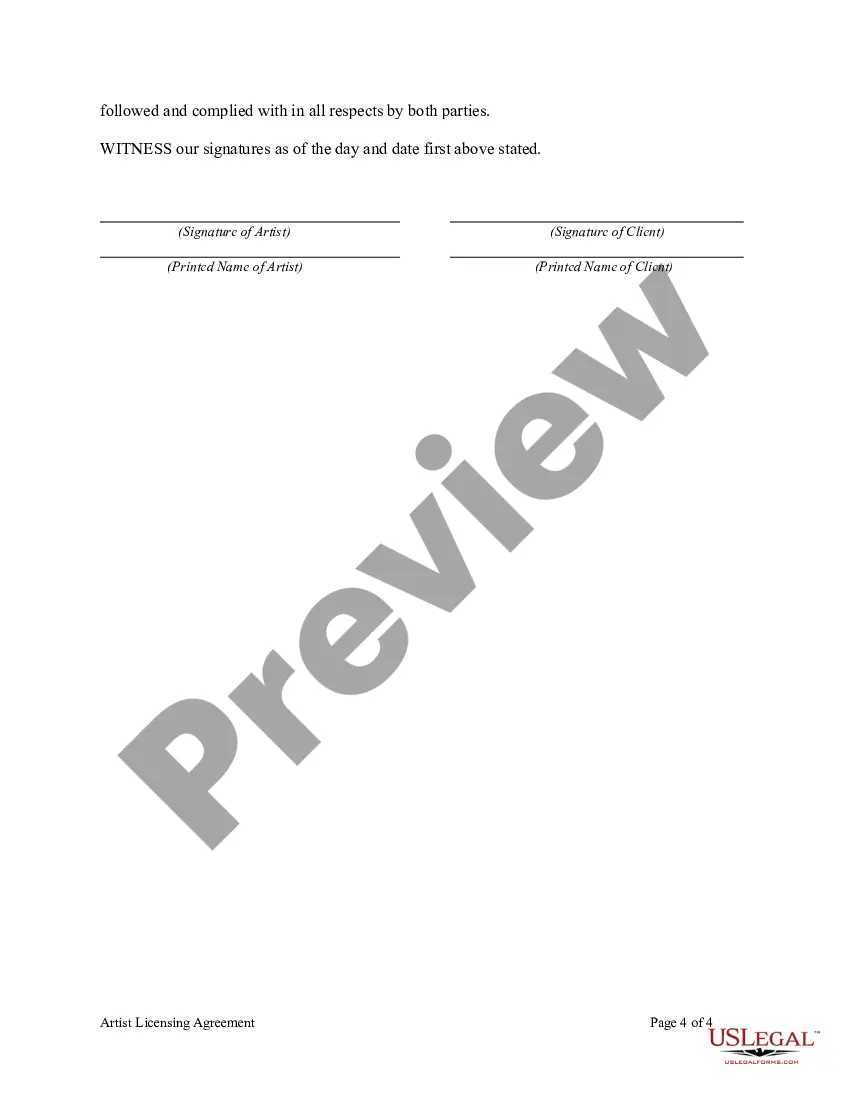
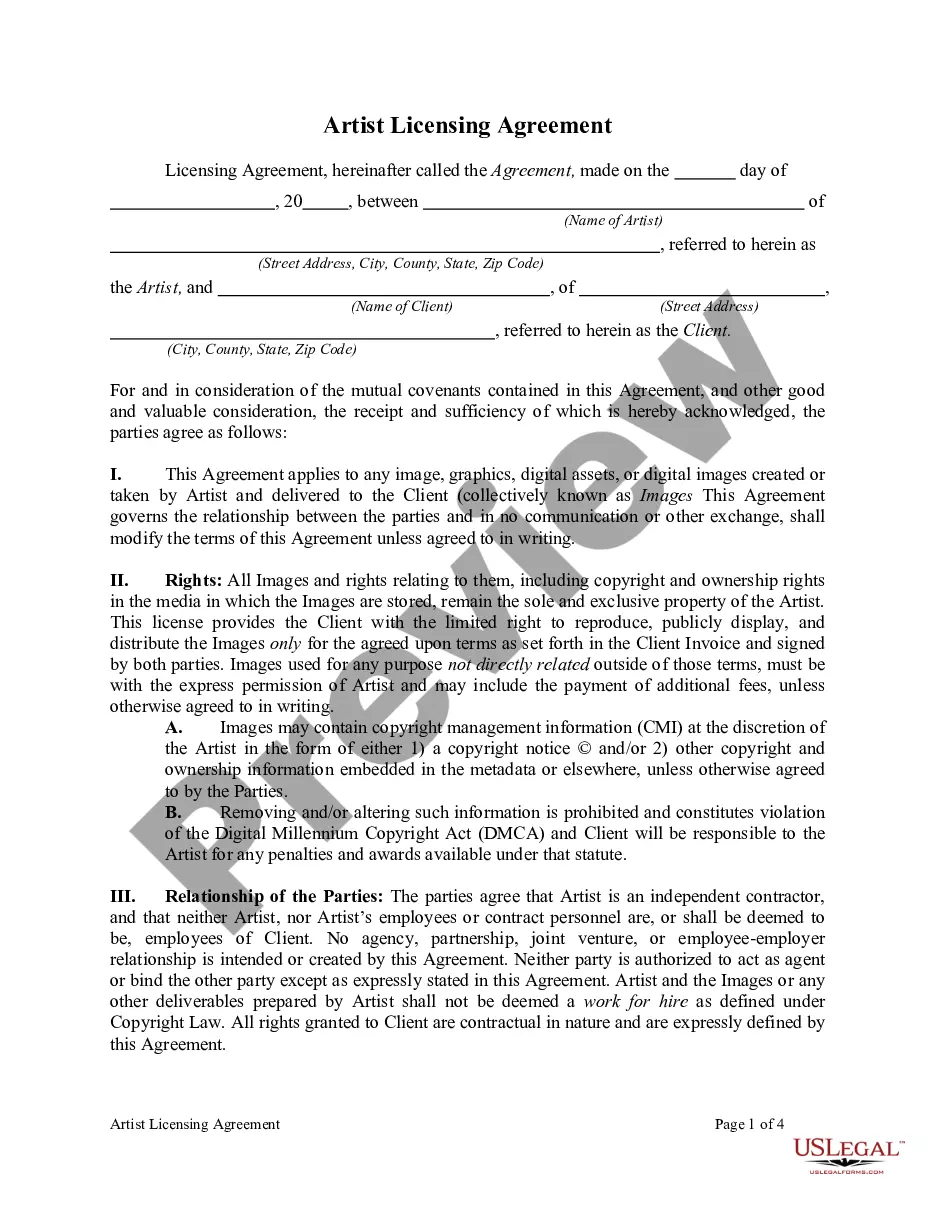
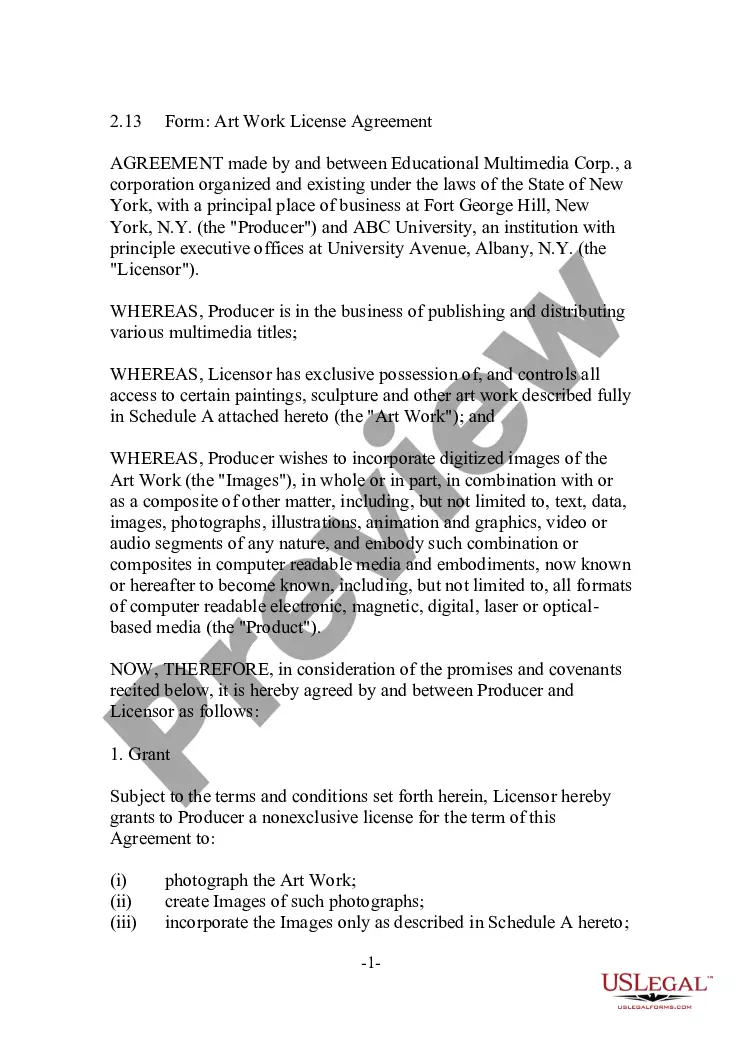
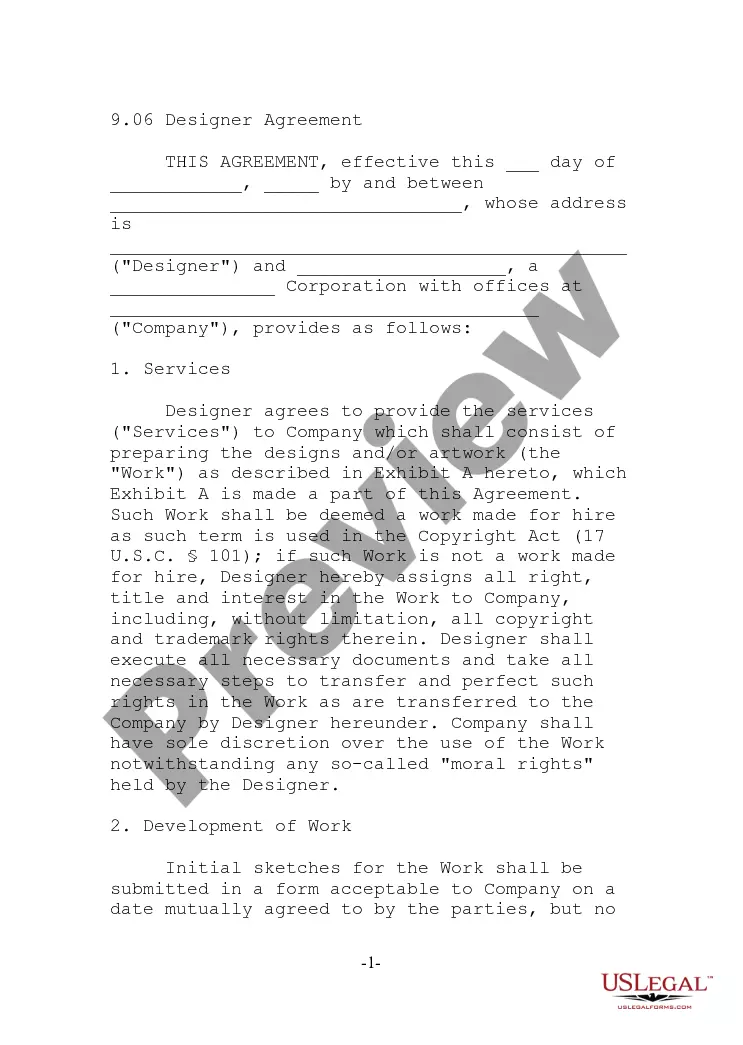
Get your form ready online
Our built-in tools help you complete, sign, share, and store your documents in one place.
Make edits, fill in missing information, and update formatting in US Legal Forms—just like you would in MS Word.
Download a copy, print it, send it by email, or mail it via USPS—whatever works best for your next step.
Sign and collect signatures with our SignNow integration. Send to multiple recipients, set reminders, and more. Go Premium to unlock E-Sign.
If this form requires notarization, complete it online through a secure video call—no need to meet a notary in person or wait for an appointment.
We protect your documents and personal data by following strict security and privacy standards.

Make edits, fill in missing information, and update formatting in US Legal Forms—just like you would in MS Word.

Download a copy, print it, send it by email, or mail it via USPS—whatever works best for your next step.

Sign and collect signatures with our SignNow integration. Send to multiple recipients, set reminders, and more. Go Premium to unlock E-Sign.

If this form requires notarization, complete it online through a secure video call—no need to meet a notary in person or wait for an appointment.

We protect your documents and personal data by following strict security and privacy standards.
Looking for another form?

How to fill out Artist Licensing Agreement?
If you wish to obtain, acquire, or print lawful document templates, utilize US Legal Forms, the largest repository of legal forms available online.
Take advantage of the site's straightforward and convenient search feature to find the documents you require.
A wide array of templates for both business and personal purposes are organized by categories and states, or keywords.
Step 4. Once you have located the form you require, click the Acquire now button. Choose your preferred pricing plan and provide your details to sign up for an account.
Step 5. Process the transaction. You can use your credit card or PayPal account to complete the transaction.
- Utilize US Legal Forms to acquire the Connecticut Artist Licensing Agreement with just a few clicks.
- If you are already a US Legal Forms user, Log In to your account and click the Obtain button to get the Connecticut Artist Licensing Agreement.
- You can also access forms you previously saved in the My documents section of your account.
- If you are using US Legal Forms for the first time, follow the steps below.
- Step 1. Ensure you have selected the form for the correct area/country.
- Step 2. Use the Preview option to view the document's content. Don't forget to read the description.
- Step 3. If you are unsatisfied with the form, utilize the Search field at the top of the screen to find alternative versions of the legal form template.
Form popularity
FAQ
Yes, you can sell art as a hobby without significant legal concerns, especially for casual sales. However, if your hobby grows into a more regular source of income, it may be wise to consider formalizing the process. Establishing a Connecticut Artist Licensing Agreement can help protect your interests and clarify the legal aspects of selling art, ensuring that you enjoy your passion while staying compliant.
You do not necessarily need to start a formal business to sell your art. Many artists begin by selling from home or at local events. However, as your sales grow, setting up a business entity can provide legal protection and enhance your brand. A Connecticut Artist Licensing Agreement can help you navigate the transition into a more formal art selling operation if you decide to go that route.
In many cases, you can sell art without a formal license, depending on your location and sales method. However, certain regulations may apply, particularly if you sell on a larger scale or in public venues. To ensure compliance, consider formalizing your sales with a Connecticut Artist Licensing Agreement. This agreement can serve as a helpful tool in understanding what is legally required when you engage in art sales.
Yes, you typically need a permit to sell art in public spaces in Connecticut. Local laws can vary, so it’s important to check with your city or town regarding specific regulations. Obtaining the right permits not only helps you comply with the law, but also protects your rights as an artist. A Connecticut Artist Licensing Agreement can clarify your obligations and support you in navigating these requirements.
When creating a contract agreement for an artist, begin with the names and details of both parties involved. Clearly outline the services provided, payment terms, and deadlines. Additionally, include confidentiality clauses and intellectual property rights. By utilizing a Connecticut Artist Licensing Agreement, you ensure that both parties understand their rights and responsibilities, fostering a professional relationship.
Writing a licensing agreement involves detailing the rights you are granting to the licensee, along with any specific terms of use. List the duration of the agreement, any fees or royalties, and the territory in which the rights apply. Additionally, include clauses for termination and dispute resolution. For artists, a Connecticut Artist Licensing Agreement is essential to protect your creative works while allowing others to use them.
To write a user license agreement, start by defining the software or artwork being licensed and the scope of the license granted. Specify any limitations on usage and outline the responsibilities of both the user and the provider. Finally, incorporate a disclaimer of warranties and liability. If you’re looking to develop a proper Connecticut Artist Licensing Agreement, consider our platform for guidance.
When writing an artist statement, begin with an overview of your artistic journey and inspirations. Describe the themes and messages in your work, while also addressing the mediums you use. Aim to connect with your audience by using clear and engaging language. A well-crafted Connecticut Artist Licensing Agreement can complement your statement by clarifying how your work can be used by others.
To write a simple agreement, start by clearly identifying the parties involved and their roles. Next, outline the main points of the agreement, including the purpose and any terms or conditions. Finally, include a section for signatures to validate the agreement. For a Connecticut Artist Licensing Agreement, make sure to specify the rights granted and any limitations to protect both parties.
Creating an artist agreement involves outlining the terms and conditions that both parties will agree upon. Essential elements include payment, project scope, rights granted, and deadlines. By using US Legal Forms, you can access customizable templates for a Connecticut Artist Licensing Agreement, making the process easier and legally sound.