Connecticut Acknowledgment by Public Officer - Short
What this document covers
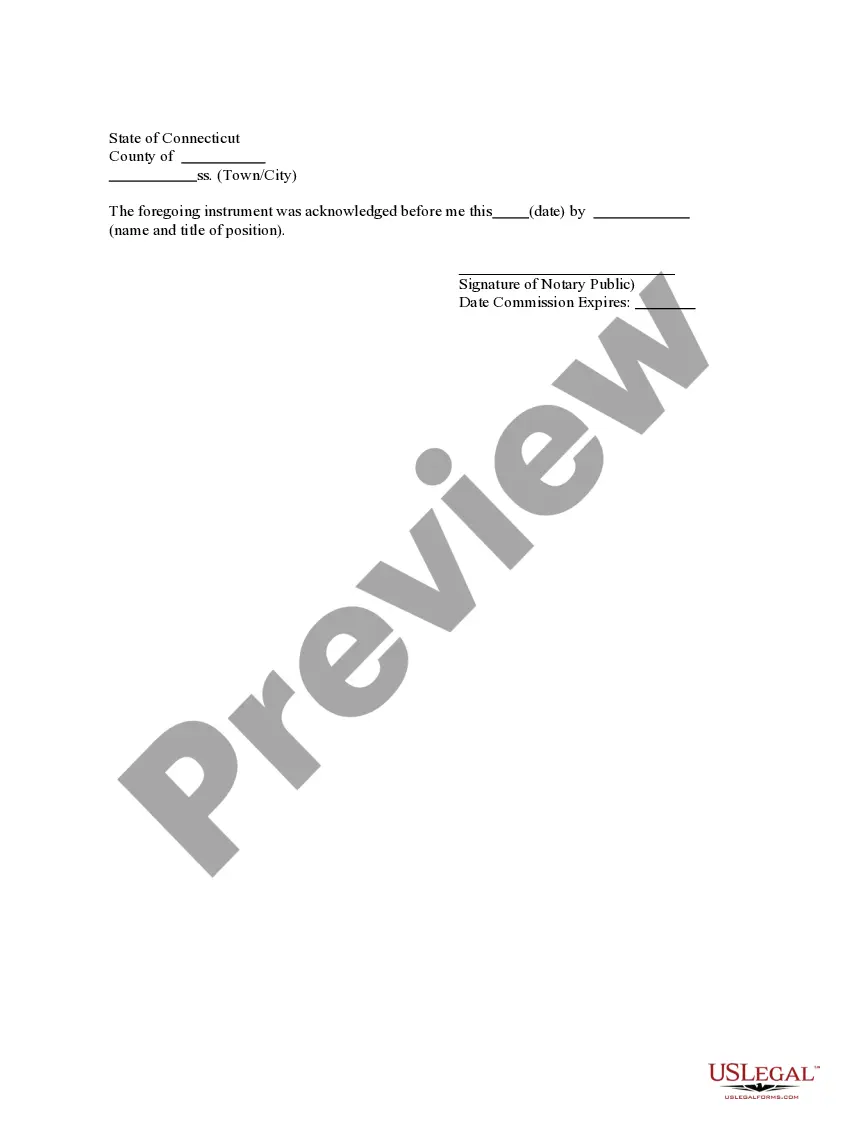
The Acknowledgment by Public Officer - Short is a legal form used to verify the identity of individuals before a public official, such as a notary public. This form serves a distinct purpose compared to other acknowledgment forms by ensuring that the person signing a document is who they claim to be, thus preventing fraud. It is essential in various legal and business contexts to confirm authenticity.
Main sections of this form
- Identification of the public officer witnessing the acknowledgment.
- Space for the name and position of the individual being acknowledged.
- Signature block for the notary public.
- Field for the date of acknowledgment.
- Commission expiration date field for the notary.

Situations where this form applies
This form is typically used when a document requires verification by a public officer. It is important in situations such as signing contracts, property deeds, or legal agreements where proof of identity is necessary. Utilizing this form helps ensure that the signatures on documents are valid and legally binding.
Who this form is for
This form is useful for:
- Individuals needing to confirm their identity to a public officer.
- Businesses requiring notarized documents for legal transactions.
- Professionals involved in legal processes needing additional verification.
How to prepare this document
- Identify the public officer who will witness the acknowledgment.
- Provide the date of the acknowledgment.
- Enter the full name and title of the individual being acknowledged.
- Ensure the notary public signs the document to validate it.
- Fill in the commission expiration date of the notary, if applicable.
Does this document require notarization?
This form must be notarized to be legally valid. US Legal Forms provides secure online notarization powered by Notarize, allowing you to complete the process through a verified video call.
Get your form ready online
Our built-in tools help you complete, sign, share, and store your documents in one place.
Make edits, fill in missing information, and update formatting in US Legal Forms—just like you would in MS Word.
Download a copy, print it, send it by email, or mail it via USPS—whatever works best for your next step.
Sign and collect signatures with our SignNow integration. Send to multiple recipients, set reminders, and more. Go Premium to unlock E-Sign.
If this form requires notarization, complete it online through a secure video call—no need to meet a notary in person or wait for an appointment.
We protect your documents and personal data by following strict security and privacy standards.

Make edits, fill in missing information, and update formatting in US Legal Forms—just like you would in MS Word.

Download a copy, print it, send it by email, or mail it via USPS—whatever works best for your next step.

Sign and collect signatures with our SignNow integration. Send to multiple recipients, set reminders, and more. Go Premium to unlock E-Sign.

If this form requires notarization, complete it online through a secure video call—no need to meet a notary in person or wait for an appointment.

We protect your documents and personal data by following strict security and privacy standards.
Avoid these common issues
- Failing to include the public officer's signature.
- Not providing the correct date of acknowledgment.
- Omitting the expiration date of the notary's commission.
- Using the form without proper identification verification.
Why use this form online
- Instantly downloadable and customizable to meet specific needs.
- Ensures legal compliance with state-specific requirements.
- Convenient access from any device, anytime.
Looking for another form?

Form popularity
FAQ
Performing an acknowledgment involves several steps. First, have the signer personally appear before you, the notary. Then, confirm the signer's identity and understanding of the document. Finally, complete the Connecticut Acknowledgment by Public Officer - Short by filling out the required details and ensuring all elements comply with state laws. Using USLegalForms can simplify this process by providing templates and guidance tailored for effective acknowledgments.
One essential requirement of an acknowledgment is that the signer must appear before the notary. Additionally, the Connecticut Acknowledgment by Public Officer - Short needs to include specific wording that indicates the signer understands the document's content. The notary also must provide their signature and seal to validate the acknowledgment. Meeting these criteria is critical for the acknowledgment to be deemed legal.
To write an acknowledgment effectively, start by clearly identifying the parties involved and the purpose of the document. In the case of the Connecticut Acknowledgment by Public Officer - Short, include the proper wording, signer's details, and your credentials. Ensure the document is signed in your presence to make it valid. Clarity and accuracy are essential to avoid misunderstandings or disputes later.
One of the most common mistakes made by a notary is failing to properly complete the Connecticut Acknowledgment by Public Officer - Short. This may involve omitting key details such as the date of the acknowledgment or not fully identifying the signer. Such errors can lead to legal complications and invalidate the document. Therefore, it's crucial to double-check all entries and ensure accuracy.
The abbreviation for Connecticut is CT. This concise representation is widely used in documents, forms, and discussions involving the state. When referencing Connecticut Acknowledgment by Public Officer - Short, using the abbreviation CT can help streamline communications and engage effectively with others in legal contexts.
Connecticut General Statutes 52-577a provides guidelines on the acknowledgment of instruments within the state. This statute is vital for ensuring the legal standing of documents filed in Connecticut. When navigating topics like Connecticut Acknowledgment by Public Officer - Short, understanding statutes, including 52-577a, can enhance your legal comprehension.
Acknowledgment forms are legal documents used to verify the identity of a signer and confirm their willingness to sign a document. These forms are essential in the field of law, particularly for real estate transactions and other formal agreements. In the context of Connecticut Acknowledgment by Public Officer - Short, using the right acknowledgment forms can make the process smoother and more legally secure.
To cite the General Statutes in Connecticut, you need to follow the format C.G.S. § Section Number. This method of citation makes it easy to reference specific laws accurately. When dealing with matters like Connecticut Acknowledgment by Public Officer - Short, proper citation ensures that you are on solid legal ground.
Yes, Connecticut does require a notary stamp for certain documents to be considered legally valid. The stamp serves as a certification that the notary has witnessed the signing of the document. For those looking into Connecticut Acknowledgment by Public Officer - Short, ensuring that the notary stamp is present is a crucial step in the process.
The Uniform Recognition of Acknowledgments Act establishes standards for recognizing acknowledgments across different states. This act aims to streamline the process of validating documents and ensures consistency in legal interpretations. Understanding this law is important for anyone dealing with Connecticut Acknowledgment by Public Officer - Short, as it affects the acknowledgment process.