Connecticut Acknowledgment for Individuals - Short
What this document covers
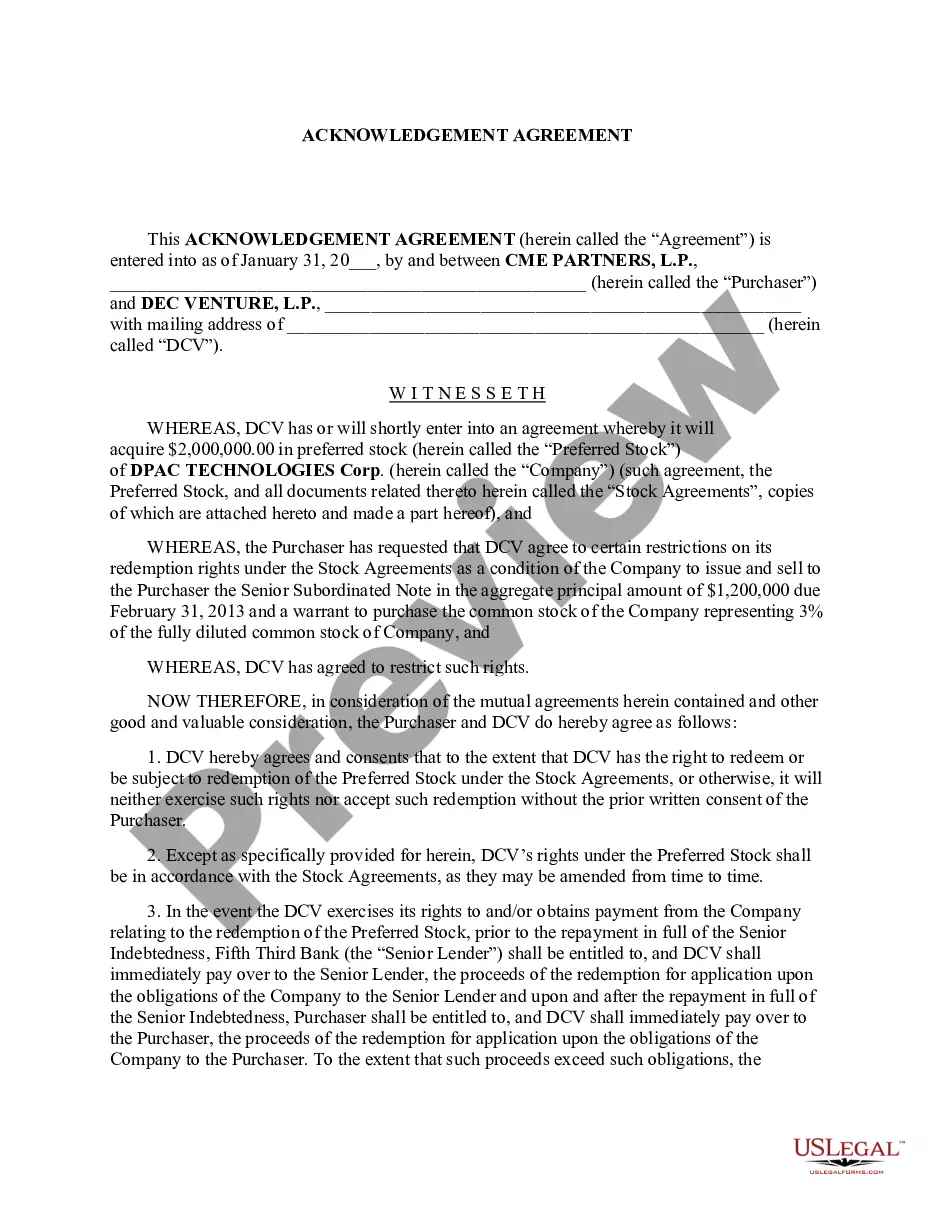
The Acknowledgment for Individuals - Short is a legal document used to verify that a person has signed a particular document in the presence of a notary public. This form serves as a way to affirm the authenticity of signatures, offering a layer of protection against fraud. Unlike other acknowledgment forms that may be more detailed, this short version is streamlined for efficiency while maintaining legal integrity.
Key parts of this document
- Date of the acknowledgment.
- Name of the individual being acknowledged.
- Name and signature of the notary public.
- Commission expiration date for the notary public.
When to use this document
You should use the Acknowledgment for Individuals - Short when you need to confirm that a specific individual has signed a document in front of a notary public. This may be required for legal documents, contracts, affidavits, and other important papers where a signature verification is necessary.
Who should use this form
- Individuals needing to affirm their signatures on legal documents.
- Notaries public facilitating the acknowledgment process.
- Attorneys and legal professionals requiring an acknowledgment for clients.
Completing this form step by step
- Identify the date when the document is signed.
- Write the full name of the person being acknowledged.
- Have the individual sign the document in the presence of a notary public.
- The notary public should sign and seal the document, providing their name and commission expiration date.
Does this form need to be notarized?
Yes, this form must be notarized to be legally valid. US Legal Forms provides integrated online notarization services that are available 24/7, allowing you to complete the acknowledgment securely through a video call without the need for travel.
Get your form ready online
Our built-in tools help you complete, sign, share, and store your documents in one place.
Make edits, fill in missing information, and update formatting in US Legal Forms—just like you would in MS Word.
Download a copy, print it, send it by email, or mail it via USPS—whatever works best for your next step.
Sign and collect signatures with our SignNow integration. Send to multiple recipients, set reminders, and more. Go Premium to unlock E-Sign.
If this form requires notarization, complete it online through a secure video call—no need to meet a notary in person or wait for an appointment.
We protect your documents and personal data by following strict security and privacy standards.

Make edits, fill in missing information, and update formatting in US Legal Forms—just like you would in MS Word.

Download a copy, print it, send it by email, or mail it via USPS—whatever works best for your next step.

Sign and collect signatures with our SignNow integration. Send to multiple recipients, set reminders, and more. Go Premium to unlock E-Sign.

If this form requires notarization, complete it online through a secure video call—no need to meet a notary in person or wait for an appointment.

We protect your documents and personal data by following strict security and privacy standards.
Mistakes to watch out for
- Failing to sign the document in front of the notary public.
- Not including the notary's seal or signature.
- Inaccurately stating the commission expiration date for the notary public.
Why use this form online
- Convenience of downloadable forms for immediate use.
- Editability to customize the document before printing.
- Reliability of forms drafted by licensed attorneys.
Key takeaways
- The Acknowledgment for Individuals - Short is essential for validating signatures on legal documents.
- The form must be completed in the presence of a Notary Public.
- This document adheres to the requirements set forth in Connecticut law.
Looking for another form?

Form popularity
FAQ
One common mistake notaries make is failing to verify the signer’s identity properly before proceeding with the acknowledgment. This can lead to issues with the document's validity. To avoid this, always ensure proper identification is provided, following the procedures outlined for Connecticut Acknowledgment for Individuals - Short. Additionally, using platforms like US Legal Forms can help streamline this process.
Performing an acknowledgment involves several steps. Begin by verifying the signer's identity through a government-issued ID. Next, guide the signer through the acknowledgment form while ensuring they understand its content. Complete the details required and sign and stamp the form, all while adhering to the standards for Connecticut Acknowledgment for Individuals - Short.
To write an effective acknowledgment, start by clearly stating the date and location of the acknowledgment. Include the name of the individual being acknowledged and the purpose of the document. Use concise language and follow the specific requirements for Connecticut Acknowledgment for Individuals - Short to enhance clarity and ensure legality.
A proper acknowledgment requires the notary to first verify the identity of the signer. After confirming their identity, the notary must complete the acknowledgement form, ensuring it is filled out correctly. It's essential to include all necessary details and to sign and seal the document appropriately, in line with Connecticut Acknowledgment for Individuals - Short guidelines.
Connecticut does permit remote online notarization, offering convenience for individuals in need of documents to be acknowledged quickly. As you navigate the process, remember that it's crucial to confirm that the notary complies with all necessary state regulations. Utilizing services like US Legal Forms helps you stay informed and ensures your Connecticut acknowledgment for individuals is processed correctly and efficiently.
Yes, Connecticut allows remote notarization under specific regulations. This means you can obtain Connecticut acknowledgments for individuals through online platforms with a notary present virtually. It is vital to follow the required legal guidelines to ensure the validity of your documents. Consider using US Legal Forms to streamline this process with ease and confidence.
Several states do not currently permit remote online notarization. These states include Alabama, New York, and South Carolina, among others. If you are looking for a Connecticut acknowledgment for individuals and require remote notarization, it is essential to check if your home state supports this service. For clarity and legal accuracy, US Legal Forms can provide you with up-to-date information about state-specific notary laws.
Yes, a Connecticut notary can notarize documents from another state. However, it is important to ensure that the document complies with Connecticut laws. This means that while you can connect with a notary in CT for your acknowledgment needs, you should verify if the other state has any specific regulations for out-of-state notarizations. With US Legal Forms, you can easily find guidance on how to navigate this process.
Yes, Connecticut allows online notary services, enabling individuals to complete acknowledgments remotely. This modern solution provides convenience, especially for those who may find in-person notarization difficult. By using a platform like uslegalforms, you can easily obtain a Connecticut Acknowledgment for Individuals - Short from the comfort of your home while ensuring that all legal requirements are met.
The purpose of an acknowledgment is to ensure that the person signing a document is doing so knowingly and voluntarily. It acts as a safeguard against fraud, providing legal proof that the signature is authentic. By obtaining a Connecticut Acknowledgment for Individuals - Short, you establish a clear record of consent, protecting your rights and intentions in any legal transaction.