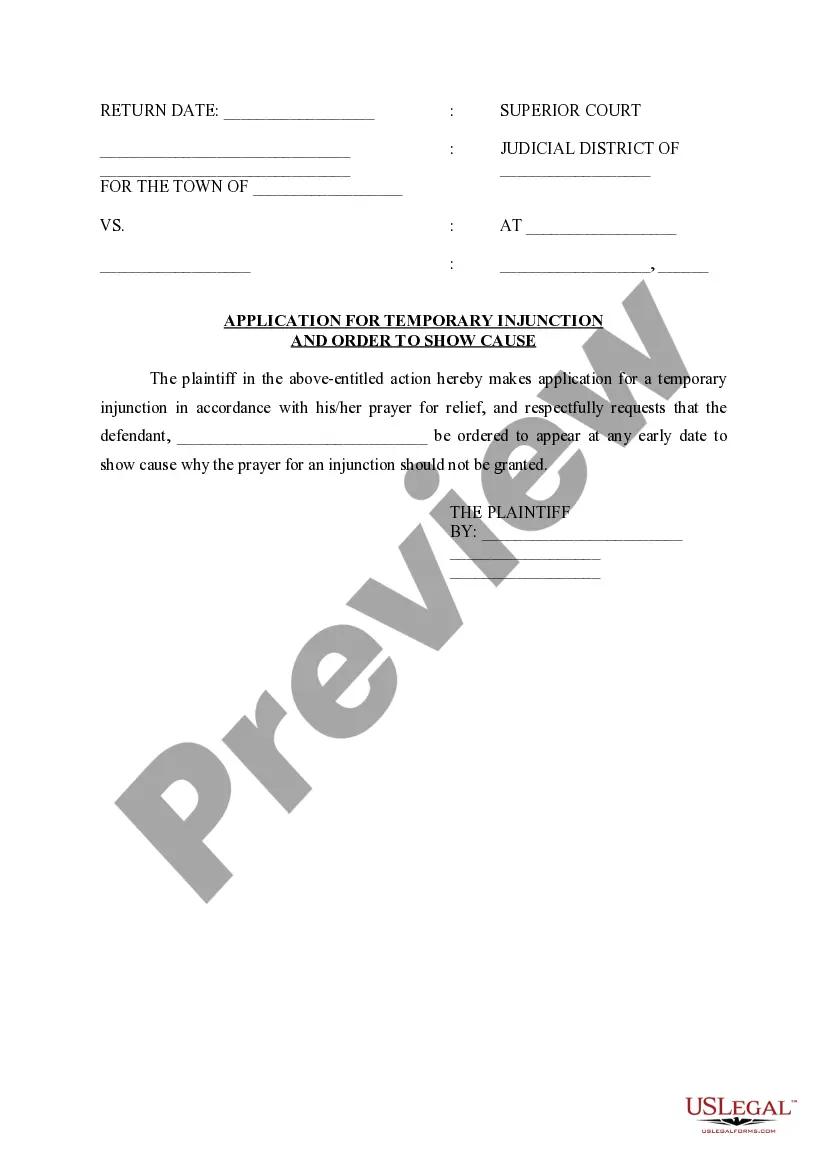
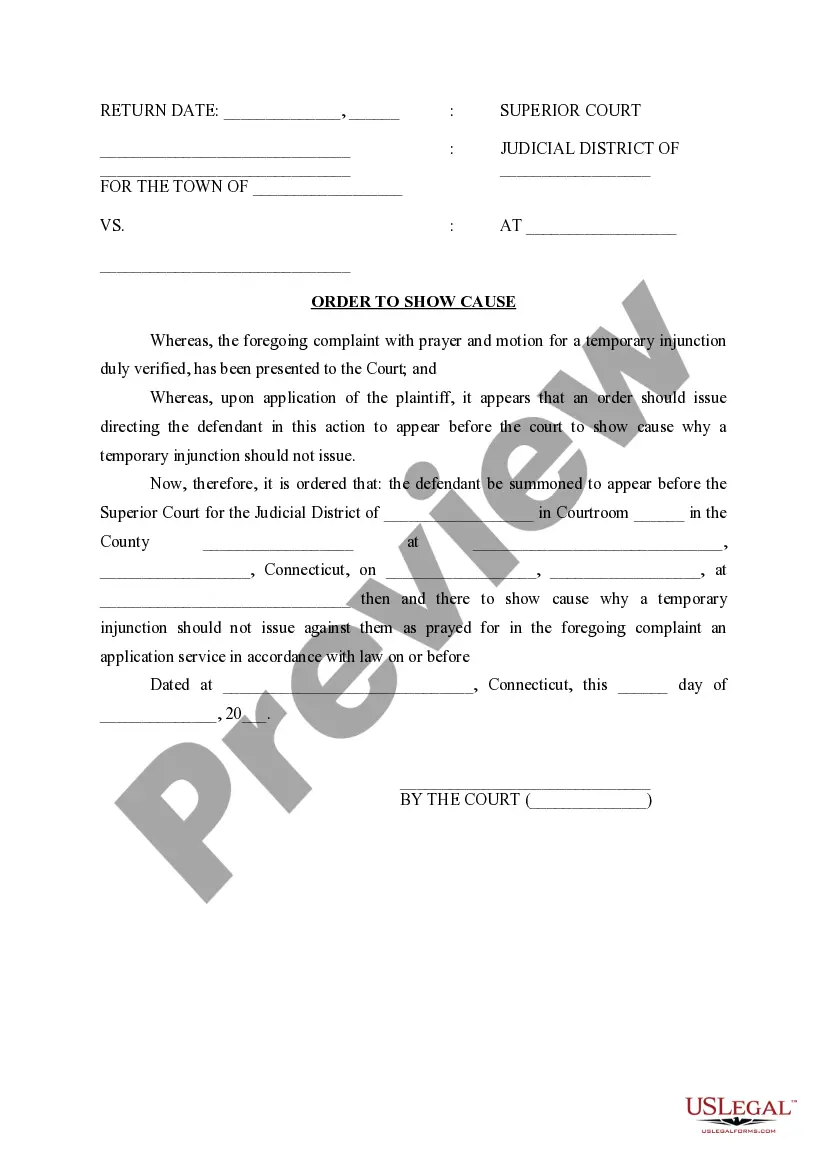
Connecticut Application for Temporary Injunction and Order to Show Cause
Overview of this form
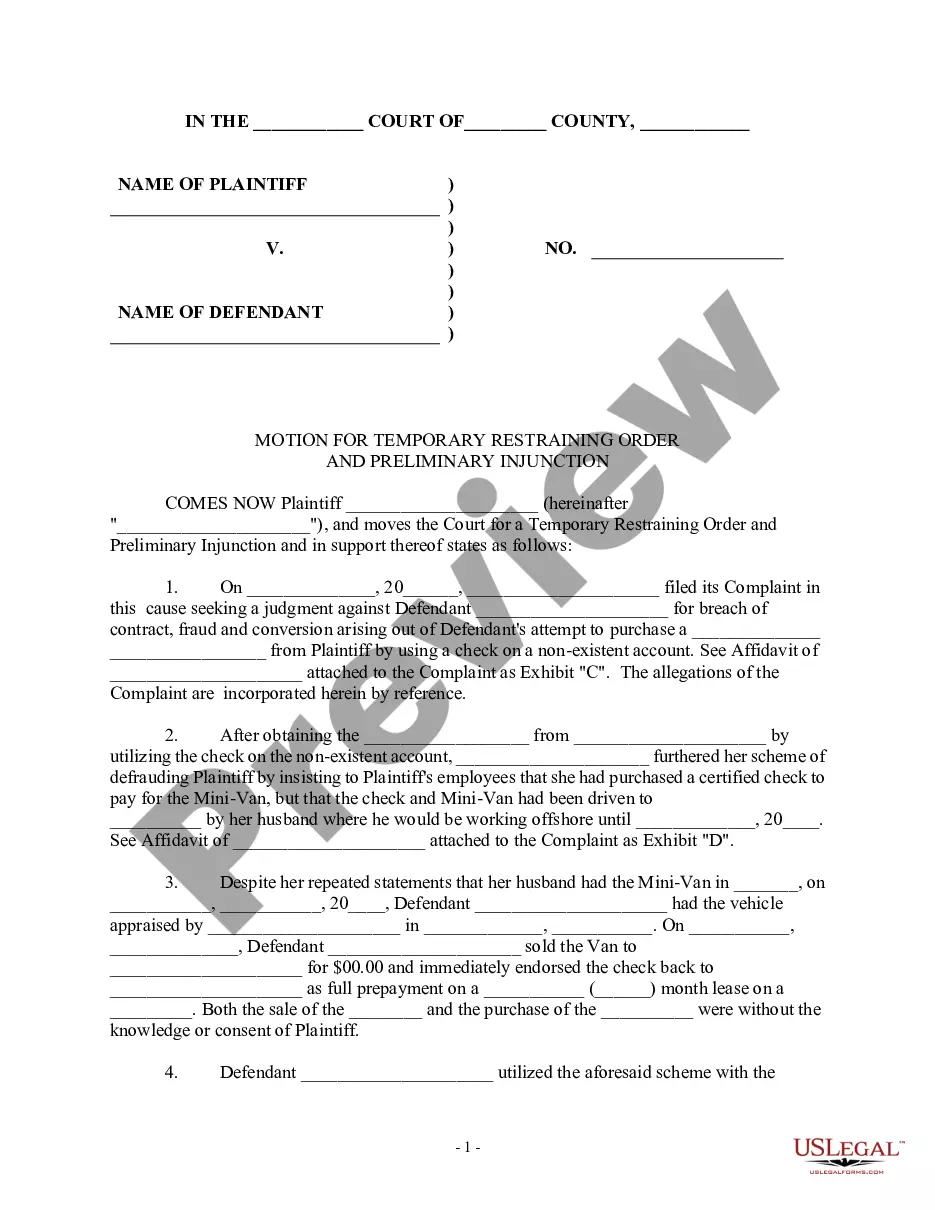
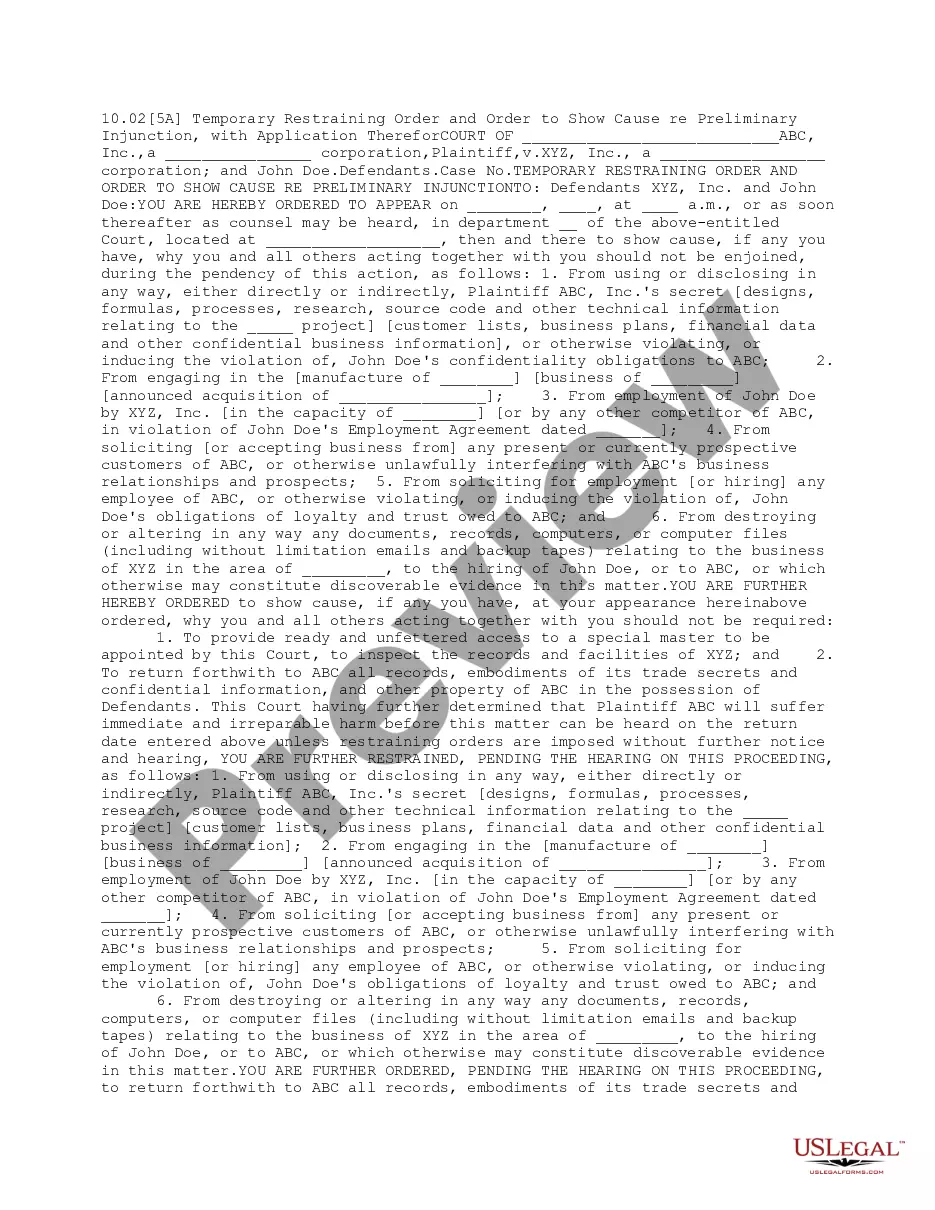
The Application for Temporary Injunction and Order to Show Cause is a legal document used to request a court order that prohibits a party from taking certain actions until a hearing can be held. This form is crucial in situations where immediate intervention is necessary to prevent harm or preserve the status quo while a legal dispute is resolved, differentiating it from other forms that may not involve urgent relief measures.
Key parts of this document
- RETURN DATE: Specifies the date by which the defendant must respond.
- COURT DETAILS: Indicates the superior court and judicial district handling the case.
- PLAINTIFF INFORMATION: Includes the name and contact of the person filing the application.
- DEFENDANT INFORMATION: Identifies the party against whom the injunction is sought.
- PRAYER FOR RELIEF: Outlines the specific relief or action the plaintiff is requesting.

When to use this document
This form should be used when a party feels that immediate legal protection is necessary. Scenarios include situations involving domestic violence, harassment, or the need to prevent the destruction of evidence. If a plaintiff requires a court to prohibit a certain action by the defendant during the resolution of a dispute, they may file this application to seek a temporary injunction.
Intended users of this form
- Individuals or entities pursuing a legal claim who need urgent protection from potential harm.
- Parties within a lawsuit who believe an action by another party could cause damage before the case is heard in court.
- Those seeking restraining orders or similar protective measures in various legal contexts.
Steps to complete this form
- Identify the parties involved: Clearly state the names of the plaintiff and defendant.
- Specify the return date: Indicate when the defendant is required to appear in court.
- Complete the court information: Fill in the name of the superior court and judicial district.
- Detail the nature of the injunction: Describe the specific actions you are requesting to be stopped.
- Sign the application: Ensure the plaintiff signs and dates the document to validate the request.
Notarization requirements for this form
This form does not typically require notarization unless specified by local law. However, it is always wise to check with your local court for any specific requirements in your jurisdiction.
Get your form ready online
Our built-in tools help you complete, sign, share, and store your documents in one place.
Make edits, fill in missing information, and update formatting in US Legal Forms—just like you would in MS Word.
Download a copy, print it, send it by email, or mail it via USPS—whatever works best for your next step.
Sign and collect signatures with our SignNow integration. Send to multiple recipients, set reminders, and more. Go Premium to unlock E-Sign.
If this form requires notarization, complete it online through a secure video call—no need to meet a notary in person or wait for an appointment.
We protect your documents and personal data by following strict security and privacy standards.

Make edits, fill in missing information, and update formatting in US Legal Forms—just like you would in MS Word.

Download a copy, print it, send it by email, or mail it via USPS—whatever works best for your next step.

Sign and collect signatures with our SignNow integration. Send to multiple recipients, set reminders, and more. Go Premium to unlock E-Sign.

If this form requires notarization, complete it online through a secure video call—no need to meet a notary in person or wait for an appointment.

We protect your documents and personal data by following strict security and privacy standards.
Common mistakes
- Failing to fill out all required fields accurately.
- Not providing sufficient details about the actions to be prohibited.
- Missing the required return date or not indicating the correct court information.
- Neglecting to sign the application before submission.
Advantages of online completion
- Convenience: Access and complete the form anytime, from anywhere.
- Editability: Make changes easily until you are ready to finalize the document.
- Reliability: Ensure compliance with the latest legal standards and formats.
What to keep in mind
- The Application for Temporary Injunction is essential for obtaining urgent legal protection.
- Proper completion and submission of this form can significantly impact the outcome of a legal dispute.
- Understanding when and how to use this form can help parties navigate their legal situations more effectively.
Looking for another form?

Form popularity
FAQ
The Connecticut Application for Temporary Injunction and Order to Show Cause is a Connecticut civil procedure form used to obtain temporary, emergency relief in a pending civil action and to request an order requiring the opposing party to show cause why the injunction should not continue. It is used when urgent protection is needed before a full hearing.
To support a request for an injunction, include evidence showing why immediate relief is necessary and why a full hearing cannot wait. Attach sworn statements or declarations and include exhibits that back your claims, such as contracts, records, or communications, and reference the specific relief you seek on this form.
An example of a show cause order is a court directive attached to the injunction that tells the respondent to appear at a specified date and time to explain why the temporary relief should not continue pending a hearing. It typically lists the court, the hearing date, and what the respondent must address.
The show cause order works by directing the respondent to appear and show cause why the injunction should stay in effect until a hearing. A scheduled hearing will determine whether the temporary relief continues, is modified, or is dissolved, depending on the evidence presented.
If the judge denies the Order to Show Cause, the temporary relief may be denied or dissolved. Consider consulting an attorney about next steps, such as pursuing a merits hearing on the injunction, appealing the decision, or re-filing with additional supporting evidence.
This form combines both requests into one Connecticut-specific document, streamlining filing and ensuring the OSC is aligned with the injunction. It helps coordinate timing, notice, and relief in a single filing rather than using separate documents.