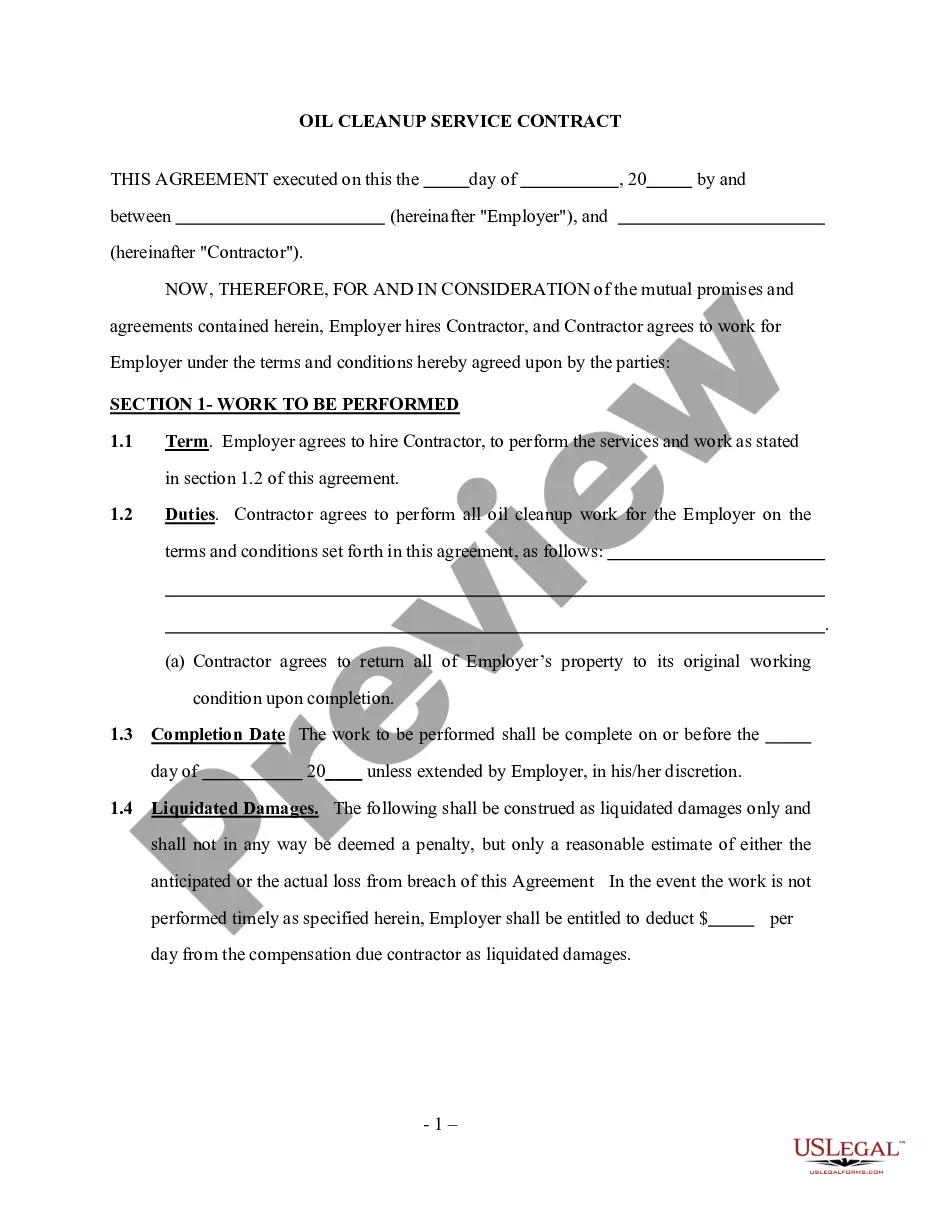
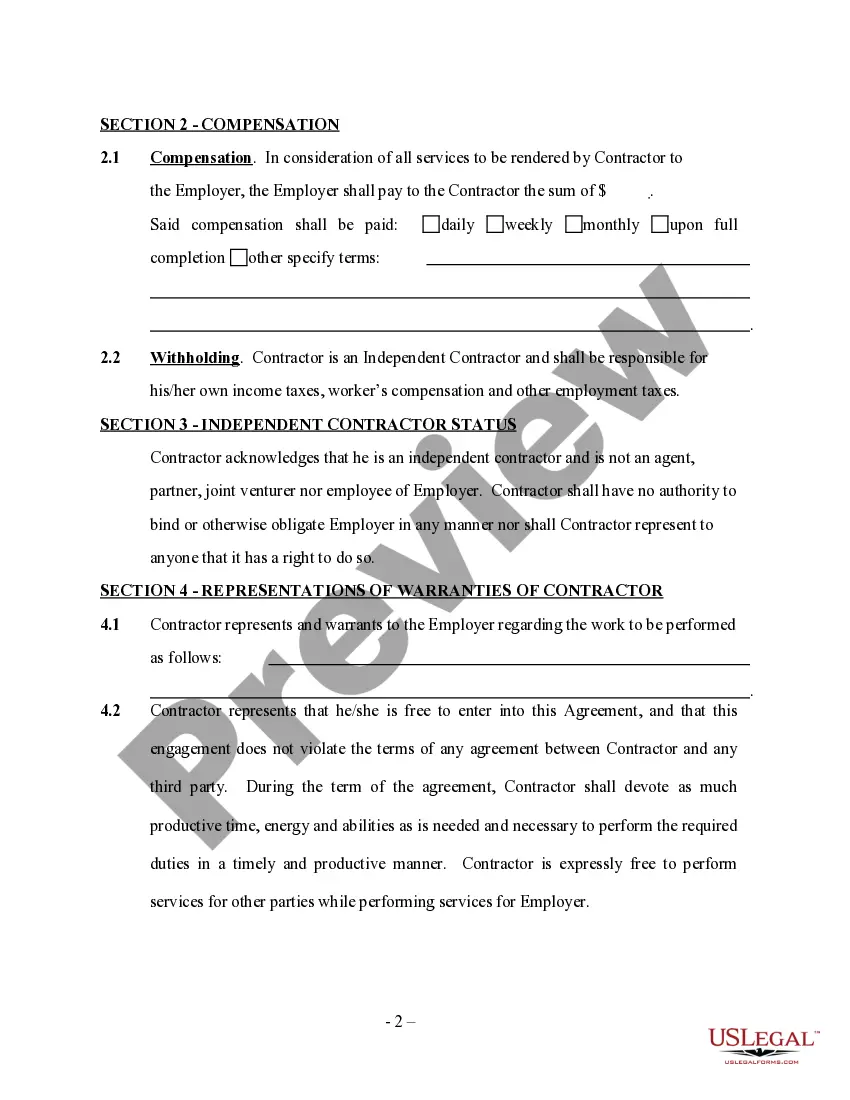
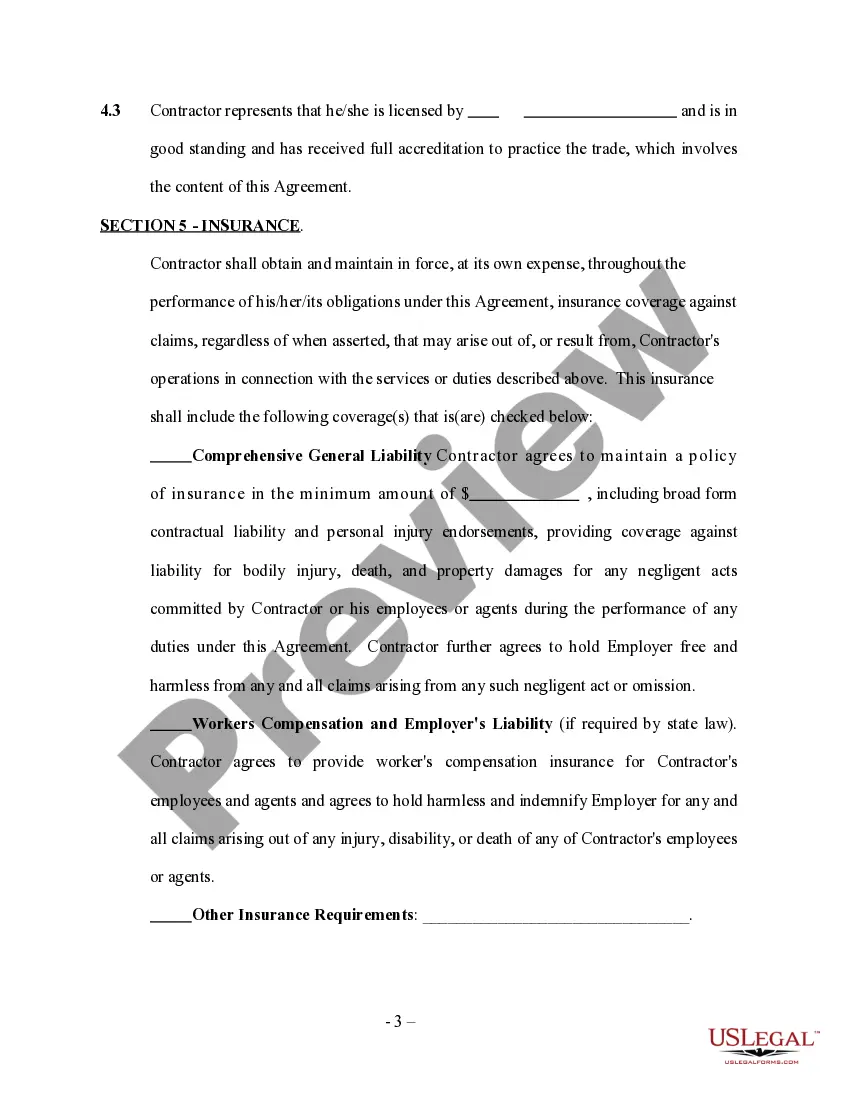
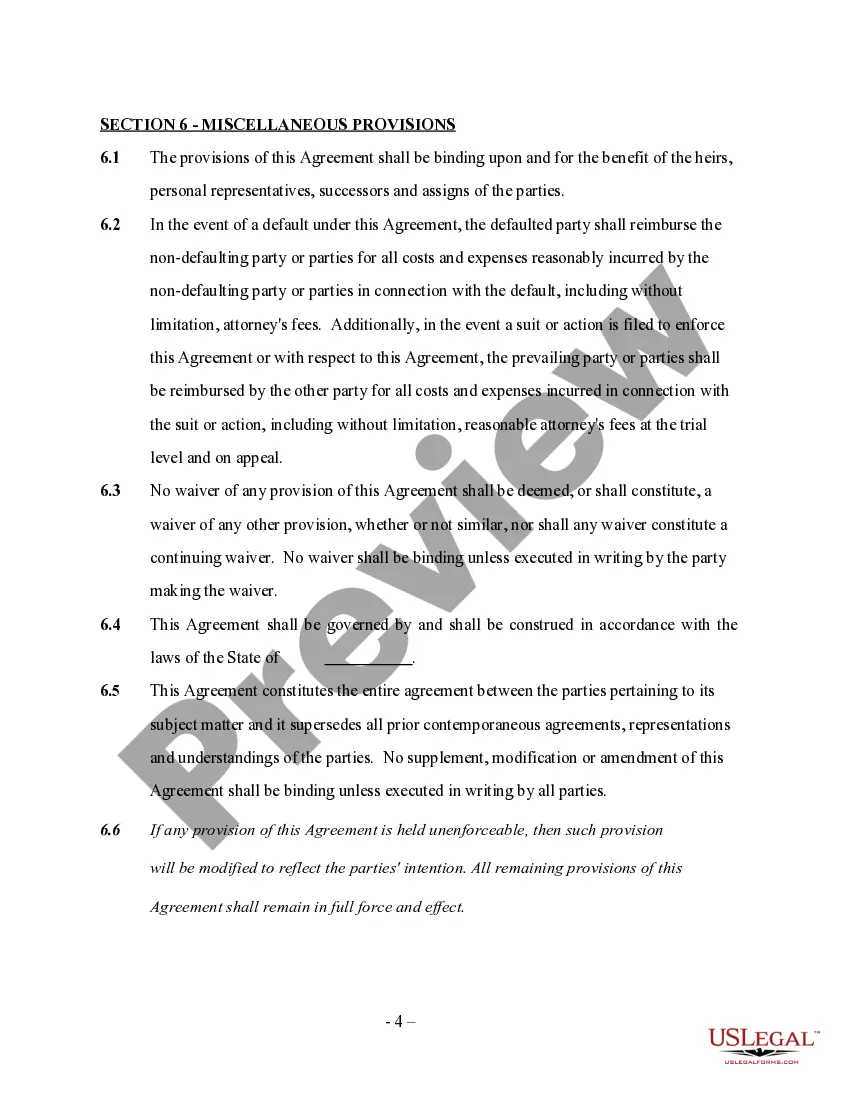
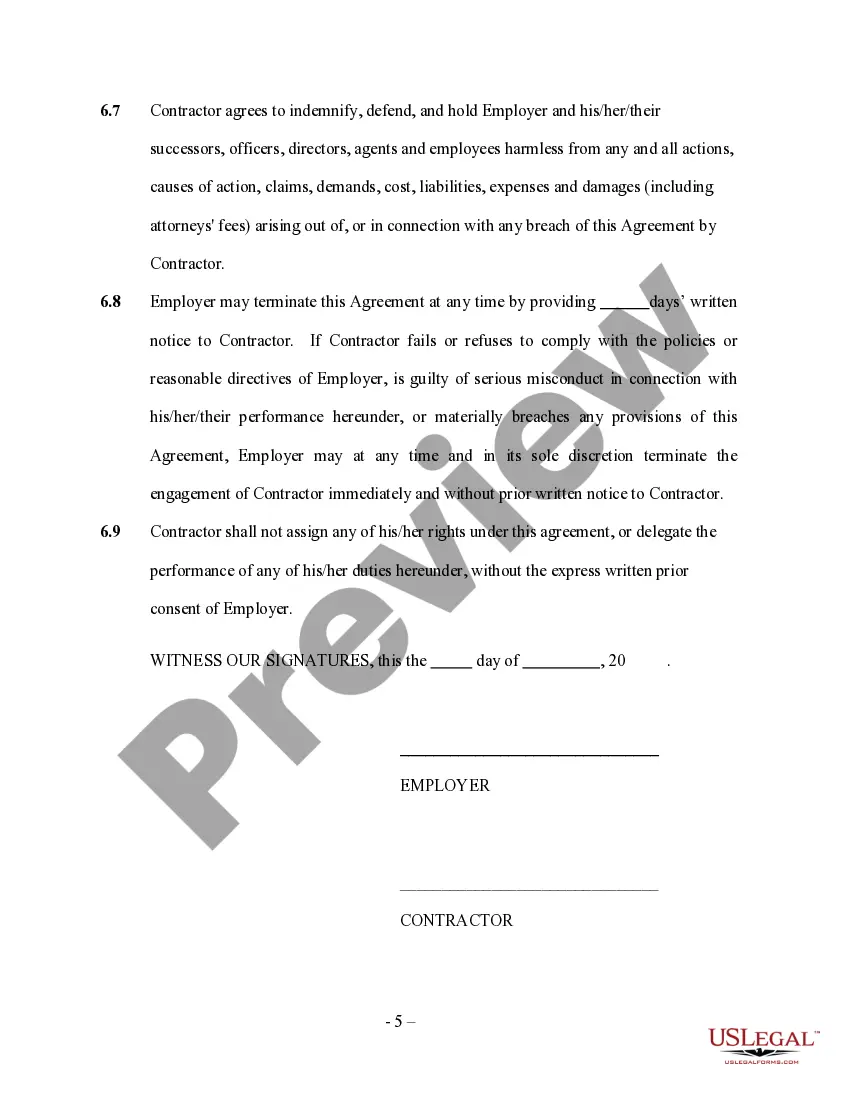
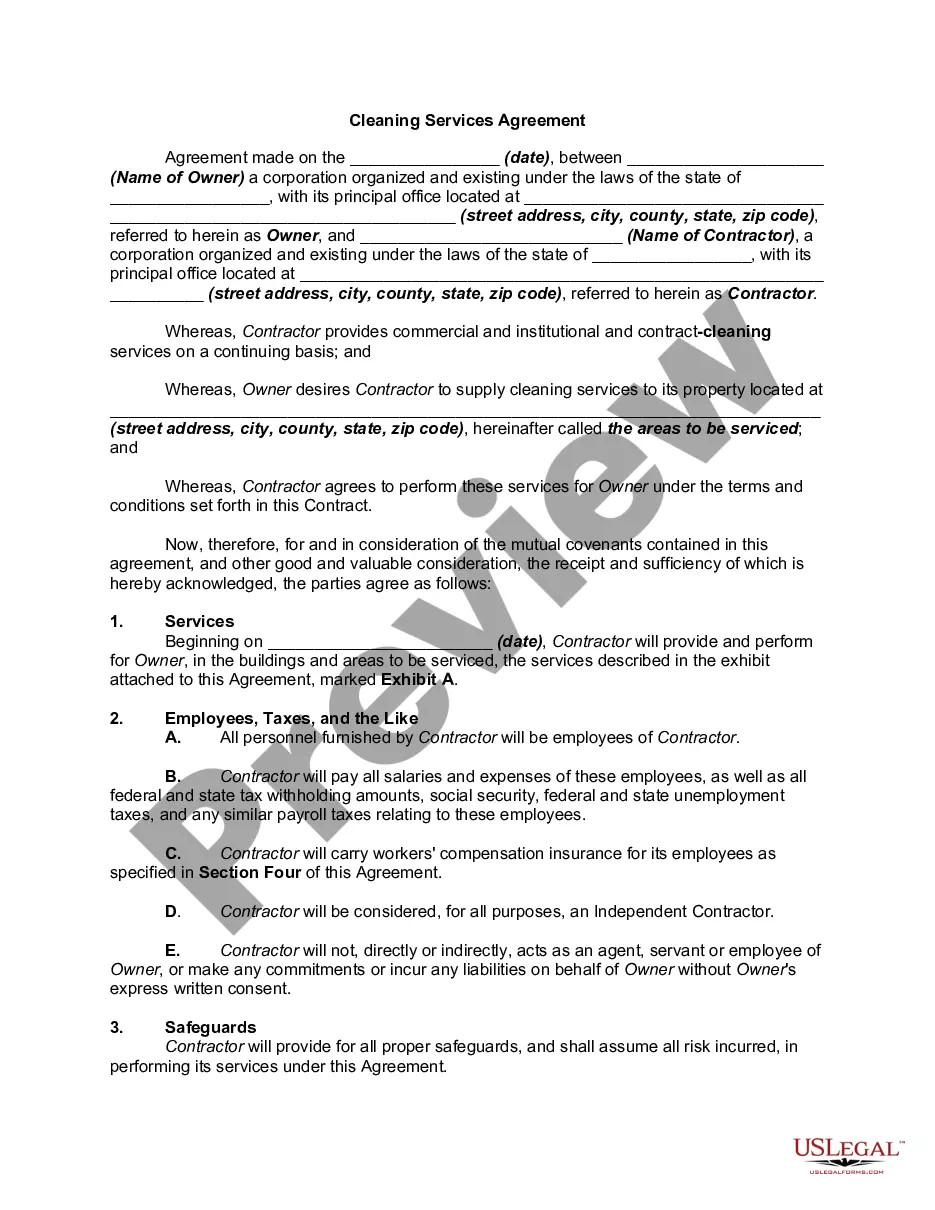
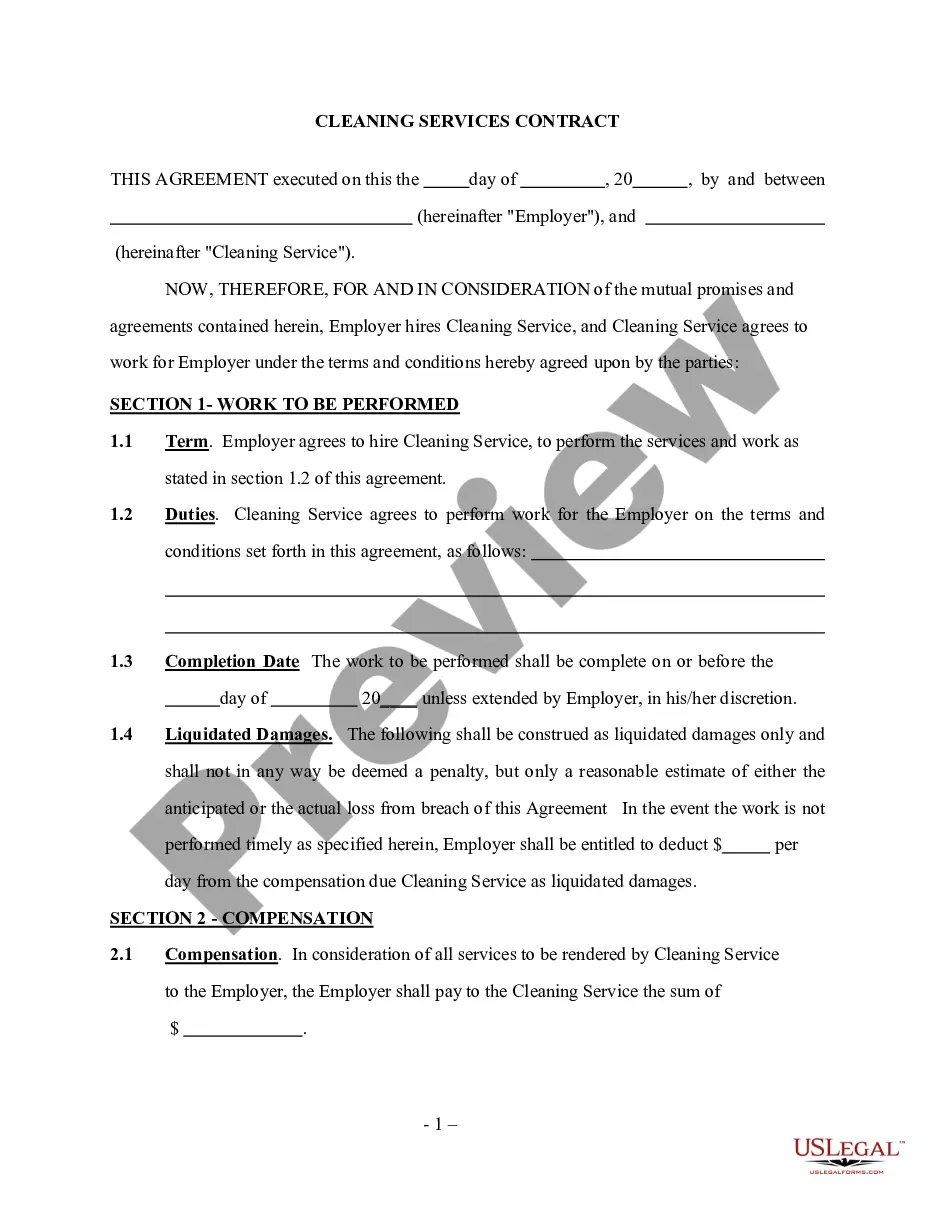
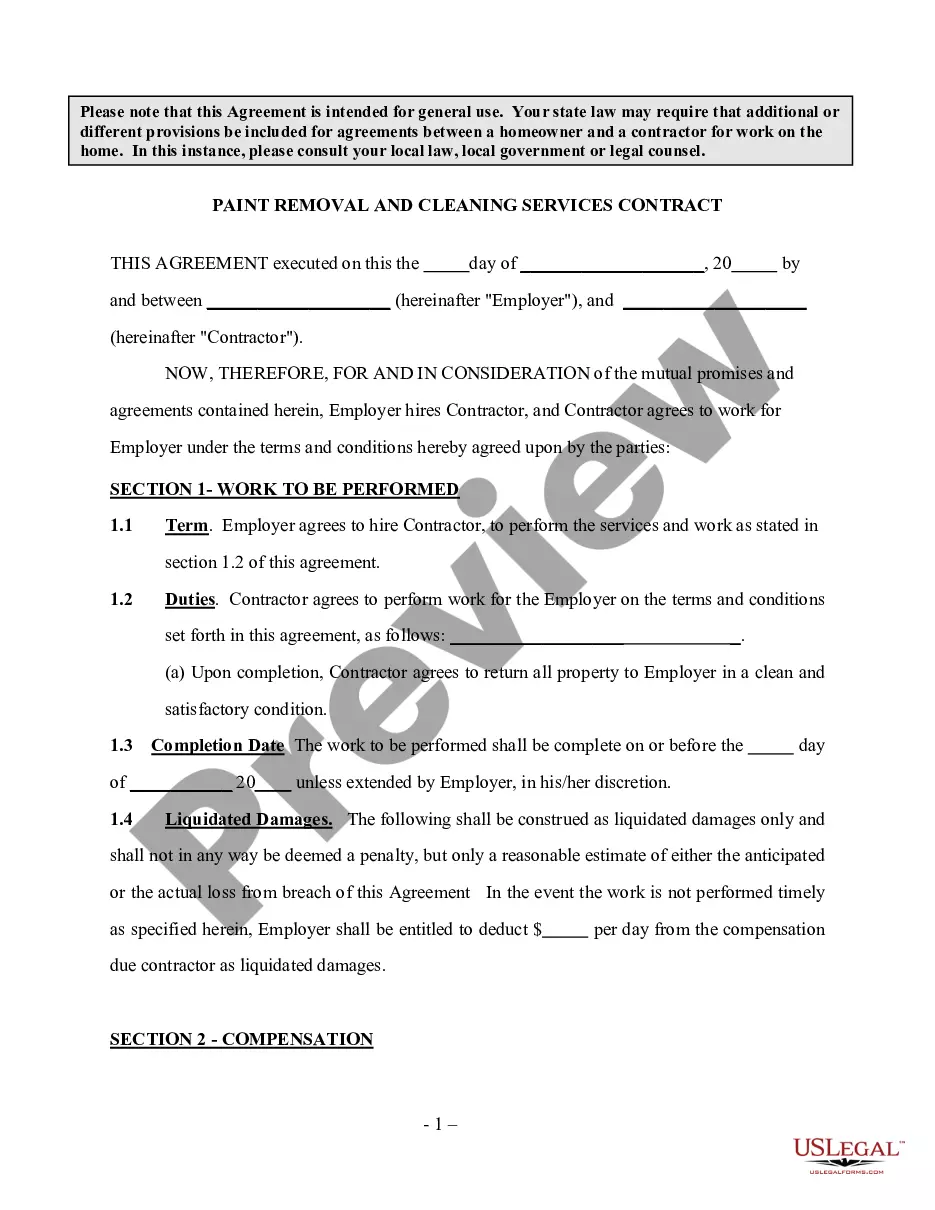
Employer contracts with an independent contractor to provide oil cleanup services as specified and agreed upon in the contract.
Colorado Oil Cleanup Services Contract - Self-Employed
State:
Multi-State
Control #:
US-INDC-102
Format:
Word;
Rich Text
Instant download
Description
Free preview




How to fill out Oil Cleanup Services Contract - Self-Employed?
US Legal Forms - one of the largest collections of legal templates in the United States - offers a variety of legal document formats that you can download or print.
By using the website, you will find thousands of forms for business and personal use, organized by categories, states, or keywords. You can find the latest versions of forms such as the Colorado Oil Cleanup Services Contract - Self-Employed in just a few minutes.
If you already have an account, Log In to download the Colorado Oil Cleanup Services Contract - Self-Employed from the US Legal Forms library. The Download button will appear on every form you view. You will have access to all previously downloaded forms in the My documents section of your account.
Choose the format and download the form onto your device.
Edit. Complete, modify, print, and sign the downloaded Colorado Oil Cleanup Services Contract - Self-Employed.
- Make sure you have selected the correct form for the area/county. Click the Preview button to review the content of the form.
- Check the form details to ensure that you have chosen the right template.
- If the form does not meet your needs, use the Search box at the top of the screen to find the one that does.
- If you are satisfied with the form, confirm your selection by clicking the Download now button.
- Then, select the pricing plan you prefer and provide your details to create an account.
- Process the payment. Use your Visa, Mastercard, or PayPal account to complete the purchase.
Form popularity
FAQ
In Colorado, independent contractors must register their business, provide a valid taxpayer identification number, and comply with state and federal regulations. You are responsible for your tax obligations, including self-employment tax. When working within Colorado Oil Cleanup Services Contract - Self-Employed, ensure you also meet industry-specific licensing and insurance requirements. Being informed about these obligations helps you operate smoothly and professionally.
To safeguard yourself as an independent contractor, you should clearly outline your services in a contract, maintain thorough records of work completed, and keep communication transparent with your clients. Additionally, consider obtaining liability insurance to cover potential claims. Being diligent about these practices is especially vital when engaging in Colorado Oil Cleanup Services Contract - Self-Employed, where regulatory compliance and safety may be paramount. By investing in protections, you enhance your credibility and security.
Yes, having a contract as an independent contractor is essential for protecting your rights and clarifying your responsibilities. A written agreement details the services you will provide, your payment terms, and any liabilities. This is especially important in fields related to Colorado Oil Cleanup Services Contract - Self-Employed, where specific expertise and compliance may be necessary. Using a proper contract minimizes misunderstandings and establishes professionalism.
In Colorado, a single member LLC is not legally required to have an operating agreement, but creating one is highly recommended. This document outlines the management structure and operational guidelines of your business. Additionally, having an operating agreement can help in establishing your independent contractor status when working with Colorado Oil Cleanup Services Contract - Self-Employed. It serves as important documentation in case of disputes or legal inquiries.
Creating an independent contractor agreement for your Colorado Oil Cleanup Services Contract - Self-Employed can be straightforward. Start by outlining key details such as project scope, payment terms, and duration of the contract. Make sure to include relevant clauses for confidentiality and dispute resolution. Services like uslegalforms can help streamline this process by providing templates and guidance to ensure your agreement is comprehensive and legally compliant.
In Colorado, a notarized signature is not generally required for a Colorado Oil Cleanup Services Contract - Self-Employed. However, having a notarized agreement can add an extra layer of authenticity and trust between parties. It is also essential to include clear terms and conditions to protect your rights. You can utilize platforms like uslegalforms to create a professionally drafted agreement tailored to your needs.
When engaging in the Colorado Oil Cleanup Services Contract - Self-Employed, independent contractors must fulfill several legal requirements. They need to properly register their business, obtain necessary licenses, and maintain liability insurance. Additionally, contractors must comply with tax regulations, including reporting income and paying self-employment taxes to the IRS and the state of Colorado. Ensuring these requirements are met protects both you and your clients.