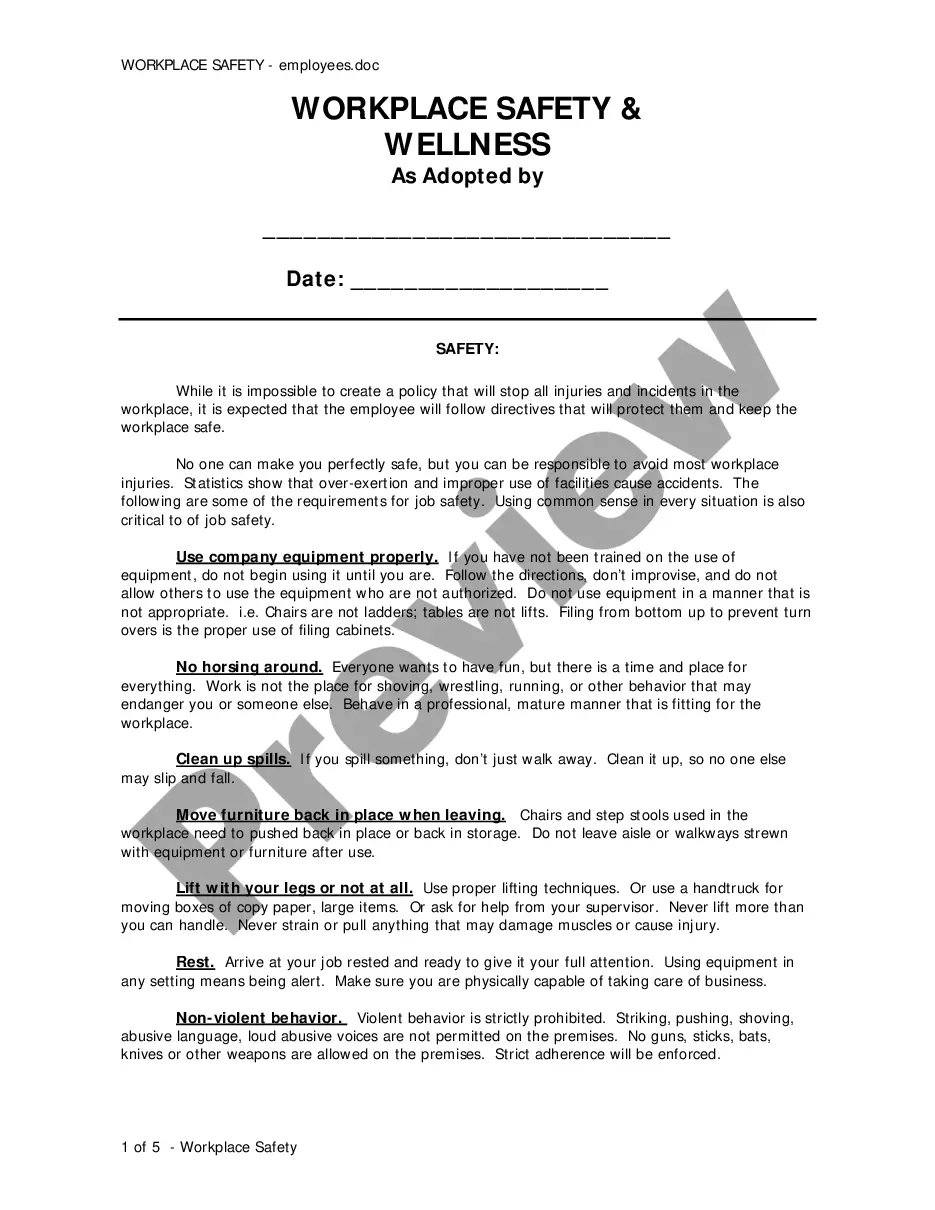
Safety policies for supervisors managing other employees.
Colorado Safety Policy for Supervisors Training
Instant download
Description
Free preview








How to fill out Safety Policy For Supervisors Training?
You can spend hours online searching for the official document template that meets the state and federal requirements you need.
US Legal Forms offers thousands of legal templates that can be reviewed by experts.
You can download or print the Colorado Safety Policy for Supervisors Training from the service.
If available, use the Preview button to view the document template as well.
- If you already possess a US Legal Forms account, you can Log In and click the Download button.
- After that, you can complete, modify, print, or sign the Colorado Safety Policy for Supervisors Training.
- Each legal document template you obtain is yours indefinitely.
- To get another copy of any purchased form, go to the My documents tab and click the corresponding button.
- If you are accessing the US Legal Forms site for the first time, follow the simple steps below.
- First, ensure you have selected the correct document template for the area/city you choose.
- Check the form description to confirm you have selected the correct form.
Form popularity
FAQ
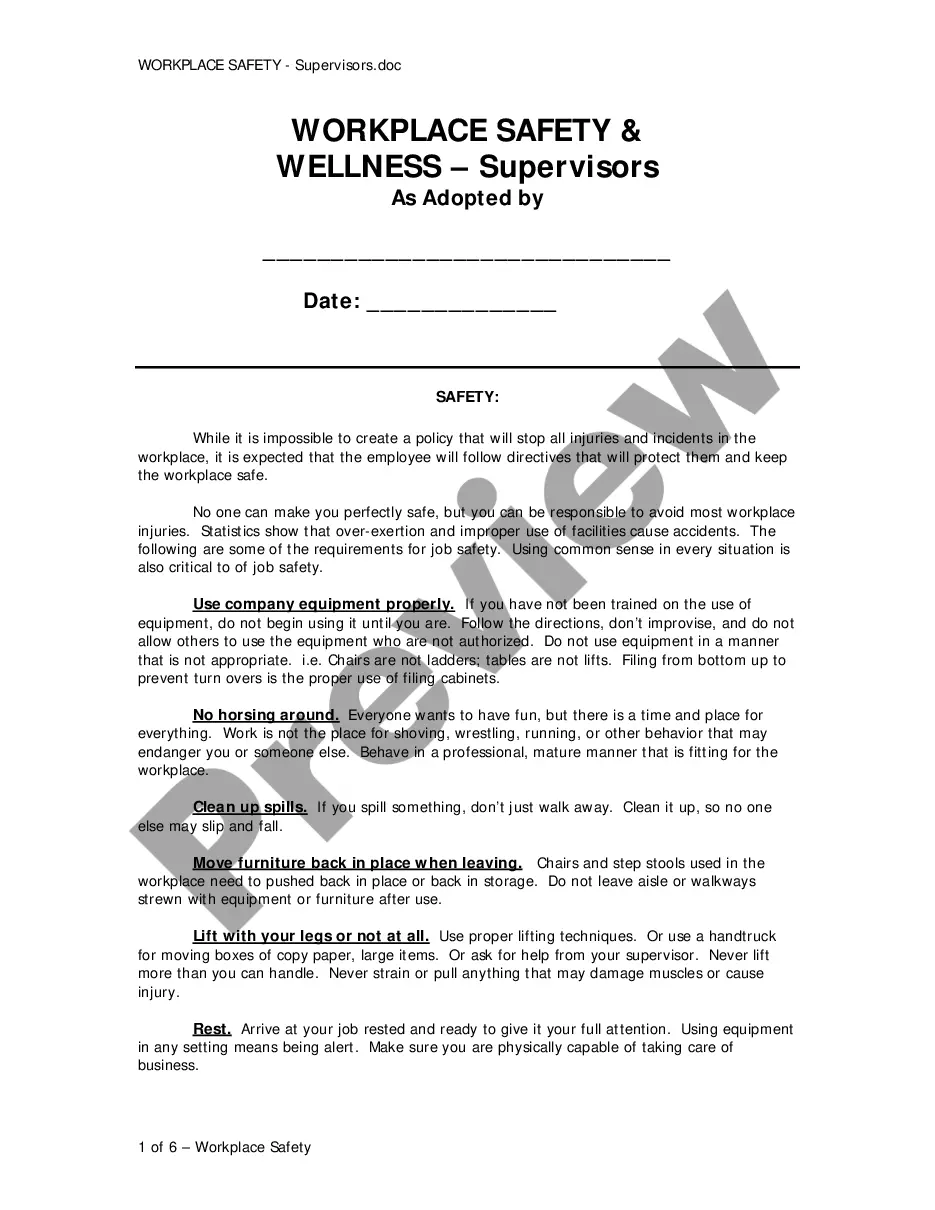
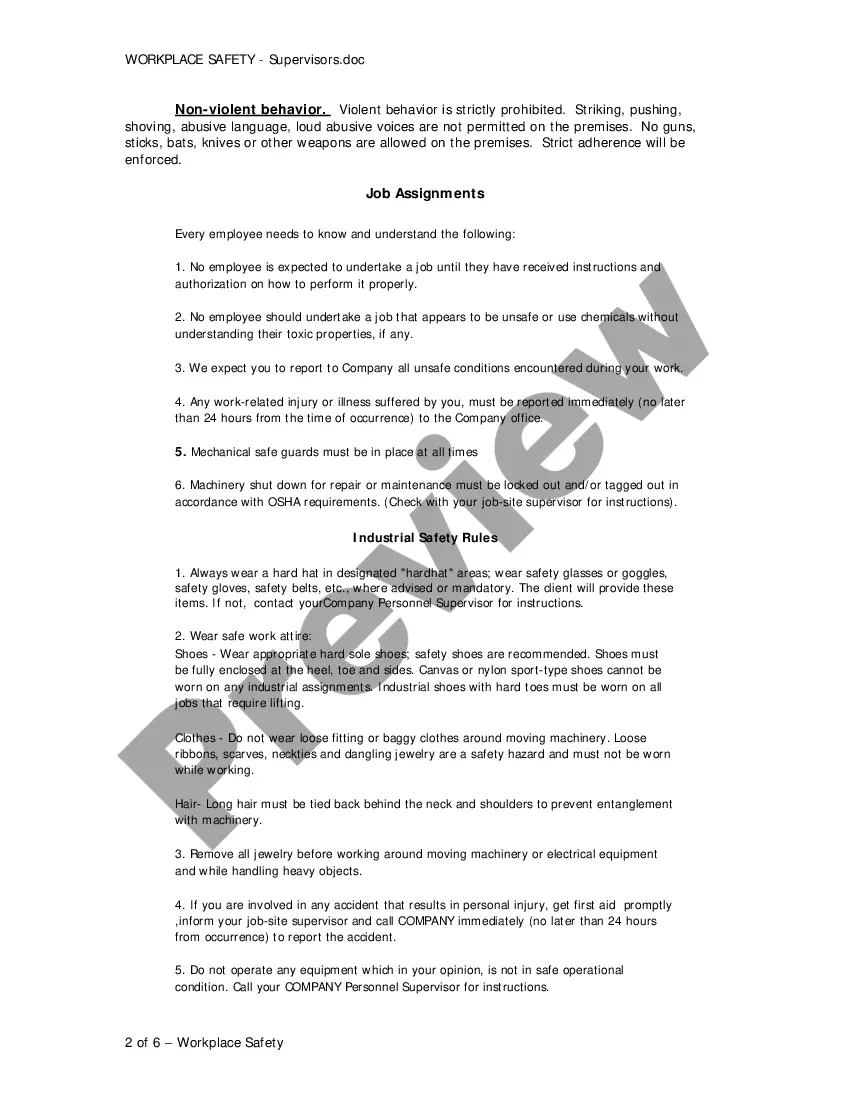
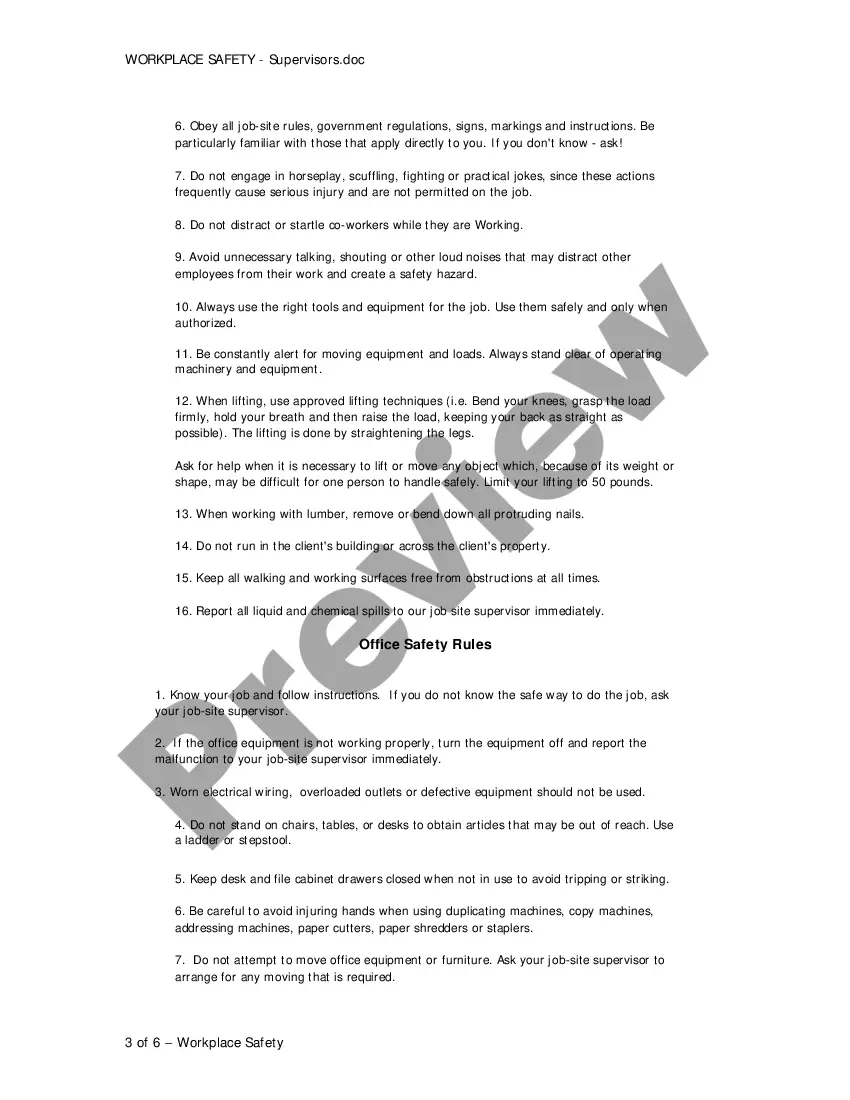
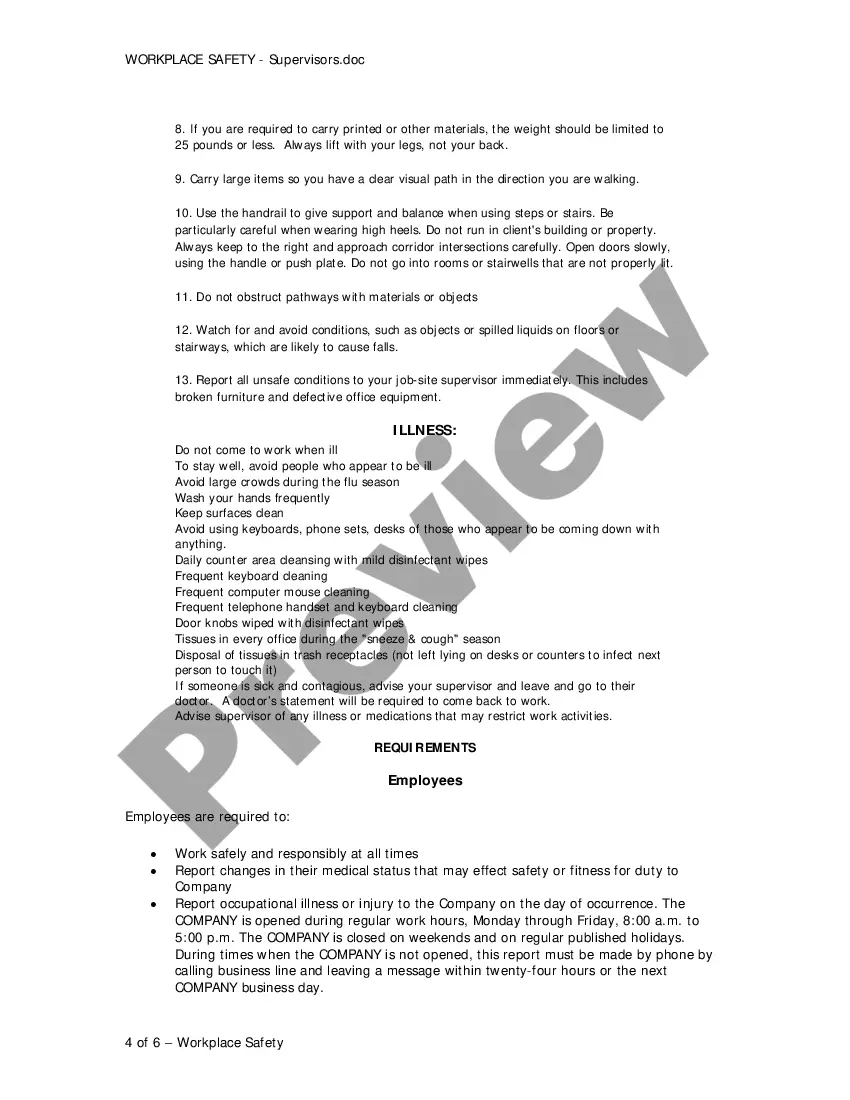
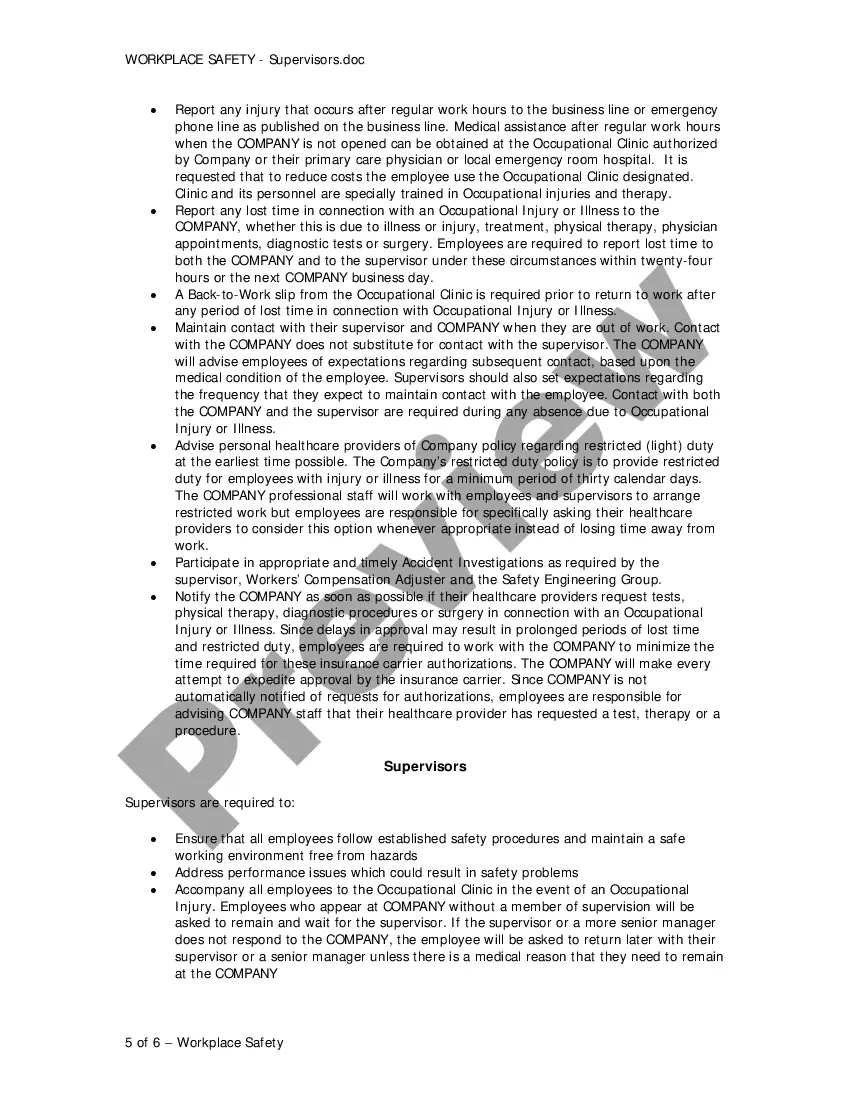
Supervisor safety training is a program designed to equip leaders with the skills and knowledge to oversee workplace safety effectively. This training covers topics such as risk assessment, emergency response, and compliance with safety regulations. A Colorado Safety Policy for Supervisors Training is essential for preparing supervisors to lead their teams in maintaining a safe and productive work environment.
The seven step safety rules typically include: recognizing hazards, assessing risks, developing control measures, implementing safety procedures, providing training, regularly reviewing safety practices, and promoting a culture of safety. These steps ensure that safety is a continuous priority. Incorporating these rules into a Colorado Safety Policy for Supervisors Training empowers supervisors to lead by example and create a safe workplace.
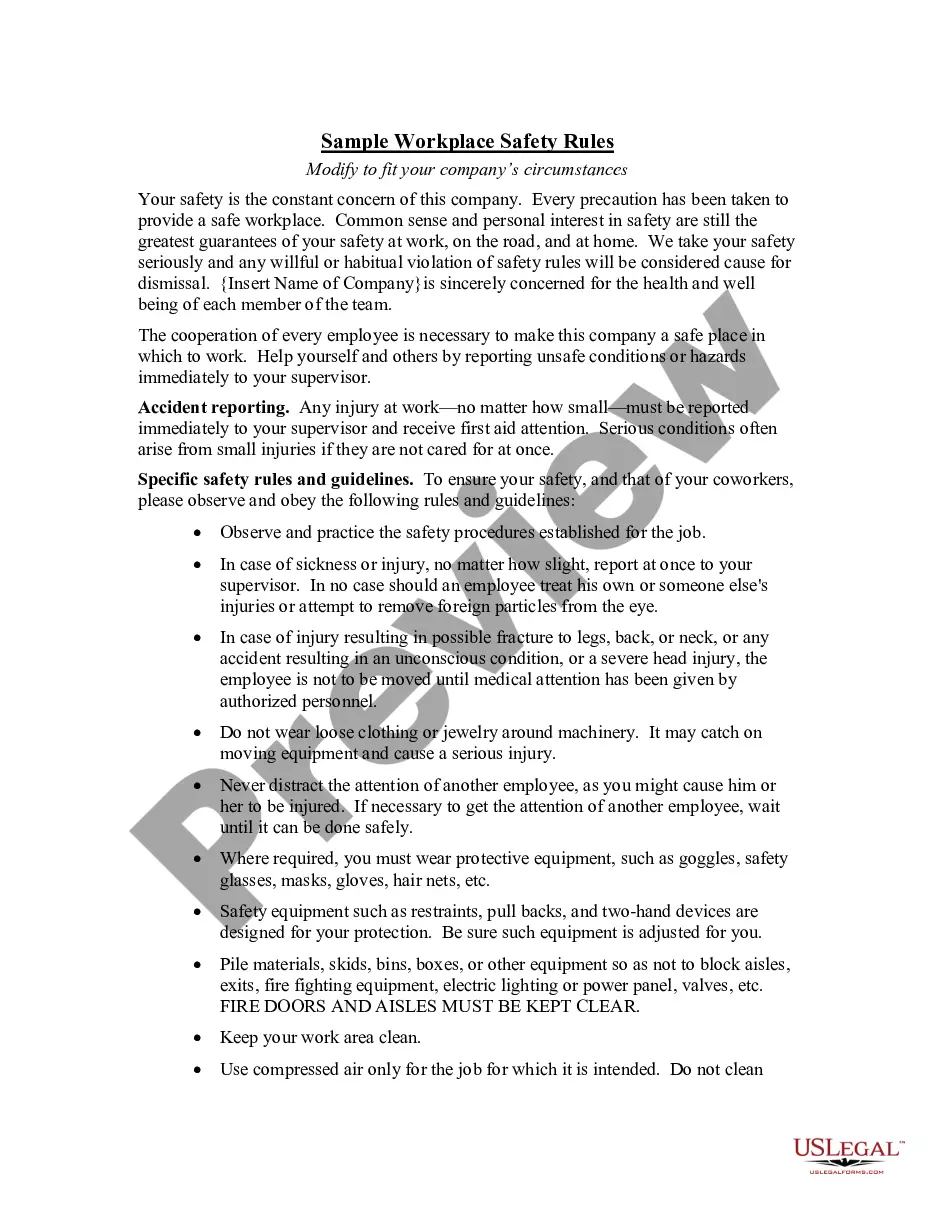
An example of a safety policy is a rule that requires regular safety audits and inspections to identify potential hazards. Such policies not only help ensure compliance with safety regulations but also demonstrate a commitment to employee well-being. A thorough Colorado Safety Policy for Supervisors Training can guide supervisors in properly implementing and enforcing this policy.
The seven core elements of a safety program include management leadership, employee participation, hazard identification, hazard prevention and control, education and training, evaluation of safety performance, and continuous improvement. Each element works together to form a robust framework for workplace safety. By integrating these elements into a Colorado Safety Policy for Supervisors Training, organizations can foster a proactive safety culture.
Safety policies are formalized guidelines that outline the expected behaviors and practices to promote safety in a workplace. These policies help protect employees from hazards and establish a framework for maintaining a safe environment. A comprehensive Colorado Safety Policy for Supervisors Training equips managers with the knowledge to enforce these important rules effectively.
A safety policy often includes clear guidelines about the procedures and practices employees should follow to ensure a safe working environment. It typically details the responsibilities of supervisors, safety measures, and reporting protocols. In the context of a Colorado Safety Policy for Supervisors Training, this document serves as a roadmap for promoting workplace safety.
A simple example of a policy is a workplace safety rule that states employees must wear personal protective equipment when on the shop floor. This rule helps ensure their safety and clarifies expectations. When implemented as part of a Colorado Safety Policy for Supervisors Training, it creates a culture of safety and accountability.
A supervisor must undergo training that covers safety policies, hazard assessment, and legal obligations. The Colorado Safety Policy for Supervisors Training provides this vital knowledge, empowering supervisors to lead safety efforts effectively. Such training is crucial for fostering a culture of safety and compliance in the workplace.
In Colorado, employees must receive training on workplace safety and specific job-related hazards. This training is often mandated by state laws and should align with the Colorado Safety Policy for Supervisors Training. By ensuring employees are well-trained, companies can reduce workplace injuries and promote a safer work environment.
OSHA 30 is not exclusively for supervisors, but it is beneficial for them. This course provides extensive training on OSHA standards and safety regulations, which is beneficial for any supervisor overseeing a team. The Colorado Safety Policy for Supervisors Training complements this by focusing on state-specific requirements and safety practices.