Colorado ADA Questionnaire for Physician
Description
Get your form ready online
Our built-in tools help you complete, sign, share, and store your documents in one place.
Make edits, fill in missing information, and update formatting in US Legal Forms—just like you would in MS Word.
Download a copy, print it, send it by email, or mail it via USPS—whatever works best for your next step.
Sign and collect signatures with our SignNow integration. Send to multiple recipients, set reminders, and more. Go Premium to unlock E-Sign.
If this form requires notarization, complete it online through a secure video call—no need to meet a notary in person or wait for an appointment.
We protect your documents and personal data by following strict security and privacy standards.

Make edits, fill in missing information, and update formatting in US Legal Forms—just like you would in MS Word.

Download a copy, print it, send it by email, or mail it via USPS—whatever works best for your next step.

Sign and collect signatures with our SignNow integration. Send to multiple recipients, set reminders, and more. Go Premium to unlock E-Sign.

If this form requires notarization, complete it online through a secure video call—no need to meet a notary in person or wait for an appointment.

We protect your documents and personal data by following strict security and privacy standards.
Looking for another form?





How to fill out ADA Questionnaire For Physician?
You can spend many hours online trying to locate the official document template that meets the state and federal requirements you need.
US Legal Forms provides a vast array of legal documents that can be assessed by experts.
You are able to download or print the Colorado ADA Questionnaire for Physician from our service.
If available, use the Review option to look through the document template as well.
- If you already have a US Legal Forms account, you can Log In and then select the Acquire option.
- After that, you can fill out, modify, print, or sign the Colorado ADA Questionnaire for Physician.
- Each legal document template you purchase belongs to you indefinitely.
- To obtain another copy of a purchased form, go to the My documents tab and then select the corresponding option.
- If you are using the US Legal Forms website for the first time, follow the straightforward instructions below.
- First, ensure that you have selected the correct document template for the state/region of your choice.
- Review the form outline to ensure you have chosen the right form.
Form popularity
FAQ
Step 1 Create a policy.Step 2 Review your job descriptions.Step 3 Train your supervisors to recognize an accommodation request.Step 4 Arrange a personal meeting with the employee.Step 5 Consider whether you need information from the employee's physician.Step 6 Continue the dialogue.More items...?
The Americans with Disabilities Act (ADA) is a landmark federal law that protects the rights of people with disabilities by eliminating barriers to their participation in many aspects of living and working in America.
The ADA does not name all of the impairments that are covered, but common examples of disabilities include wheelchair confinement, blindness, deafness, learning disabilities, and certain kinds of mental illness.
The Americans with Disabilities Act (ADA) prohibits discrimination against people with disabilities in several areas, including employment, transportation, public accommodations, communications and access to state and local government' programs and services.
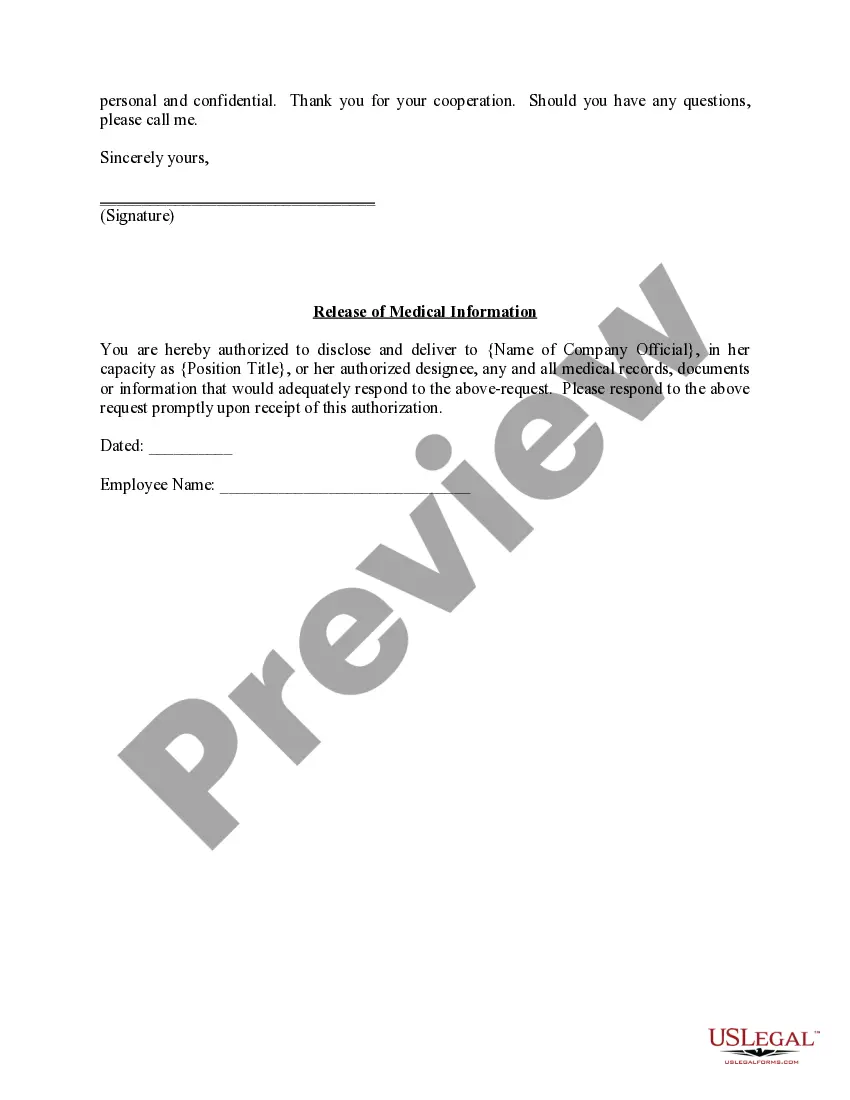
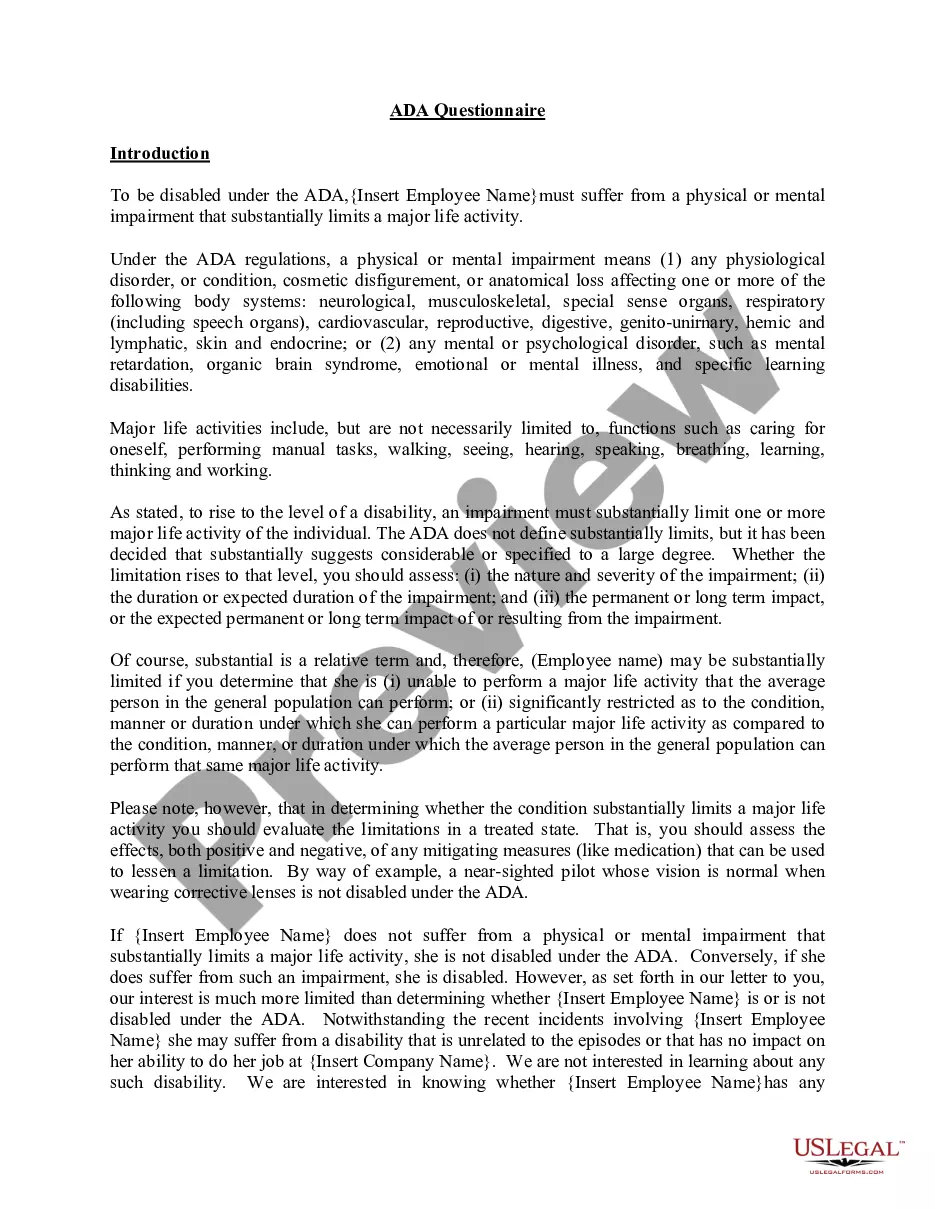
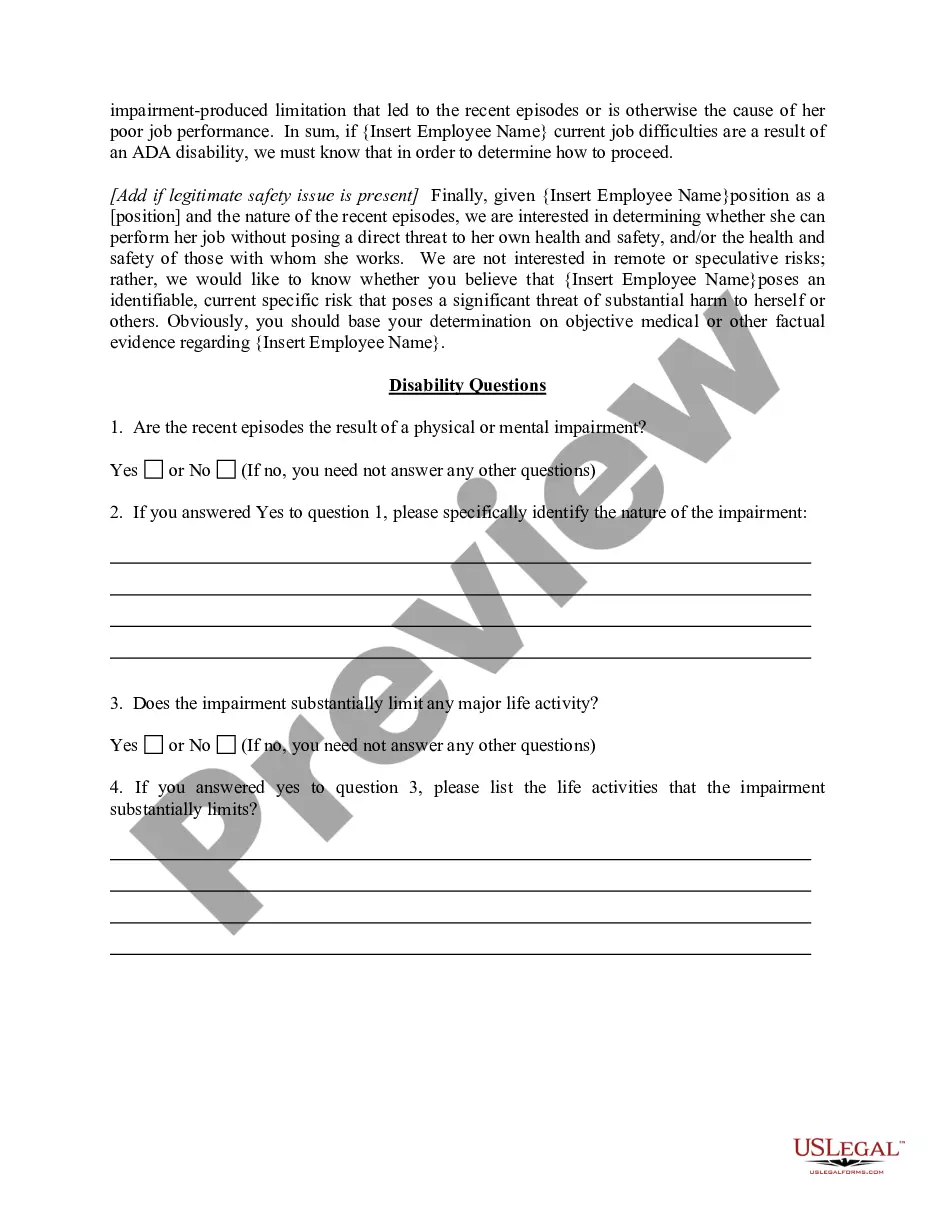
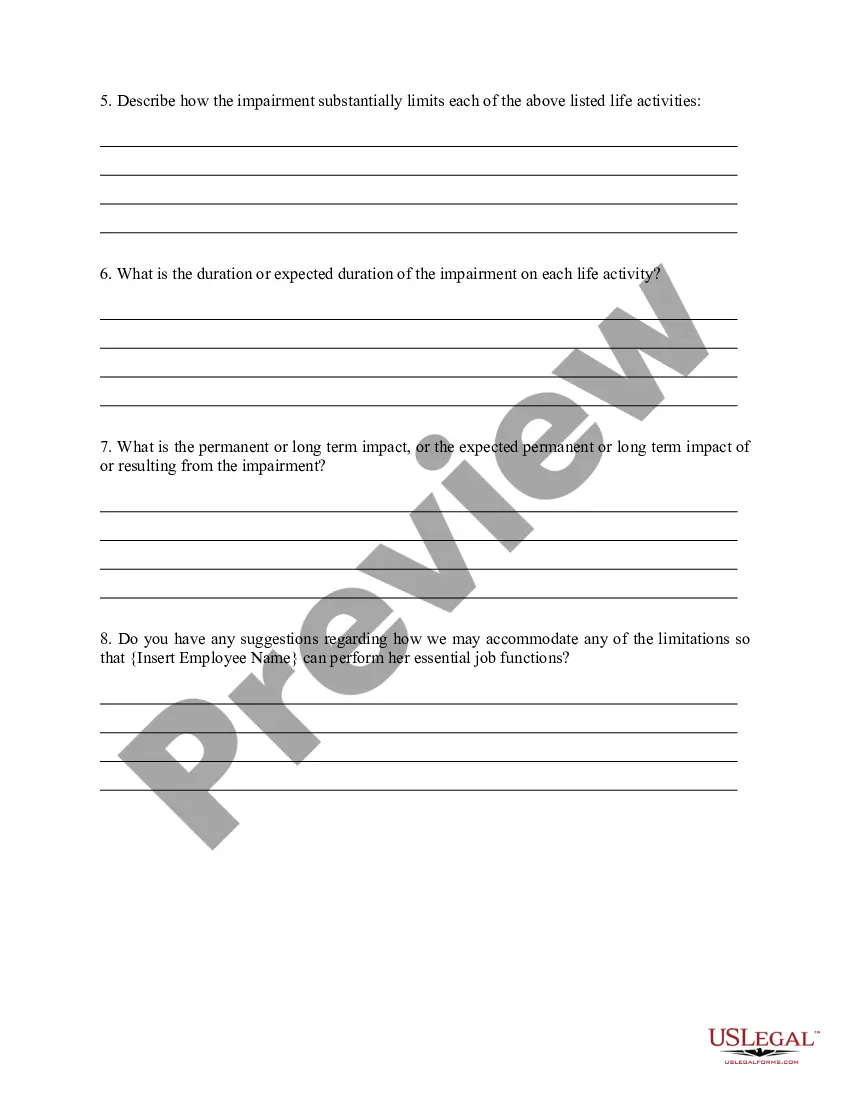
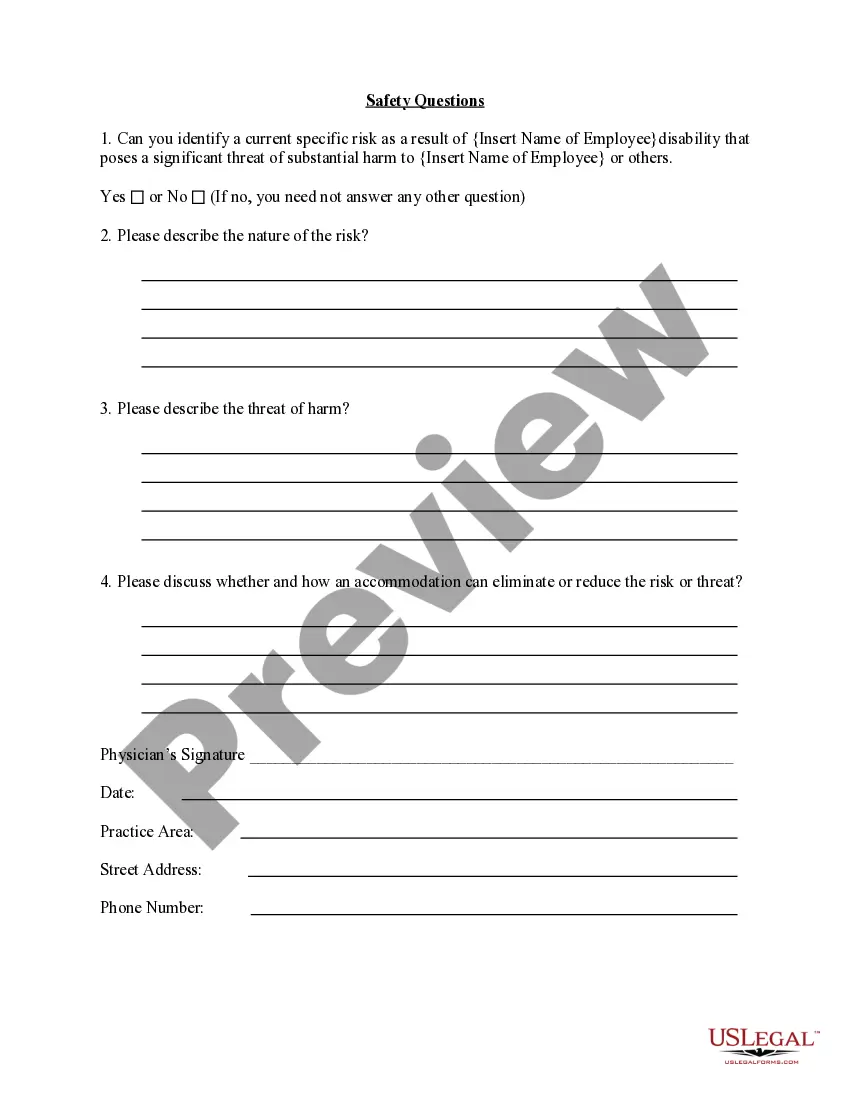
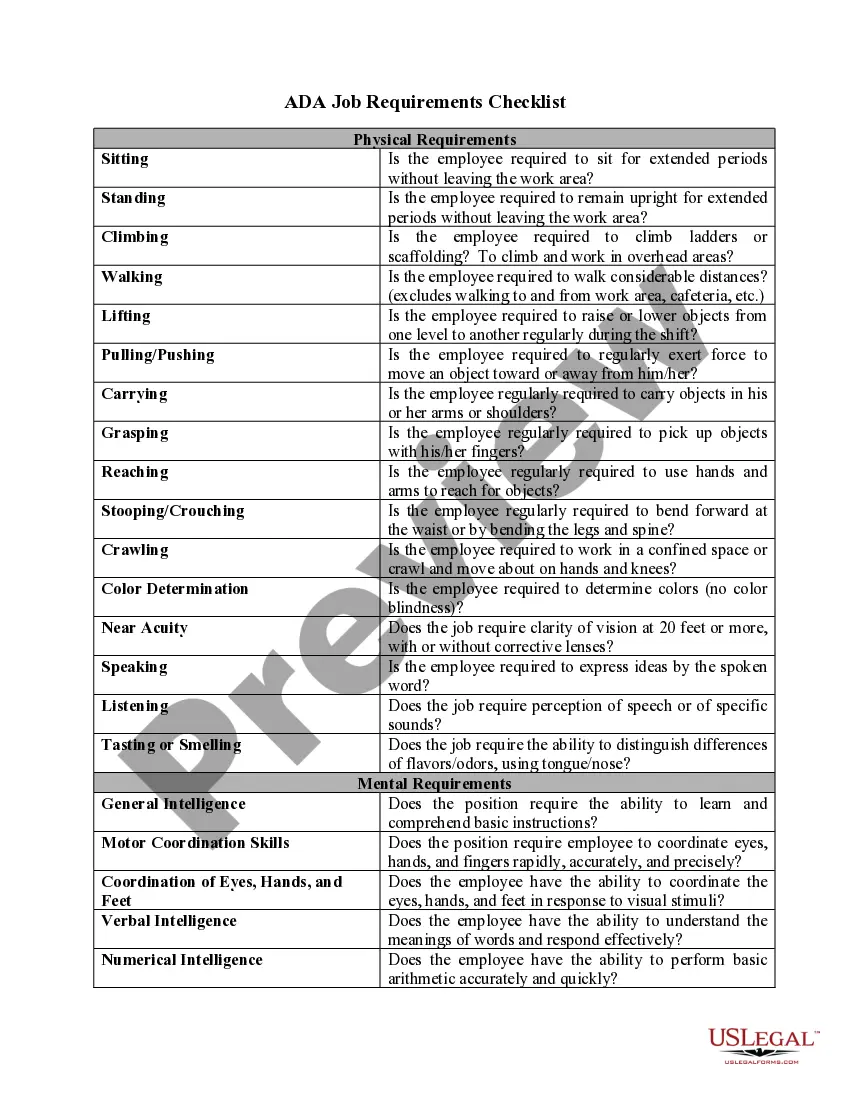
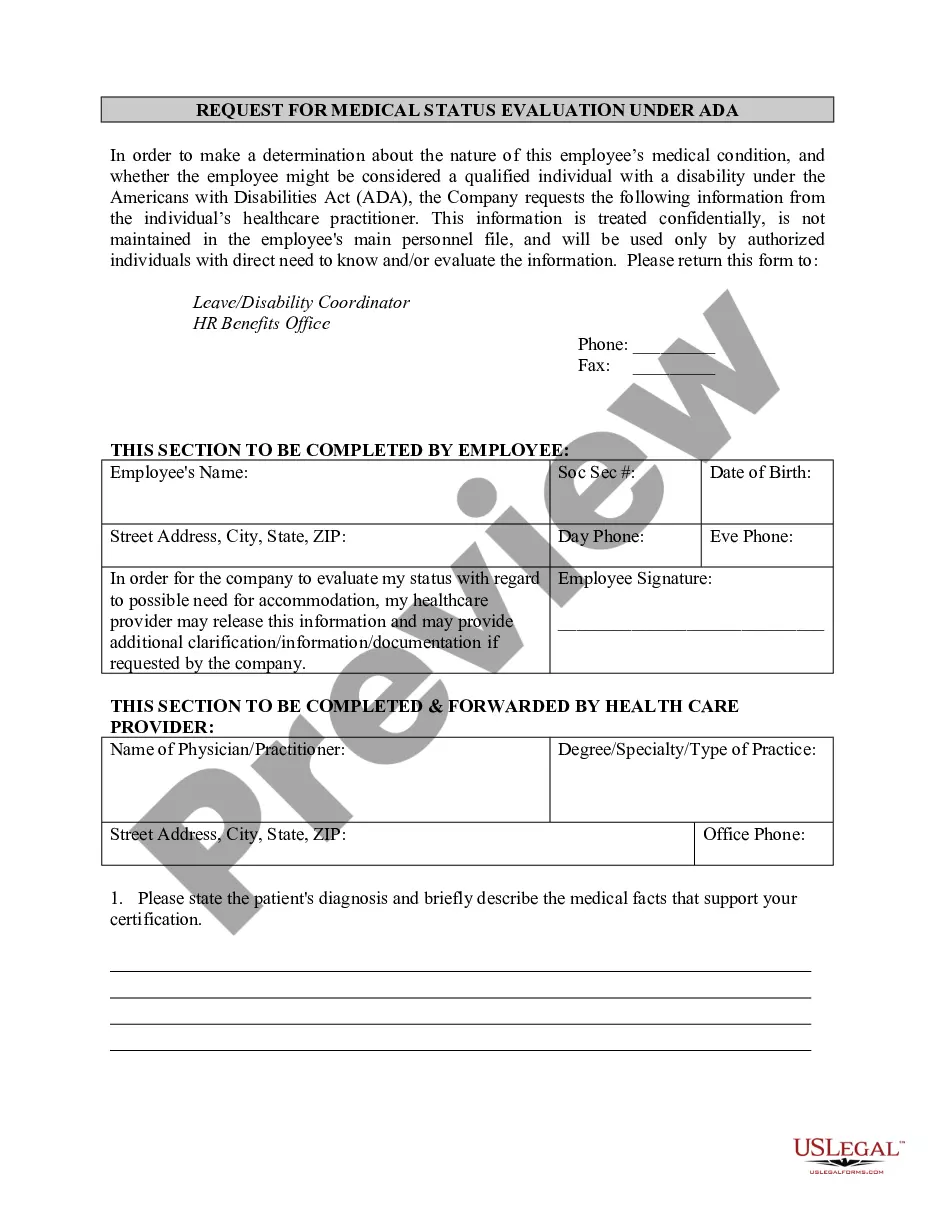
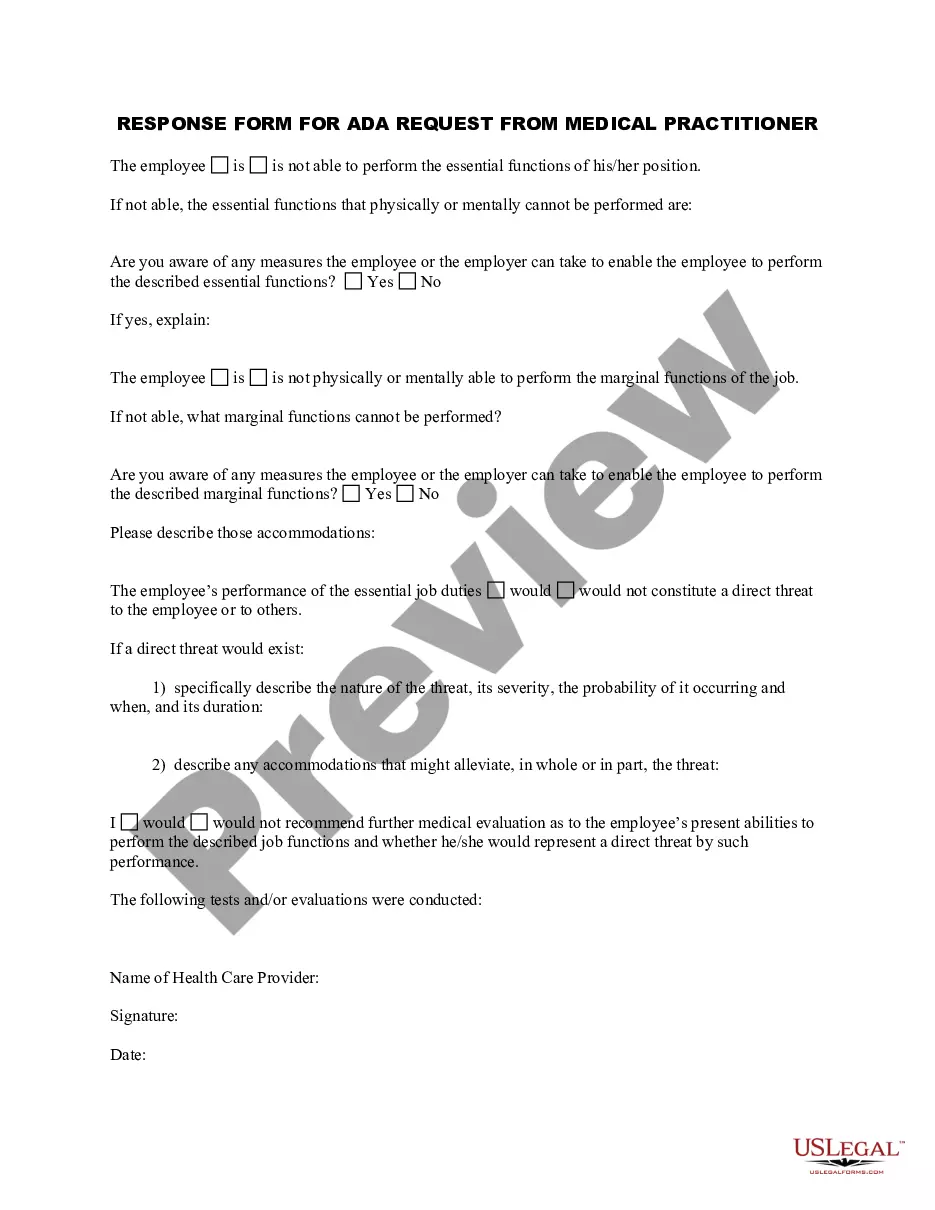
This questionnaire is part of an interactive process that is necessary in order to determine if your patient (our employee) has a disability recognized under the Americans With Disabilities Act, and, if so, what, if any, reasonable accommodation(s) are necessary and can be made that would enable your patient to perform
A completed Special Accommodation Request Packet includes the Candidate ADA Request Form, the Professional Accommodation Verification Form and any additional information or documentation requested by PCS to evaluate an accommodation request.
To be protected under the ADA, an individual must have a physical or mental impairment that substantially limits one or more major life activities, a record of such an impairment; or being regarded as having a substantial impairment.
The Americans with Disabilities Act (ADA) prohibits discrimination against people with disabilities in several areas, including employment, transportation, public accommodations, communications and access to state and local government' programs and services.