Colorado Notice of Option for Recording
What is this form?
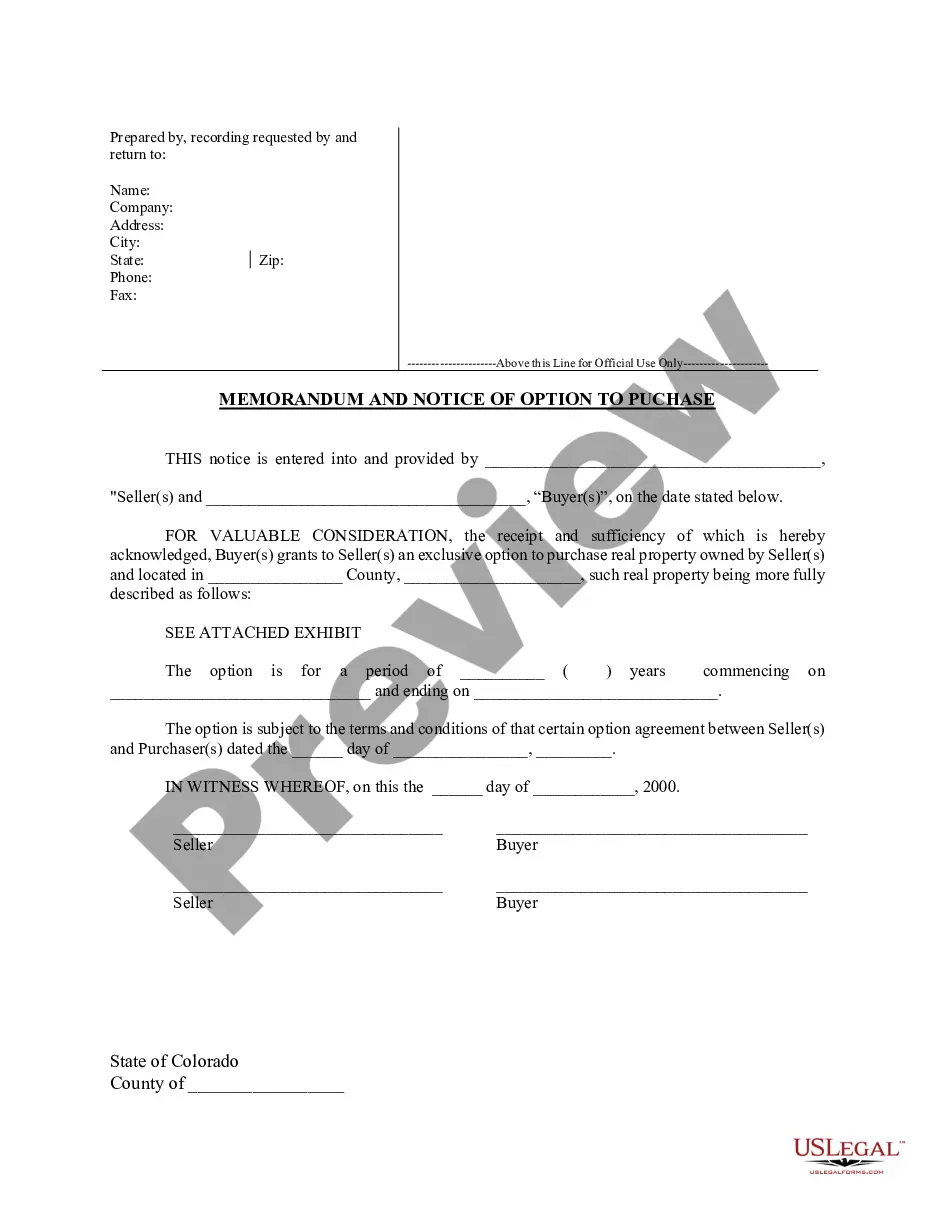
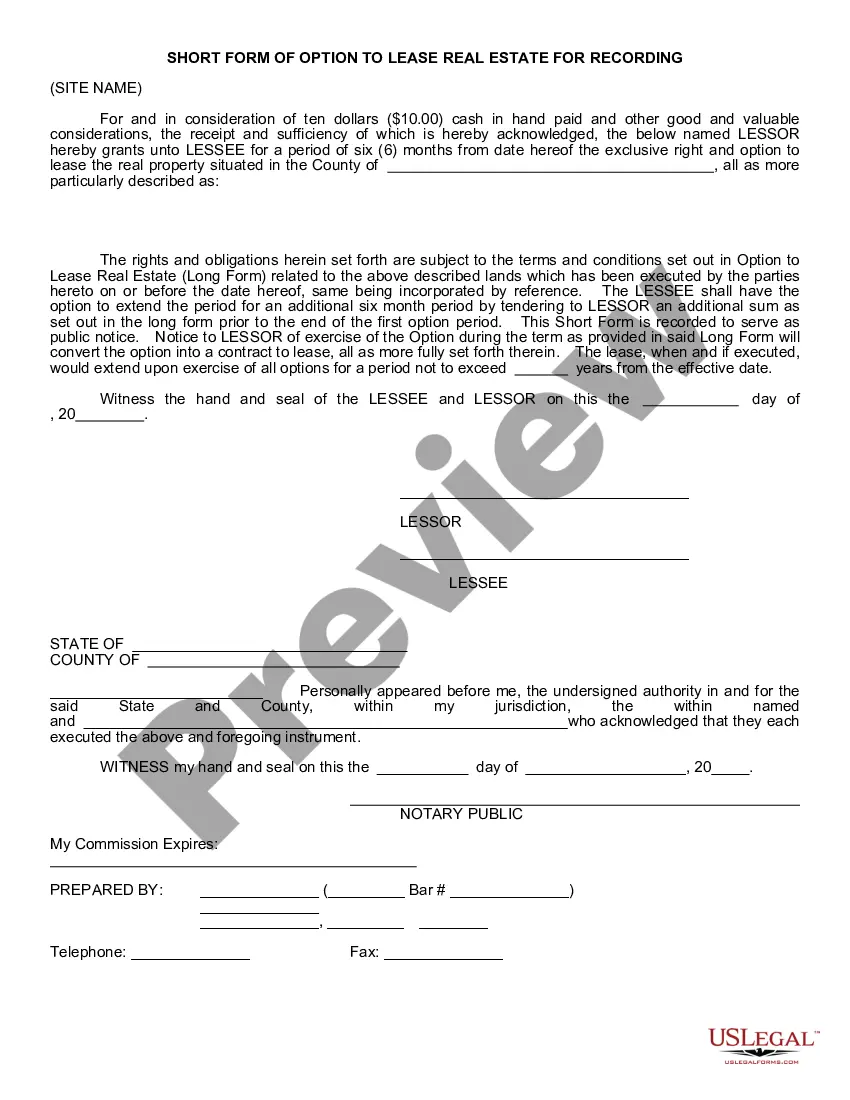
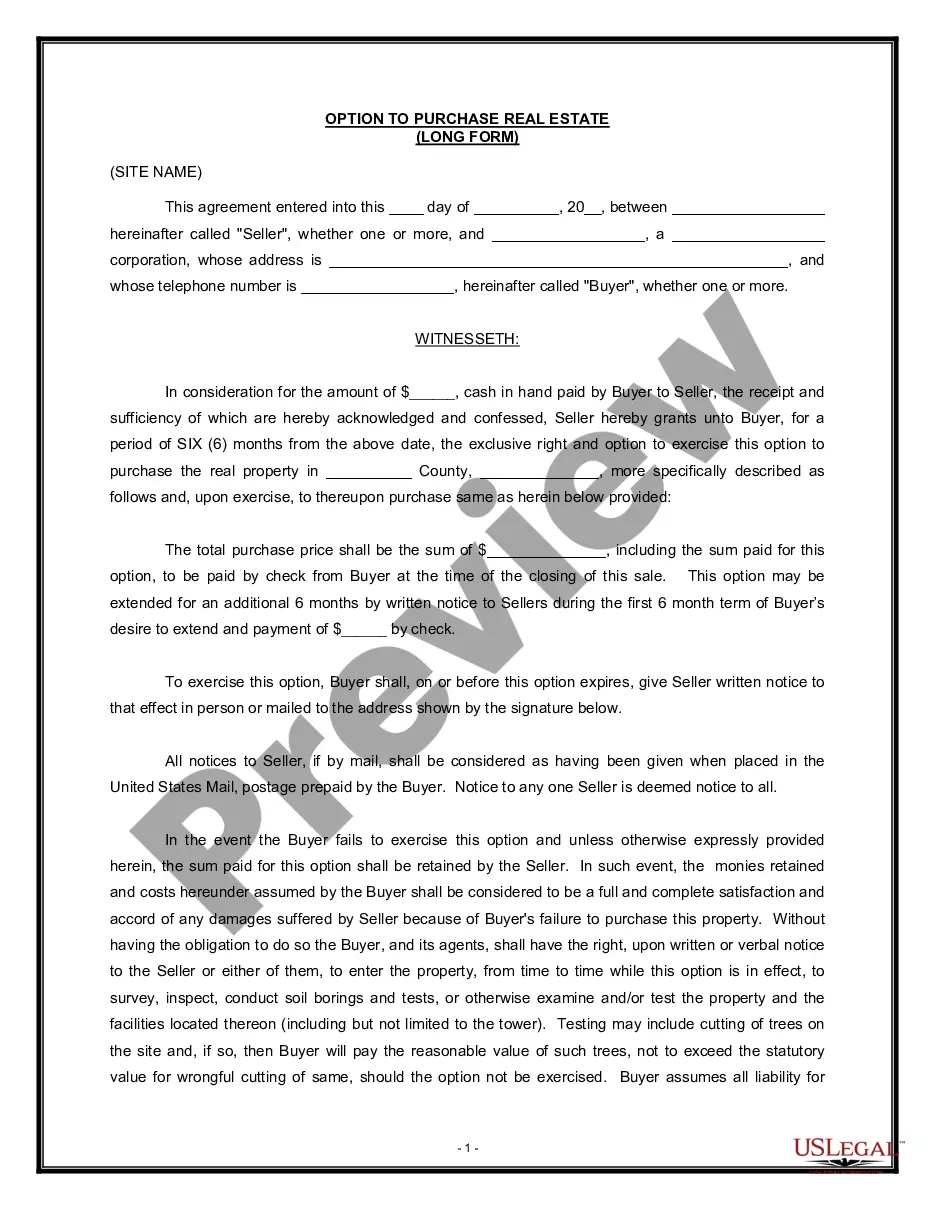
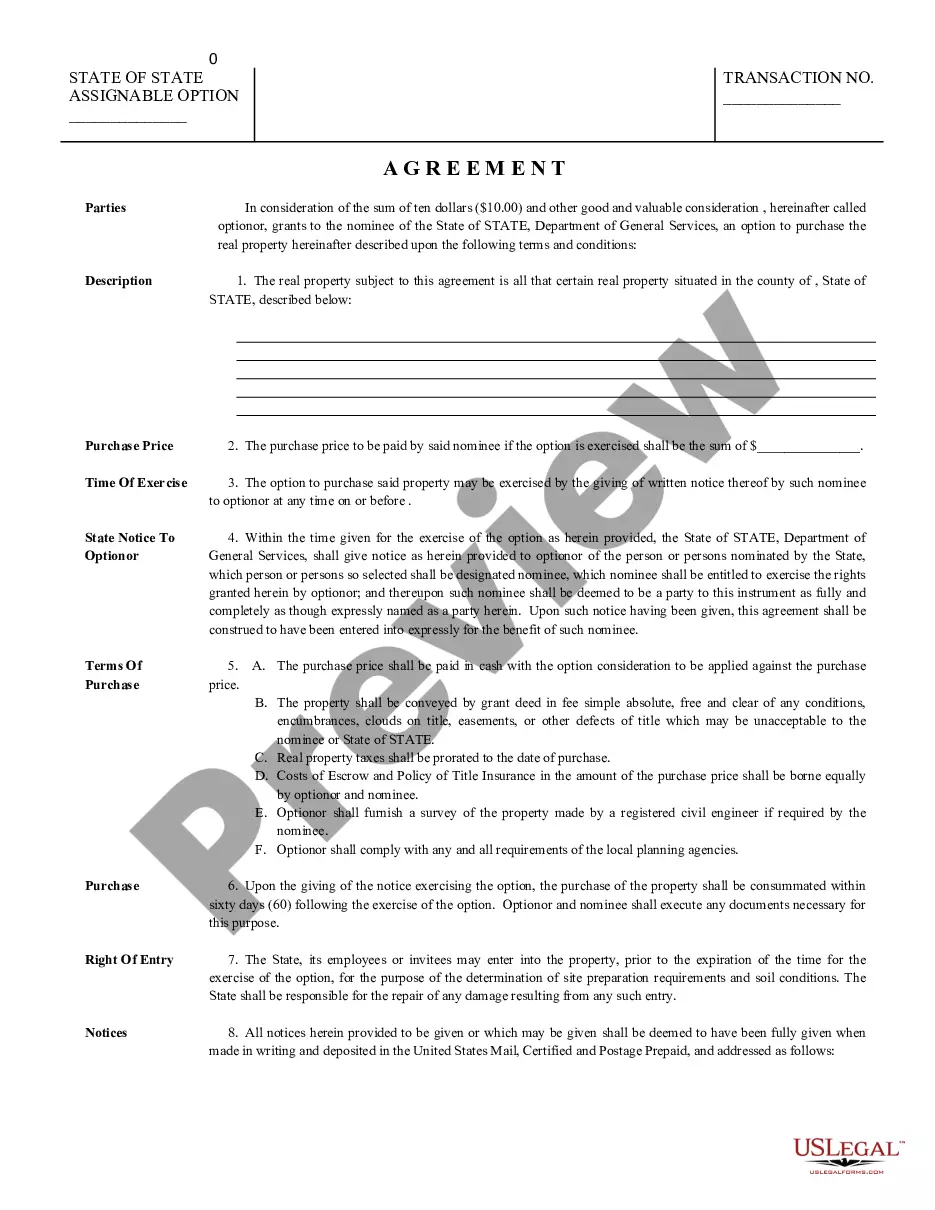
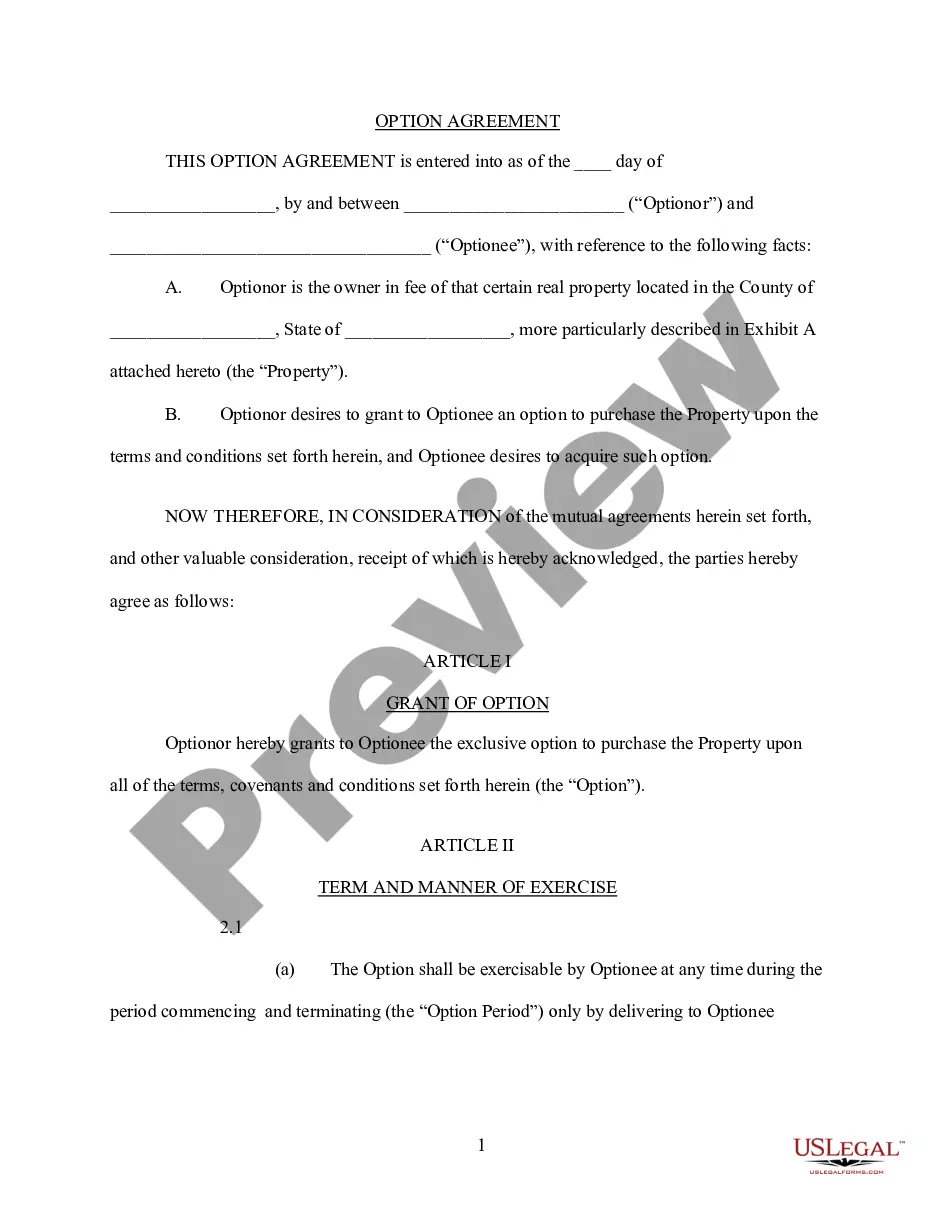
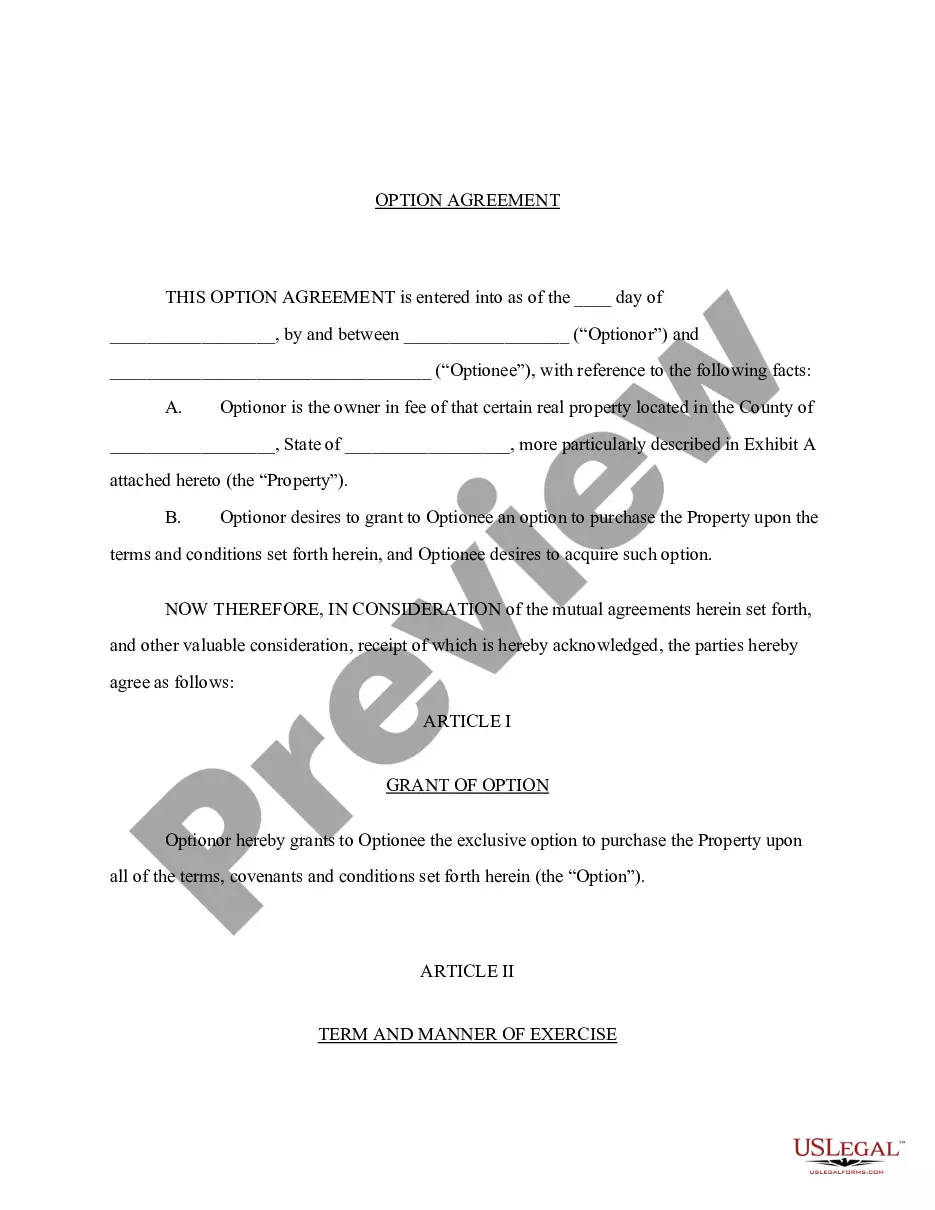
The Notice of Option for Recording is a legal document that provides public notice that an option to purchase a specific piece of real estate exists. This form serves as a memorandum rather than recording the entire option agreement, making it a streamlined way to inform third parties of the buyer's rights to the property.
Form components explained
- Prepared by and return address section
- Seller and Buyer information
- Description of the property, including county and detailed property description
- Time period for the option to purchase validity
- Reference to the original option agreement
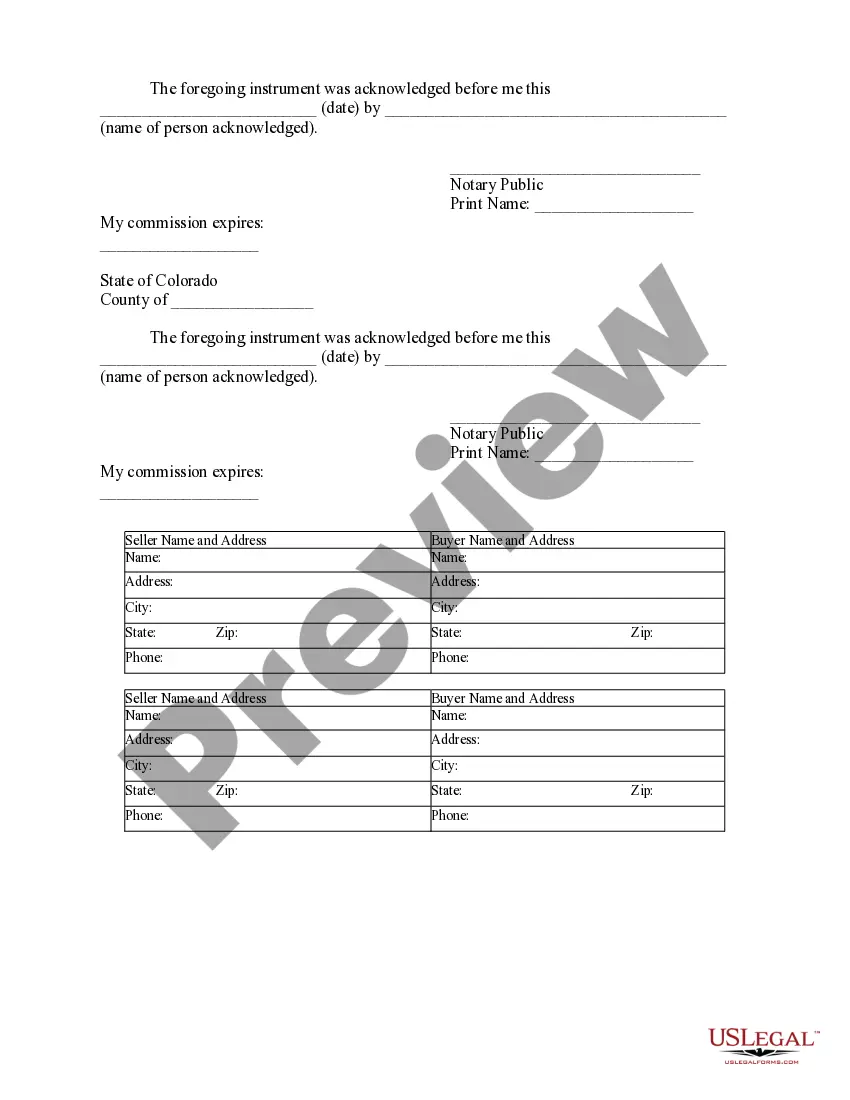
- Signatures and acknowledgments, including notary information
When to use this form
This form is typically used when a seller and buyer agree on an option to purchase real estate but do not wish to record the entire option agreement in public records. It is suitable in situations where the seller wants to provide notice of the existing option without revealing all the details of the agreement.
Who can use this document
- Real estate sellers and buyers who enter into an option agreement
- Individuals or businesses involved in real estate transactions
- Real estate agents or brokers acting on behalf of clients
Completing this form step by step
- Identify the parties involved: the sellers and buyers.
- Specify the property by including its detailed description and location.
- Enter the duration of the option period.
- Reference the original option agreement by date.
- Have all parties sign and date the document.
- Complete the notary section to ensure legal validity.
Is notarization required?
This form needs to be notarized to ensure legal validity. US Legal Forms provides secure online notarization powered by Notarize, allowing you to complete the process through a verified video call, available anytime.
Get your form ready online
Our built-in tools help you complete, sign, share, and store your documents in one place.
Make edits, fill in missing information, and update formatting in US Legal Forms—just like you would in MS Word.
Download a copy, print it, send it by email, or mail it via USPS—whatever works best for your next step.
Sign and collect signatures with our SignNow integration. Send to multiple recipients, set reminders, and more. Go Premium to unlock E-Sign.
If this form requires notarization, complete it online through a secure video call—no need to meet a notary in person or wait for an appointment.
We protect your documents and personal data by following strict security and privacy standards.

Make edits, fill in missing information, and update formatting in US Legal Forms—just like you would in MS Word.

Download a copy, print it, send it by email, or mail it via USPS—whatever works best for your next step.

Sign and collect signatures with our SignNow integration. Send to multiple recipients, set reminders, and more. Go Premium to unlock E-Sign.

If this form requires notarization, complete it online through a secure video call—no need to meet a notary in person or wait for an appointment.

We protect your documents and personal data by following strict security and privacy standards.
Typical mistakes to avoid
- Failing to include a complete description of the property.
- Not specifying the duration of the option period.
- Omitting signatures from all involved parties.
- Neglecting the notary acknowledgment section.
Why use this form online
- Convenient access to a legally vetted template.
- Editable format allows for quick customization.
- Secure storage and easy retrieval of legal documents.
Looking for another form?
Form popularity
FAQ
In Colorado, voice recording someone without their consent is illegal under the state's wiretapping laws. You must have the consent of at least one person participating in the conversation to record it legally. Therefore, before recording conversations, ensure you are compliant with these laws, as knowing your rights will help you when dealing with issues related to the Colorado Notice of Option for Recording.
In Colorado, the statute governing wiretapping and electronic communications is found in the Colorado Revised Statutes. This statute prohibits intercepting or recording private conversations without the consent of at least one party involved. Understanding this statute is essential, especially when considering the implications of recording conversations that could impact your ability to file a Colorado Notice of Option for Recording.
The 13 21 111.5 statute in Colorado outlines the procedures for recording notices related to real estate transactions. This statute allows property owners to record a Notice of Option for Recording, which helps protect their interests in the property. By complying with this statute, you ensure that your recorded documents are recognized as public notices, thus enhancing the legal standing of your property rights.
In most cases in Colorado, you do not have to inform someone that you are recording a conversation, provided you are a participant. This is in line with the state's one-party consent law. Nevertheless, it's best practice to be transparent whenever possible, as it fosters trust and compliance. Additionally, being aware of the Colorado Notice of Option for Recording can help you navigate your legal responsibilities regarding permissions.
Yes, in Colorado, you can record a conversation without obtaining consent from all parties involved, as long as you are one of the participants in that conversation. This is known as 'one-party consent.' However, the context and purpose of the recording matter greatly, so it is wise to familiarize yourself with Colorado's recording laws to avoid legal issues. Ensuring you understand the Colorado Notice of Option for Recording is crucial if you're planning to document conversations for records.
In Colorado, you generally do not need to inform someone that you are recording them if it relates to a private conversation they are part of. However, for specific situations involving phone calls, at least one party must consent to the conversation being recorded. It's essential to review the laws pertaining to recording to ensure compliance and protect your rights, especially when considering the Colorado Notice of Option for Recording.
In Colorado, the recording statute governs how documents, such as property deeds, are officially recognized. It specifies that a document must be recorded with the county clerk to provide public notice of the property ownership transfer. This is essential to establish rights against third parties. Understanding the requirements for the Colorado Notice of Option for Recording can help secure your claims to the property.
To transfer a property title to a family member in Colorado, you typically need to draft a new deed that outlines the transfer. This deed must include the legal description of the property and the names of both the grantor and grantee. After preparing the deed, you must sign it in front of a notary public and then file it with the local county clerk's office. Using services like US Legal Forms can simplify this process, ensuring that you meet all legal requirements regarding the Colorado Notice of Option for Recording.
Filing a notice of appeal in Colorado involves completing and submitting a specific form to the relevant court. Make sure to include the case number and name, as well as the grounds for your appeal. After filling out the form, file it within the strict deadlines set by the court. Tools like US Legal Forms provide templates and guidance that can make this process smoother, particularly regarding the Colorado Notice of Option for Recording.
Writing a notice of appeal requires clear and concise language. Start by stating the court's name and the parties involved in the case. Be sure to include a statement indicating your intention to appeal and reference the specific decision you're appealing. Lastly, conclude with your signature and date. For additional tips, turn to resources that explain the Colorado Notice of Option for Recording clearly.