Colorado Paving Contract for Contractor
What is this form?
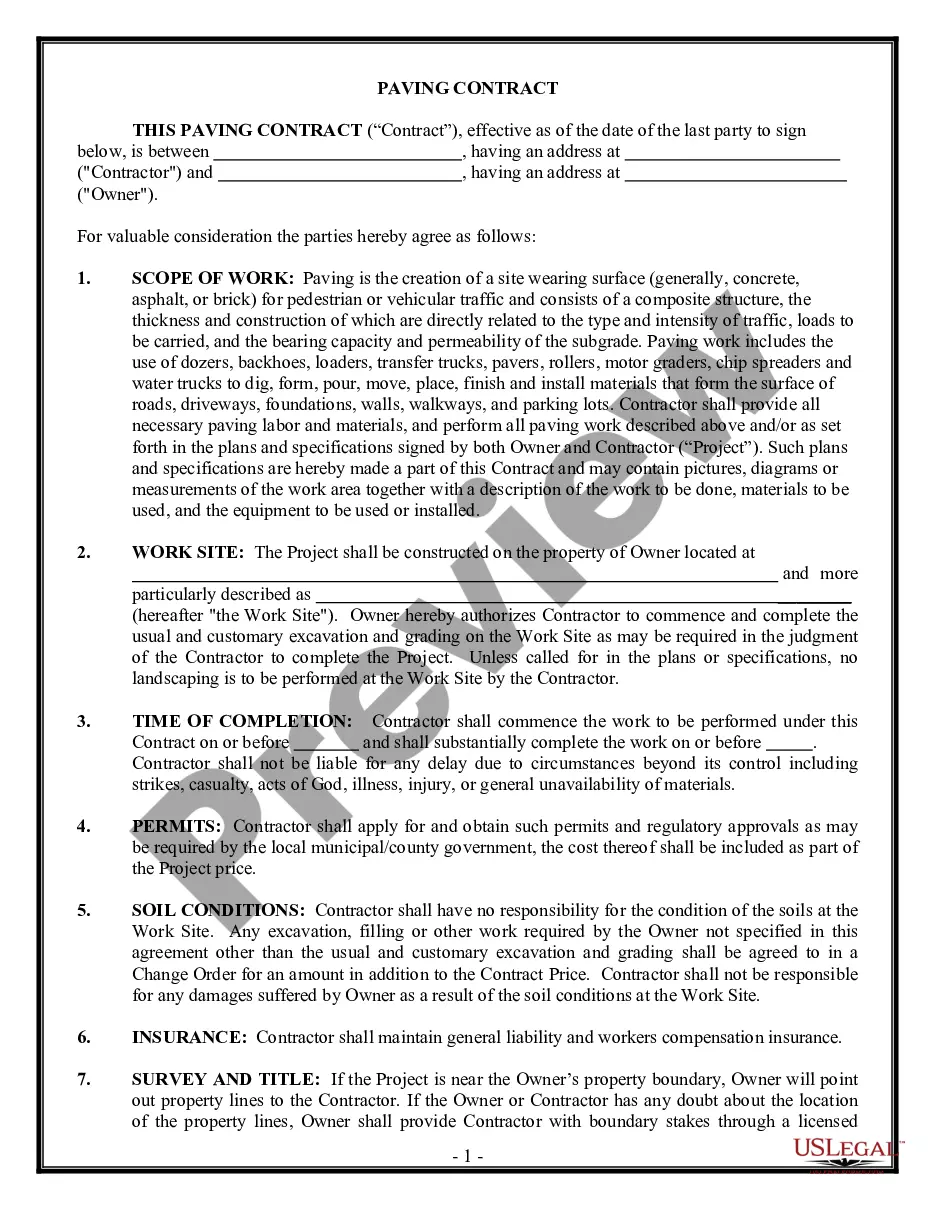
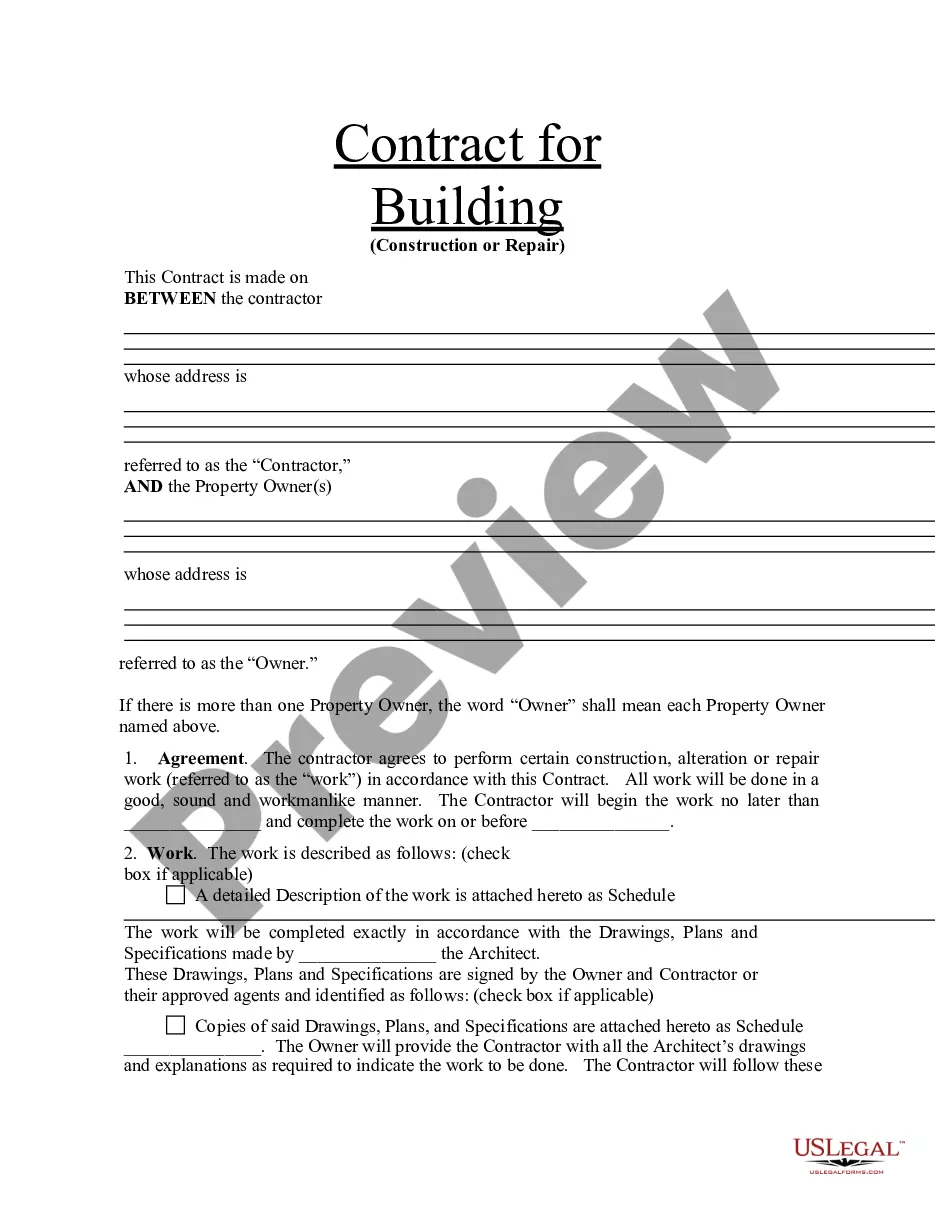
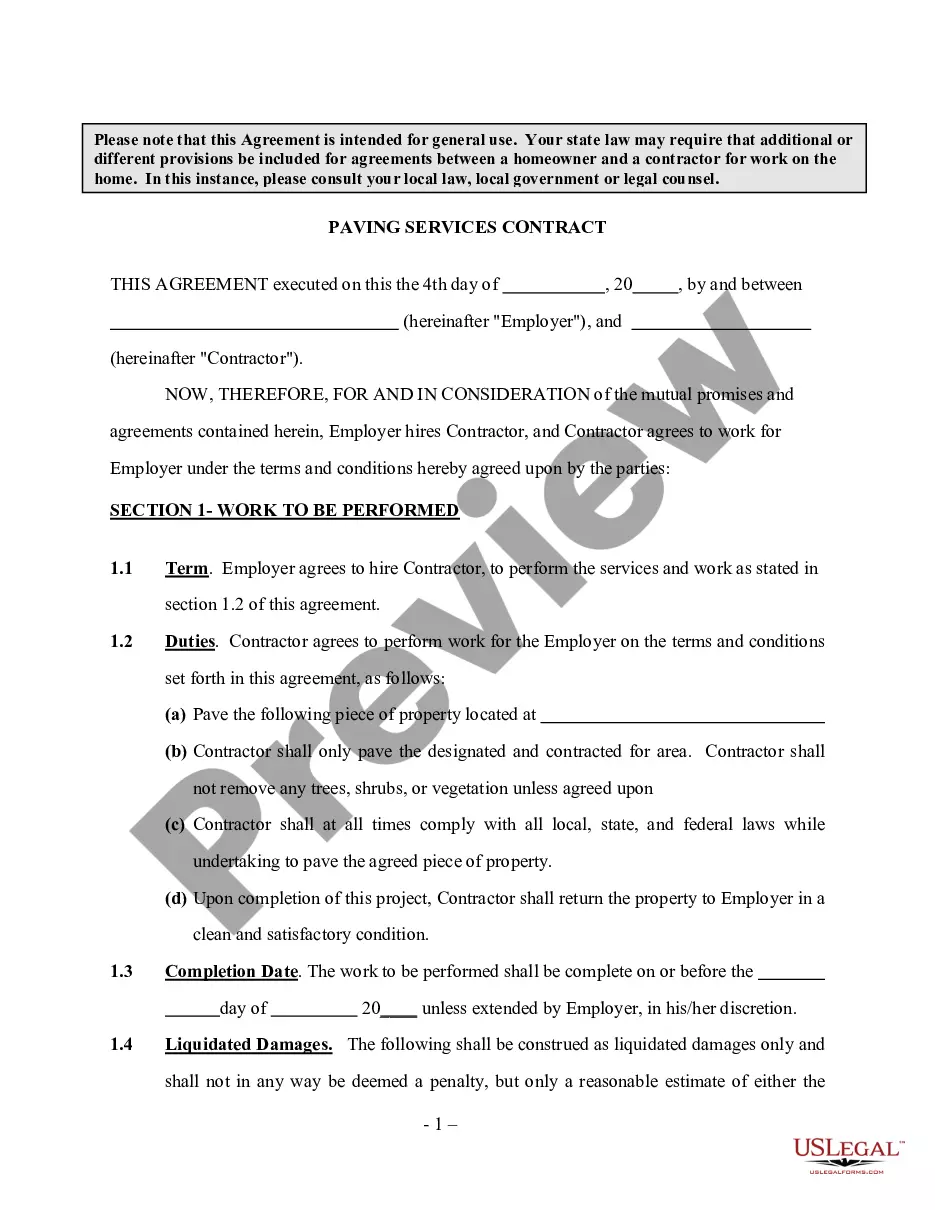
The Paving Contract for Contractor is a legal document that formalizes an agreement between paving contractors and property owners. This contract outlines the terms of the paving project, including payment arrangements, responsibilities for permits, and the handling of change orders. It is specifically designed to comply with the laws of the State of Colorado, making it distinct from generic contracts in the paving industry.
Main sections of this form
- Permits: The contractor is responsible for obtaining necessary permits.
- Soil Conditions: Clarifies that the contractor is not liable for existing soil conditions at the work site.
- Insurance: The contractor must maintain required general liability and workers compensation insurance.
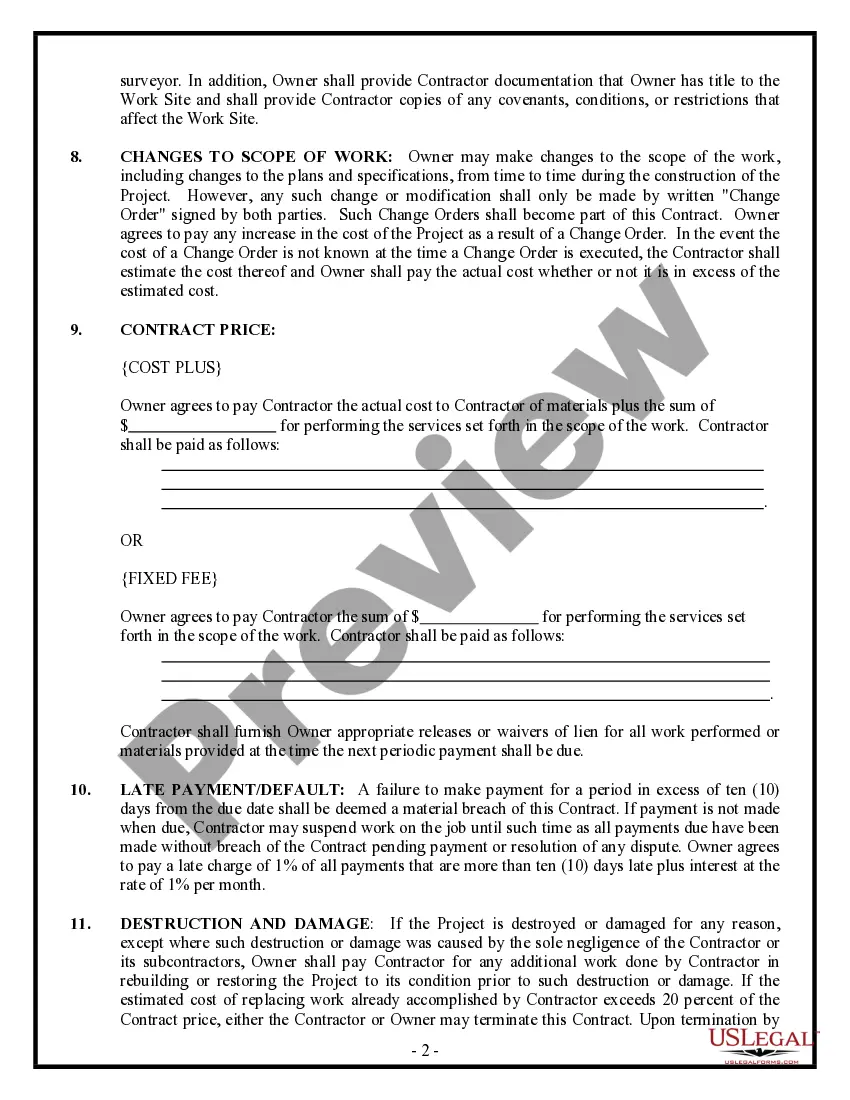
- Changes to Scope of Work: Outlines how modifications to the project must be documented via change orders.
- Contract Price Cost Plus: Specifies payment terms.
- Late Payment Penalties: Details fees and consequences for late payments.
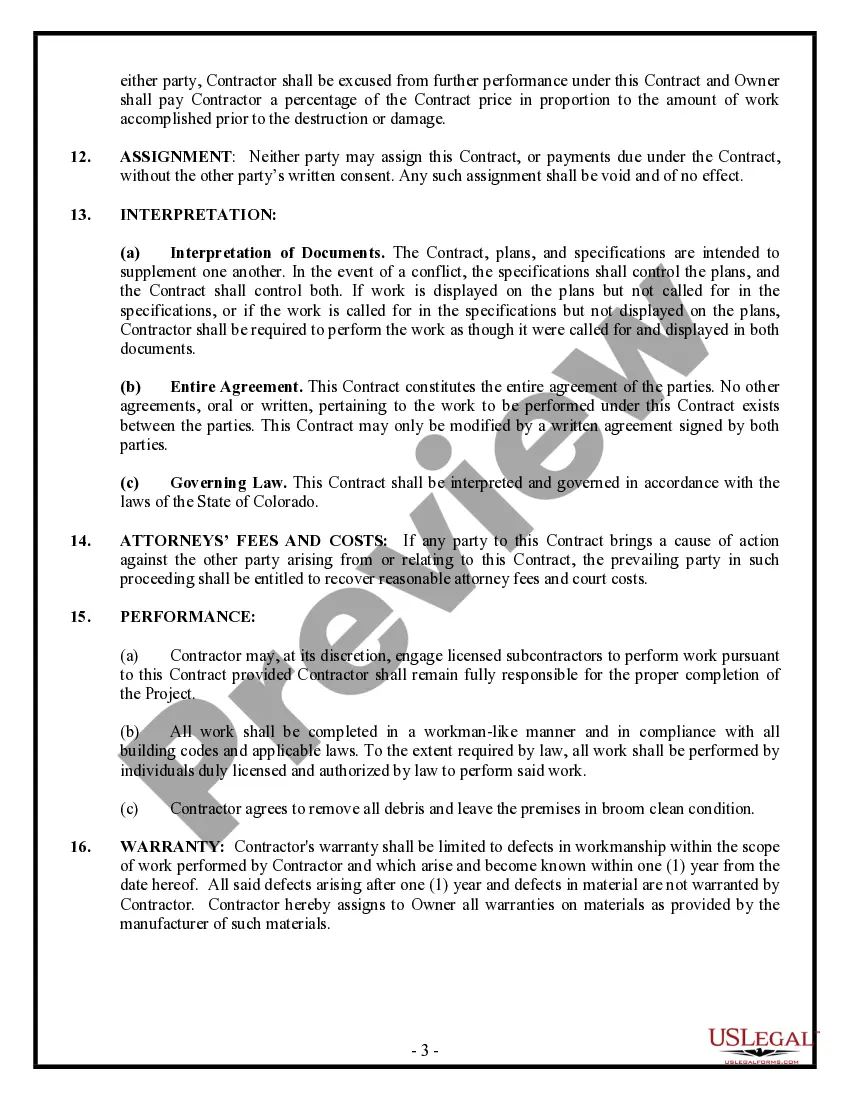
- Warranty: Limits the warranty period for workmanship to one year from completion.
Common use cases
This form should be used when a property owner hires a paving contractor for projects like driveway installation, parking lot paving, or similar work. It is suitable when a clear agreement is required regarding the project specifications, payment details, and legal responsibilities of both parties. Utilizing this contract helps prevent disputes by clearly defining expectations and obligations.
Intended users of this form
- Property owners looking to hire a paving contractor.
- Paving contractors who need a formal contract template for their projects.
- Individuals or businesses planning a paving project in Colorado.
How to complete this form
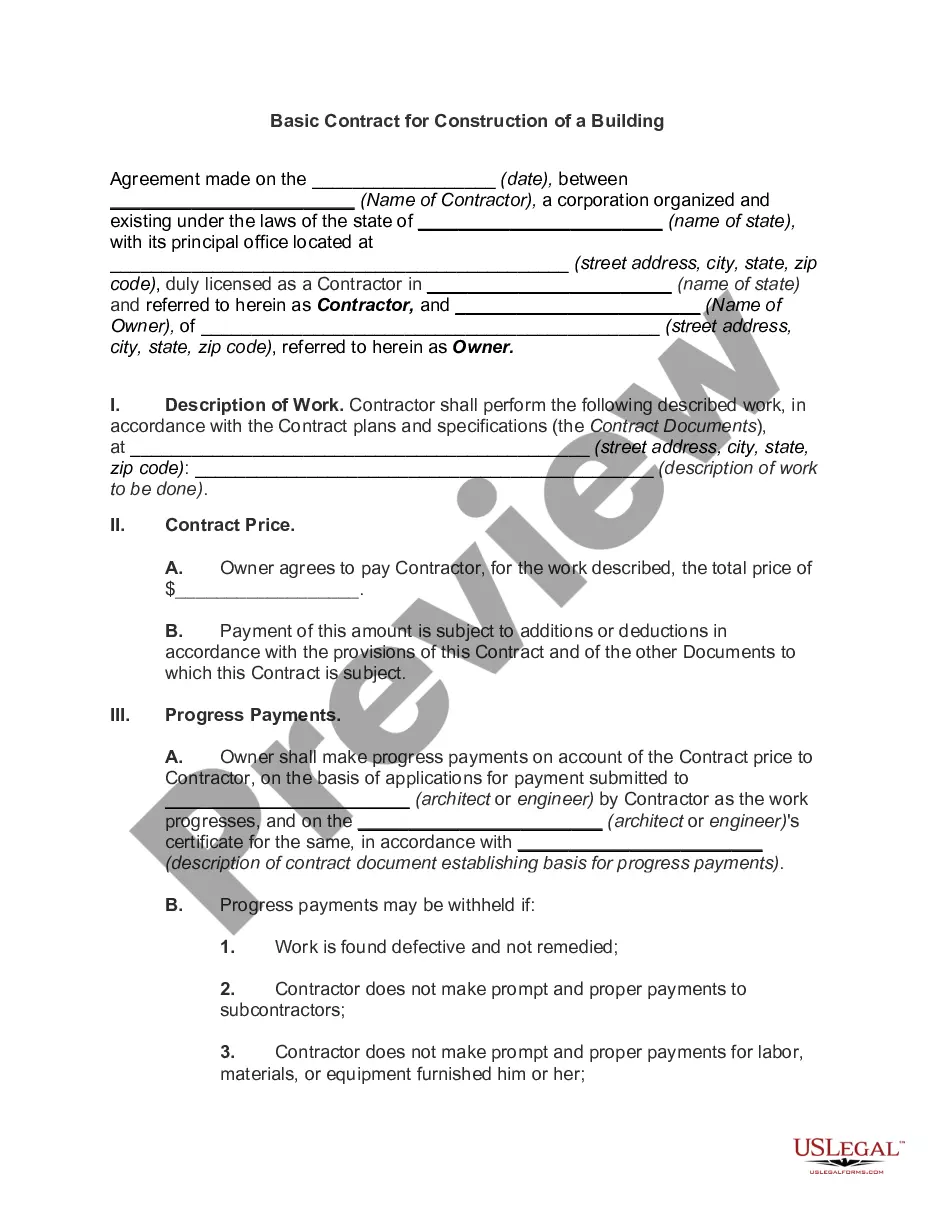
- Identify the parties: Enter the names and addresses of the property owner and the contracting company.
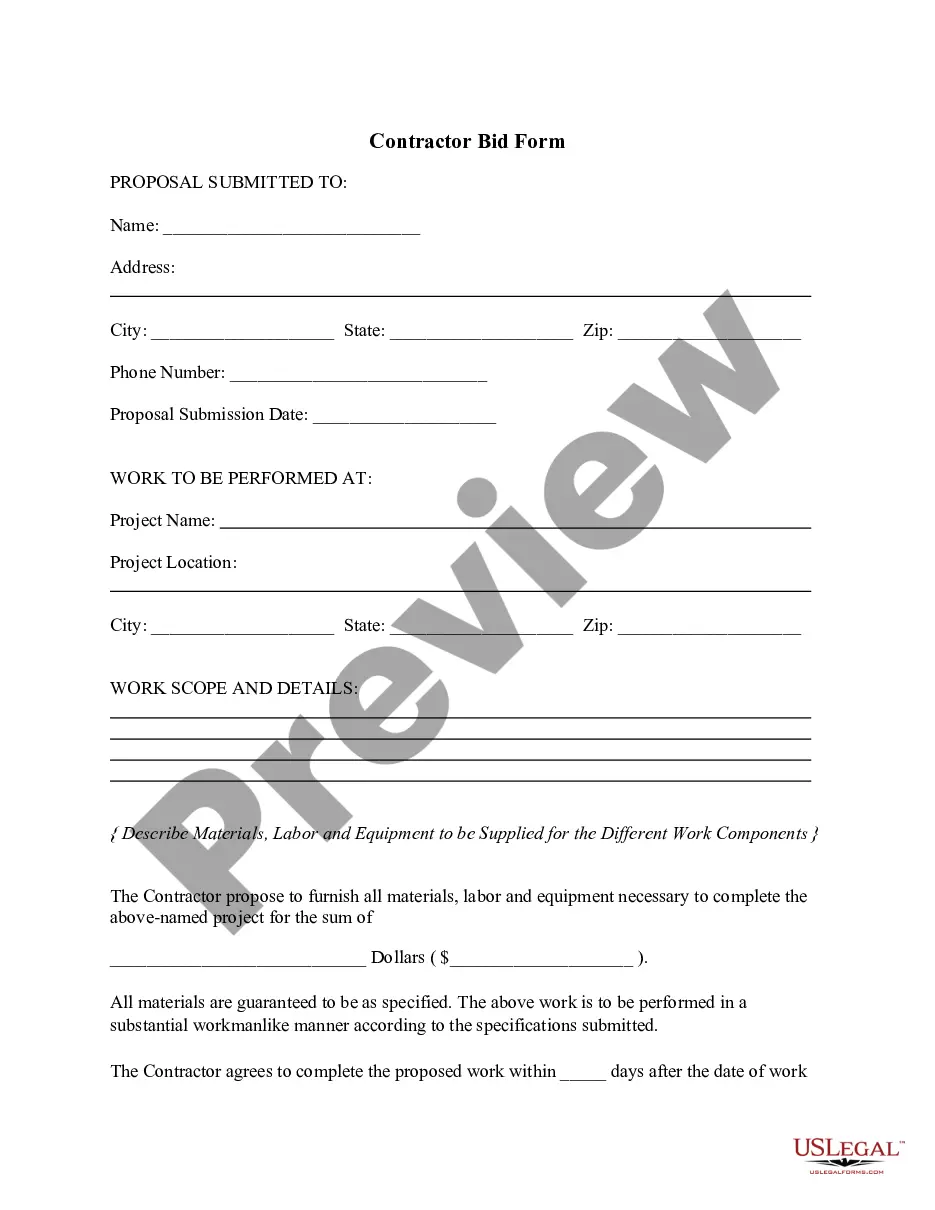
- Specify project details: Describe the scope of work, including the areas to be paved and any specific requirements.
- Enter payment terms: Indicate whether the contract will be cost plus or fixed fee and specify the amount.
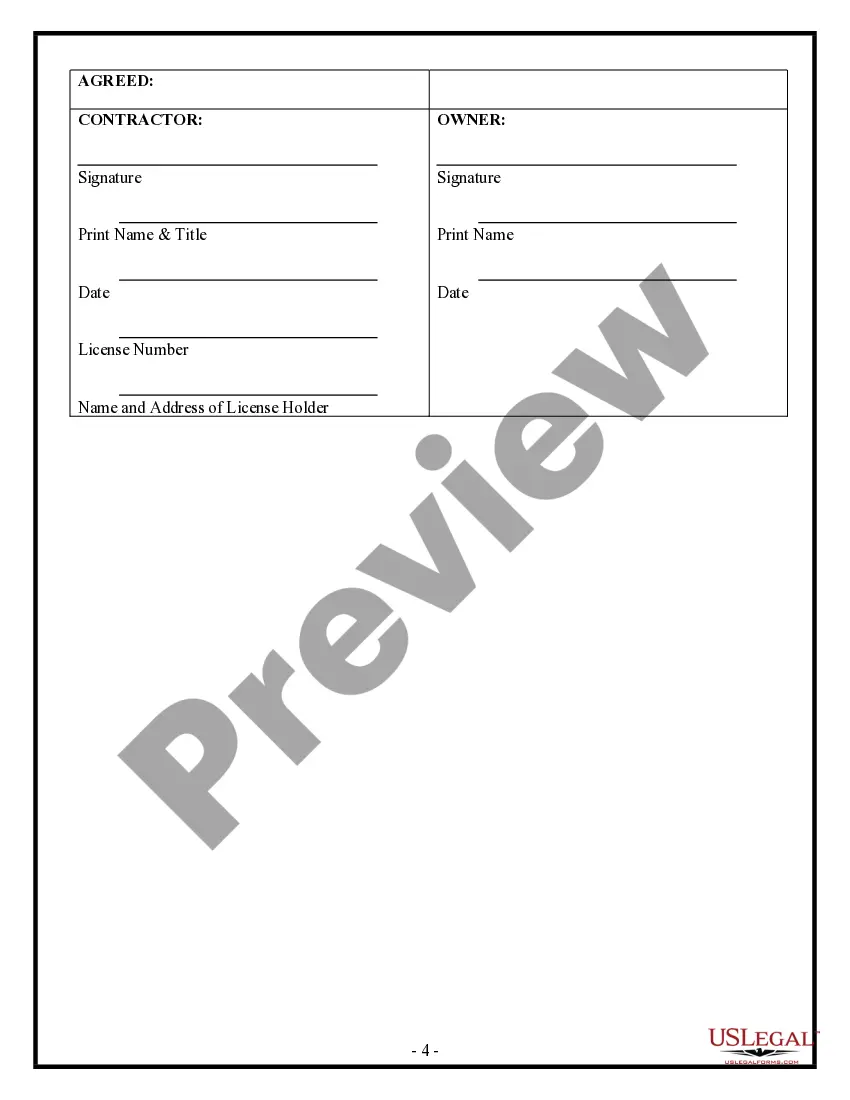
- Sign and date the contract: Ensure both parties sign the document to make it legally binding.
- Attach any necessary documents: Include any relevant permits, insurance information, or change orders as needed.
Does this form need to be notarized?
Notarization is generally not required for this form. However, certain states or situations might demand it. You can complete notarization online through US Legal Forms, powered by Notarize, using a verified video call available anytime.
Get your form ready online
Our built-in tools help you complete, sign, share, and store your documents in one place.
Make edits, fill in missing information, and update formatting in US Legal Forms—just like you would in MS Word.
Download a copy, print it, send it by email, or mail it via USPS—whatever works best for your next step.
Sign and collect signatures with our SignNow integration. Send to multiple recipients, set reminders, and more. Go Premium to unlock E-Sign.
If this form requires notarization, complete it online through a secure video call—no need to meet a notary in person or wait for an appointment.
We protect your documents and personal data by following strict security and privacy standards.

Make edits, fill in missing information, and update formatting in US Legal Forms—just like you would in MS Word.

Download a copy, print it, send it by email, or mail it via USPS—whatever works best for your next step.

Sign and collect signatures with our SignNow integration. Send to multiple recipients, set reminders, and more. Go Premium to unlock E-Sign.

If this form requires notarization, complete it online through a secure video call—no need to meet a notary in person or wait for an appointment.

We protect your documents and personal data by following strict security and privacy standards.
Avoid these common issues
- Failing to specify all project details, leading to misunderstandings.
- Not obtaining necessary permits before work begins.
- Ignoring change order procedures, which can lead to disputes over project scope.
Benefits of completing this form online
- Convenience: Easily download and complete the form at your convenience.
- Editability: Modify the template to fit your specific project needs.
- Reliability: Ensure the contract meets legal standards and requirements.
What to keep in mind
- This paving contract is crucial for defining the relationship between contractors and property owners.
- It covers essential terms such as payment, scope of work, and insurance.
- Colorado-specific legal compliance is included for user security.
- Properly completing this form helps prevent disputes and ensures project clarity.
Looking for another form?
Form popularity
FAQ
When writing a contract for beginners, focus on clarity and simplicity. Begin with an introduction of the parties involved and outline the scope of work, payment details, and project timelines. Make sure to conclude with spaces for signatures, which affirm agreement on the key elements. Resources like uslegalforms can aid beginners in navigating the essential components of a Colorado Paving Contract for Contractor.
In Colorado, a contractor can file a lien even if there is no formal written contract, but specific requirements must be met. Nonetheless, having a Colorado Paving Contract for Contractor is crucial to delineate project terms and to safeguard against potential disputes. Understanding the lien laws can protect your investment and ensure the contractor complies with the law. Consulting a legal expert will provide further clarity on this matter.
To create a contract for a contractor, begin with a detailed description of the work to be done and any materials needed. Clearly outline payment schedules, deadlines, and terms for changes or cancellations. This contract should reflect the conditions of the Colorado Paving Contract for Contractor, providing both parties with a reliable reference. A template can significantly streamline your drafting process, making it easier to cover all necessary points.
Creating your own contract agreement involves drafting the essential terms, such as project specifics, payment schedule, and signatures from both parties. You should ensure that your agreement complies with local laws, including those relevant to the Colorado Paving Contract for Contractor. Using a reliable resource like uslegalforms can guide you through each necessary step, ensuring all important details are included.
To write a contract for a contractor, start by clearly outlining the scope of work, payment terms, and project deadlines. Include a section for dispute resolution and any warranties related to the work. Ensure the contract aligns with the Colorado Paving Contract for Contractor standards. Utilizing templates from platforms like uslegalforms can simplify this process and enhance clarity.
The 2 year contractor rule refers to the timeframe within which homeowners can file a complaint against contractors for work-related issues in Colorado. This statute provides a clear guideline for addressing disputes related to the Colorado Paving Contract for Contractor. Understanding this rule helps protect your rights and interests throughout the contract duration. Always consult with a legal expert if you have specific concerns.
It is common for contractors to request a deposit, often around 50%, before starting work. This practice helps ensure commitment from both parties in the Colorado Paving Contract for Contractor. However, it's important to agree on the terms and timeline of the payment in advance. Always read your contract carefully to understand the payment conditions.
The five required elements of a contract include mutual agreement, consideration, capacity to contract, legal purpose, and certainty of terms. In a Colorado Paving Contract for Contractor, addressing these elements secures a binding agreement. By ensuring clarity in these areas, both parties can have peace of mind regarding their commitments.
A contractor contract, such as a Colorado Paving Contract for Contractor, should include a detailed description of the work to be completed, payment details, and timelines. Don't forget to address responsibilities, communication methods, and any permits or licenses needed for the job. A well-rounded contract helps prevent misunderstandings and ensures a smoother project execution.
To fill out a contract agreement like a Colorado Paving Contract for Contractor, begin by entering the names and details of all parties involved. Clearly outline the project specifics, payment schedule, and timelines. Double-check for any additional clauses that may apply, such as dispute resolution methods or what happens if the project does not meet the contract's standards.