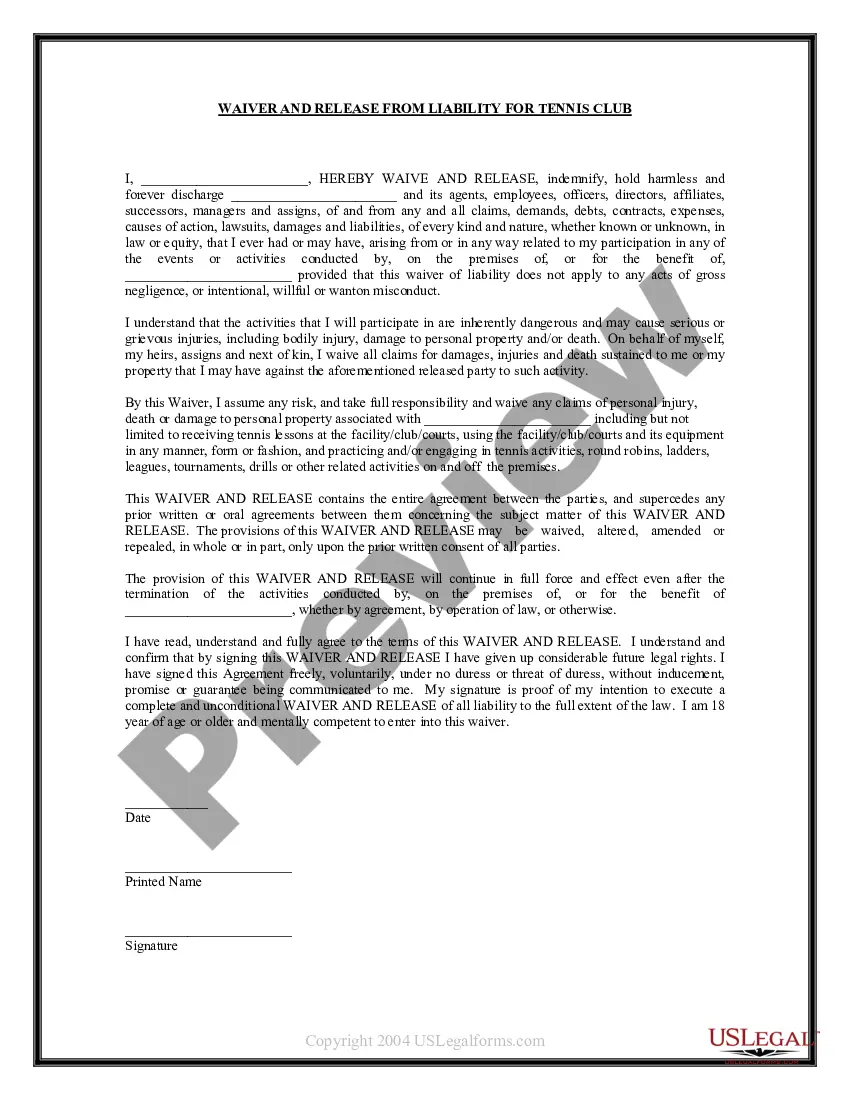
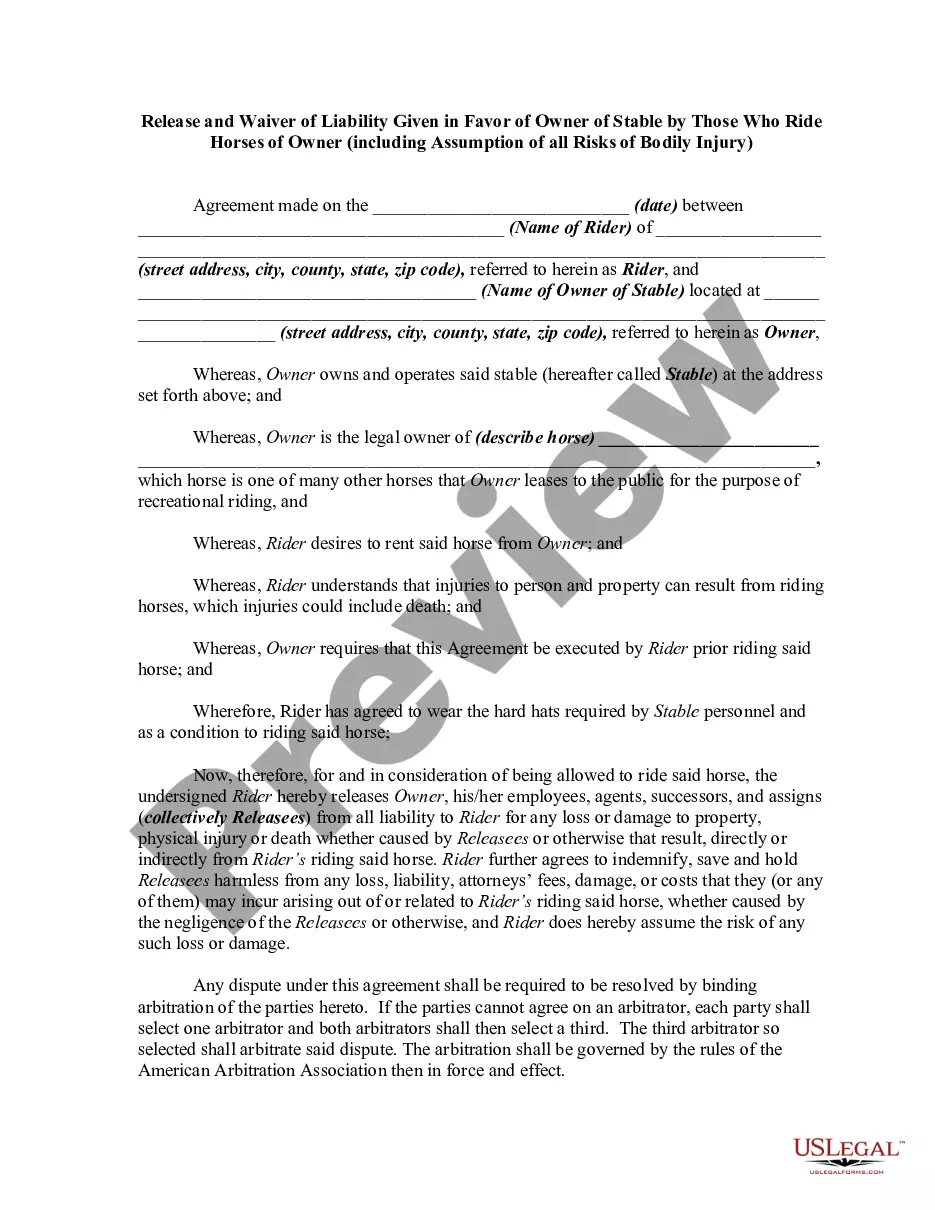
This form allows an adult to release a tennis club facility from liability for injuries which may be incurred while on the premises, taking part in activities, etc.
California Waiver and Release From Liability For Adult for Tennis Club
Category:
State:
Multi-State
Control #:
US-WAV-47A
Format:
Word;
Rich Text
Instant download
Description
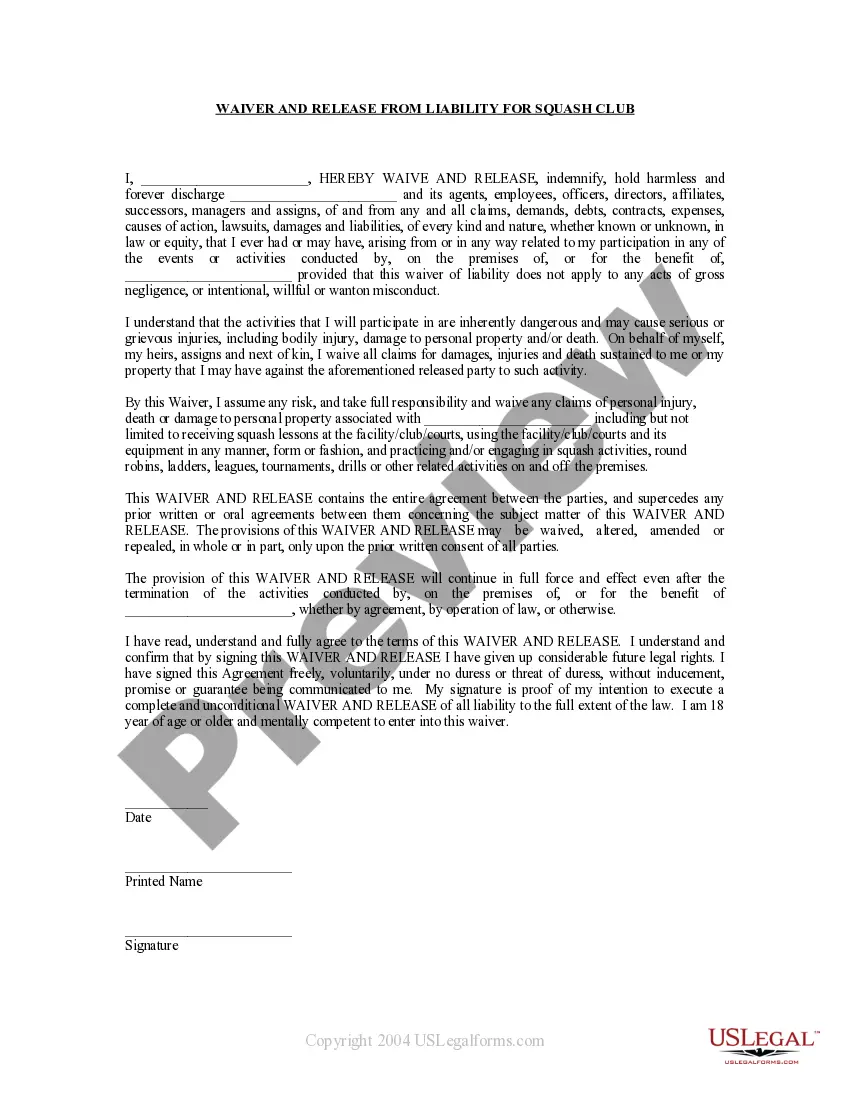
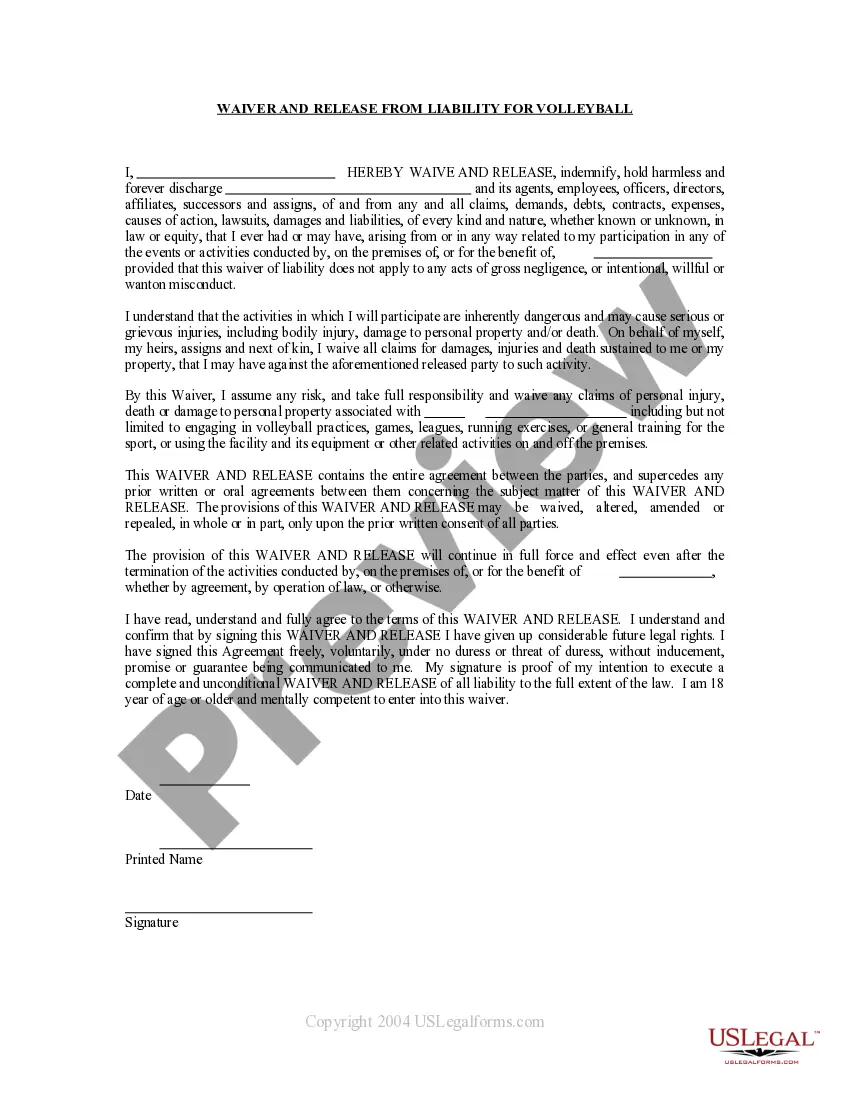
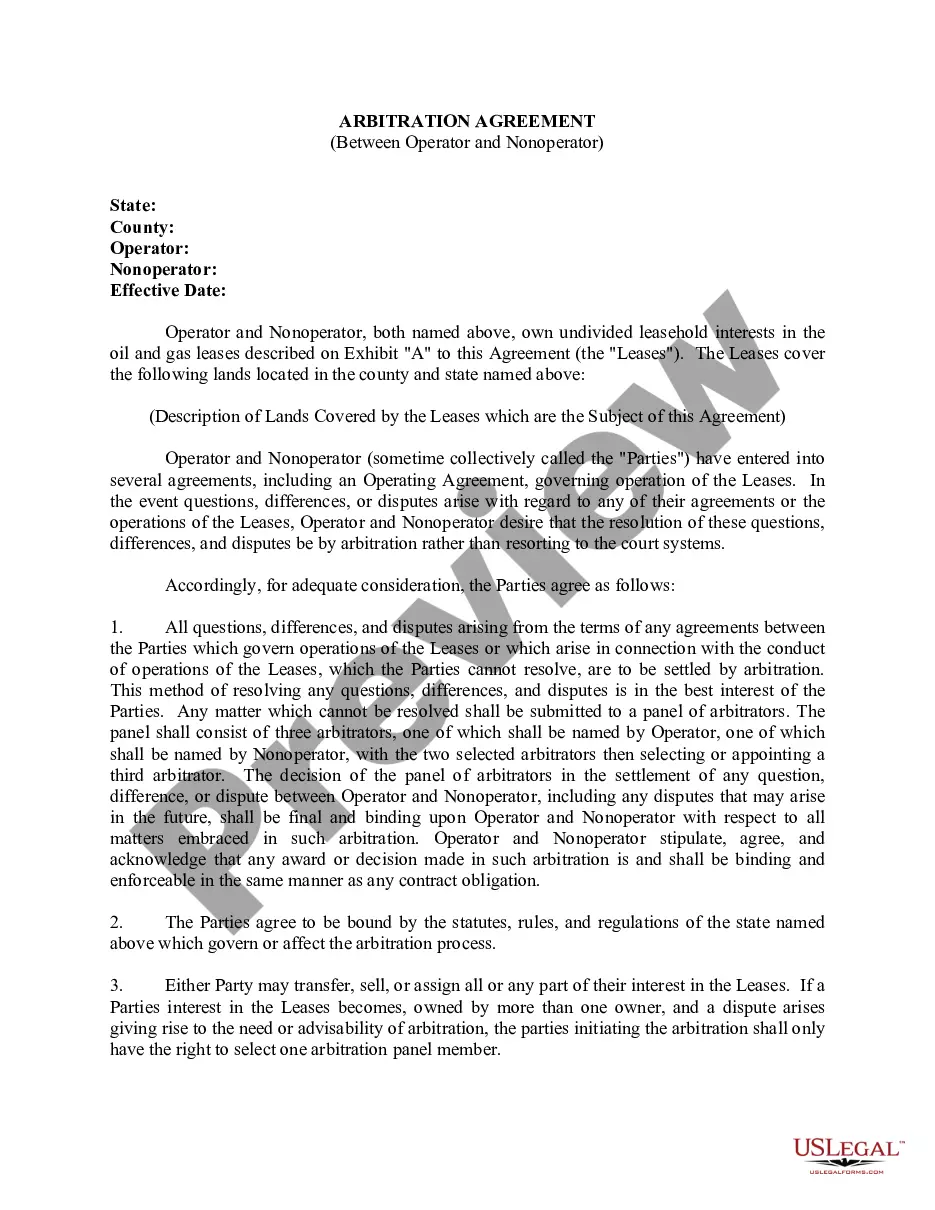

How to fill out Waiver And Release From Liability For Adult For Tennis Club?
US Legal Forms - one of the largest repositories of legal documents in the USA - offers a broad selection of legal document templates that you can download or print. By using the site, you can find thousands of forms for business and personal use, categorized by types, states, or keywords. You can obtain the latest versions of forms such as the California Waiver and Release From Liability For Adult for Tennis Club in moments.
If you already have a membership, Log In and download the California Waiver and Release From Liability For Adult for Tennis Club from the US Legal Forms collection. The Download button will appear on every form you view. You can access all previously downloaded forms in the My documents section of your account.
If you wish to use US Legal Forms for the first time, here are simple steps to get started: Make sure you have selected the correct form for your area/region. Click the Review button to examine the form’s details. Check the form summary to ensure you have selected the right form. If the form does not meet your needs, utilize the Search field at the top of the screen to find one that does. When you are satisfied with the form, confirm your selection by clicking on the Purchase now button. Then, choose the payment method you prefer and provide your credentials to register for the account.
- Complete the transaction. Use your credit card or PayPal account to finalize the transaction.
- Select the format and download the form to your device.
- Make edits. Fill out, modify, and print and sign the downloaded California Waiver and Release From Liability For Adult for Tennis Club.
- Every template you added to your account does not have an expiration date and is yours permanently. So, if you want to download or print another copy, simply go to the My documents section and click on the form you need.
- Access the California Waiver and Release From Liability For Adult for Tennis Club with US Legal Forms, the most extensive collection of legal document templates.
- Utilize thousands of professional and state-specific templates that meet your business or personal needs and requirements.
Form popularity
FAQ
In California, for a liability release to be enforceable, it must meet three essential criteria. First, it should clearly express the intent to release the party from liability. Second, the waiver must be written in a way that is understandable to the participant. Lastly, it should not violate public policy or involve conduct that is grossly negligent. A California Waiver and Release From Liability For Adult for Tennis Club can help you address these requirements effectively, ensuring your club's protection.
You can write your own liability waiver, but it is crucial to ensure that it meets all legal requirements. A well-crafted California Waiver and Release From Liability For Adult for Tennis Club should clearly outline the risks involved in tennis activities and include specific language that protects your club from liability. Using templates from reliable sources, such as US Legal Forms, can help you create a waiver that is both effective and compliant with California law.
Signing a waiver does not mean you automatically do not have the right to file a lawsuit after suffering a serious injury in California. Liability laws are complex and often require an attorney's assistance. If you signed a waiver before an activity that gave you an injury, speak to a lawyer about your rights.
In California, a liability waiver must be clear, unambiguous, and explicit. In other words, waivers cannot be printed in faded ink, in small font, on the back of a paper, or in an otherwise ambiguous form. If the waiver that you sign is not represented clearly, it may not hold up in the event of a lawsuit.
In California, waivers of liability are generally enforceable so long as they have been drafted correctly, are explicit as to the scope of coverage, are legible and use high-visibility text, and do not illegally waive unknown or unrelated claims.
Generally, a liability waiver document is a legally binding agreement that relinquishes the right of one party to pursue legal remedy for injuries accrued on the property, regardless of fault involved.
In general, waivers of liability are enforceable in California so long as they have been drafted correctly and explicitly discuss the scope of coverage. Waivers also have to be legible and use high visibility text, and they cannot illegally waive unknown or unrelated claims.
You might think that since you signed a waiver acknowledging the risks of the activity, you have no legal leg to stand on to file a personal injury lawsuit. Waivers can make personal injury lawsuits more complex, but you can still seek damages for injuries that could have and should have been prevented.
In California, waivers of liability are generally enforceable so long as they have been drafted correctly, are explicit as to the scope of coverage, are legible and use high-visibility text, and do not illegally waive unknown or unrelated claims.
To sum it up, customers can still sue business owners even when they've signed a waiver to use the business.