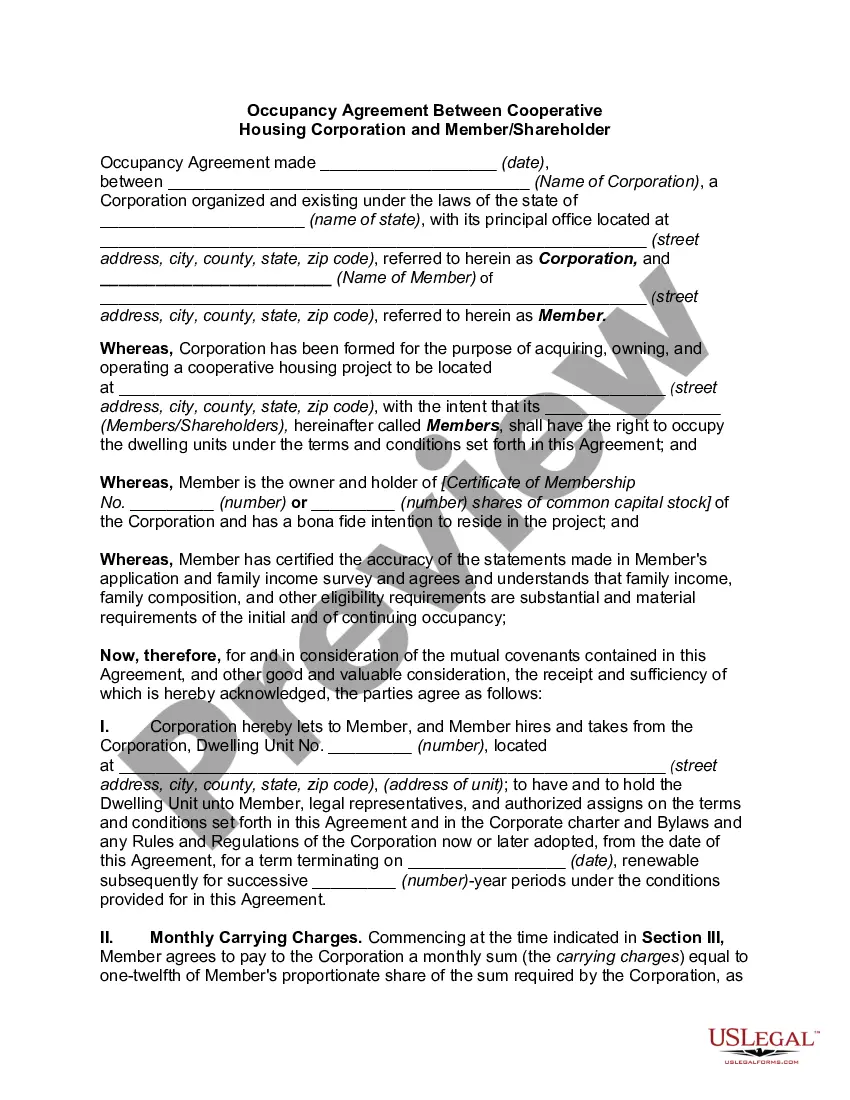
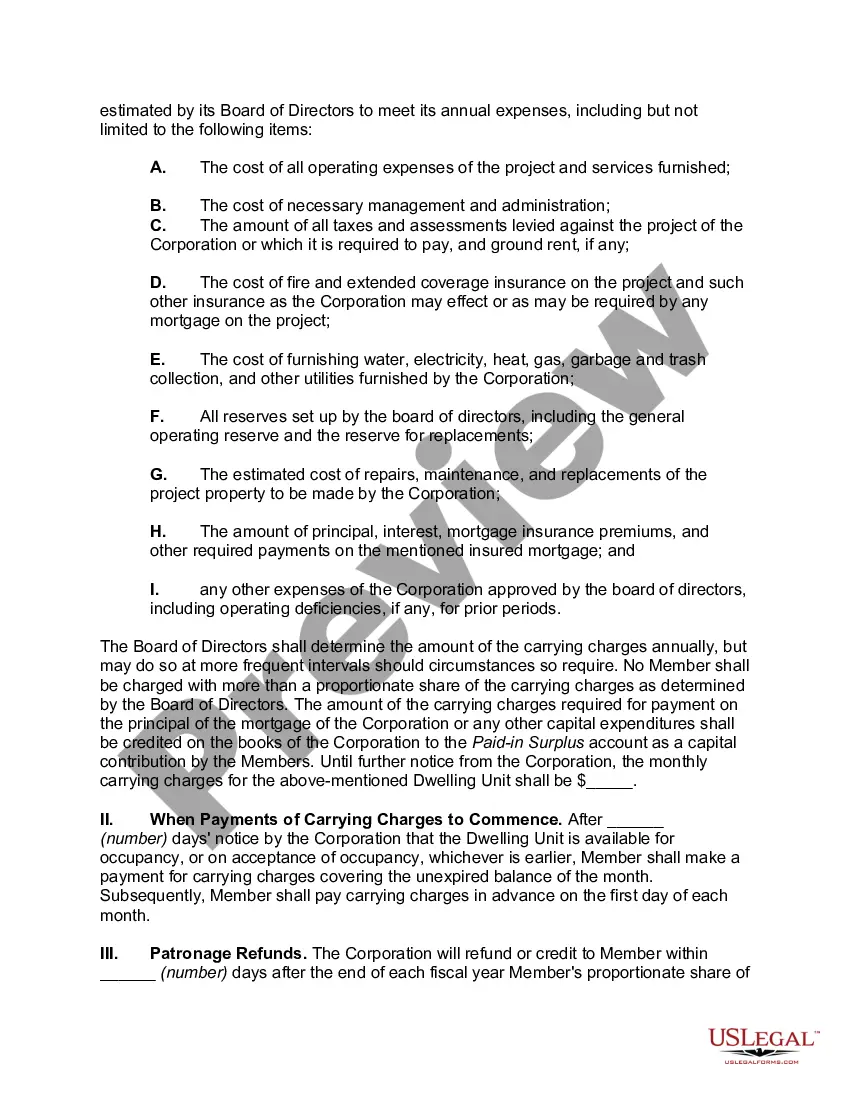
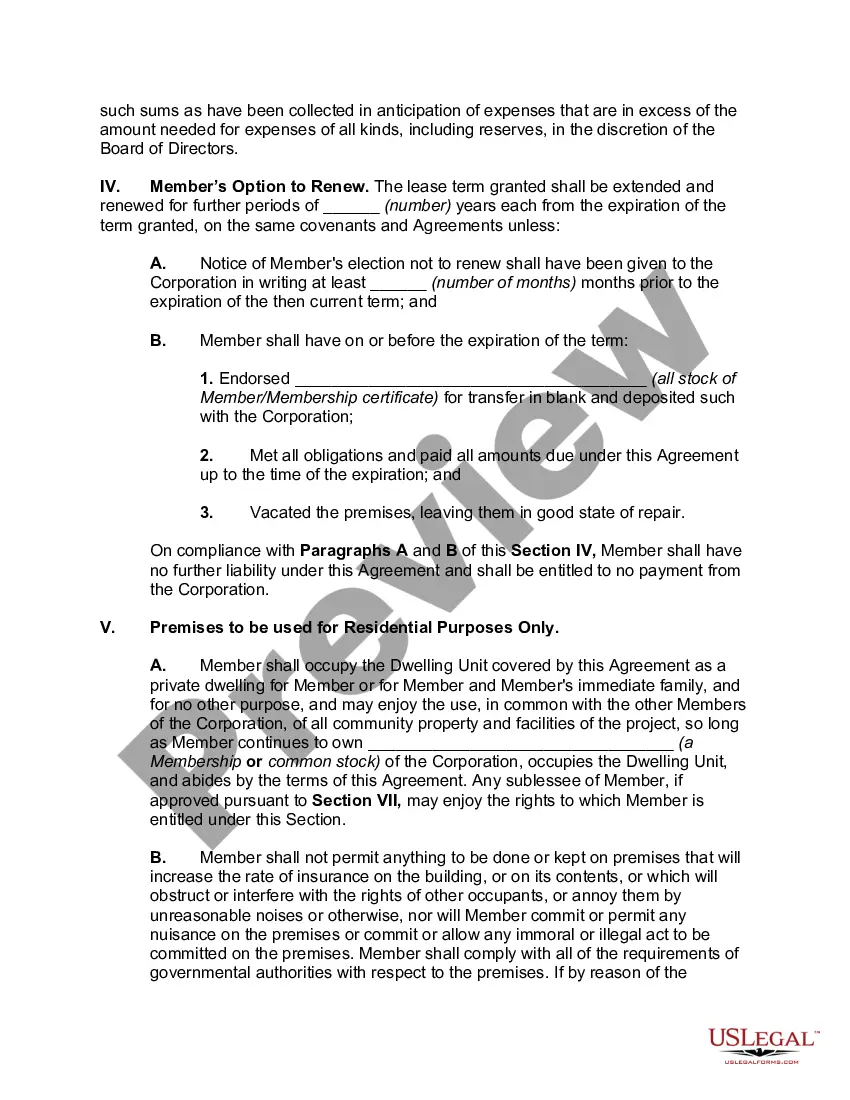
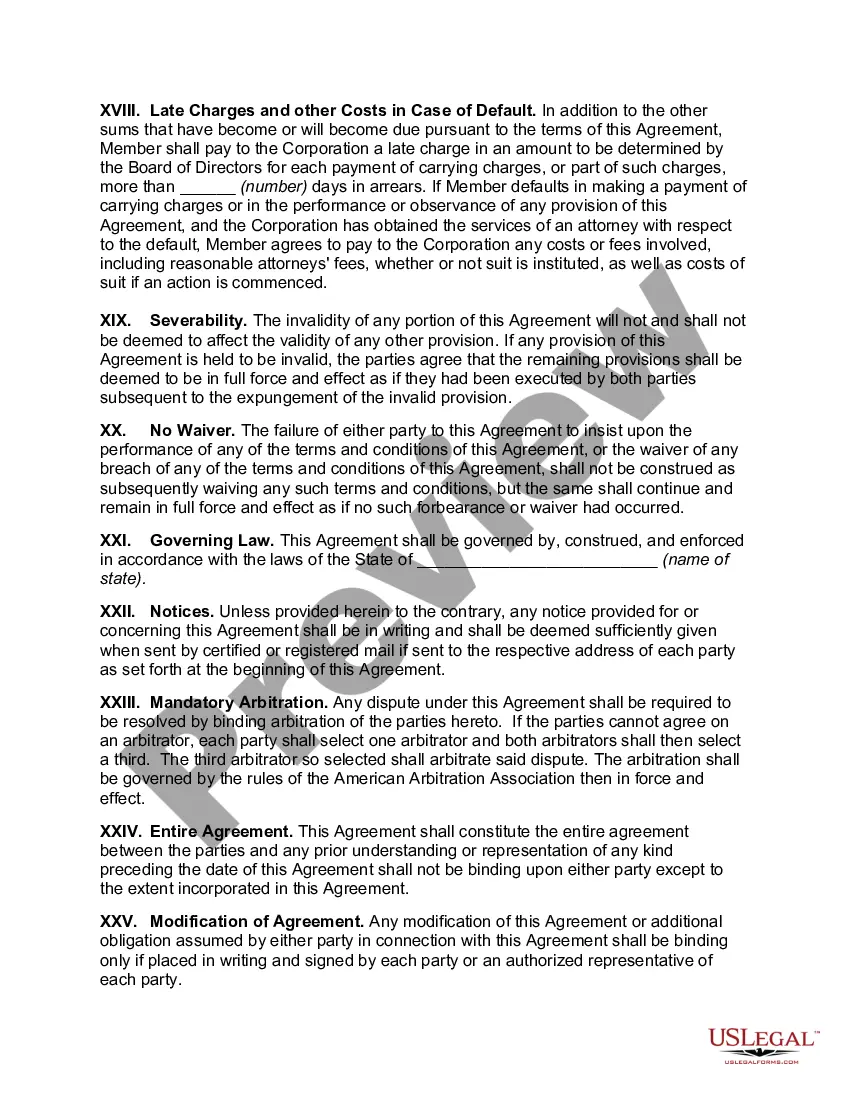
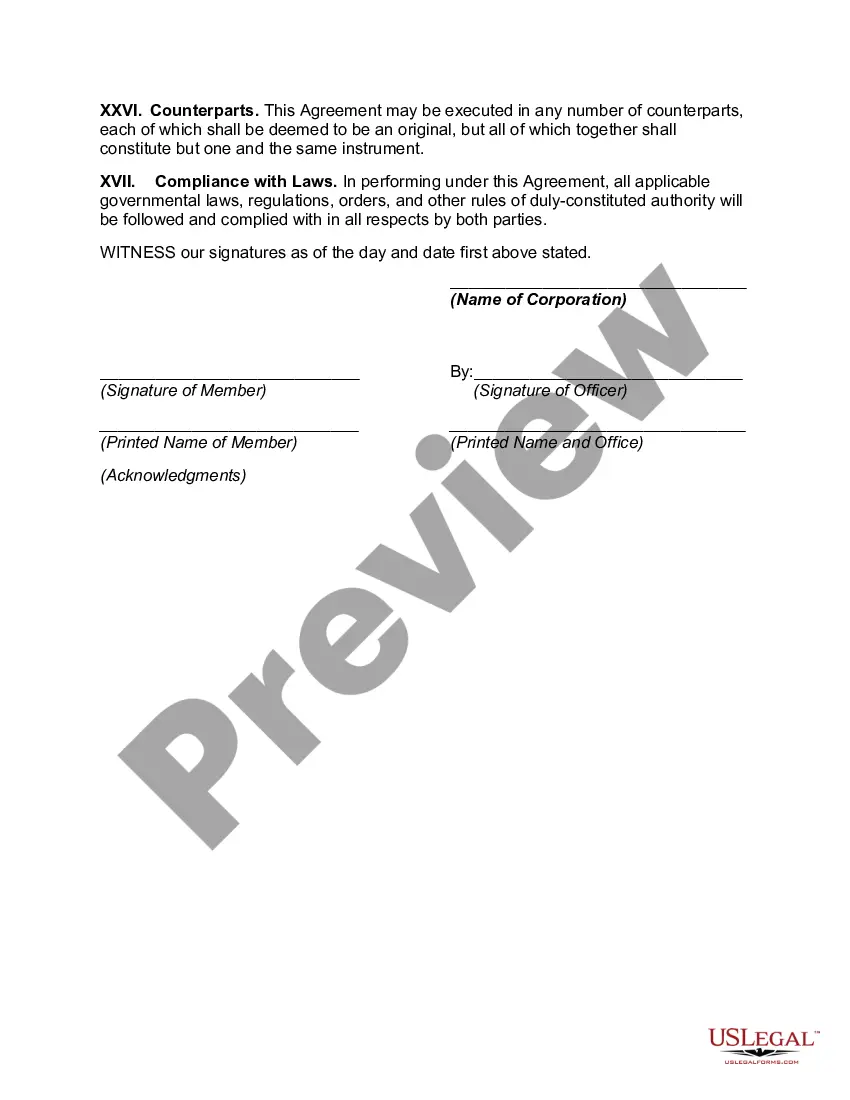
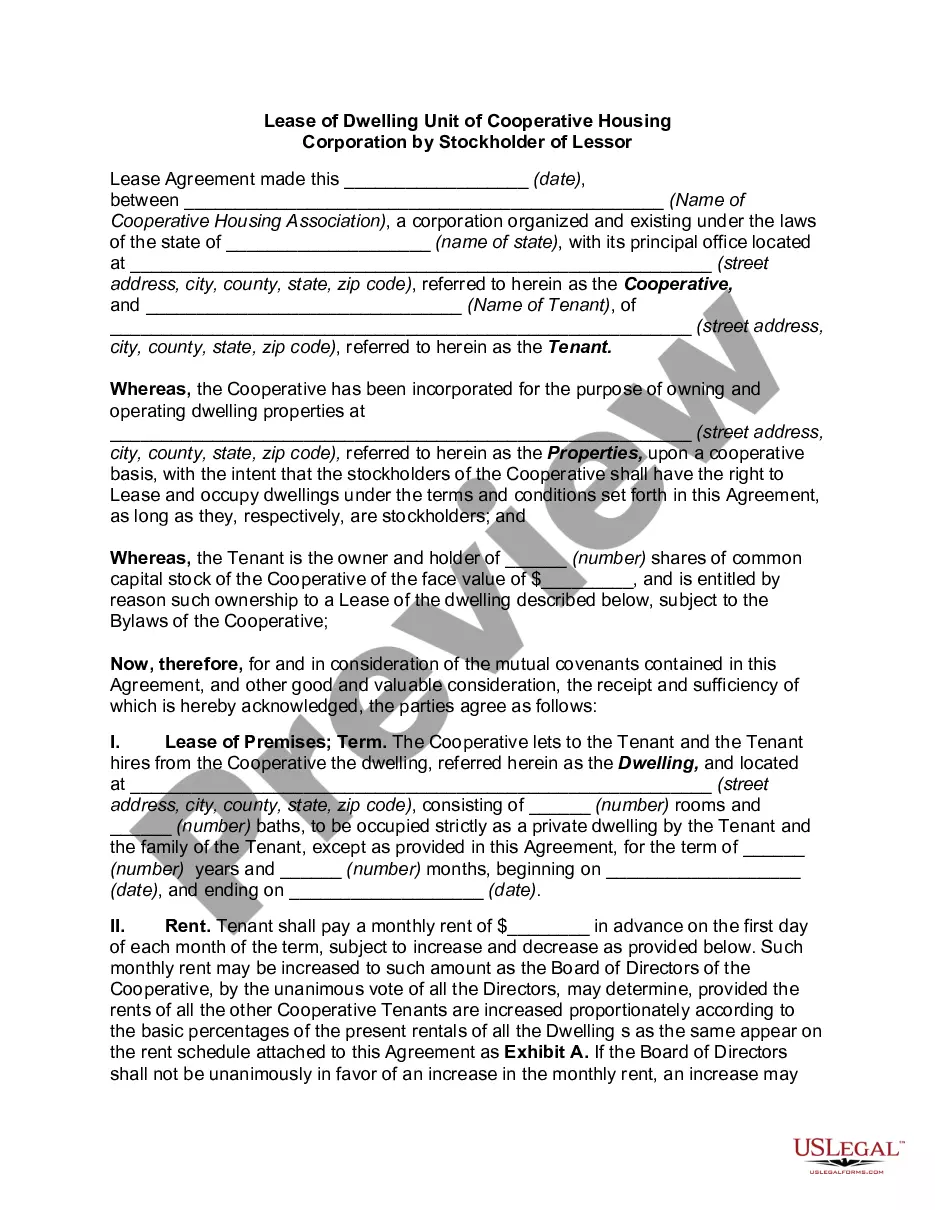
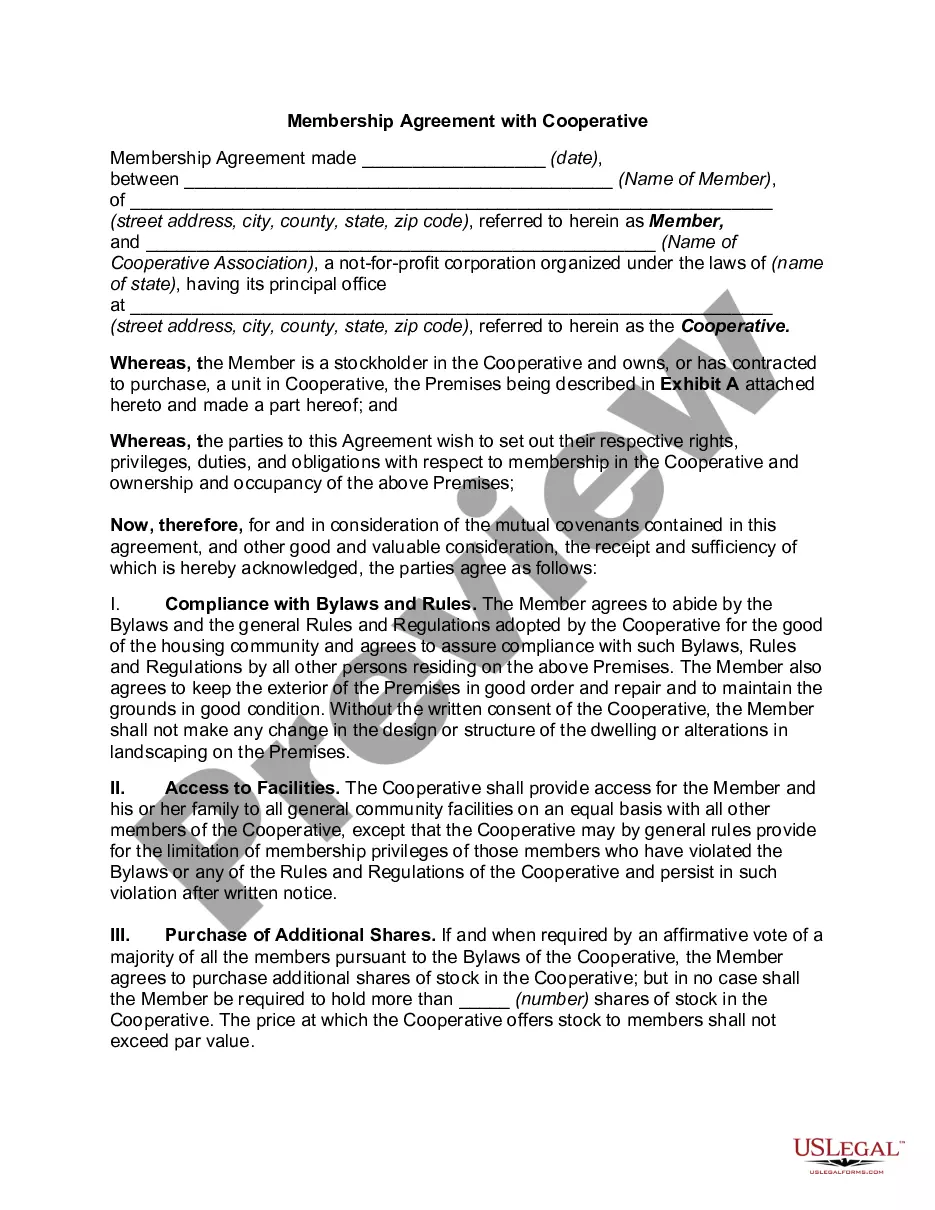
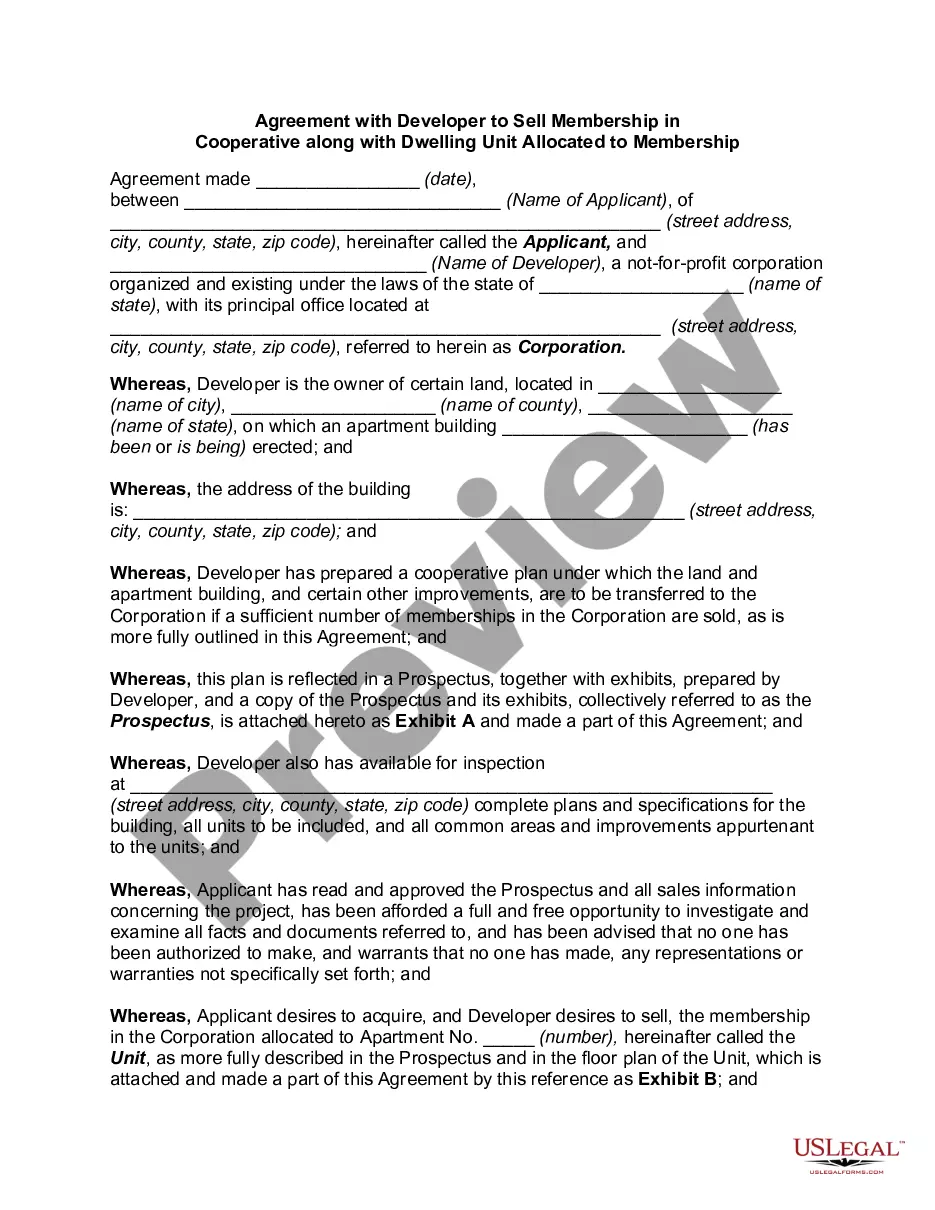
California Occupancy Agreement Between Cooperative Housing Corporation and Member/Shareholder
Description
Get your form ready online
Our built-in tools help you complete, sign, share, and store your documents in one place.
Make edits, fill in missing information, and update formatting in US Legal Forms—just like you would in MS Word.
Download a copy, print it, send it by email, or mail it via USPS—whatever works best for your next step.
Sign and collect signatures with our SignNow integration. Send to multiple recipients, set reminders, and more. Go Premium to unlock E-Sign.
If this form requires notarization, complete it online through a secure video call—no need to meet a notary in person or wait for an appointment.
We protect your documents and personal data by following strict security and privacy standards.

Make edits, fill in missing information, and update formatting in US Legal Forms—just like you would in MS Word.

Download a copy, print it, send it by email, or mail it via USPS—whatever works best for your next step.

Sign and collect signatures with our SignNow integration. Send to multiple recipients, set reminders, and more. Go Premium to unlock E-Sign.

If this form requires notarization, complete it online through a secure video call—no need to meet a notary in person or wait for an appointment.

We protect your documents and personal data by following strict security and privacy standards.
Looking for another form?


How to fill out Occupancy Agreement Between Cooperative Housing Corporation And Member/Shareholder?
Finding the appropriate legal document format can be a challenge. Of course, there are many online templates available, but how do you locate the legal document you need.
Use the US Legal Forms website. This service provides thousands of templates, including the California Occupancy Agreement Between Cooperative Housing Corporation and Member/Shareholder, that you can utilize for business and personal purposes. All the forms are reviewed by experts and comply with state and federal regulations.
If you are already registered, Log In to your account and click the Download button to receive the California Occupancy Agreement Between Cooperative Housing Corporation and Member/Shareholder. Use your account to search for the legal forms you have acquired previously. Go to the My documents section of your account to obtain another copy of the document you need.
US Legal Forms is the largest repository of legal forms from which you can find numerous document templates. Use this service to acquire professionally crafted documents that comply with state regulations.
- First, ensure you have selected the correct form for your city/county. You can browse the form using the Preview button and review the form's description to confirm this is the right one for you.
- If the form does not meet your expectations, use the Search area to find the appropriate form.
- Once you are confident that the form is suitable, click the Buy now button to acquire the form.
- Select the pricing plan you prefer and fill in the required details. Create your account and complete your purchase using your PayPal account or credit card.
- Choose the file format and download the legal document format to your device.
- Complete, edit, print, and sign the obtained California Occupancy Agreement Between Cooperative Housing Corporation and Member/Shareholder.
Form popularity
FAQ
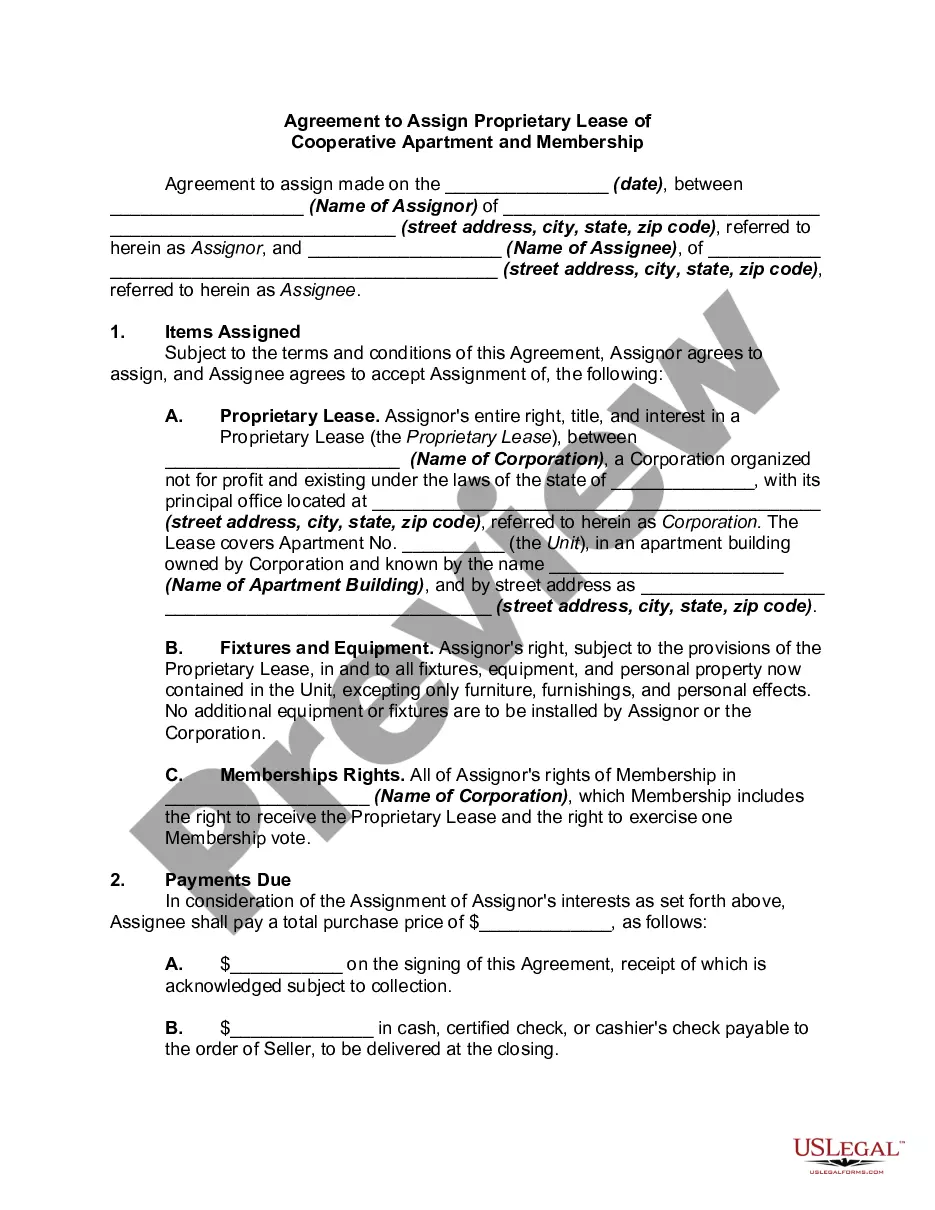
A proprietary lease is an agreement that grants shareholders in a co-op the right to live in a particular apartment space. Also known as occupancy agreements, proprietary leases stake out the rights and responsibilities of shareholders and the cooperative corporation's board of directors.
Each co-op owner either holds shares in the association just like owning shares in any other corporation or, if there are no shares, has what is known as a proprietary lease. That lease spells out the rights and responsibilities of the owner, as well as the obligations and duties of the association.
ConsMost co-ops require a 10 to 20 percent down payment.The rules for renting your co-op are often quite restrictive.Because there are a limited amount of lenders who do co-op loans, your loan options are restricted.Typically it is harder to rent your co-op with the restrictions that most co-ops have.
In a Market Equity co-op, a member joins the co-op, buys a share, and lives in a unit. This is similar to something like a condo complex, but instead of owning one condo, you own a share in the whole complex. When you decide to leave the co-op, you can sell your share at whatever the market will pay for it.
Condominiums and cooperatives are known as common interest communities. All the common space, including hallways and corridors, lobbies and common rooms, and exterior grounds, are commonly owned or maintained by all the owners in the development.
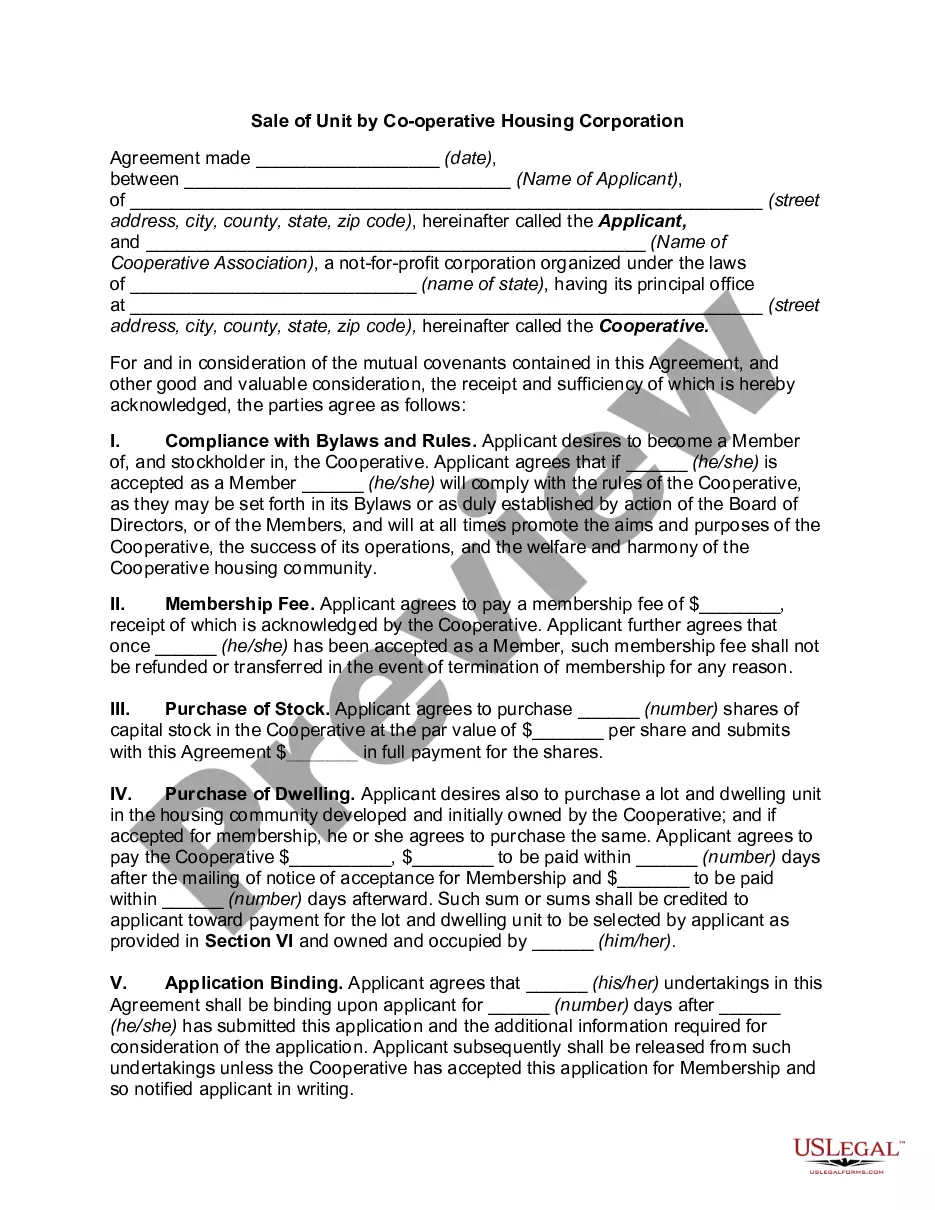
The major difference between a condominium and a cooperative is that in a cooperative, each owner does not have outright ownership of any specific, identifiable unit. Rather, title to the entire property is held by the cooperative (usually a corporation), and the residents own stock in the corporation.
Proprietary Lease. A lease given by a corporation to another. It is often used in a co-op context, where the owner is given a certain number of shares in the co-op, along with a proprietary lease for one of the residences in the building. Maintenance.
The owner of a co-op does not own his or her unit. The co-op is generally a corporation, with a corporate board of directors, and each resident is a "shareholder." Co-op buyers do not sign a deed. Instead, they purchase shares of the corporation, shares that include a lease granting use of a specific unit.
Why is a co-op lease called a proprietary lease? There are extensive management requirements. The lease has a fixed rent.
A proprietary lease, also referred to as an occupancy agreement, gives a shareholder in a housing cooperative the right to occupy a particular dwelling unit. Homebuyers who join a co-op are purchasing shares in a corporation rather than acquiring real estate.