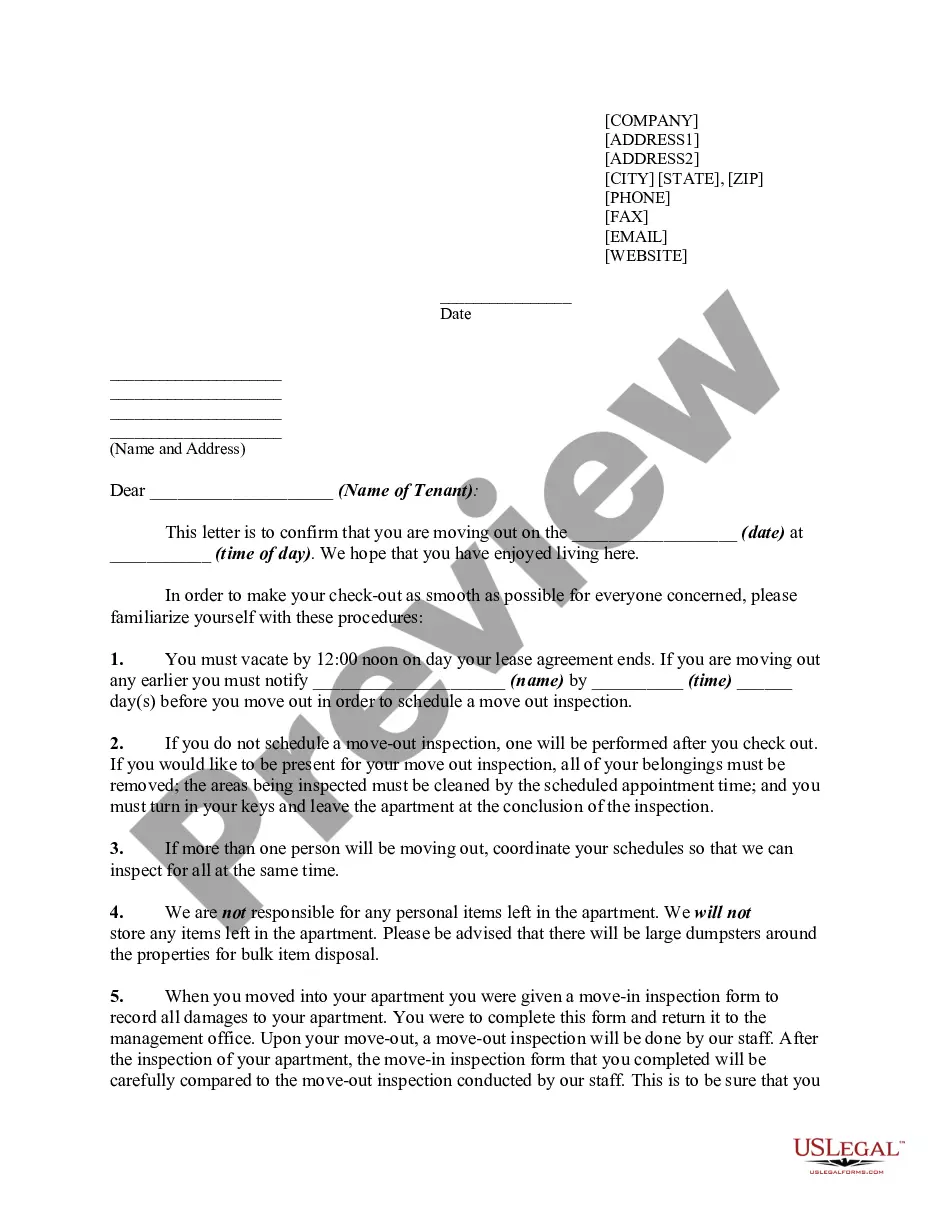
California Co-Branding Agreement
Description



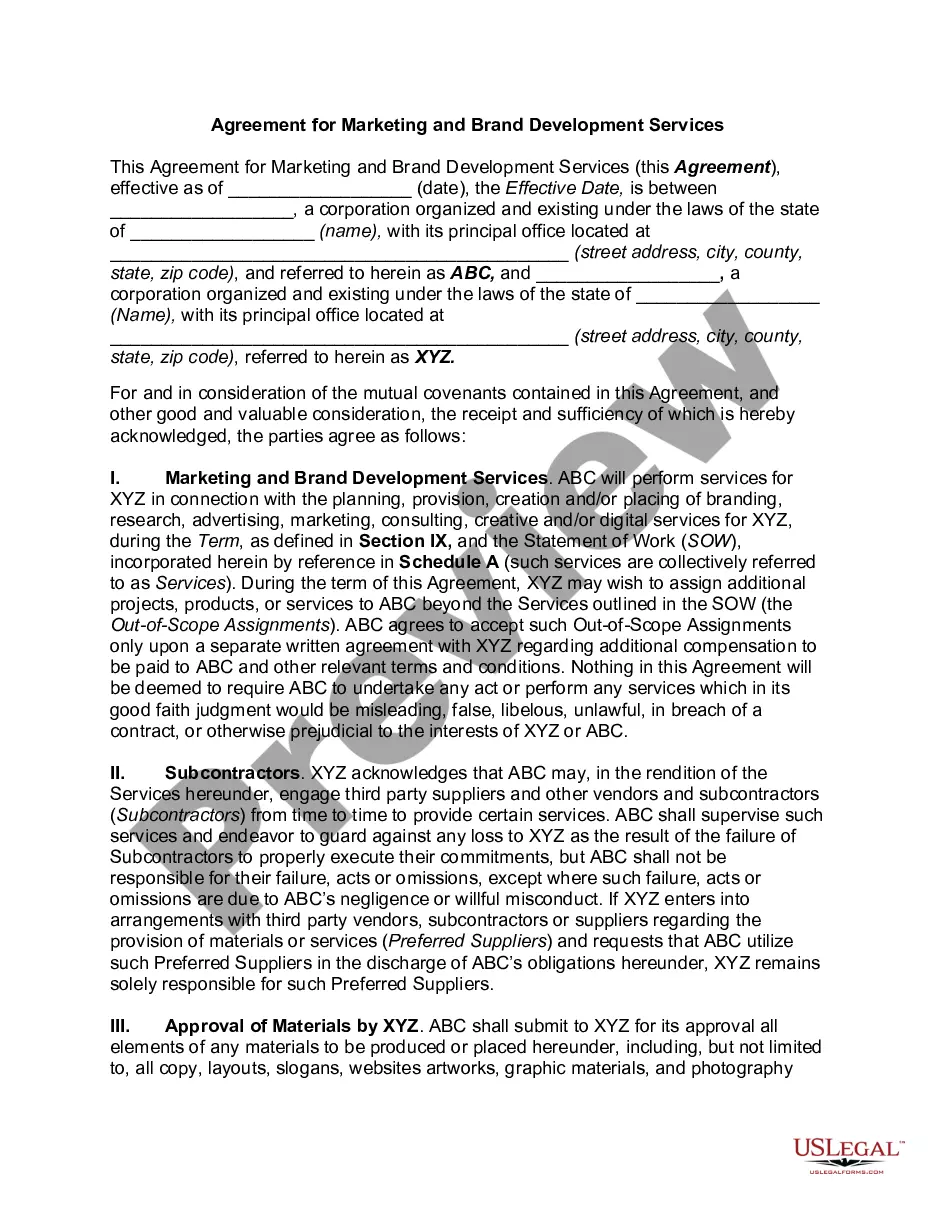
Get your form ready online
Our built-in tools help you complete, sign, share, and store your documents in one place.
Make edits, fill in missing information, and update formatting in US Legal Forms—just like you would in MS Word.
Download a copy, print it, send it by email, or mail it via USPS—whatever works best for your next step.
Sign and collect signatures with our SignNow integration. Send to multiple recipients, set reminders, and more. Go Premium to unlock E-Sign.
If this form requires notarization, complete it online through a secure video call—no need to meet a notary in person or wait for an appointment.
We protect your documents and personal data by following strict security and privacy standards.

Make edits, fill in missing information, and update formatting in US Legal Forms—just like you would in MS Word.

Download a copy, print it, send it by email, or mail it via USPS—whatever works best for your next step.

Sign and collect signatures with our SignNow integration. Send to multiple recipients, set reminders, and more. Go Premium to unlock E-Sign.

If this form requires notarization, complete it online through a secure video call—no need to meet a notary in person or wait for an appointment.

We protect your documents and personal data by following strict security and privacy standards.
Looking for another form?
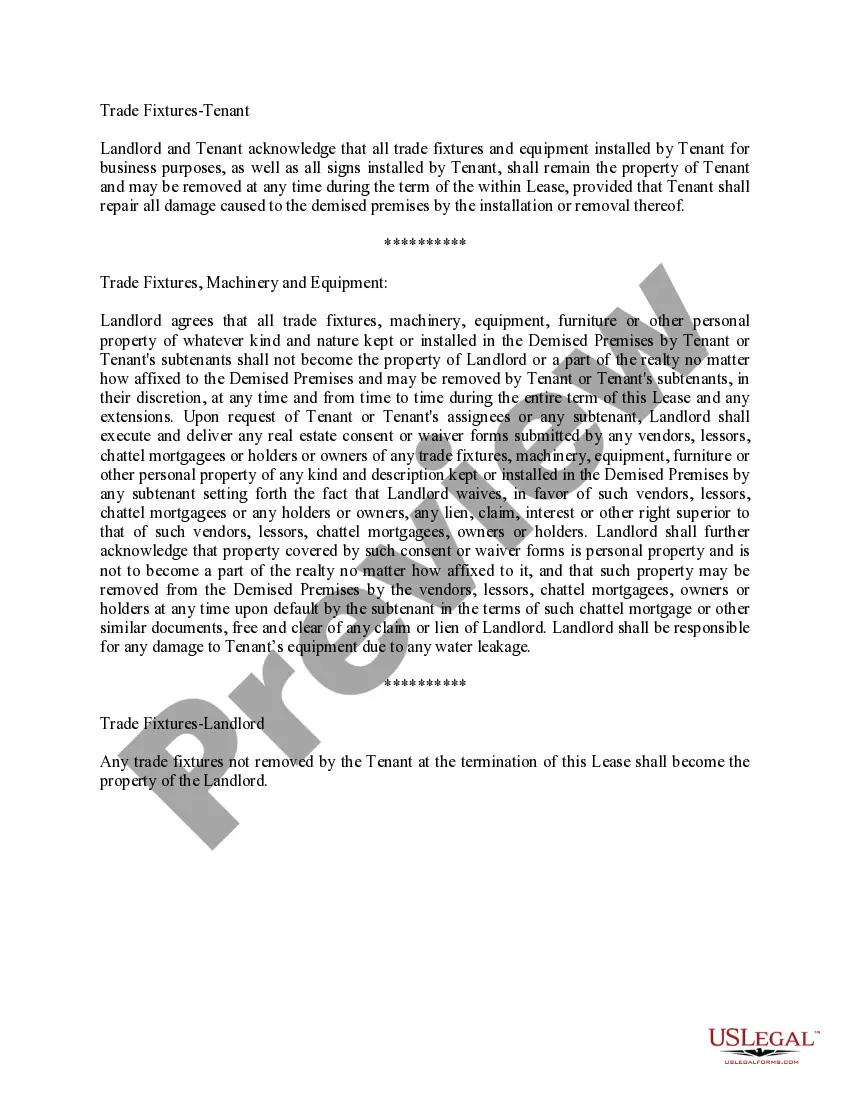


How to fill out Co-Branding Agreement?
You can invest time online searching for the legal document template that meets the state and federal requirements you will need.
US Legal Forms provides thousands of legal forms that can be reviewed by experts.
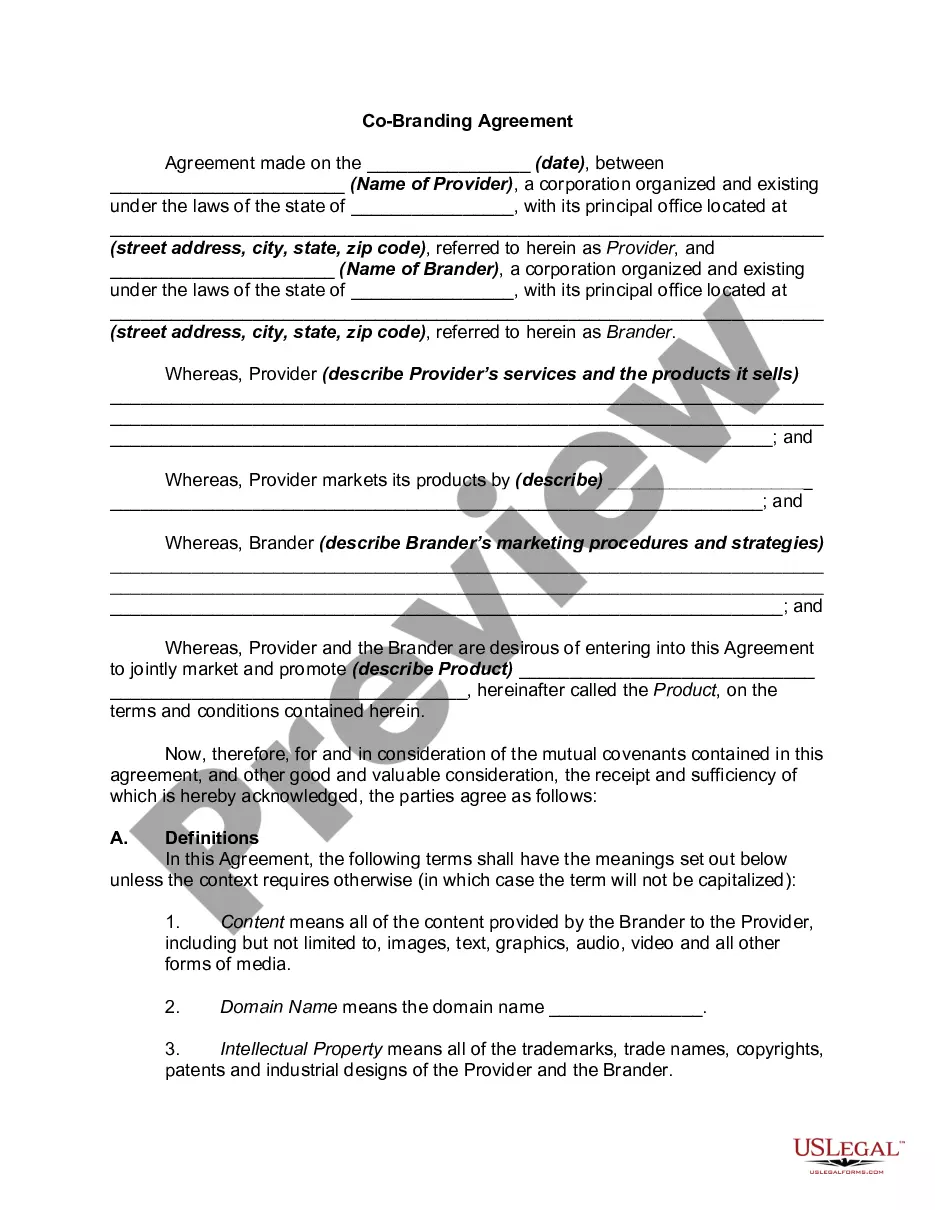
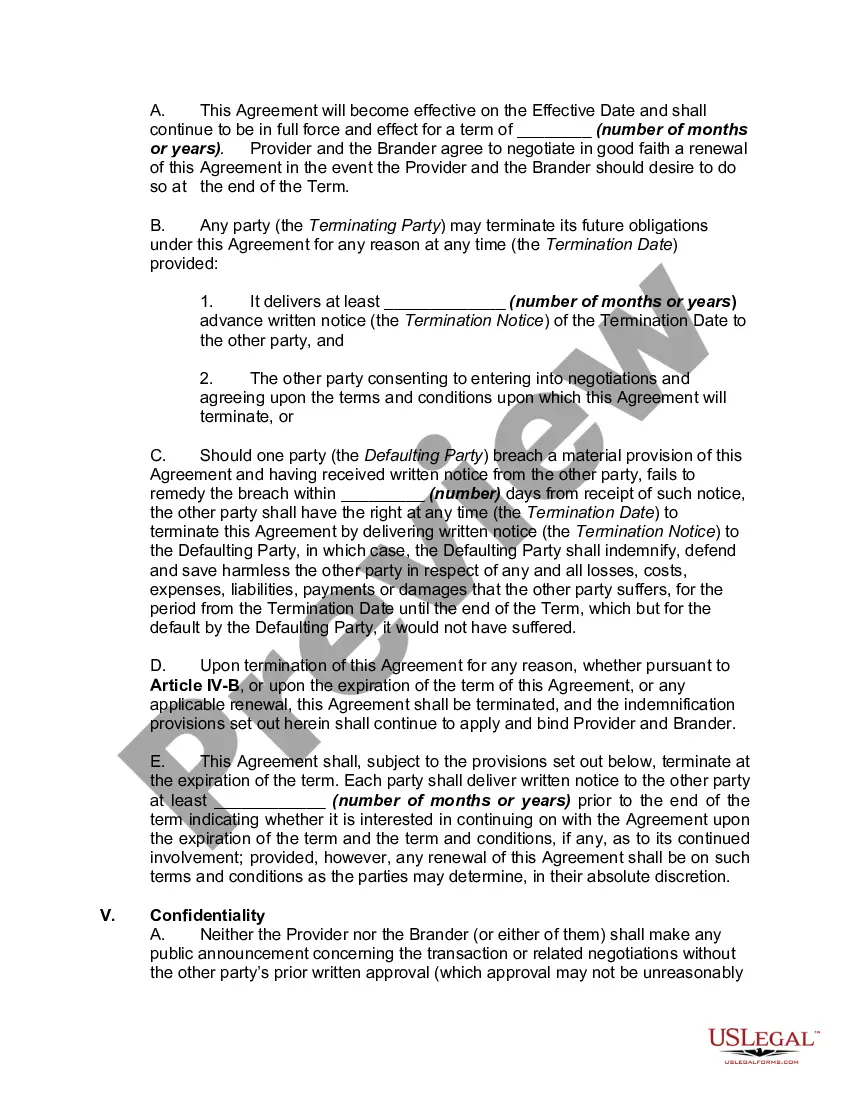
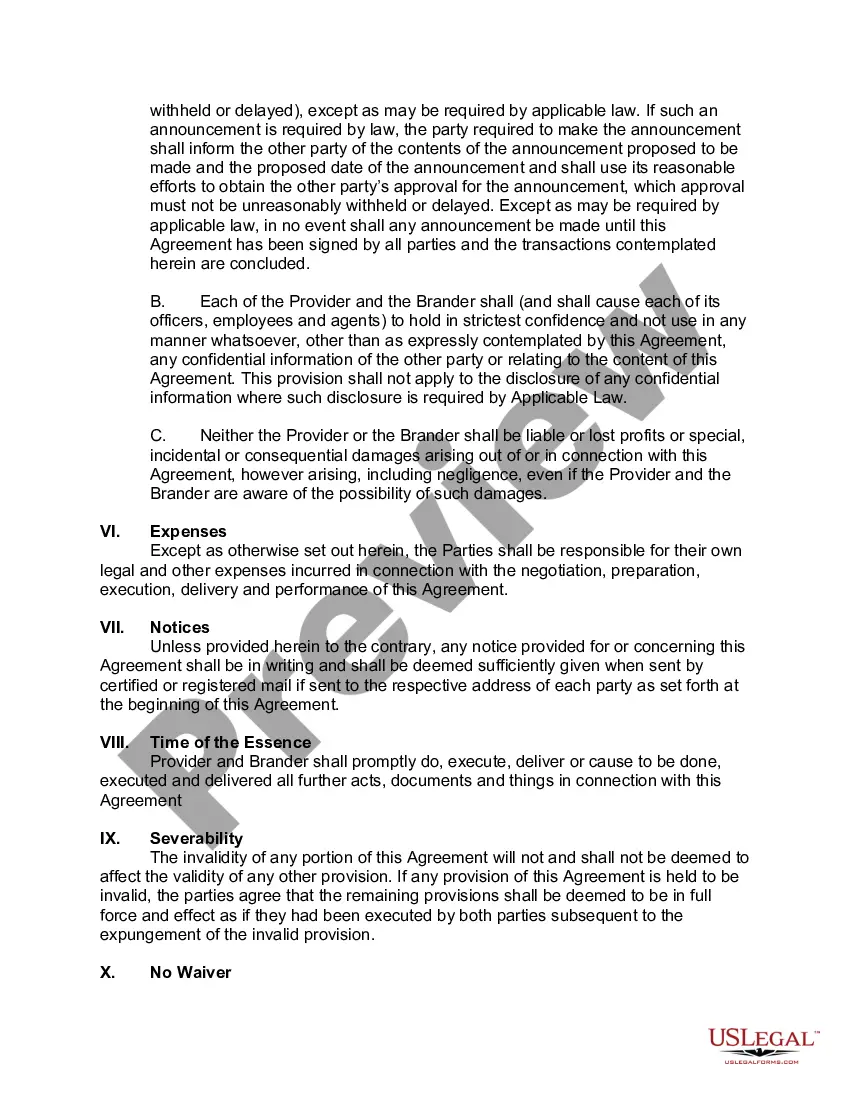
You can acquire or print the California Co-Branding Agreement from the service.
- If you already have a US Legal Forms account, you can Log In and click the Download option.
- After that, you can complete, edit, print, or sign the California Co-Branding Agreement.
- Each legal document template you obtain is yours permanently.
- To access another copy of any purchased form, go to the My documents tab and click the relevant option.
- If you are using the US Legal Forms website for the first time, follow the straightforward steps outlined below.
- First, make sure you have chosen the correct document template for your area that you select.
Form popularity
FAQ
Co-branding is the collaboration between two brands to create a new product that showcases both identities. For example, a popular coffee brand might team up with a dairy company to launch a coffee drink that includes their cream. A solid California Co-Branding Agreement can establish the terms of such collaborations, ensuring both brands gain recognition and market traction.
To create a co-branding initiative, start by identifying brands that complement your own, ensuring shared values and goals. Once you have chosen partners, draft a California Co-Branding Agreement outlining roles, responsibilities, and expectations. Such a clear agreement helps navigate the partnership and maximizes the success of your joint marketing efforts.
Dual branding involves two brands marketing themselves without forming a new product, while co-branding creates a distinct product that merges elements from both brands. With a California Co-Branding Agreement, brands collaborate closely, producing a unique offering that carries the strengths of both. This distinction clarifies expectations and fosters better cooperation between brands.
The co-branding process generally consists of identifying potential partners, aligning brand values, and creating a strategic plan. After partners agree on their objectives, they can draft a California Co-Branding Agreement to formalize their roles and responsibilities. This careful planning ensures that both brands benefit from increased exposure and market share.
The three levels of co-branding include ingredient co-branding, composite co-branding, and cooperative co-branding. Ingredient co-branding involves a main product featuring a well-known component or ingredient, while composite co-branding combines two or more brands to create a new product. Understanding these levels can enhance your California Co-Branding Agreement by defining how brands collaborate effectively.
Partnerships and co-branding serve different purposes in the business world. A partnership typically implies a deeper, more legal relationship, wherein partners share ownership, profits, and responsibilities for the business's operations. In contrast, co-branding focuses on collaboration for marketing purposes; it highlights shared branding efforts to reach customers without merging ownership. A California Co-Branding Agreement helps clearly define the roles and expectations of each brand, ensuring successful marketing outcomes.
Co-branding can offer significant advantages, but it also comes with limitations. For instance, the brands must align closely in values and reputation; otherwise, one brand's negative perception can affect the other. Additionally, a California Co-Branding Agreement may define restrictions on how each brand represents the partnership, potentially limiting marketing flexibility. Understanding these limitations can help businesses navigate co-branding partnerships more effectively.
A partner typically refers to an individual or entity that contributes to a business and shares its profits and losses, usually defined by a partnership agreement. On the other hand, a co-owner has legal rights and responsibilities for property or assets, having ownership stakes in a company. In a California Co-Branding Agreement, parties involved may establish specific roles that clarify whether they are partners working together or co-owners sharing assets, ensuring clear expectations and legal protections.
Co-branding refers to a marketing strategy where two or more brands collaborate to create a single product or service that highlights the strengths of each brand. In the context of a California Co-Branding Agreement, businesses establish a framework for this collaboration, allowing them to share resources and enhance visibility. This partnership leverages the reputation and customer base of both brands to achieve mutual benefits while promoting their combined offerings. Understanding co-branding is essential for any business looking to maximize impact in the competitive market.
Co-branding comes with risks such as brand damage and misalignment in public perception. If one brand experiences negative publicity, it can affect the other brand's image too. A California Co-Branding Agreement is crucial in mitigating these risks by including clauses that protect each brand’s reputation and outline dispute resolution methods.