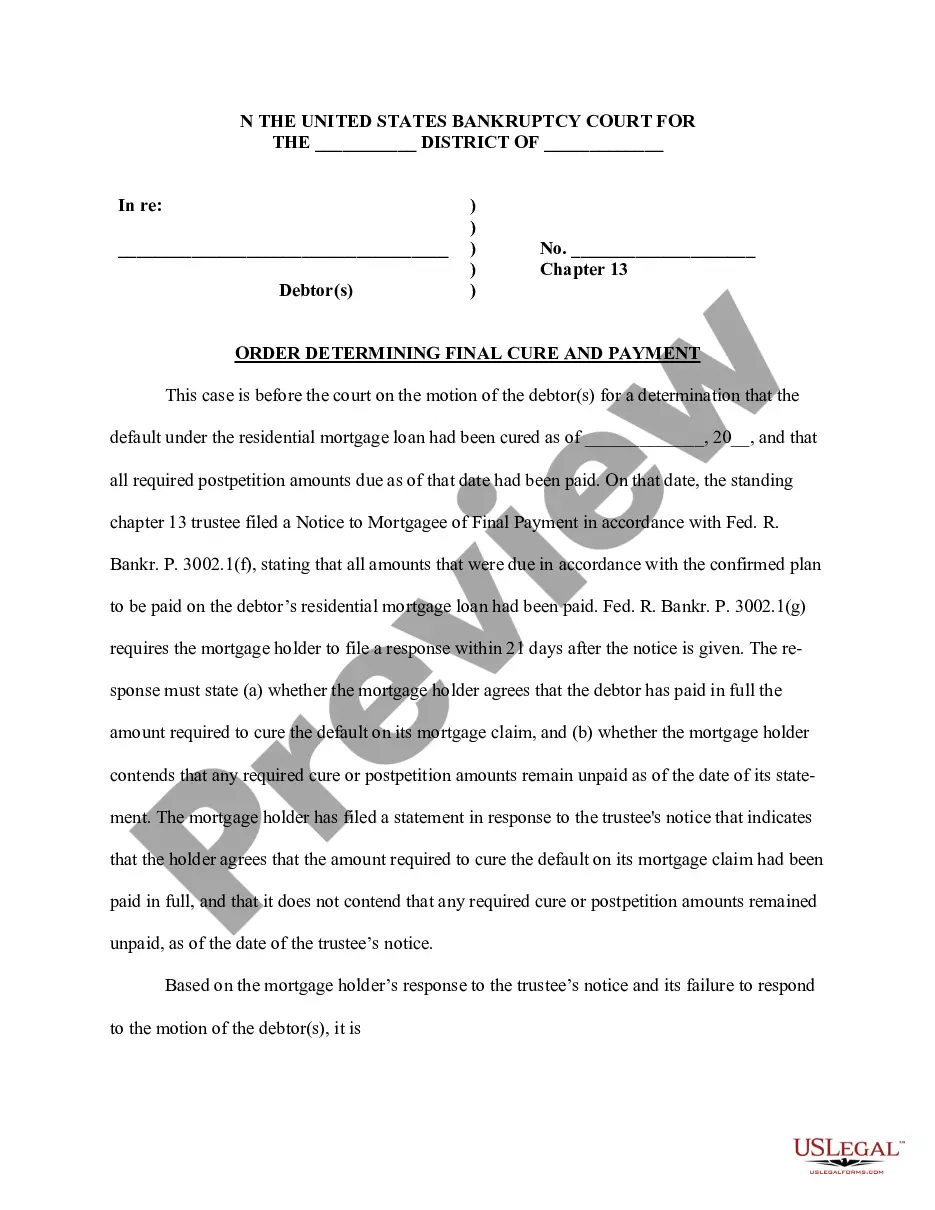
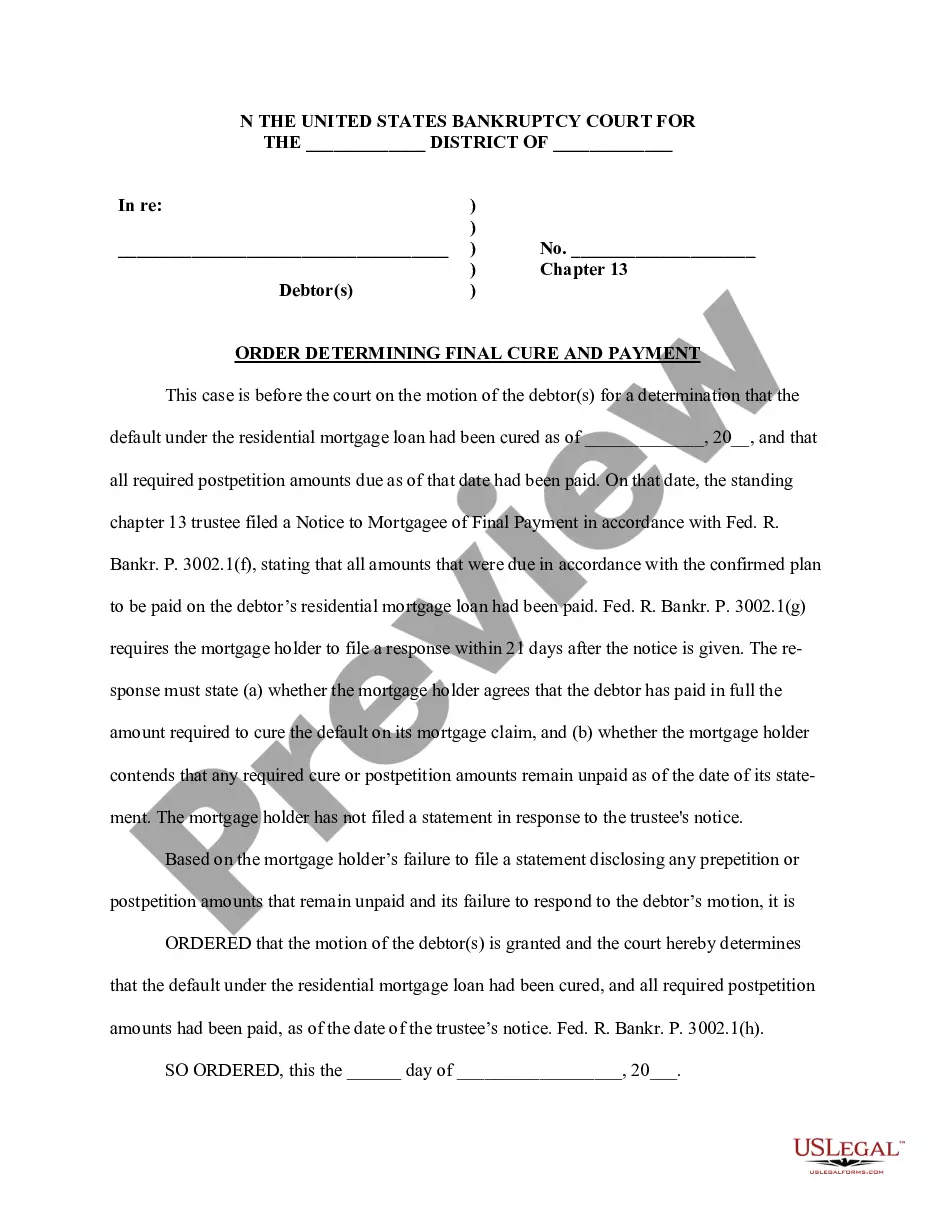
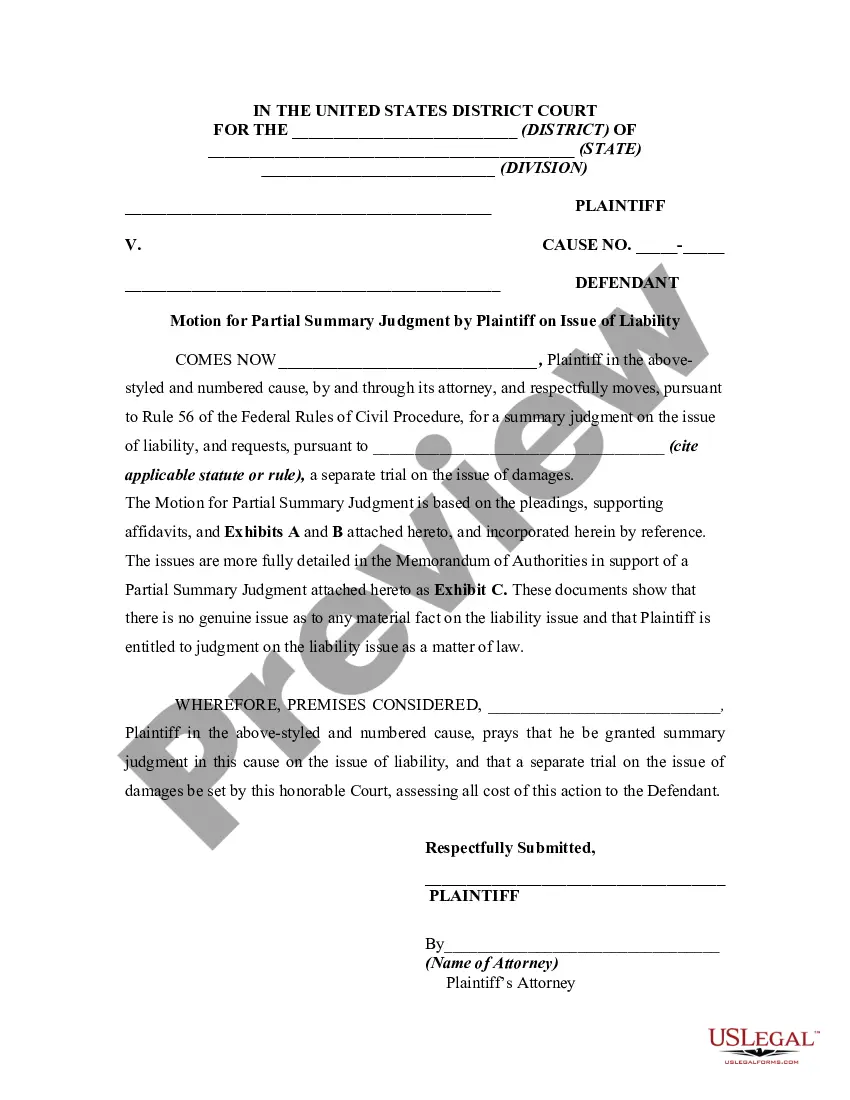
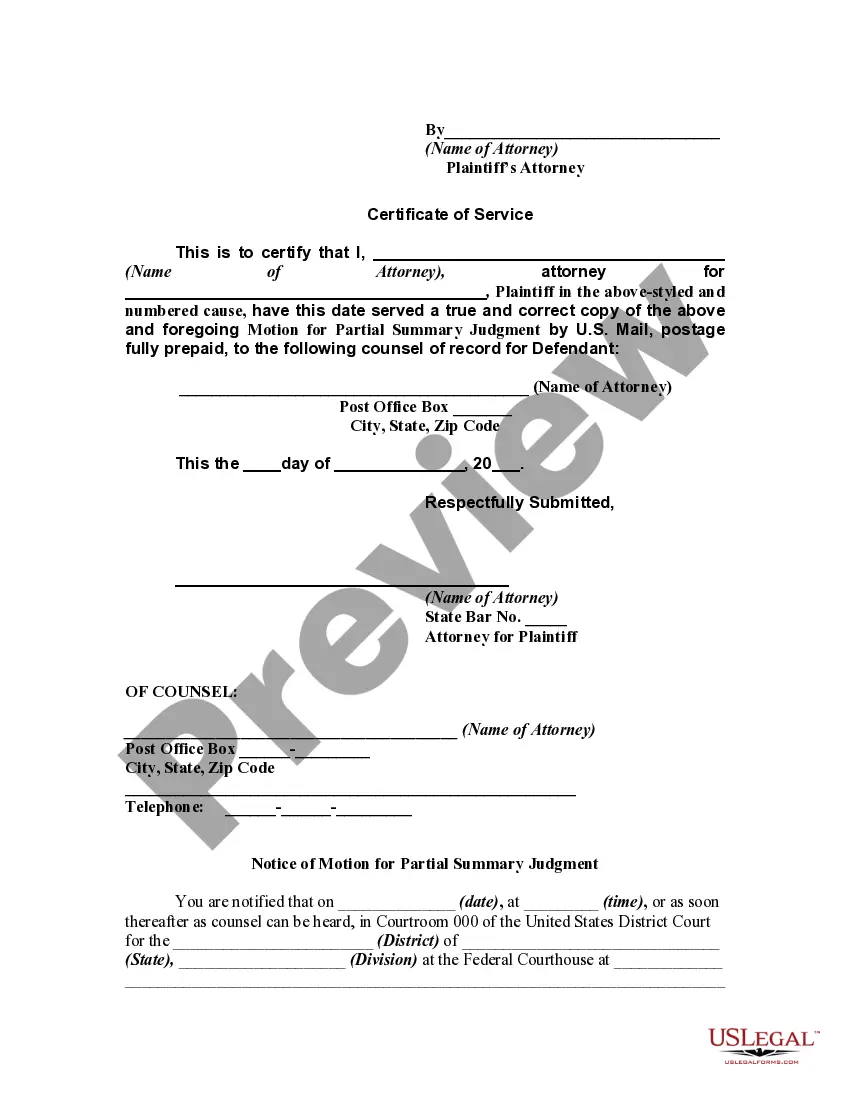
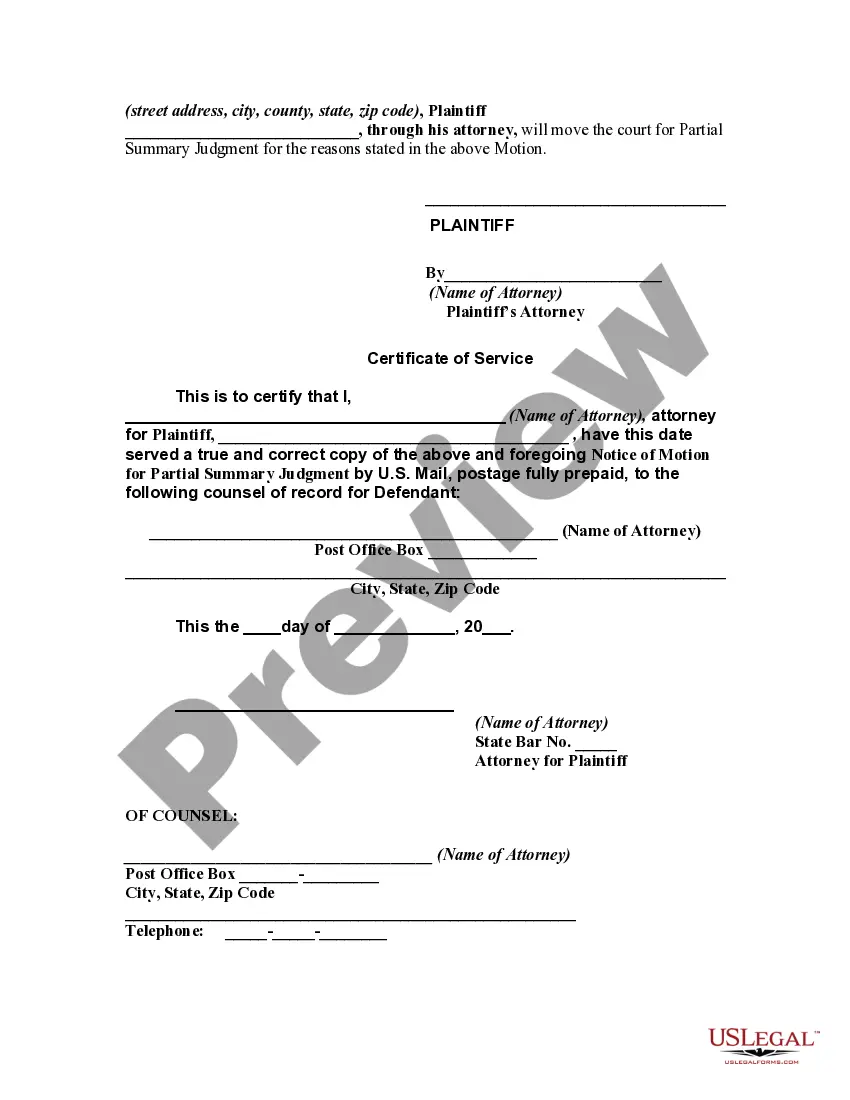
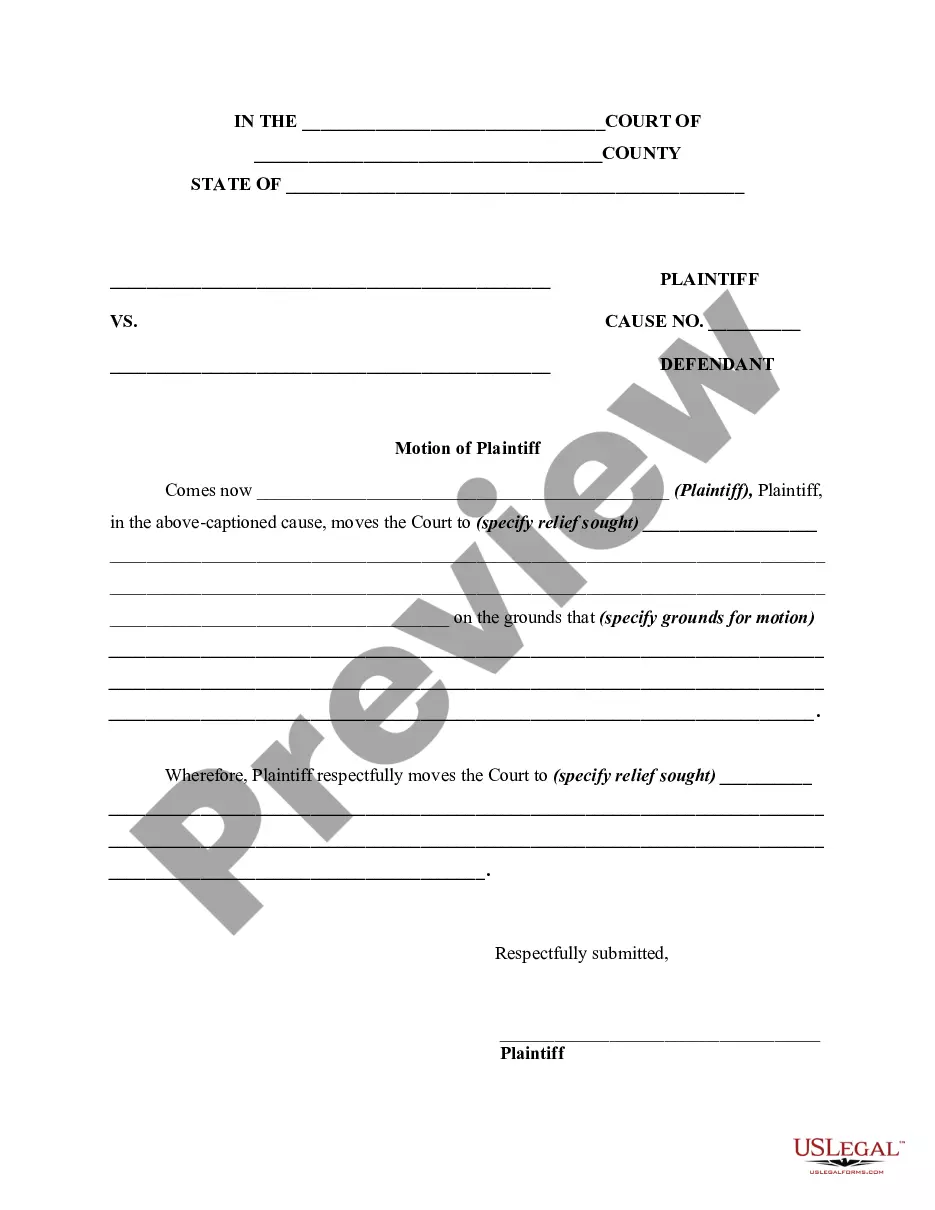
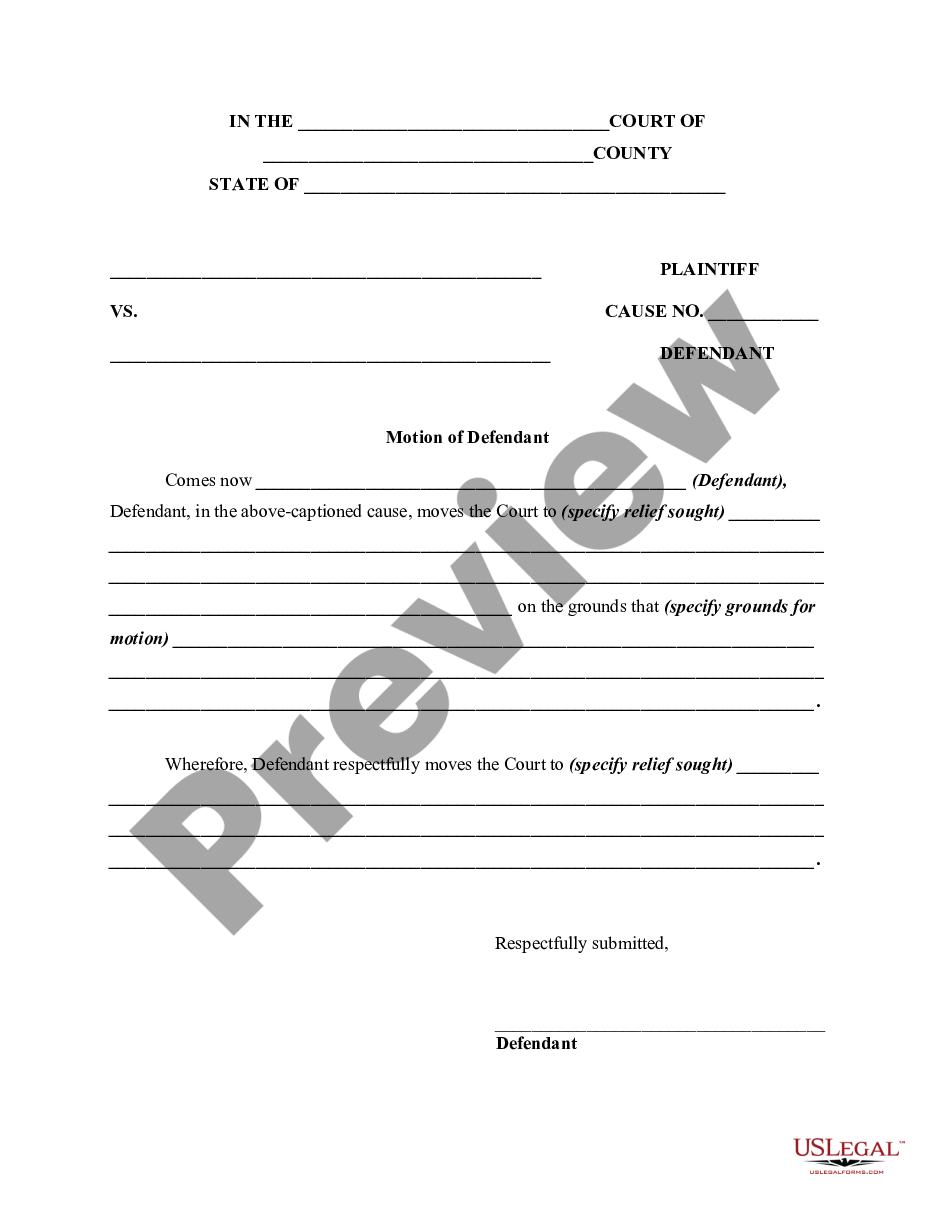
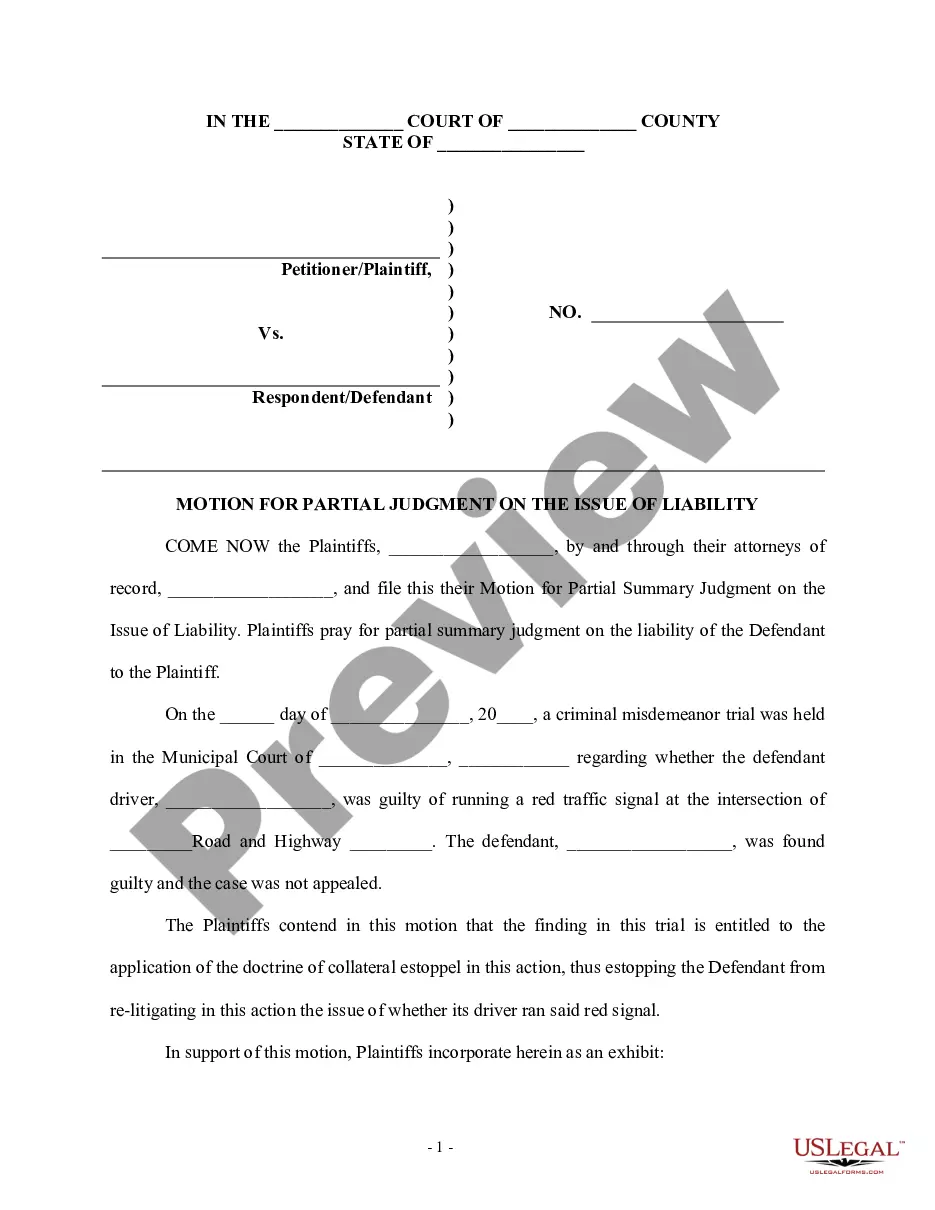
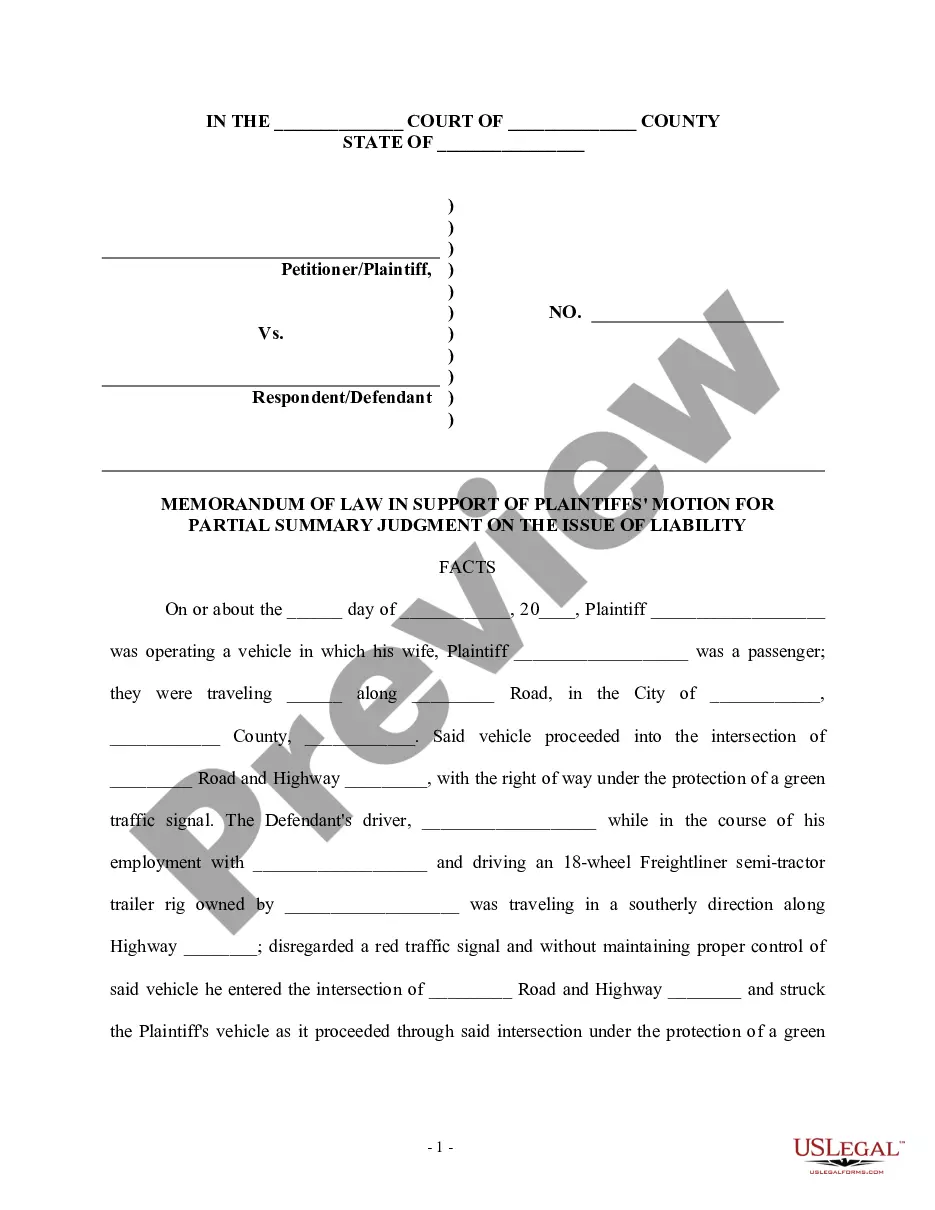
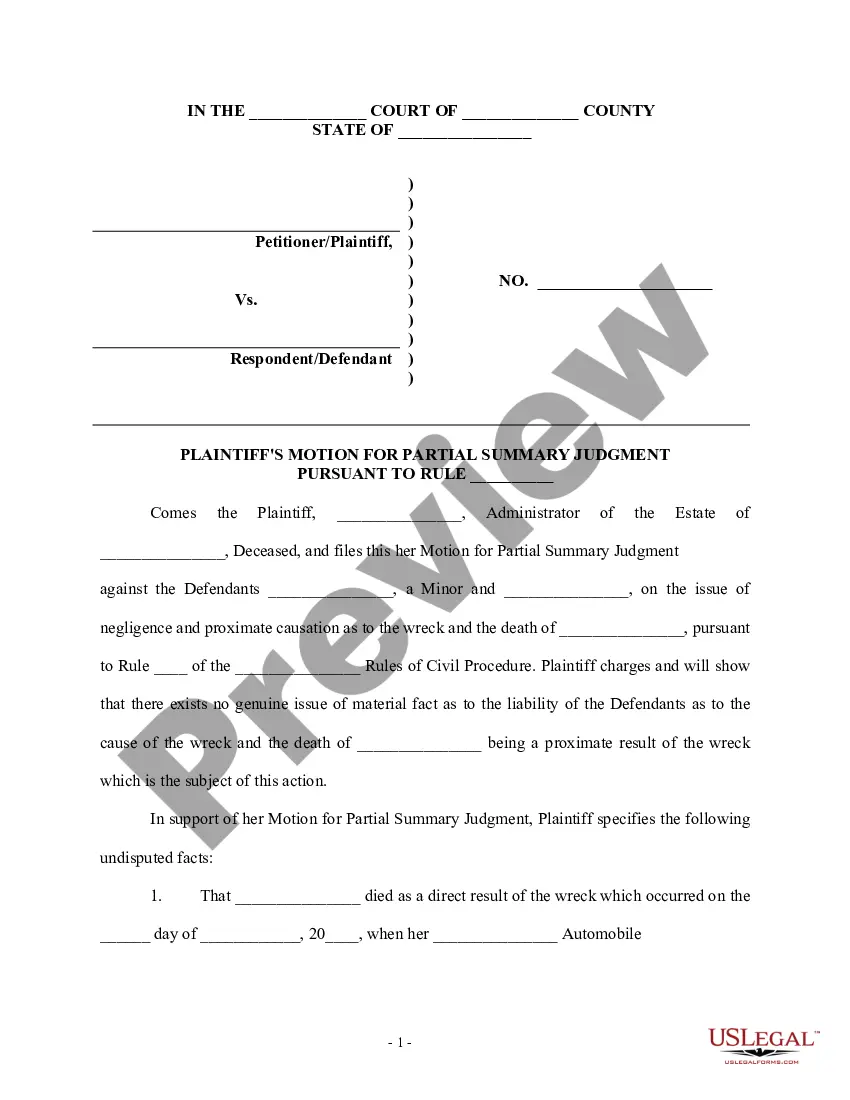
This form is a generic motion for partial summary judgment on the issue of liability. The motion adopts the "notice pleadings" format of the Federal Rules of Civil Procedure, which have been adopted by most states in one form or another.
California General Form of Partial Motion for Summary Judgment by Plaintiff on Issue of Liability with Notice of Motion and with Request for Separate Trial on Issue of Damages
Category:
State:
Multi-State
Control #:
US-00918BG
Format:
Word;
Rich Text
Instant download
Description
Free preview
Get your form ready online
Our built-in tools help you complete, sign, share, and store your documents in one place.
Built-in online Word editor
Make edits, fill in missing information, and update formatting in US Legal Forms—just like you would in MS Word.
Export easily
Download a copy, print it, send it by email, or mail it via USPS—whatever works best for your next step.
E-sign your document
Sign and collect signatures with our SignNow integration. Send to multiple recipients, set reminders, and more. Go Premium to unlock E-Sign.
Notarize online 24/7
If this form requires notarization, complete it online through a secure video call—no need to meet a notary in person or wait for an appointment.
Store your document securely
We protect your documents and personal data by following strict security and privacy standards.

Make edits, fill in missing information, and update formatting in US Legal Forms—just like you would in MS Word.

Download a copy, print it, send it by email, or mail it via USPS—whatever works best for your next step.

Sign and collect signatures with our SignNow integration. Send to multiple recipients, set reminders, and more. Go Premium to unlock E-Sign.

If this form requires notarization, complete it online through a secure video call—no need to meet a notary in person or wait for an appointment.

We protect your documents and personal data by following strict security and privacy standards.
Looking for another form?






How to fill out General Form Of Partial Motion For Summary Judgment By Plaintiff On Issue Of Liability With Notice Of Motion And With Request For Separate Trial On Issue Of Damages?
Are you presently in a position that requires you to manage paperwork for either business or personal activities on a daily basis? There are numerous legal document templates accessible online, but finding ones that you can rely on is not straightforward. US Legal Forms offers thousands of template forms, including the California General Form of Partial Motion for Summary Judgment by Plaintiff on Issue of Liability with Notice of Motion and with Request for Separate Trial on Issue of Damages, which are designed to meet federal and state regulations.
If you are already acquainted with the US Legal Forms site and have an account, simply Log In. After that, you can download the California General Form of Partial Motion for Summary Judgment by Plaintiff on Issue of Liability with Notice of Motion and with Request for Separate Trial on Issue of Damages template.
If you do not have an account and wish to start using US Legal Forms, follow these steps: Find the form you need and ensure it is for your correct city/county. Utilize the Review button to examine the form. Check the details to confirm that you have selected the correct form. If the form is not what you are looking for, use the Lookup section to find the form that suits your needs and criteria. Once you find the correct form, simply click Get now. Choose the pricing plan you desire, fill in the necessary information to create your account, and complete the purchase with your PayPal or Visa or Mastercard. Select a convenient file format and download your copy.
Avoid altering or deleting any HTML tags. Only synonymize plain text outside of the HTML tags.
- Locate all the document templates you have purchased in the My documents menu.
- You can obtain an additional copy of the California General Form of Partial Motion for Summary Judgment by Plaintiff on Issue of Liability with Notice of Motion and with Request for Separate Trial on Issue of Damages at any time, if needed.
- Simply click on the required form to download or print the document template.
- Utilize US Legal Forms, one of the largest collections of legal forms, to save time and avoid errors.
- The service provides properly crafted legal document templates that you can use for various purposes.
- Create an account on US Legal Forms and start making your life easier.
Form popularity
FAQ
The Hearing on the Motion for Summary Judgment The motion for summary judgment shall be granted if all the papers submitted show that there is no triable issue as to any material fact and that the moving party is entitled to a judgment as a matter of law.
Suffice to say that a Demurrer is brought as a motion before the court at the beginning of a lawsuit as an attempt to attack all or some of a lawsuit, while a Motion for Summary Judgment is usually brought later in the case, (but still prior to actual trial) after discovery has taken place and key depositions have been ...
Notice of a summary judgment motion, as well as the papers in support of the motion, must be filed with the court and served on all parties at least 75 calendar days before the scheduled hearing date of the motion. All papers opposing a motion must be served and filed not less than 14 days before the hearing date.
The court shall grant summary judgment if the movant shows that there is no genuine dispute as to any material fact and the movant is entitled to judgment as a matter of law. The court should state on the record the reasons for granting or denying the motion.
Requirement. A party moving for summary judgment or summary adjudication must serve and file evidence, such as affidavits, declarations, admissions, answers to interrogatories, depositions, and matters of which judicial notice shall or may be taken (Cal. Civ.
The motion for summary judgment shall be granted if all the papers submitted show that there is no triable issue as to any material fact and that the moving party is entitled to a judgment as a matter of law. Summary Judgment allows a judgment to be entered without the proceedings of a full trial.
Code of Civil Procedure (?CCP?) section 1005 states the amount of time required to give notice of most motions. The moving papers must be personally given to each opposing side at least 21 days before the hearing on the motion, OR mailed to each opposing side at least 26 days before the hearing on the motion.
In a summary judgment or summary adjudication motion, no opening or responding memorandum may exceed 20 pages. No reply or closing memorandum may exceed 10 pages.