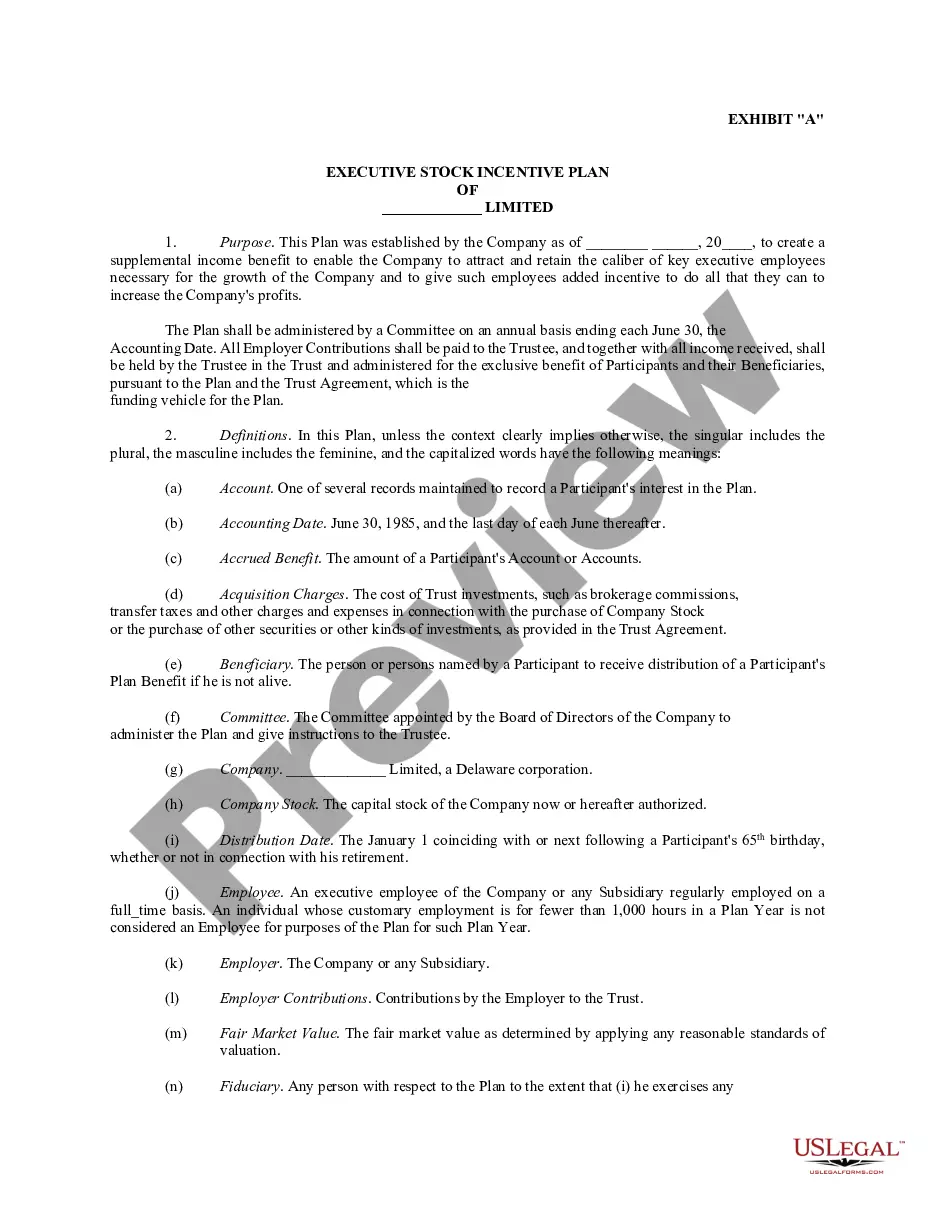
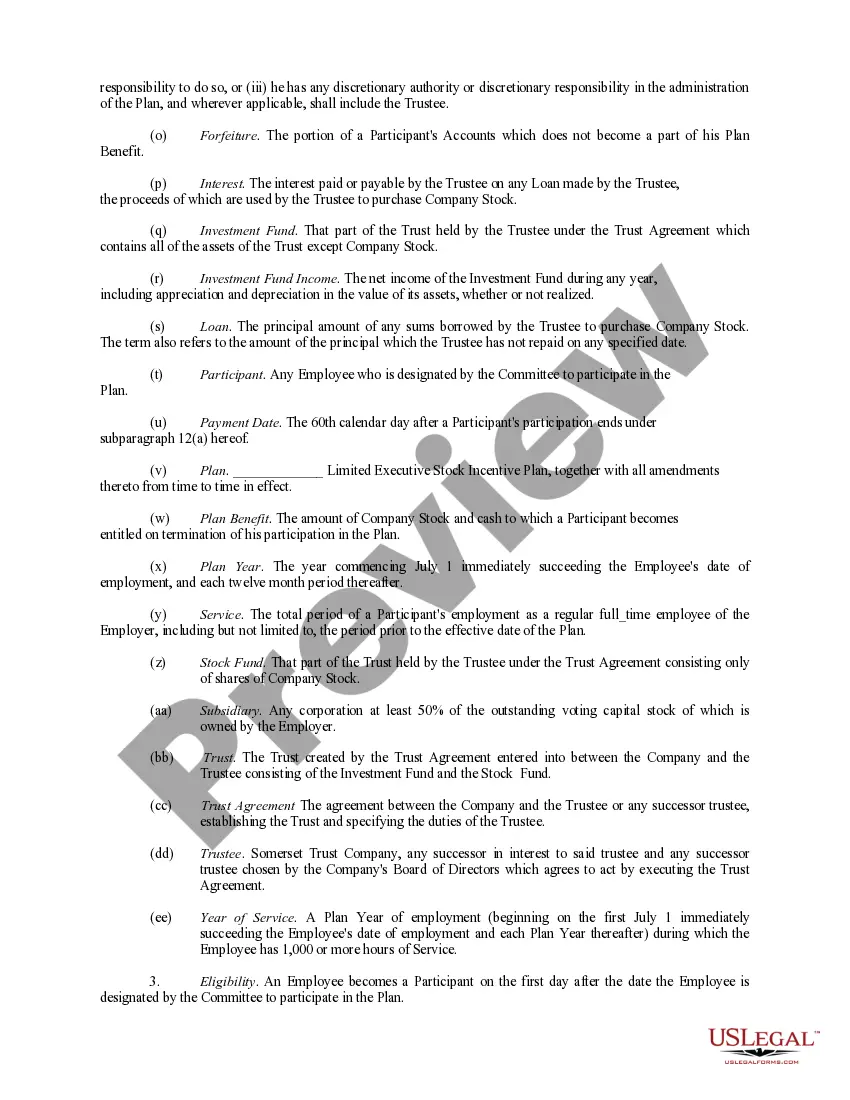
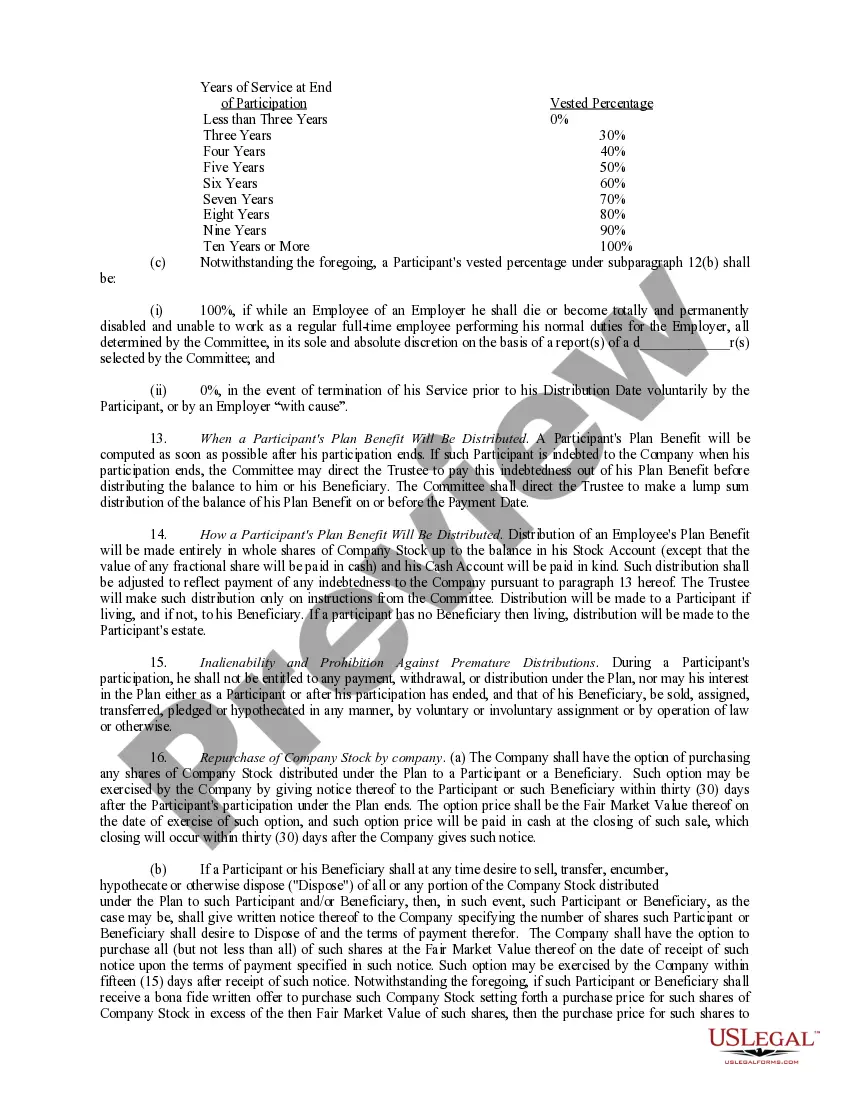
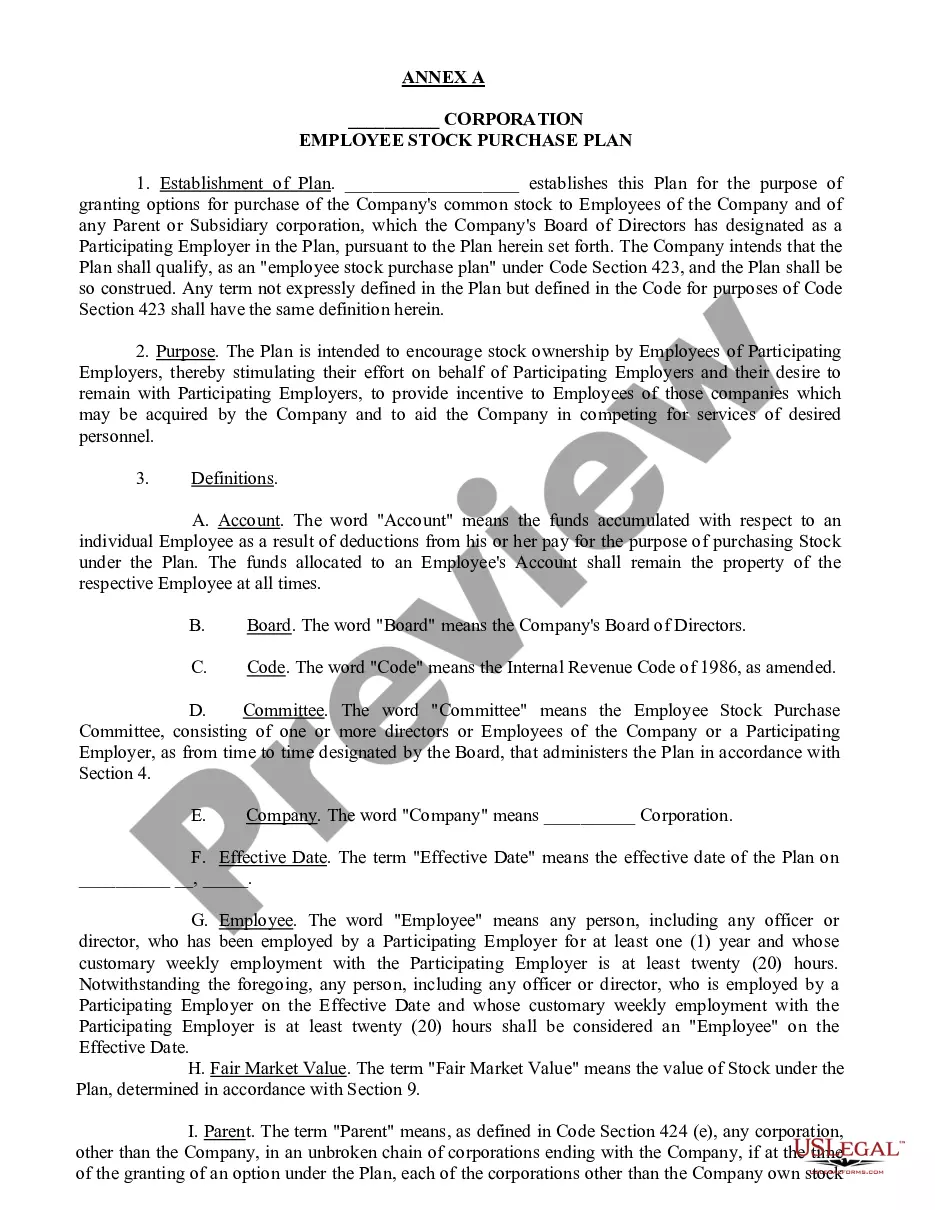
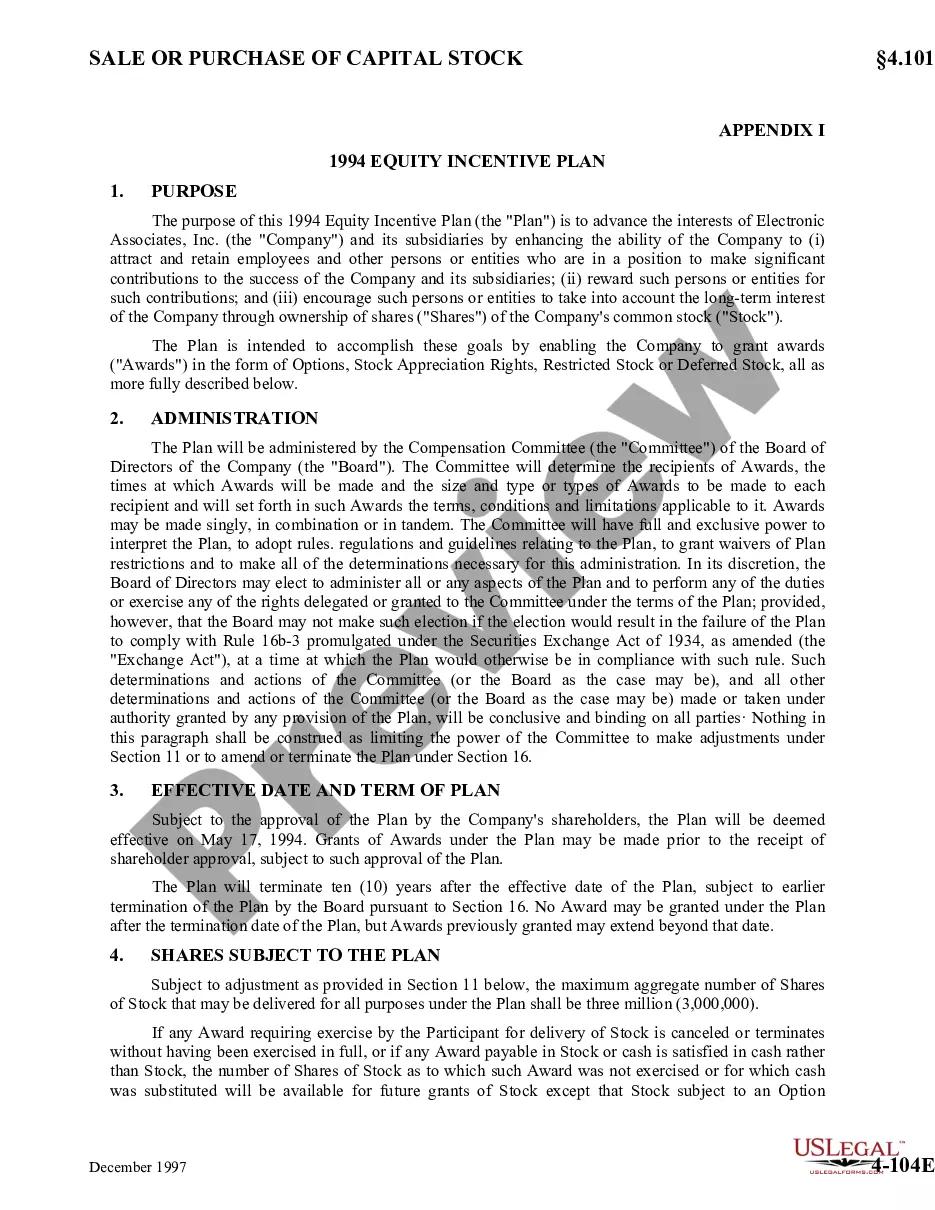
This form is an executive stock initiative plan. The form provides that the plan was created in order to create a supplemental income benefit to to enable the company to attract and retain key executive employees necessary for the growth of the company.
California Executive Employee Stock Incentive Plan
63 downloads
Description
Free preview





Get your form ready online
Our built-in tools help you complete, sign, share, and store your documents in one place.
Built-in online Word editor
Make edits, fill in missing information, and update formatting in US Legal Forms—just like you would in MS Word.
Export easily
Download a copy, print it, send it by email, or mail it via USPS—whatever works best for your next step.
E-sign your document
Sign and collect signatures with our SignNow integration. Send to multiple recipients, set reminders, and more. Go Premium to unlock E-Sign.
Notarize online 24/7
If this form requires notarization, complete it online through a secure video call—no need to meet a notary in person or wait for an appointment.
Store your document securely
We protect your documents and personal data by following strict security and privacy standards.

Make edits, fill in missing information, and update formatting in US Legal Forms—just like you would in MS Word.

Download a copy, print it, send it by email, or mail it via USPS—whatever works best for your next step.

Sign and collect signatures with our SignNow integration. Send to multiple recipients, set reminders, and more. Go Premium to unlock E-Sign.

If this form requires notarization, complete it online through a secure video call—no need to meet a notary in person or wait for an appointment.

We protect your documents and personal data by following strict security and privacy standards.
Looking for another form?








How to fill out Executive Employee Stock Incentive Plan?
Are you currently in a situation that requires documentation for either business or personal activities nearly every day.
There are numerous legal document templates available online, but locating reliable versions is not straightforward.
US Legal Forms offers thousands of template forms, such as the California Executive Employee Stock Incentive Plan, that are designed to comply with both state and federal requirements.
When you find the appropriate form, simply click Get now.
Choose the payment plan you wish, complete the required information to create your account, and pay for your order using PayPal or a credit card.
- If you are already acquainted with the US Legal Forms website and have an account, simply Log In.
- Then, you can download the California Executive Employee Stock Incentive Plan template.
- If you do not have an account and wish to start using US Legal Forms, follow these instructions.
- Locate the form you need and ensure it is for the appropriate city/state.
- Utilize the Preview button to review the form.
- Examine the details to ensure you have selected the correct form.
- If the form is not what you are looking for, use the Search field to find the template that fits your needs and requirements.
Form popularity
FAQ
Stock options connected to the California Executive Employee Stock Incentive Plan are reported on your W-2 if they create taxable income. This means any income you receive from exercised options will be included in Box 1 of your W-2, where your total compensation is listed. Understanding this will help you accurately complete your tax return. For additional guidance, you can rely on the comprehensive resources offered by uslegalforms.
When reporting incentive stock options on your tax return related to the California Executive Employee Stock Incentive Plan, you must consider the timing of your sale. If you sell the shares immediately after exercising, report the income on Form 1040 as ordinary income. If you hold the shares, prepare to report any capital gains upon sale. Make sure to utilize uslegalforms for further clarification on tax forms and reporting standards.
Incentive stock options under the California Executive Employee Stock Incentive Plan may offer favorable tax treatment. Generally, you do not owe taxes when you exercise these options, but you may incur a capital gains tax when you sell the stock. This tax treatment encourages long-term investment, making it an attractive option for employees. To navigate these complexities, consider using the resources available at uslegalforms.
When dealing with the California Executive Employee Stock Incentive Plan, stock options are typically reported on a 1099 form if they are exercised in a non-qualified plan. The report shows income earned from the options as compensation. It's essential to review your 1099 carefully, as accurate reporting affects your tax obligations. You can consult with a tax professional or utilize resources from uslegalforms to ensure you report correctly.
Filing an Employee Stock Ownership Plan (ESOP) involves completing several forms and ensuring compliance with federal regulations. Start by consulting with a qualified professional who can help you understand the necessary steps and facilitate the process. The California Executive Employee Stock Incentive Plan may offer features that streamline this process, giving you greater confidence in managing your ESOP.
In California, incentive stock options are generally not taxed at the time of exercise, unlike other forms of compensation. However, if you sell the stock, the profit may be subject to capital gains tax. Understanding the tax implications of the California Executive Employee Stock Incentive Plan can be complex, so we recommend consulting with a tax advisor for personalized guidance.
When you exercise incentive stock options, you typically do not report them as income for regular tax purposes immediately. However, you may need to report them as income for alternative minimum tax purposes. It's advisable to consult a tax professional to understand how the California Executive Employee Stock Incentive Plan affects your specific tax situation.
The primary difference between incentive stock options (ISOs) and non-qualified stock options (non-qual) lies in their tax treatment and eligibility criteria. ISOs can qualify for favorable capital gains tax rates, provided specific conditions are met, while non-qual options are taxed as ordinary income upon exercise. Knowing these differences is essential for California employees to leverage the California Executive Employee Stock Incentive Plan effectively.
Yes, California does tax stock options, though the approach may depend on the type of option granted. For instance, non-qualified stock options are taxed as regular income upon exercise, while incentive stock options may only incur tax consequences after the stock is sold. Understanding the implications of the California Executive Employee Stock Incentive Plan can aid employees in effectively managing their stock option benefits while minimizing tax burdens.
A qualified stock option typically refers to options that meet specific criteria set by the Internal Revenue Code, particularly incentive stock options (ISOs). These options are often favored for their favorable tax treatment when exercised within the guidelines of the California Executive Employee Stock Incentive Plan. To qualify, these options must generally be offered by a company and must have a fair market value limitation upon grant.