California Ex Parte Application And Declaration
Understanding this form
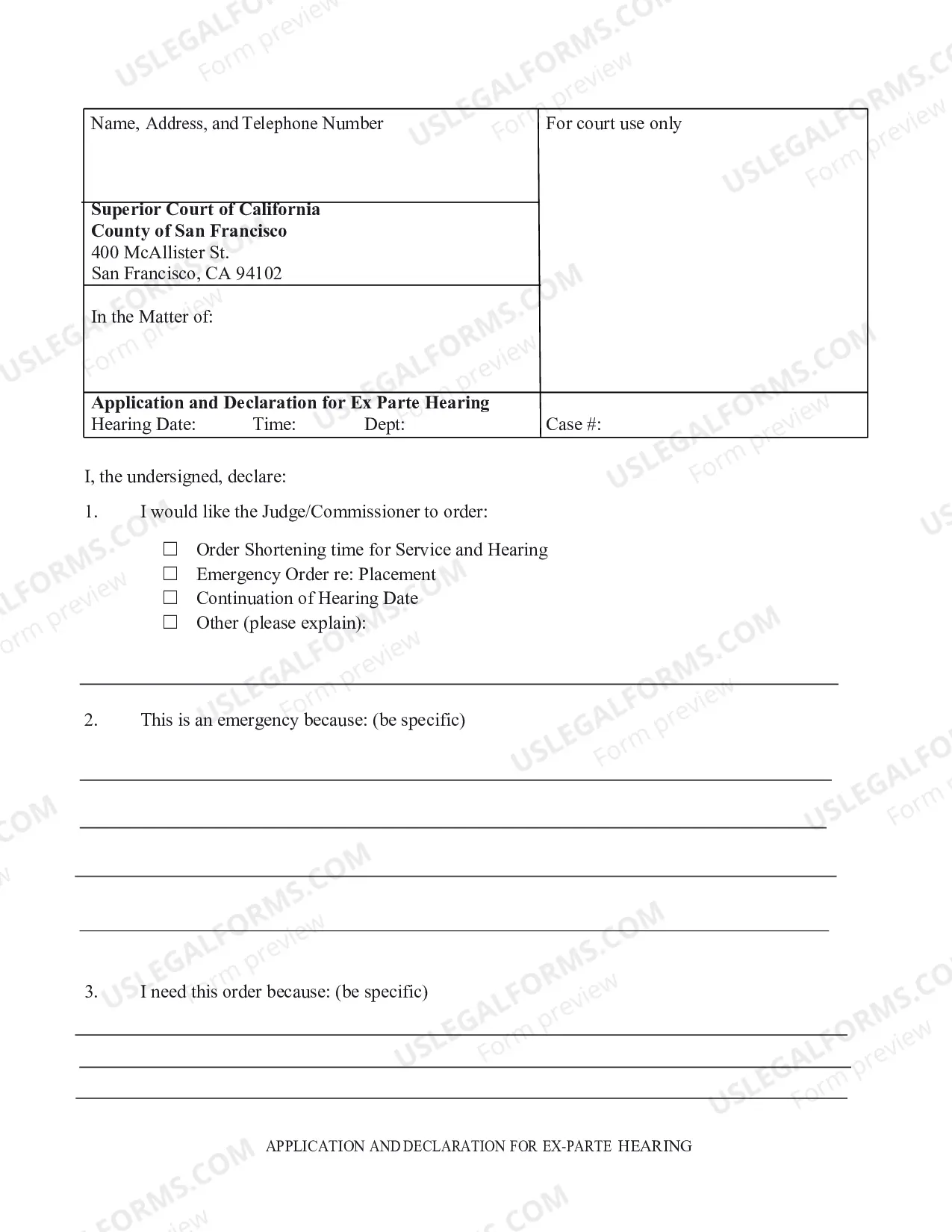
The Ex Parte Application and Declaration is a legal form used to request an emergency hearing in court. Unlike standard court applications, this form allows a party to seek immediate relief without waiting for a regular hearing, which can be crucial in urgent situations. It is essential for those needing quick action regarding family, probate, or juvenile matters.
What’s included in this form
- Party information: Includes name, address, and contact details of the applicant.
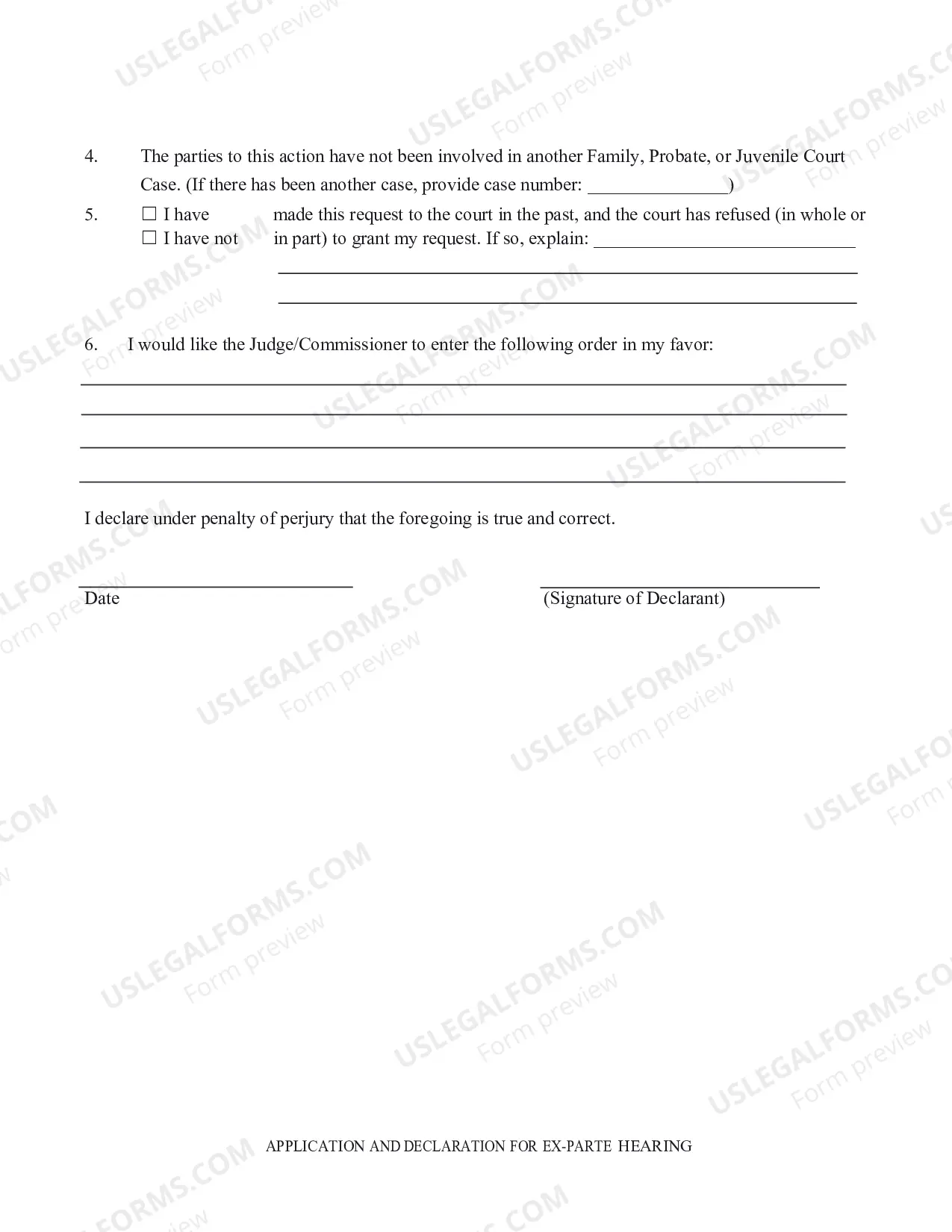
- Hearing requests: Specifies the orders sought from the court, such as emergency placement or hearing date changes.
- Justification for urgency: A section outlining why the situation qualifies as an emergency.
- Prior requests: A declaration regarding any previous requests made to the court on the same issue.
- Signature and date: Authenticates the declaration made under penalty of perjury.
When this form is needed
This form is typically used in situations where immediate court intervention is necessary. Common scenarios include urgent family matters, such as a child's welfare, emergency placement situations, or when a delay could cause harm or prejudice. It is also relevant when timing is critical, and the standard notice period cannot be adhered to.
Who this form is for
- Any individual seeking emergency orders related to family, probate, or juvenile issues.
- Parties involved in legal disputes that require immediate attention from the court.
- Individuals who have previously made requests to the court regarding the same matter.
Completing this form step by step
- Fill out the applicant's name, address, and contact information at the top of the form.
- Specify the type of order being requested, marking the appropriate checkboxes.
- Provide detailed explanations for why the request is urgent and necessary.
- Indicate if there have been any prior requests to the court on this matter.
- Sign and date the form to confirm the accuracy of the information provided.
Notarization guidance
In most cases, this form does not require notarization. However, some jurisdictions or signing circumstances might. US Legal Forms offers online notarization powered by Notarize, accessible 24/7 for a quick, remote process.
Get your form ready online
Our built-in tools help you complete, sign, share, and store your documents in one place.
Make edits, fill in missing information, and update formatting in US Legal Forms—just like you would in MS Word.
Download a copy, print it, send it by email, or mail it via USPS—whatever works best for your next step.
Sign and collect signatures with our SignNow integration. Send to multiple recipients, set reminders, and more. Go Premium to unlock E-Sign.
If this form requires notarization, complete it online through a secure video call—no need to meet a notary in person or wait for an appointment.
We protect your documents and personal data by following strict security and privacy standards.

Make edits, fill in missing information, and update formatting in US Legal Forms—just like you would in MS Word.

Download a copy, print it, send it by email, or mail it via USPS—whatever works best for your next step.

Sign and collect signatures with our SignNow integration. Send to multiple recipients, set reminders, and more. Go Premium to unlock E-Sign.

If this form requires notarization, complete it online through a secure video call—no need to meet a notary in person or wait for an appointment.

We protect your documents and personal data by following strict security and privacy standards.
Avoid these common issues
- Failing to provide sufficient details in the urgency explanation.
- Leaving sections blank, particularly regarding prior requests to the court.
- Not signing and dating the form, which can result in rejection.
- Using vague language that does not clearly outline the requested orders.
Why use this form online
- Convenience of completing the form from home, saving time on travel.
- Access to a clear, organized format that helps prevent errors.
- Ability to save progress and edit responses before final submission.
- Reliable templates drafted by licensed attorneys, ensuring legal compliance.
Summary of main points
- The Ex Parte Application and Declaration is crucial for urgent court matters.
- It allows for expedited hearings without the standard waiting period.
- Clear and specific justifications are essential for the court's consideration.
- Compliance with state-specific rules ensures the form's proper acceptance.
Looking for another form?
Form popularity
FAQ
To proceed ex parte means to take legal action without notifying the opposing party. This process is designed for situations where time is of the essence and delays could result in serious consequences. In California, using a California Ex Parte Application And Declaration allows you to present your case directly to the court, efficiently addressing urgent legal matters while minimizing potential risks.
To serve an ex parte notice in California, you must provide the other party with a notice of the application along with a copy of the application itself. This notice informs them of your request and the time of the intended hearing. Utilizing a California Ex Parte Application And Declaration helps streamline the process, as it includes all necessary details that facilitate the service of notice effectively.
An ex parte application is a legal request for immediate relief without the usual procedural notice to the other party. In California, this process is often used in urgent situations where waiting for a hearing can lead to irreparable harm. By filing a California Ex Parte Application And Declaration, you can quickly seek temporary orders from the court while ensuring that your legal rights are protected.
There are several reasons a California Ex Parte Application And Declaration might be denied, including failure to demonstrate urgency or inadequate notice to the opposing party. If the request lacks supporting evidence or does not comply with procedural rules, the court may reject it. Understanding these pitfalls is essential for crafting a successful application. Utilizing tools like USLegalForms can help you ensure compliance and increase your chances of approval.
In federal court, an ex parte application also aims for urgent relief without the standard notice period. The Federal Rules of Civil Procedure have specific guidelines for such applications, including a requirement to show why notification to the other party is impossible or would cause harm. This procedural framework is designed to ensure fairness while accommodating urgent needs. Consulting resources like USLegalForms can help you navigate these federal rules effectively.
For an ex parte application notice, you must include the date and time of the hearing, the court where you're filing, and the specific relief you are seeking. In California, the notice should clearly communicate that the application is being filed ex parte and why immediate action is necessary. Properly drafting this notice increases your chances of a successful outcome. Leveraging platforms like USLegalForms can simplify the preparation of these documents.
A noticed motion requires the opposing party to be informed in advance, allowing them an opportunity to respond. In contrast, a California Ex Parte Application And Declaration seeks immediate relief without prior notice, usually due to pressing circumstances. This difference in notice and urgency is critical, as ex parte applications often address urgent matters that cannot wait for a standard hearing. Understanding this distinction helps you choose the appropriate filing method.
Writing a California Ex Parte Application And Declaration involves several key components. Start with a clear title specifying it as an ex parte application, followed by a statement outlining your reasons for urgency. Include factual details supporting your request and provide any necessary supporting documents. Make sure to format it according to court rules, as this will enhance the effectiveness of your filing.
When filing a California Ex Parte Application And Declaration, you must provide a notice to the opposing party. This notice should include the time and place of the application hearing and the specific relief sought. Ensuring timely notice is crucial, as it informs the other party about the proceedings, allowing them to prepare a response. Failing to provide proper notice can lead to delays or denial of your request.
The FL 303 form is a declaration in support of a request for an ex parte order in family law matters in California. This form accompanies the California Ex Parte Application and Declaration and provides detailed information to the court regarding the urgency of the request. Accurate completion of the FL 303 can prove crucial in persuading the court to grant immediate relief. It is important to ensure that all required details are covered to strengthen your application.