California Declaration Re Notice Upon Ex Parte Application For Orders
What this document covers
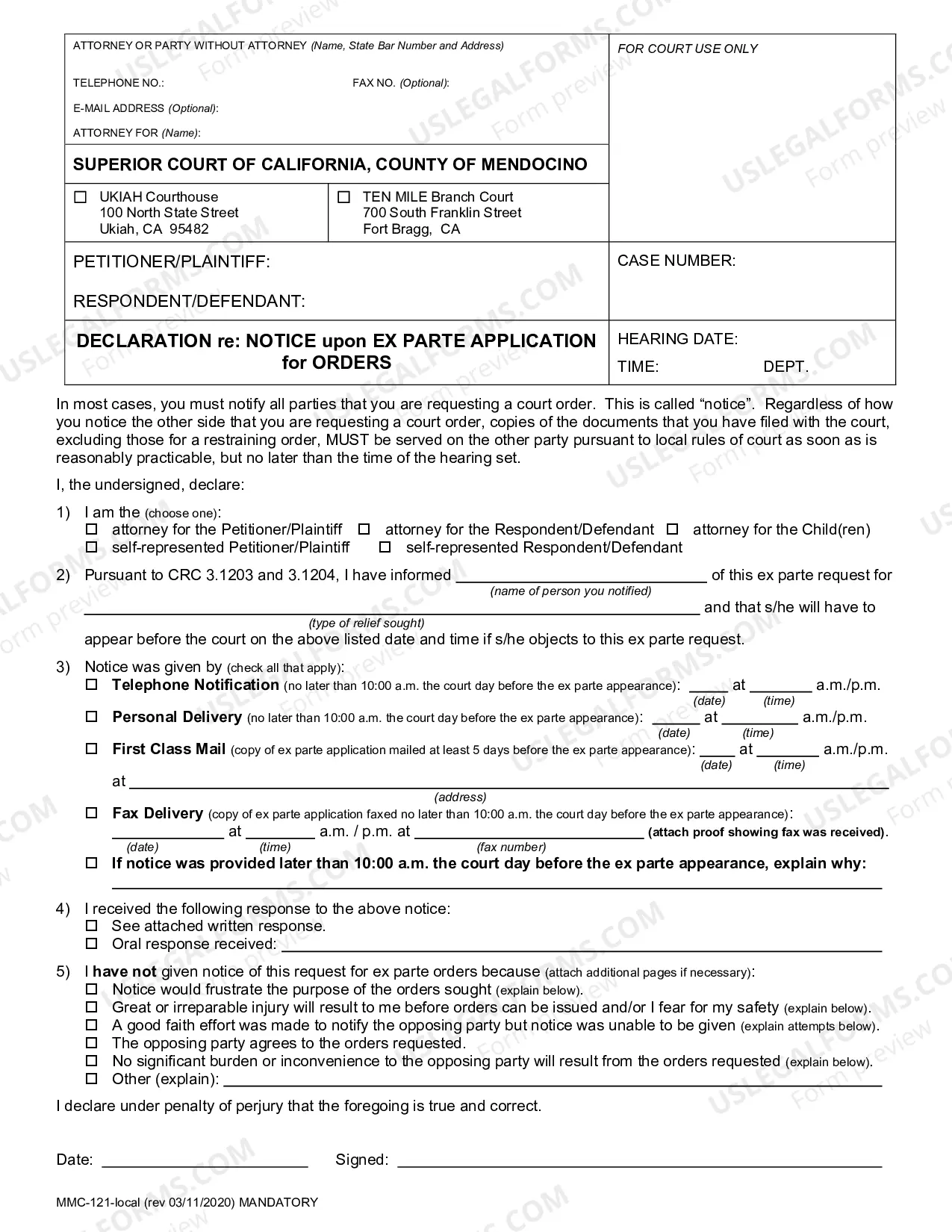
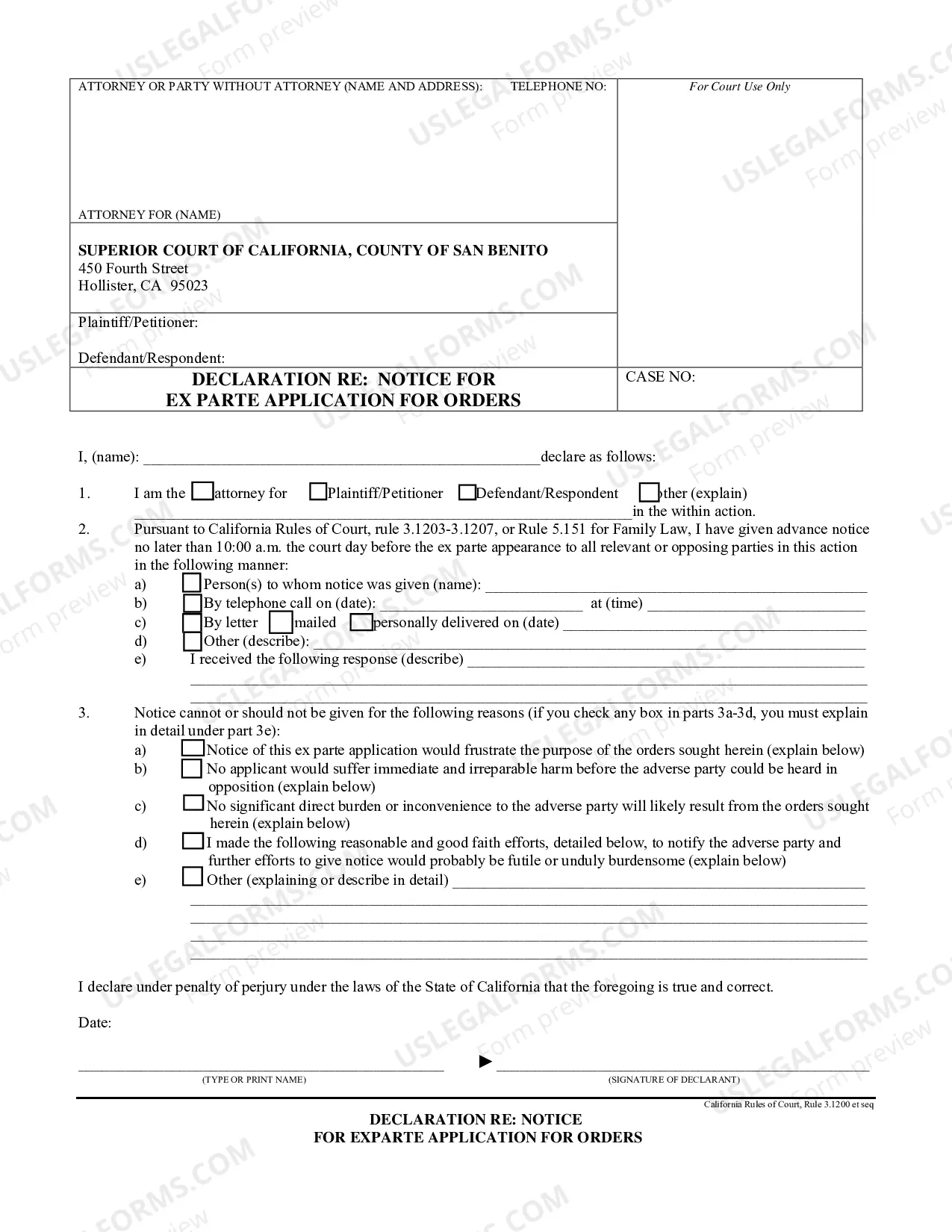
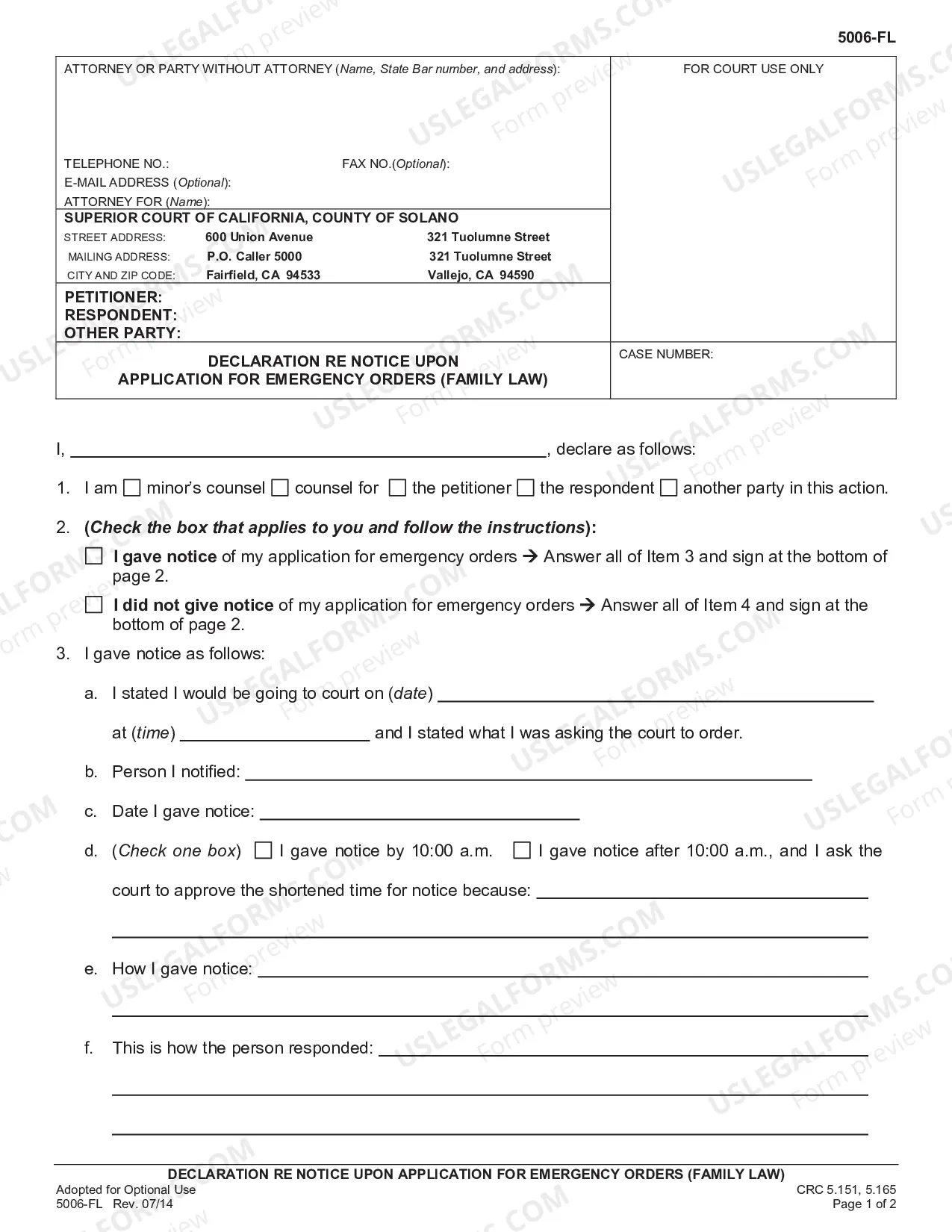
The Declaration Re Notice Upon Ex Parte Application For Orders is a legal document used in California courts. This form is essential when a party seeks immediate court orders without waiting for a regular hearing. It serves to notify the opposing party of the intent to request these orders, ensuring they have a fair opportunity to respond. The form is crucial for maintaining transparency in the legal process and differs from other forms as it specifically addresses the notice requirements for ex parte applications.
Key parts of this document
- Identification of the attorney or self-represented party submitting the application.
- Details of the opposing party who must be notified.
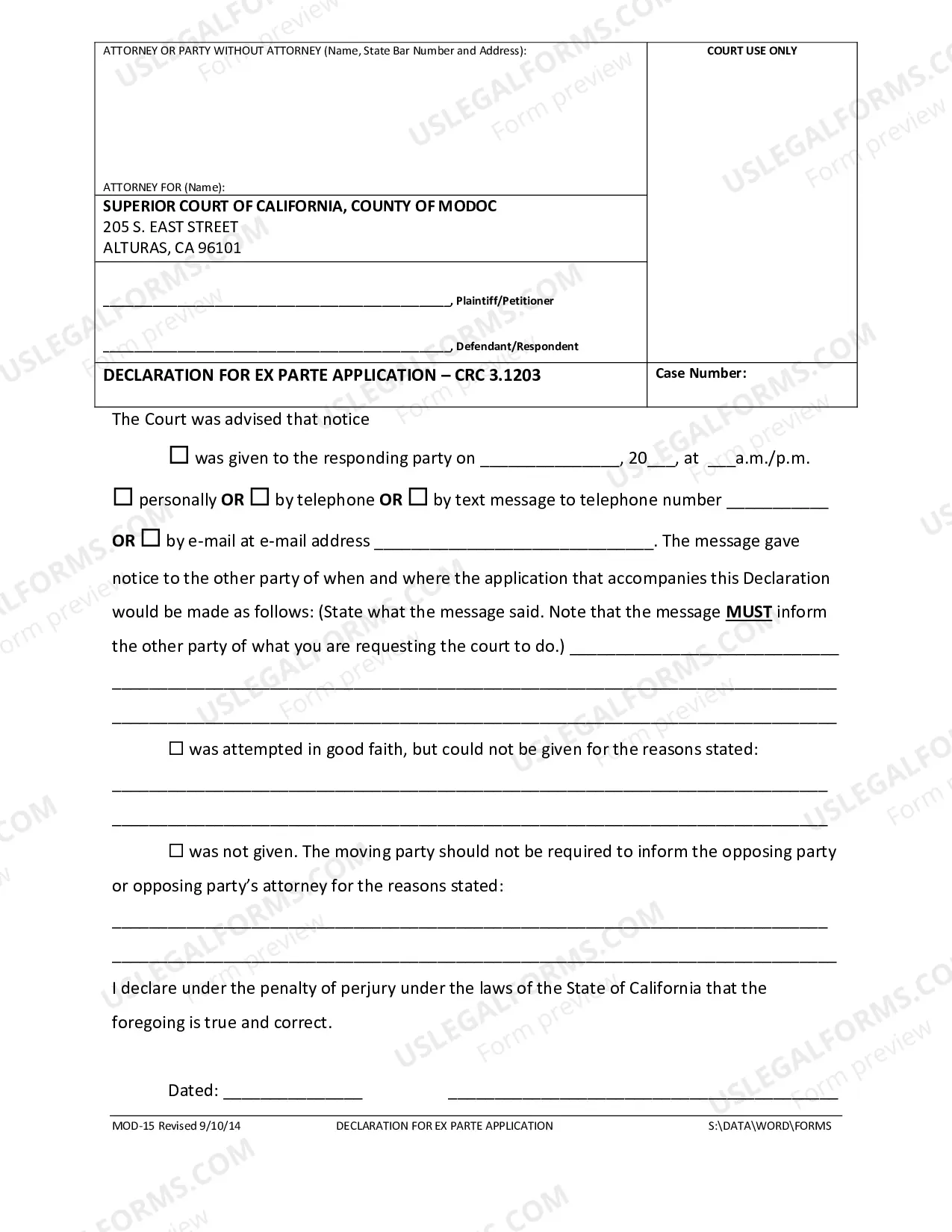
- Methods of providing notice to the opposing party, including telephone, personal delivery, or mail.
- Explanation for any instances where notice could not be given.
- Signature and declaration under penalty of perjury affirming the accuracy of the information provided.
Situations where this form applies
This form is necessary when you are filing an ex parte application for immediate orders in family law, civil, or probate cases. For instance, if you need urgent temporary custody orders or a restraining order, you must communicate this to the other party before your court hearing. Completing this form ensures you follow the proper procedures and that the court is aware that notice was given.
Who can use this document
- Attorneys representing clients in urgent legal matters.
- Individuals representing themselves in court who require immediate orders.
- Parents seeking immediate custody arrangements.
- Parties needing quick protection from harassment or harm.
Completing this form step by step
- Enter your name, address, phone number, and email as either the attorney or self-represented party.
- Fill in the court's name, location, and case number at the top of the form.
- Provide details about the opposing party and specify how notice was given.
- Select the method of notification you used and provide required times and dates.
- Sign the declaration at the bottom, affirming the accuracy of your statements.
Is notarization required?
Notarization is not commonly needed for this form. However, certain documents or local rules may make it necessary. Our notarization service, powered by Notarize, allows you to finalize it securely online anytime, day or night.
Get your form ready online
Our built-in tools help you complete, sign, share, and store your documents in one place.
Make edits, fill in missing information, and update formatting in US Legal Forms—just like you would in MS Word.
Download a copy, print it, send it by email, or mail it via USPS—whatever works best for your next step.
Sign and collect signatures with our SignNow integration. Send to multiple recipients, set reminders, and more. Go Premium to unlock E-Sign.
If this form requires notarization, complete it online through a secure video call—no need to meet a notary in person or wait for an appointment.
We protect your documents and personal data by following strict security and privacy standards.

Make edits, fill in missing information, and update formatting in US Legal Forms—just like you would in MS Word.

Download a copy, print it, send it by email, or mail it via USPS—whatever works best for your next step.

Sign and collect signatures with our SignNow integration. Send to multiple recipients, set reminders, and more. Go Premium to unlock E-Sign.

If this form requires notarization, complete it online through a secure video call—no need to meet a notary in person or wait for an appointment.

We protect your documents and personal data by following strict security and privacy standards.
Mistakes to watch out for
- Not providing notice in a timely manner, which can jeopardize your application.
- Failing to complete all relevant sections of the form, leading to potential delays.
- Not signing the declaration, which may render the document invalid.
- Using incorrect or incomplete information regarding the opposing party's contact details.
Why complete this form online
- Convenient access to the form allows you to fill it out at your own pace.
- Editable documents ensure you can make changes as necessary before finalizing.
- Certified templates ensure that you comply with current legal standards and regulations.
Looking for another form?

Form popularity
FAQ
To write a response to a petition, begin by carefully reviewing the petition to understand its claims. Your response should address each issue raised, supporting your arguments with facts and evidence. Remember to align your response with the requirements of the California Declaration Re Notice Upon Ex Parte Application For Orders for it to be effective.
A response to an order is a formal written request addressing an order issued by the court. In your response, clarify your stance, present supporting evidence, and outline any requests you may have. Adhering to the California Declaration Re Notice Upon Ex Parte Application For Orders will guide your response format and content.
The FL 303 form is a declaration form utilized in California family law matters. It allows parties to disclose relevant information regarding their ex parte application. Using this form helps meet the requirements of the California Declaration Re Notice Upon Ex Parte Application For Orders, ensuring all necessary information is presented.
To respond to a responsive declaration, read the document carefully to understand its contents. Prepare your response by addressing each point raised and include any supporting evidence. Ensure your response meets the necessary guidelines outlined in the California Declaration Re Notice Upon Ex Parte Application For Orders.
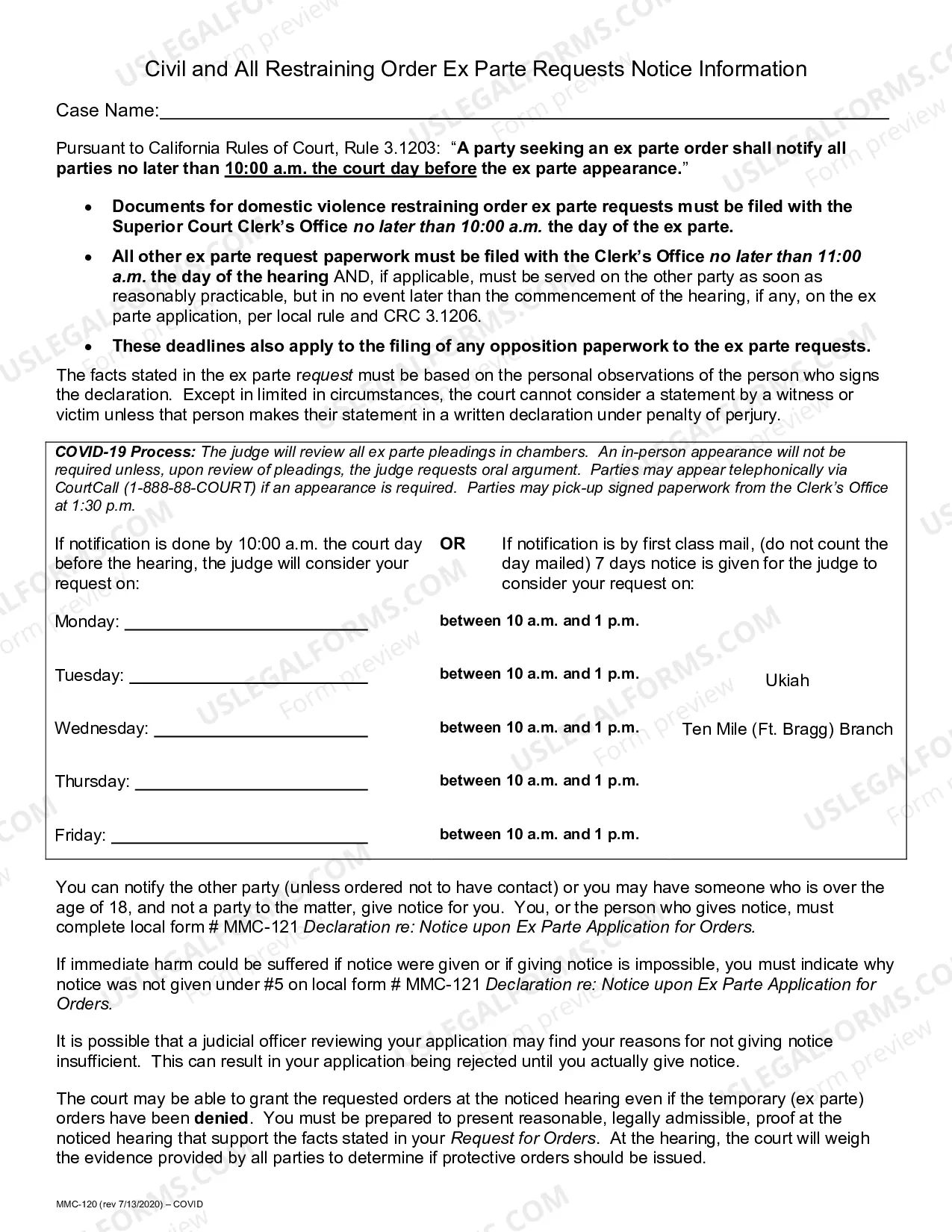
In California, you must provide notice of an ex parte application to all parties involved. This notice should include the time and place of the hearing. Complying with the California Declaration Re Notice Upon Ex Parte Application For Orders is essential for ensuring proper notification and avoiding delays.
To oppose a declaration, start by identifying the specific claims made within that document. Prepare a detailed response that logically counters those claims with facts and evidence. It's crucial to file your opposition in compliance with the California Declaration Re Notice Upon Ex Parte Application For Orders process.
To respond effectively, you must review the responsive declaration carefully. Understand the points raised and gather any evidence or documents that support your position. Submit your response in a timely manner, ensuring it aligns with the California Declaration Re Notice Upon Ex Parte Application For Orders requirements.
To oppose an ex parte application in California, you need to file a 'California Declaration Re Notice Upon Ex Parte Application For Orders' with the court. This document allows you to present your side of the story and outline your objections. It's important to submit your opposition quickly, as the court may make a decision soon after the application is filed. Additionally, consider using resources from US Legal Forms to guide you through the process and ensure proper filing.
To request a trial by written declaration in California, begin by completing the California Declaration Re Notice Upon Ex Parte Application For Orders form. It's essential to follow your local court's specific instructions and submit your paperwork before any deadlines. If you need assistance in navigating this process, US Legal Forms offers the resources necessary to guide you step-by-step.
While a trial by written declaration offers convenience, it does have some drawbacks. One significant concern is that you won't have the opportunity for direct interaction with the judge or opposing party, which can limit the ability to clarify points in real-time. Additionally, relying solely on written documents may not convey the complete context of your case, as seen with the California Declaration Re Notice Upon Ex Parte Application For Orders.