California Quitclaim Deed from two Individuals to One Individual
About this form
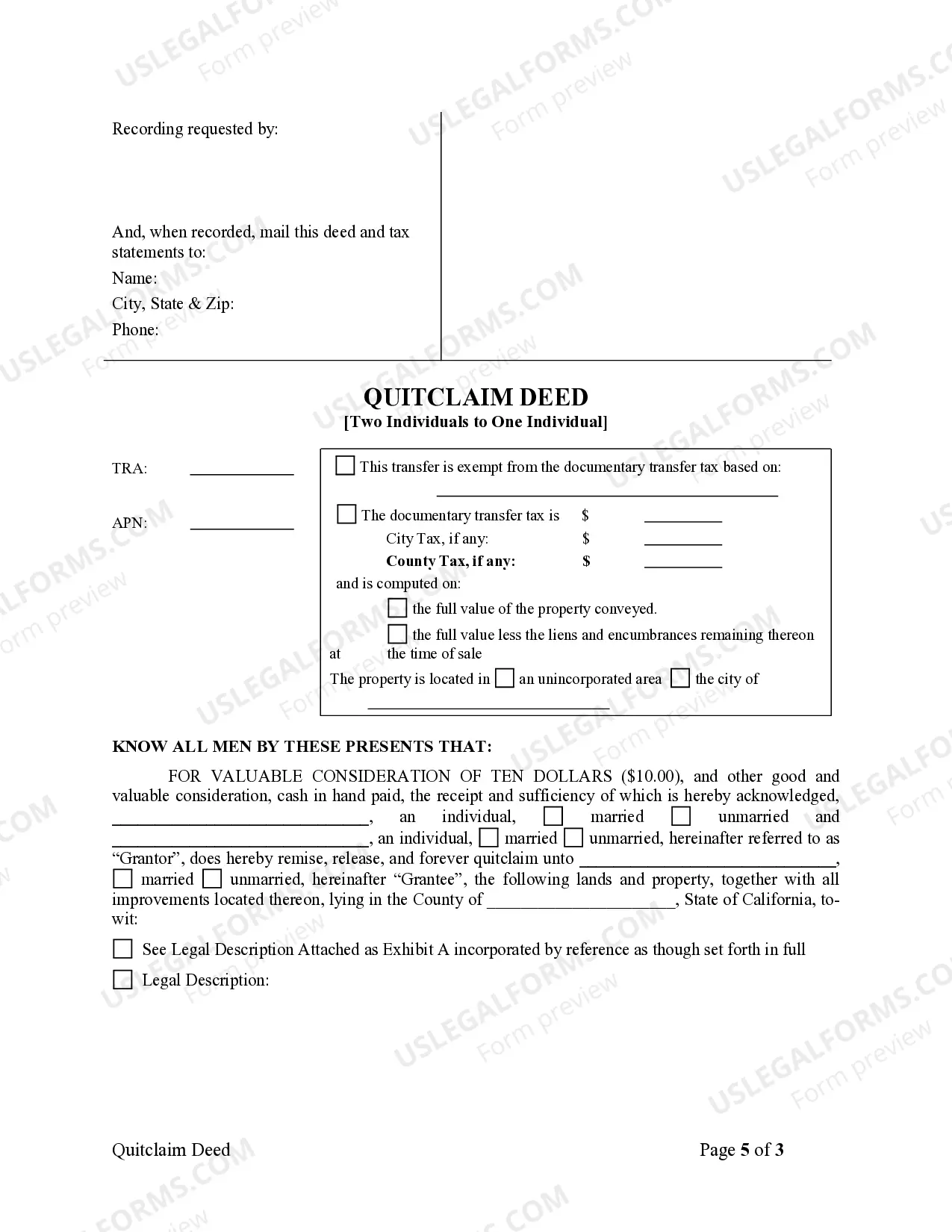
This form is a Quitclaim Deed where two individuals (the grantors) transfer their interest in a property to a single individual (the grantee). Unlike other types of deeds, a quitclaim deed does not guarantee that the grantors have valid ownership; it simply conveys whatever interest they may have. This document is commonly used in informal property transfers between family members, friends, or in situations such as divorce settlements.
Main sections of this form
- Names and addresses of the grantors and the grantee
- Description of the property being transferred
- Statement of the consideration (if any) paid for the property
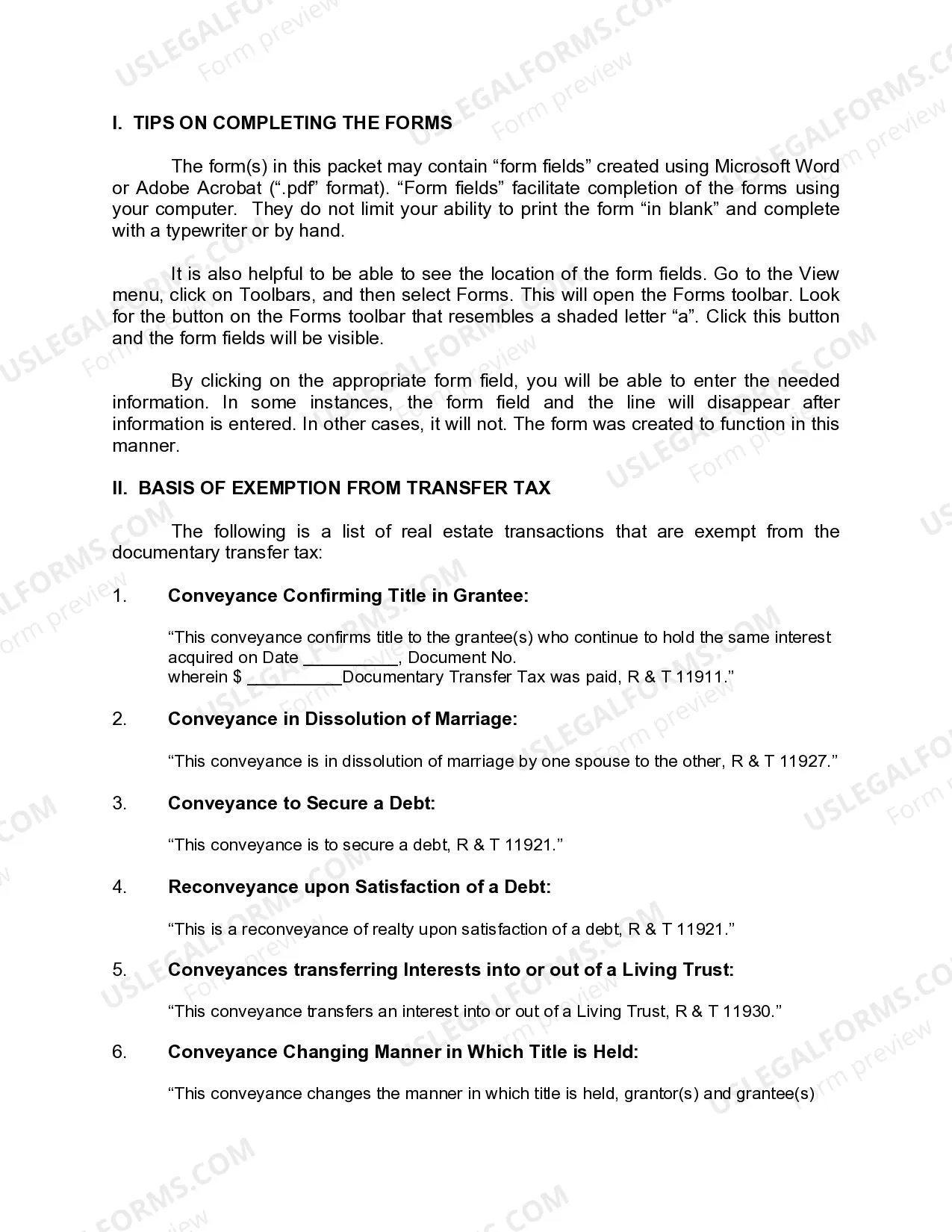
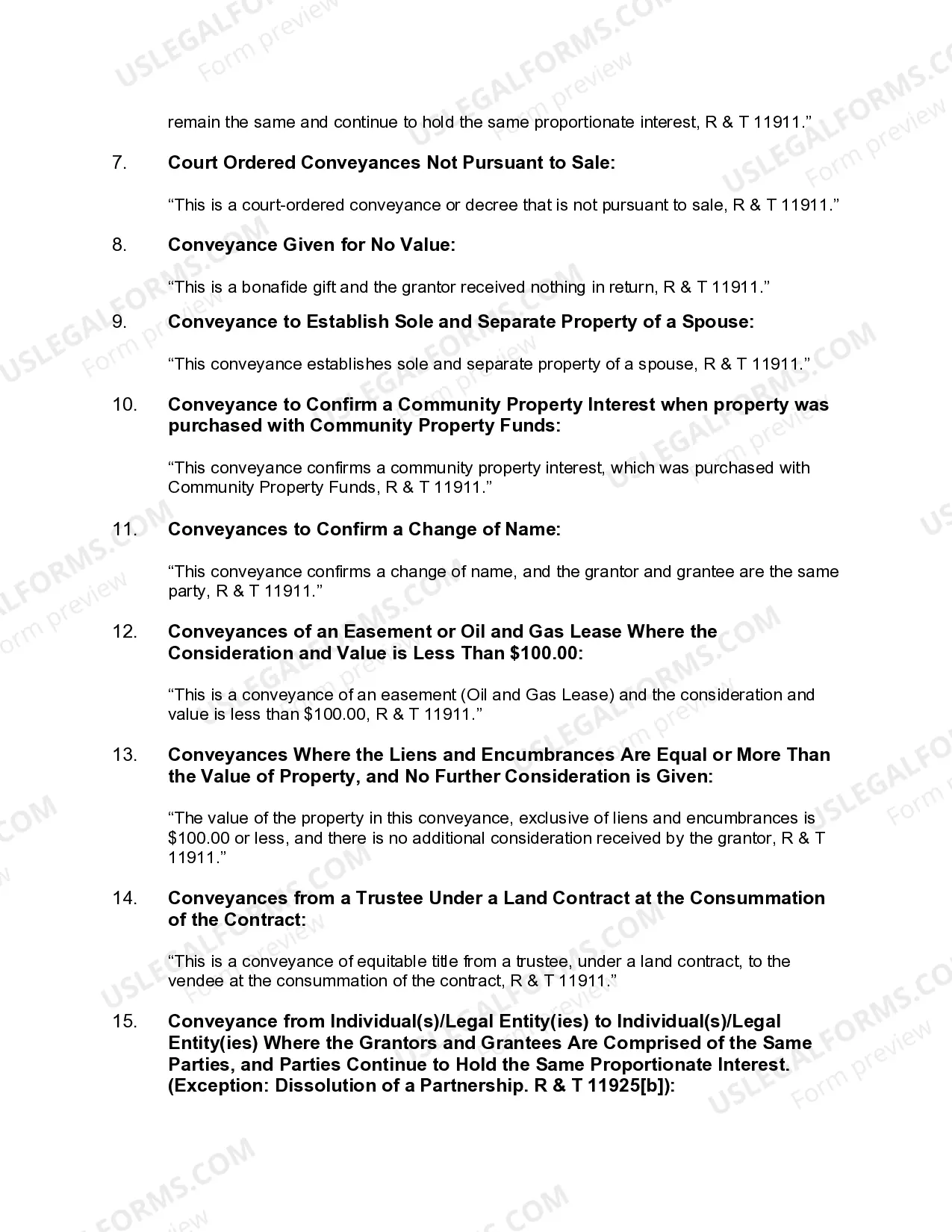
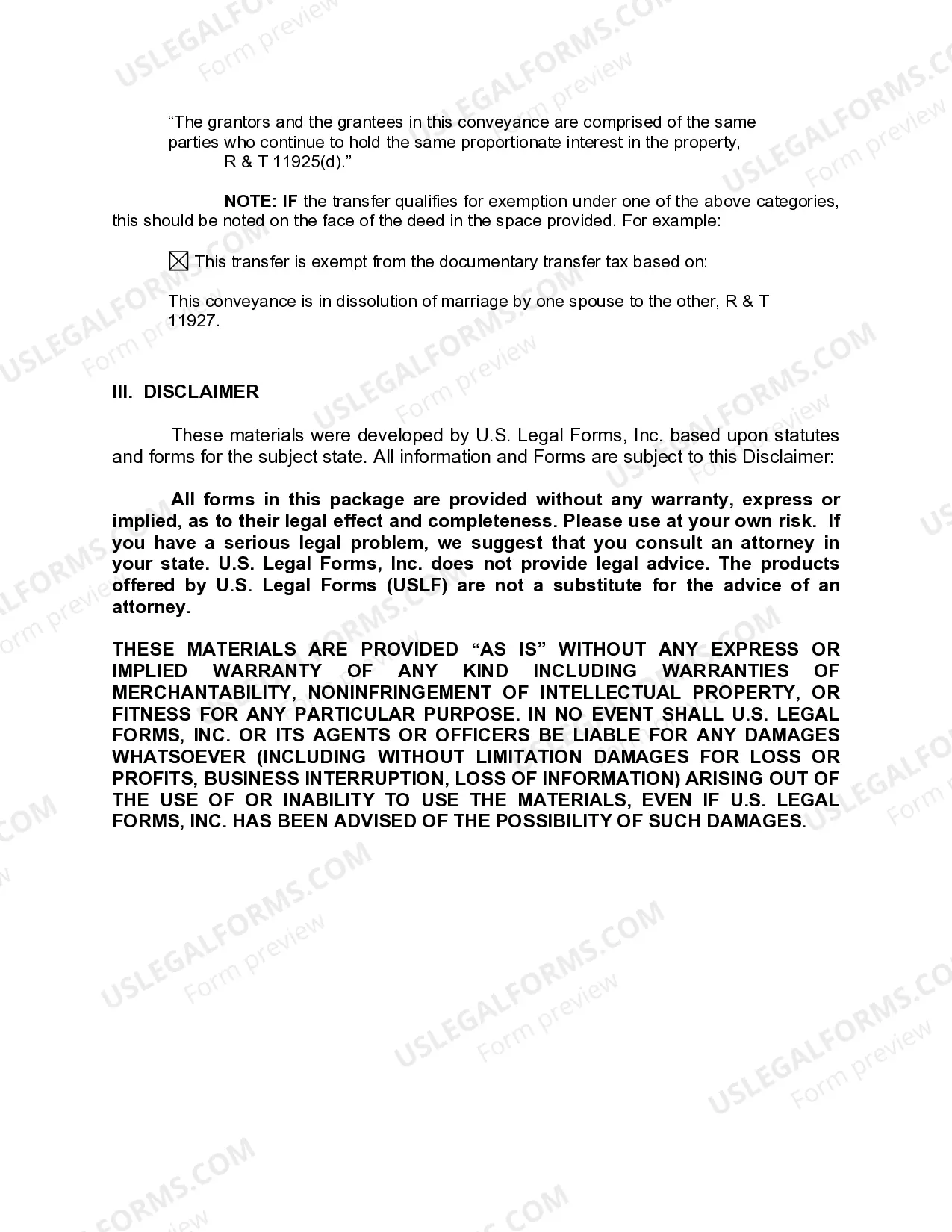
- Exemption from documentary transfer tax, if applicable
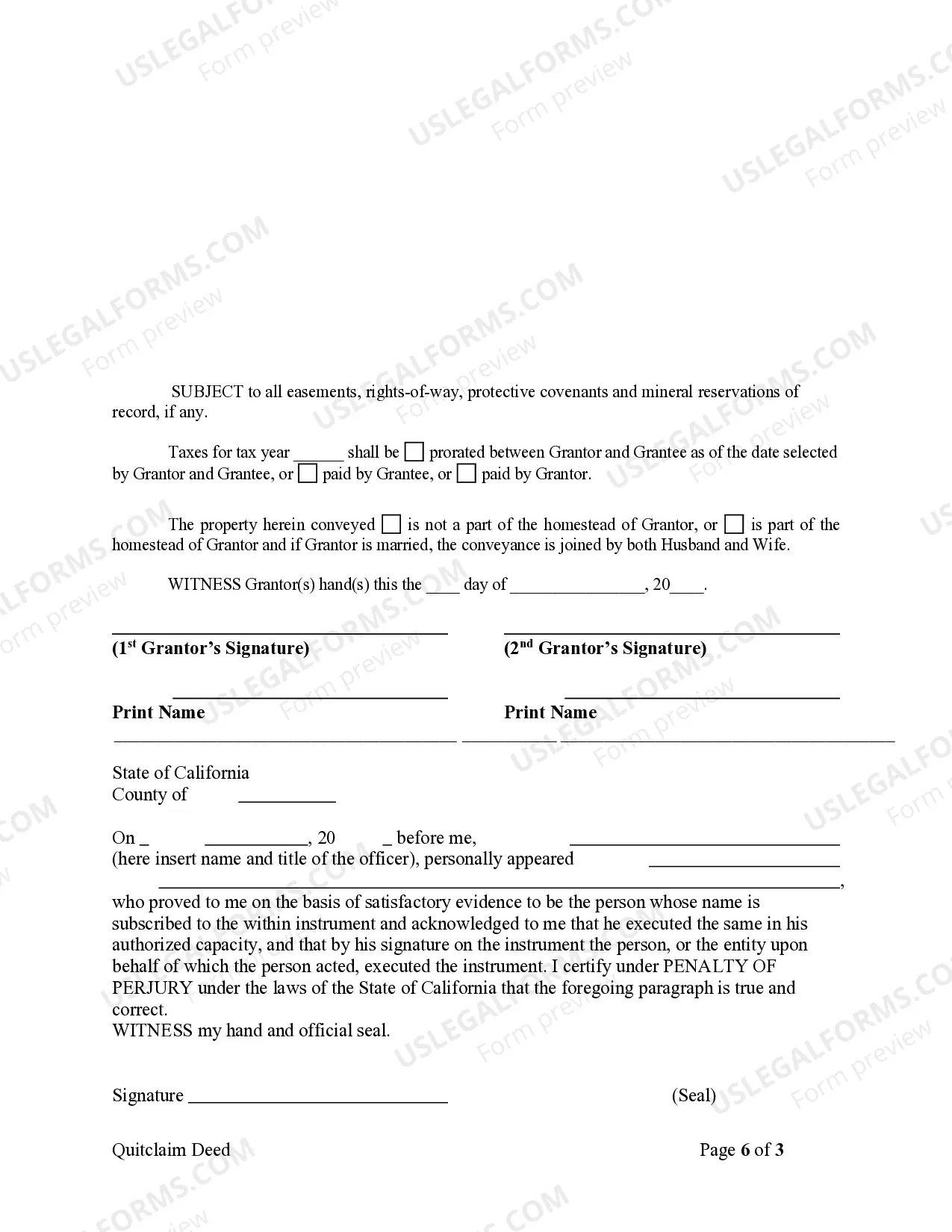
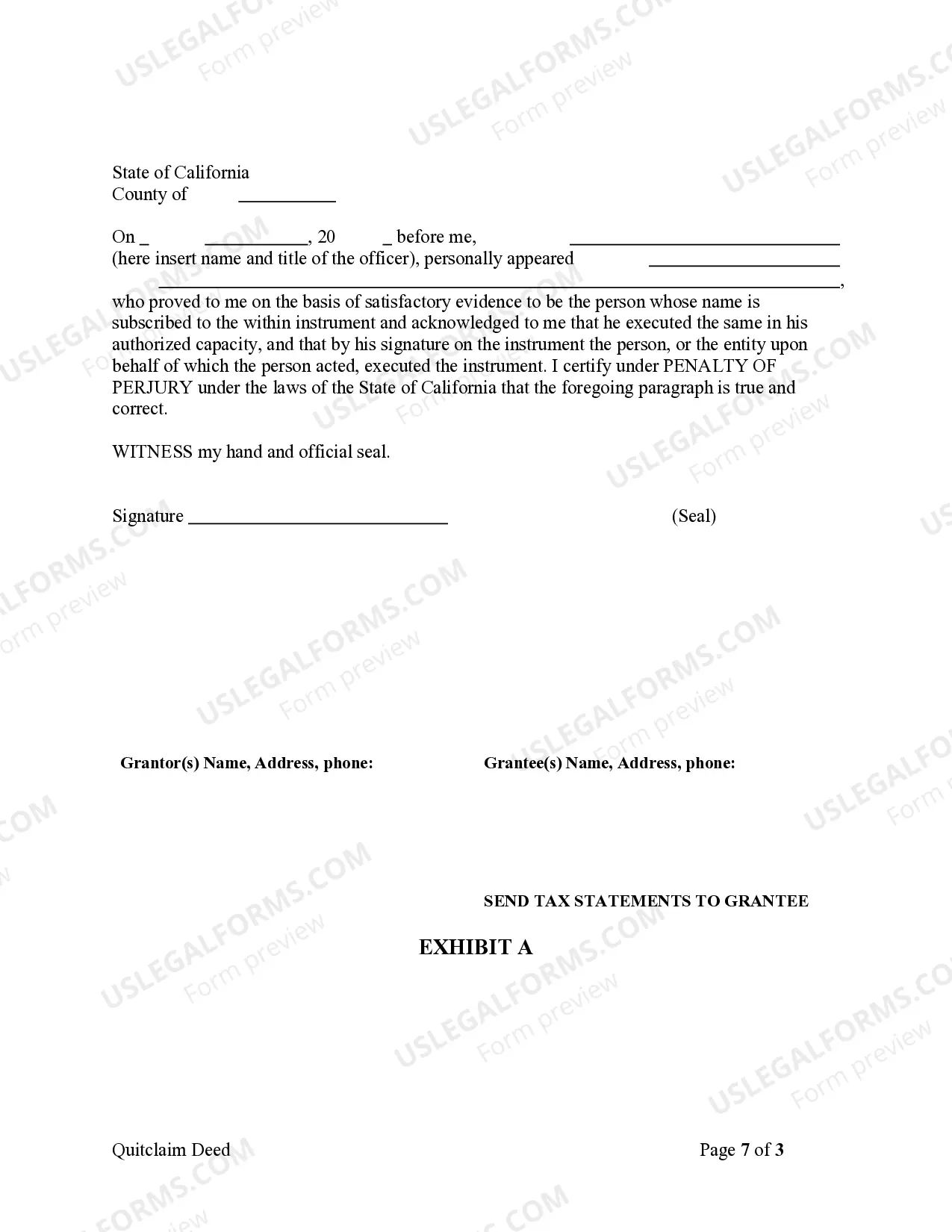
- Signatures of the grantors and any required witnesses or notary public






When this form is needed
This Quitclaim Deed should be used when two individuals wish to transfer their ownership interest in a property to one individual. Common scenarios include: resolving disputes between co-owners, transferring property as a gift, or during divorce proceedings where one spouse wishes to convey their interest in a property to the other. It is essential to clearly document the transfer to avoid future disputes regarding ownership.
Who this form is for
This form is suitable for:
- Individuals who own property jointly and need to transfer their interest to one party
- Family members engaging in property transfers without the involvement of a traditional transaction
- Parties involved in divorce proceedings or legal separations who need to settle property interests
Steps to complete this form
- Identify the grantors by providing their full names and addresses.
- Specify the grantee's full name and address to whom the property is being transferred.
- Provide a detailed description of the property being conveyed, including its legal description.
- Enter the consideration amount, if any, for the property transfer.
- Both grantors must sign the document in the presence of a notary public.
Is notarization required?
Notarization is required for this form to take effect. Our online notarization service, powered by Notarize, lets you verify and sign documents remotely through an encrypted video session, available 24/7.
Get your form ready online
Our built-in tools help you complete, sign, share, and store your documents in one place.
Make edits, fill in missing information, and update formatting in US Legal Forms—just like you would in MS Word.
Download a copy, print it, send it by email, or mail it via USPS—whatever works best for your next step.
Sign and collect signatures with our SignNow integration. Send to multiple recipients, set reminders, and more. Go Premium to unlock E-Sign.
If this form requires notarization, complete it online through a secure video call—no need to meet a notary in person or wait for an appointment.
We protect your documents and personal data by following strict security and privacy standards.

Make edits, fill in missing information, and update formatting in US Legal Forms—just like you would in MS Word.

Download a copy, print it, send it by email, or mail it via USPS—whatever works best for your next step.

Sign and collect signatures with our SignNow integration. Send to multiple recipients, set reminders, and more. Go Premium to unlock E-Sign.

If this form requires notarization, complete it online through a secure video call—no need to meet a notary in person or wait for an appointment.

We protect your documents and personal data by following strict security and privacy standards.
Avoid these common issues
- Failing to include a legal description of the property.
- Not having the signatures of both grantors notarized.
- Leaving the consideration field blank or incorrectly filled out.
- Not recording the deed with the appropriate county office.
Advantages of online completion
- Immediate access to pre-drafted legal forms designed by licensed attorneys.
- Easy to edit and customize to fit individual circumstances.
- Convenience of downloading and printing forms at home.
Looking for another form?


Form popularity
FAQ
Many people consider the California Quitclaim Deed from two Individuals to One Individual risky because it provides no warranty of title. Essentially, this means that the new owner inherits the property with all existing issues. If prior claims or liens exist, the new owner may have to deal with those problems. It's essential to understand these risks, which is why platforms like US Legal Forms can offer insights and guidance when using a quitclaim deed.
If you're on the deed but not the mortgage, you own the property but may not be responsible for mortgage payments. However, the lender may still have a claim to the property if the mortgage defaults. With a California Quitclaim Deed from two Individuals to One Individual, it's crucial to understand how these distinctions affect ownership and liabilities. Consulting a legal professional can provide clarity on your specific circumstances.
When two people are listed on a deed, it is typically referred to as joint ownership. This could involve a California Quitclaim Deed from two Individuals to One Individual, where two individuals share ownership. This type of arrangement ensures that both parties have a legal claim to the property. It is essential to clarify the type of joint ownership, as it affects how the property is managed and transferred in the future.
If your name appears on a deed, you hold ownership rights to the property associated with that deed, including a California Quitclaim Deed from two Individuals to One Individual. This means you can sell, transfer, or use the property as collateral. Additionally, you share responsibilities with co-owners for property taxes, maintenance, and other obligations. Understanding these rights can help you fully leverage your ownership.
Yes, adding someone to a deed can impact taxes related to property ownership. Generally, when you transfer ownership through a California Quitclaim Deed from two Individuals to One Individual, it may trigger reassessment of property taxes. This means that the county may reassess the property's value, resulting in a potential increase in property taxes. It's wise to consult a tax professional to understand the specific implications for your situation.
Yes, you can add someone to your house deed in California by using a California Quitclaim Deed from two Individuals to One Individual. This type of deed allows you to transfer interest in the property to another person legally. Be sure to follow the necessary procedures, like notarizing the document and recording it with the county, to complete the process.
Filling out a quit claim deed correctly is essential for a smooth transfer of property ownership. You should start by including the names of the grantors and grantees, along with the property description and any relevant legal details. It is advisable to use a comprehensive resource like UsLegalForms to guide you through each step and ensure that your California Quitclaim Deed from two Individuals to One Individual meets all requirements for your area.
To add an owner to a deed, you would create a California Quitclaim Deed from two Individuals to One Individual. This deed outlines the property details and names the current owners as well as the new owner. It's crucial to ensure the deed is accurately filled out and signed by all parties involved, after which it should be recorded with the local county recorder's office to formalize the ownership transfer.
Adding someone to a deed in California can have various tax implications, which generally depend on the relationship between the parties involved. If the individuals are family members, there may be exemptions from certain taxes. However, it’s essential to review your specific case or consult a tax professional to understand how a California Quitclaim Deed from two Individuals to One Individual might impact property taxes and potential reassessment.
To add a person to a deed in California, you typically need to create a new California Quitclaim Deed from two Individuals to One Individual. This process involves completing the deed form with the appropriate information about the new owner and the property. Once completed, you must have it signed by the current owners and notarized, then record it with the county recorder's office to make the change official.