California Quitclaim Deed from one Individual to Two Individuals as Joint Tenants
Overview of this form
This Quitclaim Deed enables an individual (the grantor) to transfer property ownership to two individuals (the grantees) as joint tenants. Unlike a warranty deed, this form does not guarantee that the property is free of claims or liens. A Quitclaim Deed is often used to relinquish rights or interests in a property without providing any warranty of the title, making it an efficient way to update property ownership among family members or friends.
Key components of this form
- Grantor's information: Identifies the individual transferring their interest.
- Grantees' information: Names the two individuals receiving the property.
- Property description: Clearly describes the property being transferred.
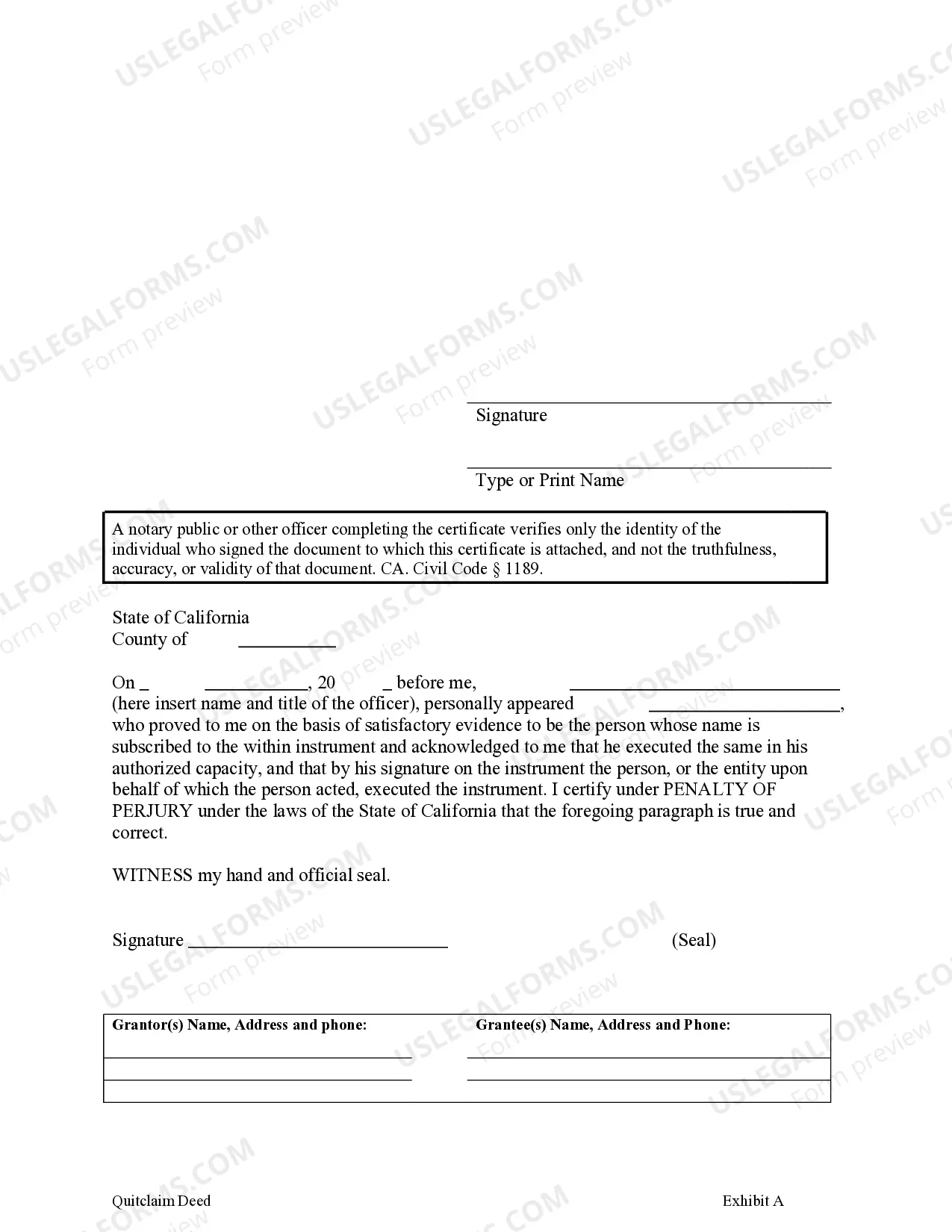
- Notarization section: Confirms the signature of the grantor in the presence of a notary.
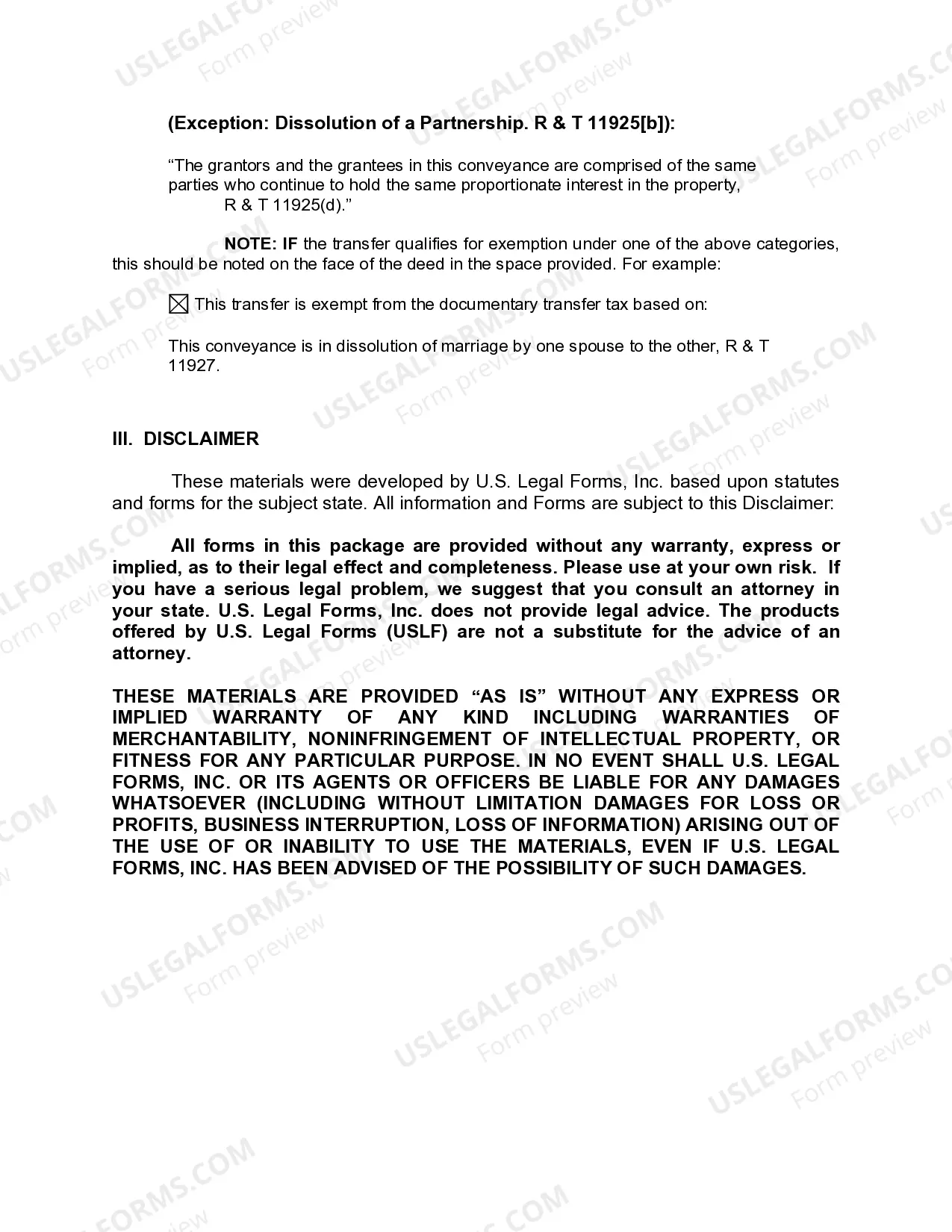
- Exemption from transfer tax: Indicates any relevant exemptions that may apply.








When this form is needed
This Quitclaim Deed is commonly used in situations where one person wishes to transfer ownership of a property to two others as joint tenants. Typical scenarios include transferring property as a gift to family members, adding a spouse or partner to the title, or facilitating property transfers during estate planning. It is essential to use this form when the grantor does not require any warranty regarding the title of the property.
Who can use this document
- Individuals wanting to transfer property ownership to others without a title guarantee.
- Property owners wishing to add joint tenants to their title.
- Those involved in estate planning or family property arrangements.
- People looking to clarify property ownership arrangements among family members or friends.
Steps to complete this form
- Identify the parties: Clearly input the names and addresses of the grantor and the two grantees.
- Specify the property: Provide a detailed description of the property being transferred, including any parcel numbers or legal descriptions.
- Enter the date: Include the date when the transfer takes place.
- Sign the document: The grantor must sign the deed in front of a notary public.
- Complete notarization: Ensure the notary public fills out the notary section and stamps the document.
- Record the deed: Submit the completed Quitclaim Deed to the relevant local government office for recording.
Does this document require notarization?
This document requires notarization to meet legal standards. US Legal Forms provides secure online notarization powered by Notarize, allowing you to complete the process through a verified video call, available 24/7.
Get your form ready online
Our built-in tools help you complete, sign, share, and store your documents in one place.
Make edits, fill in missing information, and update formatting in US Legal Forms—just like you would in MS Word.
Download a copy, print it, send it by email, or mail it via USPS—whatever works best for your next step.
Sign and collect signatures with our SignNow integration. Send to multiple recipients, set reminders, and more. Go Premium to unlock E-Sign.
If this form requires notarization, complete it online through a secure video call—no need to meet a notary in person or wait for an appointment.
We protect your documents and personal data by following strict security and privacy standards.

Make edits, fill in missing information, and update formatting in US Legal Forms—just like you would in MS Word.

Download a copy, print it, send it by email, or mail it via USPS—whatever works best for your next step.

Sign and collect signatures with our SignNow integration. Send to multiple recipients, set reminders, and more. Go Premium to unlock E-Sign.

If this form requires notarization, complete it online through a secure video call—no need to meet a notary in person or wait for an appointment.

We protect your documents and personal data by following strict security and privacy standards.
Typical mistakes to avoid
- Failing to properly describe the property, leading to confusion about what is being transferred.
- Not having the document notarized, which may invalidate the deed.
- Leaving the date blank or using an incorrect date of transfer.
- Not checking for any local tax exemptions that might apply.
Why use this form online
- Convenient access: Download and complete the form from anywhere, at any time.
- Editability: Fill out the form digitally, reducing the chance of errors.
- Time-saving: Eliminate the need for in-person legal consultations for simple transfers.
- Secure storage: Keep digital copies for your records easily accessible.
Looking for another form?
Form popularity
FAQ
The primary beneficiaries of a quitclaim deed are often family members and close friends who are transferring property without the need for legal entanglements or financial transactions. This method provides simplicity and speed, particularly when handling estate matters. A California Quitclaim Deed from one Individual to Two Individuals as Joint Tenants is especially beneficial for couples or partners looking to establish shared ownership without lengthy procedures.
Yes, you can prepare a quit claim deed yourself, but caution is necessary. Ensure you fully understand the process and requirements specific to California law. To simplify this task, consider using platforms like USLegalForms, which provide templates and guidance tailored to creating a California Quitclaim Deed from one Individual to Two Individuals as Joint Tenants. While DIY is possible, legal advice can enhance your security.
One key disadvantage of a quitclaim deed is the lack of warranties or guarantees regarding the property title. This means that if any title issues arise, the grantee has limited recourse against the granter. Furthermore, using a California Quitclaim Deed from one Individual to Two Individuals as Joint Tenants may not provide the same legal protections as a warranty deed. Always weigh the risks before proceeding.
Joint tenancy in California means that two or more individuals share ownership of a property, with equal rights to the entire property. When you use a California Quitclaim Deed from one Individual to Two Individuals as Joint Tenants, all parties enjoy rights of survivorship, meaning if one owner passes away, their share automatically transfers to the surviving owner. This arrangement simplifies the transfer of property upon death and can avoid probate.
Several factors can void a quit claim deed in California. If the deed is signed under duress or fraud, it may be deemed invalid. Additionally, if proper execution or notarization requirements are not met, the deed may not hold up legally. Always consult legal experts to understand how to avoid these pitfalls when transferring property ownership.
To fill out a California Quitclaim Deed from one Individual to Two Individuals as Joint Tenants, start by downloading the form from a reliable source. Clearly indicate the names of the granter and grantee, along with their addresses. Be sure to include a legal description of the property and specify that the ownership is as joint tenants. After filling out the form, sign it in the presence of a notary public before recording it with the county recorder's office.
A tenant in common can transfer their interest under several circumstances such as financial need or personal decisions. This transfer can occur without the consent of other tenants unless otherwise agreed upon. A California Quitclaim Deed from one Individual to Two Individuals as Joint Tenants can facilitate the process and clarify ownership transitions. Understanding these options is vital for all parties involved.
To convert tenants in common to joint tenancy in California, all parties involved must agree to the conversion and execute a new deed. This process often requires a California Quitclaim Deed from one Individual to Two Individuals as Joint Tenants, clearly stating the new joint tenancy arrangement. Engaging legal assistance can make this transition smoother and help ensure everyone’s interests are protected.
If one person wants to leave a joint tenancy in California, they need to transfer their interest, which typically converts the joint tenancy into a tenancy in common. This change affects how the property is managed and owned. Using a California Quitclaim Deed from one Individual to Two Individuals as Joint Tenants is a straightforward way to execute this transfer. It’s essential to address this matter carefully to prevent misunderstandings.
When two people are on the deed as joint tenants, both individuals share equal ownership and responsibilities of the property. This means that both have the right to use the property, and decisions about it must be made together. If you need to formalize this arrangement, a California Quitclaim Deed from one Individual to Two Individuals as Joint Tenants can be used. Proper understanding of these dynamics can help avoid potential conflicts.