California Home Improvement Contract - Self-Employed
What this document covers
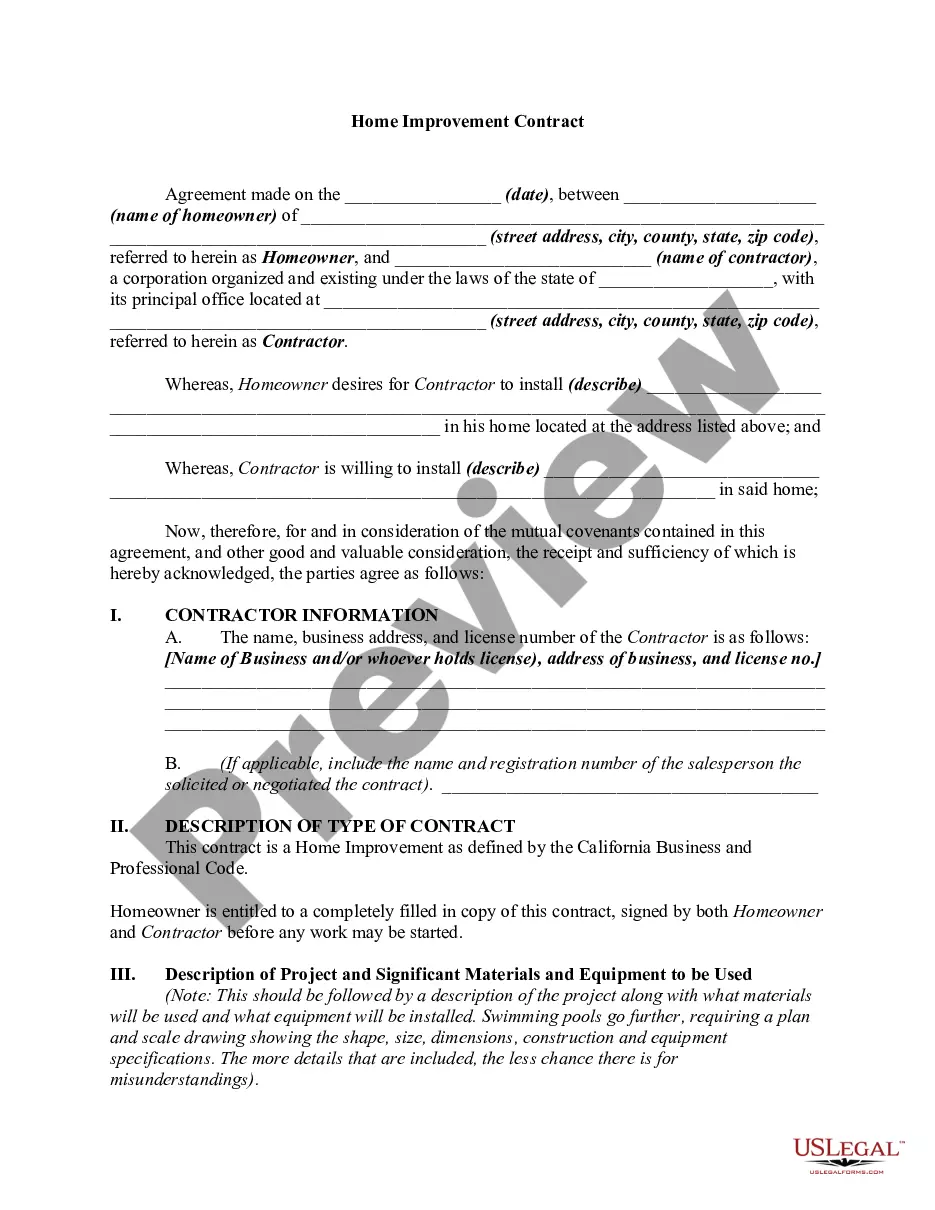
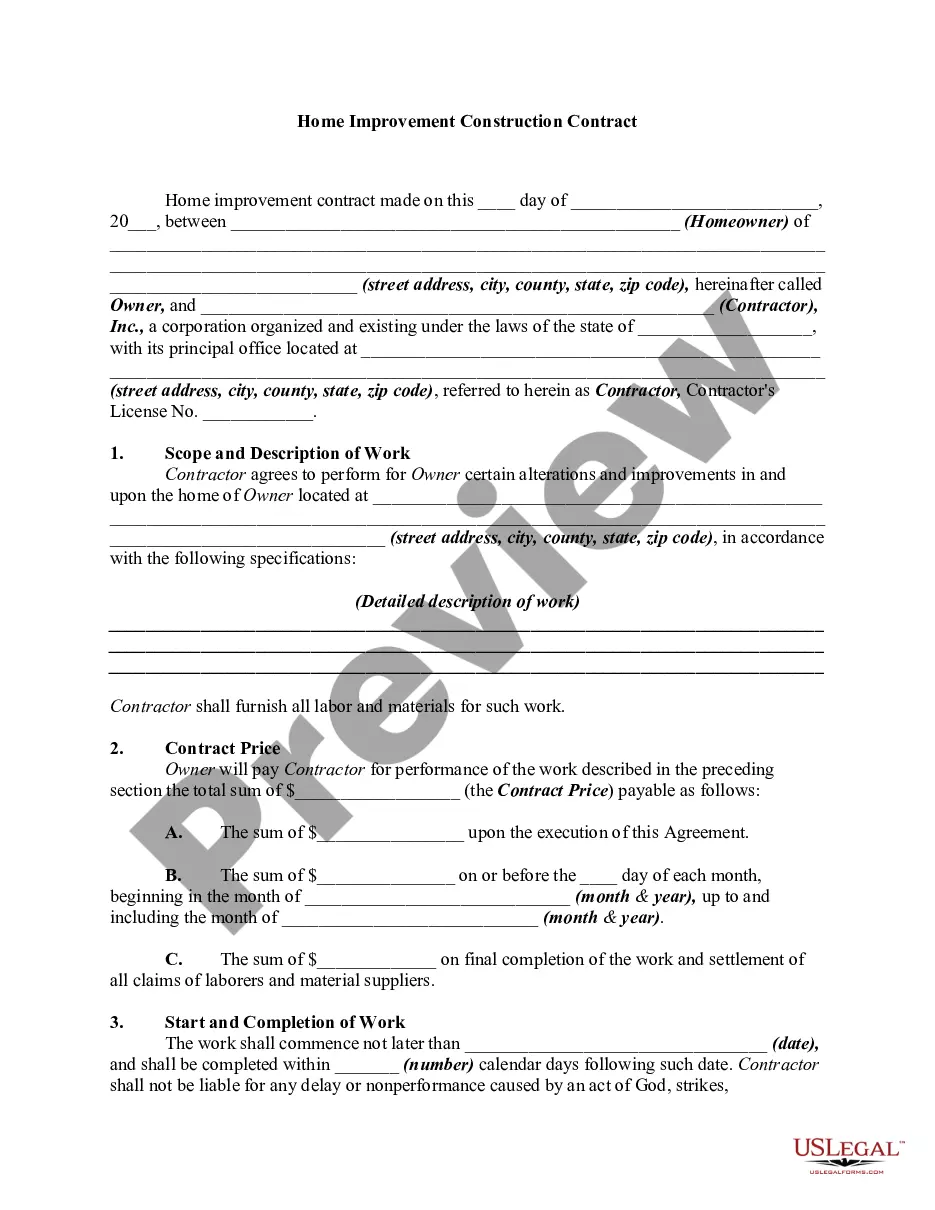
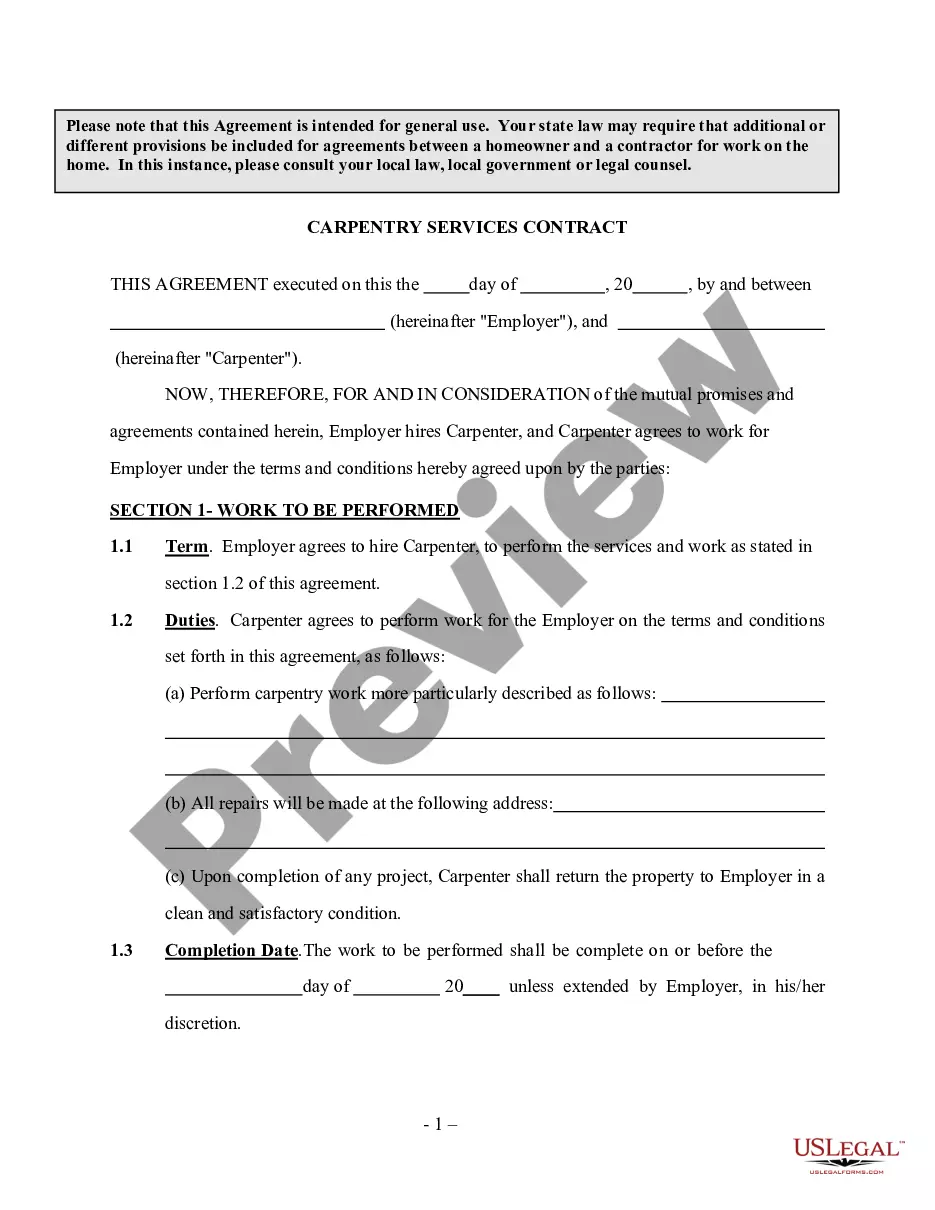
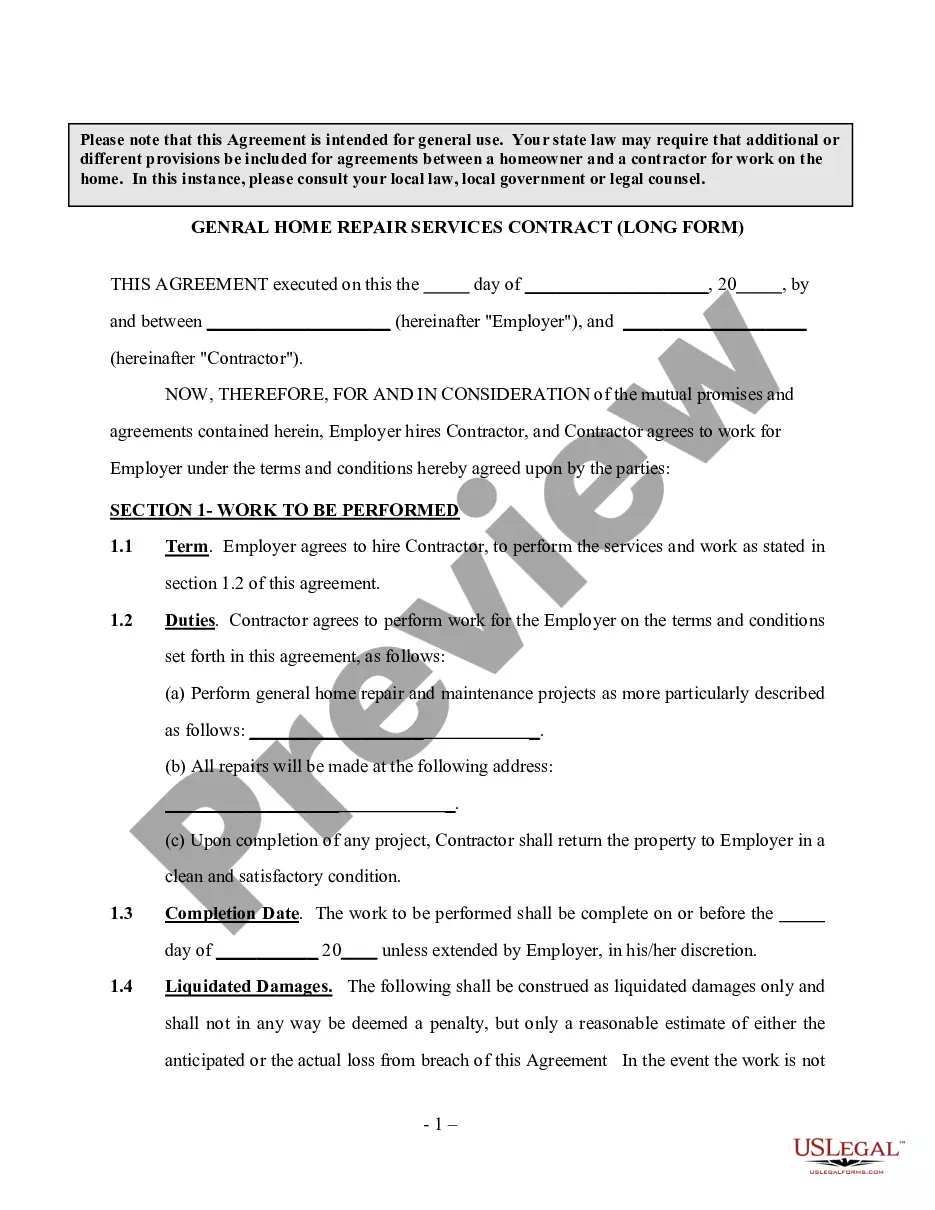
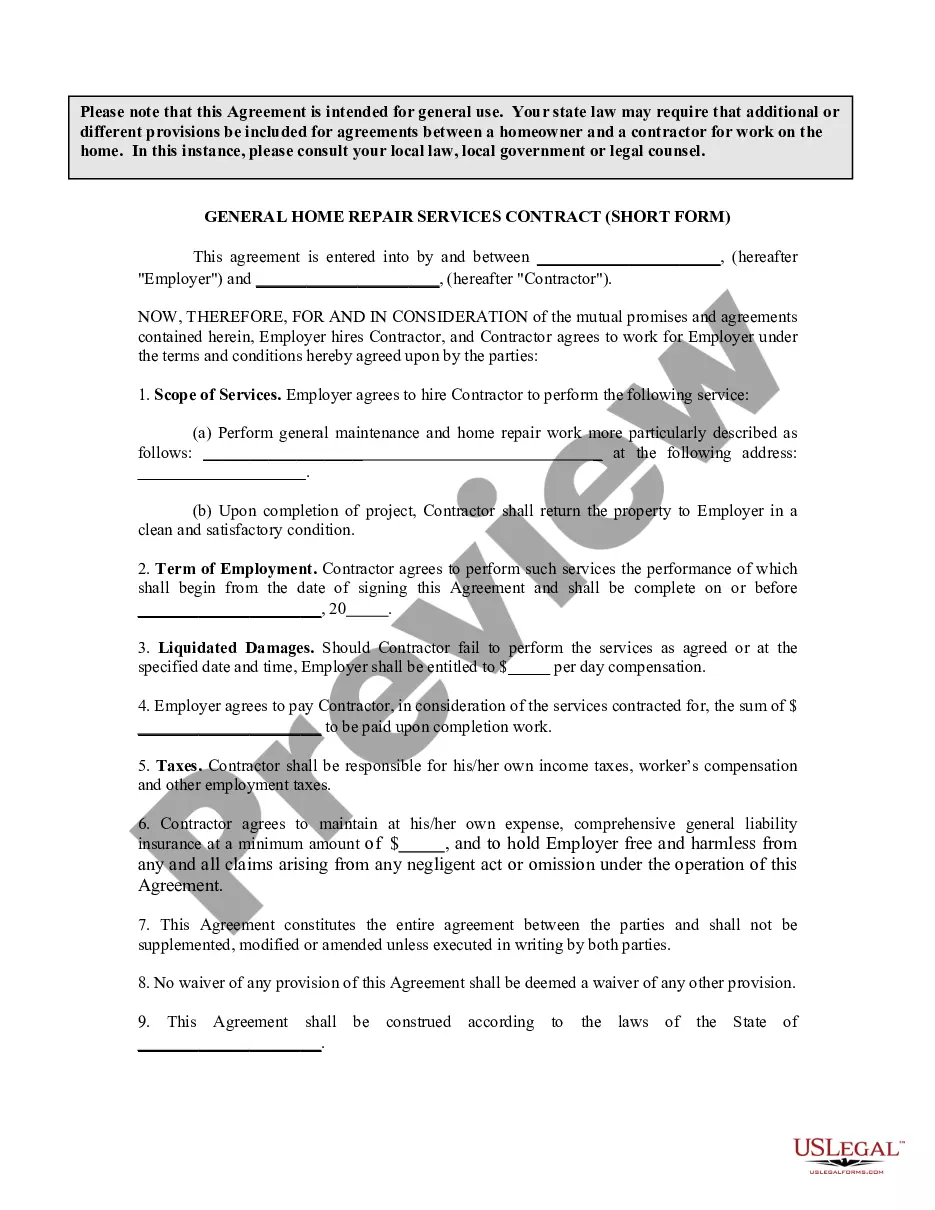
The Home Improvement Contract - Self-Employed is a legally binding agreement between a homeowner and a self-employed contractor for home renovation or improvement services. This form outlines the responsibilities, payments, and terms associated with the construction project, ensuring both parties have a clear understanding of the agreement. It differs from generic contracts by specifically addressing the unique needs of home improvement projects, including state-specific requirements and payment schedules.
Main sections of this form
- Identification of the Homeowner and Contractor, including names and addresses.
- Description of the home improvement project detailing the scope of work, materials, and equipment to be used.
- Contract price, including payment details, down payment limits, and the schedule for progress payments.
- Conditions regarding the start and completion dates for the work, as well as any necessary permits.
- Consumer notices, ensuring homeowners are informed of their rights regarding cancellations and changes to the contract.


When this form is needed
This form should be used when a homeowner and a self-employed contractor agree to undertake home improvementwork. It is necessary before any construction begins, ensuring a legal framework for the project and protections for both parties. Use this contract if you're hiring a contractor for tasks like renovations, additions, or significant repairs in your home.
Who this form is for
- Homeowners looking to contract self-employed workers for home improvement projects.
- Self-employed contractors who want to formalize agreements with homeowners.
- Individuals seeking to ensure compliance with state regulations regarding home improvements.
How to prepare this document
- Identify the parties by entering the names and addresses of both the homeowner and contractor.
- Describe the scope of the home improvement project in detail.
- Specify the contract price and outline the payment schedule, ensuring compliance with state down payment rules.
- Include the estimated start and completion dates for the project.
- Ensure both parties sign and date the contract before any work begins.
Is notarization required?
This form does not typically require notarization unless specified by local law. However, having a notary may enhance the form's validity and provide an extra layer of protection for both parties.
Get your form ready online
Our built-in tools help you complete, sign, share, and store your documents in one place.
Make edits, fill in missing information, and update formatting in US Legal Forms—just like you would in MS Word.
Download a copy, print it, send it by email, or mail it via USPS—whatever works best for your next step.
Sign and collect signatures with our SignNow integration. Send to multiple recipients, set reminders, and more. Go Premium to unlock E-Sign.
If this form requires notarization, complete it online through a secure video call—no need to meet a notary in person or wait for an appointment.
We protect your documents and personal data by following strict security and privacy standards.

Make edits, fill in missing information, and update formatting in US Legal Forms—just like you would in MS Word.

Download a copy, print it, send it by email, or mail it via USPS—whatever works best for your next step.

Sign and collect signatures with our SignNow integration. Send to multiple recipients, set reminders, and more. Go Premium to unlock E-Sign.

If this form requires notarization, complete it online through a secure video call—no need to meet a notary in person or wait for an appointment.

We protect your documents and personal data by following strict security and privacy standards.
Typical mistakes to avoid
- Failing to provide a signed copy of the contract to the homeowner before work begins.
- Not detailing the scope of work accurately, leading to misunderstandings.
- Accepting payments for work not yet completed, which is against state law.
- Overlooking state-specific requirements and consumer notices.
Advantages of online completion
- Convenience of downloading and editing the form as needed.
- Access to up-to-date legal language and guidance tailored to home improvement contracts.
- Reduction in the risk of disputes by ensuring clear communication and documentation of terms.
Legal use & context
- This form is enforceable under California law, ensuring both parties adhere to state regulations concerning home improvement projects.
- Conditions outlined in the contract protect against non-compliance and provide remedies for breach of contract.
- Homeowners must be aware of their rights, including cancelation rights and consumer notices included in the contract.
Key takeaways
- The Home Improvement Contract - Self-Employed is essential for clear agreements between homeowners and contractors.
- Understanding and complying with state-specific requirements is crucial for legal protection.
- Accurate completion of the form minimizes disputes and enhances clarity in the contractor-homeowner relationship.
Looking for another form?



Form popularity
FAQ
Writing a California Home Improvement Contract - Self-Employed involves capturing all essential project details in a clear manner. Begin with the scope of work, set payment terms, and include deadlines. Ensure it contains clauses for handling disputes and modifications to prevent future issues. By leveraging resources like USLegalForms, you can access professional templates and guidance to help you.
Filling out an independent contractor agreement requires specific information about the service to be performed and compensation details. Ensure to include roles, responsibilities, and deadlines in your California Home Improvement Contract - Self-Employed. You can turn to platforms like USLegalForms for templates that simplify this process.
To fill out a California Home Improvement Contract - Self-Employed, start by entering your personal information and the contractor's details. Clearly outline the project scope, payment terms, and any additional clauses relevant to your situation. For accuracy and ease, utilize resources from USLegalForms that provide step-by-step guidance.
For those starting out with a California Home Improvement Contract - Self-Employed, begin by outlining the scope of work clearly. Include essential elements such as the project description, timelines, payment structures, and responsibilities of all parties. Consider using templates from platforms like USLegalForms to streamline the process and avoid common pitfalls.
When creating your California Home Improvement Contract - Self-Employed, steer clear of vague terms and conditions. Be specific about project timelines, payment schedules, and materials used. Avoid leaving out details that could lead to misunderstandings or disputes during the project. Clarity will help ensure everyone is on the same page.
You should avoid discussing your total budget without some context. Instead, mention specific project goals and expectations. Additionally, do not make promises about future projects unless you intend to follow through. Transparency is important, but revealing too much can impact negotiations in your California Home Improvement Contract - Self-Employed.
To become a self-employed independent contractor, first, decide on the services you want to offer and ensure you have the necessary skills and licensing. Next, register your business and set up a strong legal foundation that includes a California Home Improvement Contract - Self-Employed. Establish a marketing strategy to attract clients and network within your industry. Consistent planning and professionalism will help you thrive in your new venture.
In California, certain factors can void a contract, such as fraud, misrepresentation, or lack of capacity. If the terms of the contract violate public policy or law, such as an illegal purpose, it may also be considered void. Understanding these elements is crucial for anyone creating a California Home Improvement Contract - Self-Employed to avoid potential pitfalls. Ensure that your contract adheres to legal standards to protect yourself and your clients.
A construction contract is an agreement between parties outlining the scope of work, payment terms, and responsibilities related to a construction project. For a California Home Improvement Contract - Self-Employed, this includes details like project timelines, materials, and costs. Both parties must understand and agree to the terms for the contract to be enforceable. Clear documentation helps prevent disputes and ensures smooth project execution.
In California, most contractors must have a valid contractor's license to work legally, especially in the home improvement sector. Working without a license can lead to legal issues and fines. If you are considering a California Home Improvement Contract - Self-Employed, it's crucial to secure the necessary licenses to protect both yourself and your clients.