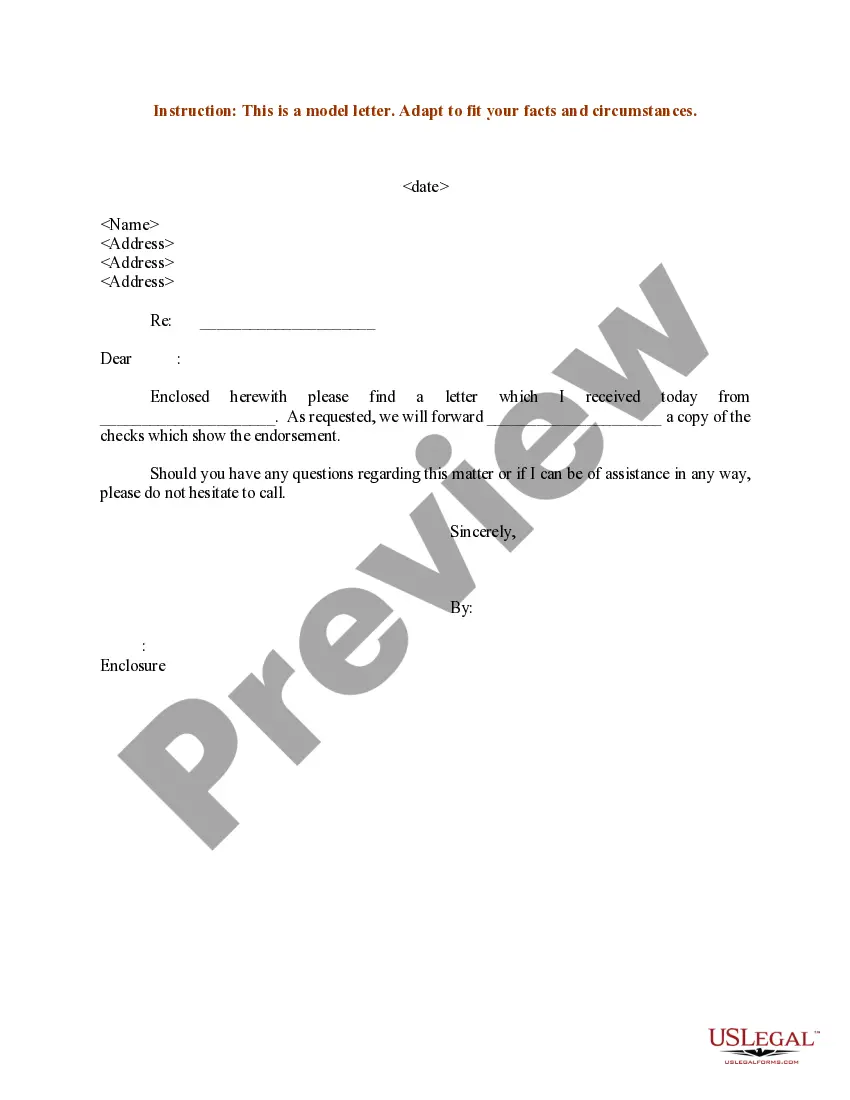
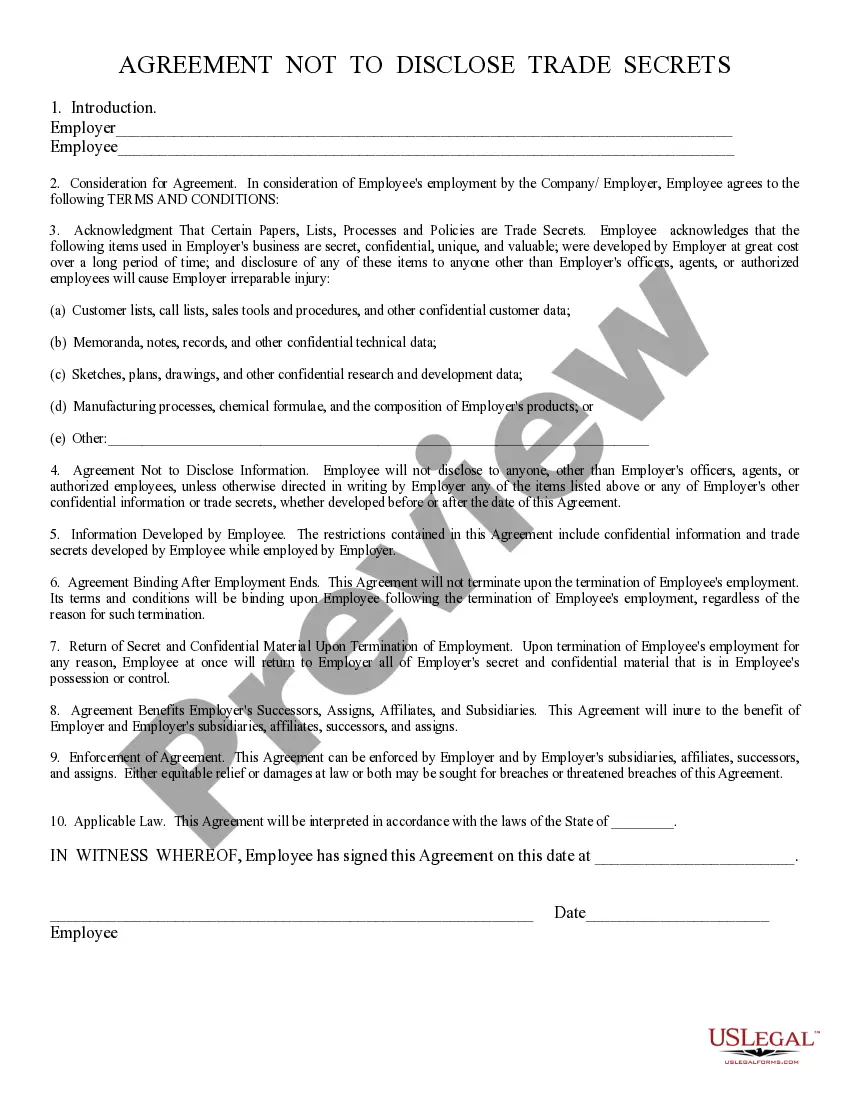
Arizona Agreement Not to Disclose Trade Secrets
Description
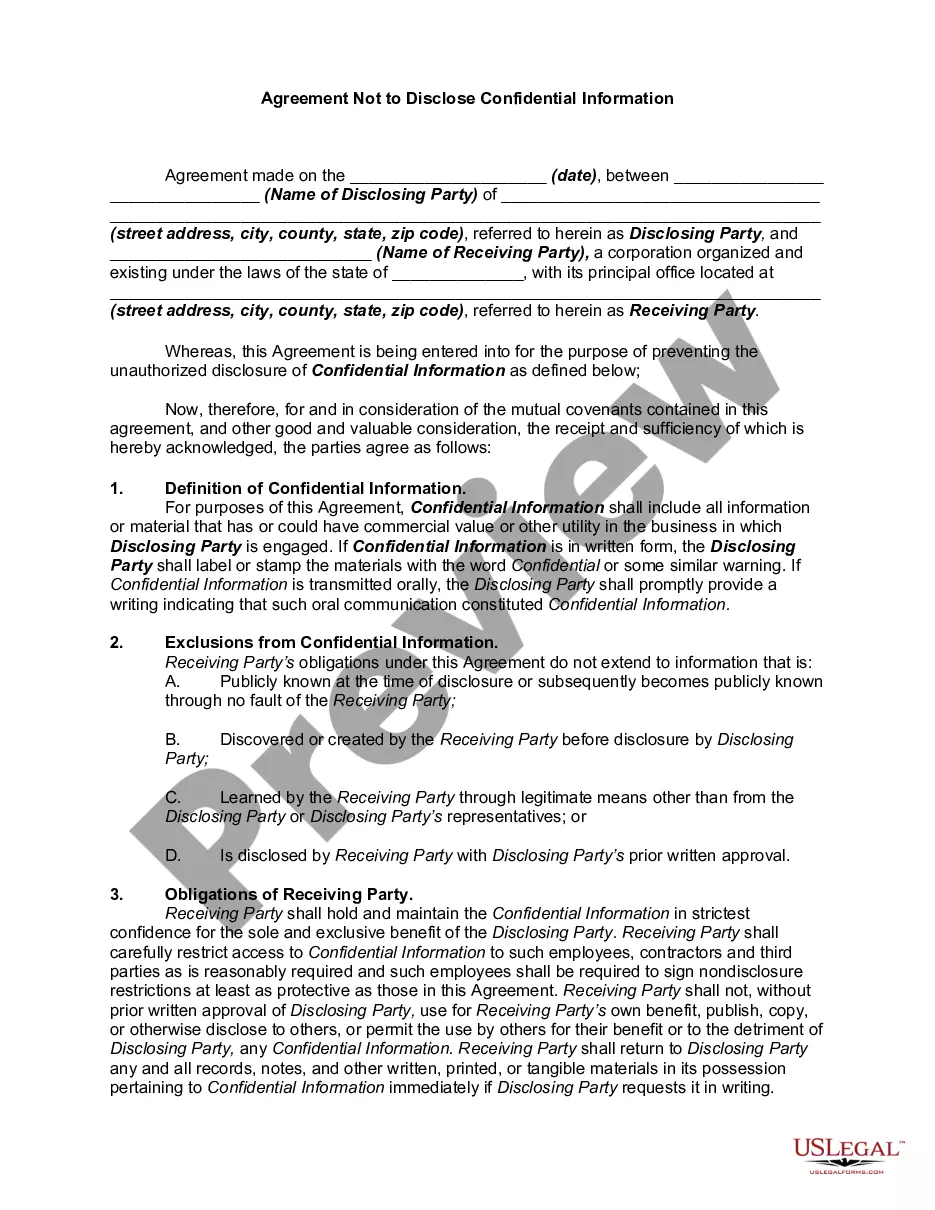
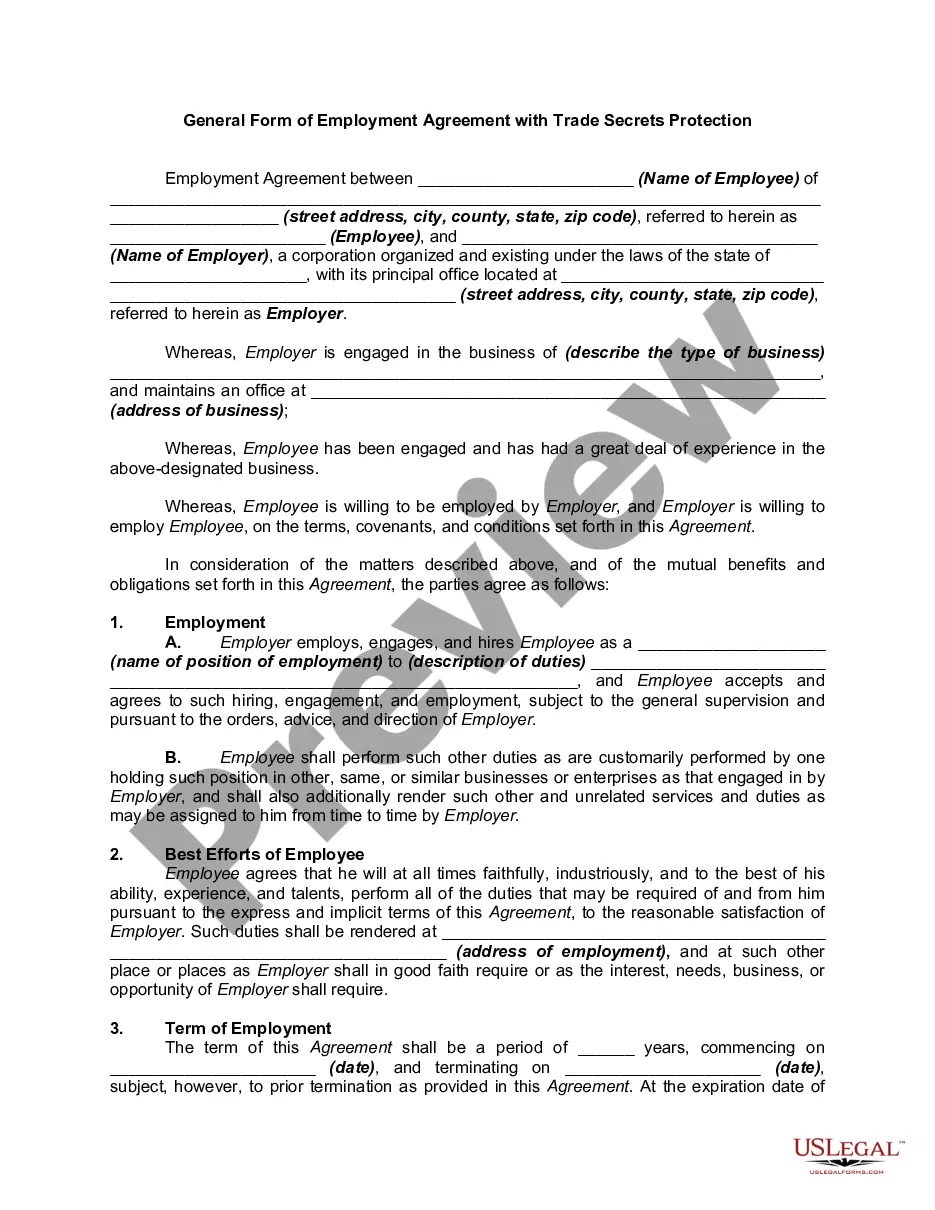
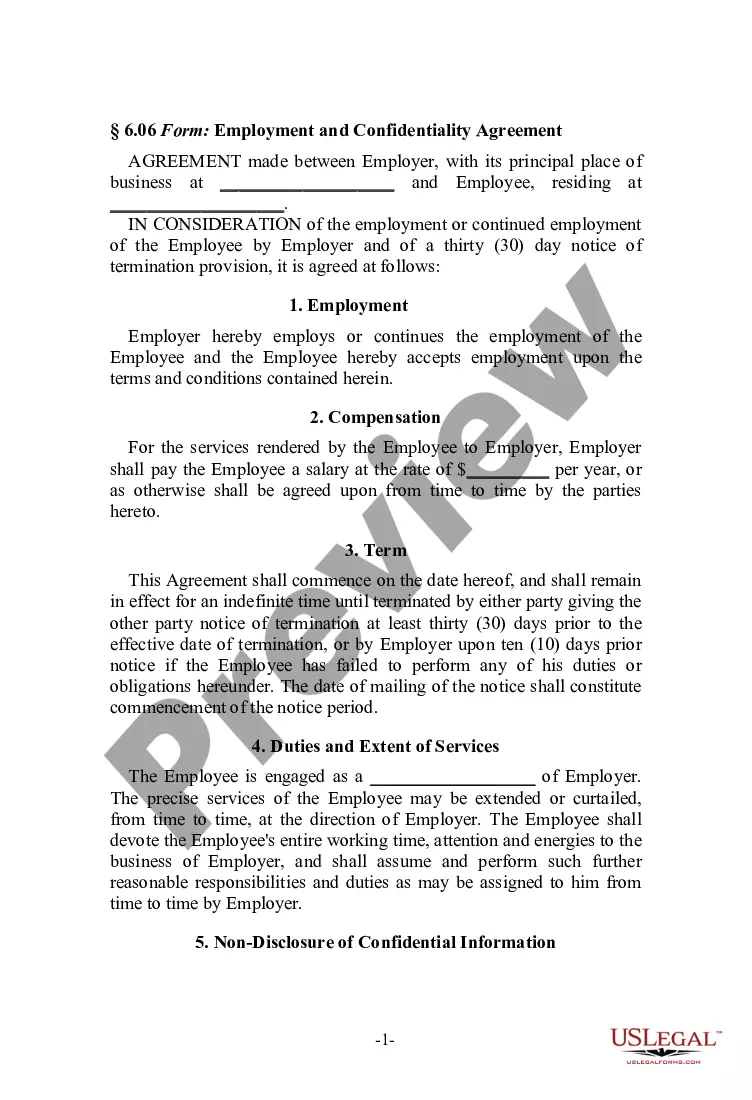


How to fill out Agreement Not To Disclose Trade Secrets?
It is feasible to spend many hours online looking for the legal document template that meets the federal and state requirements you have.
US Legal Forms offers a vast array of legal forms that are validated by experts.
You can easily obtain or print the Arizona Agreement Not to Disclose Trade Secrets through customer support.
Once you have found the template you need, click Get now to proceed. Choose the payment plan you want, enter your information, and register for an account on US Legal Forms. Complete the transaction. You can use your Visa, Mastercard, or PayPal account to pay for the legal document. Select the format of the document and download it to your system. Make edits to your document if needed. You can complete, edit, and sign and print the Arizona Agreement Not to Disclose Trade Secrets. Download and print thousands of document templates using the US Legal Forms website, which provides the largest collection of legal forms. Utilize professional and state-specific templates to address your business or personal needs.
- If you already possess a US Legal Forms account, you can Log In and click the Download button.
- Subsequently, you can complete, edit, print, or sign the Arizona Agreement Not to Disclose Trade Secrets.
- Each legal document template you acquire is yours to keep permanently.
- To retrieve an additional copy of a purchased form, navigate to the My documents tab and click the corresponding button.
- If this is your first time using the US Legal Forms website, follow the simple instructions below.
- First, ensure that you have selected the correct document template for your chosen state or city. Review the document description to confirm that you have chosen the right form.
- If available, use the Preview button to review the document template.
- If you want to find another version of the document, use the Search field to locate the template that meets your requirements.
Form popularity
FAQ
Trade Secrets Act This statute, enacted in 1948, is actually of narrow applicability. It forbids federal government employees and government contractors from making an unauthorized disclosure of confidential government information, including trade secrets.
In Arizona, courts will only enforce NDAs if they are reasonable, meaning that overly restrictive NDAs may not protect an employer's confidential information if the matter goes to court. A reasonable, and therefore enforceable, NDA is one that is appropriately restrictive in time, geography, and content.
A trade secret can also be revealed legally, and you have no recourse in this case, even if it was not your intention to reveal it. Illegal disclosure may be made by people who: Used illegal means, such as theft or bribery, to obtain the information.
Trade secrets may be disclosed during meetings between parties. Ideally, such disclosures are made under a confidential disclosure or nondisclosure agreement, and should always reveal only as much trade secret information as is required under the circumstances.
Since trade secrets are not made public, unlike patents, they do not provide defensive protection, as being prior art.
The NDA ensures your secrets remain secret, and if they do not you have legal recourse against the person or entity that disclosed them. When an NDA is violated, you can ask the court to enjoin the party responsible from infringing or misappropriating your trade secrets, and you can sue for any resulting damages.
If any of the confidential information is revealed to another individual or company by a party to the confidentiality agreement, the injured party can claim a breach of contract, and seek an injunction from the court to restrain the individual or company from further disclosing or using the confidential information and
Non-disclosure agreements, or NDAs as they are sometimes called, are legally enforceable agreements between parties that are used to ensure that certain information will remain confidential.
In Arizona, courts will only enforce NDAs if they are reasonable, meaning that overly restrictive NDAs may not protect an employer's confidential information if the matter goes to court. A reasonable, and therefore enforceable, NDA is one that is appropriately restrictive in time, geography, and content.
Generally, confidentiality agreements are enforceable when they meet the general requirements of a contract.