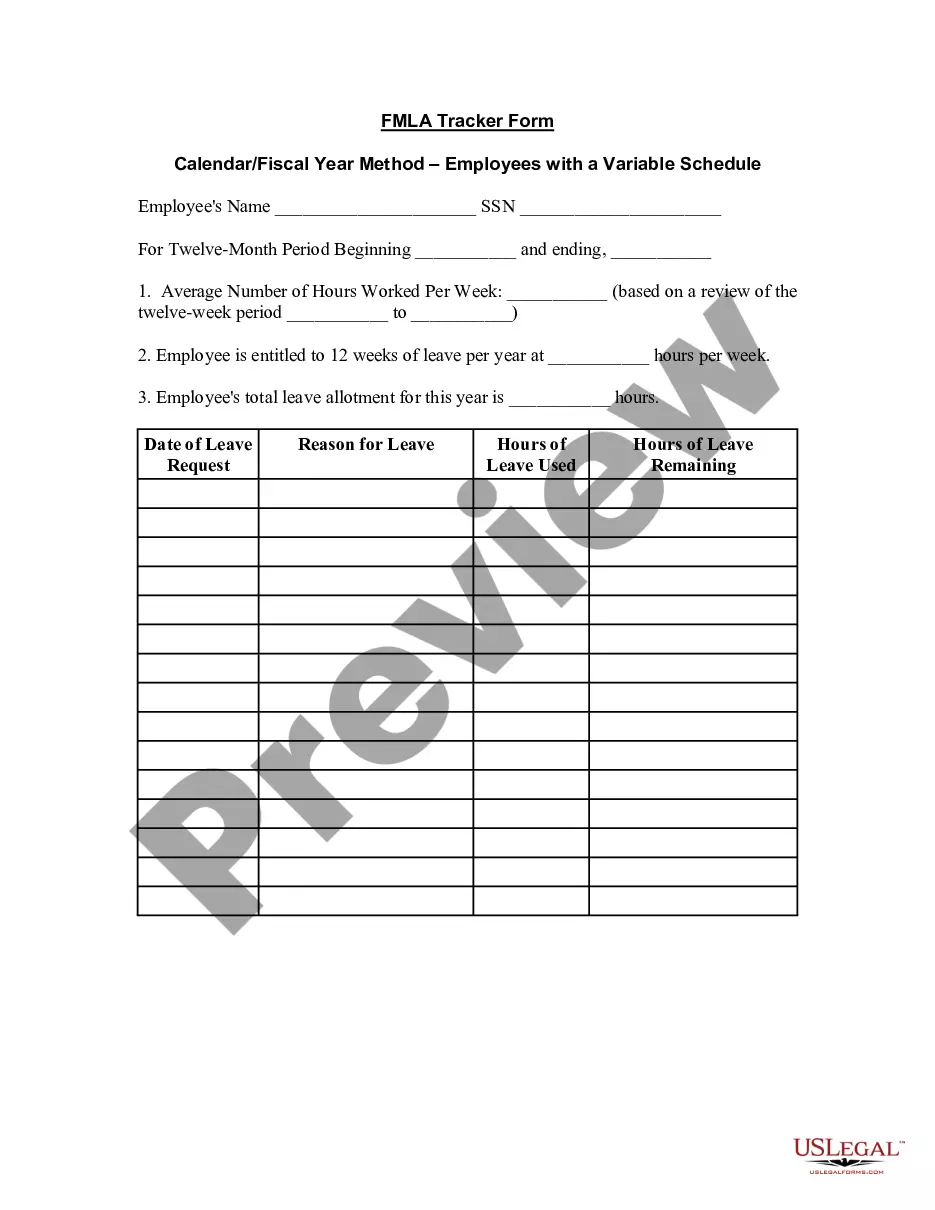
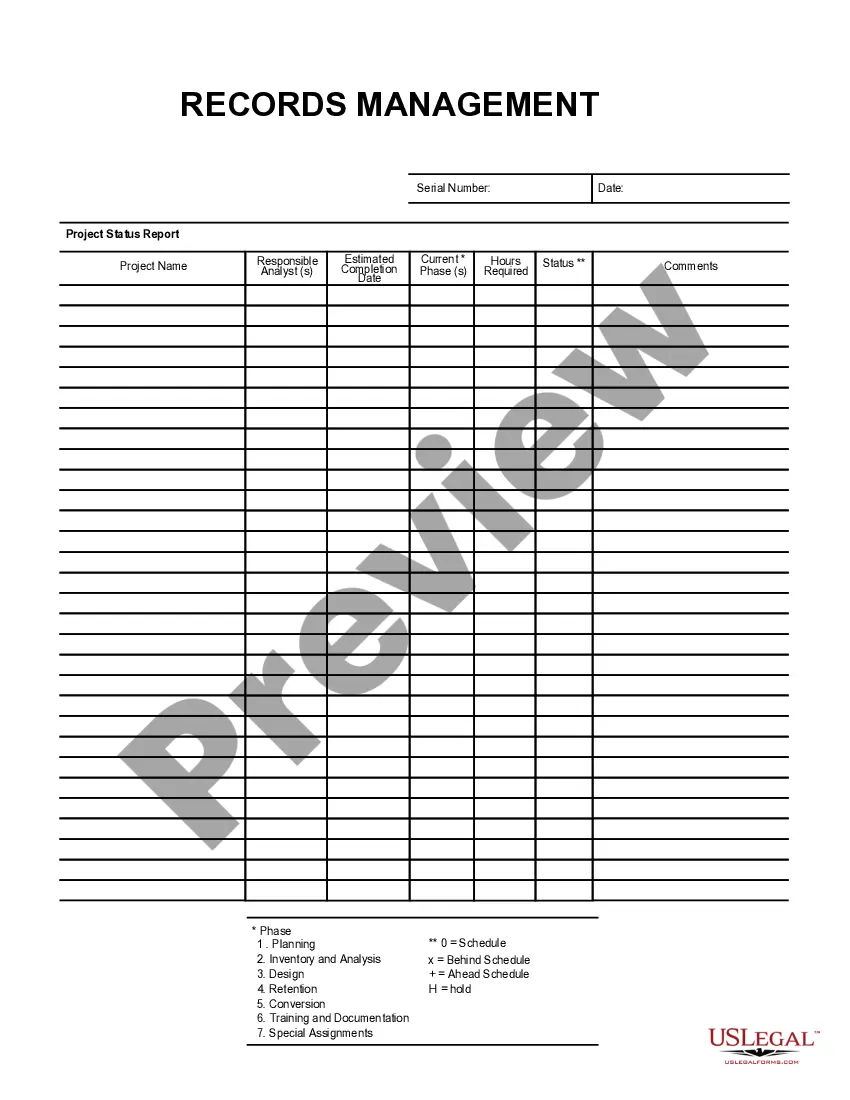
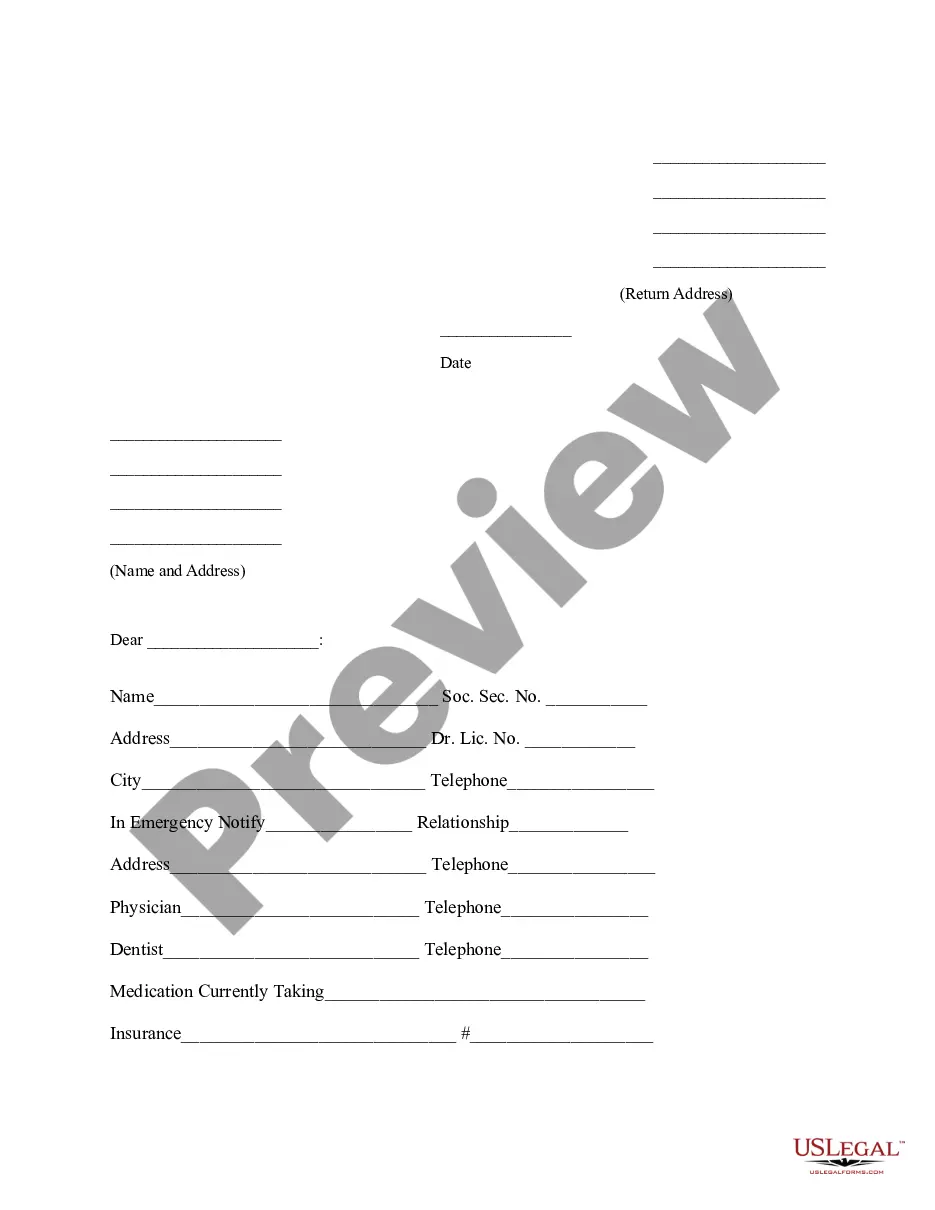
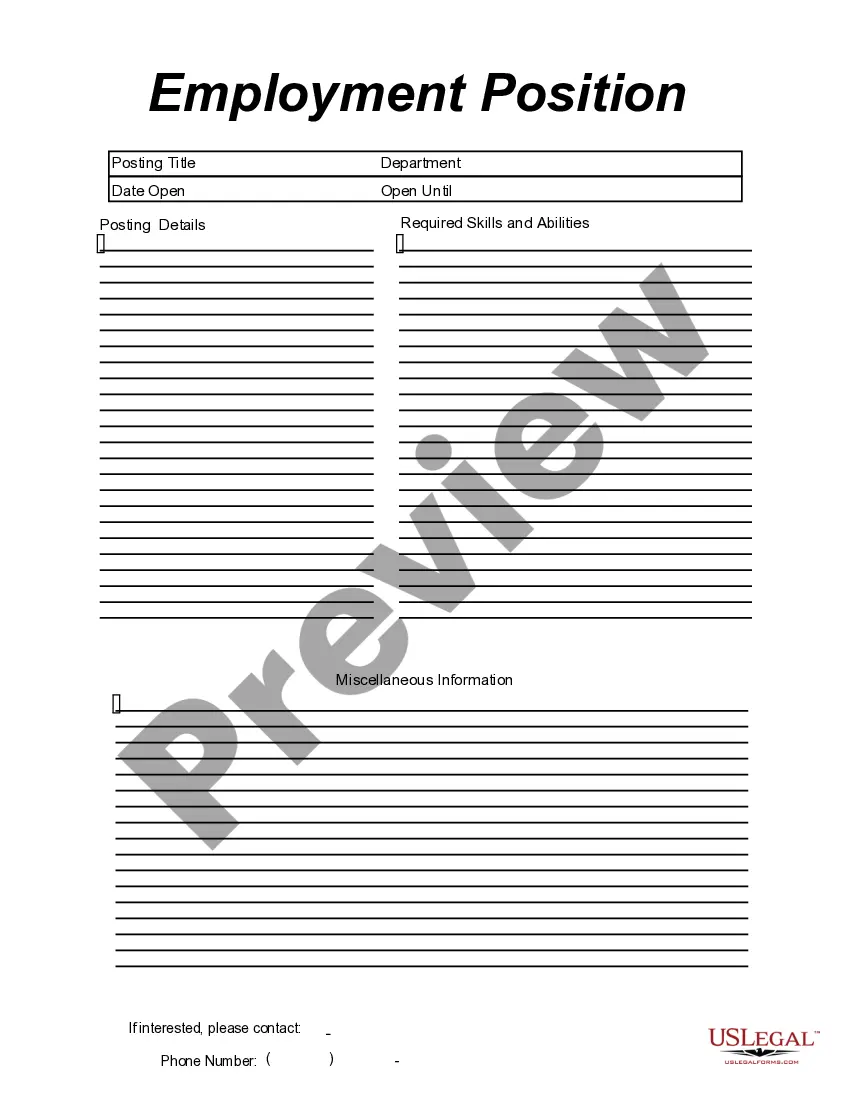
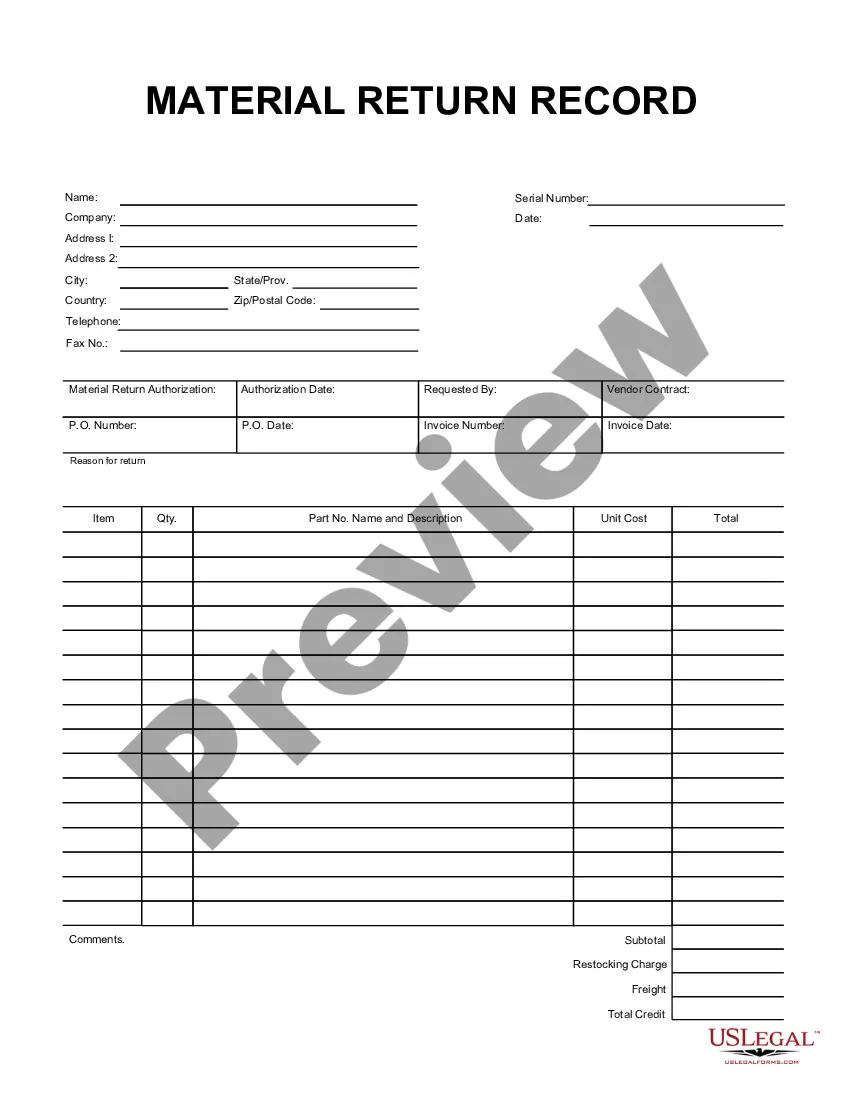
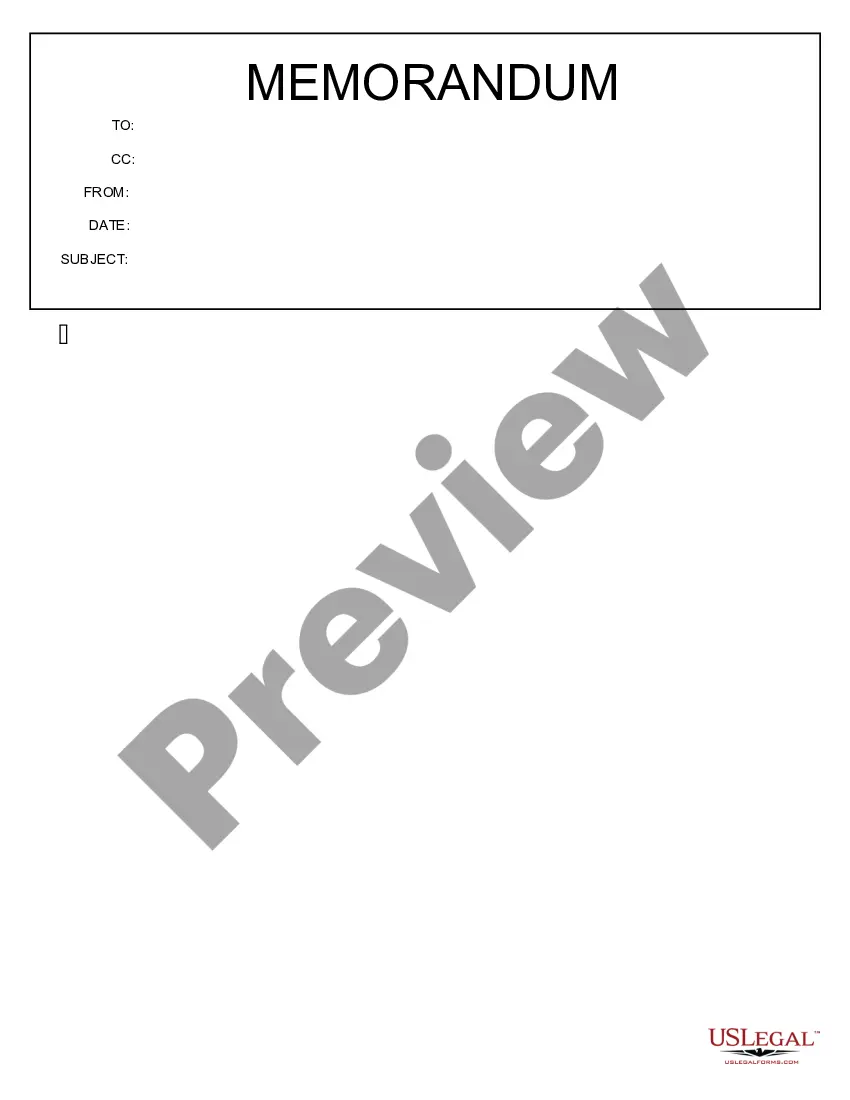
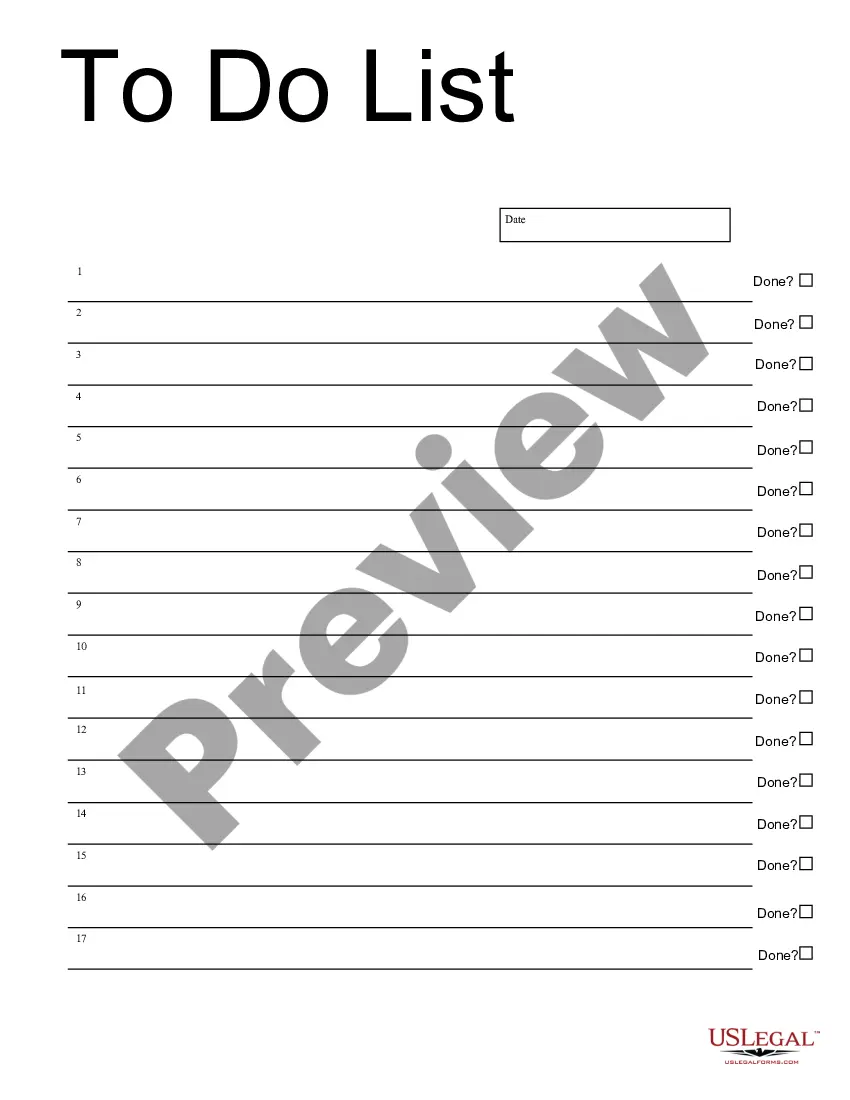
This form is a business type form that is formatted to allow you to complete the form using Adobe Acrobat or Word. The word files have been formatted to allow completion by entry into fields. Some of the forms under this category are rather simple while others are more complex. The formatting is worth the small cost.
Arizona Records Management
Category:
State:
Multi-State
Control #:
US-193-AZ
Format:
Word;
PDF;
Rich Text
Instant download
Description
Get your form ready online
Our built-in tools help you complete, sign, share, and store your documents in one place.
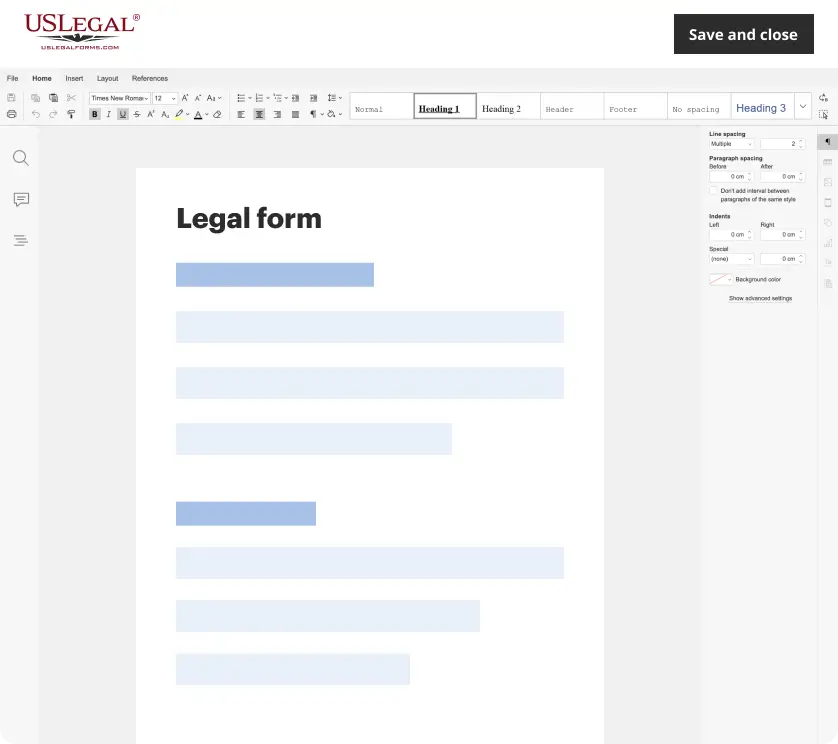
Built-in online Word editor
Make edits, fill in missing information, and update formatting in US Legal Forms—just like you would in MS Word.
Export easily
Download a copy, print it, send it by email, or mail it via USPS—whatever works best for your next step.
E-sign your document
Sign and collect signatures with our SignNow integration. Send to multiple recipients, set reminders, and more. Go Premium to unlock E-Sign.
Notarize online 24/7
If this form requires notarization, complete it online through a secure video call—no need to meet a notary in person or wait for an appointment.
Store your document securely
We protect your documents and personal data by following strict security and privacy standards.
Make edits, fill in missing information, and update formatting in US Legal Forms—just like you would in MS Word.
Download a copy, print it, send it by email, or mail it via USPS—whatever works best for your next step.
Sign and collect signatures with our SignNow integration. Send to multiple recipients, set reminders, and more. Go Premium to unlock E-Sign.

If this form requires notarization, complete it online through a secure video call—no need to meet a notary in person or wait for an appointment.
We protect your documents and personal data by following strict security and privacy standards.
Looking for another form?





How to fill out Records Management?
If you intend to total, obtain, or print official document templates, use US Legal Forms, the largest repository of official forms available online.
Take advantage of the site's user-friendly search feature to find the documents you require.
Various templates for business and personal purposes are organized by categories and states, or keywords.
Each official document template you download is yours indefinitely. You have access to every form you've obtained within your account. Click on the My documents section and select a form to print or download again.
Compete and obtain, and print the Arizona Records Management with US Legal Forms. There are numerous professional and state-specific forms available to suit your business or personal needs.
- Utilize US Legal Forms to access the Arizona Records Management with just a few clicks.
- If you are a returning US Legal Forms user, Log In to your account and click the Acquire button to obtain the Arizona Records Management.
- You can also retrieve forms you previously acquired in the My documents section of your account.
- If this is your first time using US Legal Forms, follow the instructions below.
- Step 1. Ensure you select the form for the appropriate area/region.
- Step 2. Use the Preview option to review the content of the form. Don't forget to read the description.
- Step 3. If you are not satisfied with the form, utilize the Search field at the top of the page to find alternative forms within the official form framework.
- Step 4. After you find the desired form, click the Purchase now button. Choose the pricing plan you prefer and provide your details to register for an account.
- Step 5. Complete the payment process. You can use your credit card or PayPal account to finalize the transaction.
- Step 6. Select the format of the official form and download it to your device.
- Step 7. Complete, modify, and print or sign the Arizona Records Management.
Form popularity
FAQ
The purpose of a records management policy is to create a framework for consistent and effective management of records throughout their lifecycle. It ensures that records are accurate, secure, and accessible, which is crucial for operational efficiency as well as legal compliance. Adopting a robust policy supports your organization's Arizona Records Management efforts and protects against potential liabilities.
Records management (RM) is the supervision and administration of digital or paper records, regardless of format. Records management activities include the creation, receipt, maintenance, use and disposal of records. In this context, a record is content that documents a business transaction.
Types of recordsCorrespondence records. Correspondence records may be created inside the office or may be received from outside the office.Accounting records. The records relating to financial transactions are known as financial records.Legal records.Personnel records.Progress records.Miscellaneous records.
Records management is defined as a field of management responsible for the efficient and systematic control of the creation, receipt, maintenance, use and disposition of records, including processes for capturing, and maintaining evidence of and information about business activities and transactions in the form of
Public records not protected from disclosure will be made available upon request. All Public Record Requests concerning the Arizona Attorney General's Office should be submitted either through the online form below or downloading the form and then submitting via email to PublicRecords@azag.gov .
Records management (RM) is the supervision and administration of digital or paper records, regardless of format. Records management activities include the creation, receipt, maintenance, use and disposal of records. In this context, a record is content that documents a business transaction.
Generally speaking, there are two types of records management systems: traditional paper record management systems, and electronic record management systems. As the name might imply, traditional paper record management systems involve the management and storage of hard-copy documents.
Identifying, classifying, and storing records. coordinating access to records internally and outside of the organization, balancing the requirements of business confidentiality, data privacy, and public access. identification and maintenance of records per a specified retention period.
Defined as state and local records that are created in accordance with state law or in connection with public business transactions. Examples include correspondence, maps, memoranda, papers, photographs, reports, writings, recordings, e-mail, and other data, information, or documentary material.
Some of the examples of records include final reports, budget documents, company balance sheets, emails referring to an action, maps of field missions, etc.