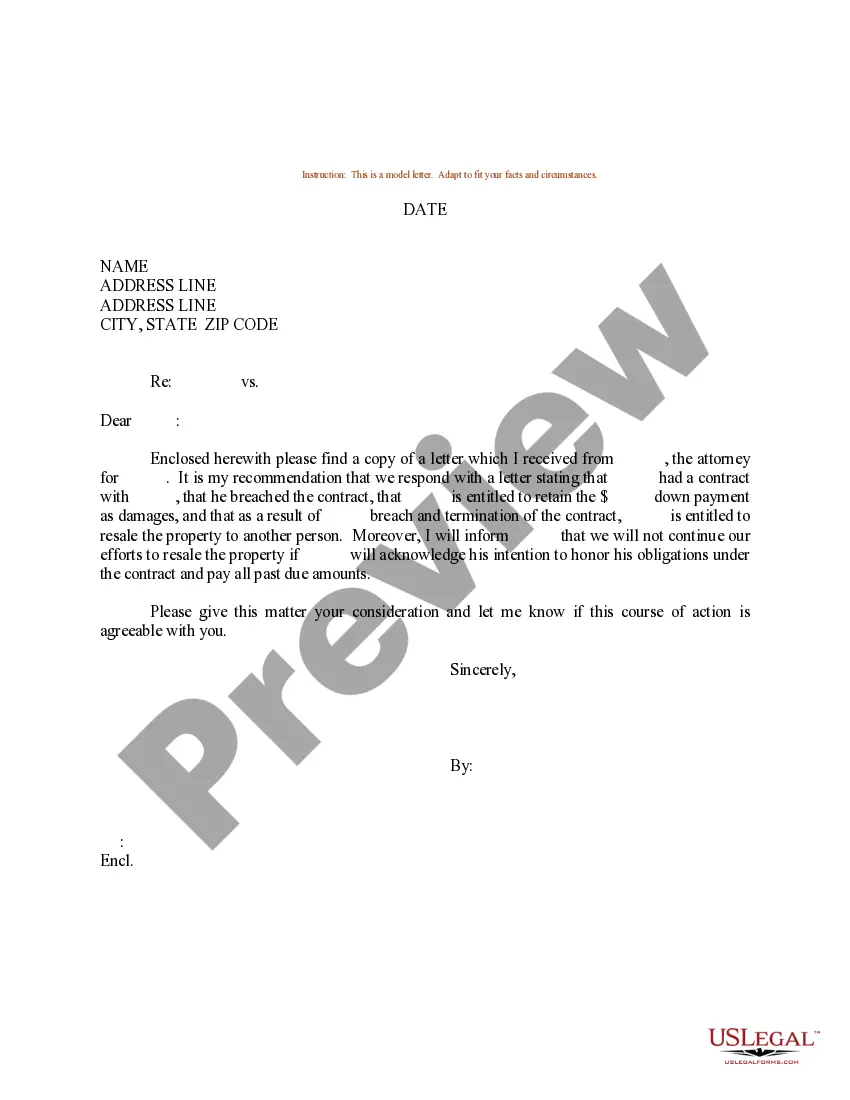
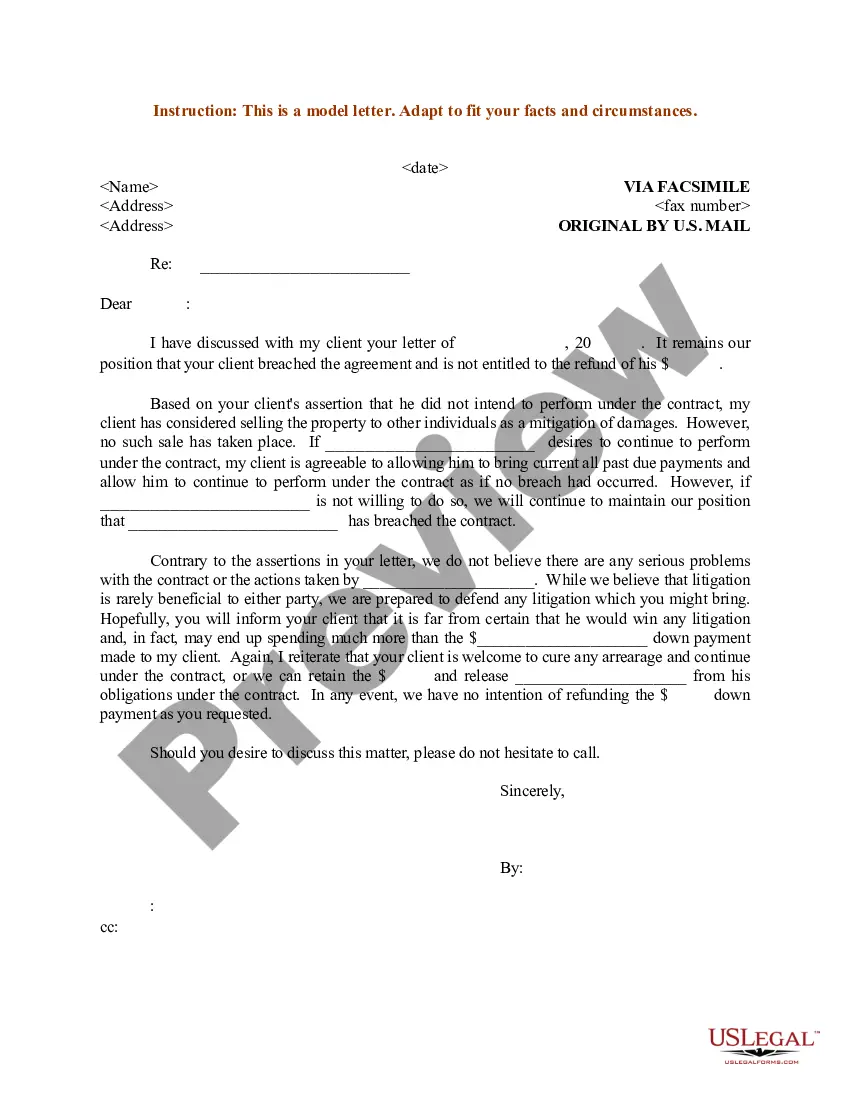
Arizona Sample Letter to Client with Case Update - Breach of Contract Litigation
Description
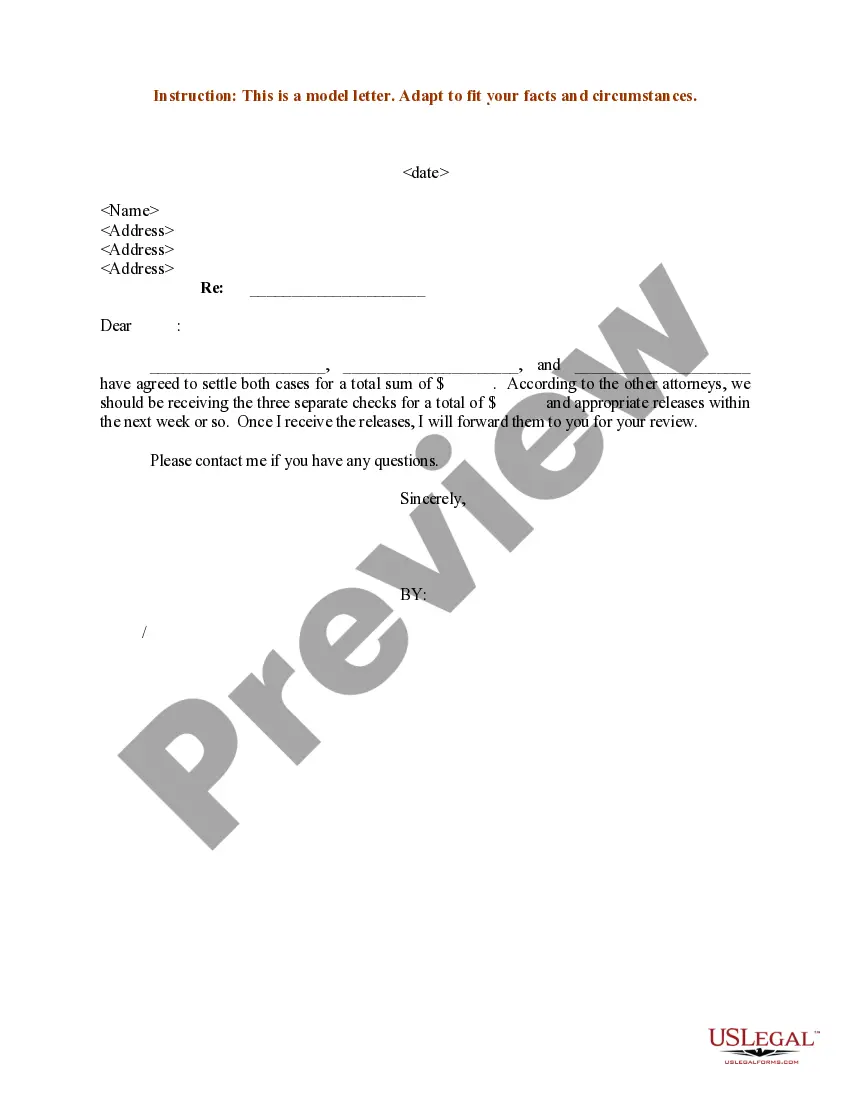
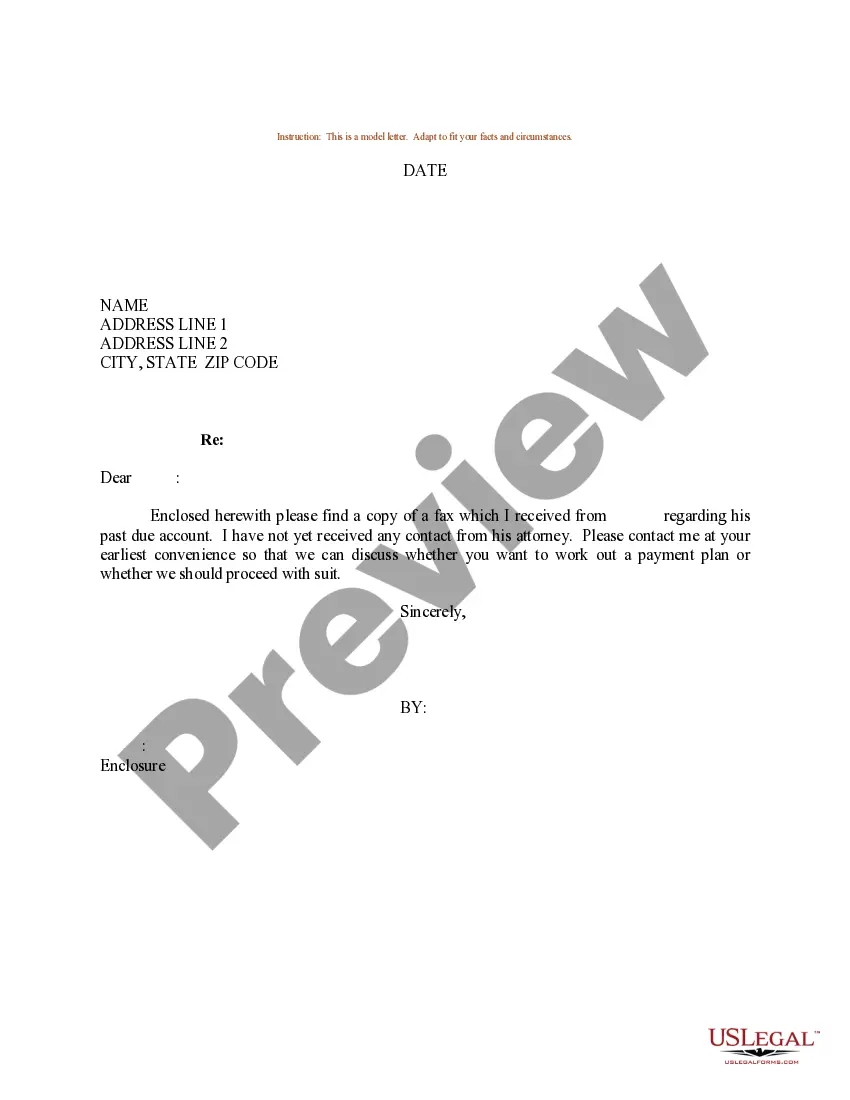
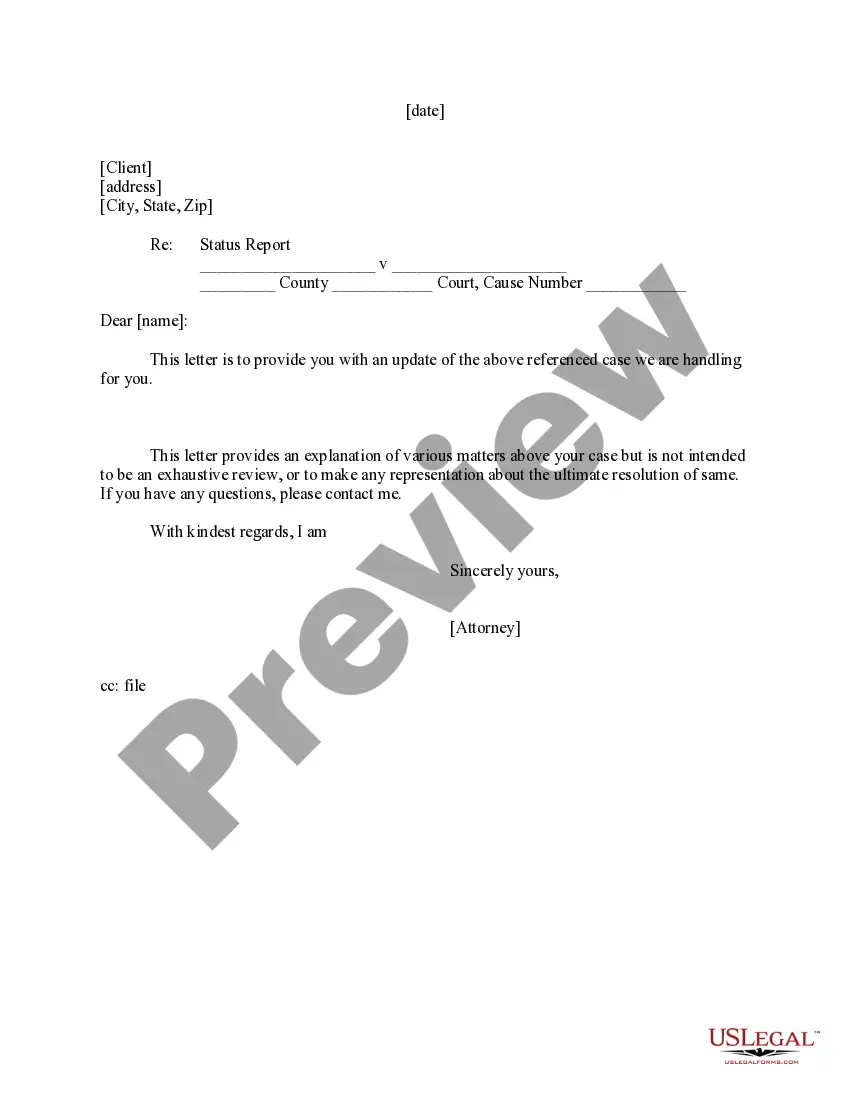
Get your form ready online
Our built-in tools help you complete, sign, share, and store your documents in one place.
Make edits, fill in missing information, and update formatting in US Legal Forms—just like you would in MS Word.
Download a copy, print it, send it by email, or mail it via USPS—whatever works best for your next step.
Sign and collect signatures with our SignNow integration. Send to multiple recipients, set reminders, and more. Go Premium to unlock E-Sign.
If this form requires notarization, complete it online through a secure video call—no need to meet a notary in person or wait for an appointment.
We protect your documents and personal data by following strict security and privacy standards.

Make edits, fill in missing information, and update formatting in US Legal Forms—just like you would in MS Word.

Download a copy, print it, send it by email, or mail it via USPS—whatever works best for your next step.

Sign and collect signatures with our SignNow integration. Send to multiple recipients, set reminders, and more. Go Premium to unlock E-Sign.

If this form requires notarization, complete it online through a secure video call—no need to meet a notary in person or wait for an appointment.

We protect your documents and personal data by following strict security and privacy standards.
Looking for another form?

How to fill out Sample Letter To Client With Case Update - Breach Of Contract Litigation?
US Legal Forms - one of the largest collections of legal documents in the USA - provides a broad selection of legal document templates that you can download or print. By using the website, you can access thousands of forms for business and personal purposes, categorized by type, state, or keywords. You can find the latest versions of forms such as the Arizona Sample Letter to Client with Case Update - Breach of Contract Litigation in seconds.
If you already have an account, Log In and download the Arizona Sample Letter to Client with Case Update - Breach of Contract Litigation from the US Legal Forms library. The Download button will appear on every form you view. You can access all previously downloaded forms in the My documents section of your account.
If you are using US Legal Forms for the first time, here are simple steps to get started: Ensure you have selected the correct form for your city/state. Click the Preview button to review the form's content. Read the form description to confirm that you have chosen the correct form. If the form does not meet your needs, use the Search field at the top of the screen to find one that does. If you are satisfied with the form, confirm your choice by clicking the Buy now button. Then, select the pricing plan you prefer and provide your details to register for an account. Process the transaction. Use a credit card or PayPal account to complete the transaction. Choose the format and download the form to your device. Make modifications. Fill out, edit, print, and sign the downloaded Arizona Sample Letter to Client with Case Update - Breach of Contract Litigation. Every template you added to your account has no expiration date and is yours indefinitely. Therefore, if you wish to download or print another version, simply go to the My documents section and click on the form you need.
Access the Arizona Sample Letter to Client with Case Update - Breach of Contract Litigation through US Legal Forms, the most comprehensive library of legal document templates.
Leverage thousands of professional and state-specific templates that fulfill your business or personal requirements.
- Access the Arizona Sample Letter to Client with Case Update - Breach of Contract Litigation with US Legal Forms, the most extensive collection of legal document templates.
- Utilize thousands of professional and state-specific templates that meet your business or personal needs and requirements.
- Confirm selection by clicking the appropriate buttons.
- Ensure accurate information is provided during account registration.
- Keep track of your downloaded forms in the My documents section.
- No expiration on templates stored in your account.
Form popularity
FAQ
To write a strong settlement letter, start by clearly stating your position and the facts surrounding the case. Include details about the breach of contract and any supporting evidence you may have. Be concise yet persuasive, outlining your desired outcome and the consequences of not reaching a settlement. For guidance, consider using an Arizona Sample Letter to Client with Case Update - Breach of Contract Litigation available on the uslegalforms platform, which can help streamline your writing process.
A demand letter for a breach of contract is a formal document that outlines the specific terms of the contract that have been violated. It demands that the other party fulfill their obligations or compensate for damages incurred. This letter also serves as a precursor to potential legal action, emphasizing the seriousness of the situation. Utilizing an Arizona Sample Letter to Client with Case Update - Breach of Contract Litigation can help you create a compelling and professional demand letter.
Counsel should issue a litigation hold letter to the client as soon as they anticipate litigation may arise. This letter serves to inform the client to preserve relevant documents and evidence related to the case. The timing is crucial to ensure that no important information is lost or destroyed. For clients involved in breach of contract litigation, an Arizona Sample Letter to Client with Case Update - Breach of Contract Litigation can provide a clear template to communicate these legal necessities effectively.
A letter of intent for breach of contract expresses your intention to take action in response to a breach. It outlines the issues at hand and can serve as a precursor to more formal legal steps. Leveraging the Arizona Sample Letter to Client with Case Update - Breach of Contract Litigation can help you frame your intent clearly and professionally.
A letter of claim for breach of contract formally notifies the other party of the breach and outlines your demands for remedy. This letter serves as a crucial step before pursuing legal action, detailing the breach and the desired outcome. Consider using the Arizona Sample Letter to Client with Case Update - Breach of Contract Litigation to ensure your letter is comprehensive and effective.
A letter of response to a breach of contract addresses the allegations made by the other party. It typically includes your position regarding the breach and any counterarguments, along with suggestions for resolution. You can use the Arizona Sample Letter to Client with Case Update - Breach of Contract Litigation as a reference to craft a clear and professional response.
To prove a breach of contract, you must establish that a valid contract exists, demonstrate that the other party failed to fulfill their obligations, and show the resulting damages. Gather evidence, such as correspondence and contract copies, to support your claim. The Arizona Sample Letter to Client with Case Update - Breach of Contract Litigation can assist in outlining your case effectively.
Determining whether to sue for breach of contract depends on various factors, including the value of the contract and the likelihood of success. Evaluate the costs involved in litigation versus potential recovery. Seeking advice from legal resources, such as the Arizona Sample Letter to Client with Case Update - Breach of Contract Litigation, can provide insight into your decision.
To draft a lawsuit settlement letter, first state the purpose of the letter and reference the case details. Clearly outline your settlement proposal, including terms and any deadlines. Utilizing the Arizona Sample Letter to Client with Case Update - Breach of Contract Litigation can help format your letter effectively and professionally.
Writing a letter for breach of contract involves identifying the contract and the parties involved. Clearly articulate the nature of the breach, provide supporting details, and specify what you seek as a resolution. The Arizona Sample Letter to Client with Case Update - Breach of Contract Litigation can serve as an effective template to ensure clarity and professionalism.