Arizona Charitable Remainder Inter Vivos Annuity Trust
Description
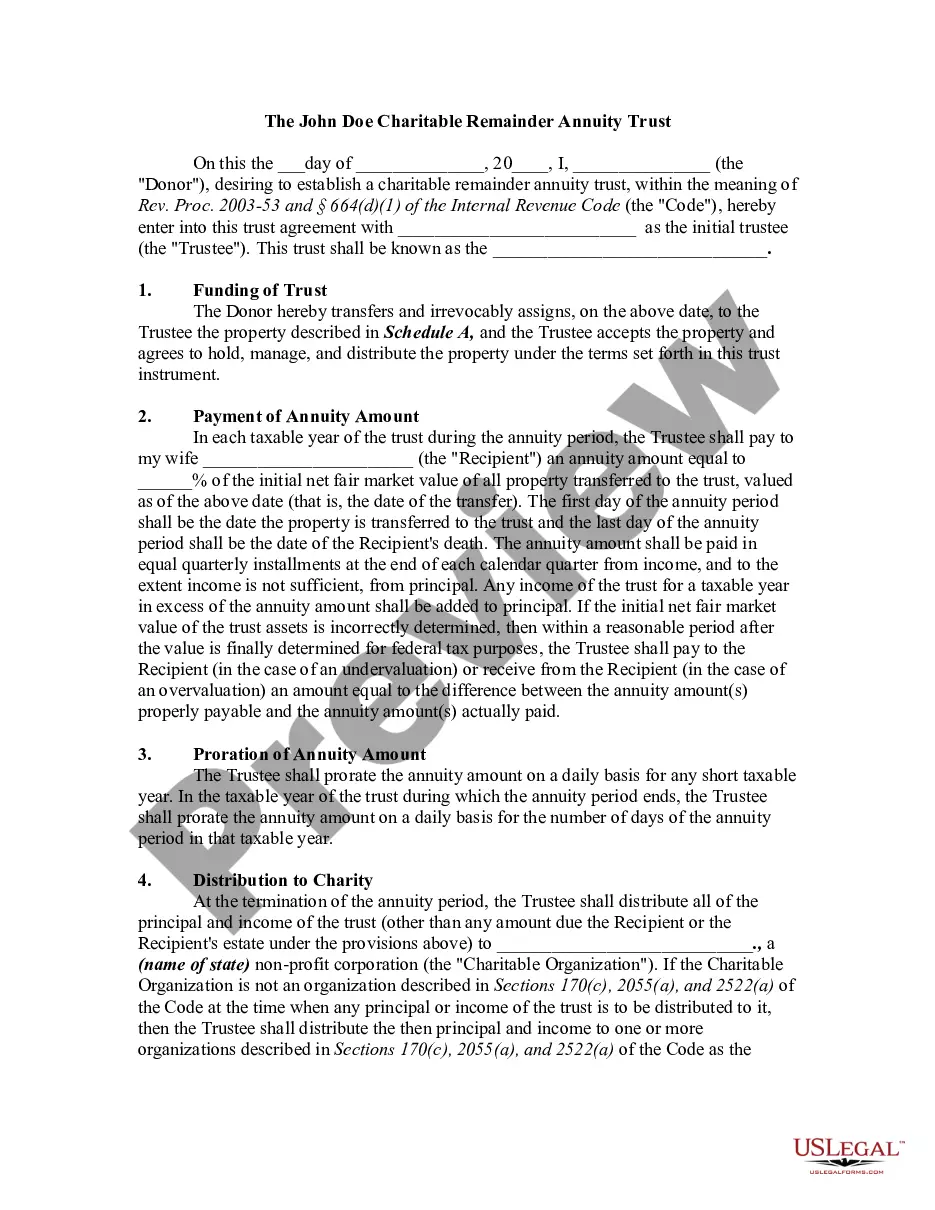
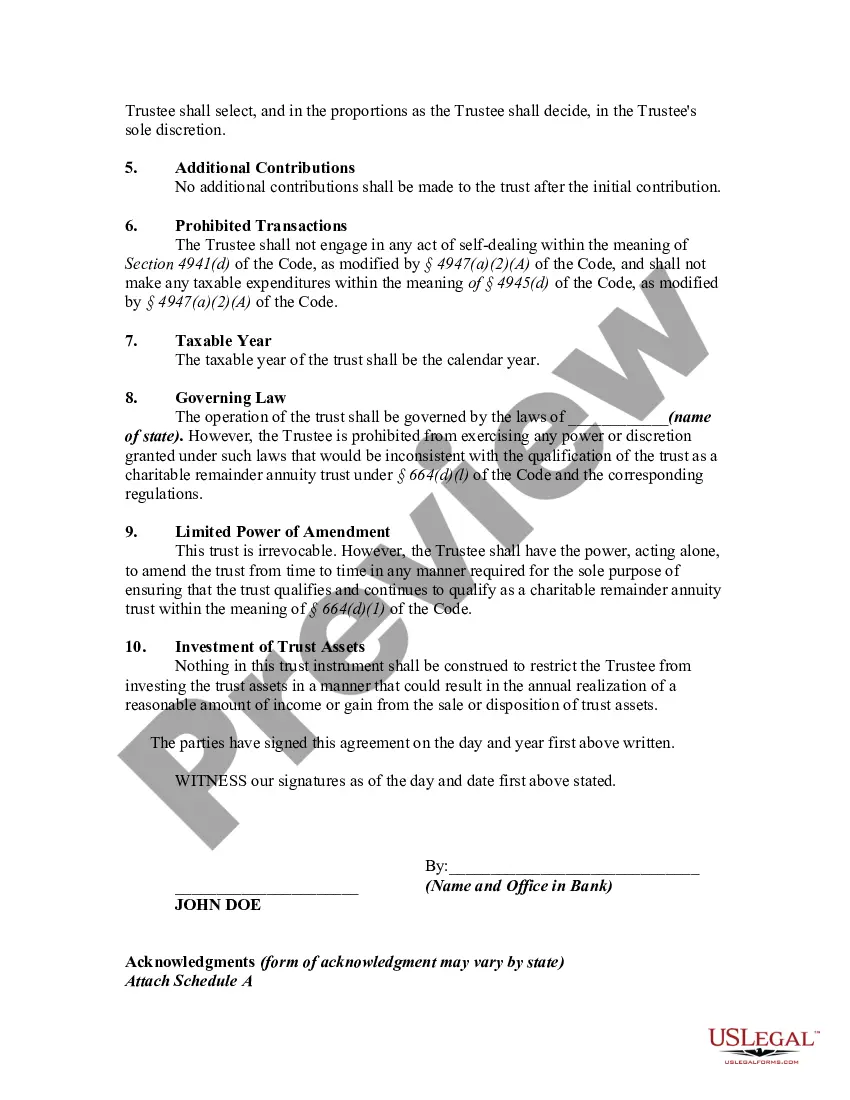
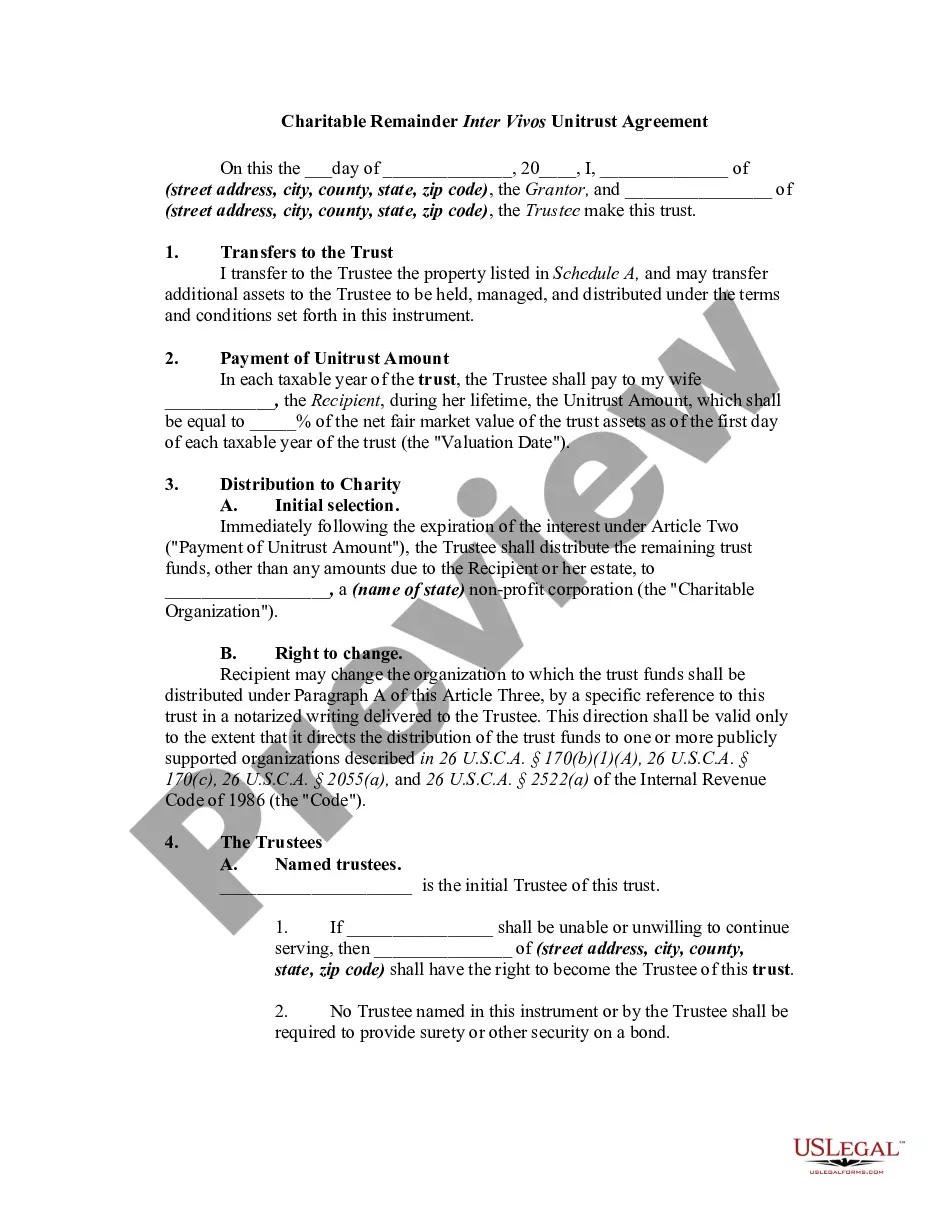
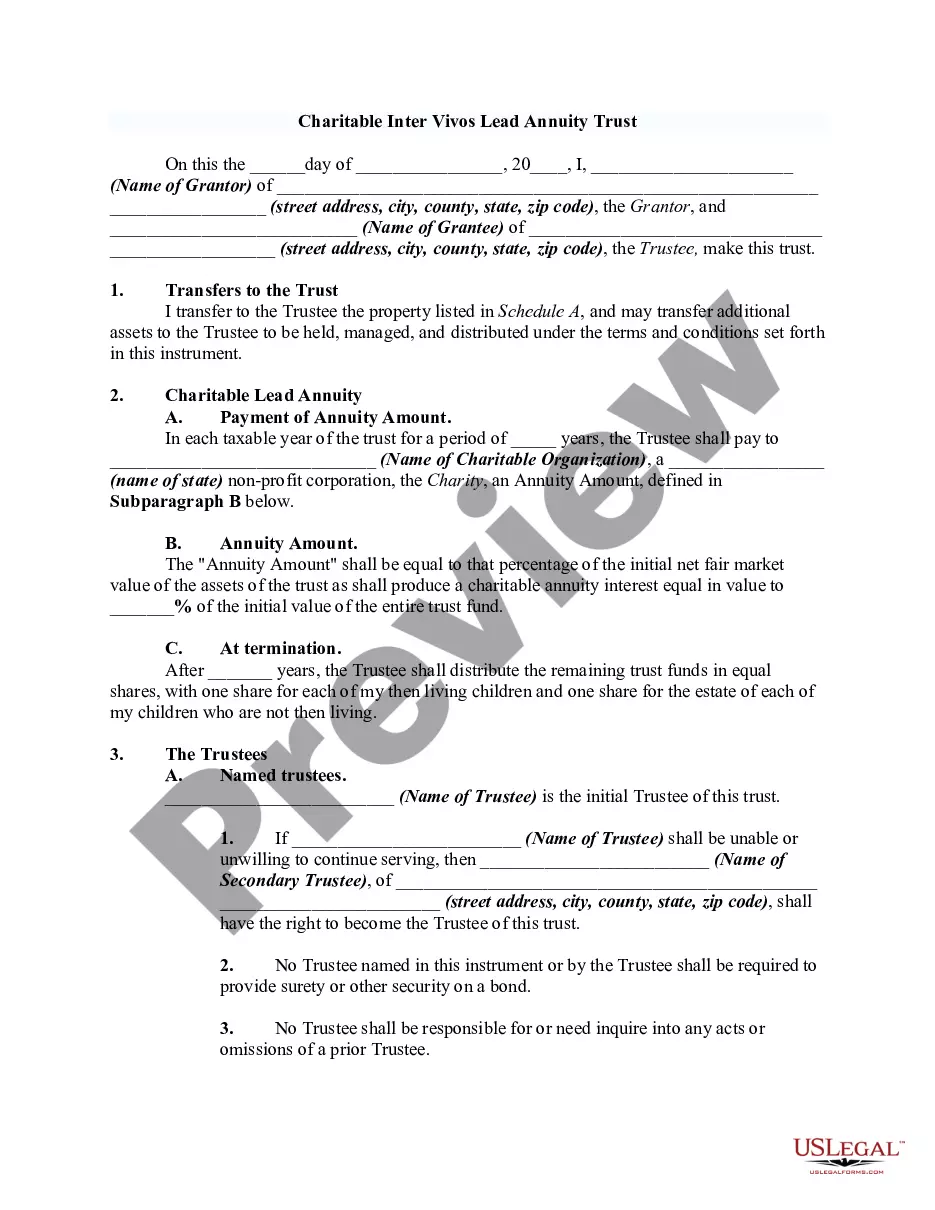
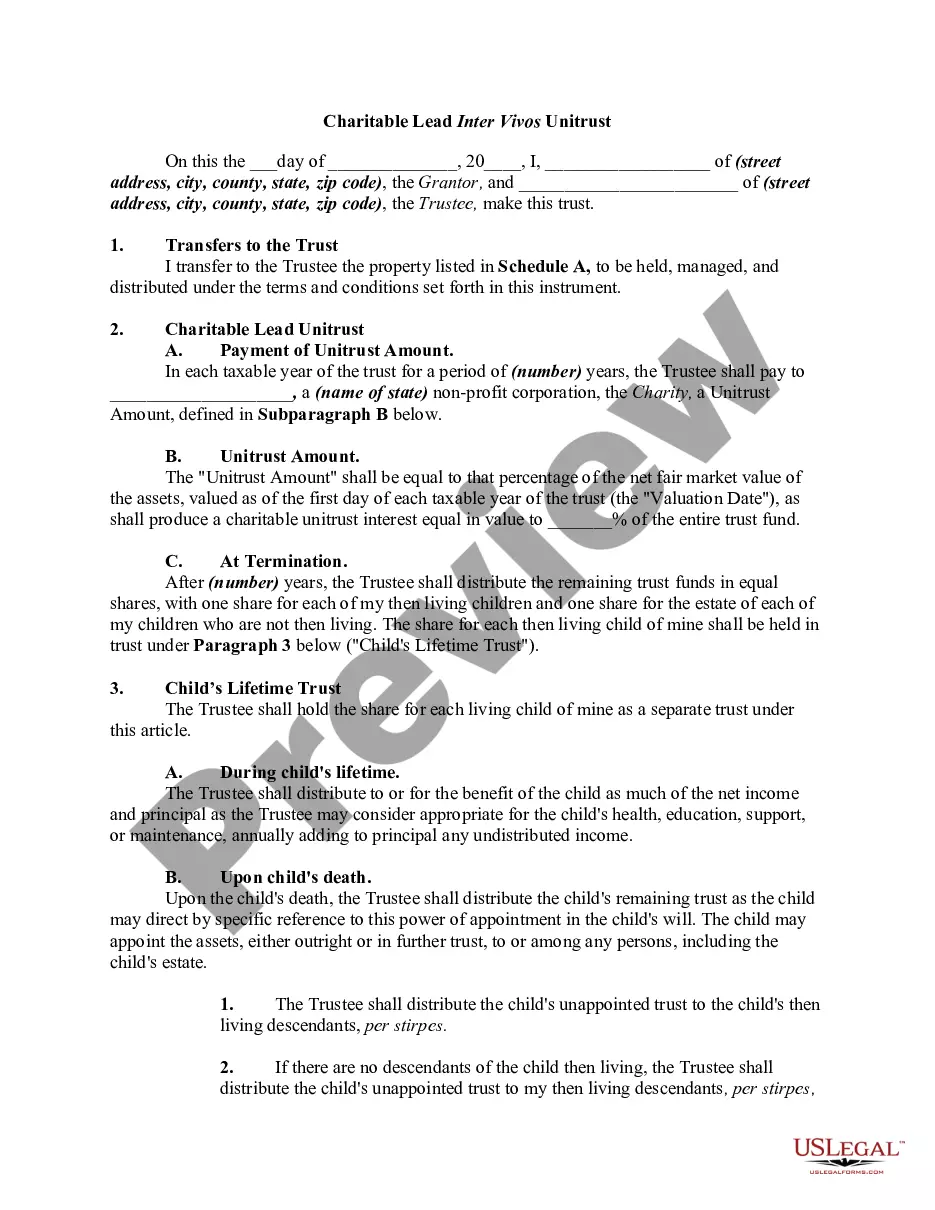
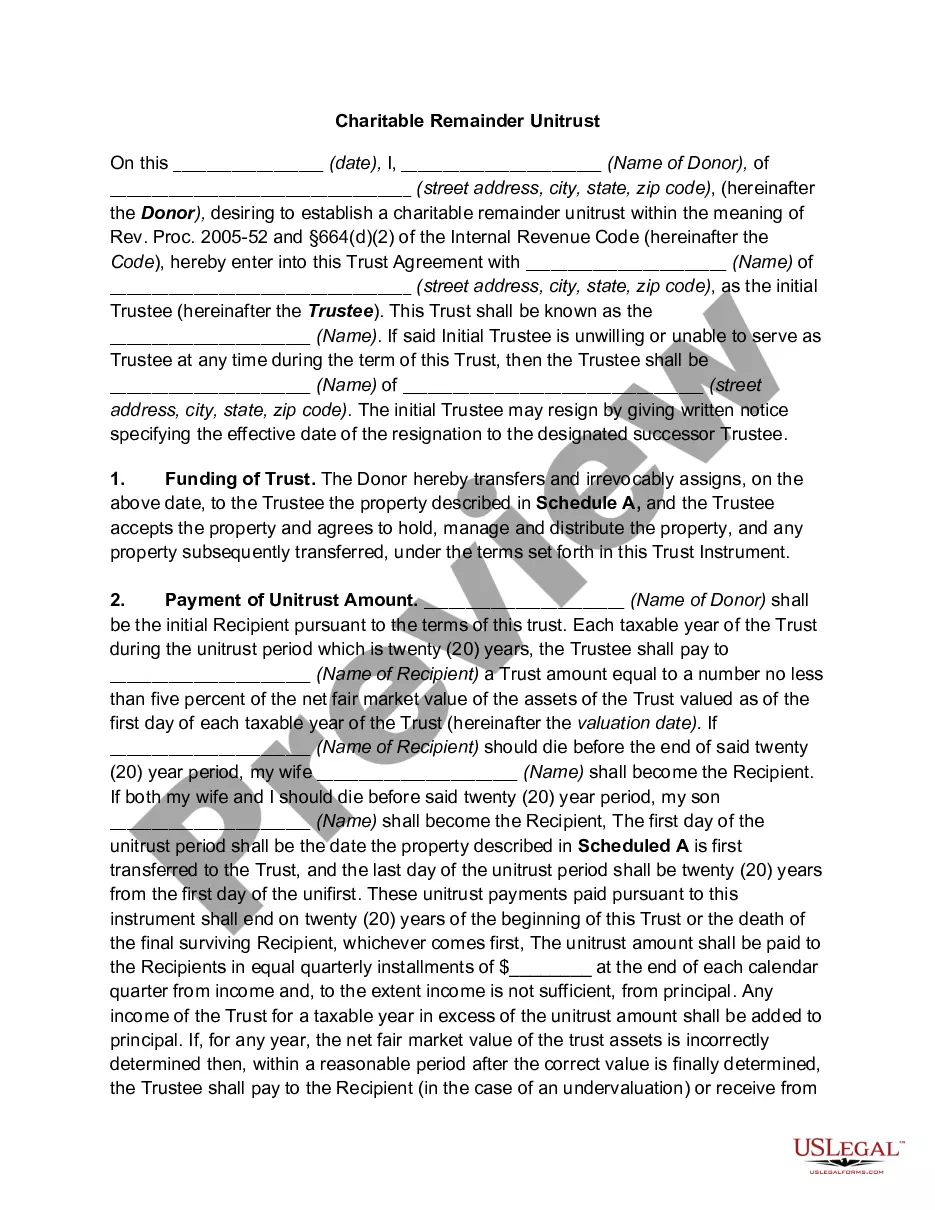
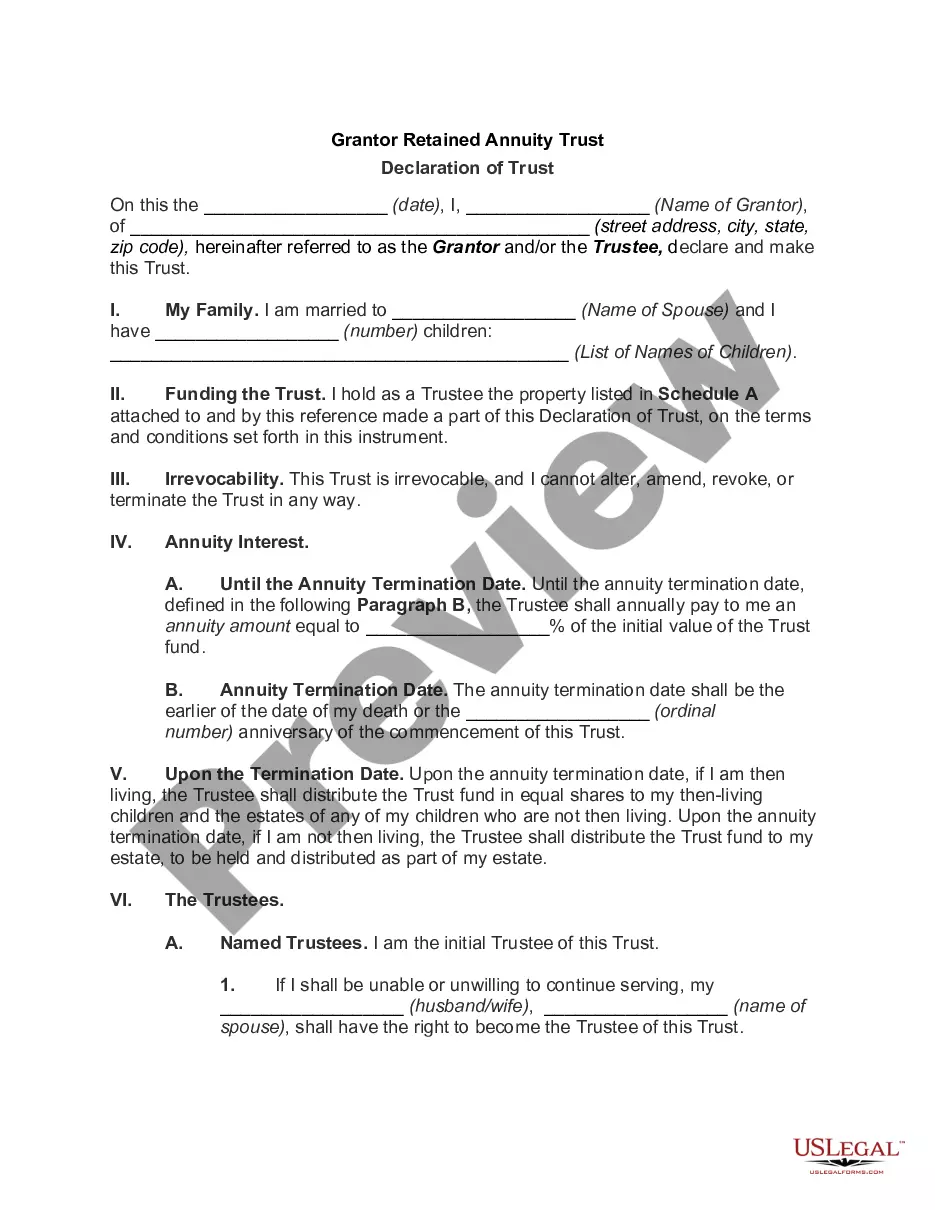
Get your form ready online
Our built-in tools help you complete, sign, share, and store your documents in one place.
Make edits, fill in missing information, and update formatting in US Legal Forms—just like you would in MS Word.
Download a copy, print it, send it by email, or mail it via USPS—whatever works best for your next step.
Sign and collect signatures with our SignNow integration. Send to multiple recipients, set reminders, and more. Go Premium to unlock E-Sign.
If this form requires notarization, complete it online through a secure video call—no need to meet a notary in person or wait for an appointment.
We protect your documents and personal data by following strict security and privacy standards.

Make edits, fill in missing information, and update formatting in US Legal Forms—just like you would in MS Word.

Download a copy, print it, send it by email, or mail it via USPS—whatever works best for your next step.

Sign and collect signatures with our SignNow integration. Send to multiple recipients, set reminders, and more. Go Premium to unlock E-Sign.

If this form requires notarization, complete it online through a secure video call—no need to meet a notary in person or wait for an appointment.

We protect your documents and personal data by following strict security and privacy standards.
Looking for another form?








How to fill out Charitable Remainder Inter Vivos Annuity Trust?
Selecting the appropriate legal document template can be a challenge. Of course, there are numerous templates available online, but how do you find the legal form you require? Utilize the US Legal Forms website.
The service offers thousands of templates, including the Arizona Charitable Remainder Inter Vivos Annuity Trust, which can be utilized for both business and personal purposes. All forms are reviewed by experts and comply with state and federal regulations.
If you are already registered, Log In to your account and click the Download button to obtain the Arizona Charitable Remainder Inter Vivos Annuity Trust. Use your account to search through the legal forms you have previously purchased. Go to the My documents tab of your account and download another copy of the document you need.
Complete, edit, print, and sign the acquired Arizona Charitable Remainder Inter Vivos Annuity Trust. US Legal Forms is the largest collection of legal forms where you can find various document templates. Utilize the service to obtain professionally created paperwork that meets state requirements.
- If you are a new user of US Legal Forms, here are simple instructions you can follow.
- First, ensure that you have selected the correct form for your city/state. You can browse the form using the Review option and check the form description to ensure it is suitable for you.
- If the form does not meet your needs, use the Search field to find the right form.
- Once you are confident that the form is suitable, click the Get now button to obtain the form.
- Choose the pricing plan you prefer and enter the necessary information. Create your account and place an order using your PayPal account or credit card.
- Select the file format and download the legal document template to your device.
Form popularity
FAQ
Arizona law governs the establishment and operation of trusts, emphasizing transparency, accountability, and the protection of beneficiaries. Trusts in Arizona must adhere to specific regulations regarding documentation, reporting, and fiduciary responsibilities. If you're considering forming an Arizona Charitable Remainder Inter Vivos Annuity Trust, understanding these rules can guide you through the setup process and ensure compliance with state requirements.
The 7520 rate is the IRS interest rate used for valuing annuities, life estates, and other charitable remainder trusts (CRTs). This rate is critical for calculating the present value of the charitable remainder. When you set up an Arizona Charitable Remainder Inter Vivos Annuity Trust, keeping an eye on the 7520 rate will help in estimating the tax benefits associated with your charitable contributions.
The 5 by 5 rule in a Crummey trust allows beneficiaries to withdraw the greater of $5,000 or 5 percent of the trust's value each year without losing their gift tax exclusion. This provision provides a measure of control to beneficiaries while still ensuring that the trust maintains its charitable purpose. If you're exploring options like an Arizona Charitable Remainder Inter Vivos Annuity Trust, understanding this rule can provide insight into managing trust distributions.
The 5% rule for Charitable Remainder Unitrusts (CRUTs) permits distributions to beneficiaries of at least 5 percent of the trust's value, recalculated annually. This flexibility allows the income to fluctuate with the trust's investment performance, potentially increasing distributions in favorable market conditions. For individuals considering an Arizona Charitable Remainder Inter Vivos Annuity Trust, distinguishing between CRUTs and CRATs can help in selecting the appropriate trust structure.
The CRAT 5% rule applies to Charitable Remainder Annuity Trusts (CRATs), specifically stating that the annual payments to beneficiaries must be at least 5 percent of the initial trust value. This rule ensures a predictable income stream for beneficiaries while providing a charitable benefit. When establishing an Arizona Charitable Remainder Inter Vivos Annuity Trust, it's vital to comply with this guideline to ensure legal and financial standing.
The 5 percent rule in a trust refers to the guideline that limits the annual distribution from a trust to no more than 5 percent of the trust's assets. This approach helps maintain the overall value of the trust while allowing beneficiaries to receive some income. For those considering an Arizona Charitable Remainder Inter Vivos Annuity Trust, understanding this rule is crucial for balancing the financial needs of the beneficiaries with the long-term goals of the trust.
The primary difference lies in how each entity distributes assets. A charitable gift annuity provides fixed payments to the donor for life, while an Arizona Charitable Remainder Inter Vivos Annuity Trust allows for varying payments based on trust performance. Both options benefit charitable organizations, but they cater to different financial strategies and goals. Understanding these differences is essential for selecting the right option that aligns with your philanthropic objectives.
One potential pitfall of an Arizona Charitable Remainder Inter Vivos Annuity Trust is the irrevocability of the trust once established. This means you cannot change your mind easily regarding the assets transferred. Additionally, the trust requires careful management and compliance with IRS regulations, which can be complex. It’s wise to seek professional advice to navigate these challenges.
Yes, you can add assets to an Arizona Charitable Remainder Inter Vivos Annuity Trust after its initial funding. This flexibility allows you to increase the trust's value and potentially improve your tax deductions. However, be aware of the implications and legal requirements involved in such additions. Using services like US Legal Forms can guide you through this process seamlessly.
An Arizona Charitable Remainder Inter Vivos Annuity Trust files Form 5227, which reports the income, deductions, and other essential details for the trust. This form helps ensure compliance with tax regulations and provides transparency in managing the trust's financial activities. Make sure to maintain accurate records to support the information on this form. Platforms like US Legal Forms can help you prepare the necessary documentation.