Arizona Counter Offer to Purchase 3 - Residential
Overview of this form
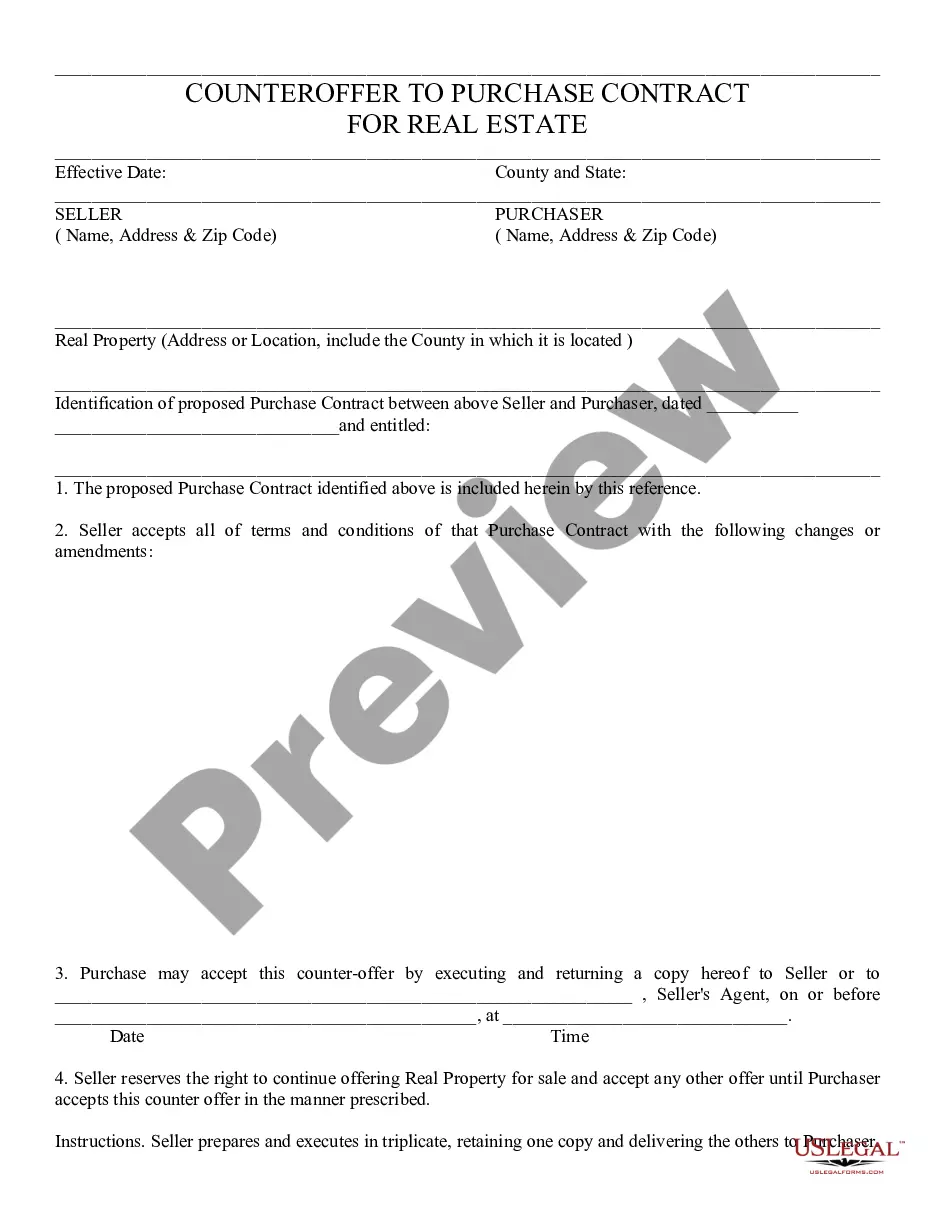
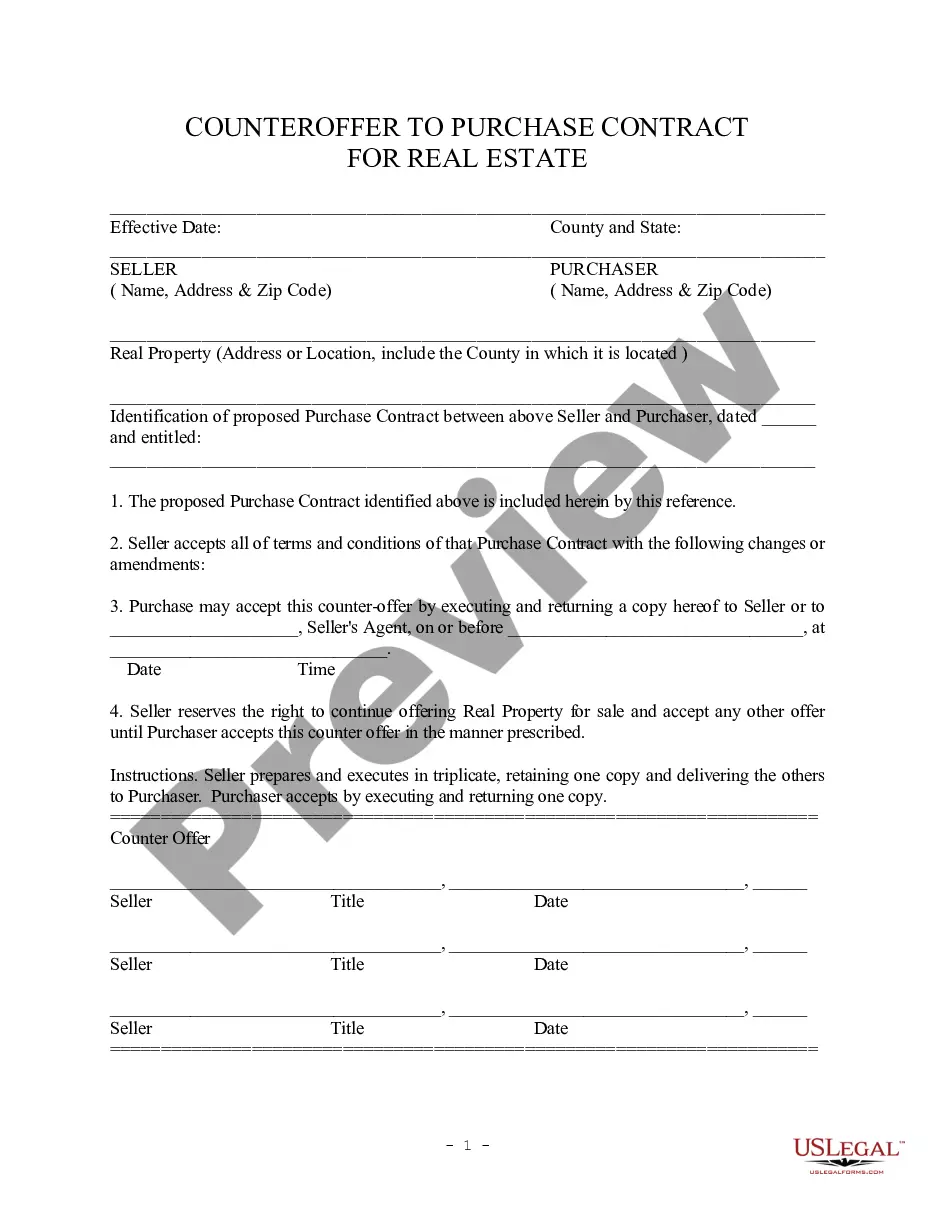
The Counter Offer to Purchase 3 - Residential is a legal document used when a seller wishes to respond to a buyer's offer on a residential property with a revised price or additional terms. Unlike an initial offer, this form allows the seller to accept the buyer's proposal while modifying specific terms to better suit their needs. The form's purpose is to facilitate negotiations until both parties reach a mutually acceptable agreement.
Main sections of this form
- Effective date and location of the property.
- Identification of the seller and purchaser, including names and addresses.
- Reference to the original purchase contract being amended.
- Specific changes or amendments to the proposed purchase contract.
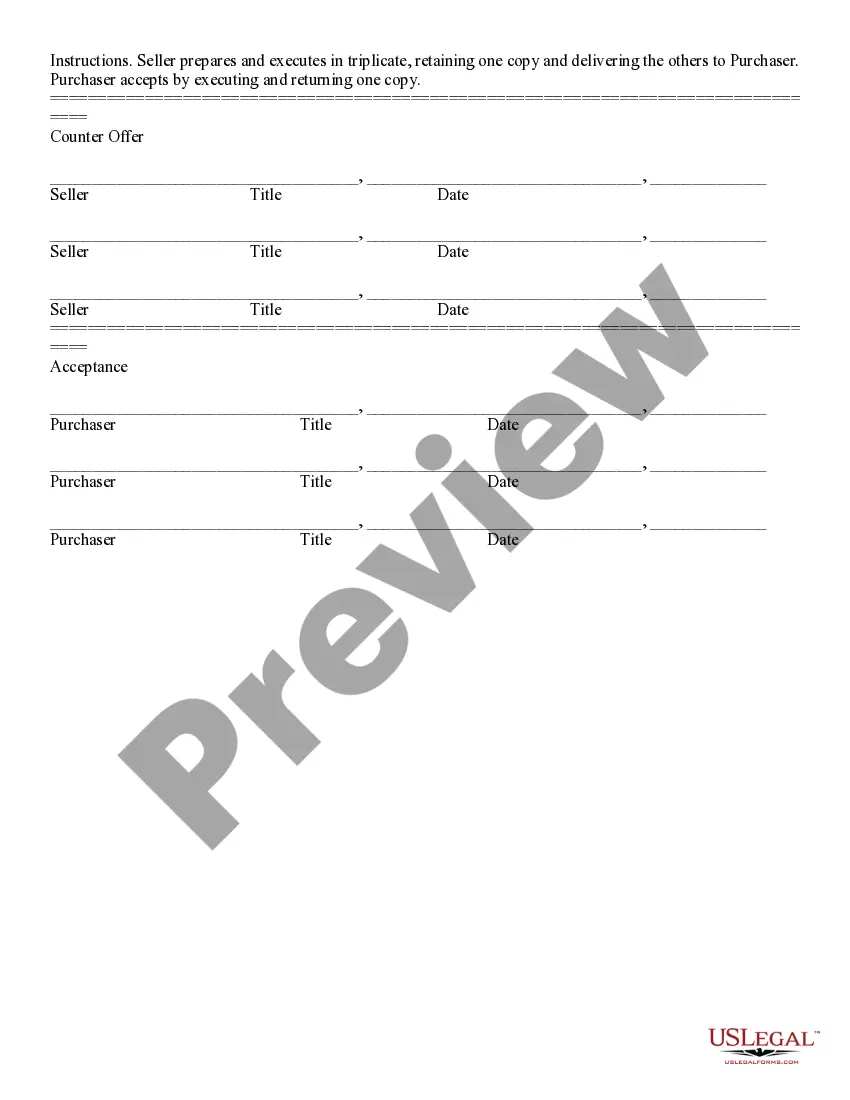
- Details on how the purchaser can accept the counteroffer.
- Declaration of the seller's right to accept other offers until a counteroffer is accepted.
When this form is needed
This form is typically used during real estate negotiations when the seller does not fully agree with the original offer made by the purchaser. Situations that may call for its use include adjusting the sale price, changing the closing date, or adding contingencies that align with the seller's specific requirements.
Who needs this form
- Home sellers responding to purchase offers on their property.
- Real estate agents acting on behalf of sellers in negotiation processes.
- Purchasers who need to understand and communicate terms of a counteroffer.
How to prepare this document
- Identify the effective date and specify the county and state where the property is located.
- Fill in the details of both the seller and the purchaser, including their names and addresses.
- Reference the original purchase contract by including the date and title of the document.
- Clearly outline any changes or amendments to the original contract terms.
- Provide instructions on how the purchaser can accept the counteroffer by signing and returning the document.
Does this form need to be notarized?
This form does not typically require notarization unless specified by local law. However, it is advisable to consult with a legal professional to ensure compliance with your stateâs requirements.
Get your form ready online
Our built-in tools help you complete, sign, share, and store your documents in one place.
Make edits, fill in missing information, and update formatting in US Legal Forms—just like you would in MS Word.
Download a copy, print it, send it by email, or mail it via USPS—whatever works best for your next step.
Sign and collect signatures with our SignNow integration. Send to multiple recipients, set reminders, and more. Go Premium to unlock E-Sign.
If this form requires notarization, complete it online through a secure video call—no need to meet a notary in person or wait for an appointment.
We protect your documents and personal data by following strict security and privacy standards.

Make edits, fill in missing information, and update formatting in US Legal Forms—just like you would in MS Word.

Download a copy, print it, send it by email, or mail it via USPS—whatever works best for your next step.

Sign and collect signatures with our SignNow integration. Send to multiple recipients, set reminders, and more. Go Premium to unlock E-Sign.

If this form requires notarization, complete it online through a secure video call—no need to meet a notary in person or wait for an appointment.

We protect your documents and personal data by following strict security and privacy standards.
Typical mistakes to avoid
- Failing to specify essential details such as dates and amendments.
- Not providing clear instructions for acceptance, leading to confusion.
- Overlooking to sign the document, which can invalidate the offer.
Advantages of online completion
- Instant access to professionally drafted documents that save you time.
- Ability to download and print the form in multiple formats as needed.
- Convenience of completing the form at your own pace.
Quick recap
- A Counter Offer to Purchase is essential for negotiating real estate transactions.
- The form details both parties' expectations and the adjustments to an initial offer.
- Completion of the form involves key steps, including identifying property, parties, and specific amendments.
Looking for another form?
Form popularity
FAQ
A buyer can cancel a real estate contract in Arizona, but it depends on the terms and conditions specified in the contract. If the contract has contingencies, cancelling under these terms is usually straightforward. However, if no contingencies are present, the buyer may need to negotiate with the seller or risk losing their deposit. For detailed legal guidance, consider the resources available on the uslegalforms platform.
Because once your offer is accepted (or you accept the seller's counter offer) the seller cannot back out unless you are not performing. This is great news: In California, buyers have 17 days to change their mind once the offer is accepted. Sellers have 0 days.
A counteroffer functions as both a rejection of an offer to enter into a contract, as well as a new offer that materially changes the terms of the original offer. Because a counteroffer serves as a rejection, it completely voids the original offer. This means that the original offer can no longer be accepted.
Updated December 05, 2019. Home sellers make counteroffers when they're dissatisfied with a buyer's initial bid. Typically, a counteroffer states that the seller has accepted the buyer's offer subject to one or more changes.
The one concluded that where such change amounts to a material alteration of the contractual terms, it constitutes a counter offer and that until accepted, is unenforceable.Clearly any material alteration to a document made by one party after the other has signed, must be accepted by the latter to be enforceable.
What Is a Counteroffer? A counteroffer is a response given to an initial offer. A counteroffer means the original offer was rejected and replaced with another one. The counteroffer gives the original offerer three options: accept the counteroffer, reject it, or make another offer.
A counteroffer is a response given to an initial offer. A counteroffer means the original offer was rejected and replaced with another one. The counteroffer gives the original offerer three options: accept the counteroffer, reject it, or make another offer.
Counteroffers can be a stall tactic. Often employers will pay you more because they know it will only be for a short while. They will then start searching for a replacement who will take a lower salary with a similar skillset to yours. This is one reason why you should never accept a counteroffer.
As nouns the difference between offer and counteroffer is that offer is a proposal that has been made or offer can be (used in combinations from phrasal verbs) agent noun of off while counteroffer is an offer made in reply to an unacceptable offer.
A counteroffer functions as both a rejection of an offer to enter into a contract, as well as a new offer that materially changes the terms of the original offer. Because a counteroffer serves as a rejection, it completely voids the original offer.