Arizona Deed of Gift
What is this form?
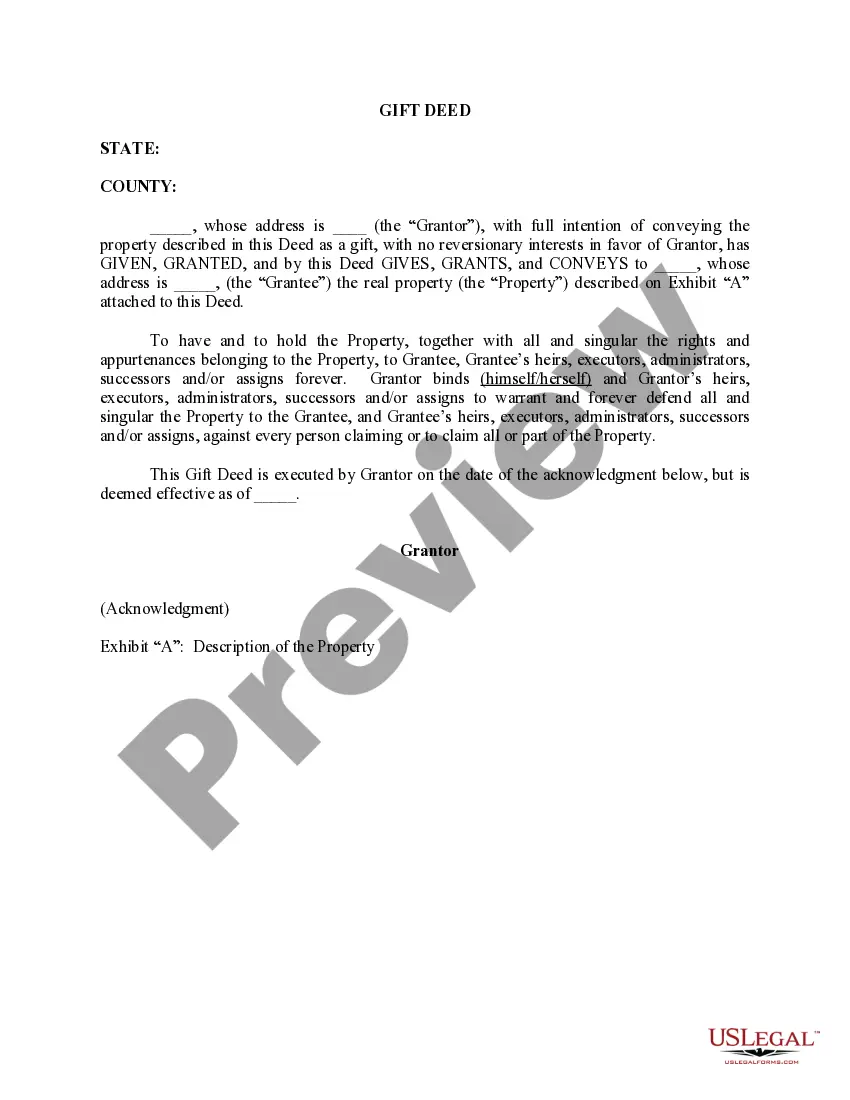
The Deed of Gift is a legal document used to transfer ownership of property from one person (the Grantor) to another (the Grantee) without any exchange of money. Unlike a sale, a deed of gift conveys property based solely on love, affection, or benevolence. This form specifically caters to property transactions in Arizona, with language that may be adapted to meet different scenarios and legal requirements.
Form components explained
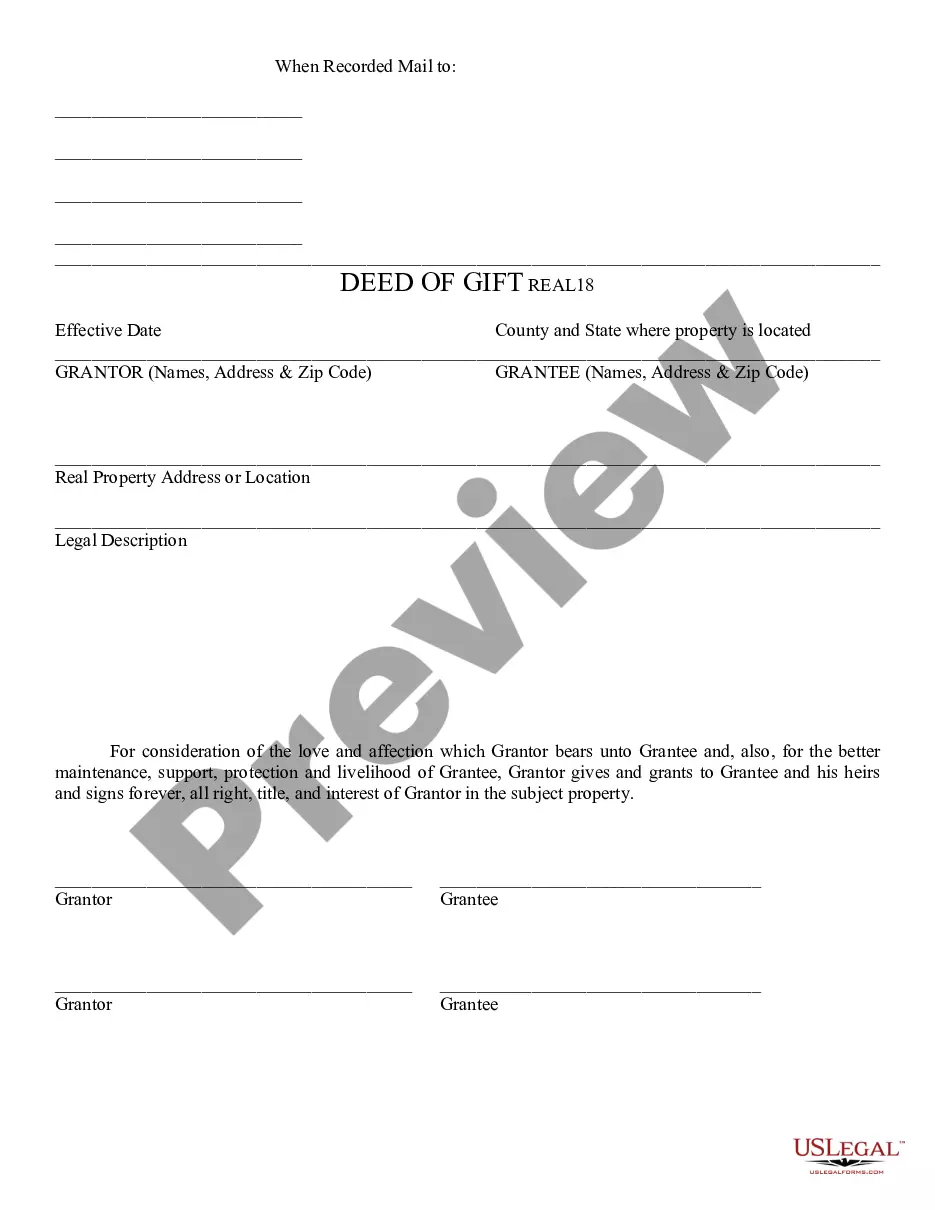
- Effective Date: Specifies when the transfer becomes valid.
- Grantor and Grantee Information: Names and addresses of both parties involved.
- Property Description: Includes the real property address or location.
- Legal Description: Provides specific details identifying the property being transferred.
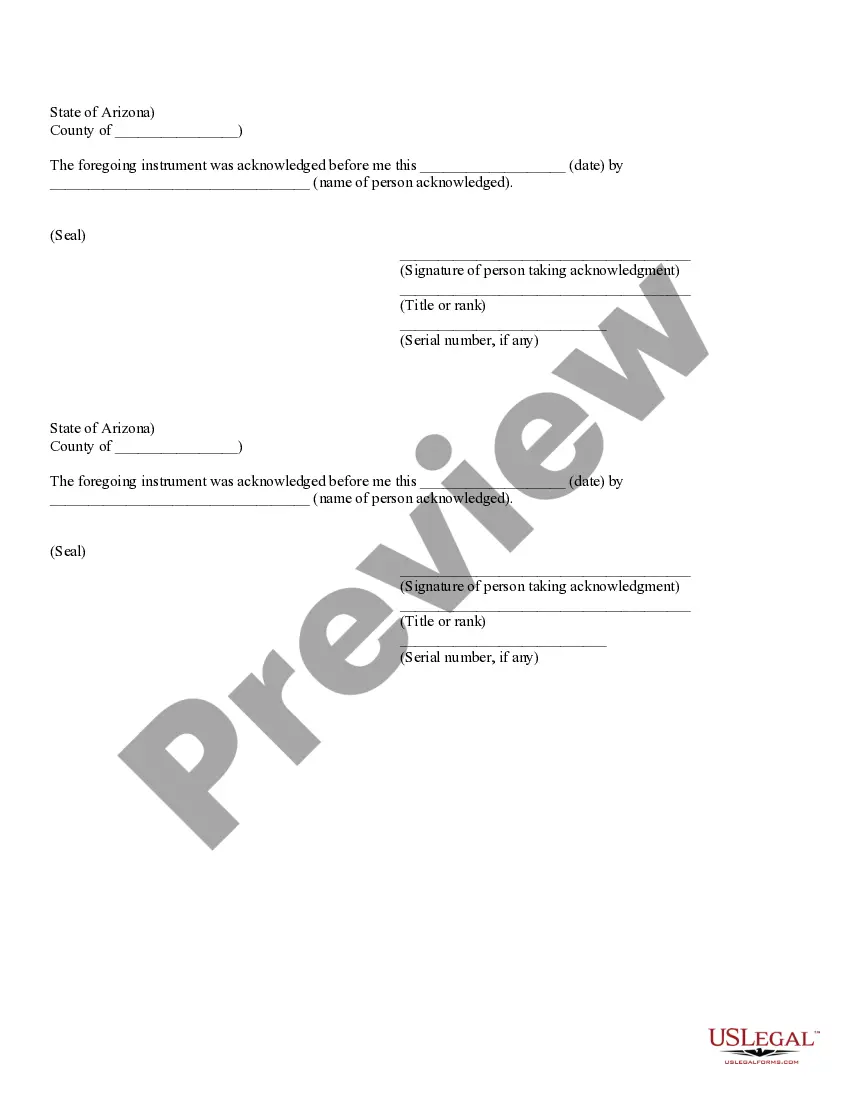
- Notary Sections: Areas designated for notary public signatures, necessary for legal validation.

When this form is needed
You should use a Deed of Gift when you intend to give property to someone without any expectation of payment. This could be for family purposes, charitable donations, or gifting property to friends. It's particularly useful during estate planning to transfer ownership of assets while retaining the ability to control them during your lifetime.
Who needs this form
- Individuals wishing to gift real property to family members or friends.
- People involved in estate planning who want to transfer property as part of their legacy.
- Individuals making charitable donations of property.
Steps to complete this form
- Identify the parties: Fill in the names and addresses of both the Grantor and Grantee.
- Specify the property: Enter the real property address and provide a legal description of the property.
- Enter the effective date: Record the date on which the transfer will take effect.
- Complete the notary sections: Ensure that both parties sign in the presence of a notary public.
- Review for accuracy: Double-check all information to ensure correctness before finalizing the document.
Is notarization required?
This document requires notarization to meet legal standards. US Legal Forms provides secure online notarization powered by Notarize, allowing you to complete the process through a verified video call, available 24/7.
Get your form ready online
Our built-in tools help you complete, sign, share, and store your documents in one place.
Make edits, fill in missing information, and update formatting in US Legal Forms—just like you would in MS Word.
Download a copy, print it, send it by email, or mail it via USPS—whatever works best for your next step.
Sign and collect signatures with our SignNow integration. Send to multiple recipients, set reminders, and more. Go Premium to unlock E-Sign.
If this form requires notarization, complete it online through a secure video call—no need to meet a notary in person or wait for an appointment.
We protect your documents and personal data by following strict security and privacy standards.

Make edits, fill in missing information, and update formatting in US Legal Forms—just like you would in MS Word.

Download a copy, print it, send it by email, or mail it via USPS—whatever works best for your next step.

Sign and collect signatures with our SignNow integration. Send to multiple recipients, set reminders, and more. Go Premium to unlock E-Sign.

If this form requires notarization, complete it online through a secure video call—no need to meet a notary in person or wait for an appointment.

We protect your documents and personal data by following strict security and privacy standards.
Common mistakes to avoid
- Failing to notarize the document, which may invalidate the transfer.
- Inaccurate property descriptions that can lead to legal disputes.
- Not including the effective date, which is crucial for validating the transfer timing.
- Leaving sections blank, which may cause confusion or delays in the transfer process.
Why complete this form online
- Convenience of immediate downloads, allowing for quick preparation.
- Editability to customize the form to meet specific needs or circumstances.
- Access to legal templates created by licensed attorneys, ensuring accuracy and compliance.
Looking for another form?



Form popularity
FAQ
To transfer a property title to a family member in Arizona, you should use an Arizona Deed of Gift. This process involves completing the appropriate form and ensuring it is properly signed and notarized. After execution, you must record the deed with the county recorder's office to make it official. US Legal Forms provides templates and instructions to help streamline this process.
In Arizona, the gift law allows you to transfer property without expecting anything in return, such as with an Arizona Deed of Gift. The law ensures that the transaction is completed without conflicts, protecting both the giver and receiver. Be sure to document the transfer accurately, as this protects your interests. You can find valuable legal forms and information on platforms like US Legal Forms.
The best way to give your house to your child in Arizona is by using an Arizona Deed of Gift. This method allows for a straightforward transfer without the need for a sale or complicated paperwork. It's a good idea to consult with a legal professional to address any tax implications or other considerations. US Legal Forms offers resources to help you draft the necessary documents efficiently.
In Arizona, a deed does not need to be recorded to be valid between the parties involved; however, recording it provides legal protection against claims from third parties. Recording an Arizona Deed of Gift helps ensure that the transfer of ownership is publicly acknowledged and recognized. Taking this step is essential for future property transactions, so consider recording your deed for security.
To secure a beneficiary deed in Arizona, you will need to prepare the deed and file it with your local county recorder's office. Making sure the document adheres to state laws is essential, as this will ensure its validity. Resources like US Legal Forms offer templates and guidance for creating an Arizona Deed of Gift or beneficiary deed, making it easier for you.
Getting a copy of your house deed in Arizona is easy. You can request it from the county recorder's office that holds the records for your property. For convenience, consider using platforms like US Legal Forms, where you can find materials related to your Arizona Deed of Gift, ensuring you access accurate documentation quickly.
To obtain a copy of the deed to your house in Arizona, you can visit the county recorder's office where the property is located. You may also access these records online through many county websites. If you prefer, you can utilize services like US Legal Forms to request a copy of the Arizona Deed of Gift, making the process smooth and straightforward.
Adding someone to a deed in Arizona can have tax implications, particularly concerning gift taxes and property taxes. If you use an Arizona Deed of Gift, it may be considered a taxable gift, depending on the value of the property transferred. Moreover, the property may reassess at its current market value, potentially leading to higher property taxes. It's advisable to consult a tax professional to understand the specifics related to your situation.
The best way to add someone to a deed is to prepare a new deed that explicitly names the new co-owner. An Arizona Deed of Gift is ideal if you wish to transfer ownership without monetary compensation. Make sure to have the deed signed before a notary and file it with the appropriate county office. This method safeguards the legal standing of the property and clearly indicates ownership.
Transferring property title to a family member in Arizona requires you to prepare a new deed, such as an Arizona Deed of Gift, to reflect the new ownership. You should specify the relationship to ensure clarity. Additionally, it's vital to have the deed notarized and then recorded at your local county recorder’s office. This process ensures that ownership records are updated to reflect your family member's interests.