Arizona Debts of Estate - Schedule C
Overview of this form
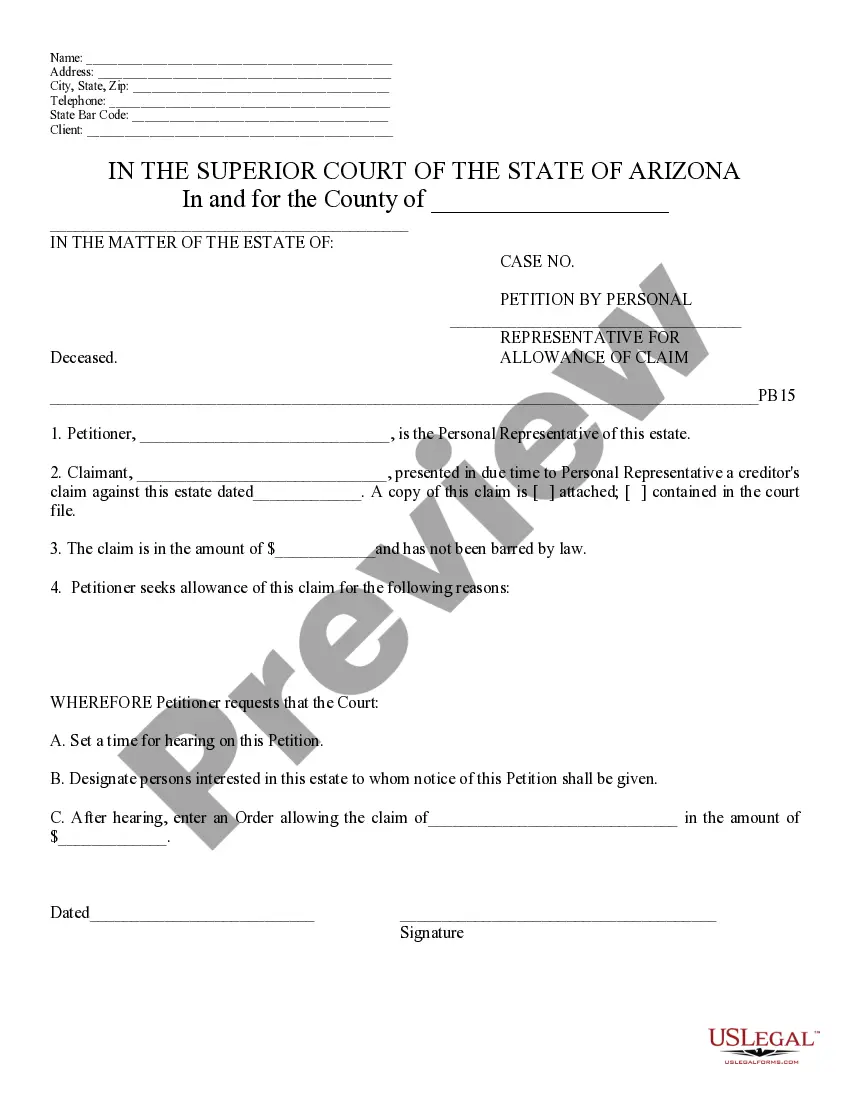
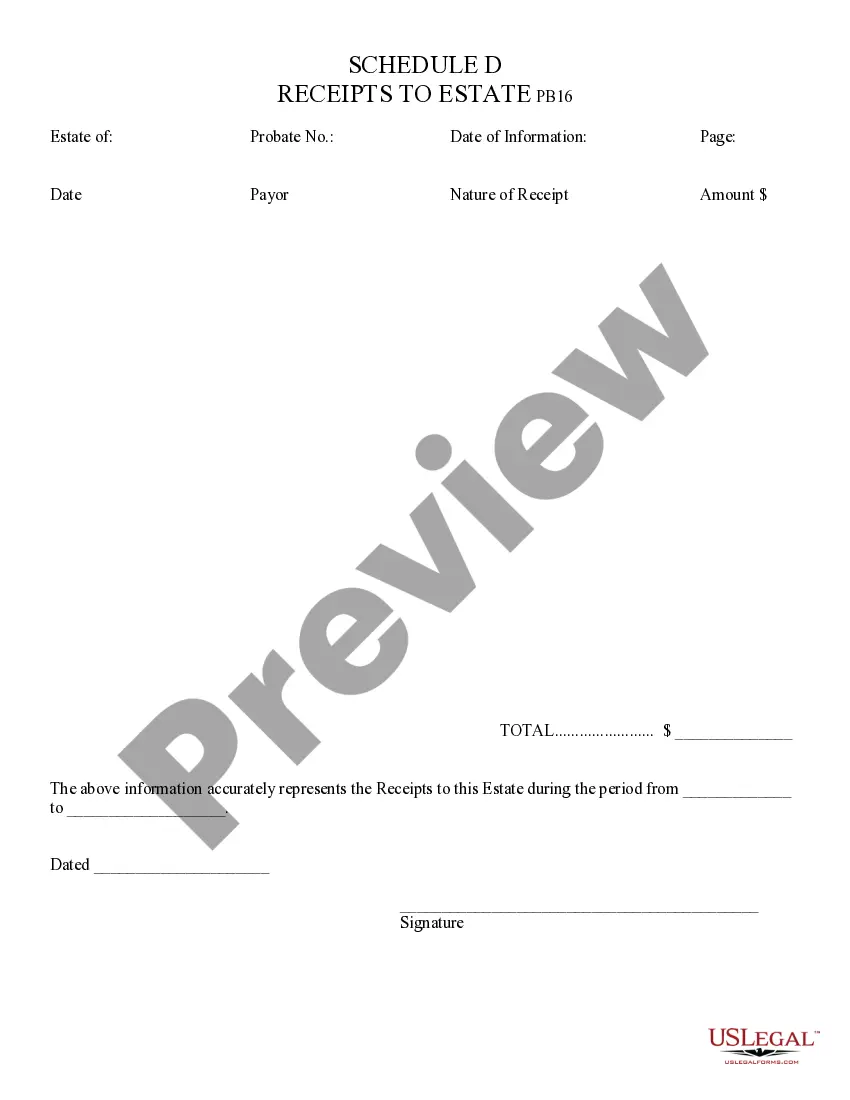
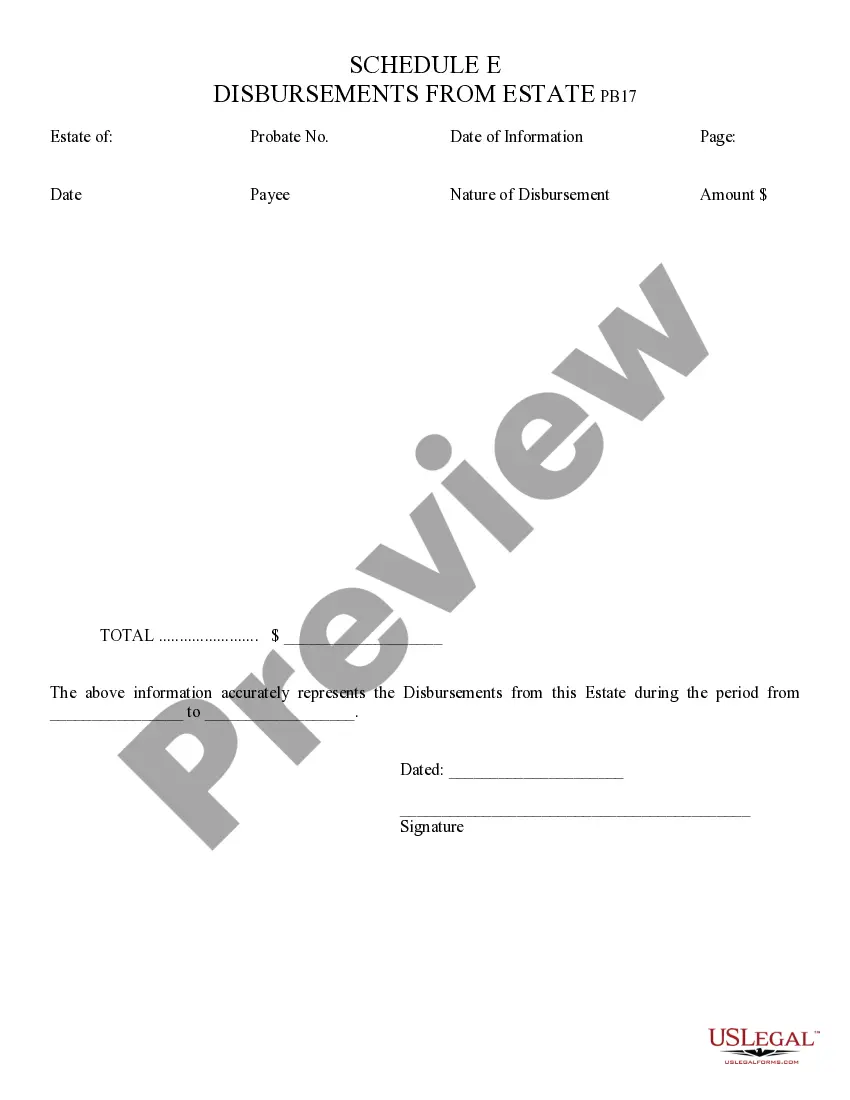
The Debts of Estate - Schedule C is a legal document used in Arizona by the personal representative of an estate to formally list debts owed by the estate and request approval from the court for these claims. This form serves a critical purpose in estate administration, ensuring debts are acknowledged and properly managed in accordance with state law. It differs from similar forms by specifically focusing on debts that require court validation.
Main sections of this form
- Identification of the petitioner (personal representative) and the estate.
- Details of the creditor's claim including the amount and date of claim.
- Request for a court hearing to discuss the creditor's claim.
- Specification of interested persons who should receive notice regarding this petition.
- Signature of the personal representative, affirming the information is accurate.
Common use cases
This form should be used when there are legitimate debts associated with an estate that need to be addressed. It is typically filed after a claim has been made by a creditor, and it is essential for the personal representative to seek court approval for debts that exceed a specified amount or that require validation before being paid out of estate funds.
Who can use this document
The following individuals should use this form:
- Personal representatives or administrators of an estate in Arizona.
- Heirs or beneficiaries needing to understand the claims against the estate.
- Creditors seeking to have their debts recognized and approved through the court.
How to prepare this document
- Fill in the address, city, state, zip code, and telephone number at the top of the form.
- Enter the details of the deceased and case number at the headings provided.
- Clearly state the creditor's name, amount of the claim, and attach a copy of the claim if necessary.
- Explain the reason for allowing the claim in the designated section.
- Sign and date the form as the personal representative to affirm its accuracy.
Does this form need to be notarized?
This form does not typically require notarization unless specified by local law. Ensure to check Arizona rules for any additional notarization requirements that may apply.
Get your form ready online
Our built-in tools help you complete, sign, share, and store your documents in one place.
Make edits, fill in missing information, and update formatting in US Legal Forms—just like you would in MS Word.
Download a copy, print it, send it by email, or mail it via USPS—whatever works best for your next step.
Sign and collect signatures with our SignNow integration. Send to multiple recipients, set reminders, and more. Go Premium to unlock E-Sign.
If this form requires notarization, complete it online through a secure video call—no need to meet a notary in person or wait for an appointment.
We protect your documents and personal data by following strict security and privacy standards.

Make edits, fill in missing information, and update formatting in US Legal Forms—just like you would in MS Word.

Download a copy, print it, send it by email, or mail it via USPS—whatever works best for your next step.

Sign and collect signatures with our SignNow integration. Send to multiple recipients, set reminders, and more. Go Premium to unlock E-Sign.

If this form requires notarization, complete it online through a secure video call—no need to meet a notary in person or wait for an appointment.

We protect your documents and personal data by following strict security and privacy standards.
Avoid these common issues
- Failing to attach supporting documents for the claim.
- Not specifying the correct amount or details of the debts.
- Neglecting to notify interested parties as required.
- Submitting the form without a signature from the personal representative.
Why use this form online
- Convenient access to a legally vetted form that can be downloaded anytime.
- Editable formats (Word and Rich Text) allow for easy customization.
- Reduction in potential errors through clear instructions and structured layout.
Looking for another form?
Form popularity
FAQ
A Schedule C proof of income refers to the financial documents you present to demonstrate your earnings from self-employment when dealing with Arizona Debts of Estate - Schedule C. This proof includes items like your business tax returns, invoices, or receipts, all reflecting your revenue streams and expenses. Having clear proof helps establish your financial situation and obligations. USLegalForms offers resources that can help you generate the necessary documentation easily and efficiently.
Yes, proof is essential when filing a Schedule C as part of the Arizona Debts of Estate - Schedule C process. You must document your income and expenses to provide a complete and accurate representation of your self-employment activities. This documentation is vital for avoiding discrepancies and potential audits. Consider using USLegalForms to simplify the process of compiling and submitting your required proof.
To show proof of income as a self-employed individual for the Arizona Debts of Estate - Schedule C, you should gather relevant documents such as tax returns, profit and loss statements, and bank statements. These documents provide clear evidence of your earnings and business expenses. Keeping thorough records helps ensure accuracy when reporting income. Furthermore, using platforms like USLegalForms can assist you in organizing and generating the necessary documents for your Schedule C filing.
On Schedule C, you can claim losses based on the difference between your gross income and your expenses related to that income. This means that if your expenses exceed your income, you can report this loss to offset other income. Understanding how to maximize losses on Arizona Debts of Estate - Schedule C is crucial for minimizing tax liabilities. Proper documentation and reporting practices are essential for ensuring compliance and maximizing your benefits.
Line 15 on Schedule 1 concerns additional income that should be reported on your tax return, such as unemployment compensation or taxable refunds. Understanding this line is critical for ensuring all earned income is properly reported. If you are navigating through debts of an estate, especially in the context of Arizona Debts of Estate - Schedule C, reporting this information accurately can make a significant difference in financial assessments.
To prove your Schedule C income, you should have detailed records of all income received and expenses incurred throughout the year. Use bank statements, invoices, and receipts to substantiate your claims. This documentation is especially important when managing Arizona Debts of Estate - Schedule C to ensure transparency and compliance with state regulations. Tools like UsLegalForms can help you organize and format this information properly.
Schedule C line 15 highlights the total costs associated with goods that a business sold during the year. This information is critical as it directly impacts your gross income calculations. Therefore, correctly reflecting this data is essential for anyone dealing with debts of an estate, particularly in Arizona Debts of Estate - Schedule C. Accurate reporting ensures that estate distributions are fair and compliant.
Line 15 on taxes can refer to different forms depending on the context, so it’s important to clarify which form you are using. In many tax forms, this line usually pertains to specific deductions or credits permissible under tax laws. Understanding the implications of this line can help you manage your Arizona Debts of Estate - Schedule C more effectively. Always refer to the specific form instructions for clarity.
Arizona Form 140NR is used for non-residents who need to file an income tax return with the state of Arizona. This form allows you to report income earned while working in Arizona, regardless of your residency status. If you are managing debts of an estate, knowing how to properly file this form is vital in relation to Arizona Debts of Estate - Schedule C. It helps ensure accurate tax reporting and compliance.
Line 23 on Schedule C is designated for other expenses not specifically categorized. Here, you can include various business-related costs that do not fall into the established expense lines. Carefully managing items like Arizona Debts of Estate - Schedule C and placing them on the right line supports accurate tax filings.