Arizona Disbursements from Estate Schedule E
What this document covers
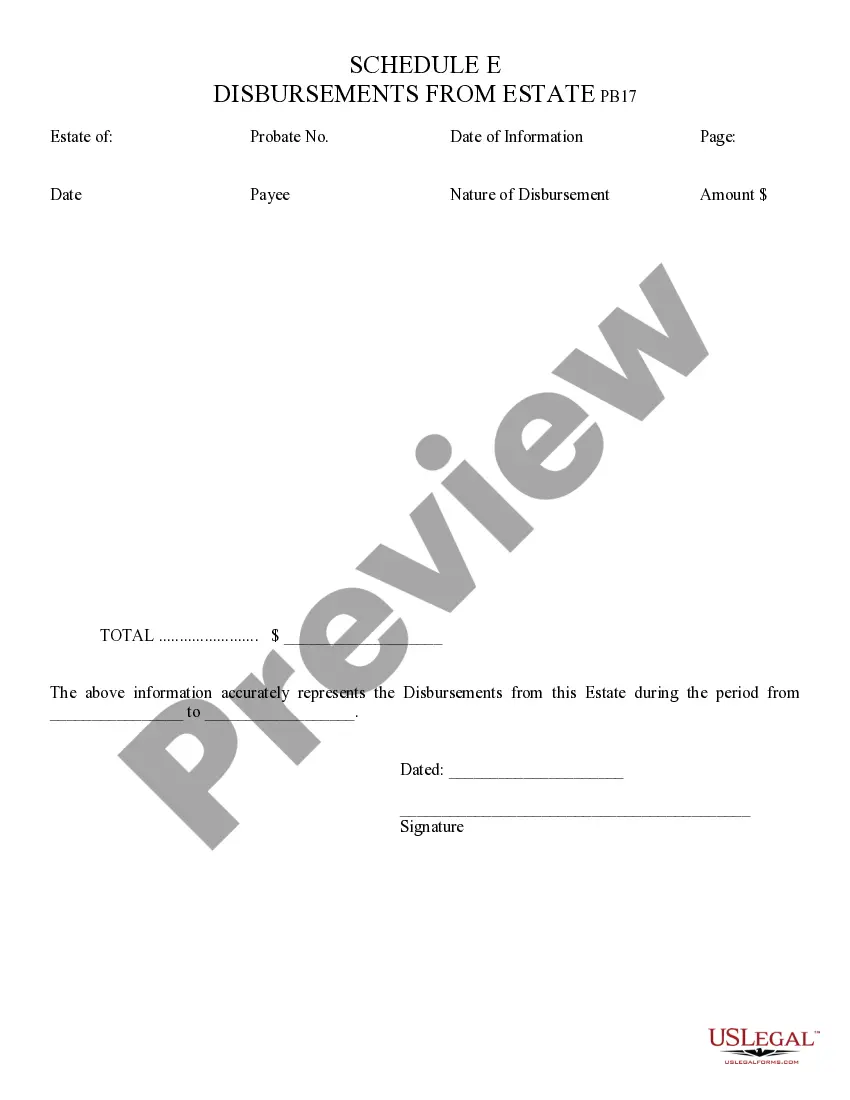
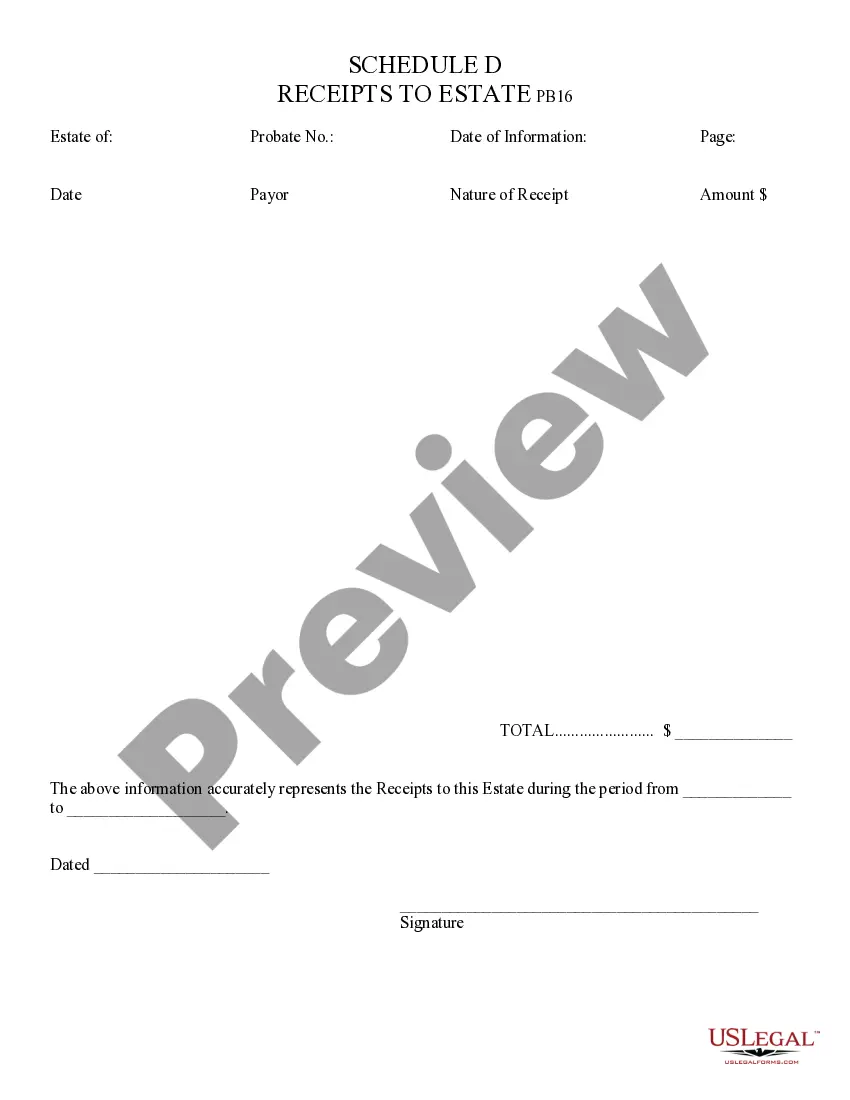
The Disbursements from Estate Schedule E is a legal document used in Arizona that details all payments made by an estate within a specified year. This form differs from other estate documents by focusing specifically on disbursements, allowing for accurate record-keeping of financial transactions related to the estate. It is essential for transparency and financial accountability in estate management.
Key components of this form
- Estate identification details, including the estate name and probate number.
- Entry fields for the date of each disbursement and the payee's name.
- Specification of the nature of each disbursement, outlining the purpose of the payment.
- Clear indication of the amount paid for each disbursement made.
- A total amount section summarizing all disbursements for the year.
- Signature line for the responsible party to verify the information.
When this form is needed
This form should be used when an estate has made disbursements during the year that need to be documented. Executors and administrators typically complete this form for annual estate accounting or when reporting to beneficiaries and the court. It helps in maintaining clear records and ensures proper financial management of the estate's funds.
Intended users of this form
This form is intended for:
- Executors or administrators of an estate managing disbursements.
- Beneficiaries who need a detailed account of how funds from the estate were allocated.
- Legal professionals involved in estate planning and administration.
Completing this form step by step
- Fill in the name of the estate and the probate number at the top of the form.
- Enter the date of each disbursement as they occurred throughout the year.
- Specify the name of the payee for each payment made from the estate.
- Detail the nature of each disbursement to clarify its purpose.
- Input the amount of each payment made.
- Calculate the total amount of disbursements and provide your signature at the bottom.
Notarization guidance
Notarization is generally not required for this form. However, certain states or situations might demand it. You can complete notarization online through US Legal Forms, powered by Notarize, using a verified video call available anytime.
Get your form ready online
Our built-in tools help you complete, sign, share, and store your documents in one place.
Make edits, fill in missing information, and update formatting in US Legal Forms—just like you would in MS Word.
Download a copy, print it, send it by email, or mail it via USPS—whatever works best for your next step.
Sign and collect signatures with our SignNow integration. Send to multiple recipients, set reminders, and more. Go Premium to unlock E-Sign.
If this form requires notarization, complete it online through a secure video call—no need to meet a notary in person or wait for an appointment.
We protect your documents and personal data by following strict security and privacy standards.

Make edits, fill in missing information, and update formatting in US Legal Forms—just like you would in MS Word.

Download a copy, print it, send it by email, or mail it via USPS—whatever works best for your next step.

Sign and collect signatures with our SignNow integration. Send to multiple recipients, set reminders, and more. Go Premium to unlock E-Sign.

If this form requires notarization, complete it online through a secure video call—no need to meet a notary in person or wait for an appointment.

We protect your documents and personal data by following strict security and privacy standards.
Common mistakes
- Failing to include all disbursements made within the reporting period.
- Incorrect or missing payee names that can lead to confusion.
- Calculating totals inaccurately, which can misrepresent the estate's financial status.
- Not signing the form, rendering it incomplete.
- Leaving out the necessary dates for each disbursement.
Why complete this form online
- Convenience of downloading the form in Word or Rich Text format for easy editing.
- Immediate access to a legally vetted document drafted by licensed professionals.
- Reduced risk of errors with a structured format guiding how to fill in required information.
- Ability to save and print as needed for your records or for court submissions.
Looking for another form?
Form popularity
FAQ
The TPT rate in Arizona varies depending on the type of business activity and the specific locality. Generally, the state rate is 5.6%, but local jurisdictions may apply their rates, leading to a combined rate that can be higher. When dealing with Arizona Disbursements from Estate Schedule E, it's essential to stay informed about TPT rates to ensure accuracy in your financial planning and tax filings.
In Arizona, the Pass-Through Entity Tax (PTET) is generally not refundable. Instead, this tax allows certain entities to reduce their taxable income on Schedule E, optimizing the overall tax burden on disbursements from the estate. It's important for individuals dealing with estate distributions to consult a knowledgeable resource, like USLegalForms, to navigate these financial intricacies and ensure effective tax management.
The Pass-Through Entity (PTE) rate in Arizona impacts various disbursements from estate Schedule E. As of the latest guidelines, the PTE rate is designed to streamline tax processes for pass-through entities, ultimately benefiting estate management. Understanding this rate is crucial for the accurate preparation of tax filings and to ensure compliance with state laws regarding estate distributions.
Some Arizona tax credits are refundable, while others are not. Refundable credits allow you to receive a refund if the credits exceed your tax liability, which can provide significant financial relief. When considering Arizona disbursements from estate schedule E, understanding which credits apply can be critical. For more information on navigating these credits, uslegalforms offers helpful resources.
Yes, a reciprocal agreement exists between California and Arizona. This means that residents of either state are not subject to income tax on wages earned in the other state. However, this may affect how you handle Arizona disbursements from estate schedule E, so it's wise to verify your specific circumstances. Uslegalforms can assist in clarifying these tax obligations.
The Arizona Research and Development (R&D) credit is nonrefundable, which means it can only reduce your tax liability to zero, but you cannot receive a refund. Businesses engaging in qualifying R&D activities can benefit from this credit, but they should keep in mind the implications for Arizona disbursements from estate schedule E as well. If you need detailed assistance, uslegalforms can guide you through the credit's application process.
You can file Arizona Form 165, which is for partnerships, at the Arizona Department of Revenue. Mail the completed form to the designated address provided on the instruction sheet for the form. It is crucial to accurately report any Arizona disbursements from estate schedule E when completing this form. For assistance with filing, uslegalforms offers helpful templates and resources.
Yes, if you earn income sourced from Arizona as a non-resident, you need to file an Arizona tax return. This applies to various types of income, including wages and revenues from business endeavors. Being aware of Arizona disbursements from estate schedule E is important, as it may play a role in your filing obligations. Uslegalforms can help provide clarity on what forms to use and how to proceed.
AZ Form 355 is the Arizona Corporate Income Tax Return. This form is essential for businesses operating in Arizona as it helps report their income and calculate the amount owed. Proper completion of this form is crucial for compliance, especially when considering Arizona disbursements from estate schedule E, as it may impact overall tax responsibilities. For assistance, uslegalforms can provide templates and guidance for filing.