Arizona Termination of Tenancy at Will by the Lessee
What this document covers
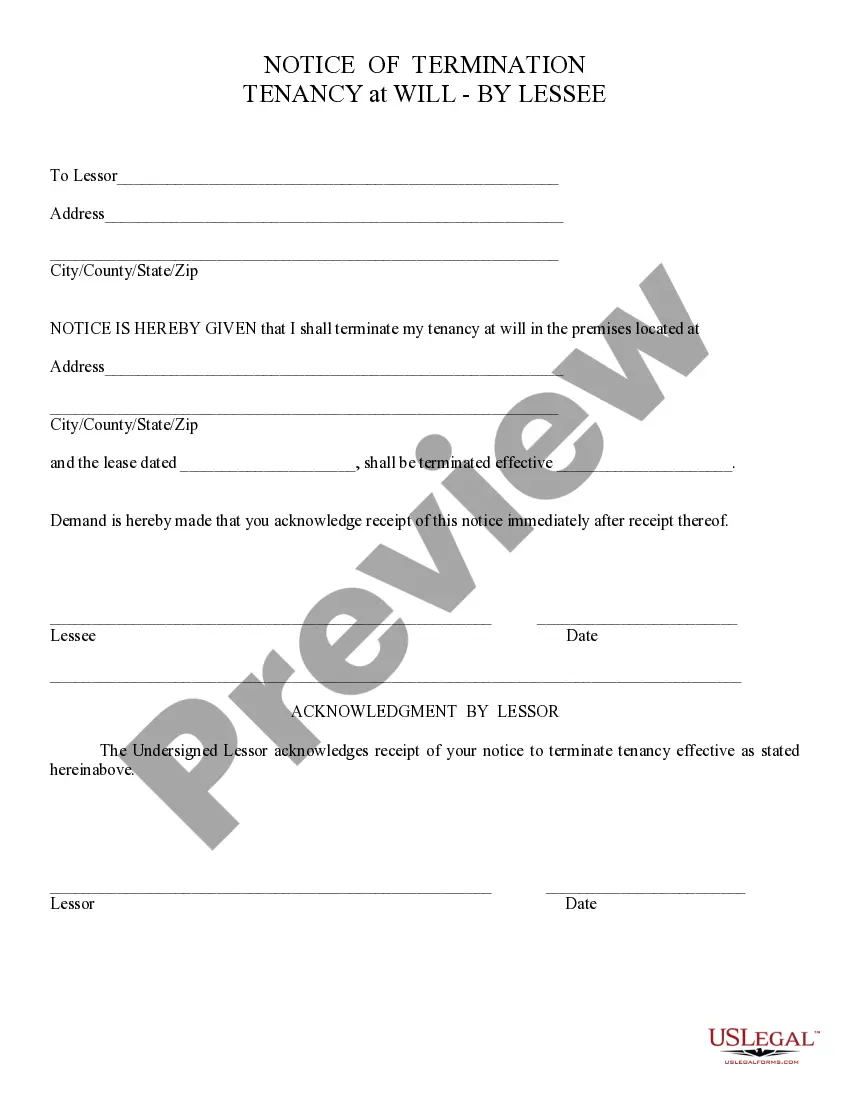
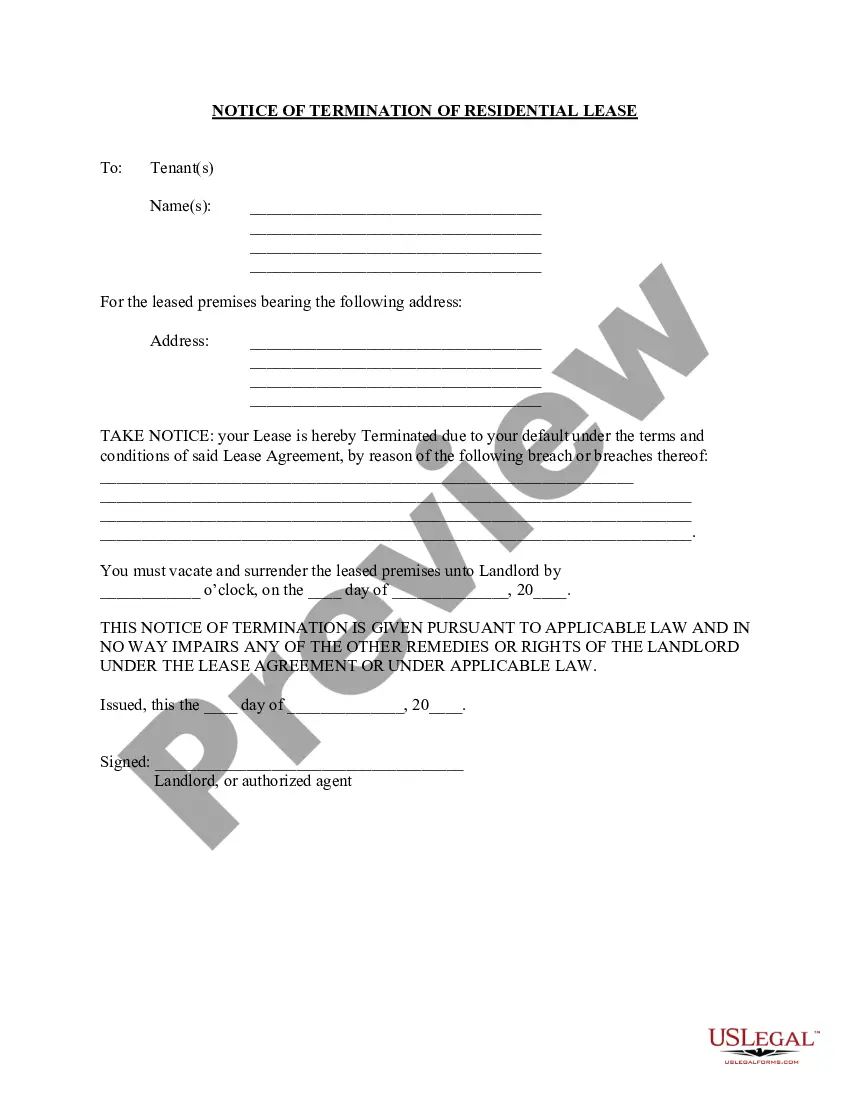
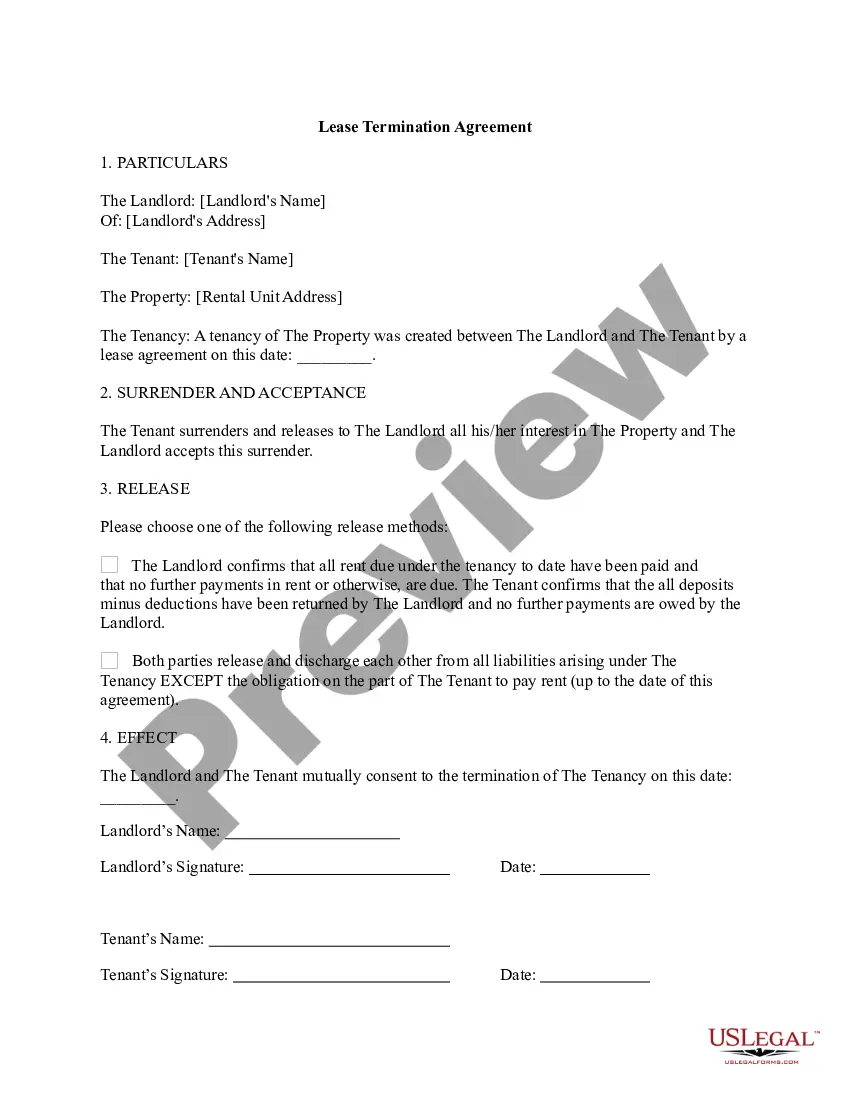
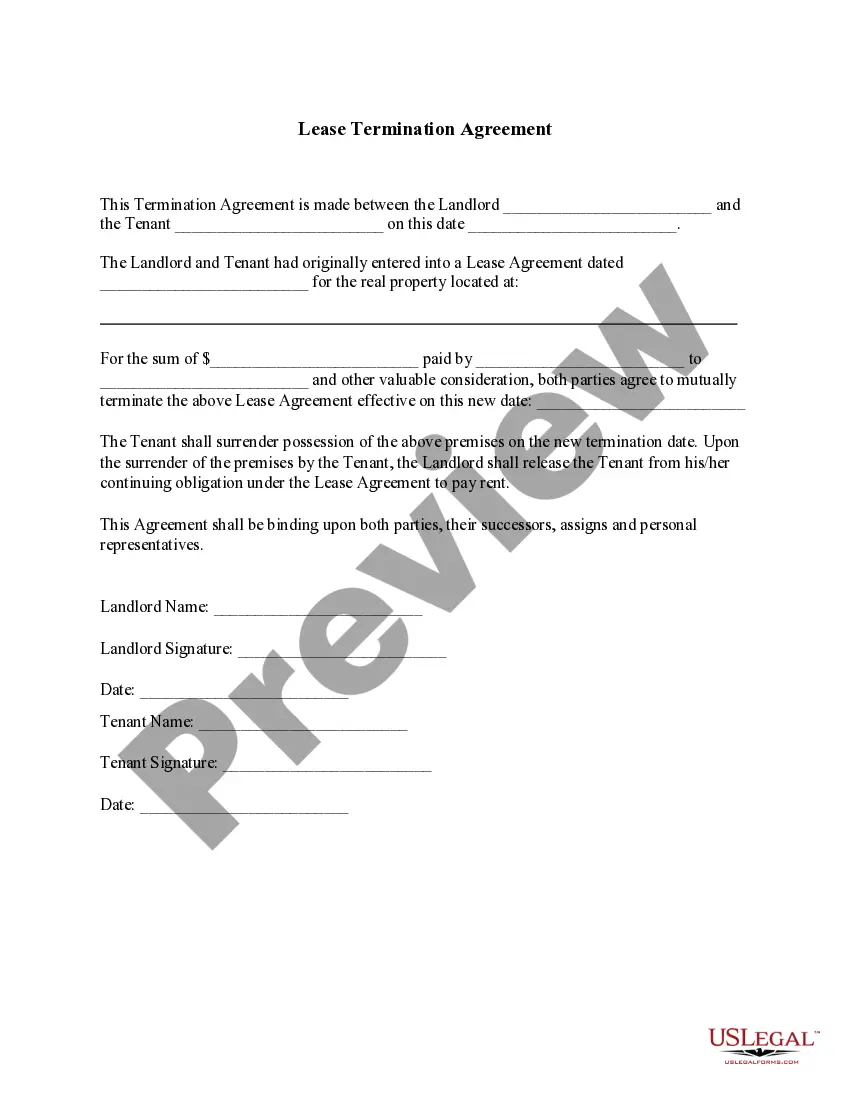
The Termination of Tenancy at Will by the Lessee form is a legal notice that allows a tenant (lessee) to formally terminate their tenancy agreement with a landlord (lessor). This form is specifically designed for tenants who have permission from their landlord to stay beyond the expiration of their rental agreement, which distinguishes it from other types of tenant notices. When completed, this form ensures that the lessor acknowledges the tenantâs intent to vacate the property.
Key components of this form
- Lessee's name and address: Identifies the tenant submitting the termination notice.
- Lessor's name and address: Specifies the landlord receiving the notice.
- Property address: Indicates the location of the rental property being vacated.
- Date of notice: The date the form is completed and delivered to the landlord.
- Termination effective date: The date the tenancy will end, as specified by the tenant.
- Acknowledgment section: A place for the landlord to confirm receipt of the termination notice.
When this form is needed
This form should be used when a tenant-at-will wishes to officially notify their landlord of their intention to vacate the premises. This is particularly relevant in situations such as: a tenant deciding to move to a new residence, a tenant needing to relocate for work or personal reasons, or a tenant wanting to terminate their residency without the complexities of a formal lease agreement.
Who this form is for
- Tenants-at-will who wish to vacate their rental property.
- Individuals occupying rental property without a formal lease agreement.
- Tenants who have received permission from their landlord to reside past the lease expiration.
How to prepare this document
- Identify the parties: Fill in the names and addresses of both the lessee (tenant) and the lessor (landlord).
- Specify the property: Include the detailed address of the rental property being vacated.
- Enter the termination effective date: Clearly state the date when the tenancy will officially end.
- Sign and date the form: Ensure that the tenant signs and dates the notice, affirming their intention to terminate the tenancy.
- Provide an acknowledgment section: The landlord should sign to confirm receipt of the notice.
Is notarization required?
This form does not typically require notarization unless specified by local law. It is advisable to check local regulations to ensure compliance.
Get your form ready online
Our built-in tools help you complete, sign, share, and store your documents in one place.
Make edits, fill in missing information, and update formatting in US Legal Forms—just like you would in MS Word.
Download a copy, print it, send it by email, or mail it via USPS—whatever works best for your next step.
Sign and collect signatures with our SignNow integration. Send to multiple recipients, set reminders, and more. Go Premium to unlock E-Sign.
If this form requires notarization, complete it online through a secure video call—no need to meet a notary in person or wait for an appointment.
We protect your documents and personal data by following strict security and privacy standards.

Make edits, fill in missing information, and update formatting in US Legal Forms—just like you would in MS Word.

Download a copy, print it, send it by email, or mail it via USPS—whatever works best for your next step.

Sign and collect signatures with our SignNow integration. Send to multiple recipients, set reminders, and more. Go Premium to unlock E-Sign.

If this form requires notarization, complete it online through a secure video call—no need to meet a notary in person or wait for an appointment.

We protect your documents and personal data by following strict security and privacy standards.
Avoid these common issues
- Failing to provide complete addresses for both parties.
- Not specifying the termination effective date.
- Neglecting to sign and date the form before submission.
- Forgeting to provide the acknowledgment section for the landlord's signature.
Advantages of online completion
- Easy access to legal forms drafted by licensed attorneys.
- Convenience of downloading and printing the form at your own pace.
- Editability allows you to customize the document for your specific situation.
- Reliability of using a legally sound form that complies with common legal standards.
Looking for another form?

Form popularity
FAQ
The best excuse to break a lease often involves a legally recognized reason, such as the property being uninhabitable or significant changes in your living circumstances. Common situations include job relocations, domestic violence, or health issues. It's vital to document your reasons and communicate openly with your landlord. Using resources that detail Arizona Termination of Tenancy at Will by the Lessee can help you formulate a strong case.
The most common way for a lease to terminate is through the expiration of its term. At this point, tenants and landlords can choose to either renew the lease or create a new agreement. In some situations, tenants might opt to terminate their tenancy early under specific legal allowances. Understanding Arizona Termination of Tenancy at Will by the Lessee is essential for navigating these scenarios.
Yes, in most cases, tenants are required to give a 60-day notice before the end of a lease in Arizona. However, this can vary depending on your lease agreement. Always review your specific rental contract to confirm the notice requirements. Familiarizing yourself with Arizona Termination of Tenancy at Will by the Lessee can provide additional clarity on this process.
To terminate a lease in Arizona, you need to follow the guidelines set forth in the lease agreement and state law. Typically, you should provide written notice to your landlord, including the intended move-out date. Be aware of the required notice periods, which usually depend on the type of lease you have. Knowing the details of Arizona Termination of Tenancy at Will by the Lessee can help ensure you proceed correctly.
Yes, you can explore several options to exit your lease without paying. One option is to negotiate with your landlord; they might agree to a mutual release if you present a reasonable request. Additionally, checking your lease for specific terms related to early termination could provide alternatives. Understanding Arizona Termination of Tenancy at Will by the Lessee can also guide your discussions.
A notice of intent to vacate serves as a formal notification from a tenant to a landlord, indicating the tenant's intention to leave the rental property. In Arizona, this notice must typically provide a specific timeframe, usually 30 days, prior to the tenant's departure. It is an essential step in the Arizona Termination of Tenancy at Will by the Lessee process, as it ensures that both parties have clarity regarding the end of the lease. For seamless documentation, consider using the resources available at US Legal Forms.
Section 33-1324-a outlines the responsibilities of landlords regarding the maintenance of rental properties. It specifically mandates that landlords provide a habitable living environment and perform necessary repairs in a timely manner. This section not only protects tenants but also clarifies the obligations of landlords in residential agreements. Understanding this can aid both parties in avoiding disputes during the Arizona Termination of Tenancy at Will by the Lessee.
Yes, you can evict a tenant in Arizona even if there is no written lease. When the arrangement is a tenancy at will, the landlord must still follow the proper legal procedures in line with Arizona Termination of Tenancy at Will by the Lessee laws. It is important to give appropriate notice and adhere to local regulations to avoid any legal complications. For assistance in navigating this process, US Legal Forms offers valuable resources.
A 30 day termination notice in Arizona allows a lessee to officially end a tenancy at will by providing written notice to the landlord. This notice gives the landlord a full month to prepare for the tenant's departure. Following the Arizona Termination of Tenancy at Will by the Lessee guidelines ensures that both parties understand their rights and responsibilities. You can find templates and resources on the US Legal platform to streamline this process.