Arizona Notices, Resolutions, Simple Stock Ledger and Certificate
Understanding this form
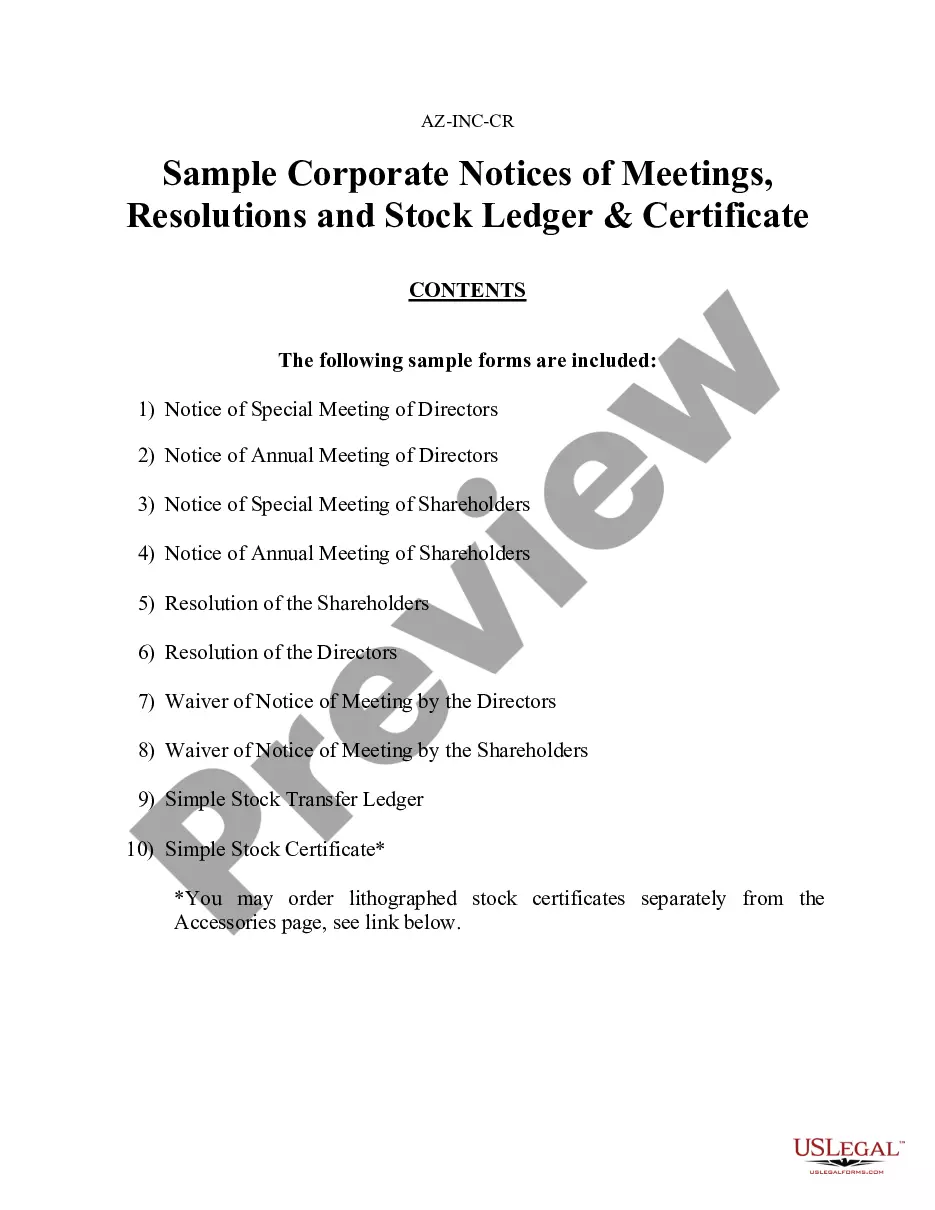
The "Notices, Resolutions, Simple Stock Ledger and Certificate" is a collection of essential corporate forms that facilitate the management of corporate meetings and shareholder communications. This package includes notices for meetings, resolutions, a stock ledger, and a sample stock certificate. These forms are designed to help corporate entities comply with legal requirements and maintain organized records of corporate decisions, ensuring transparency and adherence to corporate bylaws.
Key parts of this document
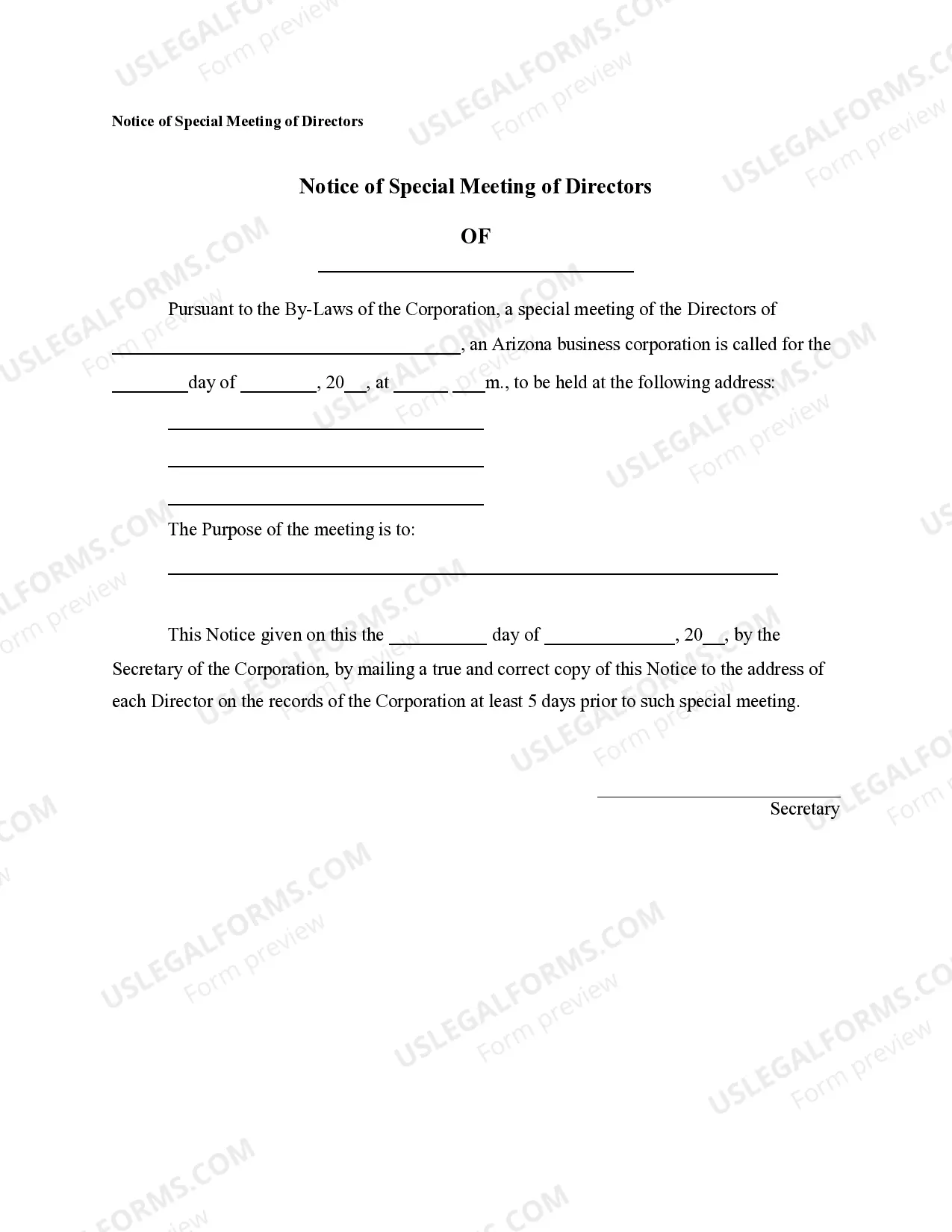
- Notice of Special Meeting of Directors
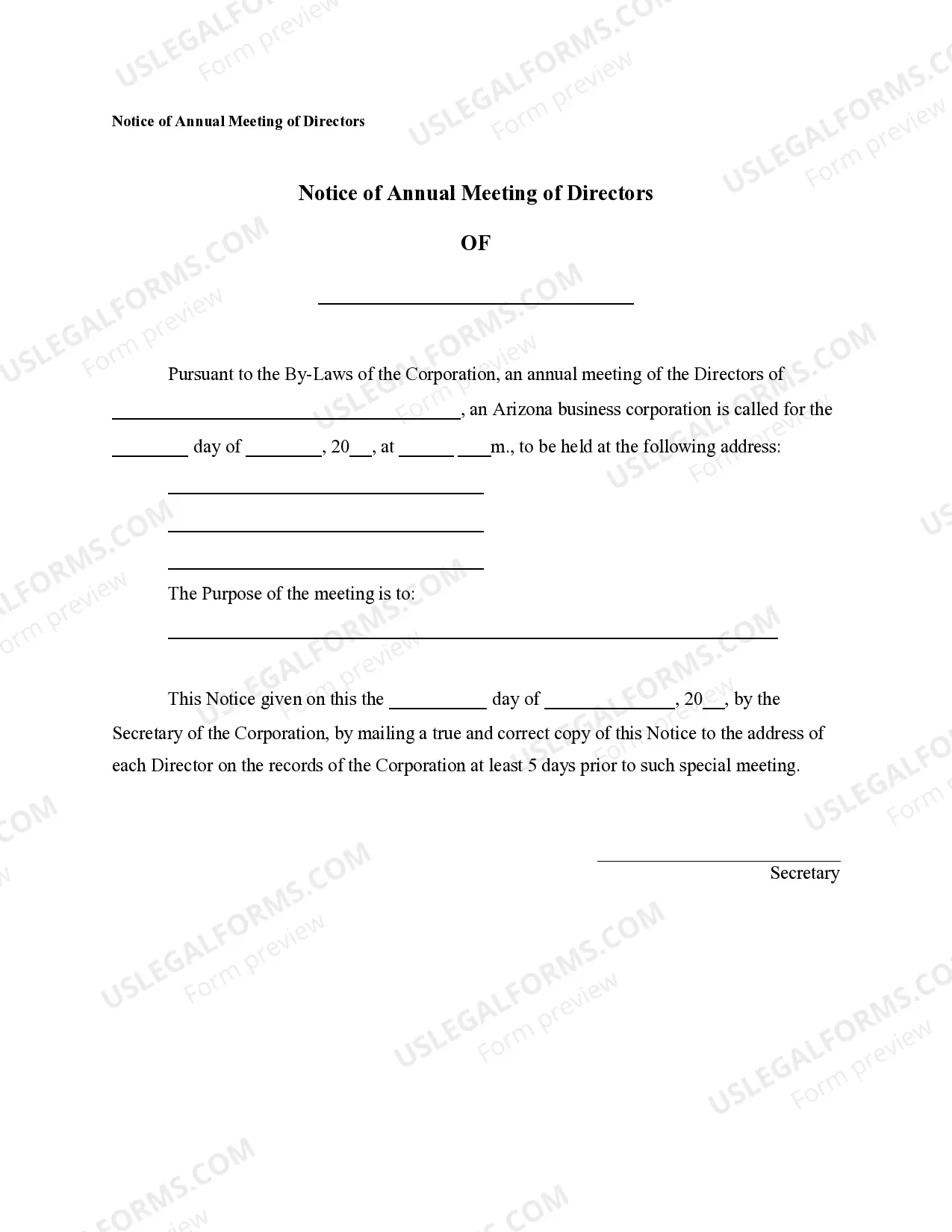
- Notice of Annual Meeting of Directors
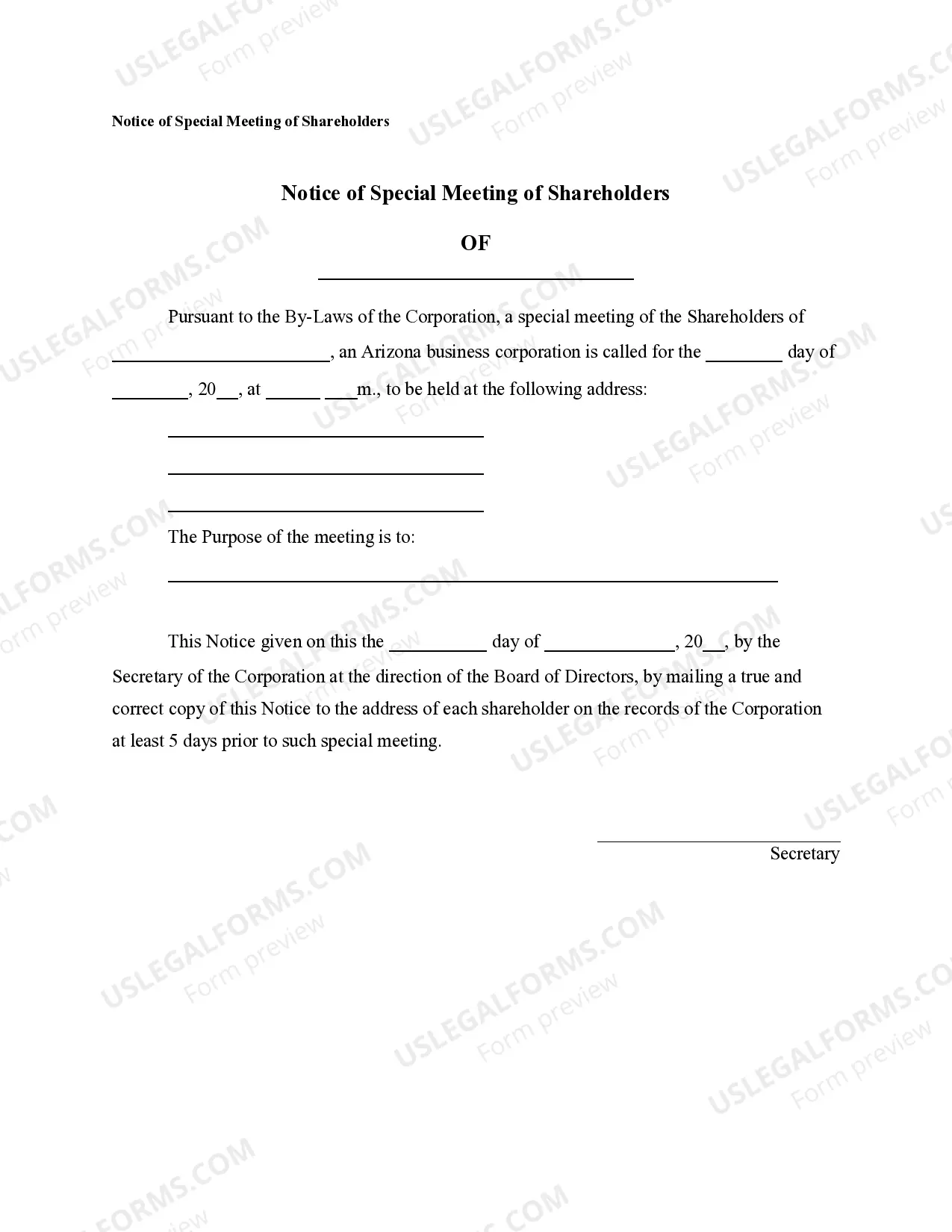
- Notice of Special Meeting of Shareholders
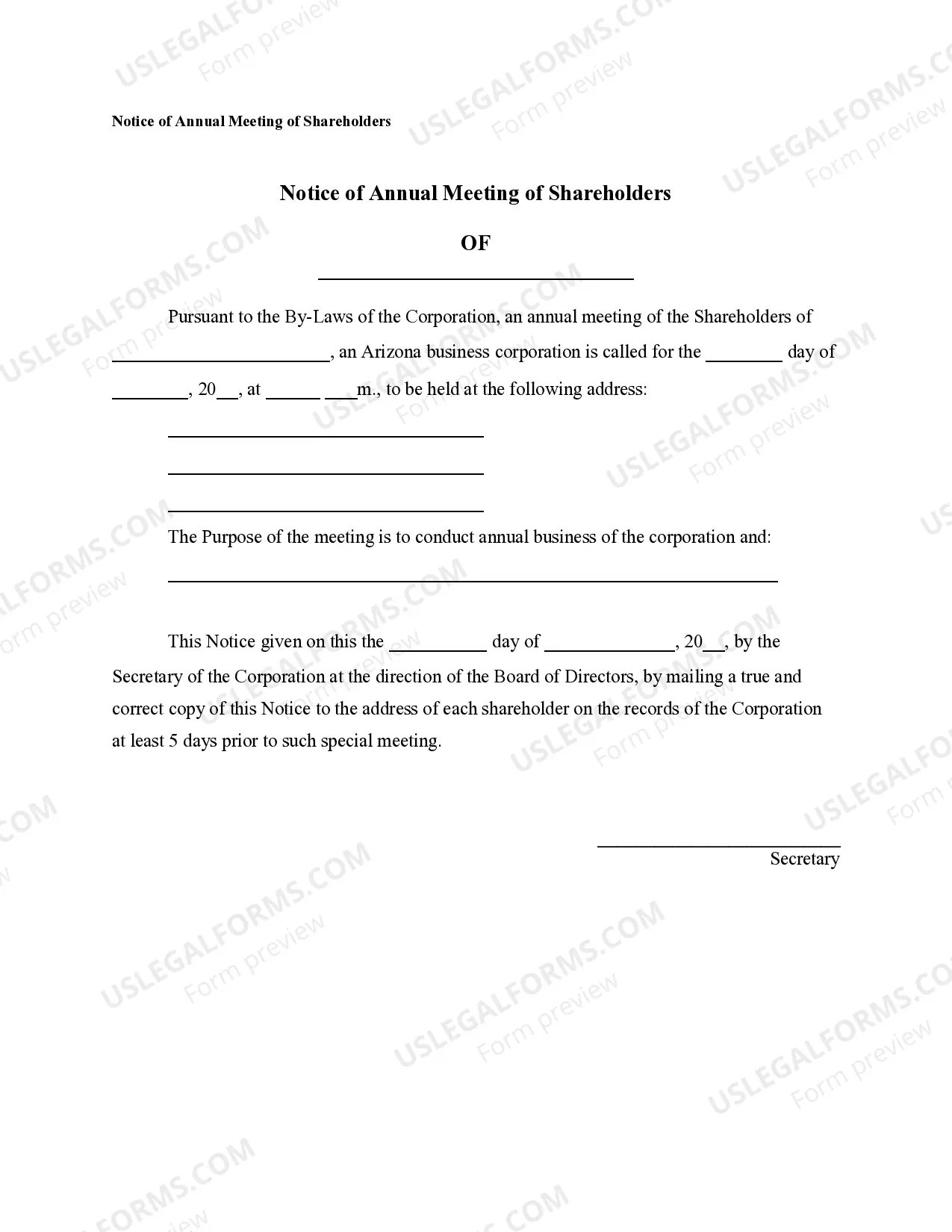
- Notice of Annual Meeting of Shareholders
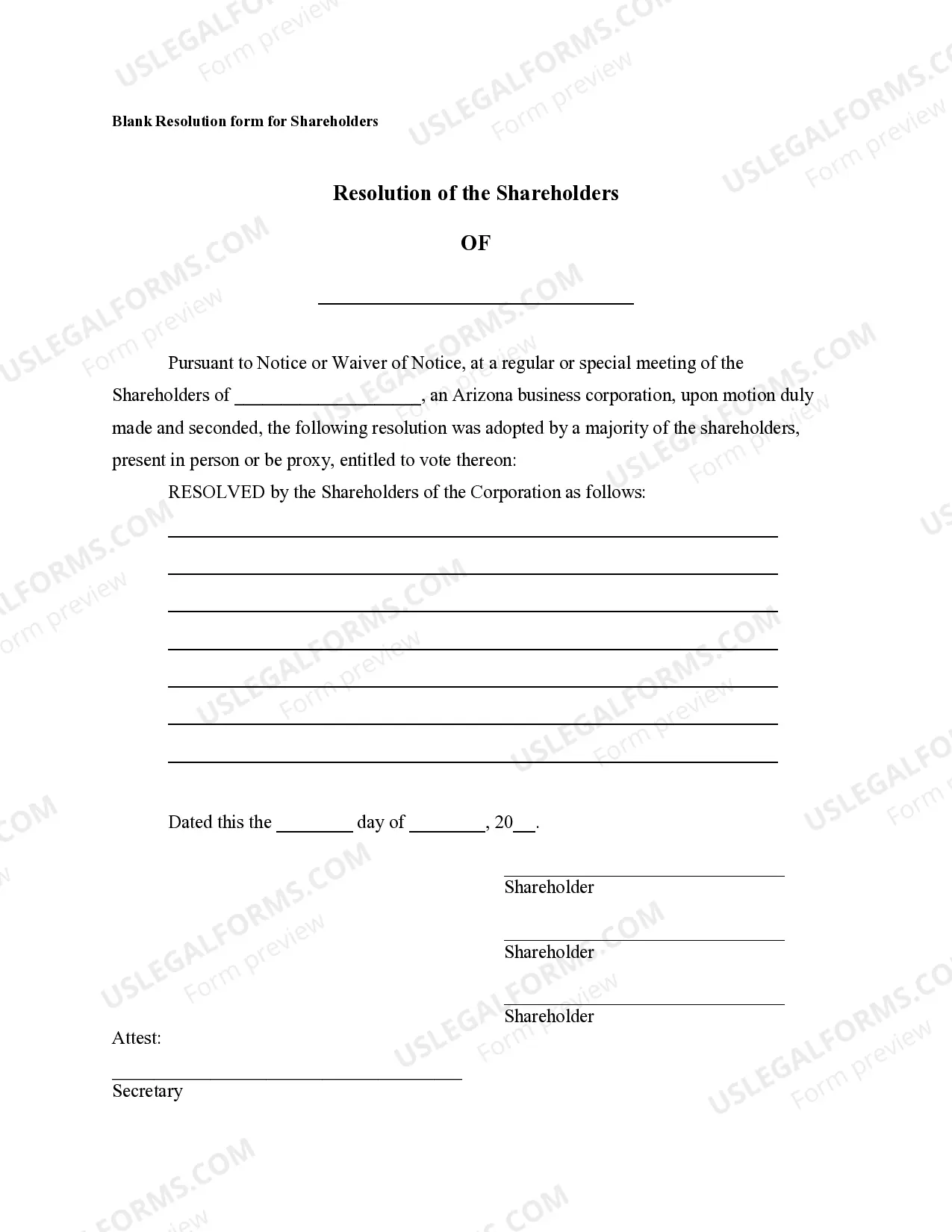
- Resolution of the Shareholders
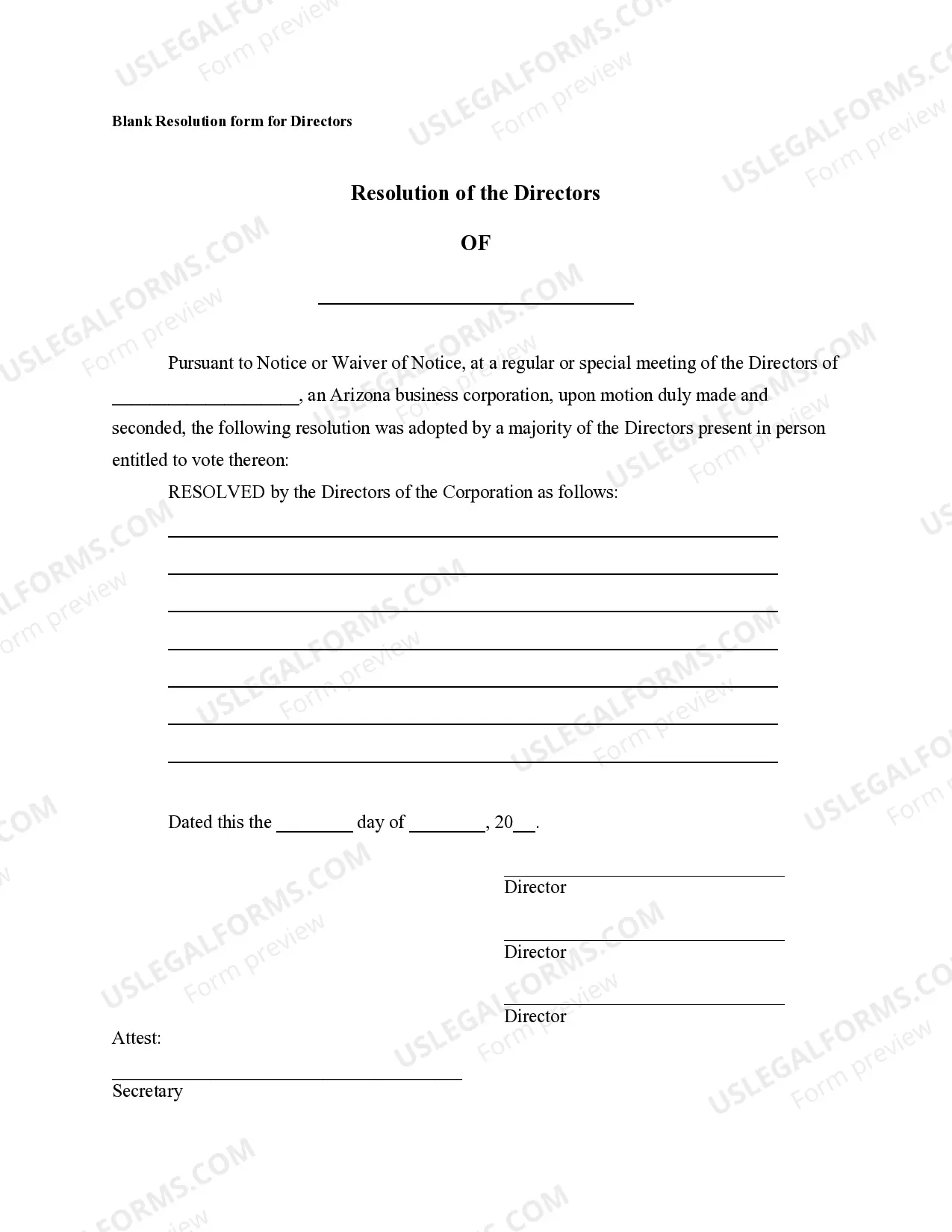
- Resolution of the Directors
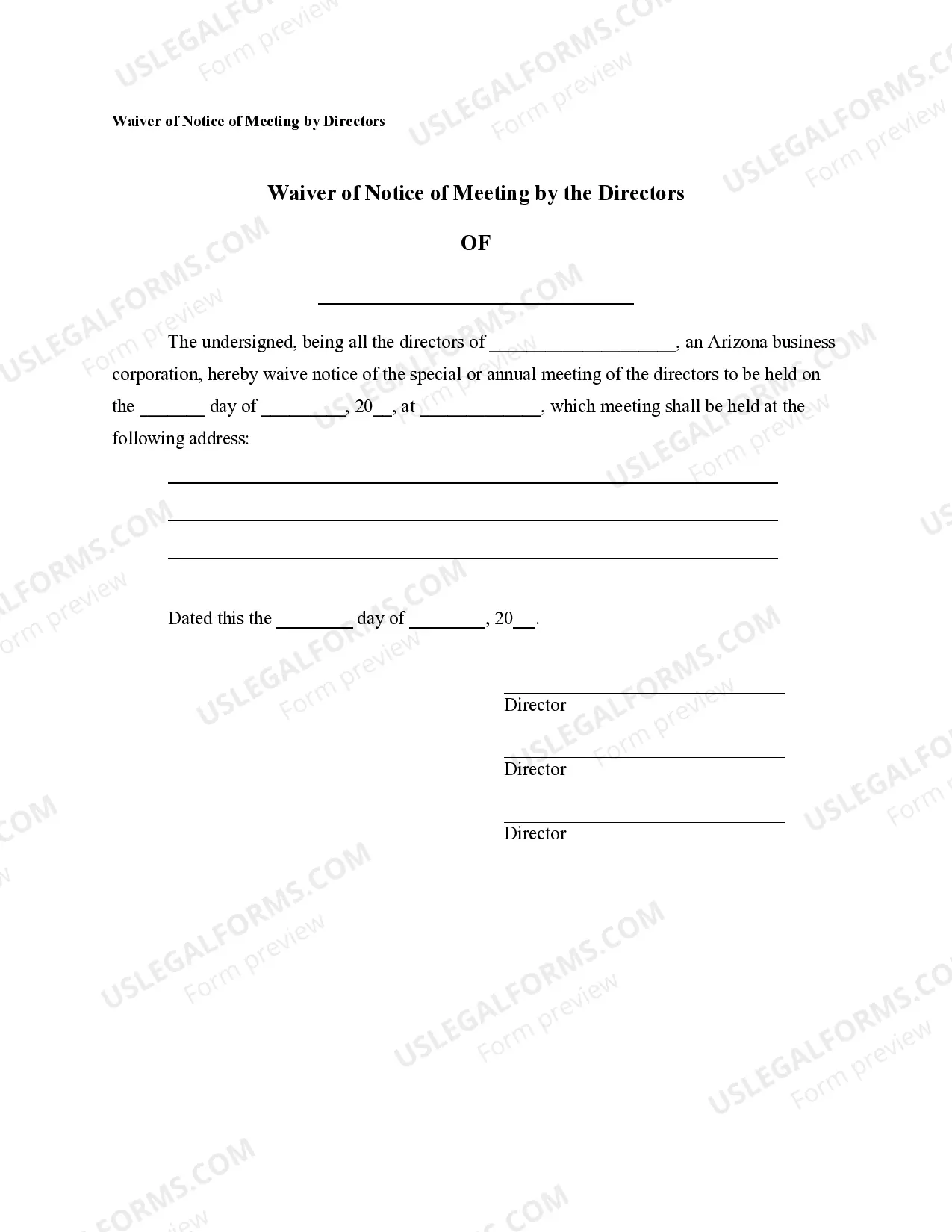
- Waiver of Notice of Meeting by the Directors
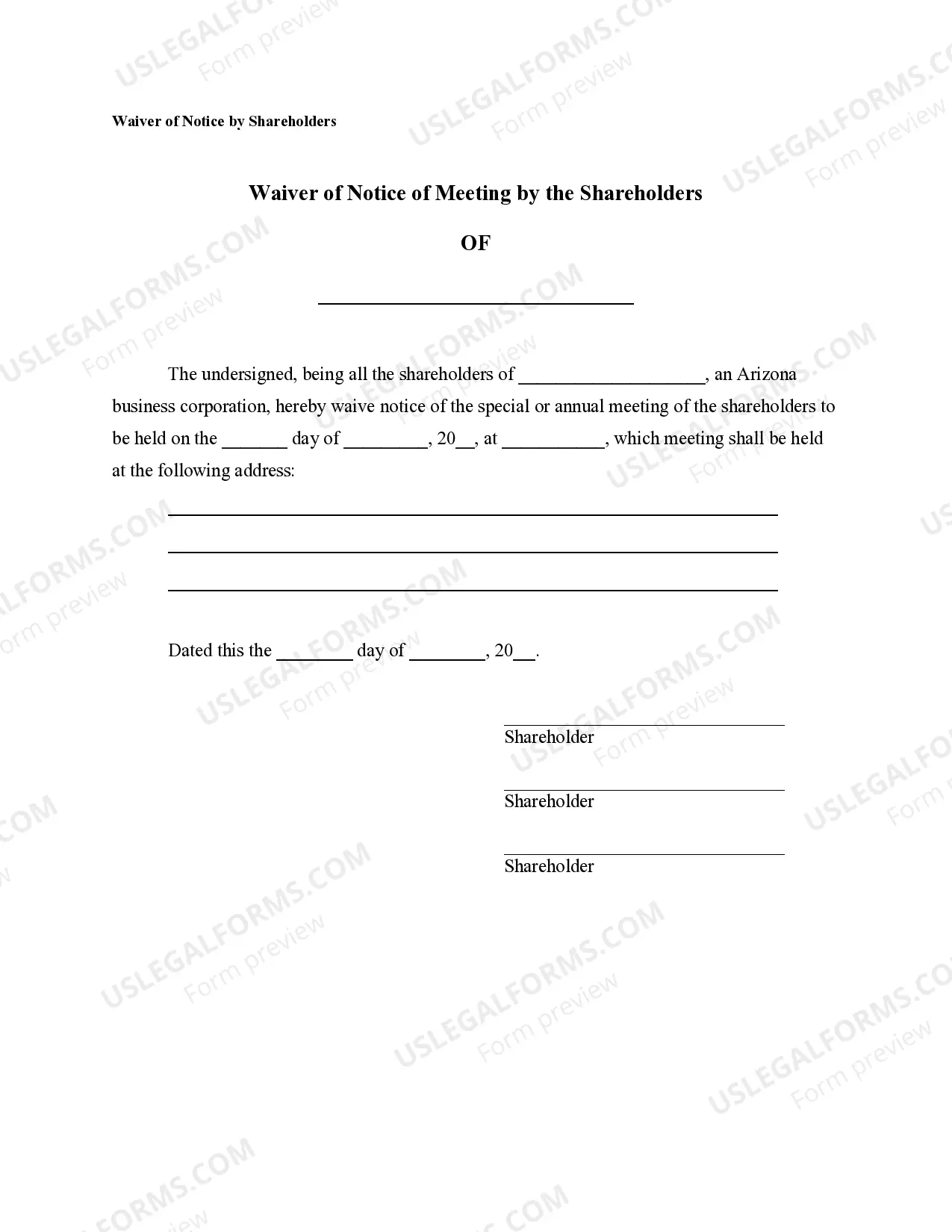
- Waiver of Notice of Meeting by the Shareholders
- Simple Stock Transfer Ledger
- Sample Stock Certificate


When to use this document
This form is essential when a corporation needs to conduct meetings with directors or shareholders. Use the Notices in this package when scheduling special or annual meetings, and the Resolutions to document decisions made in those meetings. The Stock Ledger is necessary for keeping records of stock transfers, while the Stock Certificate serves as proof of ownership of shares in the corporation.
Who needs this form
This form is suitable for:
- Corporate secretaries responsible for managing records and communications.
- Business owners needing to formalize decisions made at meetings.
- Shareholders who require documentation of ownership and stock transfers.
- Corporate directors involved in decision-making processes.
Instructions for completing this form
- Identify the corporation name and the specific type of meeting (special or annual).
- Specify the date and time of the meeting, along with the meeting location.
- Clearly outline the purpose of the meeting in the notice.
- Fill in the necessary details in the Resolutions, including the decisions made.
- Maintain an up-to-date stock ledger showing all stock transfers and ownership.
- Issue stock certificates as needed, ensuring they are completed accurately with authorized shares and par value.
Is notarization required?
This form usually doesn’t need to be notarized. However, local laws or specific transactions may require it. Our online notarization service, powered by Notarize, lets you complete it remotely through a secure video session, available 24/7.
Get your form ready online
Our built-in tools help you complete, sign, share, and store your documents in one place.
Make edits, fill in missing information, and update formatting in US Legal Forms—just like you would in MS Word.
Download a copy, print it, send it by email, or mail it via USPS—whatever works best for your next step.
Sign and collect signatures with our SignNow integration. Send to multiple recipients, set reminders, and more. Go Premium to unlock E-Sign.
If this form requires notarization, complete it online through a secure video call—no need to meet a notary in person or wait for an appointment.
We protect your documents and personal data by following strict security and privacy standards.

Make edits, fill in missing information, and update formatting in US Legal Forms—just like you would in MS Word.

Download a copy, print it, send it by email, or mail it via USPS—whatever works best for your next step.

Sign and collect signatures with our SignNow integration. Send to multiple recipients, set reminders, and more. Go Premium to unlock E-Sign.

If this form requires notarization, complete it online through a secure video call—no need to meet a notary in person or wait for an appointment.

We protect your documents and personal data by following strict security and privacy standards.
Avoid these common issues
- Failing to notify all directors or shareholders in advance of a meeting.
- Not documenting decisions made during meetings in the Resolutions.
- Inaccurately completing the Stock Ledger or Stock Certificates.
- Overlooking state-specific requirements for notice periods and formats.
Why complete this form online
- Easy access to professionally drafted legal forms.
- Allows for quick customization specific to your corporation's needs.
- Ensures compliance with legal standards and corporate bylaws.
- Streamlines the process of record-keeping and documentation.
Looking for another form?
Form popularity
FAQ
Another common name for a stock certificate is a share certificate. This term reflects its role in representing ownership in the company’s shares. Understanding the terms used around Arizona Notices, Resolutions, Simple Stock Ledger and Certificate will aid your comprehension of financial documentation and corporate governance.
A share certificate and a stock certificate essentially refer to the same thing—they both confirm ownership of shares in a company. However, some people may view share certificates as more formal documents used in traditional investments, whereas stock certificates may include a broader range of securities. Knowing the distinction can assist you in navigating Arizona Notices, Resolutions, Simple Stock Ledger and Certificate with more confidence.
Certificates in stocks represent ownership of shares in a corporation. They serve as proof of ownership and detail the number of shares owned, along with the company name and other important information. Understanding how Arizona Notices, Resolutions, Simple Stock Ledger and Certificate work can enhance your investment knowledge and help you manage your financial portfolio effectively.
A stock ledger is a comprehensive record that tracks the ownership of shares within a company. It lists each shareholder's name, the number of shares held, and any transactions affecting those shares. In contrast, a stock certificate serves as a physical proof of ownership for those shares. Together, the stock ledger and stock certificate are crucial components of Arizona Notices, Resolutions, Simple Stock Ledger and Certificate, ensuring that you maintain clear and organized records.
Filling out a stock ledger involves documenting the transactions related to stock ownership changes. Begin by listing the shareholder details followed by the number of shares bought or sold, along with transaction dates. Utilizing tools like Arizona Notices, Resolutions, Simple Stock Ledger and Certificate simplifies this process, ensuring you comply with legal requirements. Always double-check for accuracy to avoid future discrepancies.
To fill out a ledger, you start by entering the names of the shareholders and their respective details. It's important to add the number of shares owned by each shareholder along with the date those shares were issued. When using Arizona Notices, Resolutions, Simple Stock Ledger and Certificate, you can follow a structured format that helps maintain clarity. Keeping this information updated is critical for ownership accuracy.
A shareholder ledger is a record that details all share ownership and changes over time. It typically includes the name of each shareholder, the number of shares owned, and the date shares were issued. In Arizona, Notices, Resolutions, Simple Stock Ledger and Certificate are essential for maintaining an accurate ledger. This ensures proper management of shareholder information and compliance with state requirements.
To fill out a stock certificate ledger, start with the stockholder's name, the number of shares, and the date of issuance. Document any transfers or cancellations of shares as they occur. California- or industry-specific guidance like Arizona Notices, Resolutions, Simple Stock Ledger, and Certificate makes completing your ledger more straightforward and ensures compliance with legal regulations.
A stock ledger records individual stock ownership and transactions, while a cap table provides a summary of ownership percentages and valuations of a company's equity. The stock ledger offers detailed tracking of each share, whereas the cap table consolidates this data for higher-level discussions about the company's equity. Both are essential, and utilizing Arizona Notices, Resolutions, Simple Stock Ledger, and Certificate can enhance your understanding of these tools.
To record stocks in a ledger, enter each transaction in chronological order. Include details such as the date of the transaction, the number of shares, and the parties involved. Using Arizona Notices, Resolutions, Simple Stock Ledger, and Certificate can help you maintain accurate records, which is crucial for both audits and shareholder communication.