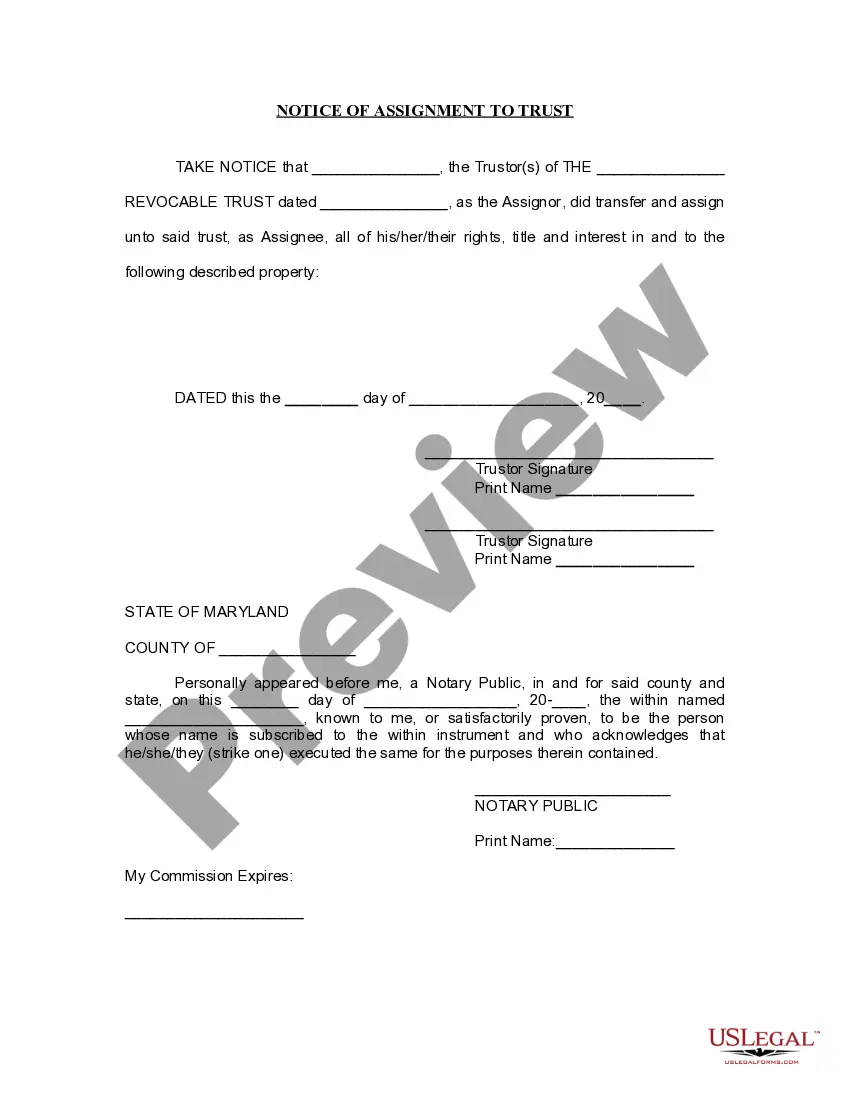
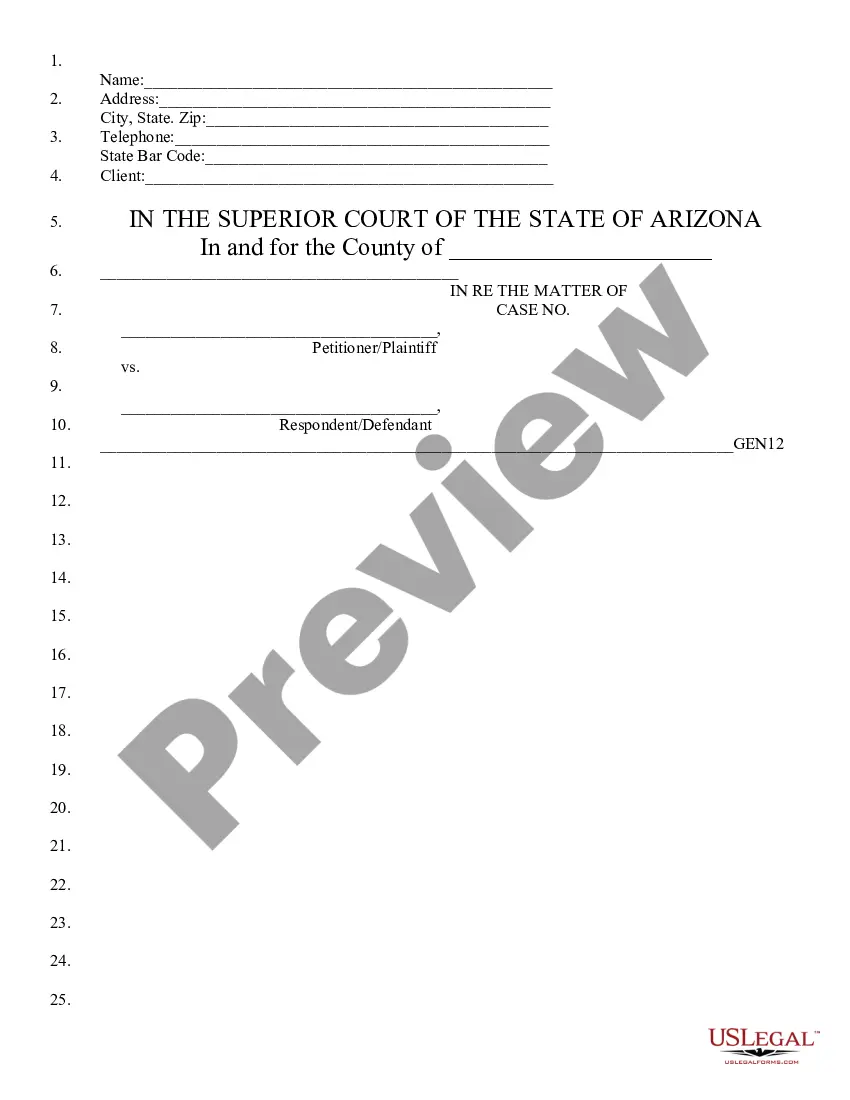
Arizona Pleading Paper with Superior Court Heading
What this document covers
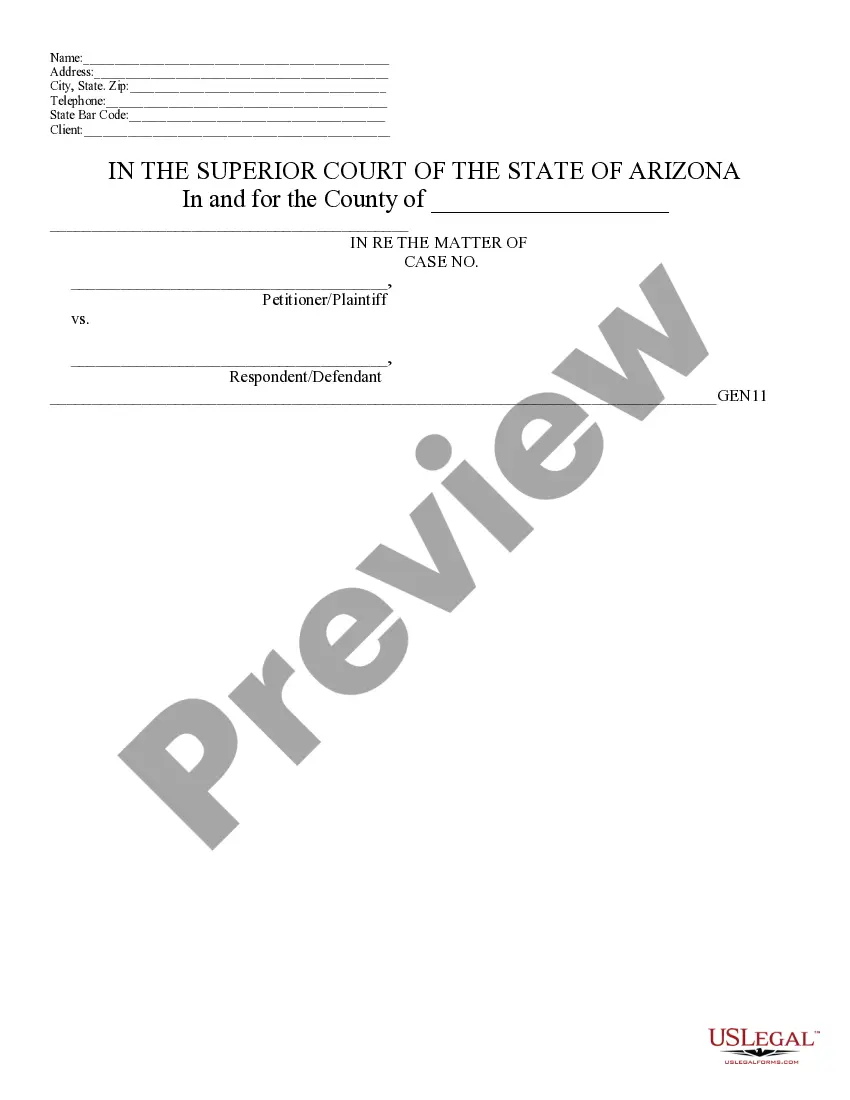
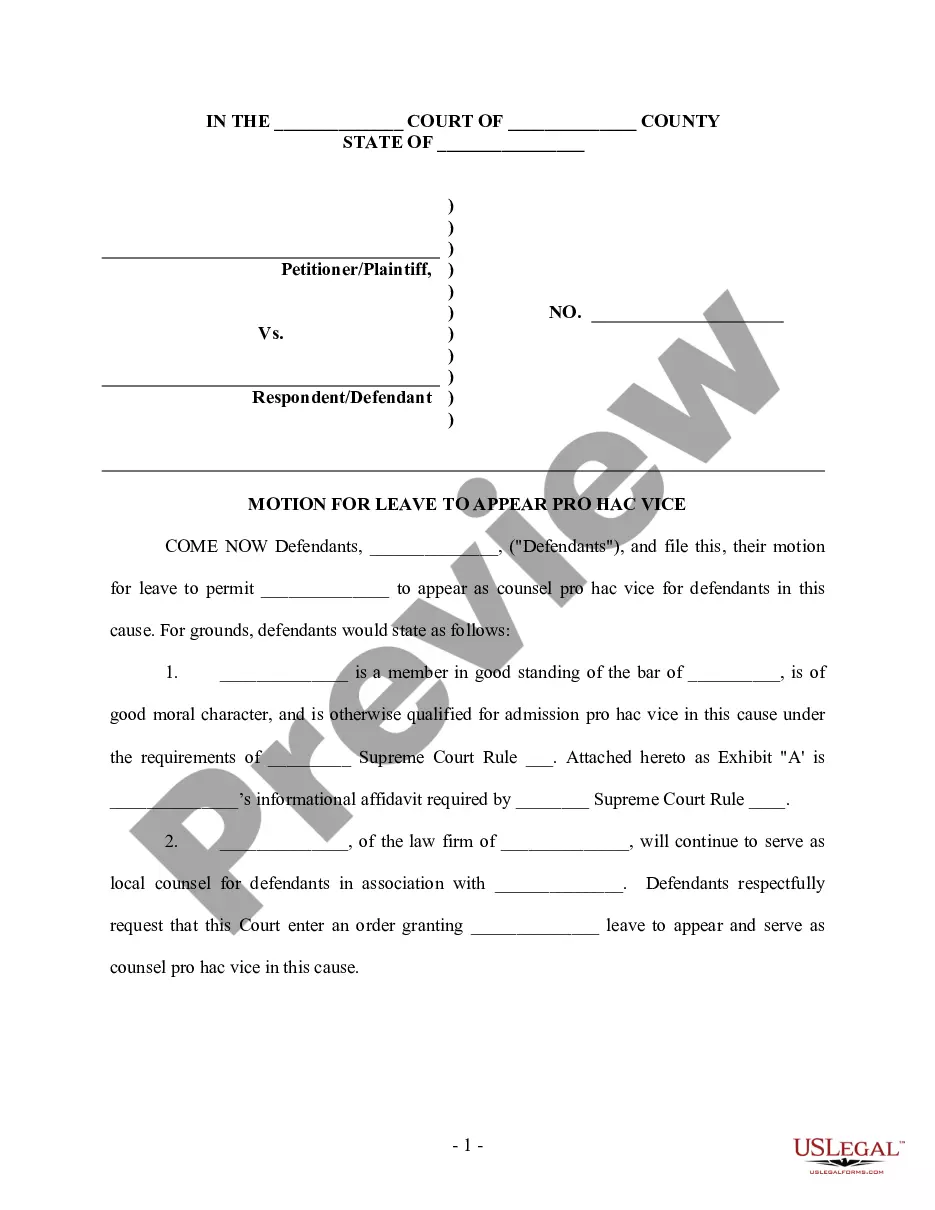
The Pleading Paper with Superior Court Heading is a specific legal form used in Arizona for submitting a pleading to the Superior Court. This document includes the required heading format and is essential for ensuring that your submission is properly filed. Unlike other forms, this pleading paper is tailored for cases in Arizona, making it a vital tool for anyone involved in legal proceedings within the state.
What’s included in this form
- Name and address fields for the petitioner and respondent
- Case number section for identification of the matter
- Superior Court heading specifics complying with Arizona regulations
- Designated spaces for attorney information, including State Bar code
- Structure for clearly outlining the parties involved in the case

When to use this form
This form should be used when you are preparing to file a pleading in the Arizona Superior Court. Situations may include filing for divorce, custody matters, legal disputes, or other court-related issues. It is essential to use this form to ensure compliance with court requirements and to facilitate the processing of your case.
Who needs this form
- Individuals representing themselves in court (pro se litigants)
- Attorneys filing pleadings on behalf of clients
- Parties involved in legal matters requiring formal documentation in Arizona
How to complete this form
- Enter the name and address of the petitioner and respondent in the designated fields.
- Fill in the case number at the specified location.
- Include your State Bar code if you are an attorney.
- Clearly state the title of the case and the nature of the action.
- Review the entire form for accuracy before submission.
Notarization requirements for this form
In most cases, this form does not require notarization. However, some jurisdictions or signing circumstances might. US Legal Forms offers online notarization powered by Notarize, accessible 24/7 for a quick, remote process.
Get your form ready online
Our built-in tools help you complete, sign, share, and store your documents in one place.
Make edits, fill in missing information, and update formatting in US Legal Forms—just like you would in MS Word.
Download a copy, print it, send it by email, or mail it via USPS—whatever works best for your next step.
Sign and collect signatures with our SignNow integration. Send to multiple recipients, set reminders, and more. Go Premium to unlock E-Sign.
If this form requires notarization, complete it online through a secure video call—no need to meet a notary in person or wait for an appointment.
We protect your documents and personal data by following strict security and privacy standards.

Make edits, fill in missing information, and update formatting in US Legal Forms—just like you would in MS Word.

Download a copy, print it, send it by email, or mail it via USPS—whatever works best for your next step.

Sign and collect signatures with our SignNow integration. Send to multiple recipients, set reminders, and more. Go Premium to unlock E-Sign.

If this form requires notarization, complete it online through a secure video call—no need to meet a notary in person or wait for an appointment.

We protect your documents and personal data by following strict security and privacy standards.
Common mistakes to avoid
- Omitting necessary identifying information such as case numbers or names.
- Failing to follow the required format for the court heading.
- Not signing the document or including the attorney's information when applicable.
Benefits of using this form online
- Convenient access to the necessary format, ensuring compliance with court requirements.
- Editable fields allow for easy personalization of information.
- Accessible at any time, enabling you to prepare documents at your own pace.
Looking for another form?
Form popularity
FAQ
Used to submit a pleading to the Arizona Superior Court with the required heading format, ensuring proper filing. The form includes name and address fields for the petitioner and respondent, a case number section, Superior Court heading specifics, and spaces for attorney information, including a State Bar code, to clearly present the parties and case details.
The form’s parts include name and address fields for the petitioner and respondent, a case number section to identify the matter, Superior Court heading specifics that meet Arizona regulations, designated spaces for attorney information (including the State Bar code), and a clear layout to outline the parties involved.
This top portion is called the caption or heading of the pleading. For this form, it uses a Superior Court heading and places the parties’ names, the document title, and the case number in a format that complies with Arizona rules.
The structure provided by this form offers a consistent layout to present the case. It includes name and address fields for the petitioner and respondent, a case number section, a Superior Court heading, and designated spaces for attorney information, helping to clearly outline the parties and the matter in Arizona court submissions.
To write a pleading using this form, fill in the petitioner and respondent details, enter the case number, apply the Superior Court heading as specified, and provide attorney information where required. The form provides a standardized framework to present the parties and case information clearly for Arizona court filings.
This form is tailored for Arizona Superior Court filings, featuring Arizona-specific heading requirements and designated spaces for attorney information, including a State Bar code. Unlike generic pleading papers, it ensures compliance with Arizona rules and is suitable for both pro se litigants and attorneys.