Maryland Assignment to Living Trust
Overview of this form
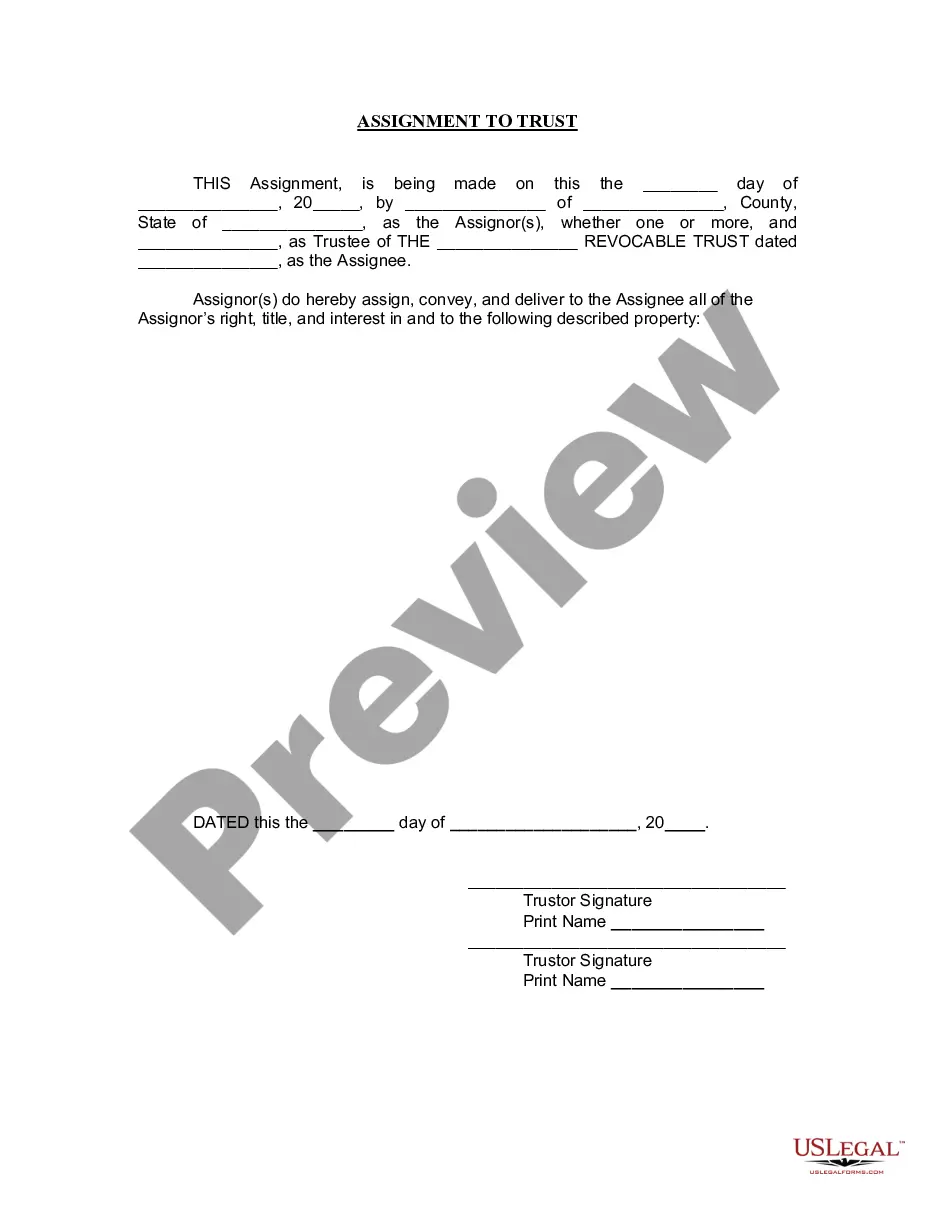
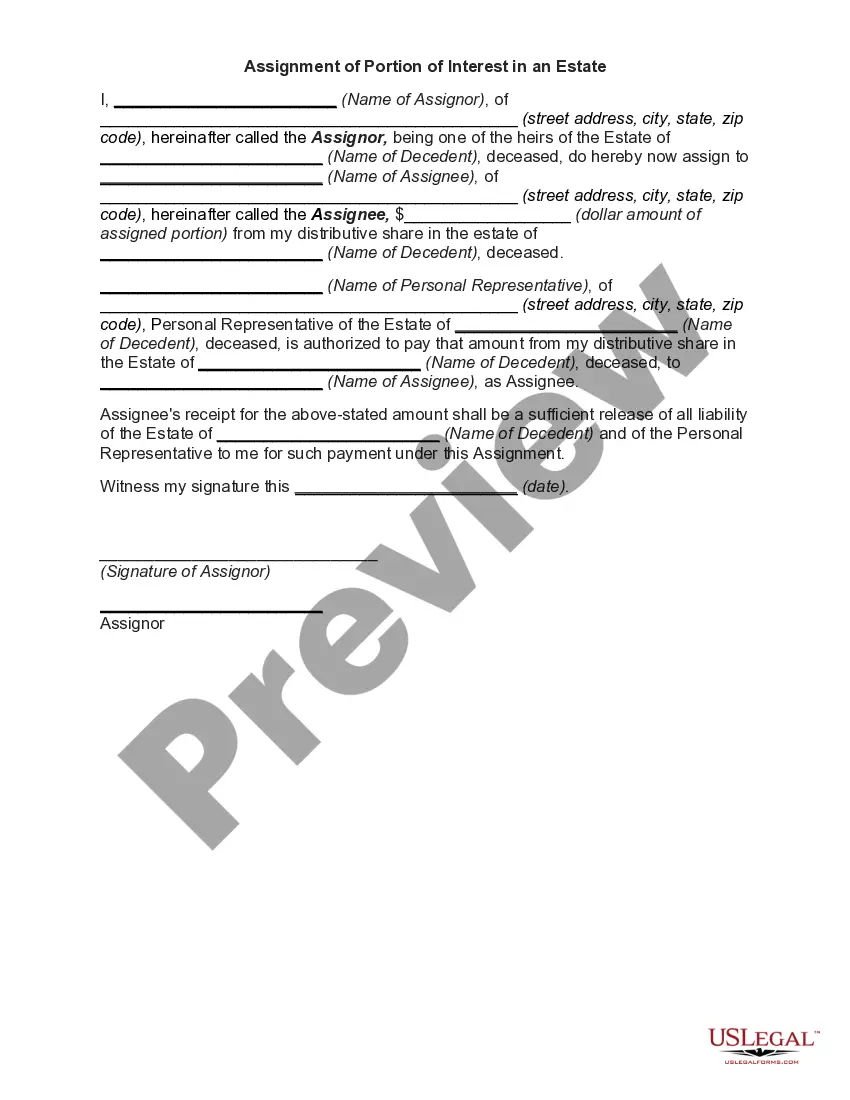
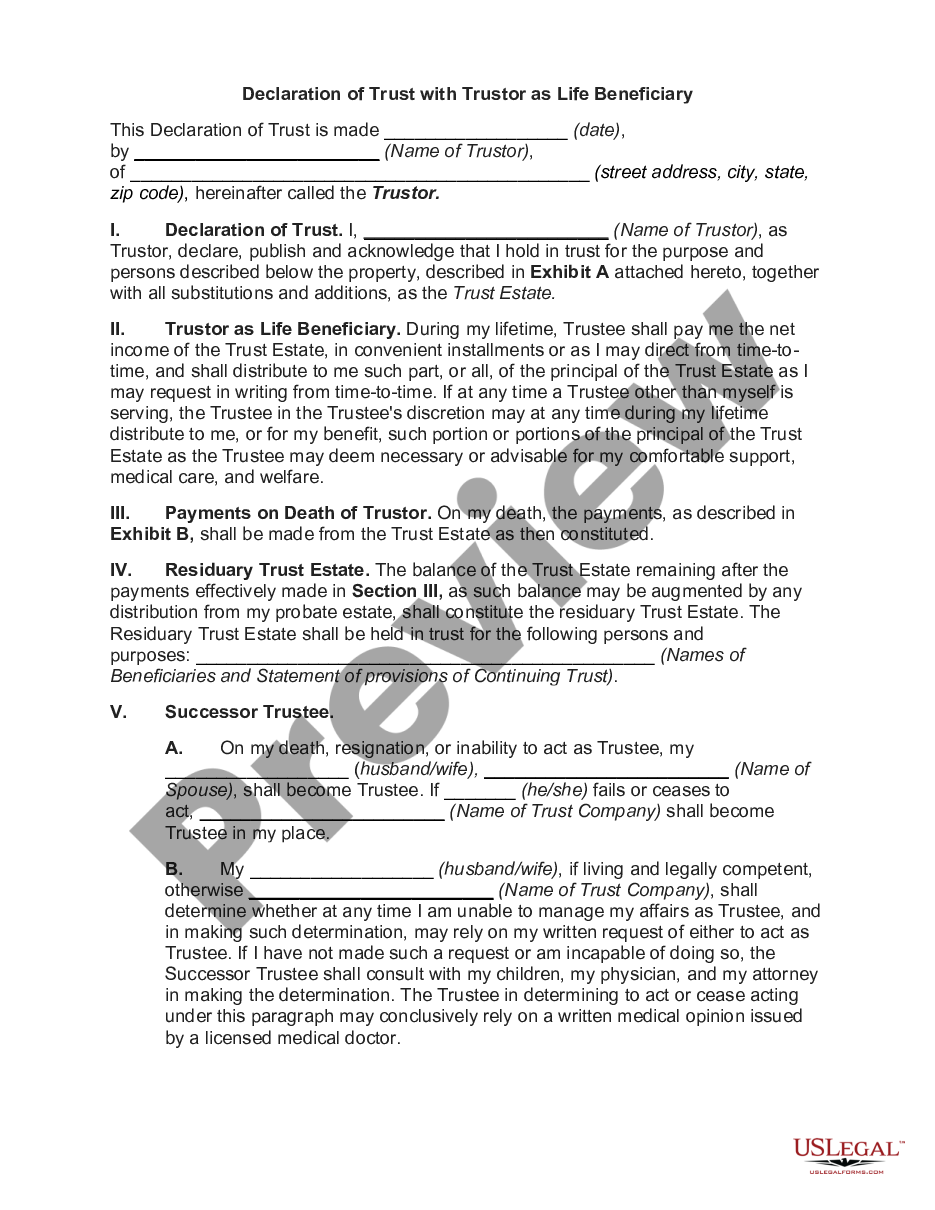
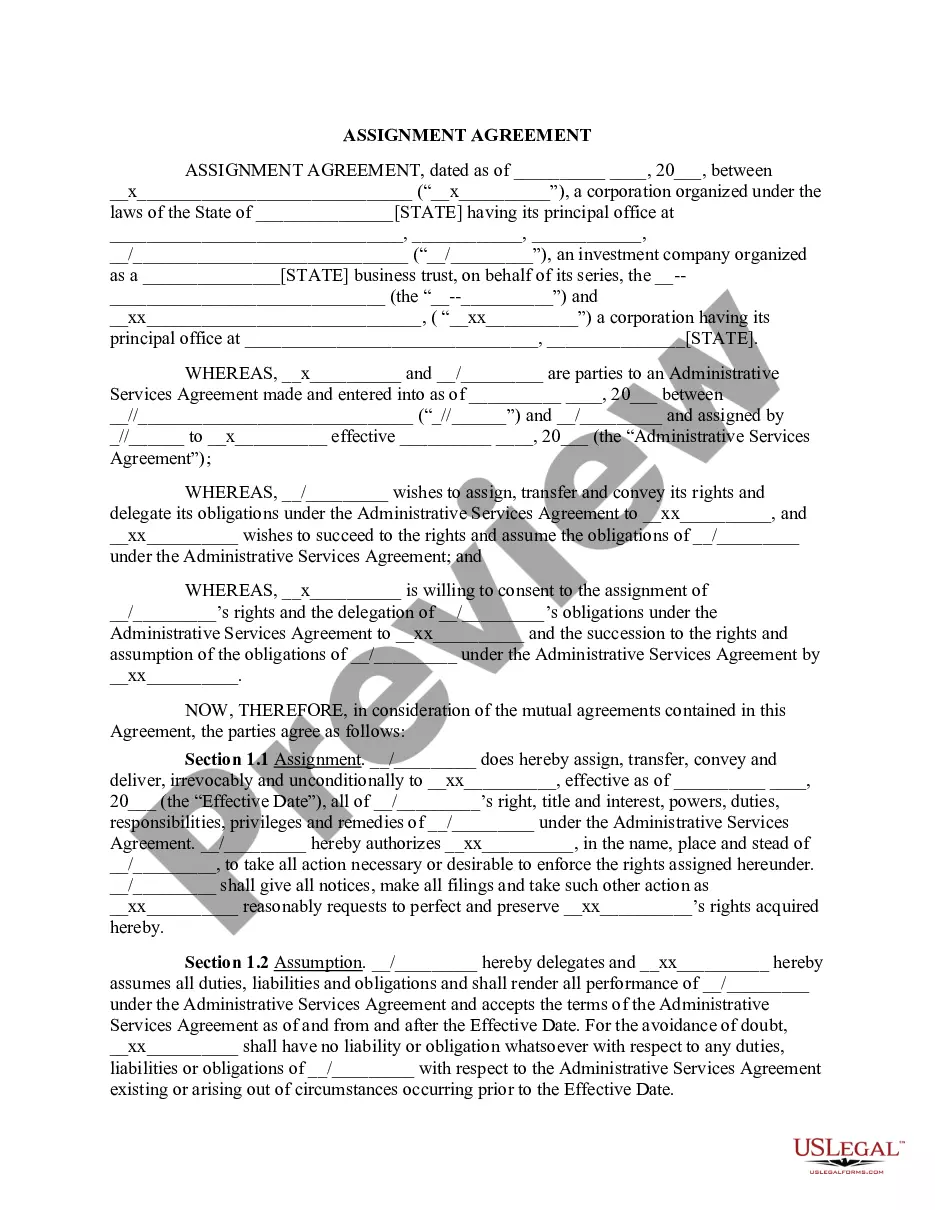
The Assignment to Living Trust form is used to assign rights, title, and interest in specific property to a living trust. Unlike other forms of property transfer, this form specifically facilitates the transfer of assets into a trust established during a person's lifetime, typically for estate planning purposes. Completing this form ensures that the property is managed according to the terms of the trust during the grantor's lifetime and after their passing.
Key components of this form
- Assignor's name and address: Identifies the individual transferring the property.
- Property description: Clearly outlines the specific assets being assigned to the living trust.
- Trustee's name: Names the individual responsible for managing the trust.
- Signature section: Requires the Assignor's signature for validation.
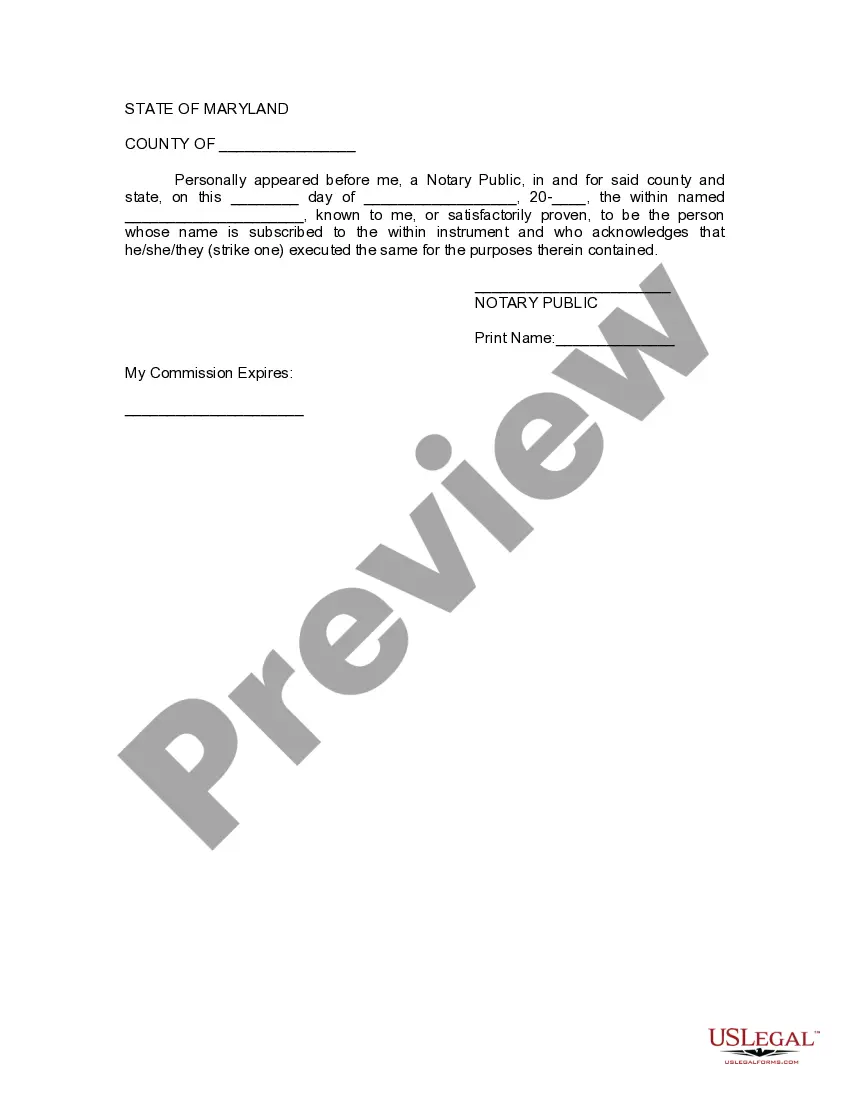
- Notary acknowledgment: Confirms that the assignment was made in the presence of a notary public.

When this form is needed
This form should be used when you wish to transfer ownership of property into a living trust. This may be necessary when planning your estate, ensuring that your assets are managed according to your wishes, and avoiding probate costs after death. It is often part of a broader estate planning strategy aimed at protecting assets and facilitating a smoother transfer to beneficiaries.
Who can use this document
- Individuals creating a living trust to manage their assets.
- Estate planners looking to simplify the transfer of property to a trust.
- Anyone who wants to ensure that their property is handled according to their wishes after their passing.
Steps to complete this form
- Identify the Assignor: Provide the full name and address of the person assigning the property.
- Describe the property: Clearly state the property or assets being assigned to the trust.
- Name the Trustee: Include the name of the person designated to manage the trust.
- Sign the form: The Assignor must sign the document in the presence of a notary public.
- Obtain notarization: Ensure that a notary public acknowledges the signing for it to be legally valid.
Notarization guidance
Yes, this form must be notarized to be legally valid. Notarization confirms the identity of the signers and the voluntary nature of the signing. US Legal Forms provides integrated online notarization, allowing you to complete the process via secure video call, ensuring convenience and legal equivalence without the need for in-person visits.
Get your form ready online
Our built-in tools help you complete, sign, share, and store your documents in one place.
Make edits, fill in missing information, and update formatting in US Legal Forms—just like you would in MS Word.
Download a copy, print it, send it by email, or mail it via USPS—whatever works best for your next step.
Sign and collect signatures with our SignNow integration. Send to multiple recipients, set reminders, and more. Go Premium to unlock E-Sign.
If this form requires notarization, complete it online through a secure video call—no need to meet a notary in person or wait for an appointment.
We protect your documents and personal data by following strict security and privacy standards.

Make edits, fill in missing information, and update formatting in US Legal Forms—just like you would in MS Word.

Download a copy, print it, send it by email, or mail it via USPS—whatever works best for your next step.

Sign and collect signatures with our SignNow integration. Send to multiple recipients, set reminders, and more. Go Premium to unlock E-Sign.

If this form requires notarization, complete it online through a secure video call—no need to meet a notary in person or wait for an appointment.

We protect your documents and personal data by following strict security and privacy standards.
Mistakes to watch out for
- Failing to provide a complete property description, which may lead to confusion or disputes.
- Not having the form notarized, resulting in a document that may not be considered legally binding.
- Skipping the signature of the Assignor or Trustee, causing the form to be invalid.
Why complete this form online
- Convenience of immediate access to a legally vetted template for your estate planning needs.
- Editability allows customization to fit specific property or trust configurations.
- Reliability of having a form drafted by licensed attorneys, ensuring legal soundness.
Key takeaways
- The Assignment to Living Trust transfers property to a living trust during the grantor's lifetime.
- Proper completion includes clear property descriptions and notarized signatures.
- This form can help avoid probate and ensure an efficient estate management process.
Looking for another form?
Form popularity
FAQ
Some common synonyms of assign are ascribe, attribute, credit, and impute. While all these words mean "to lay something to the account of a person or thing," assign implies ascribing with certainty or after deliberation.
Step 1 Understand the assignment task. Before you start your assignment make sure you analyse the assignment task or question and understand what you have been asked to do. Step 2 Do your research. Next, research your topic and find relevant and reliable information. Step 3 Plan. Step 4 Write. Step 5 Review.
An assignment is a task that someone in authority has asked you to do. The word assignment is just the noun form of the common verb assign, which you use when you want to give someone a duty or a job. When you assign something, that something is called an assignment.
Full Assignment (FULL) A full assignment incident type is simply a complement of apparatus dispatched together for more complex incidents (e.g. two engines, a truck and a battalion chief). Illegal Fire (IF) Typically open burning in violation of local regulations (e.g., burning household garbage).