Arizona Statement Reflecting Computation of Interest Using Interest Table
What this document covers
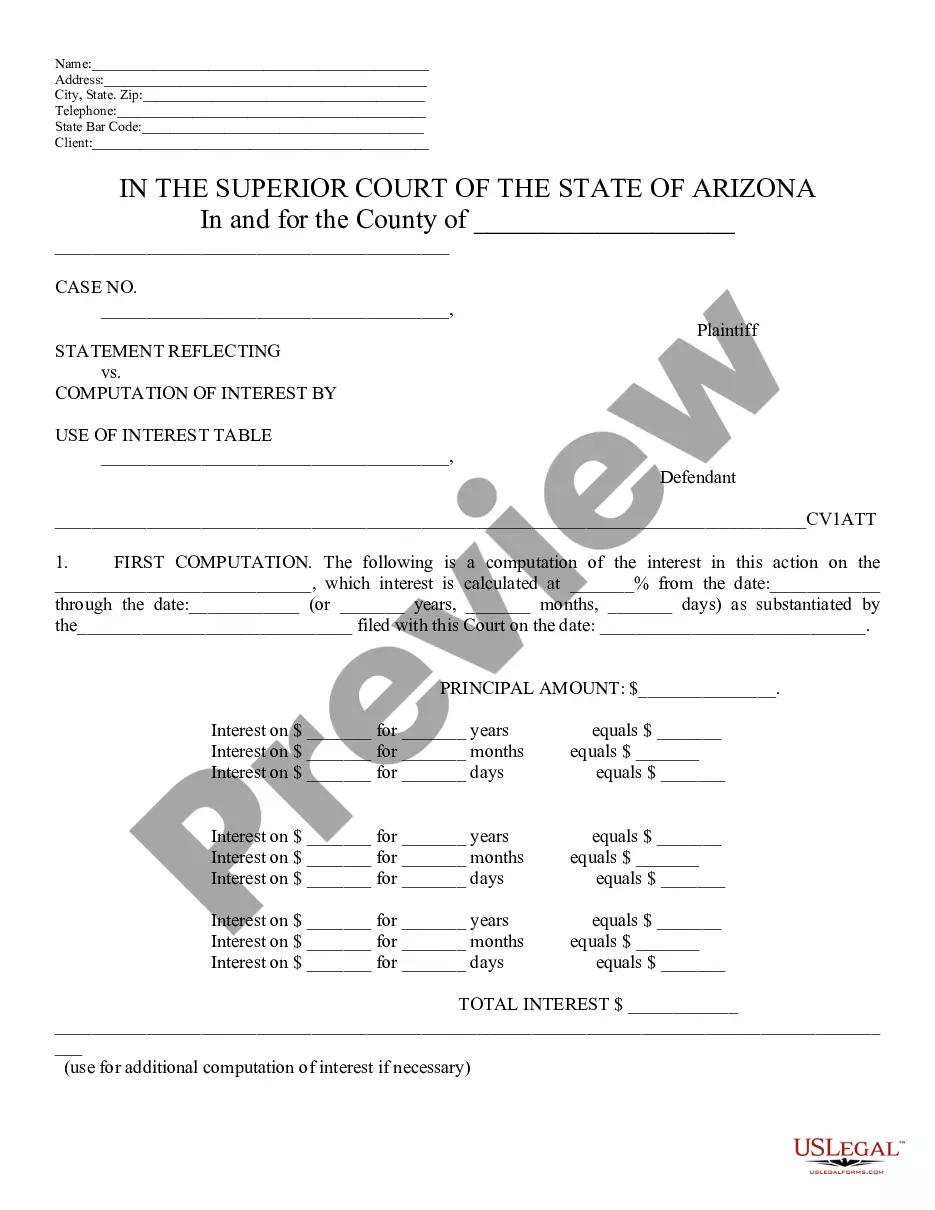
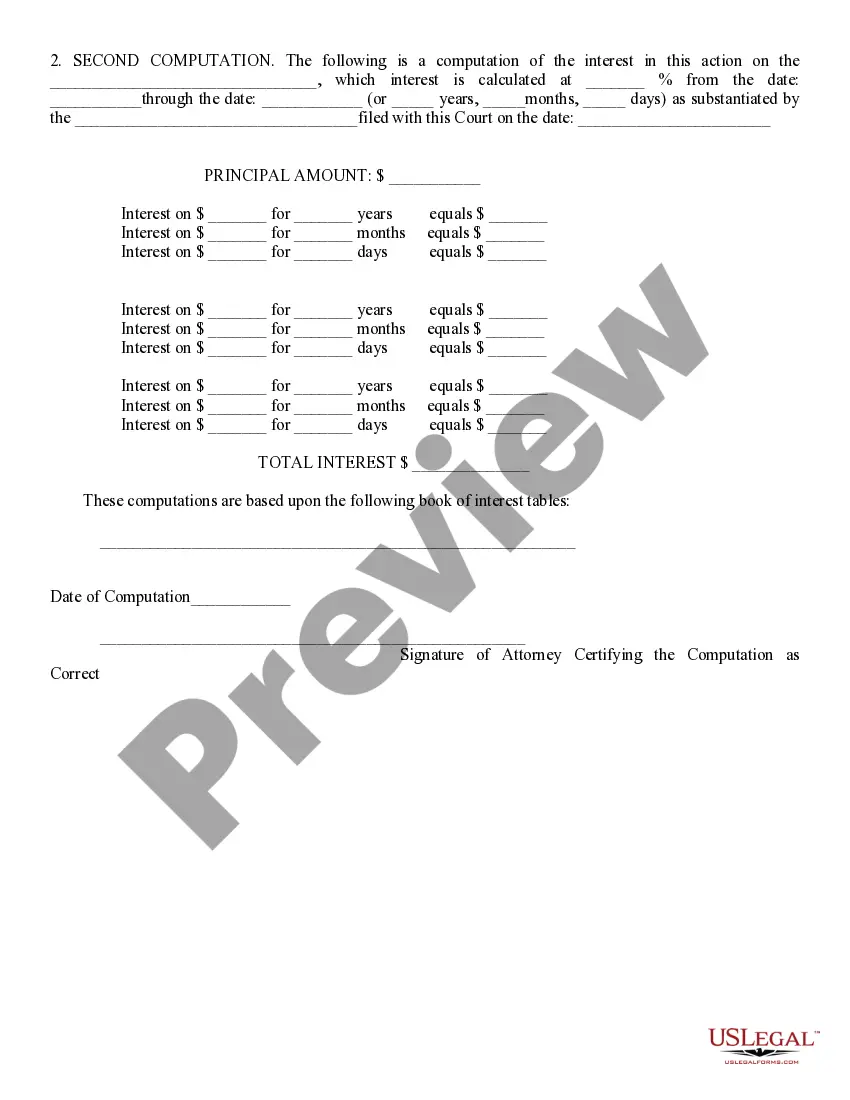
The Statement Reflecting Computation of Interest Using Interest Table is a legal document used to detail the interest accrued in a case. This form not only summarizes the total interest owed but also provides a breakdown of how that interest was calculated using specific interest tables. Unlike other forms, it includes a signature from the presenting attorney, affirming the computations are correct and transparent.
Main sections of this form
- Title and jurisdiction details (e.g., name of the court and case number).
- Identification of the parties involved (plaintiff and defendant).
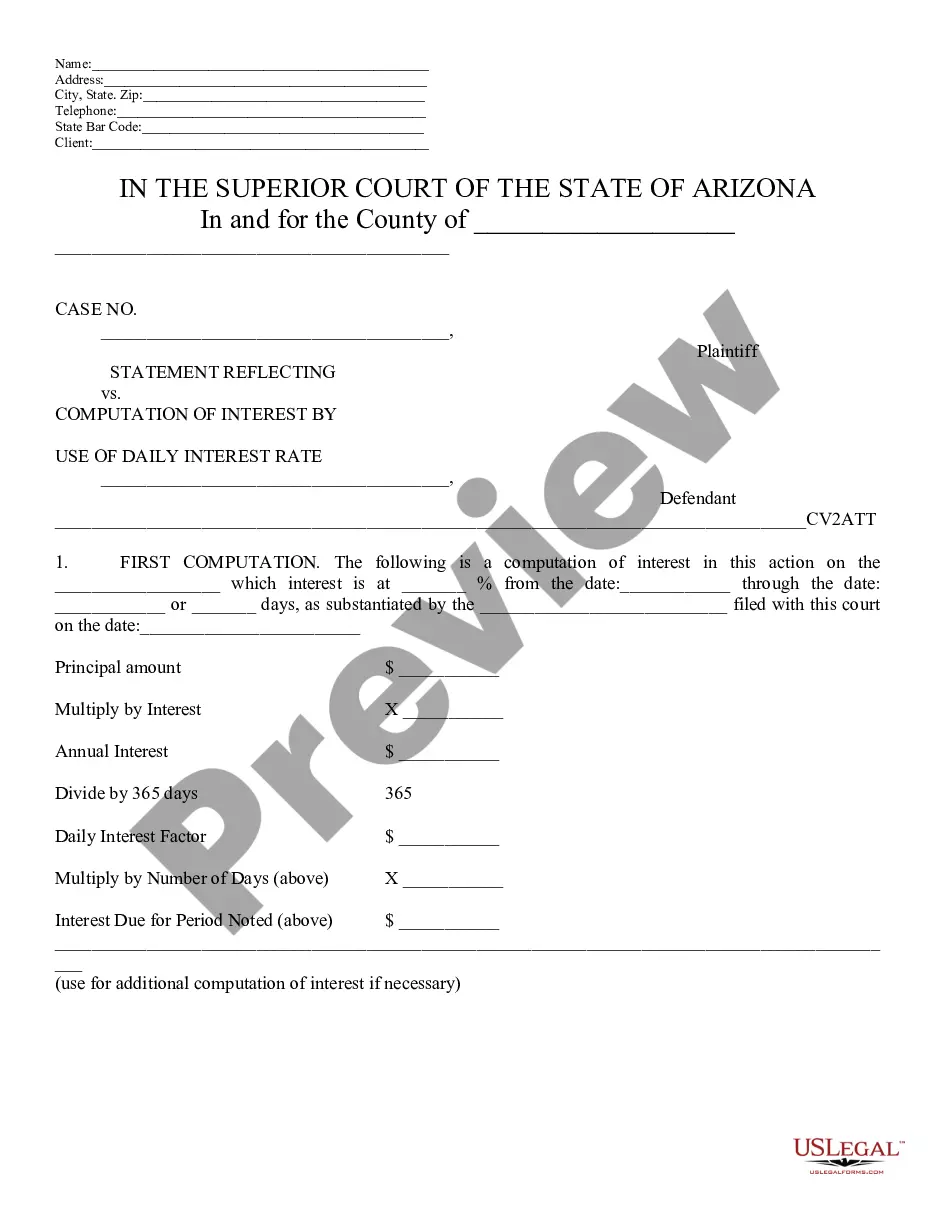
- Sections for entering principal amounts and specific interest computations.
- Signature line for the presenting attorney and date of computation.
- Space for filing details and any attached documentation.


When to use this document
This form is used when an attorney needs to report and calculate interest on amounts owed in a legal case. It is particularly useful in civil cases where monetary judgments or damages are involved, providing a clear statement of total interest from a specified date range. Use this form whenever a detailed interest computation is required, either in pre-trial disclosures or as part of a settlement agreement.
Who needs this form
- Attorneys representing clients in civil litigation where interest calculations are needed.
- Legal professionals who need to verify and document accrued interest on judgments.
- Clients seeking clarity on the interest owed in their cases, as explained by their attorney.
Instructions for completing this form
- Begin by filling out the title and jurisdiction details, including the court's name and case number.
- Identify the parties involved in the case by entering the names of the plaintiff and defendant.
- For each computation section, enter the principal amount, interest rate, and specific time period (in years, months, and days).
- Calculate and insert the total interest for each computation, summing all figures at the bottom of the section.
- Ensure the attorney certifies the computations by signing and dating the form.
Notarization requirements for this form
This form does not typically require notarization unless specified by local law. However, it is essential to check specific court requirements or consult with a legal professional to ensure compliance.
Get your form ready online
Our built-in tools help you complete, sign, share, and store your documents in one place.
Make edits, fill in missing information, and update formatting in US Legal Forms—just like you would in MS Word.
Download a copy, print it, send it by email, or mail it via USPS—whatever works best for your next step.
Sign and collect signatures with our SignNow integration. Send to multiple recipients, set reminders, and more. Go Premium to unlock E-Sign.
If this form requires notarization, complete it online through a secure video call—no need to meet a notary in person or wait for an appointment.
We protect your documents and personal data by following strict security and privacy standards.

Make edits, fill in missing information, and update formatting in US Legal Forms—just like you would in MS Word.

Download a copy, print it, send it by email, or mail it via USPS—whatever works best for your next step.

Sign and collect signatures with our SignNow integration. Send to multiple recipients, set reminders, and more. Go Premium to unlock E-Sign.

If this form requires notarization, complete it online through a secure video call—no need to meet a notary in person or wait for an appointment.

We protect your documents and personal data by following strict security and privacy standards.
Mistakes to watch out for
- Failing to sign and date the form, which can invalidate the computations.
- Incorrectly calculating the interest or omitting key time periods.
- Not ensuring that the interest tables used are current and relevant to the case.
- Leaving out vital information about the parties involved or the case specifics.
Why complete this form online
- Convenient access: Download and complete the form at any time, removing the need for in-person visits to legal offices.
- Editability: Easily modify the form to fit the specific details of your case.
- Reliable legal templates drafted by licensed attorneys ensure compliance with legal standards.
Looking for another form?



Form popularity
FAQ
In Arizona, the minimum income requirement to avoid filing a tax return varies based on factors such as filing status and age. Generally, if your income falls below a specific threshold, you may not need to file. It’s wise to refer to the Arizona Statement Reflecting Computation of Interest Using Interest Table for clarity about your specific situation and to ensure you're aware of potential filing requirements.
Arizona mandates a specific interest rate for overdue taxes, which is typically adjusted annually. This rate affects how much interest accumulates on unpaid taxes, and understanding it is crucial for effective tax management. To navigate these figures confidently, utilize the Arizona Statement Reflecting Computation of Interest Using Interest Table for precise interest calculations.
The AZ form 140A is a simplified version of the Arizona individual income tax return designed for residents with straightforward tax situations. This form streamlines the filing process and is ideal for those without complex deductions or credits. If you need help understanding the tax implications, the Arizona Statement Reflecting Computation of Interest Using Interest Table can provide valuable insights.
Line 29a on the Arizona form 140 refers to the addition of certain tax credits or adjustments that affect your overall income tax calculation. This line plays a significant role in your final tax liability and should be filled out accurately. For clarity and precision, consider using the Arizona Statement Reflecting Computation of Interest Using Interest Table to guide you through any uncertainties in your calculations.
The Arizona income tax deduction allows taxpayers to reduce their taxable income, which ultimately lowers their tax liability in Arizona. This deduction can apply to various categories, including medical expenses and certain retirement contributions. When claiming deductions, remember to utilize the Arizona Statement Reflecting Computation of Interest Using Interest Table for accurate calculations and to maximize your tax benefits.
You can mail your Arizona state tax forms to the address provided in the instructions accompanying each form. Typically, the location varies based on whether you are including payment or if you are filing a specific form. Always ensure your Arizona Statement Reflecting Computation of Interest Using Interest Table is submitted to the correct address to avoid delays.
Filing Arizona Form 165 late can result in penalties and interest on the amount due. The penalty generally starts at 4.5% of the unpaid tax for each month it's late, capped at 22.5%. To avoid potential issues, keep track of your due dates and ensure your Arizona Statement Reflecting Computation of Interest Using Interest Table is completed on time.
Yes, Arizona Form 165 accepts a federal extension. If you have filed for an extension with the IRS, you can generally apply that to your Arizona filing as well. This is particularly beneficial when you need additional time to calculate your Arizona Statement Reflecting Computation of Interest Using Interest Table accurately.
You should file Arizona Form 165 with the Arizona Department of Revenue. Specifically, the form can be sent electronically or through the mail, depending on your preference. Always refer to the instructions provided with your Arizona Statement Reflecting Computation of Interest Using Interest Table for any updated filing guidelines.
Arizona Form 165 is required for various entities, including corporations and partnerships, that have taxable income in Arizona. If your business engages in activities generating income within the state, you must file this form. Utilizing the Arizona Statement Reflecting Computation of Interest Using Interest Table can help clarify any interest calculation discrepancies.