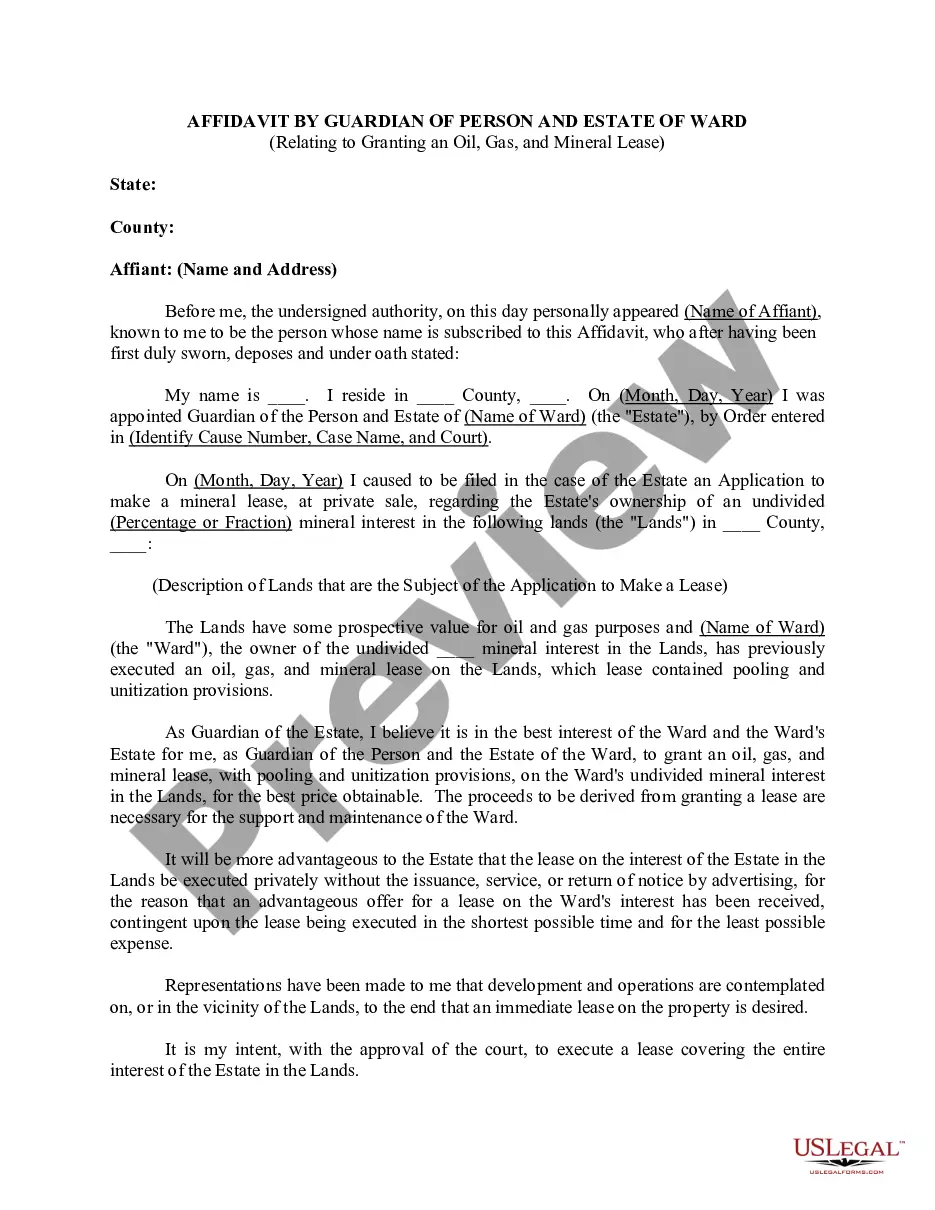
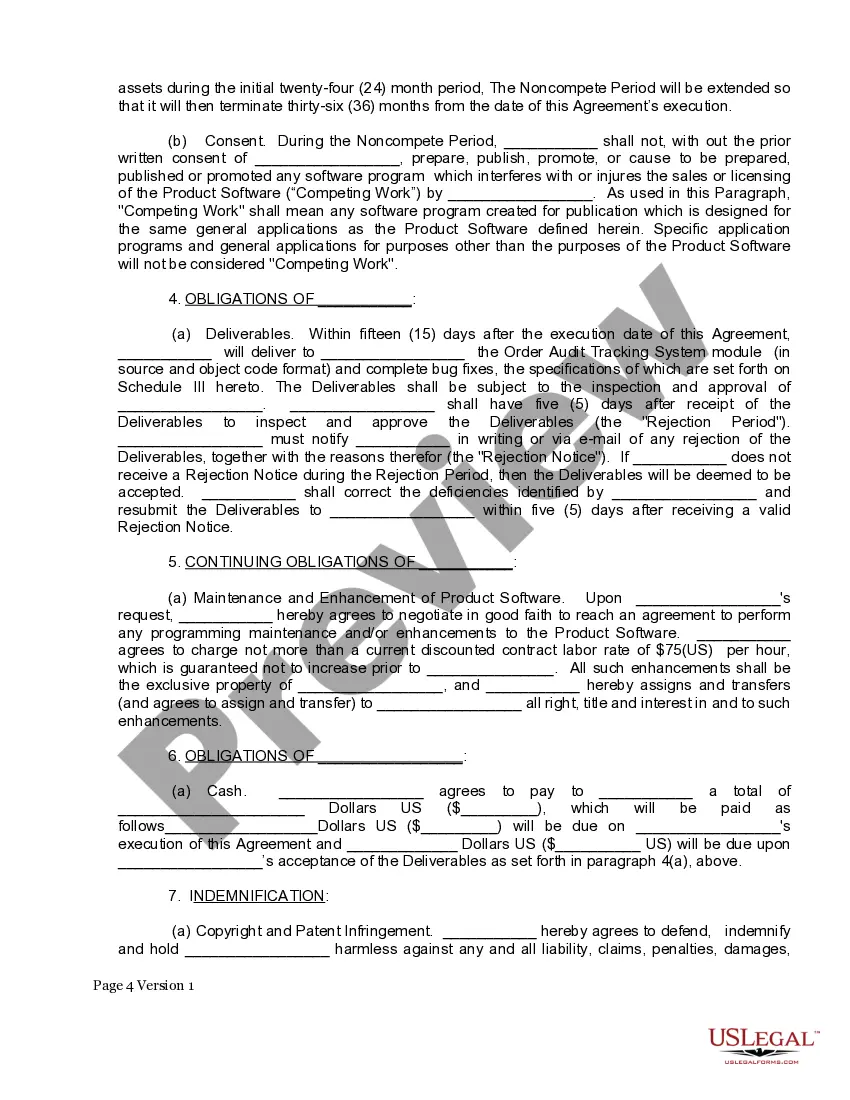
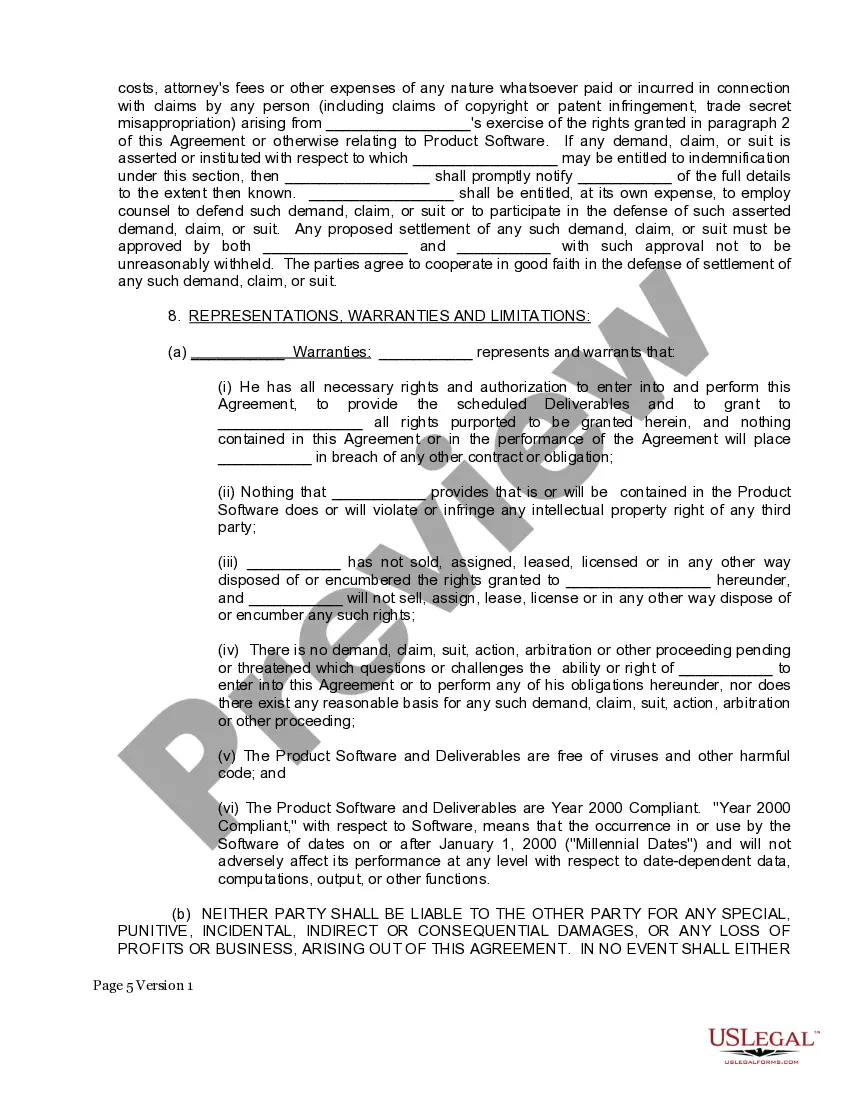
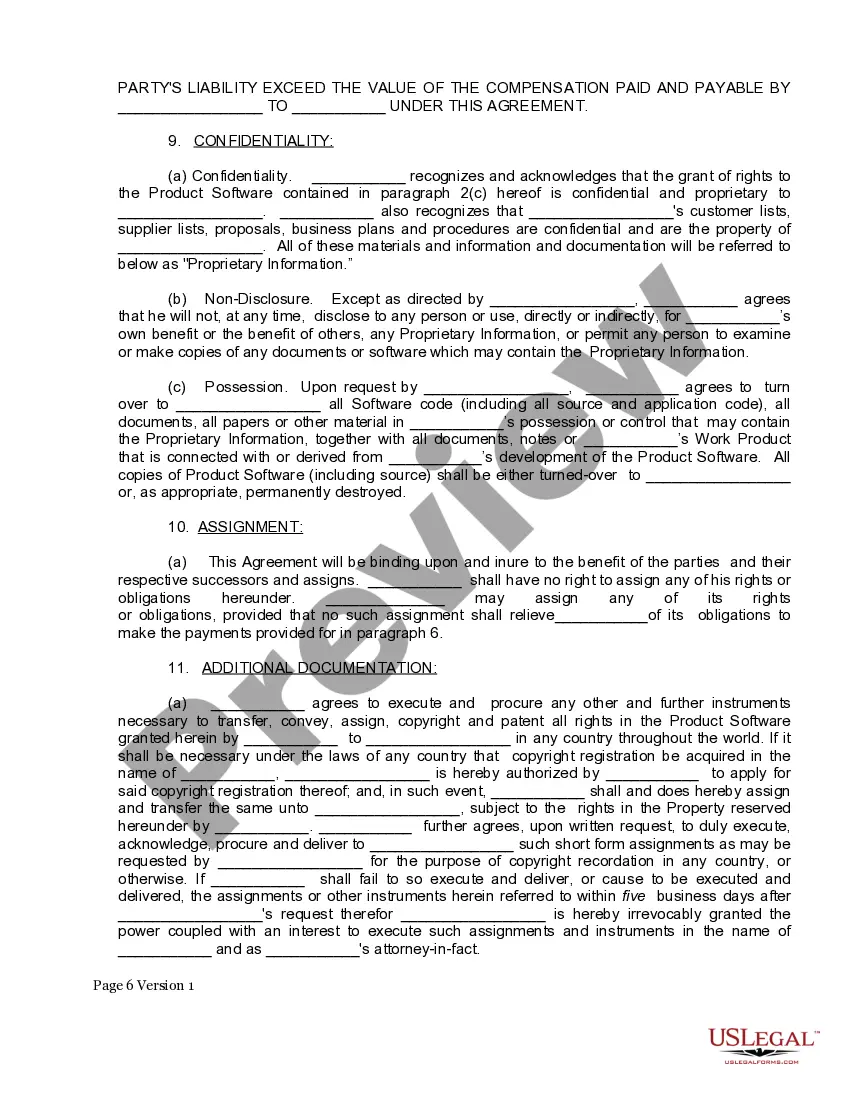
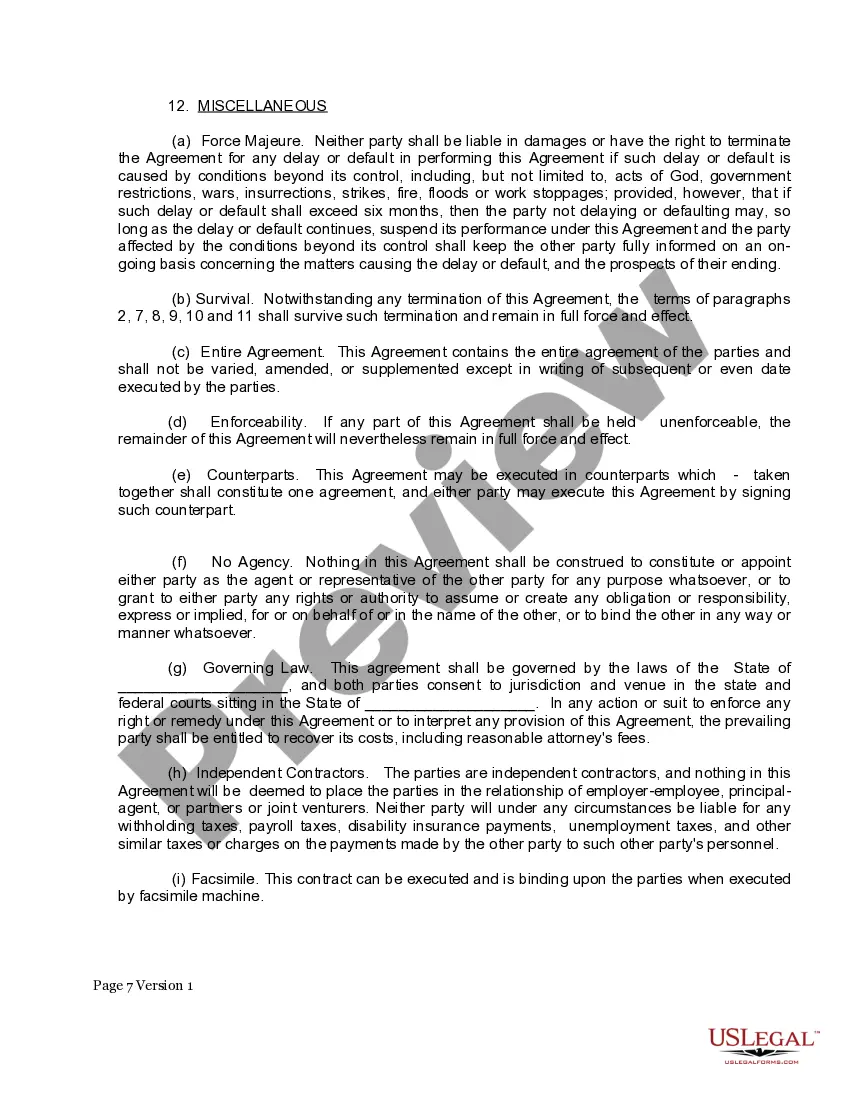
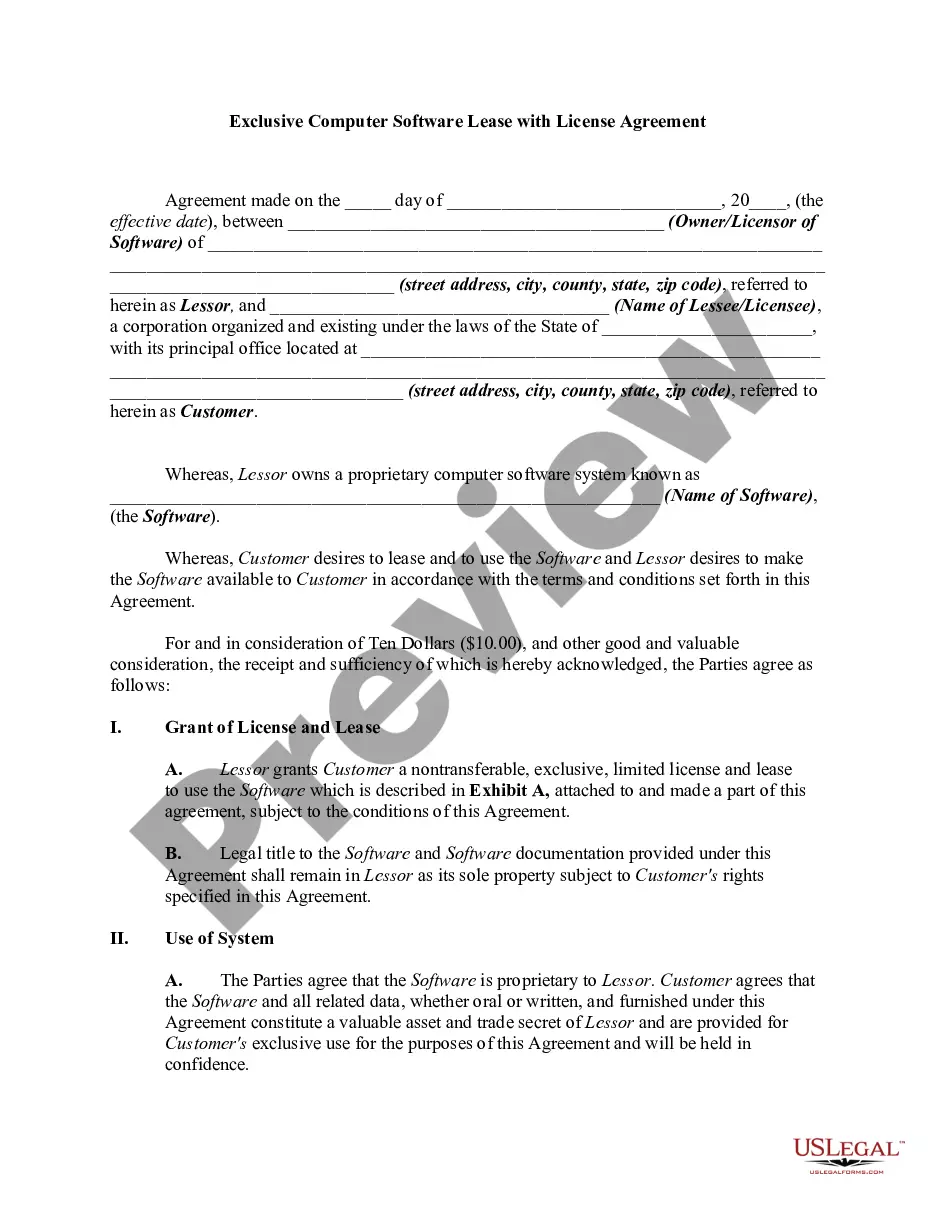
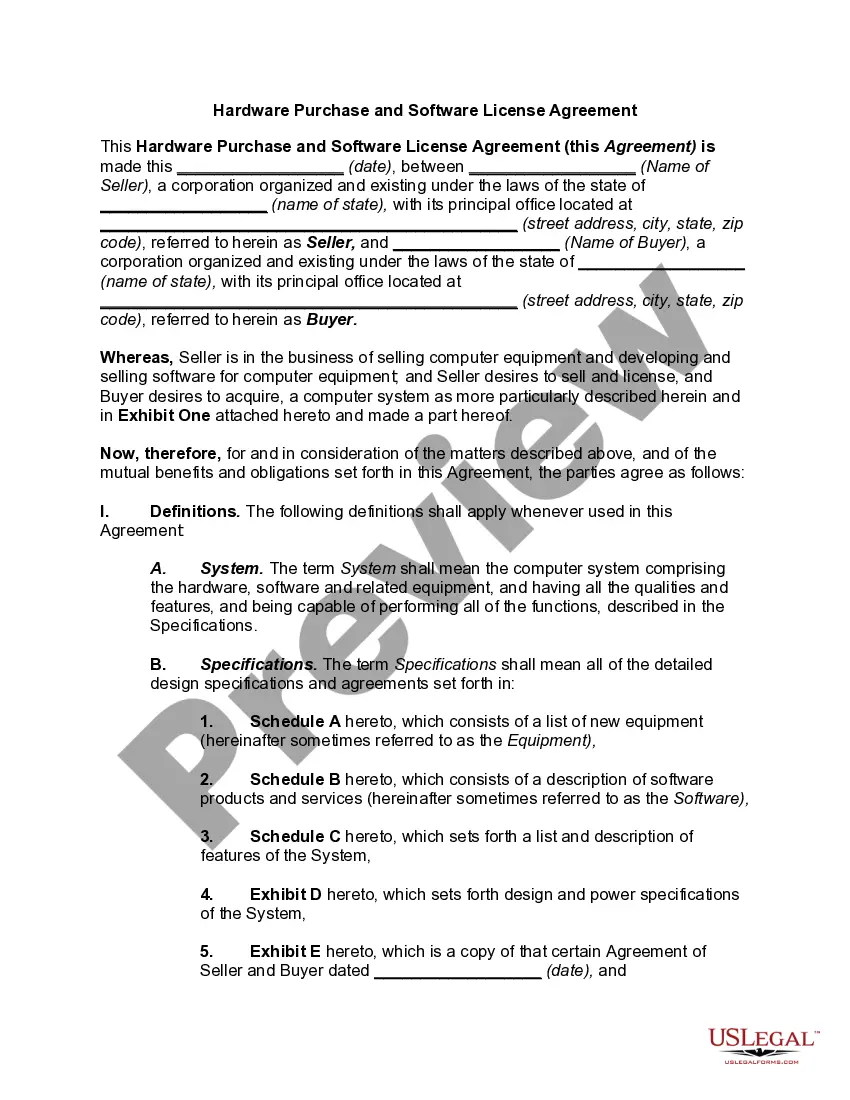
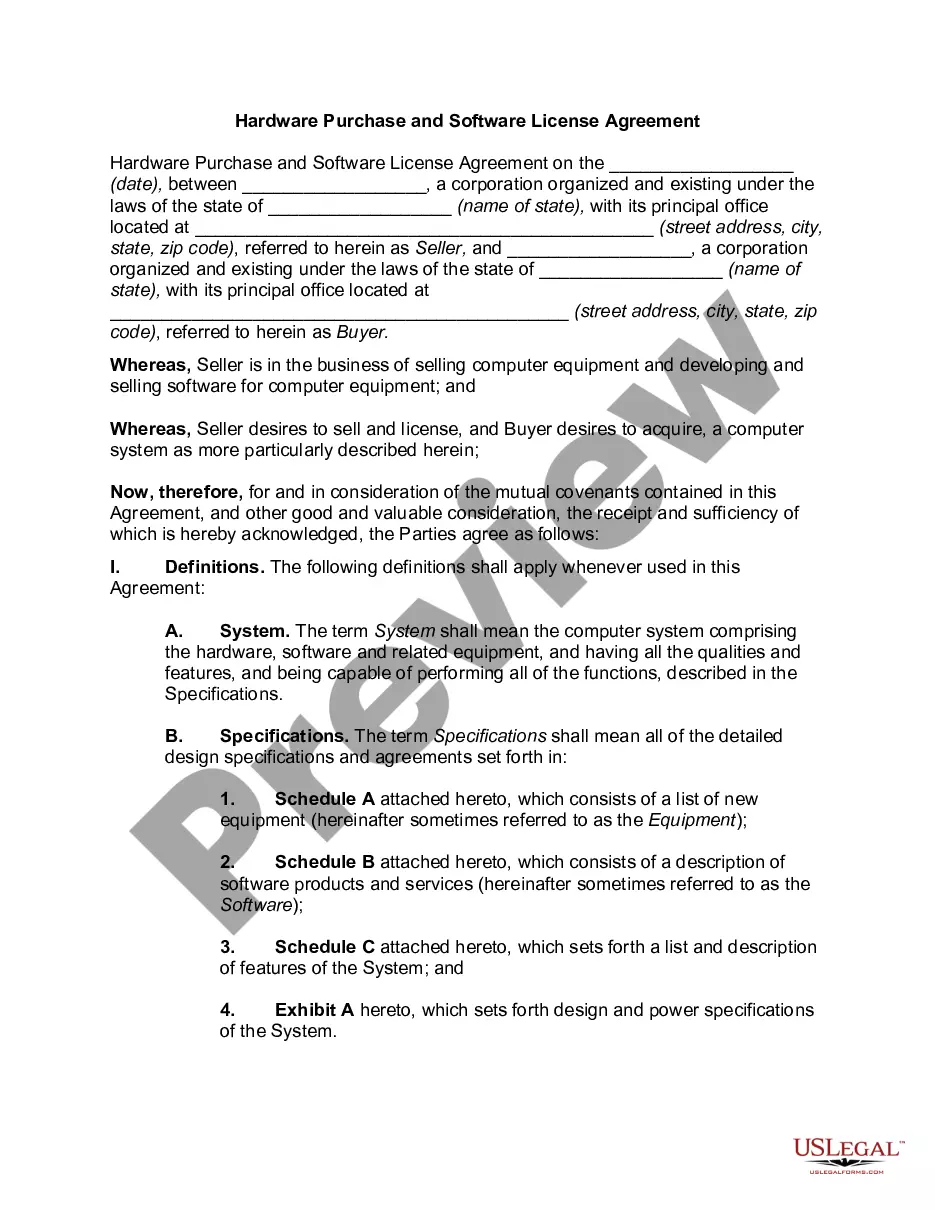
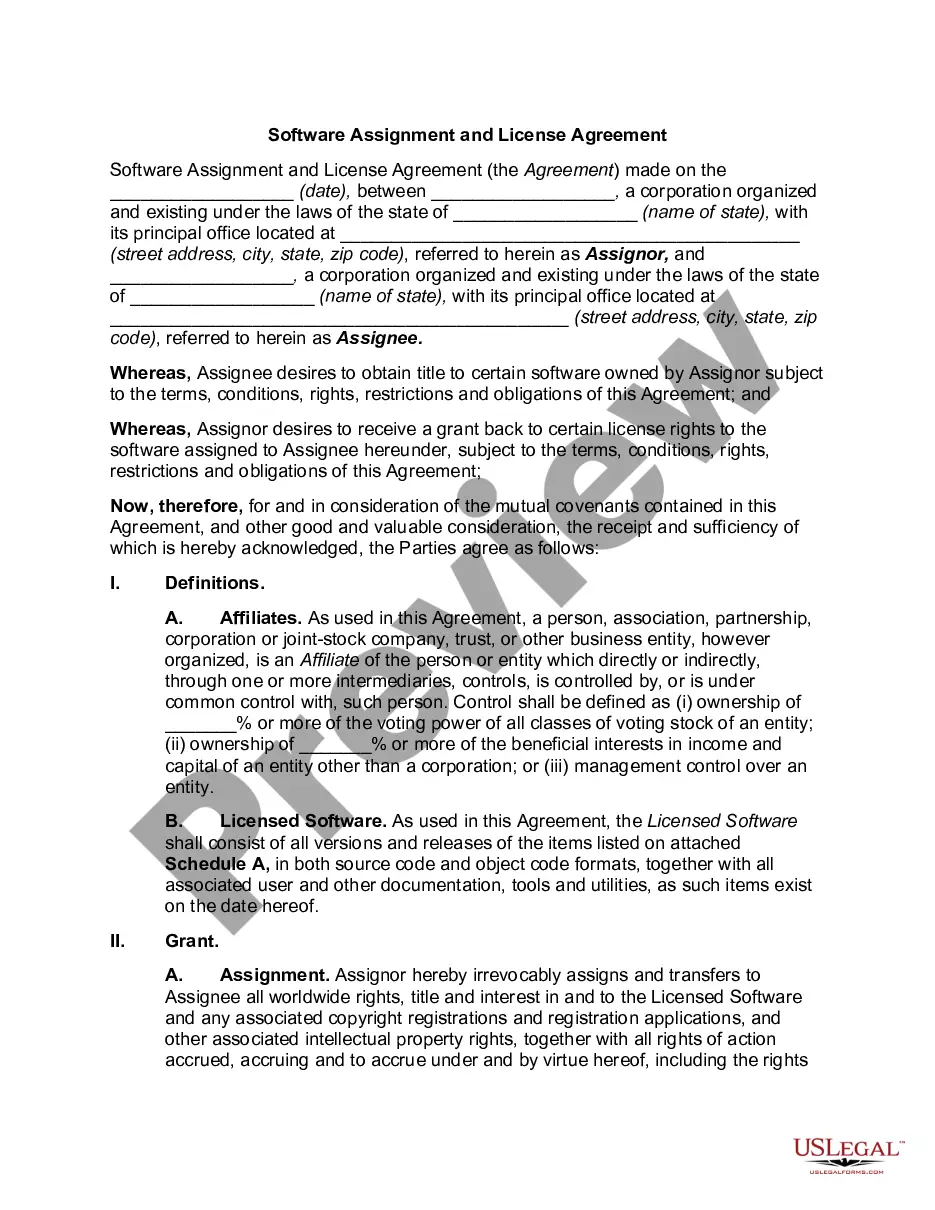
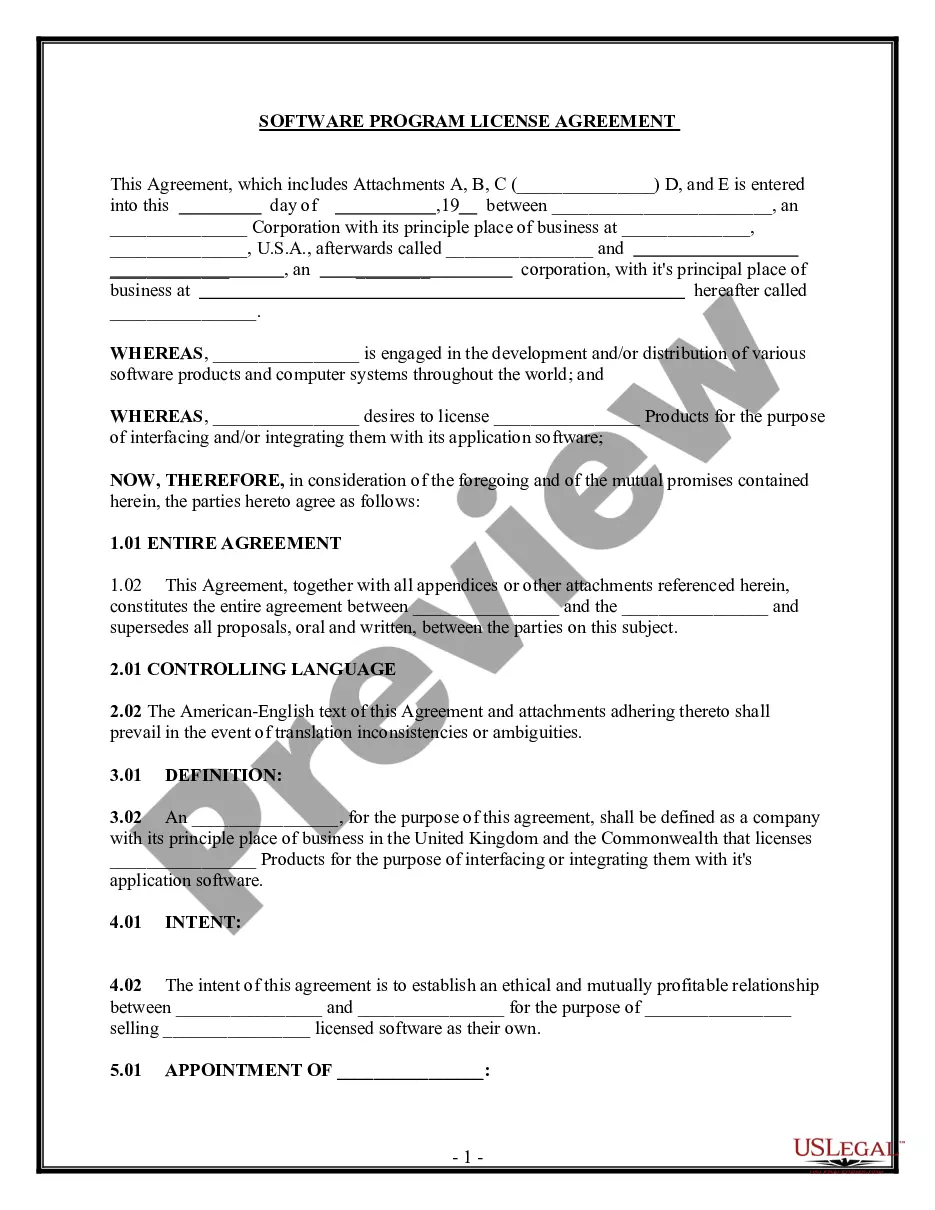
This form is a Purchase and License Agreement of a Custom Software Program. The agreement provides that neither party will be liable for damages or have the right to terminate the agreement for any delay or default in performing the agreement if the delay is beyond the control of the breaching party. The agreement may be executed in counterparts and either party may execute the agreement by signing a counterpart.
Arkansas Purchase and License Agreement of Custom Software Program
Instant download
Description
Free preview
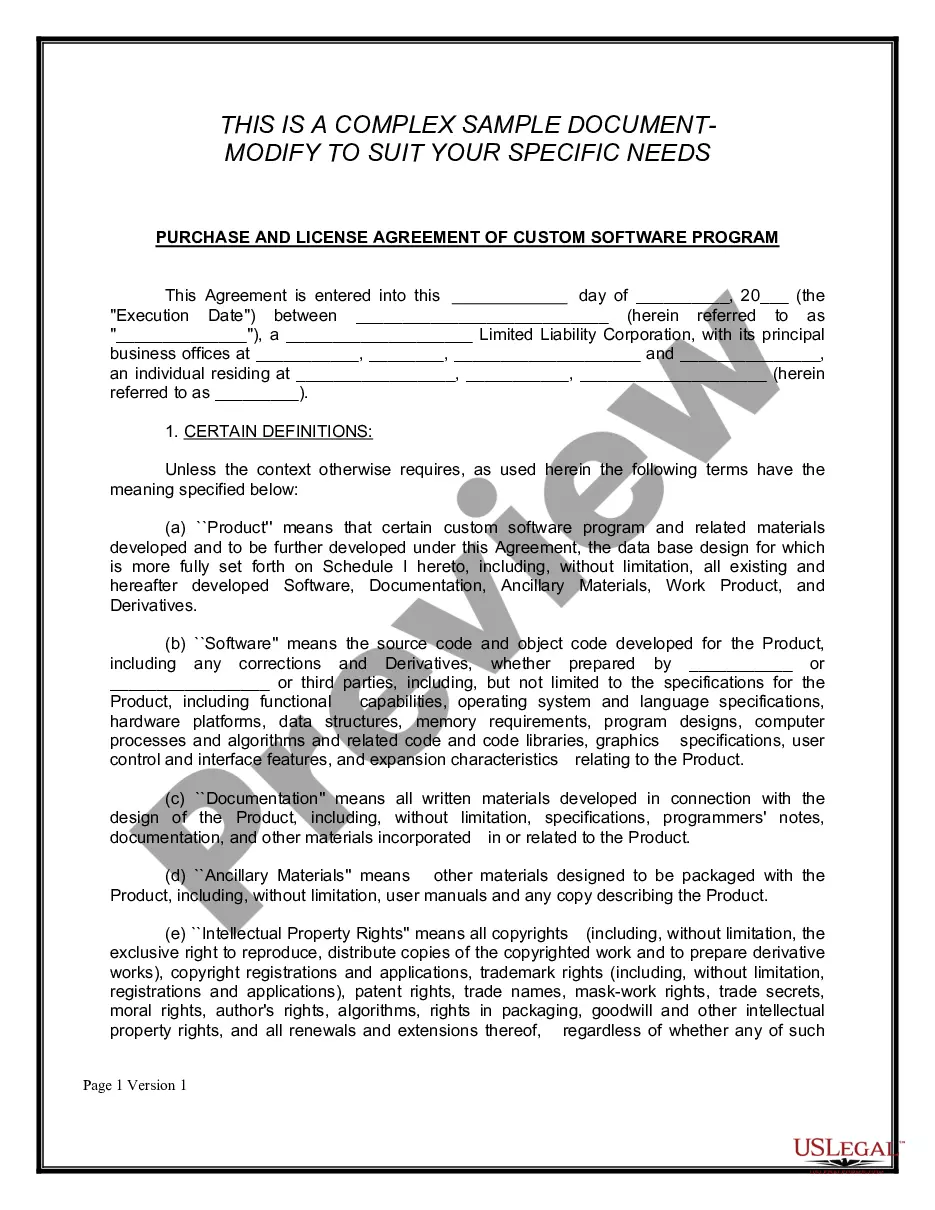
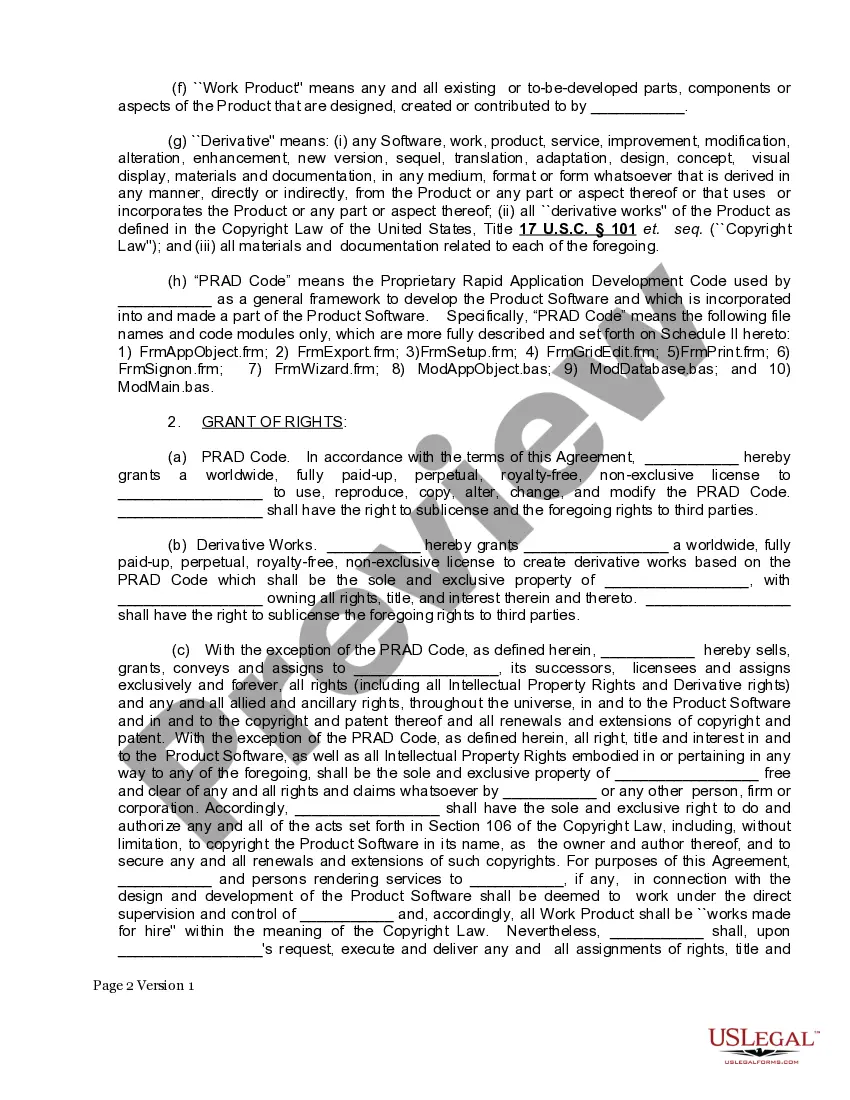
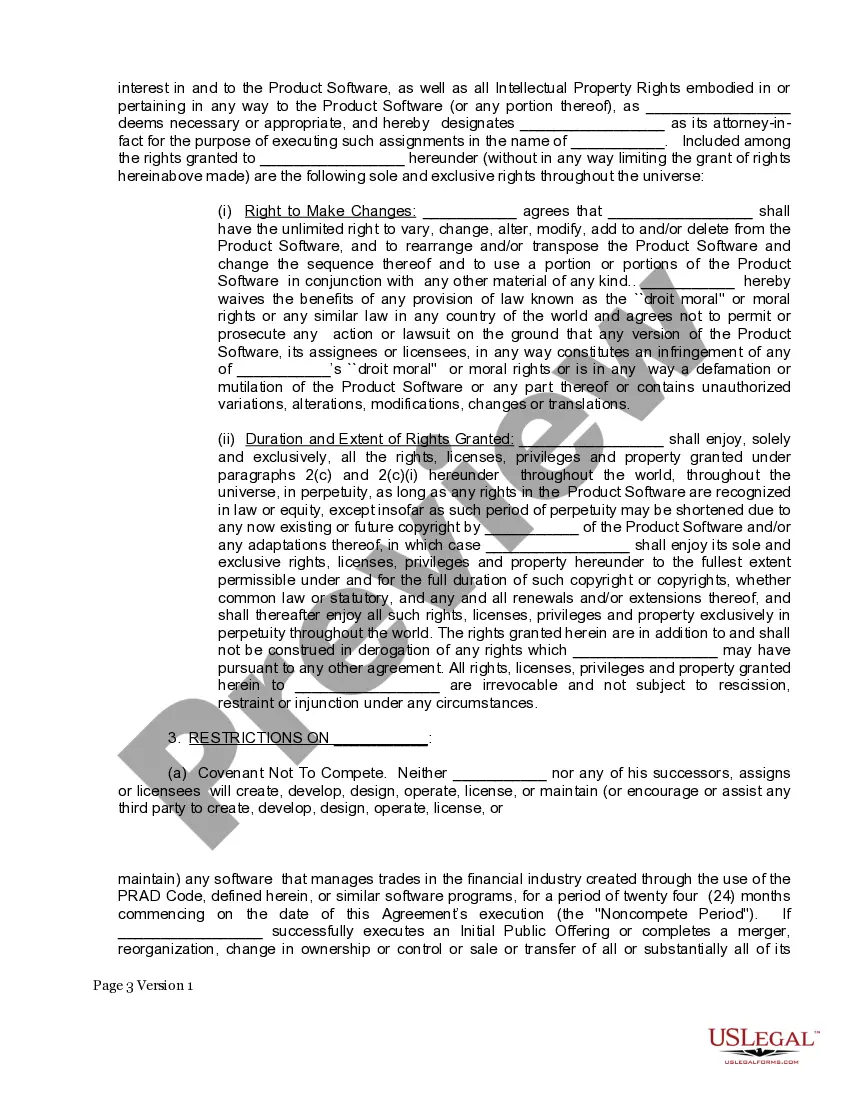

How to fill out Purchase And License Agreement Of Custom Software Program?
US Legal Forms - one of the largest collections of valid forms in the United States - provides a range of authentic document templates that you can download or print. By utilizing the website, you can access numerous forms for business and personal purposes, organized by categories, states, or keywords. You can find the latest editions of forms like the Arkansas Purchase and License Agreement of Custom Software Program in moments.
If you have an account, Log In and download the Arkansas Purchase and License Agreement of Custom Software Program from the US Legal Forms library. The Download button will appear on each form you view. You can access all previously downloaded forms in the My documents section of your account.
If you are using US Legal Forms for the first time, here are simple steps to help you get started: Ensure you have selected the correct form for your locality/region. Click the Review option to examine the form's details. Read the form description to confirm that you have chosen the correct form. If the form does not meet your requirements, use the Search field at the top of the screen to find one that does. If you are satisfied with the form, confirm your choice by clicking the Purchase now button. Then, select the pricing option you prefer and provide your details to register for an account. Process the transaction. Use your credit card or PayPal account to finalize the purchase. Choose the file format and download the form to your device. Make modifications. Complete, edit, and print and sign the downloaded Arkansas Purchase and License Agreement of Custom Software Program. Each template you add to your account has no expiration date and is yours forever. Therefore, if you wish to download or print another copy, simply navigate to the My documents section and click on the form you desire.
- Access the Arkansas Purchase and License Agreement of Custom Software Program through US Legal Forms, the most extensive collection of valid document templates.
- Utilize thousands of professional and state-specific templates that cater to your business or personal needs and requirements.
Form popularity
FAQ
The most common software license is the proprietary license, which grants specific rights to the user while retaining ownership with the publisher. This type of license often comes with terms that restrict modifications and redistribution. When drafting an Arkansas Purchase and License Agreement of Custom Software Program, it’s essential to understand how proprietary licenses can protect your custom software investment.
The four main types of software are system software, application software, programming software, and embedded software. Each type serves a specific purpose, from enabling the hardware to perform tasks to helping users complete various activities. Understanding these categories can enhance your decision-making when creating an Arkansas Purchase and License Agreement of Custom Software Program for your organization.
The different licensing models for software typically include proprietary, open-source, and subscription licenses. Each model serves different user needs and business goals. For instance, the Arkansas Purchase and License Agreement of Custom Software Program allows businesses to choose a model that best fits their operational requirements while ensuring compliance and protection.
The three main types of software contracts include software license agreements, maintenance agreements, and service level agreements (SLAs). A software license agreement grants permission to use the software, while a maintenance agreement outlines the support and updates you can expect. An SLA defines the level of service you will receive from the software provider. Each of these contracts can be found within the framework of an Arkansas Purchase and License Agreement of Custom Software Program, ensuring clarity and protection for both parties.
When obtaining a proprietary software license, you are typically required to accept an End User License Agreement (EULA). This contract outlines how you can use the software, including any limitations on usage. Accepting the EULA ensures that you understand and agree to the terms set forth by the licensor. The Arkansas Purchase and License Agreement of Custom Software Program often includes an EULA as part of the overall licensing process.
A legal contract between a licensor and a purchaser of software is known as a software license agreement. This document specifies the rights and responsibilities of both parties regarding the use of the software. It protects the intellectual property of the licensor while granting the purchaser the right to use the software under specific conditions. The Arkansas Purchase and License Agreement of Custom Software Program serves as a clear example of such a contract.
You must accept a software license agreement before you can use proprietary software. This agreement outlines the terms of use, restrictions, and obligations for both the licensor and the purchaser. By accepting it, you ensure compliance with the rules governing the software. The Arkansas Purchase and License Agreement of Custom Software Program typically includes these essential details.
A license agreement for software defines how users can access and utilize a specific software program. It details the rights granted to users, limitations on use, and any obligations they must meet. By utilizing the Arkansas Purchase and License Agreement of Custom Software Program, you can ensure a clear understanding of usage rights, which can enhance collaboration and protect your investment in software development.
A license agreement is used to grant permission for one party to use the intellectual property of another party. This includes software, trademarks, and patents. Specifically, the Arkansas Purchase and License Agreement of Custom Software Program allows businesses to access customized software solutions while ensuring compliance with legal requirements and safeguarding proprietary information.
A licensing agreement serves to establish a legal framework for the use of intellectual property, such as software. It clearly defines how the licensed material can be used, including any restrictions or obligations. With the Arkansas Purchase and License Agreement of Custom Software Program, both the licensor and licensee can benefit from a structured agreement that minimizes disputes and protects their interests.