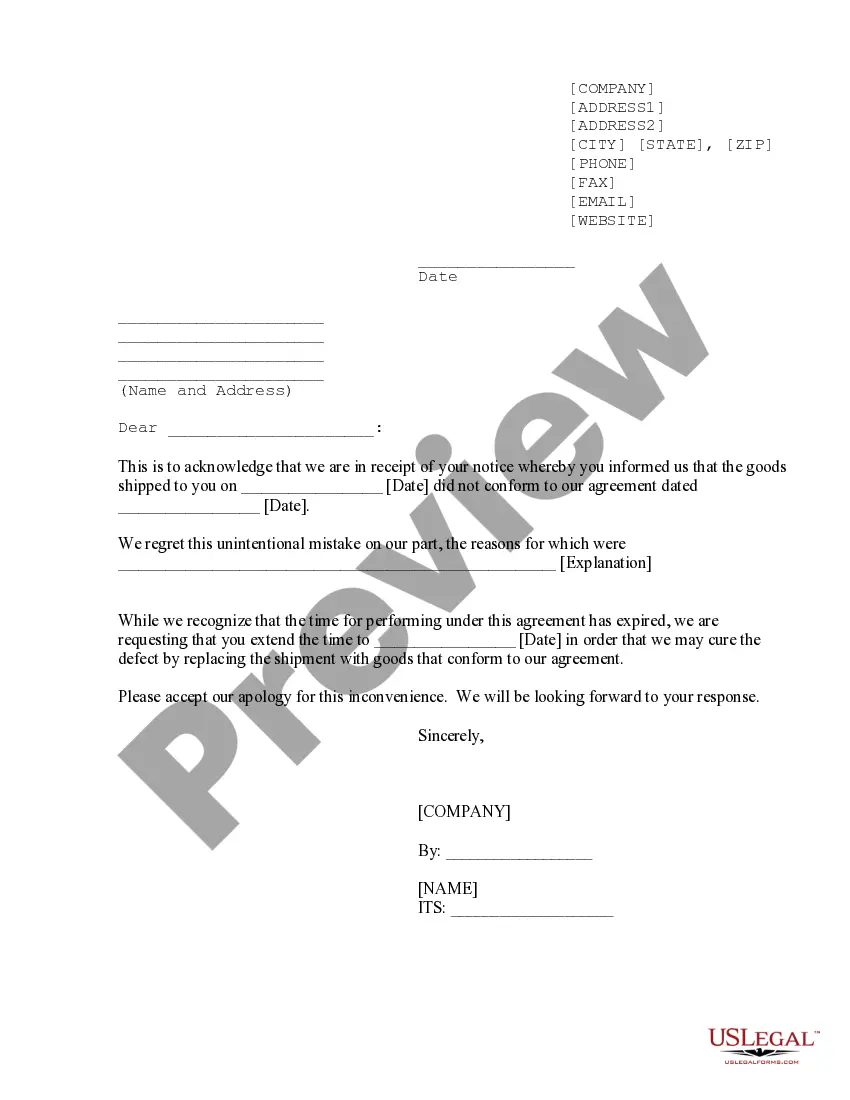
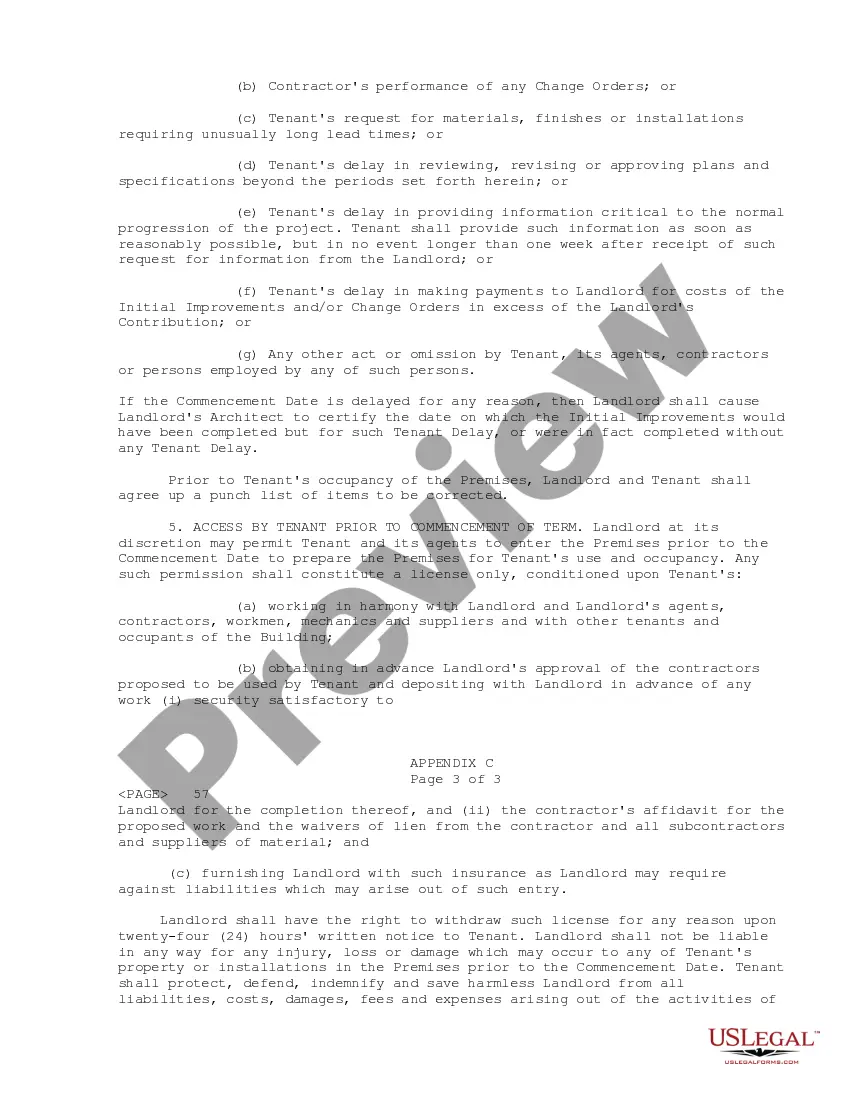
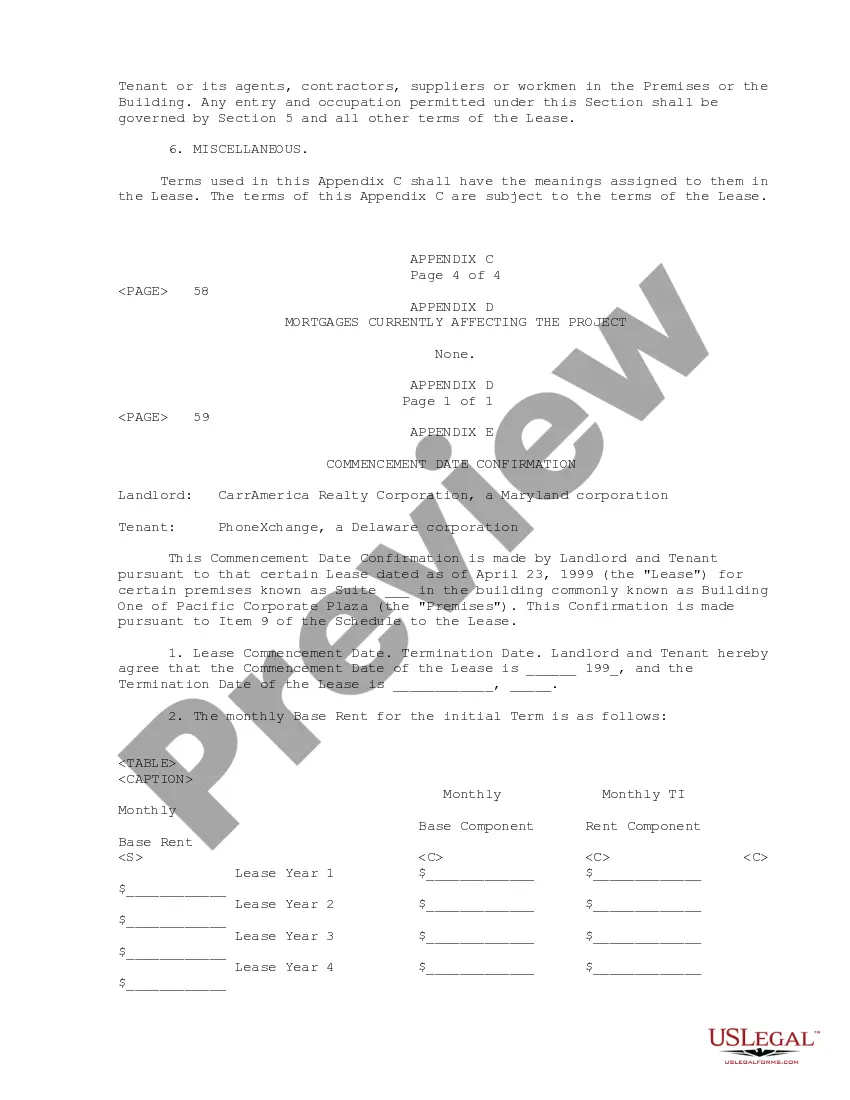
Arkansas Tenant Improvement Lease
Description

Get your form ready online
Our built-in tools help you complete, sign, share, and store your documents in one place.
Make edits, fill in missing information, and update formatting in US Legal Forms—just like you would in MS Word.
Download a copy, print it, send it by email, or mail it via USPS—whatever works best for your next step.
Sign and collect signatures with our SignNow integration. Send to multiple recipients, set reminders, and more. Go Premium to unlock E-Sign.
If this form requires notarization, complete it online through a secure video call—no need to meet a notary in person or wait for an appointment.
We protect your documents and personal data by following strict security and privacy standards.

Make edits, fill in missing information, and update formatting in US Legal Forms—just like you would in MS Word.

Download a copy, print it, send it by email, or mail it via USPS—whatever works best for your next step.

Sign and collect signatures with our SignNow integration. Send to multiple recipients, set reminders, and more. Go Premium to unlock E-Sign.

If this form requires notarization, complete it online through a secure video call—no need to meet a notary in person or wait for an appointment.

We protect your documents and personal data by following strict security and privacy standards.
Looking for another form?





How to fill out Tenant Improvement Lease?
Choosing the best legal file design can be quite a have a problem. Needless to say, there are a variety of layouts accessible on the Internet, but how do you discover the legal develop you require? Use the US Legal Forms site. The assistance gives 1000s of layouts, such as the Arkansas Tenant Improvement Lease, that can be used for organization and private requirements. Every one of the types are examined by experts and fulfill state and federal needs.
When you are previously authorized, log in to your bank account and click on the Download option to get the Arkansas Tenant Improvement Lease. Make use of bank account to look from the legal types you possess ordered formerly. Go to the My Forms tab of your own bank account and obtain another backup from the file you require.
When you are a new customer of US Legal Forms, here are easy recommendations that you can follow:
- Initial, make certain you have selected the correct develop for your personal area/county. You are able to look over the form utilizing the Preview option and study the form explanation to guarantee it will be the right one for you.
- If the develop does not fulfill your preferences, take advantage of the Seach discipline to discover the correct develop.
- When you are positive that the form is proper, go through the Buy now option to get the develop.
- Pick the rates strategy you would like and enter in the necessary information and facts. Design your bank account and pay money for the order making use of your PayPal bank account or Visa or Mastercard.
- Choose the document formatting and acquire the legal file design to your product.
- Comprehensive, edit and print out and indication the acquired Arkansas Tenant Improvement Lease.
US Legal Forms may be the greatest library of legal types in which you can see different file layouts. Use the company to acquire expertly-created paperwork that follow express needs.
Form popularity
FAQ
From an accounting standpoint, leasehold improvements must be capitalized on the balance sheet, meaning the cost of the improvements is spread out over time in line with the company's use of space.
The TIA accounting standards process typically involves the following steps: Record the TIA as a Liability. The landlord pays the TIA amount to the tenant. ... Capitalize the Improvements. The tenant then uses the TIA funds to make improvements to the office space. ... Amortize the TIA. ... Record Depreciation Expense.
How do leasehold improvements impact ASC 842? Leasehold improvements are reported as property, plant and equipment (PP&E) assets on the balance sheet. ASC 842 does not change the way they are handled, unless a tenant uses a tenant improvement allowance to make their improvements.
Per-Square-Foot Basis: Many leases calculate TIAs based on a per-square-foot basis. This involves multiplying the agreed-upon per-square-foot allowance by the total square footage of the leased space. For example, if the TIA is $10 per square foot, and your space is 2,000 square feet, your TIA would be $20,000.
The TIA accounting standards process typically involves the following steps: Record the TIA as a Liability. The landlord pays the TIA amount to the tenant. ... Capitalize the Improvements. The tenant then uses the TIA funds to make improvements to the office space. ... Amortize the TIA. ... Record Depreciation Expense.
For purposes of accounting, the costs of leasehold improvements are capitalized as a fixed asset and then amortized rather than depreciated, as the prior section mentioned. Estimated Useful Life of the Improvement. Remaining Lease Term.
From an accounting standpoint, leasehold improvements must be capitalized on the balance sheet, meaning the cost of the improvements is spread out over time in line with the company's use of space.
What Is a Leasehold Improvement? The term leasehold improvement refers to any changes made to customize a rental property to satisfy the particular needs of a specific tenant. These changes and alterations may include painting, installing partitions, changing the flooring, or putting in customized light fixtures.