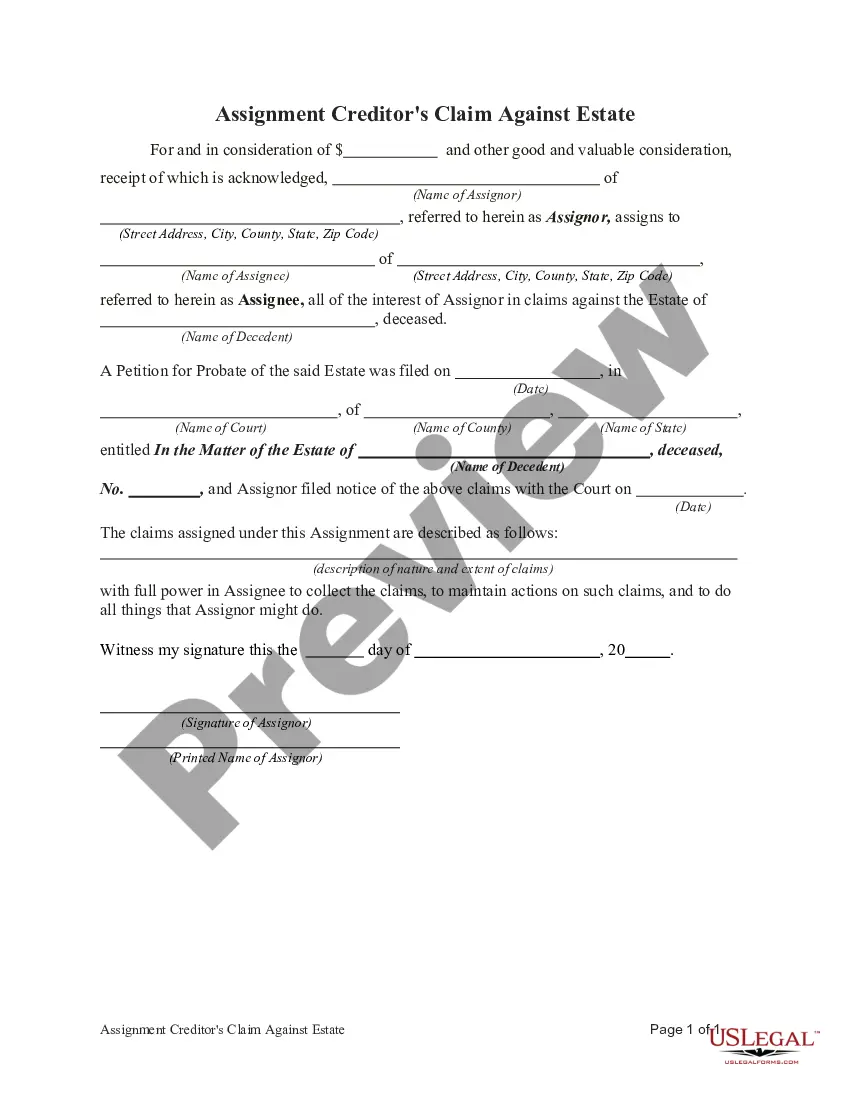
Arkansas Assignment Creditor's Claim Against Estate
Description
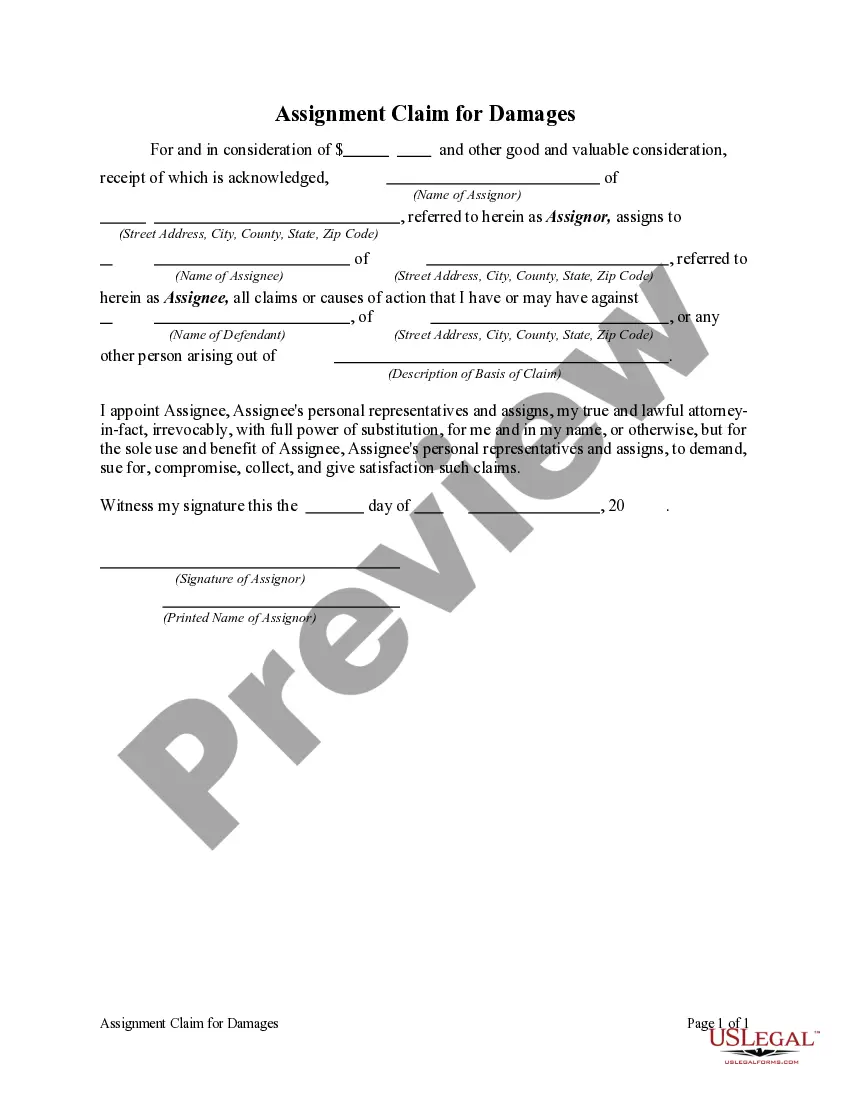
How to fill out Assignment Creditor's Claim Against Estate?
You might spend hours online searching for the legal document template that meets the federal and state requirements you need.
US Legal Forms provides a multitude of legal forms that are reviewed by experts.
It is easy to download or print the Arkansas Assignment Creditor's Claim Against Estate from our platform.
If available, use the Review button to look through the document template as well.
- If you already possess a US Legal Forms account, you can Log In and click the Download button.
- After that, you can complete, modify, print, or sign the Arkansas Assignment Creditor's Claim Against Estate.
- Each legal document template you acquire is yours to keep permanently.
- To get another copy of any purchased form, navigate to the My documents tab and click the corresponding button.
- If you're visiting the US Legal Forms website for the first time, follow the simple instructions below.
- First, ensure that you have chosen the correct document template for the region/area of your choice.
- Read the form description to confirm that you have selected the right form.
Form popularity
FAQ
How Long Do You Have to File Probate After Death in Arkansas? According to the Arkansas Code, a will must be submitted to the courts within five years of the person's death. The will cannot be used as proof for transfer of title until it has been probated.
If the deceased is a resident of Arkansas, the time limit to probate a will is 5 years past the date of death. With non-residents, the time limit is more flexible. Any will admitted to probate in another state in a timely manner may be probated in Arkansas at any time.
Arkansas also places a five-year statute of limitations on debt collection. Debt older than five years does not have to be honored.
If Probate has not been opened, then you cannot file a claim against an estate2026 Next, you need to fill out the claim form and file it with the County Clerk. You can find the form to claim at The Official Arkansas Probate Forms (Form 18). After the caption, you will type in the rest of the form, date, and sign it.
In Arkansas, the probate process is mandatory for any contested estate, if there are creditors (including a mortgage) and for any estate larger than $100,000. If a person provides written grounds for contest to the court, the will goes through the probate process.
The probate process typically takes anywhere from six to nine months to complete. This process can take longer when there are unusual assets requiring special attention. Unexpected problems that arise will also prolong the process.
An executor can be held personally liable for the debts of the estate up to the value of the estate. If they distribute the estate and leave a creditor outstanding, that creditor may bring a claim against the executors. This is the case even where the executor had no idea the debt even existed.
If there are any creditors, including credit card bills, mortgages, or hospital bills, then the estate must also go through probate. Even if you have a will in place, the probate process is inevitable in Arkansas.
A claim for reasonable financial provision must be made within six months after probate or letters of administration have been issued, although the court can extend this period in certain circumstances (eg if the applicant has not made an earlier claim because of negotiations with the executors or administrators).
In any event, where it is accepted that payment is due, the executor can seek to pay you (the creditor) from the deceased's estate. There is normally a six-month period from the deceased's death for creditors to advise the executor of any sums due to them from the estate.