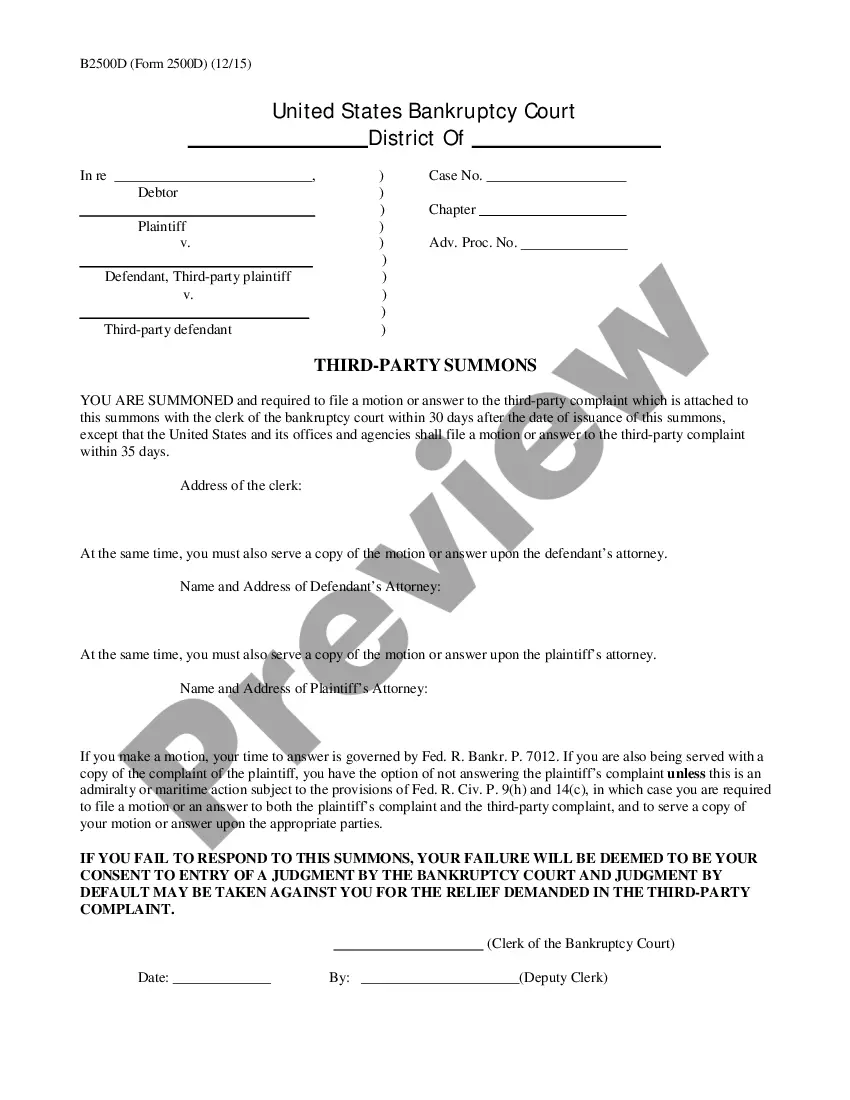
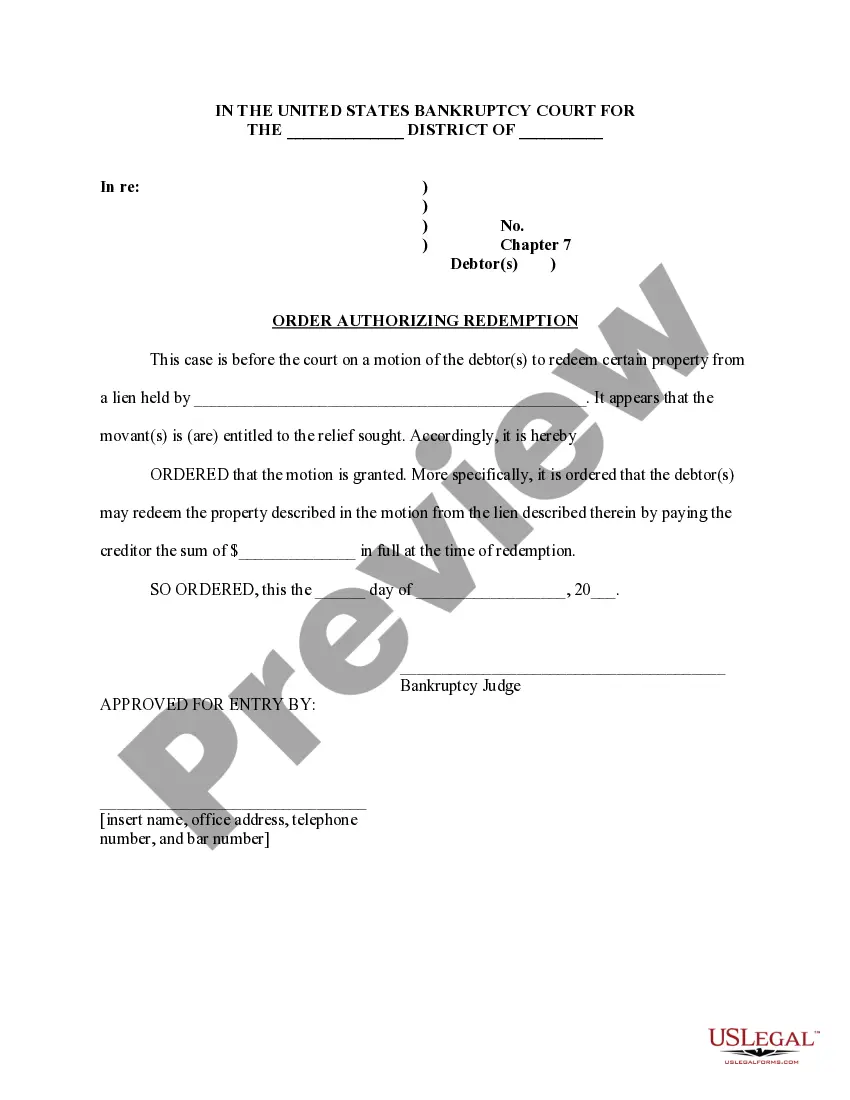
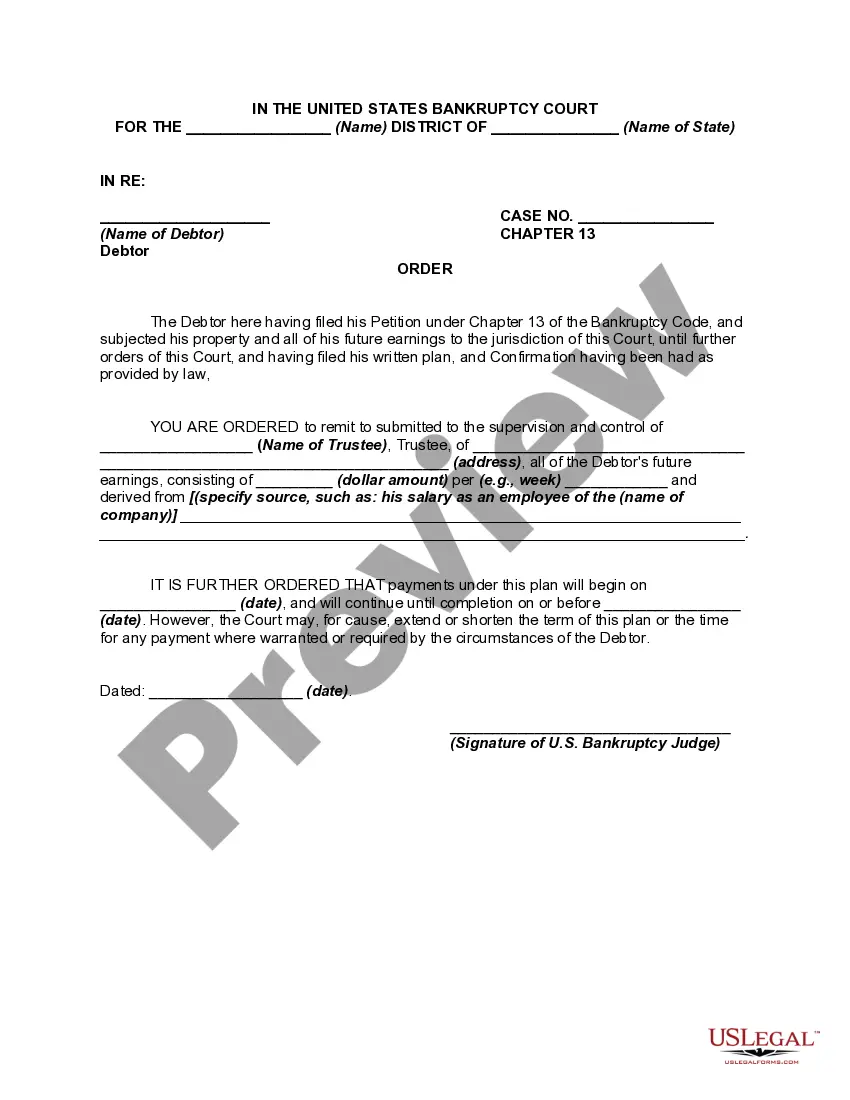
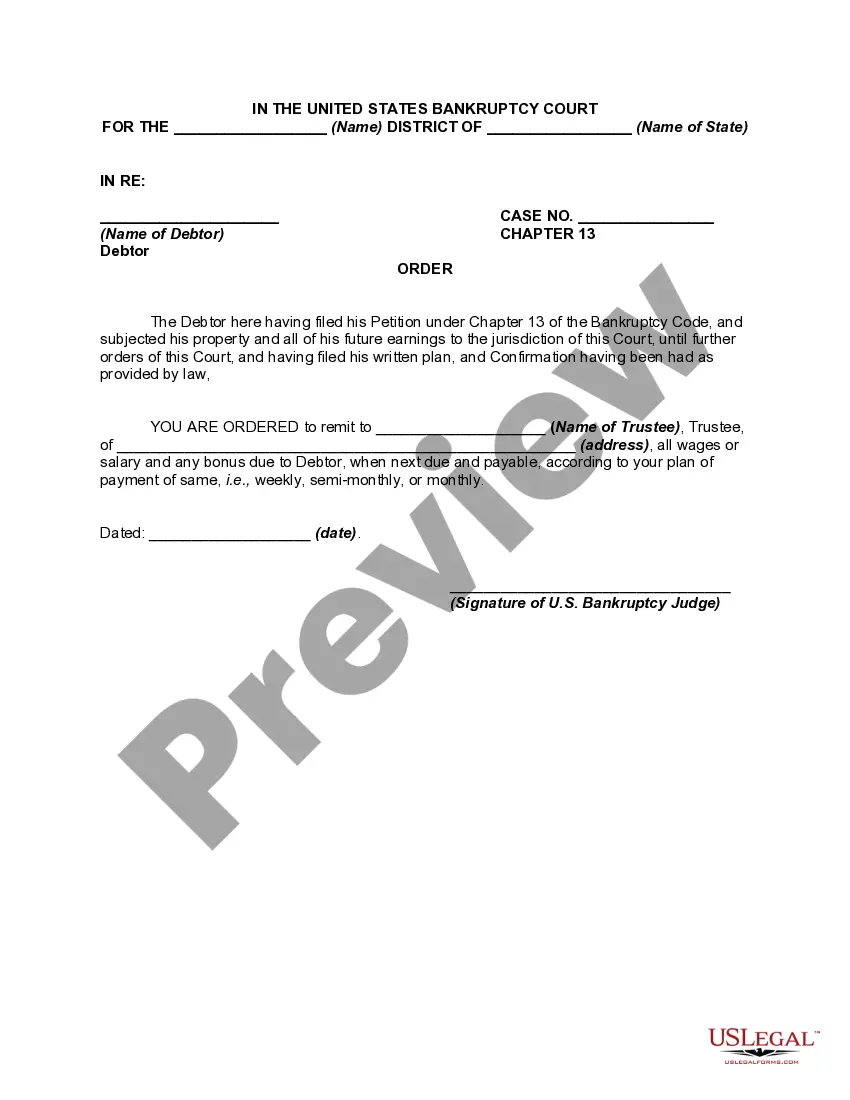
Arkansas Order Requiring Debtor's Employer to Remit Deductions from a Debtor's Income to Trustee

State:
Multi-State
Control #:
US-02154BG
Format:
Word; 
Rich Text
Instant download

Description

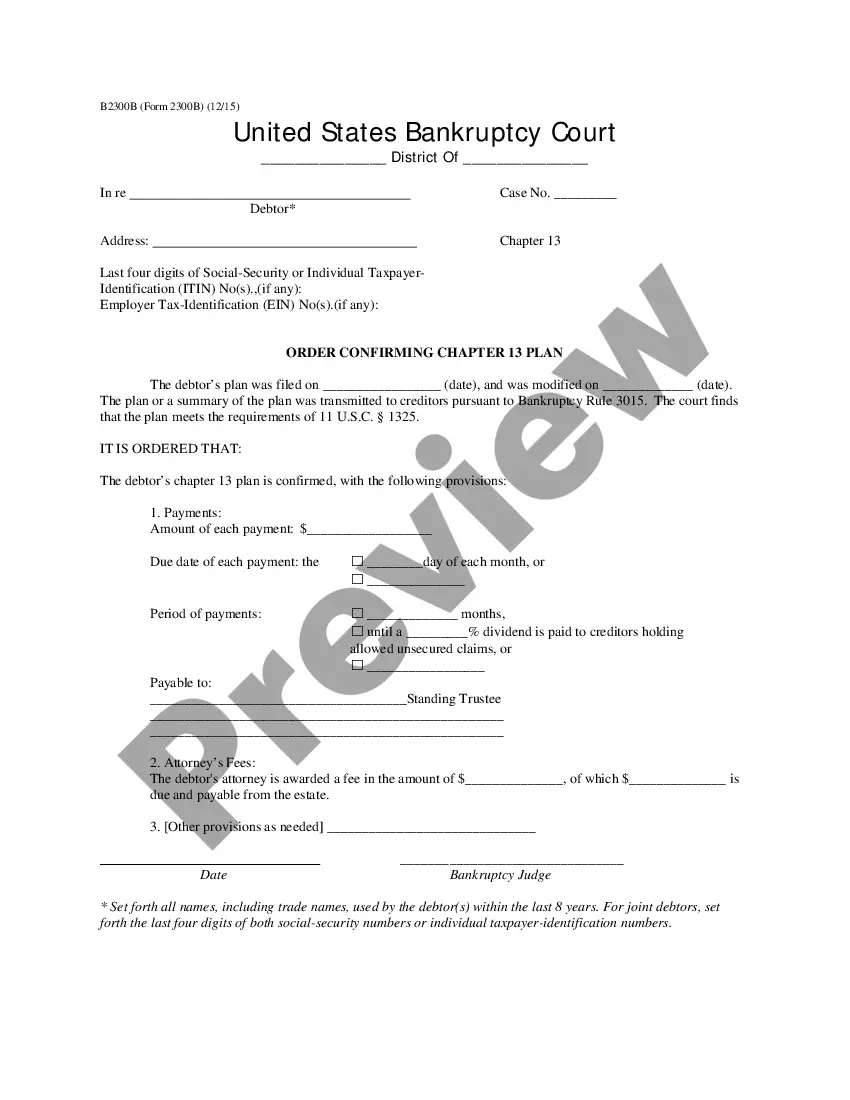
The U.S. Bankruptcy Code also allows individual debtors who meet certain financial criteria to adopt extended time payment plans for the payment of debts. An individual debtor on a regular income may submit a plan for installment payment of outstanding debts. This is called a Chapter 13 Plan. This plan must be confirmed by the court. Once it is confirmed, debts are paid in the manner specified in the plan. After all payments called for by the plan are made, the debtor is given a discharge. The plan is, in effect, a budget of the debtor's future income with respect to outstanding debts. The plan must provide for the eventual payment in full of all claims entitled to priority under the Bankruptcy Code. The plan will be confirmed if it is submitted in good faith and is in the best interest of the creditors.


A Chapter 13 plan must provide for the submission of all or such portion of future earnings or other future income of the debtor to the supervision and control of the trustee as is necessary for the execution of the plan. After the confirmation of a Chapter 13 plan, the court may exercise its discretion and order any entity from whom the debtor receives income to pay all or part of such income to the trustee.
How to fill out Order Requiring Debtor's Employer To Remit Deductions From A Debtor's Income To Trustee?

Choosing the right legal papers web template could be a struggle. Naturally, there are tons of templates accessible on the Internet, but how can you obtain the legal form you require? Use the US Legal Forms site. The assistance provides thousands of templates, like the Arkansas Order Requiring Debtor's Employer to Remit Deductions from a Debtor's Income to Trustee, which you can use for company and private demands. All of the kinds are checked by pros and fulfill federal and state demands.

In case you are previously registered, log in for your bank account and click on the Download option to obtain the Arkansas Order Requiring Debtor's Employer to Remit Deductions from a Debtor's Income to Trustee. Make use of bank account to appear throughout the legal kinds you have acquired previously. Check out the My Forms tab of the bank account and obtain yet another version from the papers you require.

In case you are a whole new user of US Legal Forms, listed below are easy directions that you should follow:

  • First, be sure you have chosen the appropriate form to your metropolis/county. It is possible to look over the shape making use of the Review option and read the shape description to guarantee this is the right one for you.
  • If the form does not fulfill your needs, make use of the Seach industry to get the correct form.
  • Once you are certain the shape is proper, select the Get now option to obtain the form.
  • Pick the rates strategy you would like and enter in the required information and facts. Make your bank account and pay for the transaction utilizing your PayPal bank account or credit card.
  • Opt for the data file format and obtain the legal papers web template for your device.
  • Complete, edit and produce and indication the received Arkansas Order Requiring Debtor's Employer to Remit Deductions from a Debtor's Income to Trustee.

US Legal Forms may be the greatest local library of legal kinds where you can discover various papers templates. Use the company to obtain appropriately-made documents that follow condition demands.

Form popularity

FAQ

The correct order of payment of claims froth debtor's estate would be: secured claims, priority claims, unsecured claims.

The Chapter 13 Trustee communicates by mail with Chapter 13 debtors. The Trustee sends out financial information, notices and legal pleadings using the debtor's mailing address maintained in the Bankruptcy Court records.

If the trustee wants to object to your plan, he or she will typically file a written objection to confirmation with the court and set forth the reasons why the court should not approve your proposed plan. If you don't respond to the trustee's objection, most courts will not confirm the plan.

In Chapter 13 bankruptcy, you pay the Chapter 13 bankruptcy trustee the monthly payment required by your Chapter 13 repayment plan and the trustee distributes the funds to creditors each month.

In some districts, the U.S. trustee or bankruptcy administrator (2) appoints a standing trustee to serve in all chapter 13 cases. 28 U.S.C. § 586(b). The chapter 13 trustee both evaluates the case and serves as a disbursing agent, collecting payments from the debtor and making distributions to creditors.

Once your repayment plan gets confirmed, you must continue to make timely payments to the bankruptcy trustee each month for the duration of your plan. You must also continue to make payments on debts, such as your mortgage or car payment, which you proposed to pay outside of bankruptcy.

A trustee is appointed to take control of certain assets of the debtor, bring these assets into the estate, and sell or distribute these assets for the benefit of creditors. Some assets will remain with the debtor if these assets are determined to be exempt from distribution to creditors.

At the meeting, the Chapter 13 trustee will ask you questions, under oath, about what you owe, what you own, your income, and your Chapter 13 Plan.

Trusted and secure by over 3 million people of the world’s leading companies

Arkansas Order Requiring Debtor's Employer to Remit Deductions from a Debtor's Income to Trustee