Arkansas Sample Questions, Voir Dire Examination
Description

Get your form ready online
Our built-in tools help you complete, sign, share, and store your documents in one place.
Make edits, fill in missing information, and update formatting in US Legal Forms—just like you would in MS Word.
Download a copy, print it, send it by email, or mail it via USPS—whatever works best for your next step.
Sign and collect signatures with our SignNow integration. Send to multiple recipients, set reminders, and more. Go Premium to unlock E-Sign.
If this form requires notarization, complete it online through a secure video call—no need to meet a notary in person or wait for an appointment.
We protect your documents and personal data by following strict security and privacy standards.

Make edits, fill in missing information, and update formatting in US Legal Forms—just like you would in MS Word.

Download a copy, print it, send it by email, or mail it via USPS—whatever works best for your next step.

Sign and collect signatures with our SignNow integration. Send to multiple recipients, set reminders, and more. Go Premium to unlock E-Sign.

If this form requires notarization, complete it online through a secure video call—no need to meet a notary in person or wait for an appointment.

We protect your documents and personal data by following strict security and privacy standards.
Looking for another form?

How to fill out Sample Questions, Voir Dire Examination?
You might spend time online attempting to locate the legal document format that fulfills the state and federal standards you require.
US Legal Forms offers a vast array of legal documents that are assessed by experts.
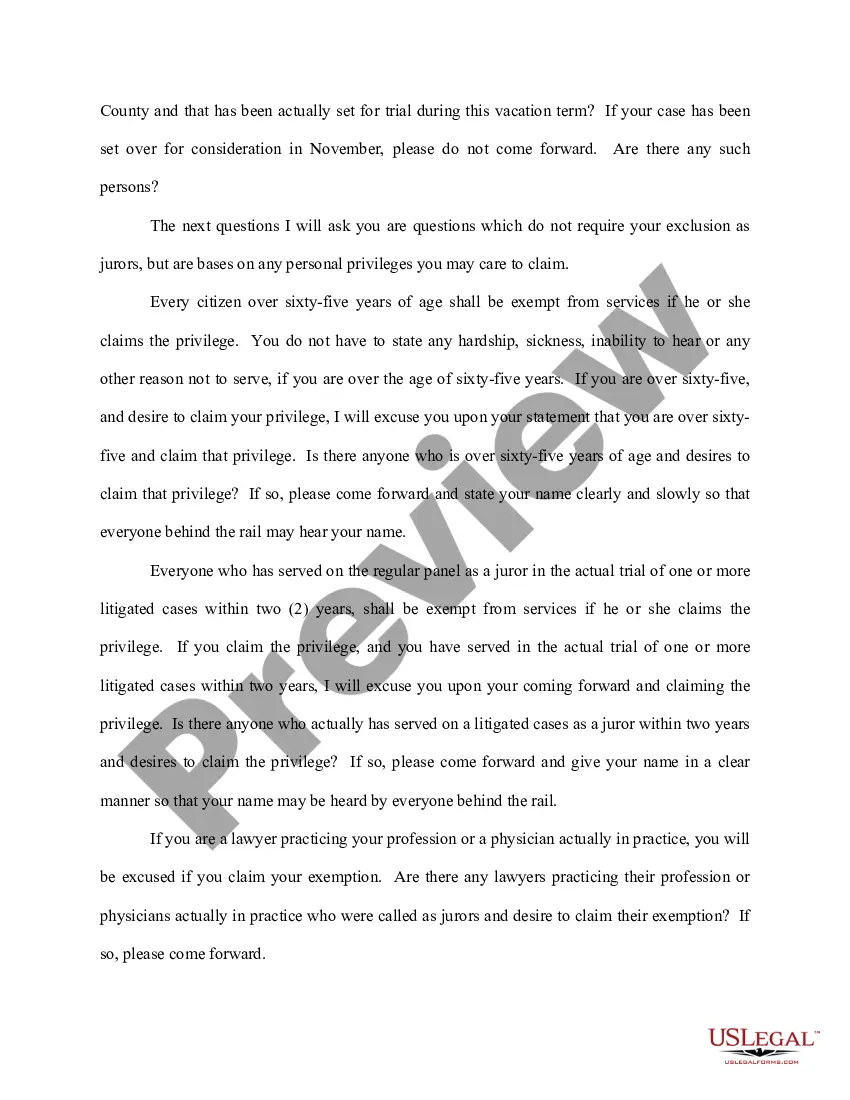
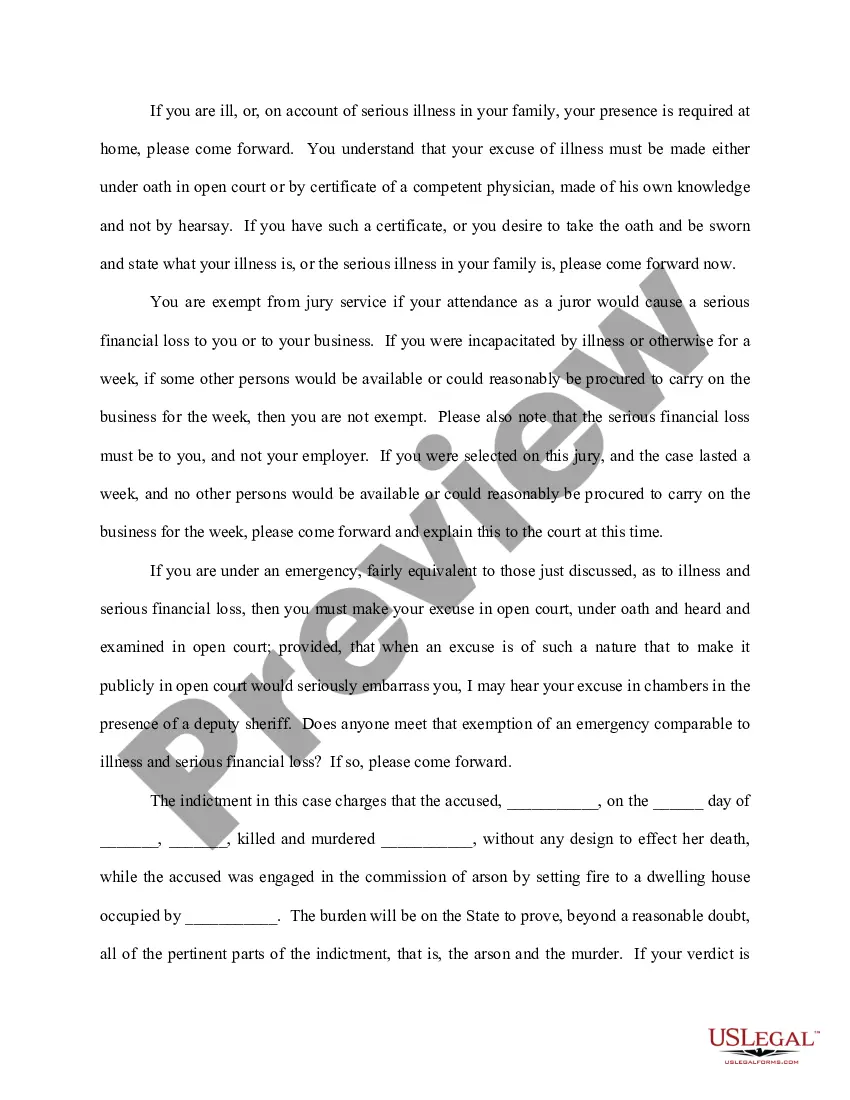
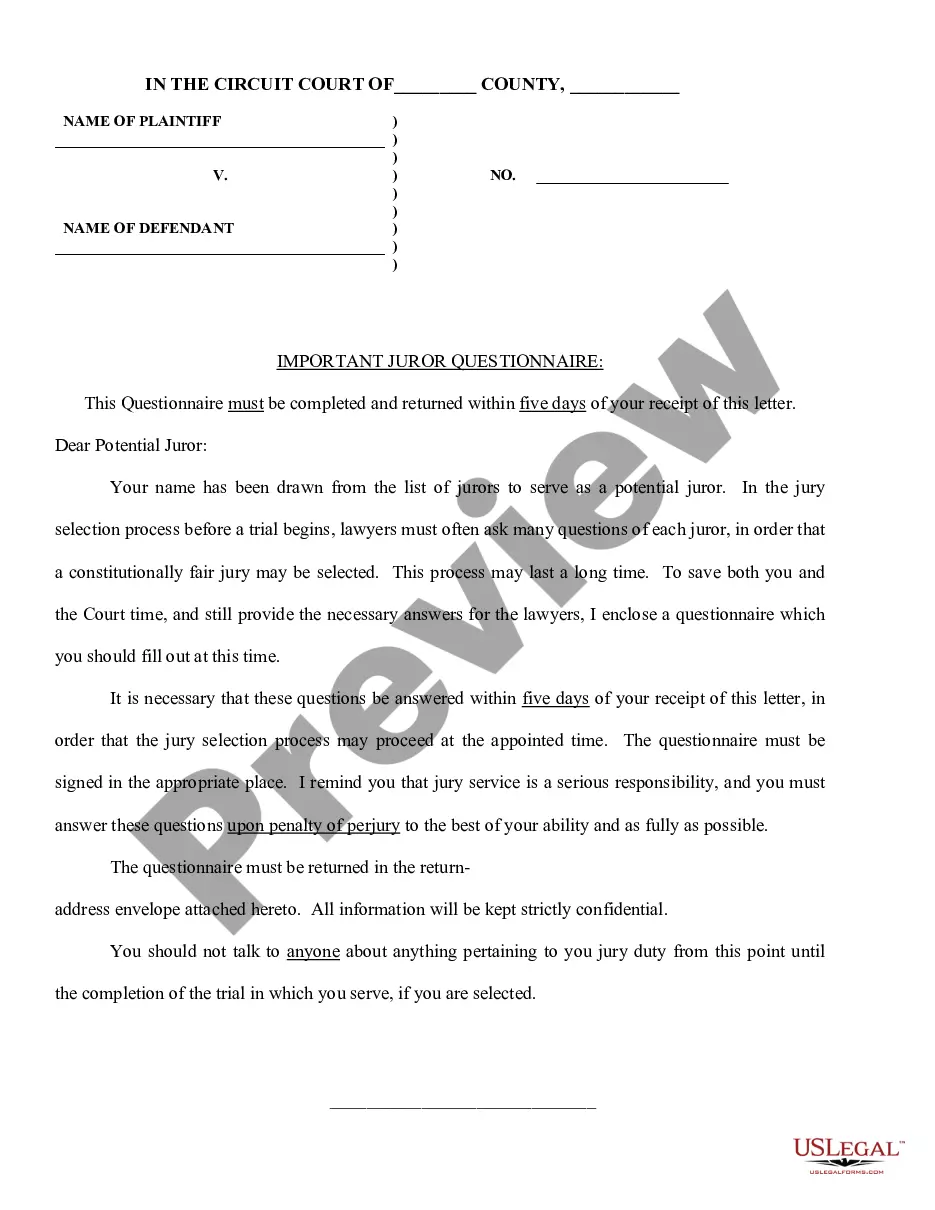
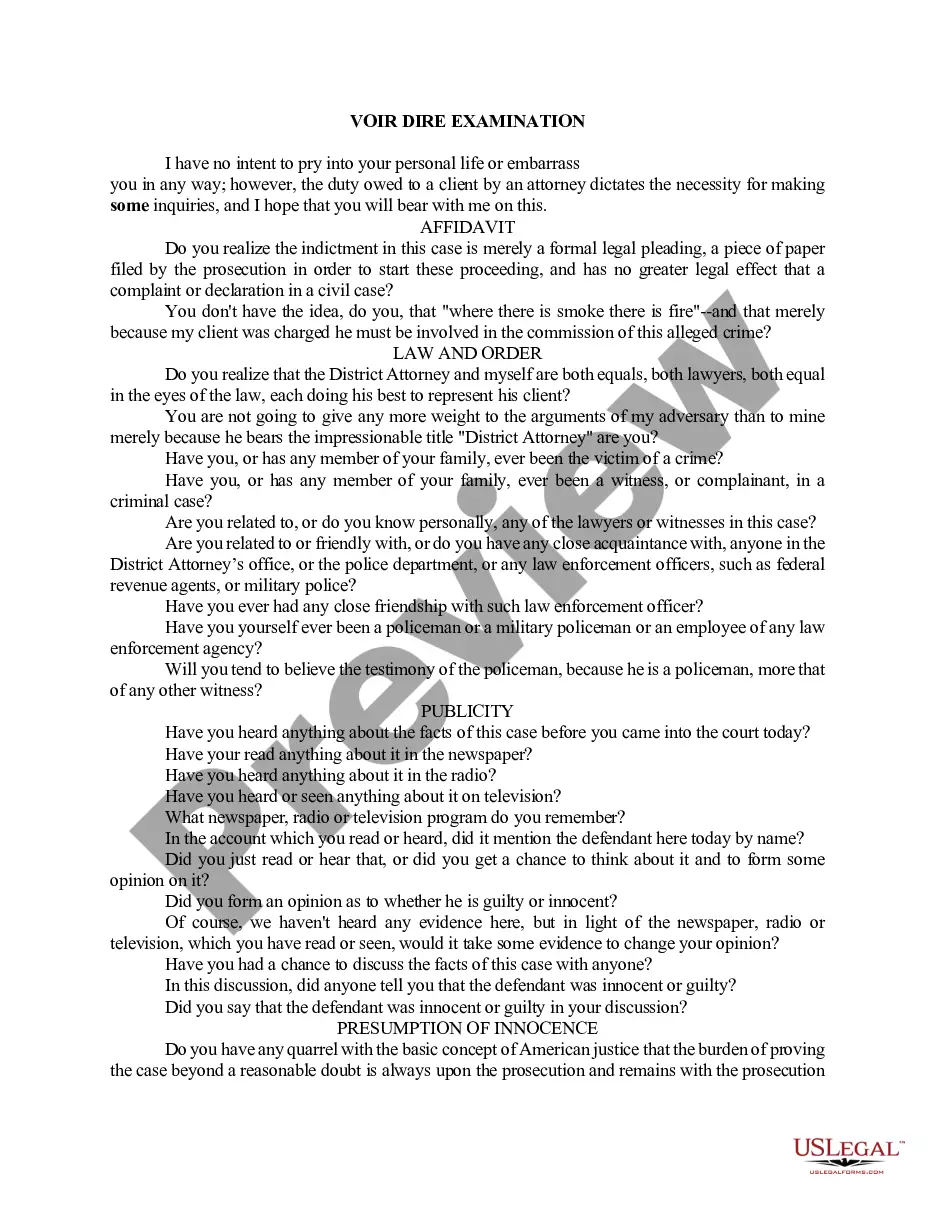
You can download or print the Arkansas Sample Questions, Voir Dire Examination from our platform.
If you wish to find another version of the document, use the Search field to locate the format that meets your needs and requirements. Once you have identified the format you desire, click Acquire now to proceed. Choose the pricing plan you prefer, enter your details, and register for your account on US Legal Forms. Complete the transaction. You can use your Visa or Mastercard or PayPal account to pay for the legal document. Select the format from the file and download it to your device. Make modifications to the document if necessary. You may complete, modify, and sign and print the Arkansas Sample Questions, Voir Dire Examination. Obtain and print a multitude of document templates using the US Legal Forms website, which offers the largest selection of legal forms. Utilize professional and state-specific templates to address your business or personal needs.
- If you already possess a US Legal Forms account, you can Log In and select the Obtain option.
- Then, you can complete, modify, print, or sign the Arkansas Sample Questions, Voir Dire Examination.
- Each legal document format you purchase is yours permanently.
- To retrieve another copy of the purchased document, navigate to the My documents tab and select the relevant option.
- If you are accessing the US Legal Forms website for the first time, follow the basic guidelines below.
- First, ensure that you have chosen the appropriate document format for the state/region of your choice.
- Check the document outline to confirm you have selected the correct form.
- If available, utilize the Preview option to review the document format as well.
Form popularity
FAQ
Do you think there are too many, too few or about the right number of lawsuits? What is a ?frivolous lawsuit?? How can you determine what is a ?real? case and what is a ?frivolous? case? Do you think some people file ?frivolous lawsuits?? Why or why not?
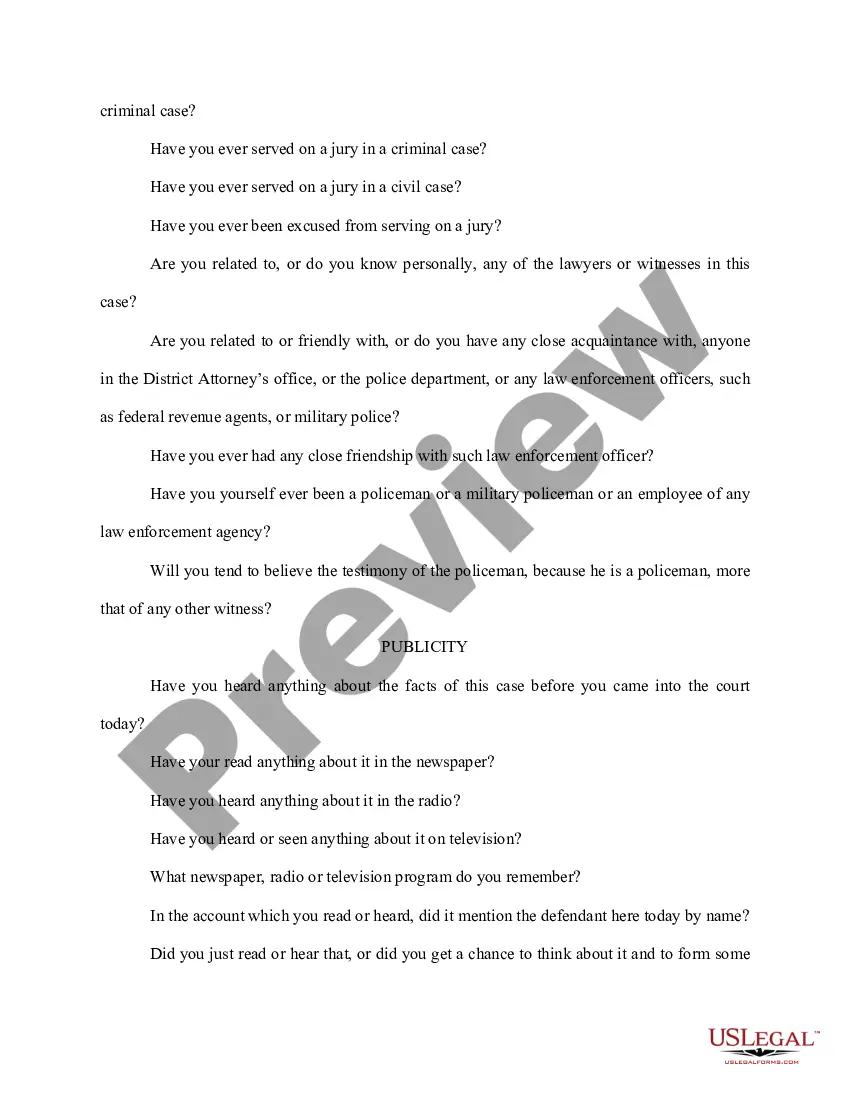
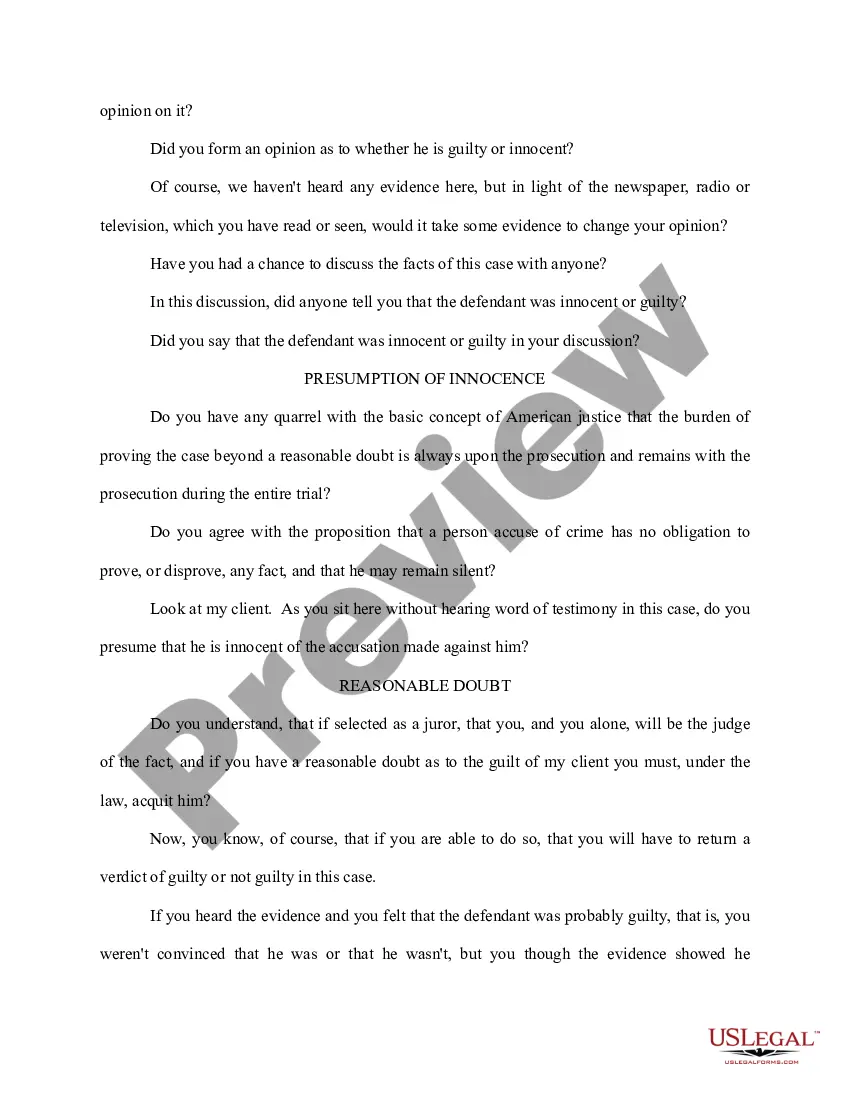
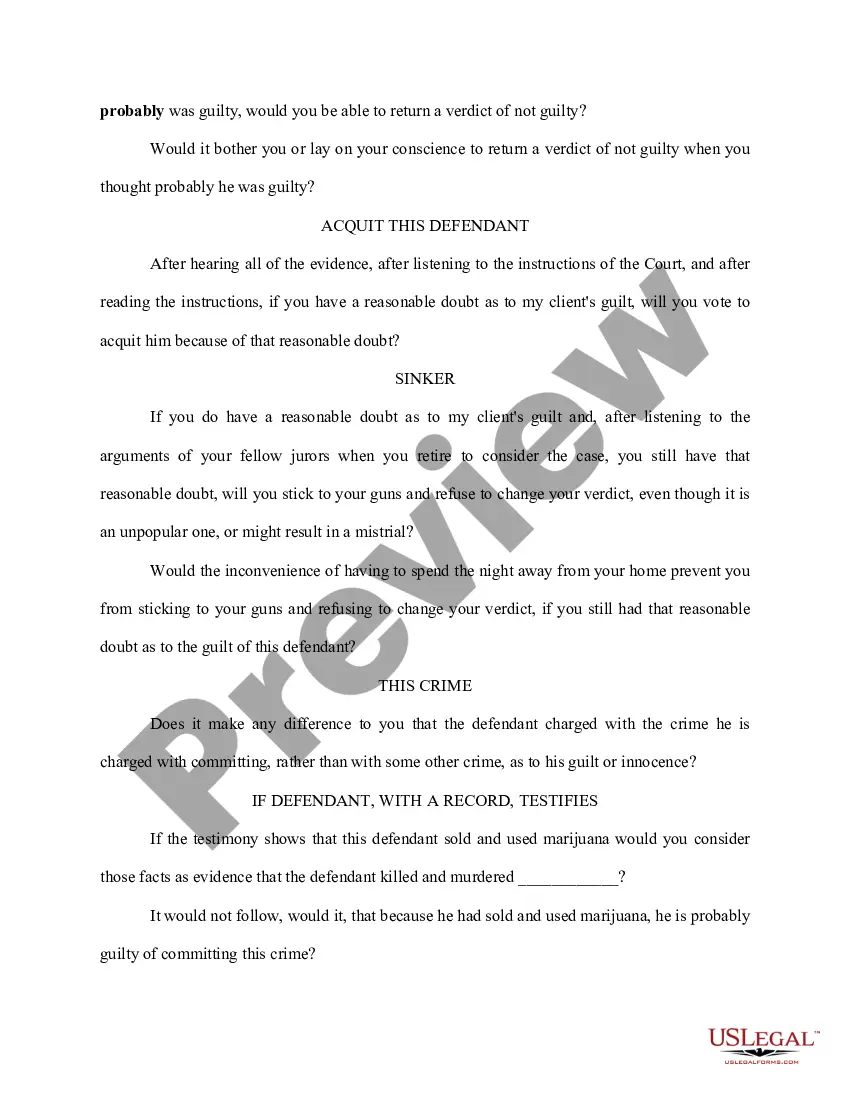
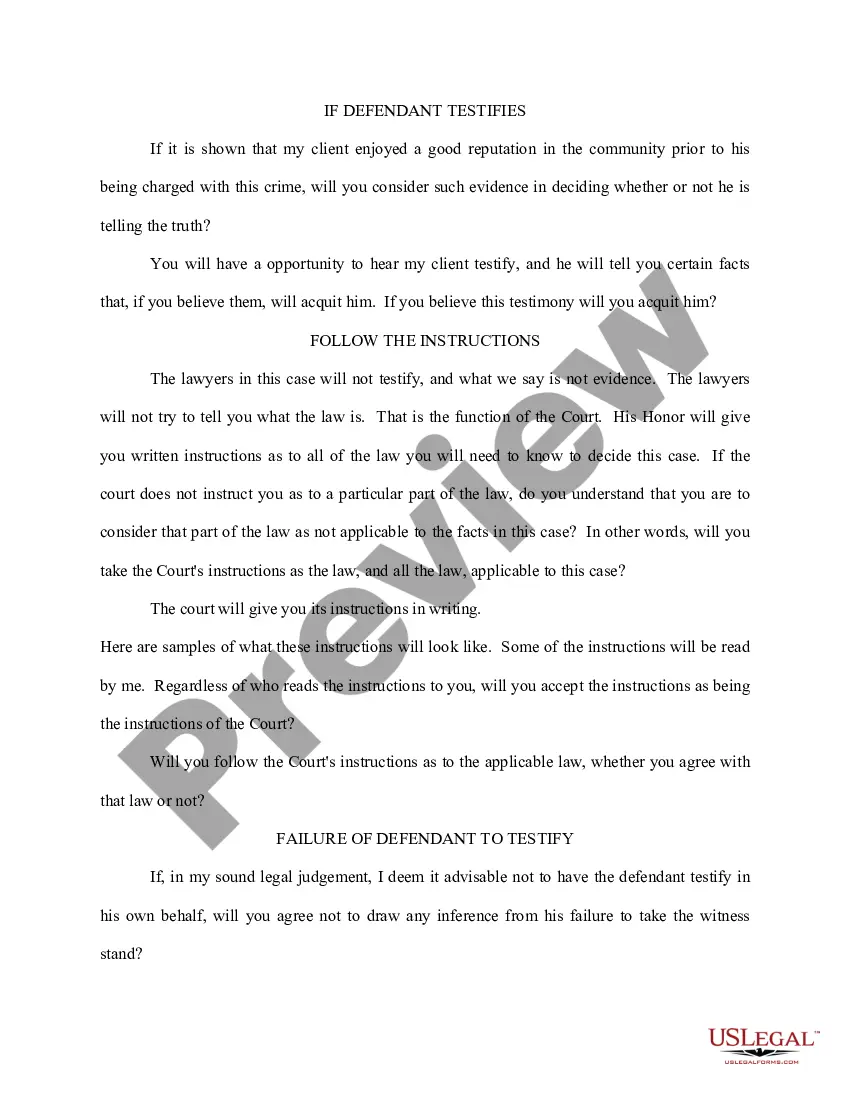
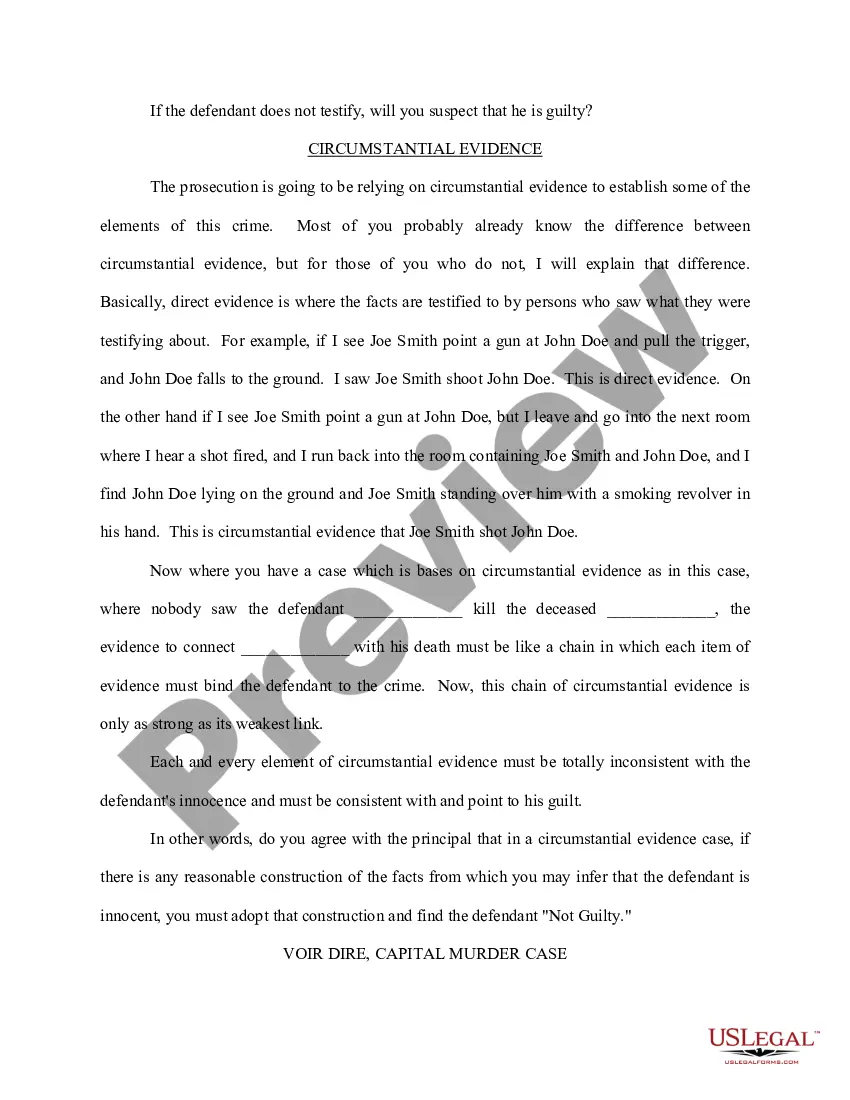
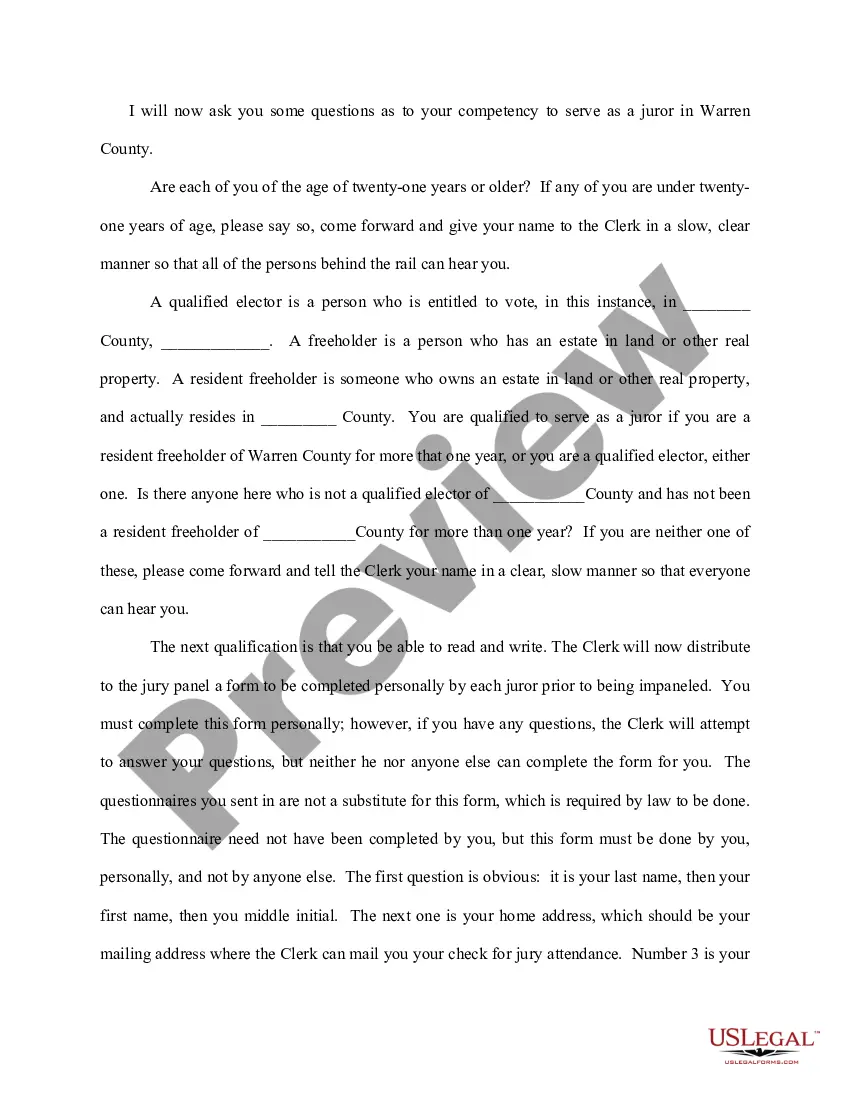
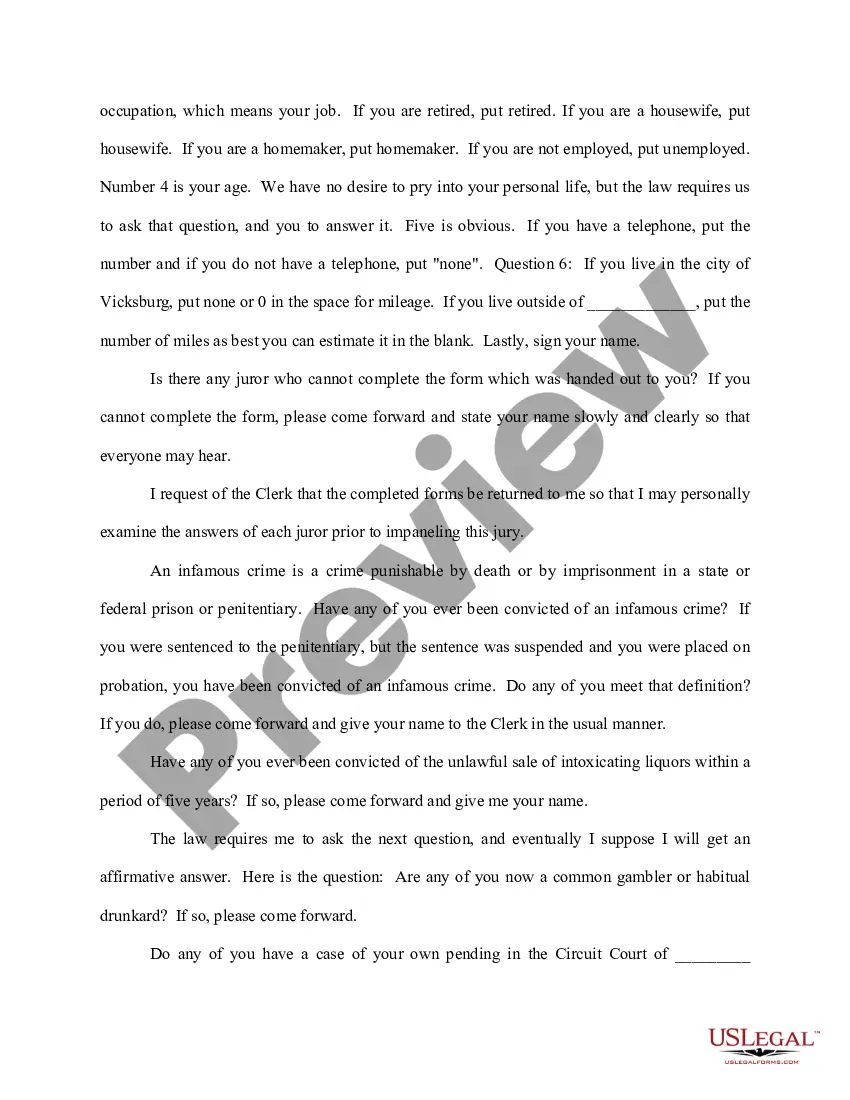
The judge and attorneys ask the potential jurors questions, general or related to the specific case before them, to determine their suitability to serve on the jury. This process is called voir dire, which typically results in some prospective jurors being excused, based on their answers, from serving in that trial.
During voir dire the lawyers may ask the judge to excuse a juror from sitting on the case. This is called "challenging a juror". There are two types of challenges: a challenge for cause and a peremptory challenge.
The judge and the attorneys ask jurors questions to determine if the jurors are free of bias (prejudice) or whether there is any other reason why they cannot be fair and impartial; this process is called voir dire.
The court may exclude relevant evidence if its probative value is substantially outweighed by a danger of one or more of the following: unfair prejudice, confusing the issues, misleading the jury, undue delay, wasting time, or needlessly presenting cumulative evidence.
Voir dire is the only way for the lawyers and the judge to find out about each particular juror. It is very important that all jurors answer the questions frankly and to the best of their ability.
(27) If a new prospective juror is seated, the court should ask him or her: (A) Have you heard my questions to the other prospective jurors? (B) Have any of the questions I have asked raised any doubt in your mind as to whether you could be a fair and impartial juror in this case?
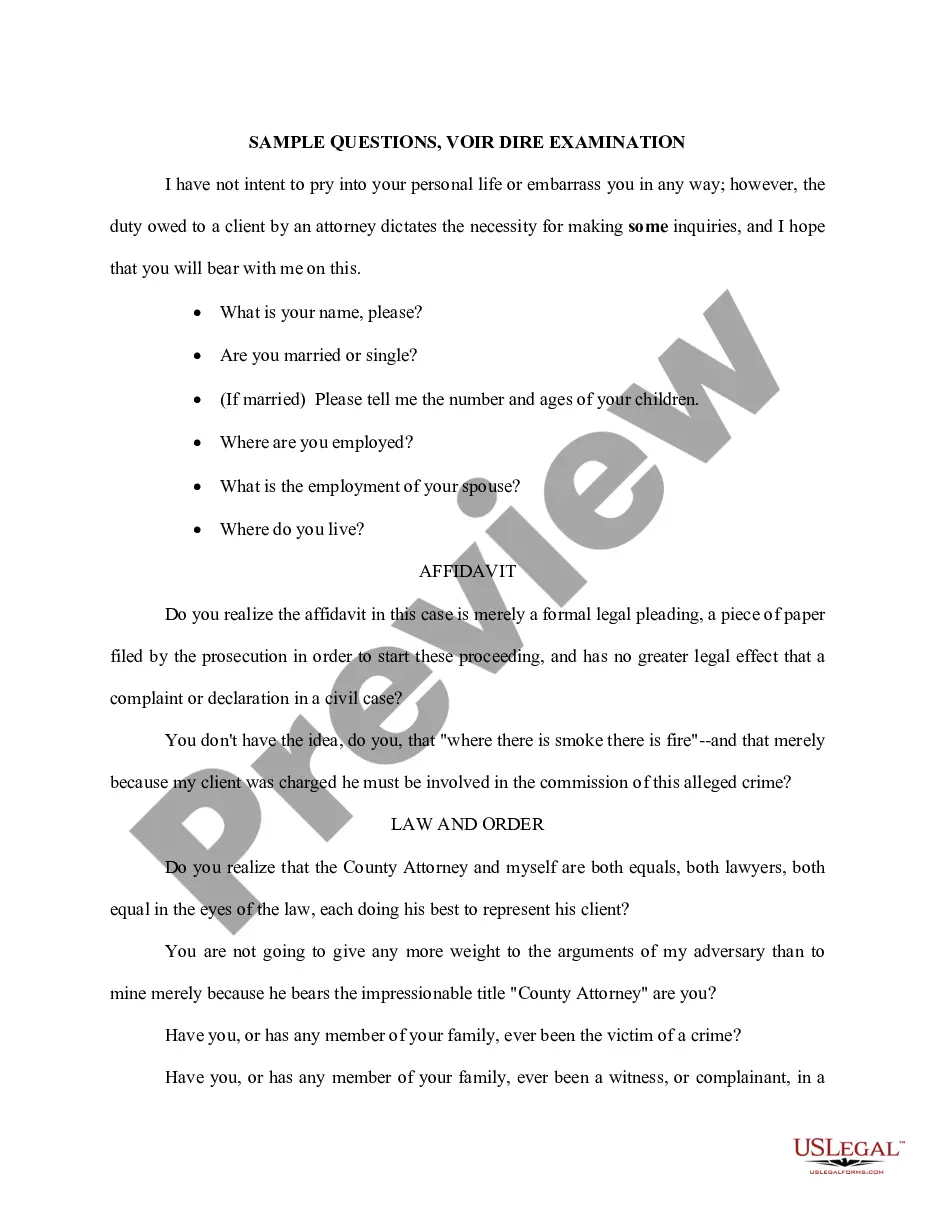
Often, jurors will be asked to state the neighborhood or area they live in, their profession, whether they have children, are married, and so on. This kind of information helps the judge and lawyers get a feel for the potential jurors, and might even inform an attorney's decision to use a challenge on someone.