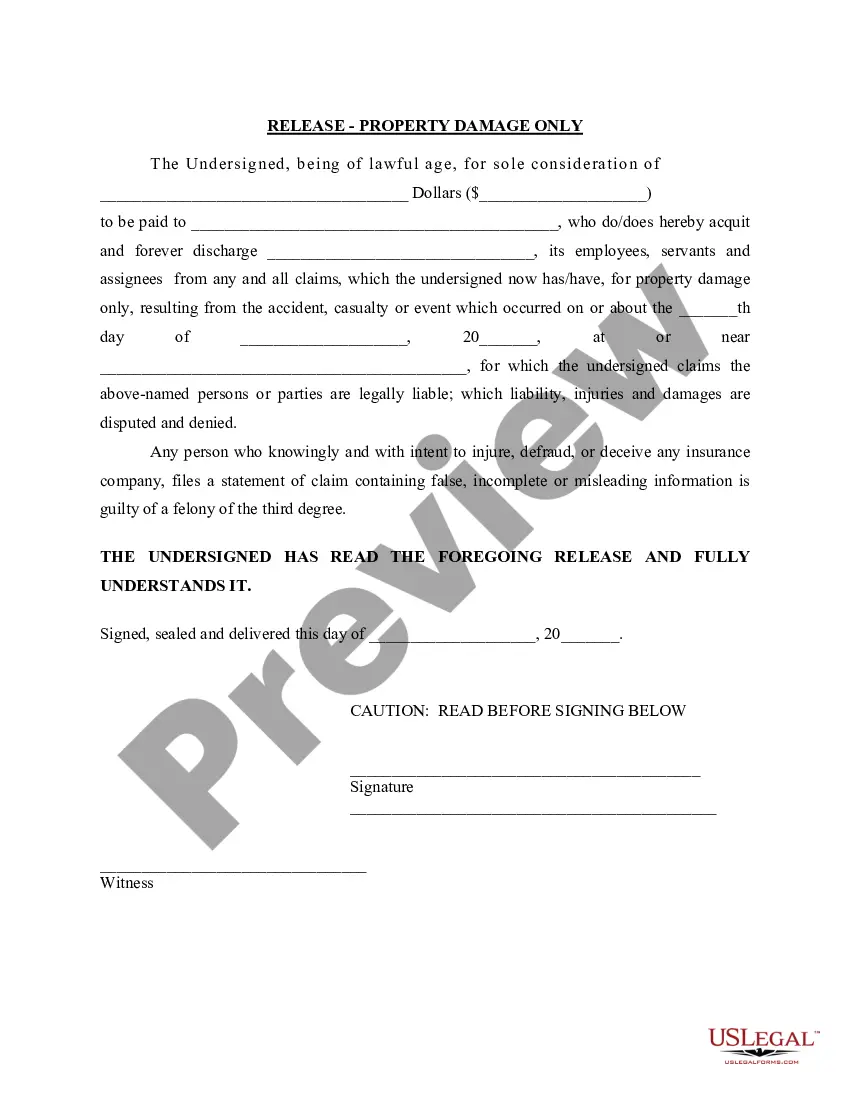
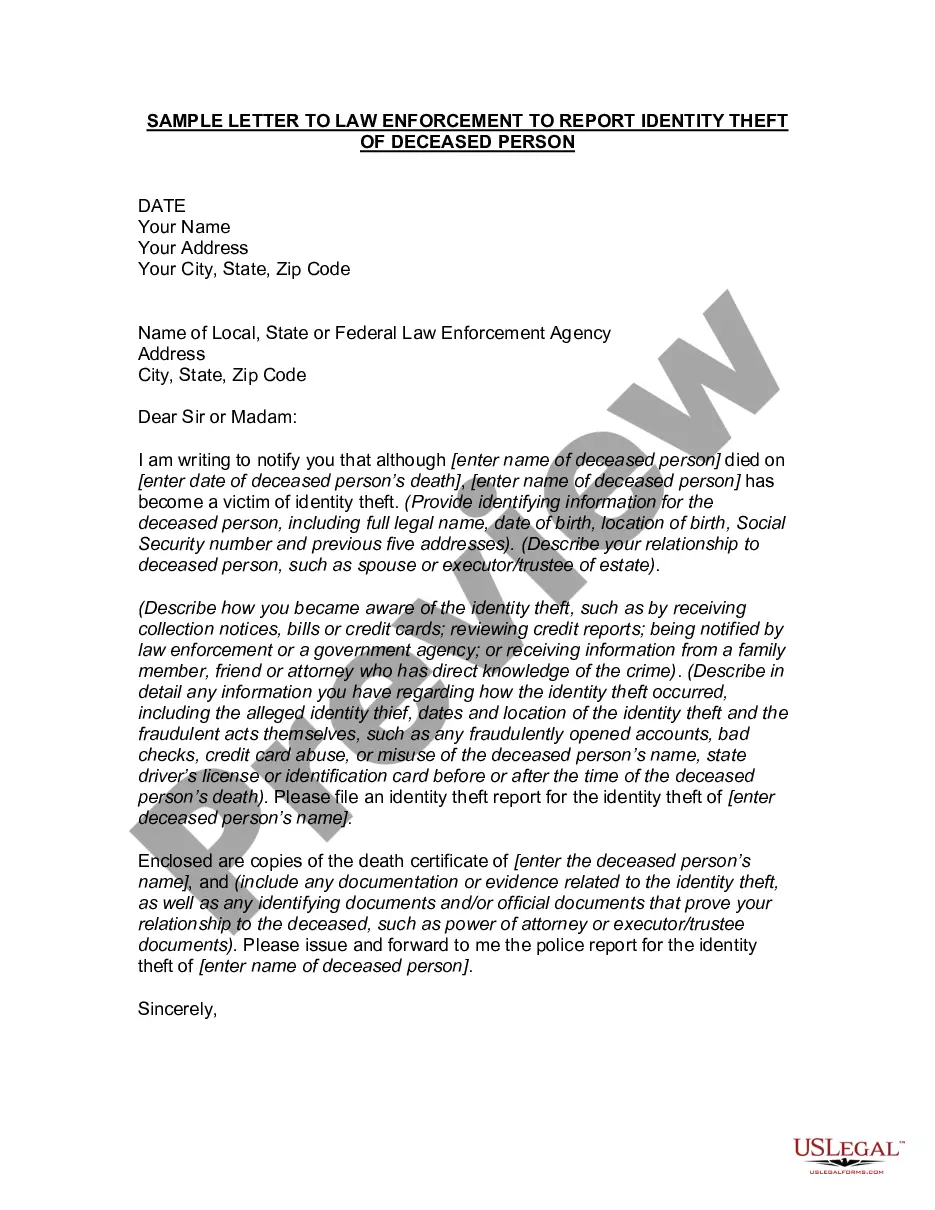
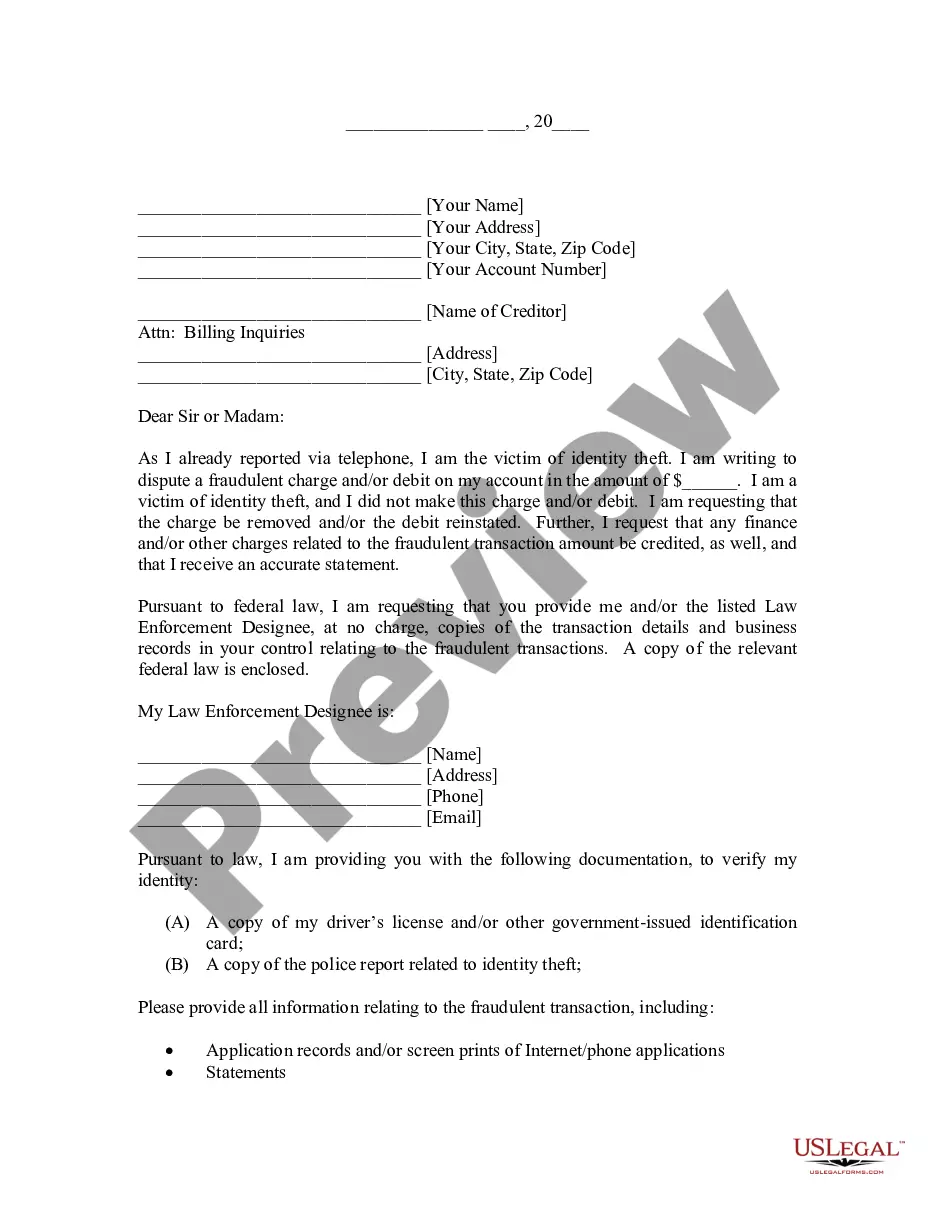
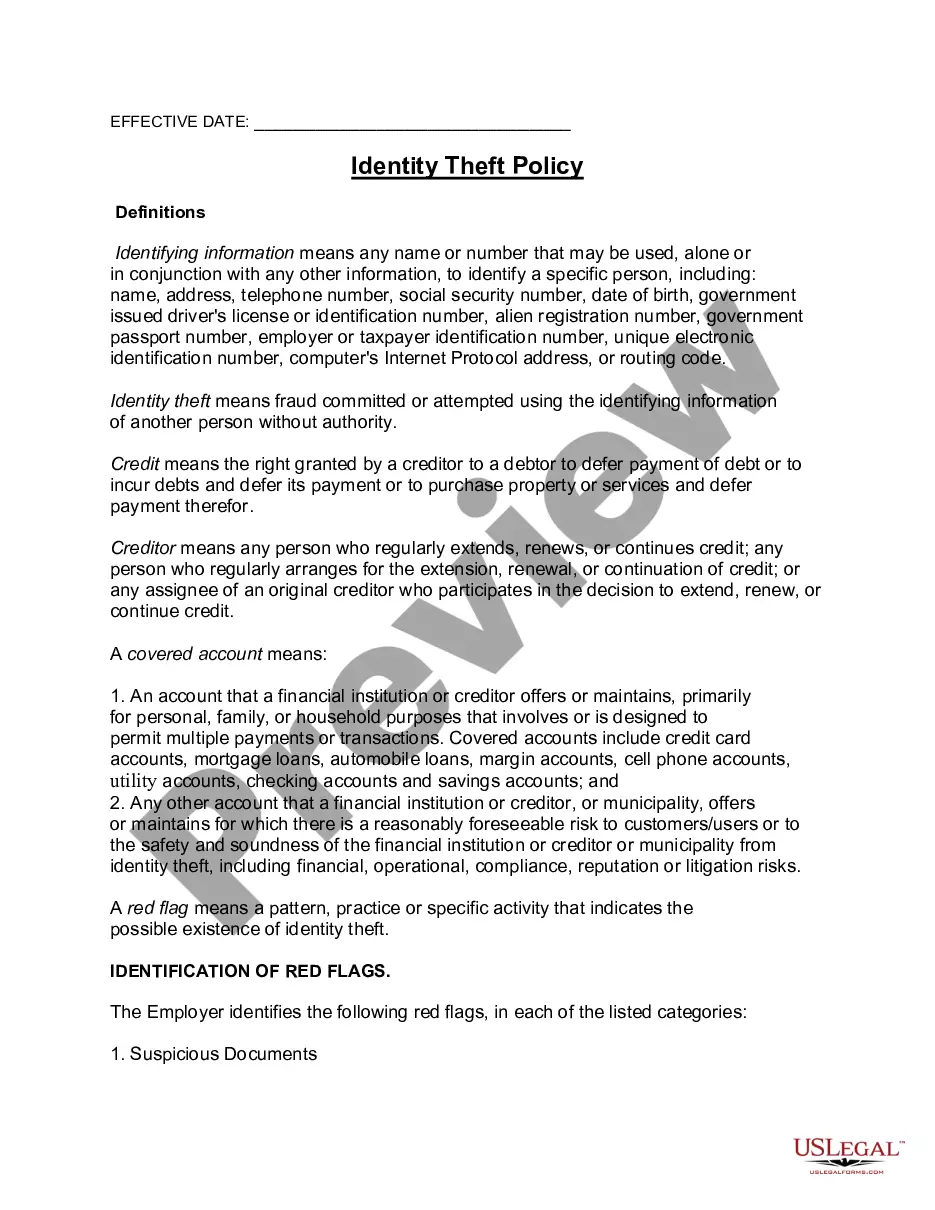
Arkansas Checklist for Remedying Identity Theft of Deceased Persons
Description
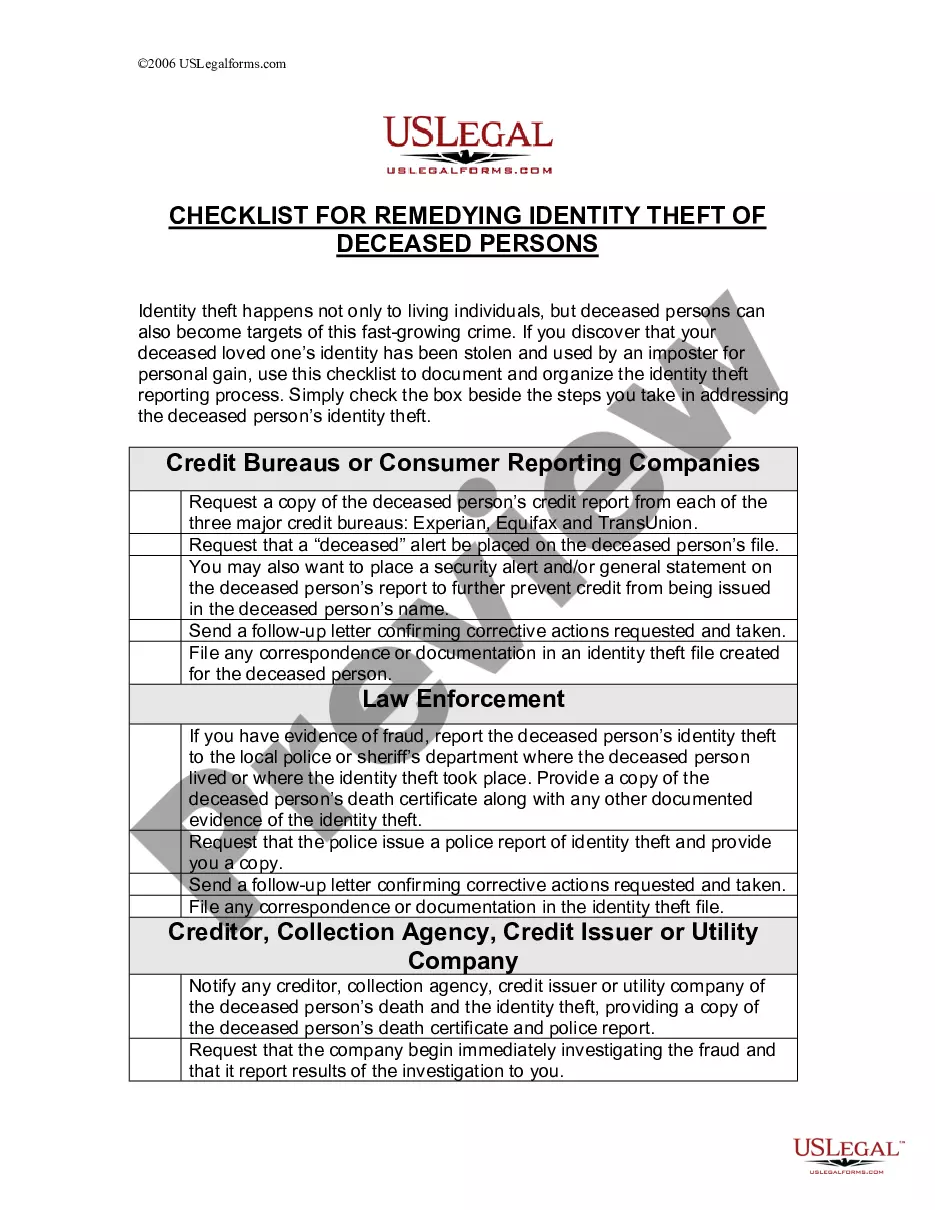
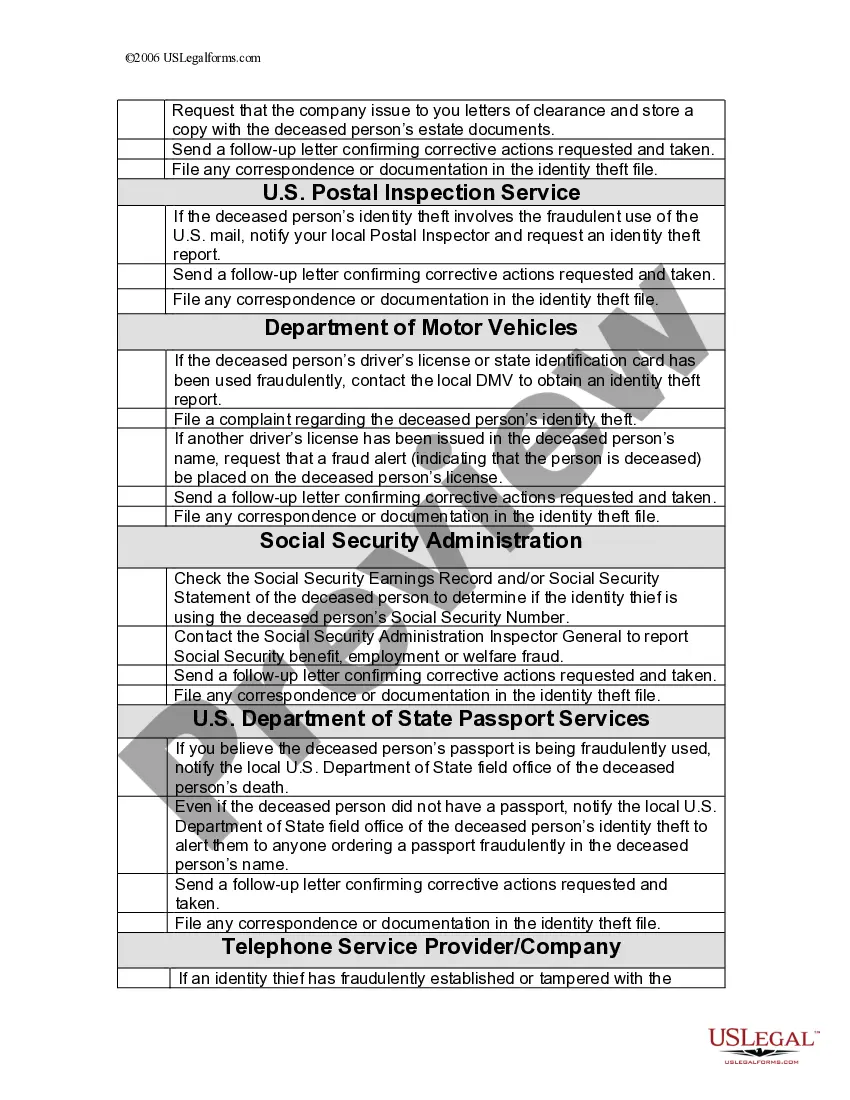
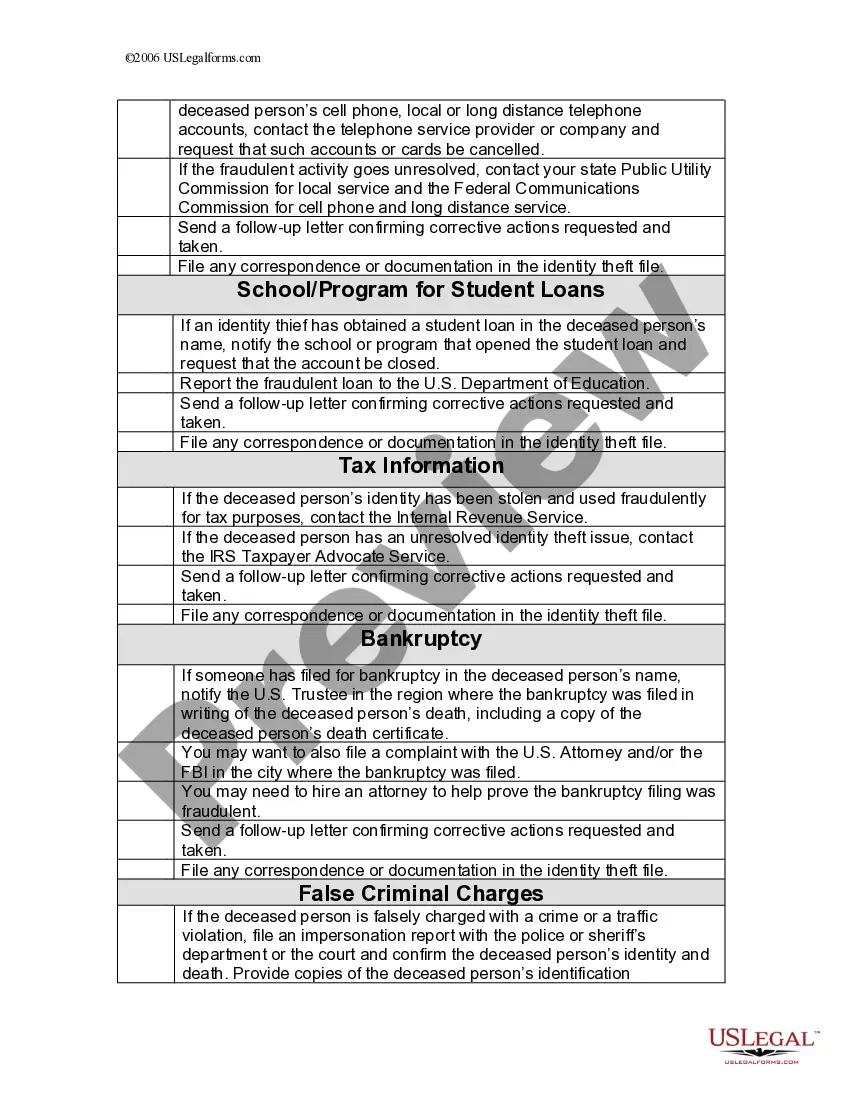
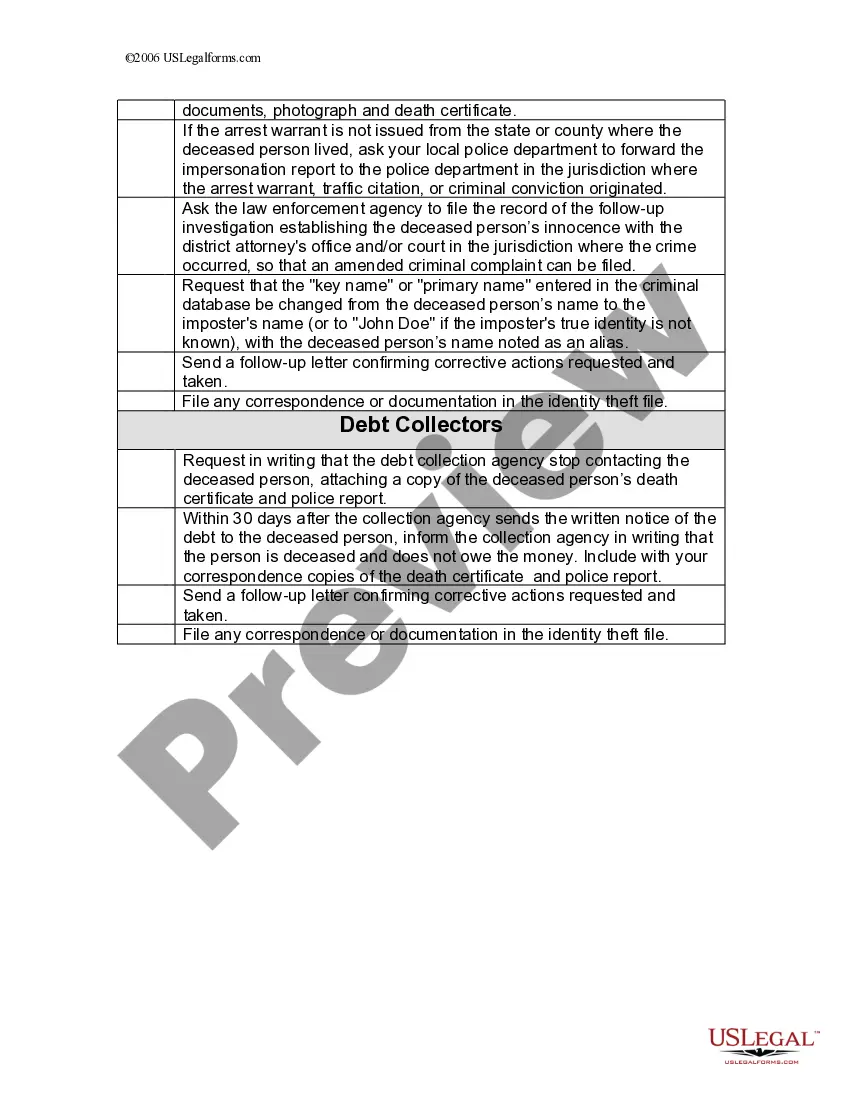
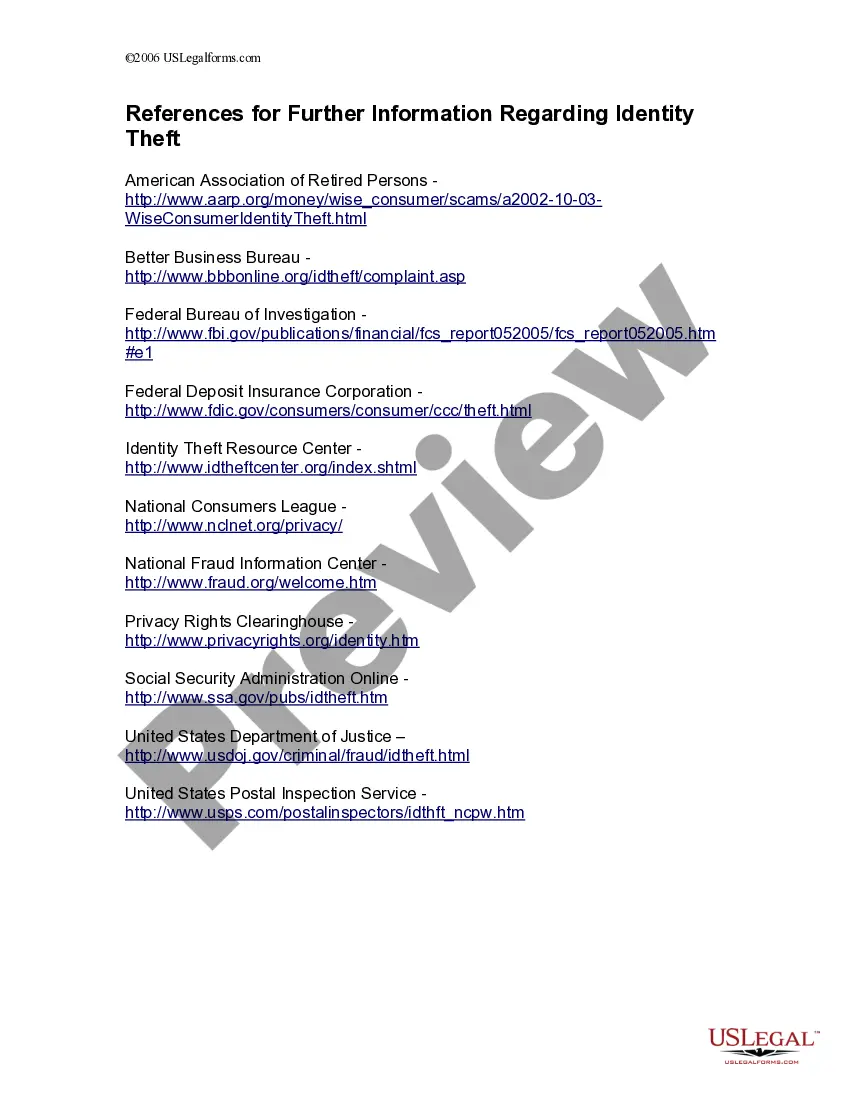
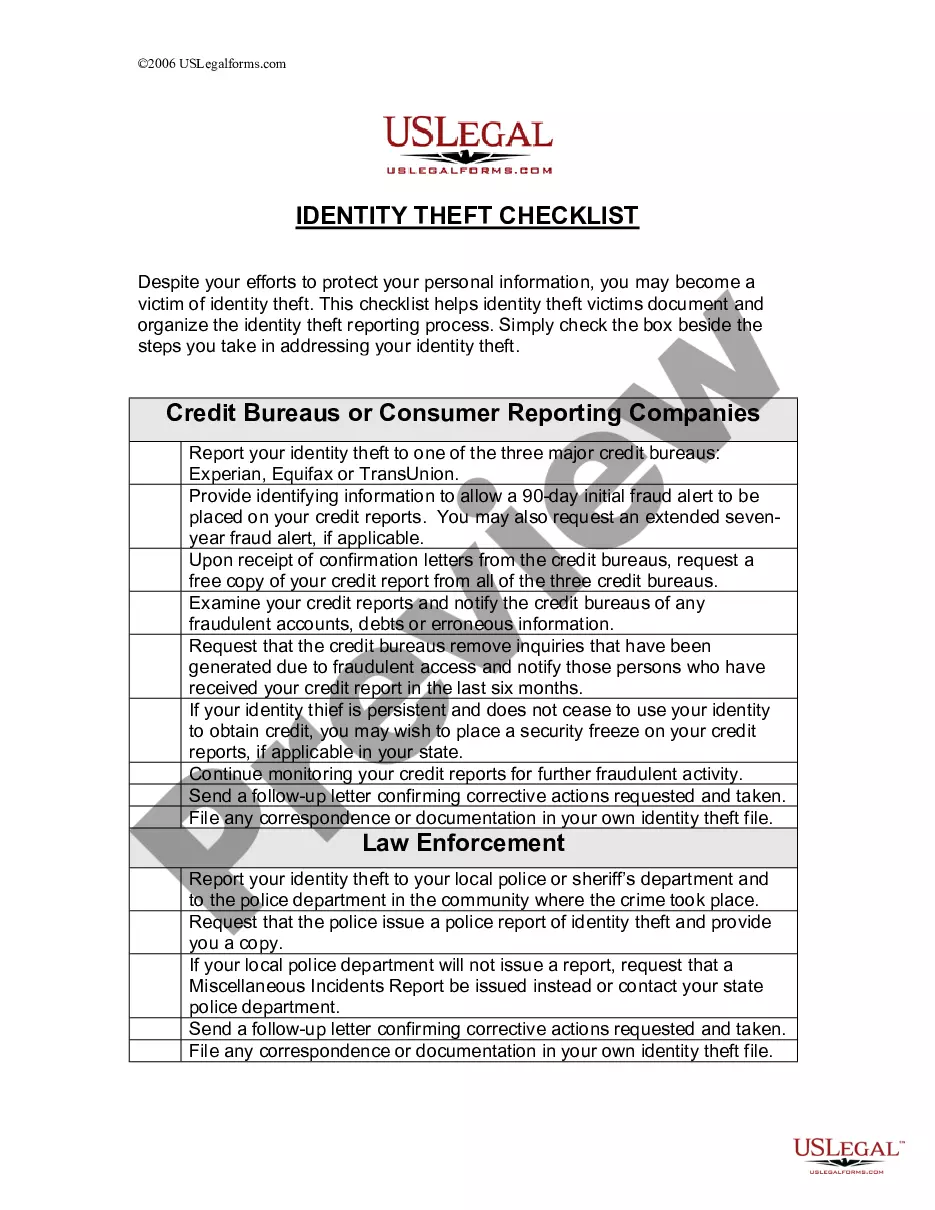
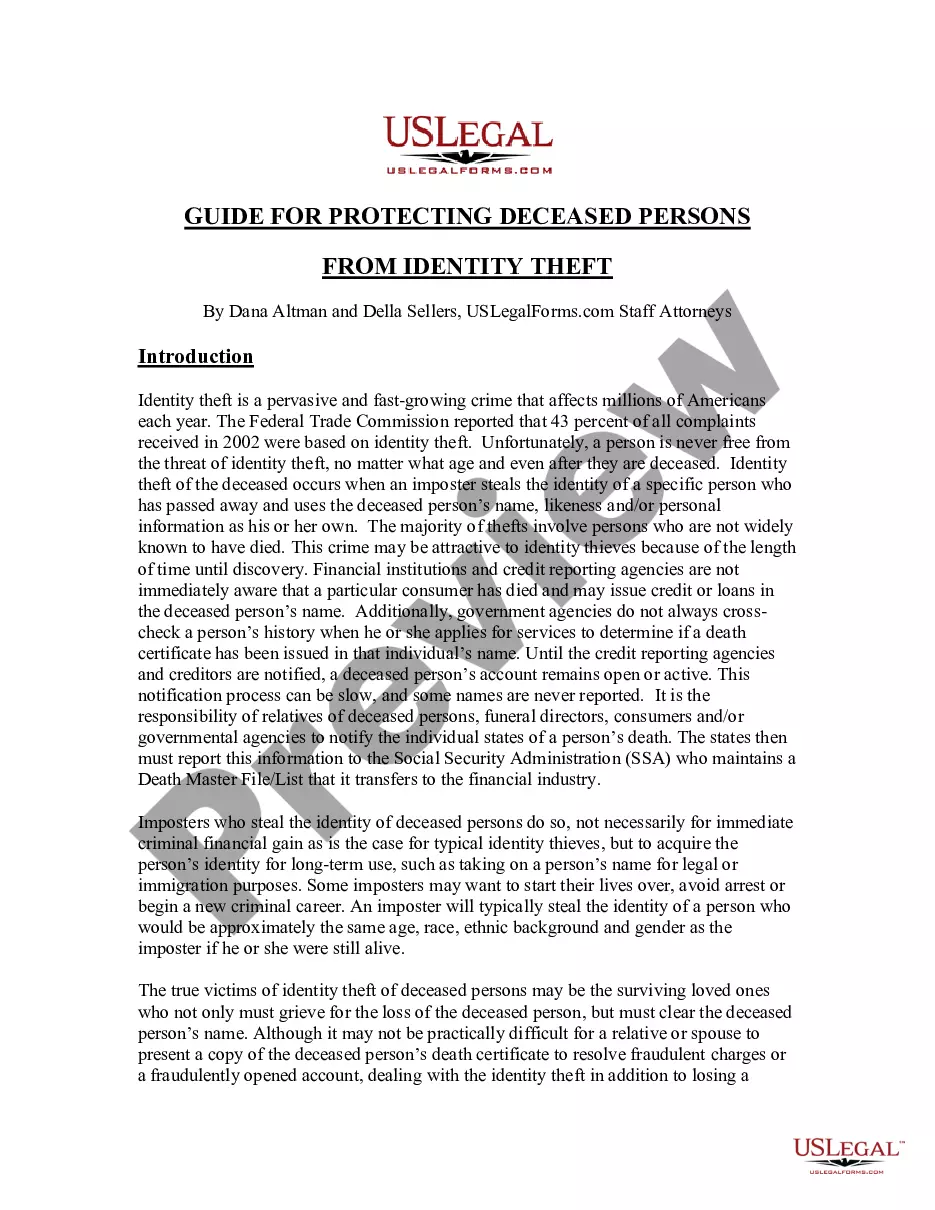

How to fill out Checklist For Remedying Identity Theft Of Deceased Persons?
You can spend numerous hours online trying to locate the appropriate document template that meets the federal and state standards you require. US Legal Forms offers thousands of legal forms that are reviewed by experts.
You can download or print the Arkansas Checklist for Addressing Identity Theft of Deceased Individuals from their service.
If you have a US Legal Forms account, you can sign in and click on the Obtain button. Subsequently, you can complete, modify, print, or sign the Arkansas Checklist for Addressing Identity Theft of Deceased Individuals. Every legal document template you obtain is yours to keep permanently. To obtain another copy of a purchased form, visit the My documents section and click on the relevant button.
Find the document template and download it to your device. Make alterations to your document if necessary. You can complete, modify, sign, and print the Arkansas Checklist for Addressing Identity Theft of Deceased Individuals. Access and print thousands of document templates using the US Legal Forms website, which provides the largest selection of legal forms. Utilize professional and state-specific templates to meet your business or personal requirements.
- If you are using the US Legal Forms site for the first time, follow the simple instructions below.
- First, ensure that you have selected the correct document template for the region/city you choose. Read the form description to confirm you have chosen the right template.
- If available, utilize the Review button to browse through the document template as well.
- If you wish to find another version of the template, use the Search field to locate the template that fits your needs and requirements.
- Once you have located the template you desire, click Buy now to proceed.
- Select the pricing plan you wish, enter your details, and register for your account on US Legal Forms.
- Complete the transaction. You can use your credit card or PayPal account to pay for the legal template.
Form popularity
FAQ
The law requires recording decedents' SSNs on the death certificate, but for people who died after December 31, 2001 this information is recorded in an ?administrative purposes? section.
(a) The Attorney General in cooperation with any law enforcement agency may issue an identity theft passport to a person who: (1) Is a resident of this state; (2) Learns or reasonably suspects that he or she is a victim of financial identity fraud; and.
Identity theft can victimize the dead. An identity thief's use of a deceased person's Social Security number may create problems for family members. This type of identity theft also victimizes merchants, banks, and other businesses that provide goods and services to the thief.
Deceased family member identity theft, also known as ghosting, occurs when someone uses the personal information of a deceased person to commit fraud. This can include opening new credit accounts, applying for loans or making other financial transactions in the deceased person's name.
Criminals look for personal details in obituaries, funeral homes, hospitals, stolen death certificates, and websites online to commit identity fraud. Thieves can use the personal information of the deceased to help guess their Social Security number or purchase it online.
Second, the details in an obituary may give scammers enough information to seek out further illicit information about the deceased, such as finding their Social Security number on the dark web.
Identity thieves can strike even after death. An identity thief's use of a deceased person's Social Security number may create problems for family members. This type of identity theft also victimizes merchants, banks, and other businesses that provide goods and services to the thief.