Arkansas Paternity Law and Procedure Handbook
What this document covers
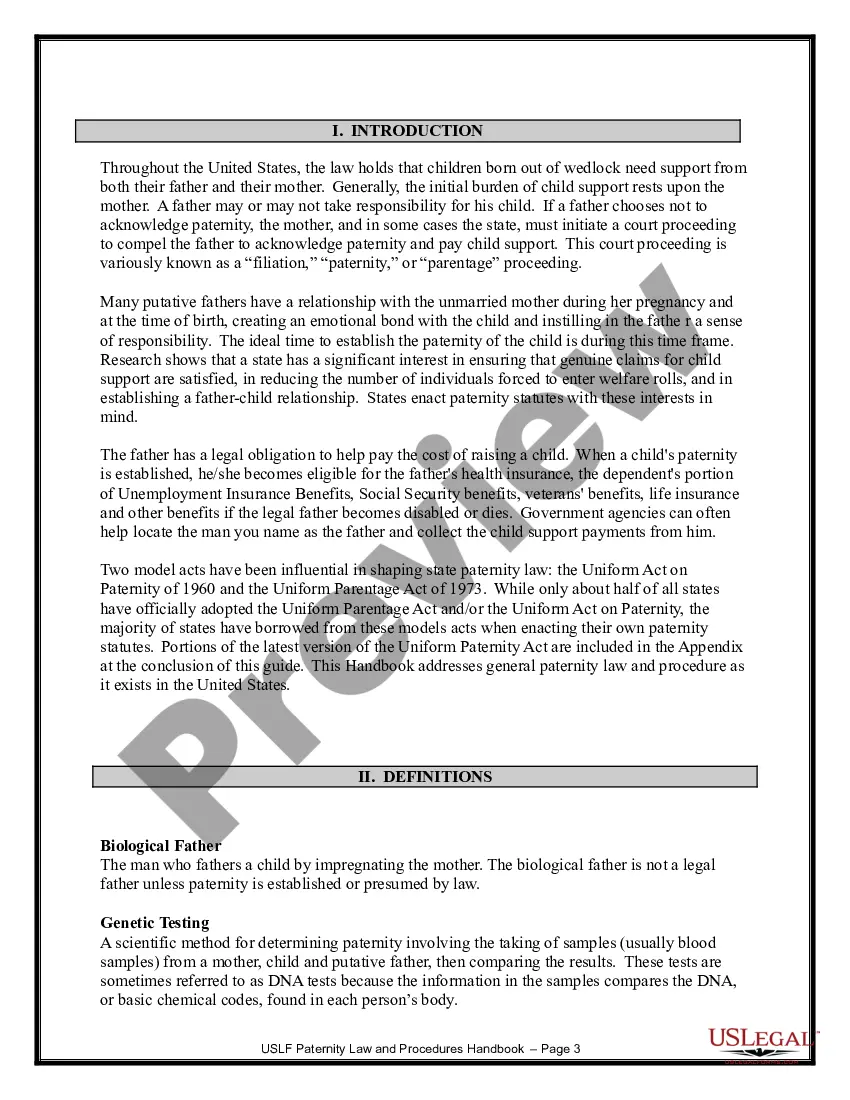
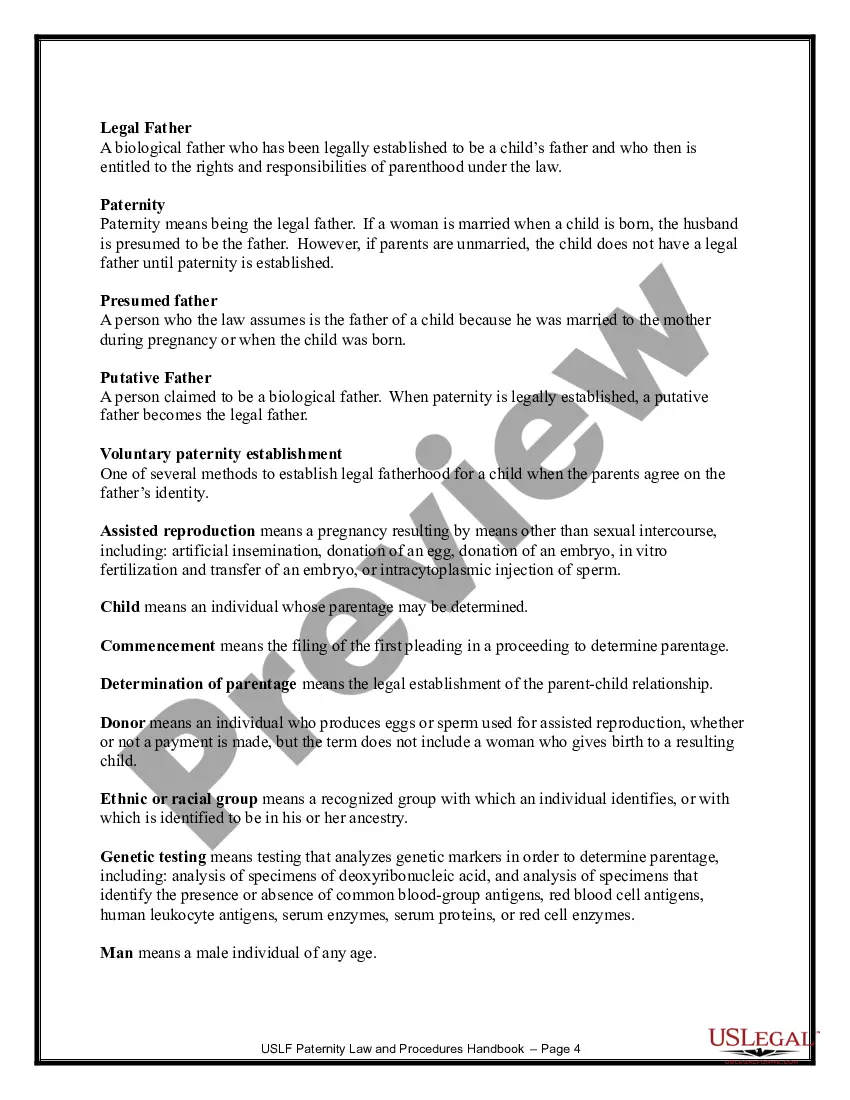
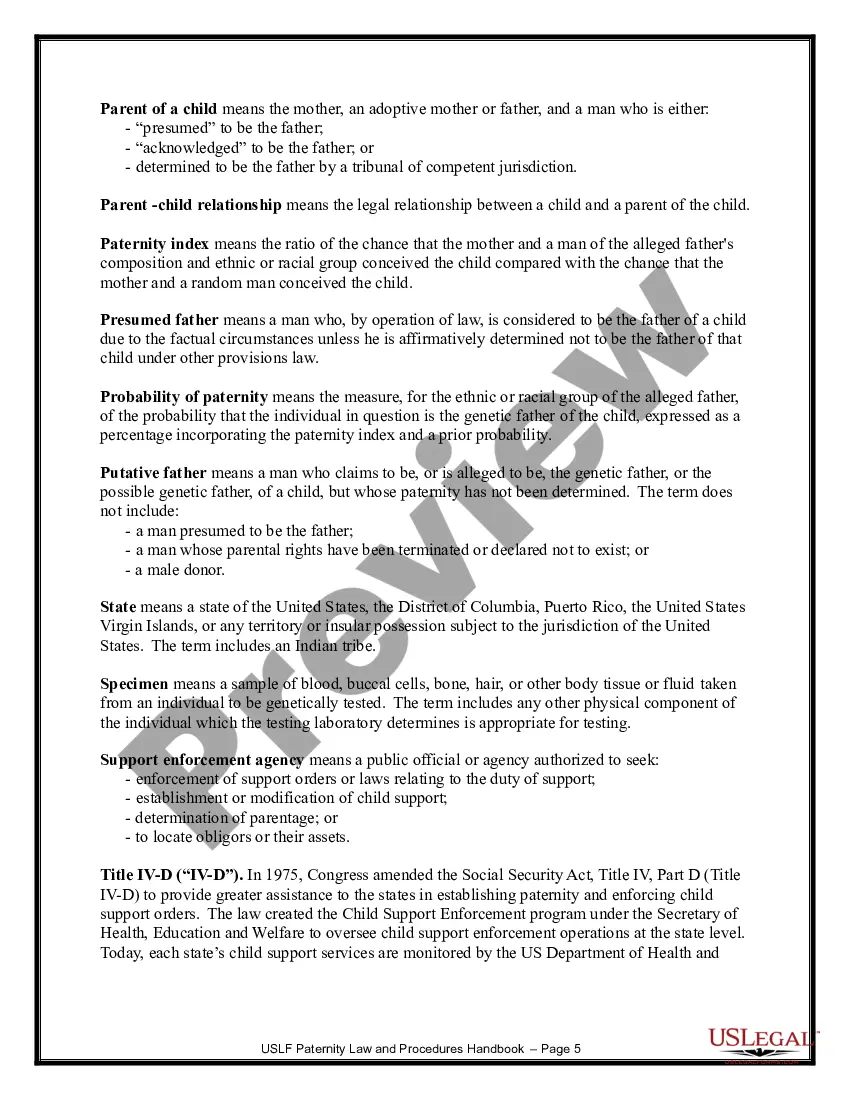
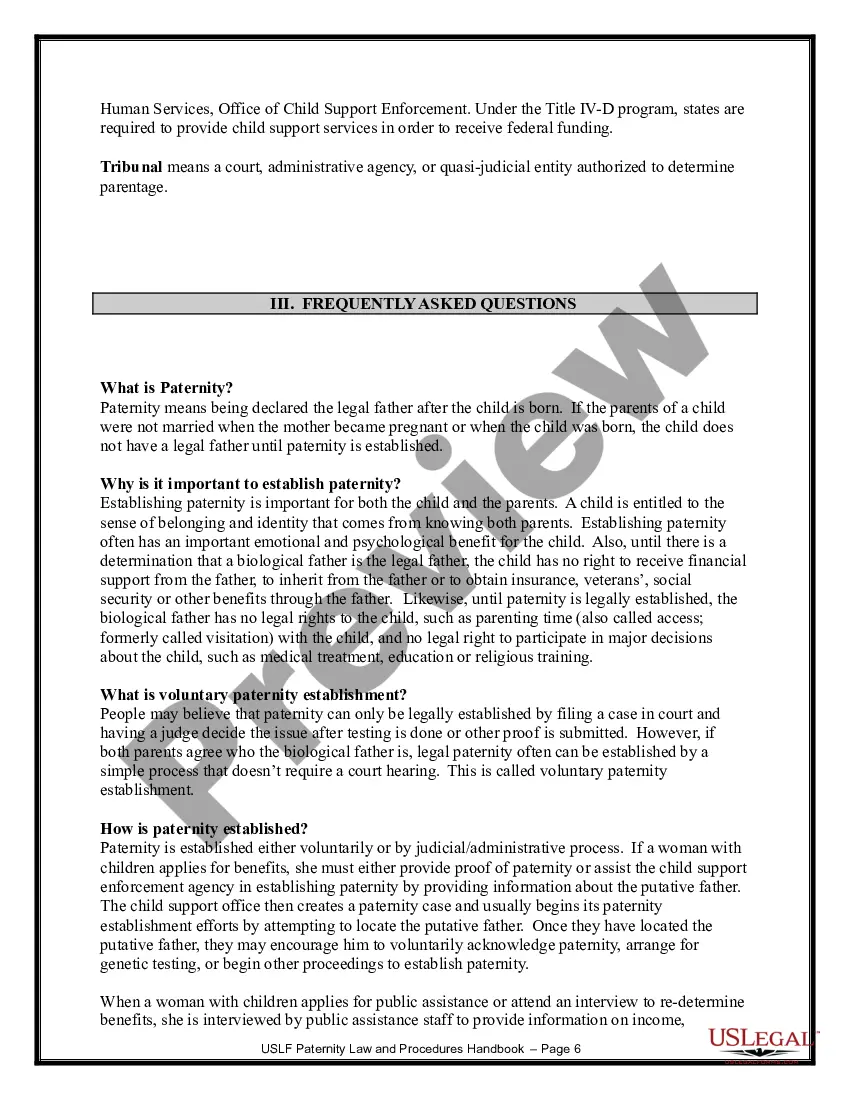
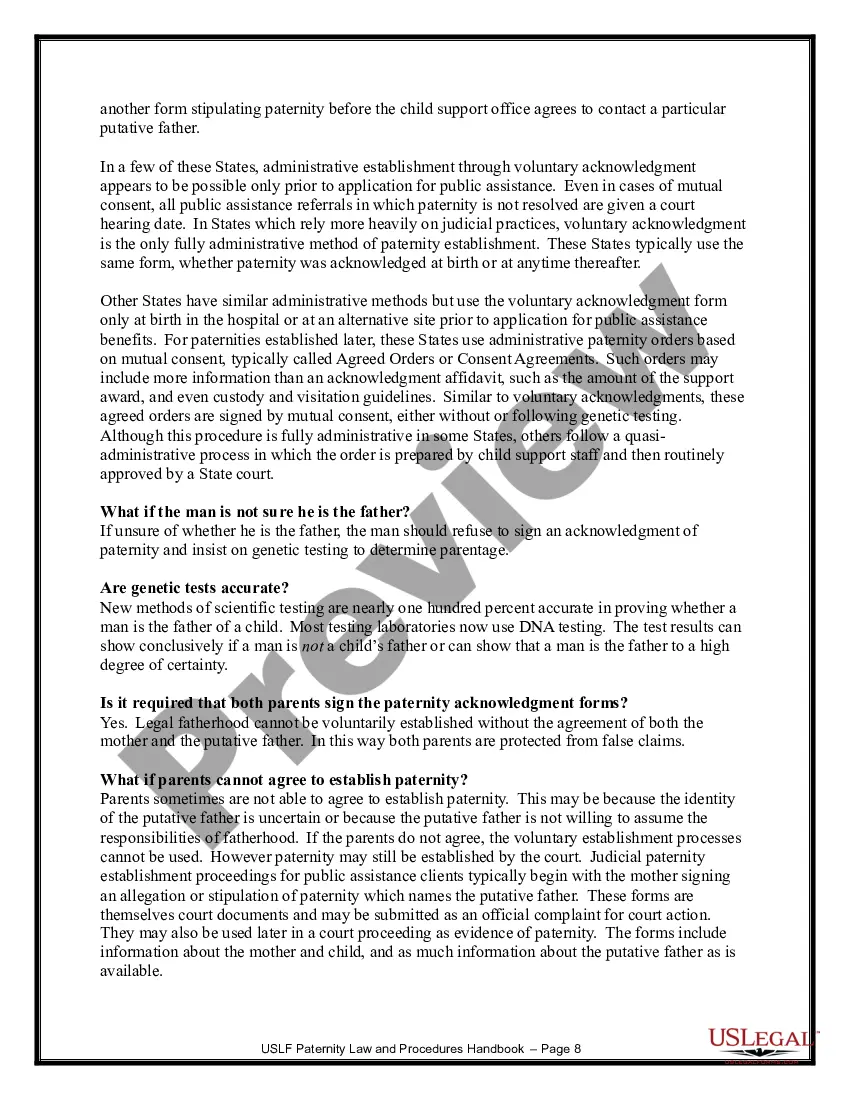
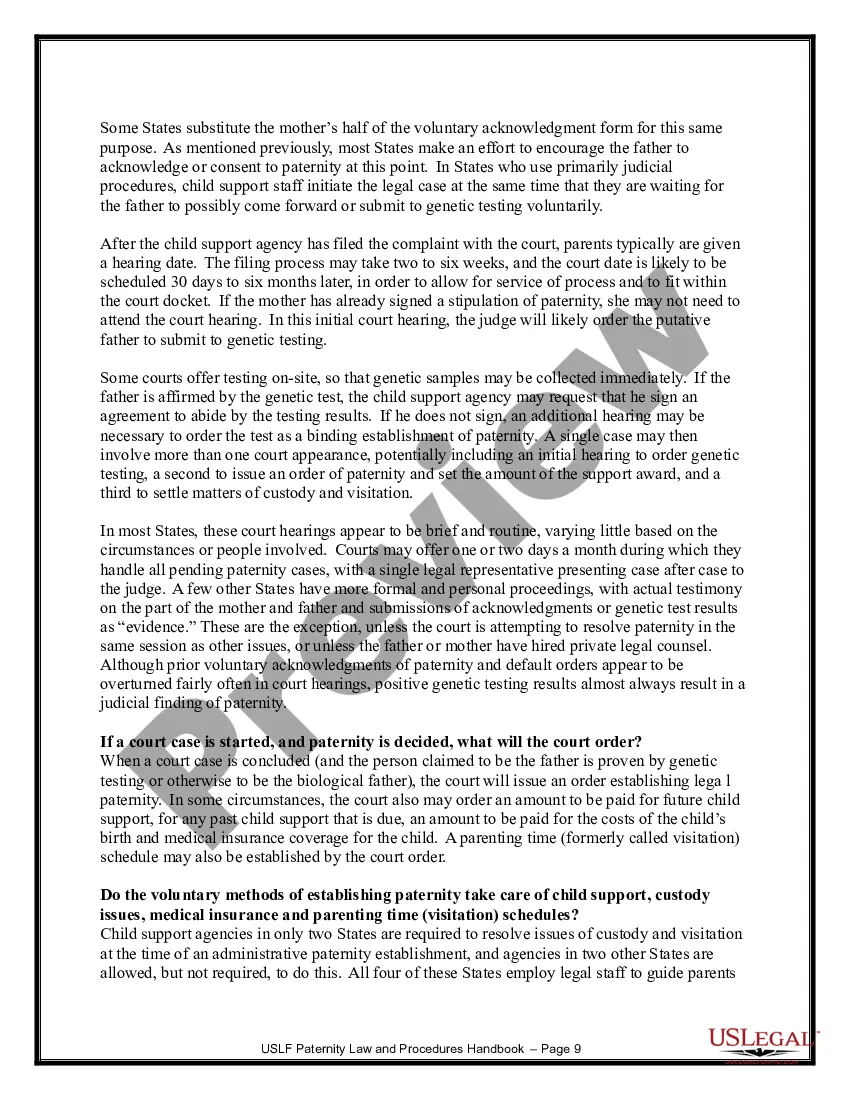
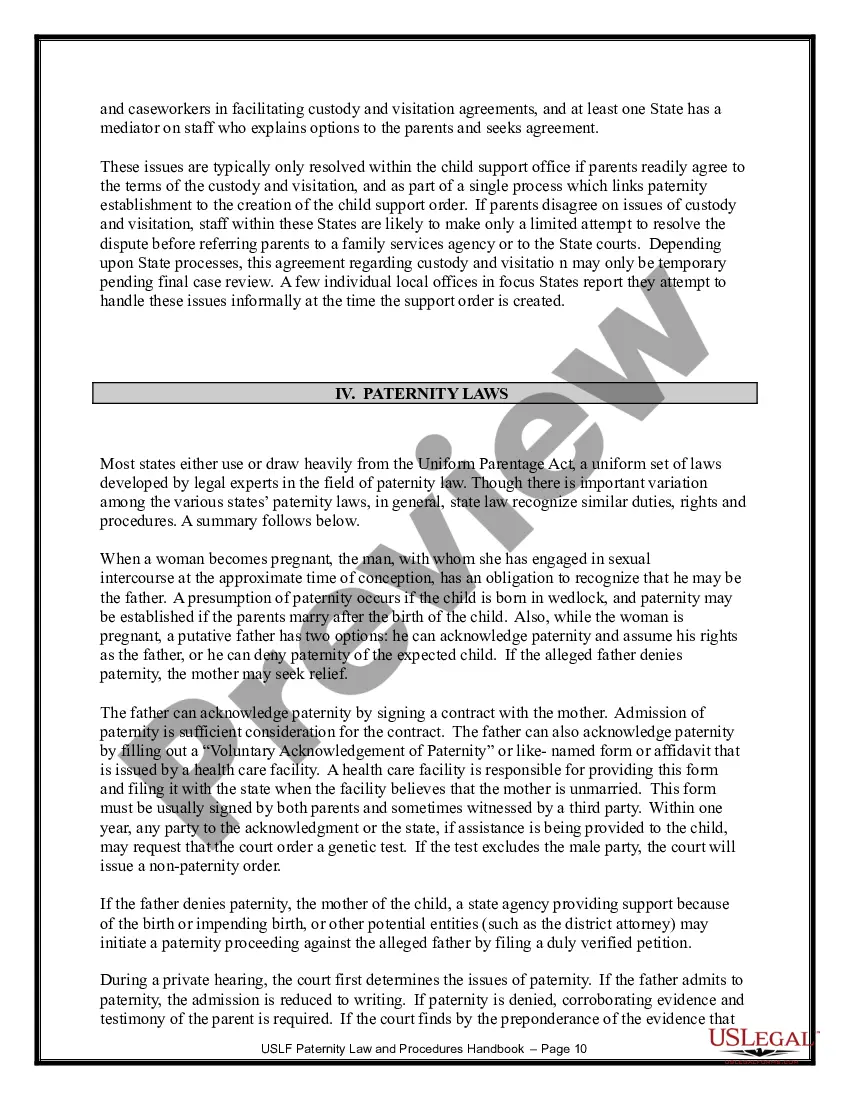
The Paternity Law and Procedure Handbook is a comprehensive guide detailing the laws and procedures for establishing paternity in the United States. This handbook serves as a resource for understanding the legal implications of paternity, the rights and responsibilities of parents, and the processes involved in acknowledging paternity. Unlike other legal documents, this handbook is designed to provide a clear overview of both voluntary and court-ordered paternity establishment, ensuring that users can navigate these procedures with confidence.
Key parts of this document
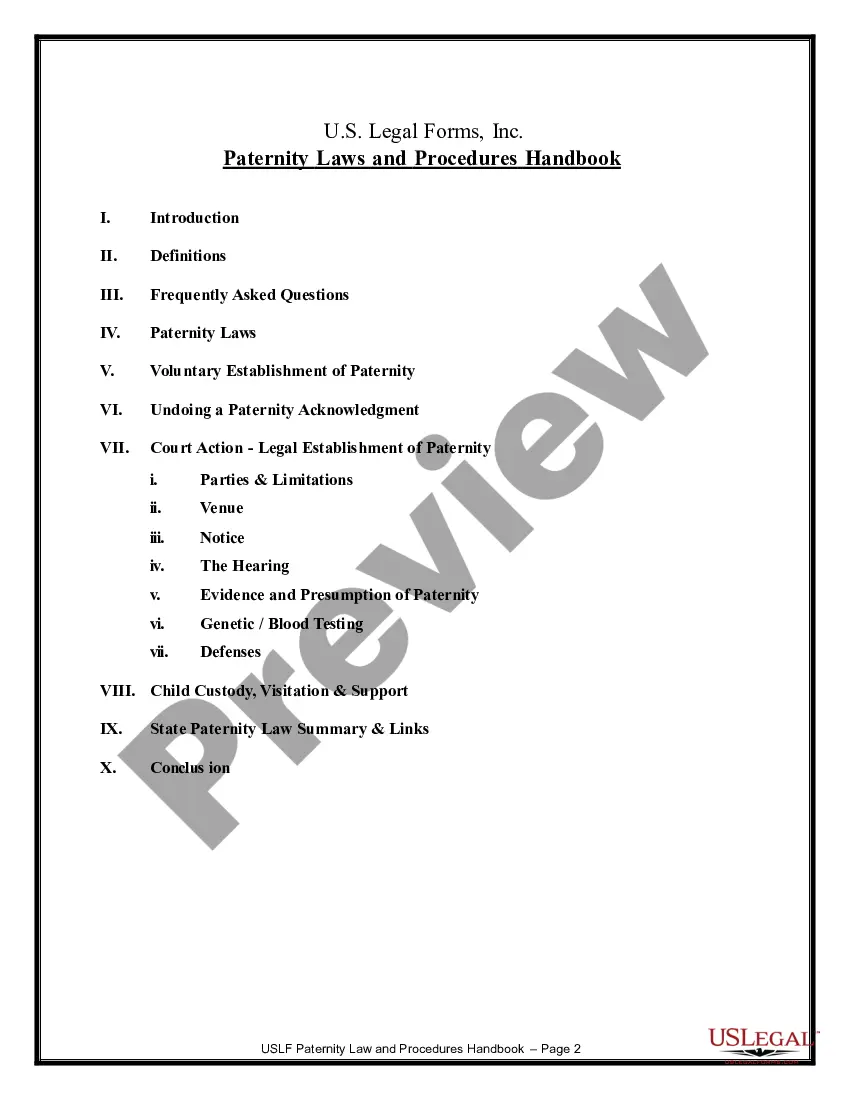
- Definitions of key terms related to paternity.
- A summary of rights and responsibilities of legal fathers.
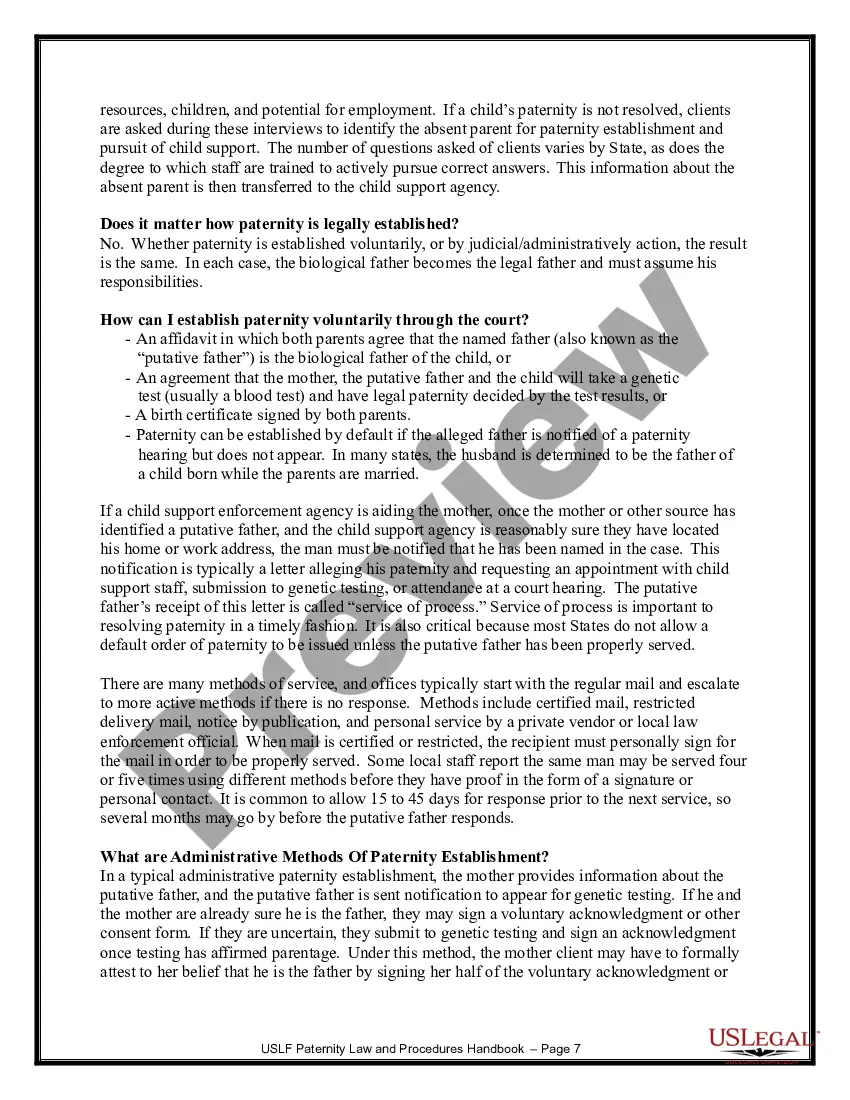
- Guidelines for voluntarily establishing paternity.
- Procedures for court actions to establish paternity.
- Information on genetic testing and its role in paternity determinations.
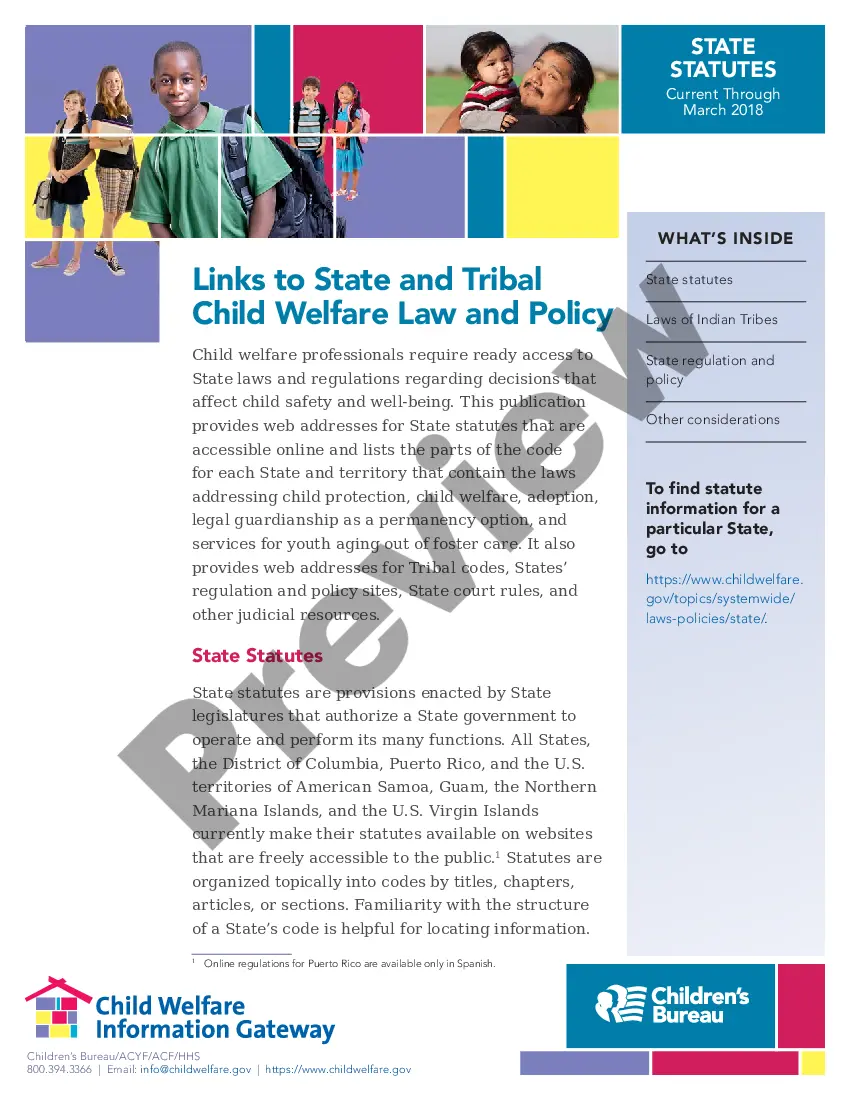
- State-specific paternity law summaries and resources.


When to use this document
This handbook is essential when parents are uncertain about the paternity of a child, particularly in situations involving unmarried parents. It is also useful for mothers seeking financial support, fathers wanting to establish their parental rights, or any party needing clarity on paternity laws in their state. By consulting this handbook, users can prepare for court actions, understand their legal standing, and ensure that child support and custody issues are appropriately addressed.
Who this form is for
- Unmarried parents who need to establish paternity.
- Mothers seeking child support from a putative father.
- Putative fathers wanting to assert their parental rights.
- Legal advocates and counselors assisting clients with paternity issues.
- Individuals seeking to understand their rights and responsibilities regarding paternity.
Steps to complete this form
- Review the definitions and key terms to understand your rights and responsibilities.
- Follow the guidelines for voluntary paternity acknowledgment if both parents agree on the identity of the biological father.
- File a petition for paternity in court if an agreement cannot be reached or if paternity is contested.
- Gather necessary documents, including identification and any statements or affidavits required.
- Attend any court hearings or mediation sessions as required.
- Obtain the results of genetic testing if ordered by the court to confirm paternity.
Is notarization required?
Notarization is not commonly needed for this form. However, certain documents or local rules may make it necessary. Our notarization service, powered by Notarize, allows you to finalize it securely online anytime, day or night.
Get your form ready online
Our built-in tools help you complete, sign, share, and store your documents in one place.
Make edits, fill in missing information, and update formatting in US Legal Forms—just like you would in MS Word.
Download a copy, print it, send it by email, or mail it via USPS—whatever works best for your next step.
Sign and collect signatures with our SignNow integration. Send to multiple recipients, set reminders, and more. Go Premium to unlock E-Sign.
If this form requires notarization, complete it online through a secure video call—no need to meet a notary in person or wait for an appointment.
We protect your documents and personal data by following strict security and privacy standards.

Make edits, fill in missing information, and update formatting in US Legal Forms—just like you would in MS Word.

Download a copy, print it, send it by email, or mail it via USPS—whatever works best for your next step.

Sign and collect signatures with our SignNow integration. Send to multiple recipients, set reminders, and more. Go Premium to unlock E-Sign.

If this form requires notarization, complete it online through a secure video call—no need to meet a notary in person or wait for an appointment.

We protect your documents and personal data by following strict security and privacy standards.
Common mistakes
- Not understanding the difference between legal and biological paternity.
- Failing to seek legal advice when unsure about the paternity establishment process.
- Signing paternity acknowledgment forms without being certain of parentage.
- Missing deadlines for contesting a paternity acknowledgment or court order.
- Neglecting to consider the long-term responsibilities after establishing paternity.
Why use this form online
- Instant access to essential information tailored to your jurisdiction.
- Editability to fit your specific situation before printing or filing.
- Reliable and up-to-date legal guidelines provided by licensed attorneys.
- Convenient access from any device, ensuring you can prepare whenever necessary.
Key takeaways
- Establishing paternity is critical for both legal recognition and financial support.
- Parents have the option to voluntarily acknowledge paternity or seek judicial processes.
- Understanding state-specific requirements is essential to navigate the paternity establishment process effectively.
- Timely action is important in establishing paternity to secure rights and obligations.
Looking for another form?





Form popularity
FAQ
The most effective way to establish paternity is through a judicial process or a voluntary acknowledgment. You can file a case in family court, where the judge will consider DNA test results and other evidence as outlined in the Arkansas Paternity Law and Procedure Handbook. Alternatively, if both parents agree, they can sign an acknowledgment of paternity, which is a simpler route. Understanding your options through the handbook can help guide your decision.
Yes, you can obtain a paternity test without a lawyer. Many testing facilities offer direct-to-consumer options, allowing you to collect samples and send them for testing without legal assistance. However, understanding Arkansas Paternity Law and Procedure Handbook can provide essential context regarding how your results may influence legal rights and duties. It is wise to consider consulting a legal professional if you plan to use the test results in court.
In Arkansas, a mother cannot arbitrarily keep a child from the father if he has established legal paternity. Both parents have rights regarding the child's welfare, and legal measures exist to ensure those rights are honored. The Arkansas Paternity Law and Procedure Handbook can help clarify these rights and outline the necessary steps for both parents.
If your father is not on your birth certificate, it does not automatically negate his parental rights. He may need to establish paternity through legal action to assert his rights and responsibilities. The Arkansas Paternity Law and Procedure Handbook provides guidance on this process and helps individuals understand their options moving forward.
A father who is not listed on a birth certificate may still pursue certain rights through legal means. Establishing paternity can grant him rights such as visitation and custody. The Arkansas Paternity Law and Procedure Handbook details the paths available for fathers to assert their rights and responsibilities towards their children.
While it is not mandatory to have an attorney to establish paternity, having legal guidance can simplify the process. An attorney can help you understand your rights and responsibilities, and assist with paperwork. The Arkansas Paternity Law and Procedure Handbook provides valuable information that can also serve as a resource during this journey.
Unmarried fathers can obtain parental rights in Arkansas, but certain steps must be taken. Establishing paternity is essential, which may require a legal acknowledgement or court order. The Arkansas Paternity Law and Procedure Handbook outlines these rights and the procedures involved, ensuring that fathers understand their legal standing.
Yes, a man can request a paternity test even if he is not listed on the birth certificate. This process usually involves filing a petition in court and providing evidence to support the request. The Arkansas Paternity Law and Procedure Handbook explains the steps involved and can assist you in navigating this legal process effectively.
Legally, a father is recognized through several methods in Arkansas, including marriage to the child’s mother, acknowledgment of paternity, or a court order. The Arkansas Paternity Law and Procedure Handbook elaborates on these pathways to establish fatherhood. Understanding the legal criteria for fatherhood is vital for gaining rights and responsibilities regarding your child. Familiarizing yourself with these terms can make a significant difference.
In a paternity action in Arkansas, the standard of proof is typically a preponderance of the evidence. This means that the evidence must show that it is more likely than not that the man is the father. The Arkansas Paternity Law and Procedure Handbook will give you further clarity on what constitutes sufficient evidence. Knowing this standard can significantly influence the outcome of your case.