Alabama Last Will and Testament for a Widow or Widower with Adult Children

Understanding this form
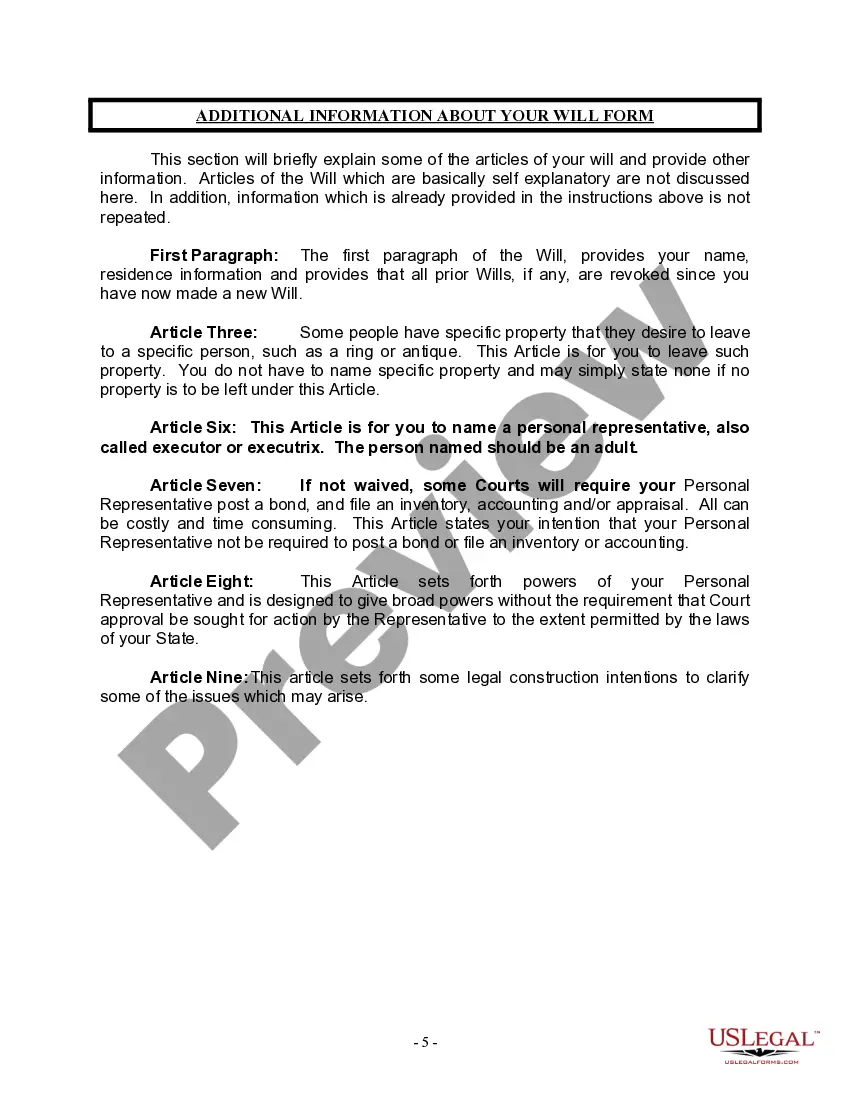
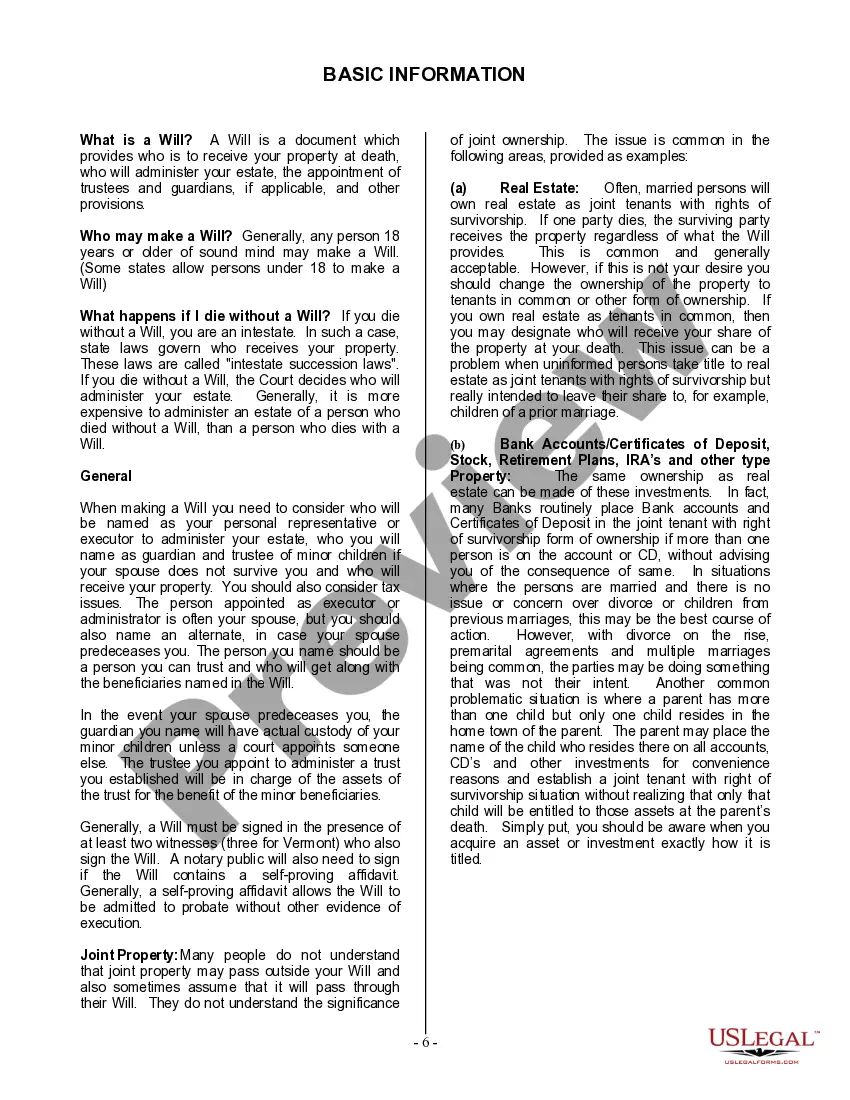
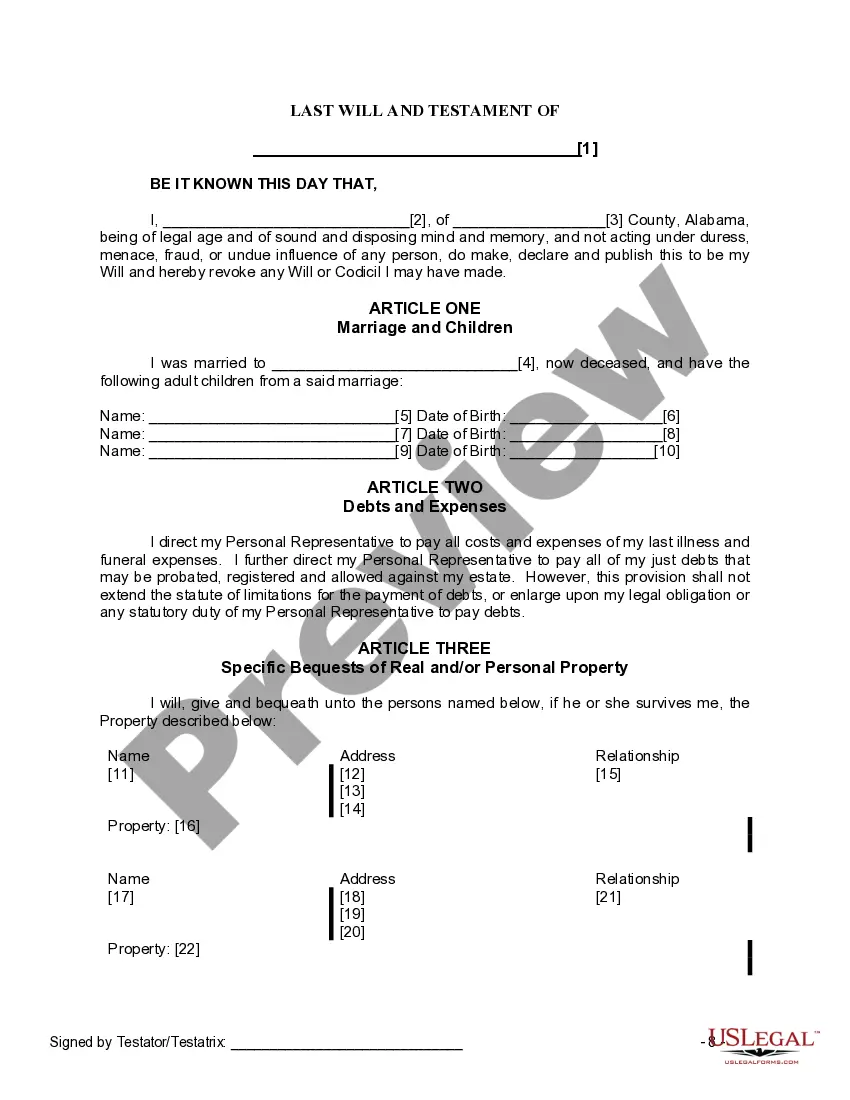
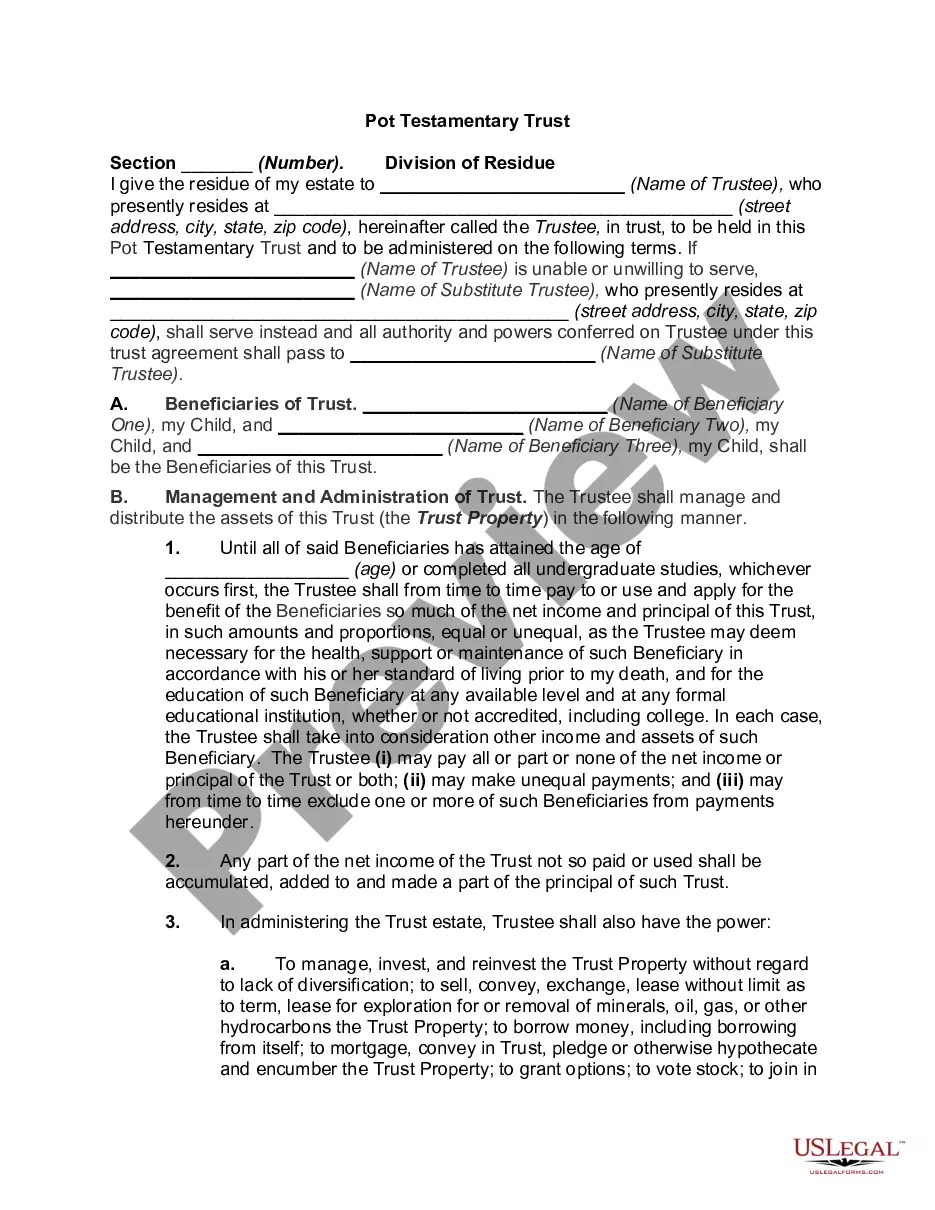
This Last Will and Testament form is specially designed for a widow or widower with adult children. It allows you to appoint a personal representative, designate beneficiaries, and specify how your property will be distributed upon your death. This form includes sections tailored to address the unique circumstances of a surviving spouse, ensuring that your adult children are provided for according to your wishes. Unlike general wills, this form also accommodates specific bequests and homestead arrangements, making it an essential tool for those in similar situations.
Key components of this form
- Declaration of the testator's name and declaration that prior wills are revoked.
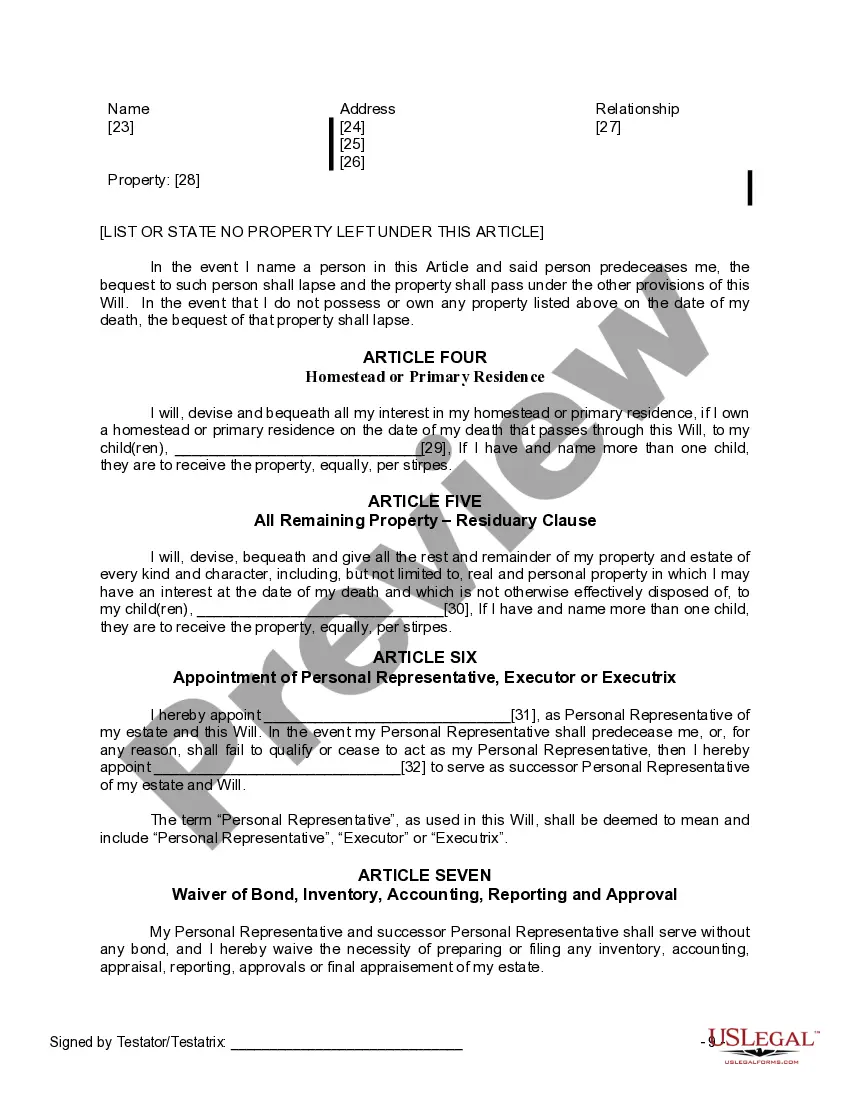
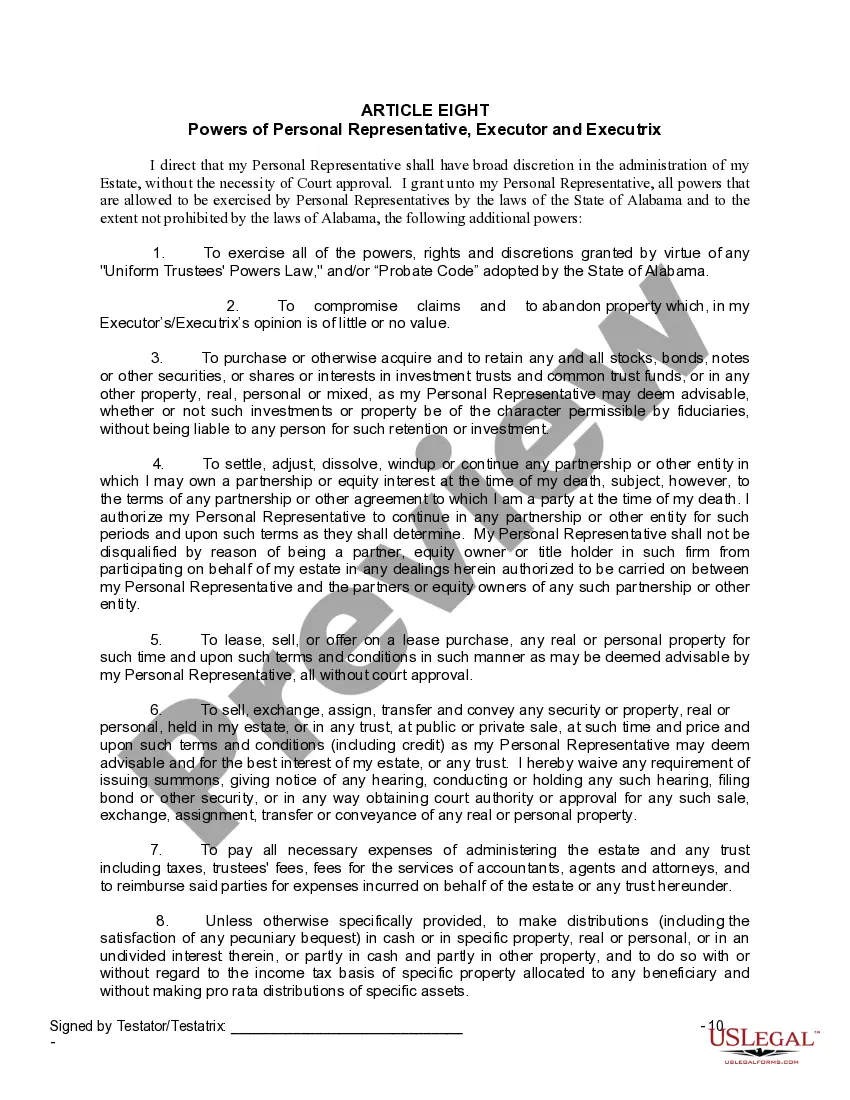
- Appointment of a personal representative or executor to manage the estate.
- Specific bequests allowing the testator to assign particular property to chosen beneficiaries.
- Provisions for the homestead or primary residence to be allocated among the children.
- Residuary clause covering the distribution of remaining assets not specifically mentioned.
- Requirements for witnessing and notary public acknowledgment, if applicable.



Situations where this form applies
This form should be utilized when a widow or widower wants to ensure that their wishes regarding the distribution of property are legally documented. It is particularly important if there are children from the marriage or previous relationships, and if you wish to provide clear instructions for your estate after your death. Using this form helps avoid disputes and ensures that your estate is managed according to your specific desires.
Who needs this form
- Individuals who have recently lost a spouse and wish to create a will.
- Widows or widowers with adult children looking to specify how their assets will be inherited.
- Persons who want to appoint an executor to assist with managing their estate.
- Anyone needing to establish a legally binding document to clarify their wishes regarding property distribution.
Steps to complete this form
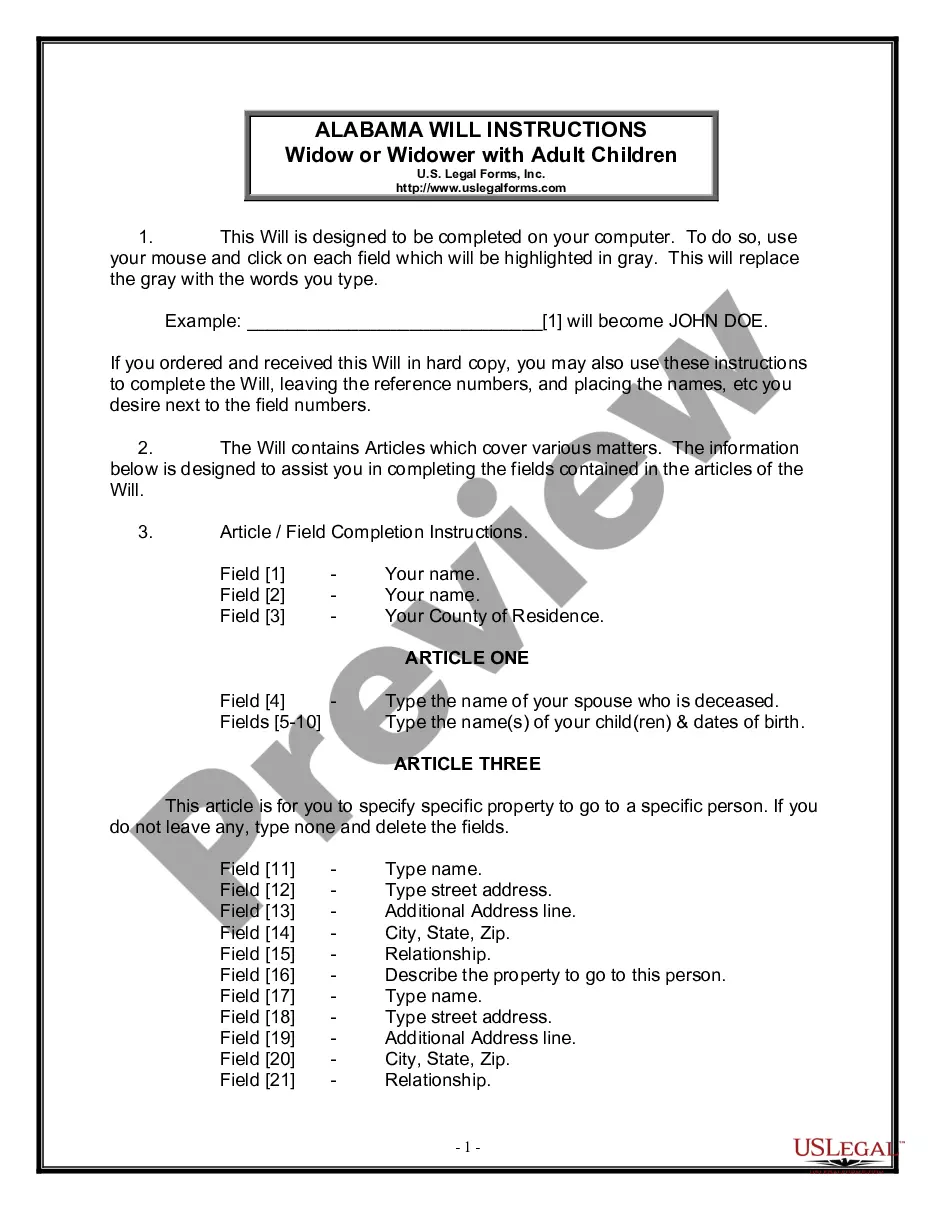
- Begin by entering your personal details, including your full name and county of residence.
- Input the name of your deceased spouse and the names and birthdates of your adult children.
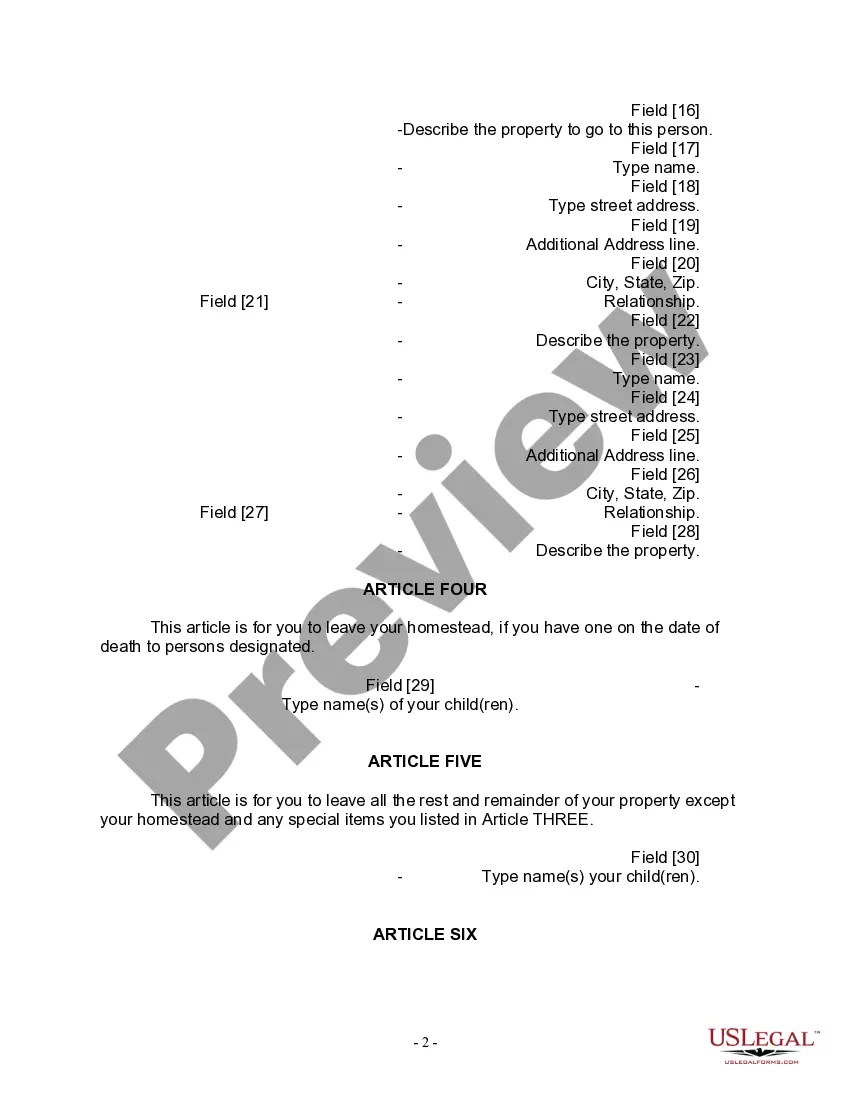
- Designate specific property to bequeath to chosen individuals in the appropriate sections.
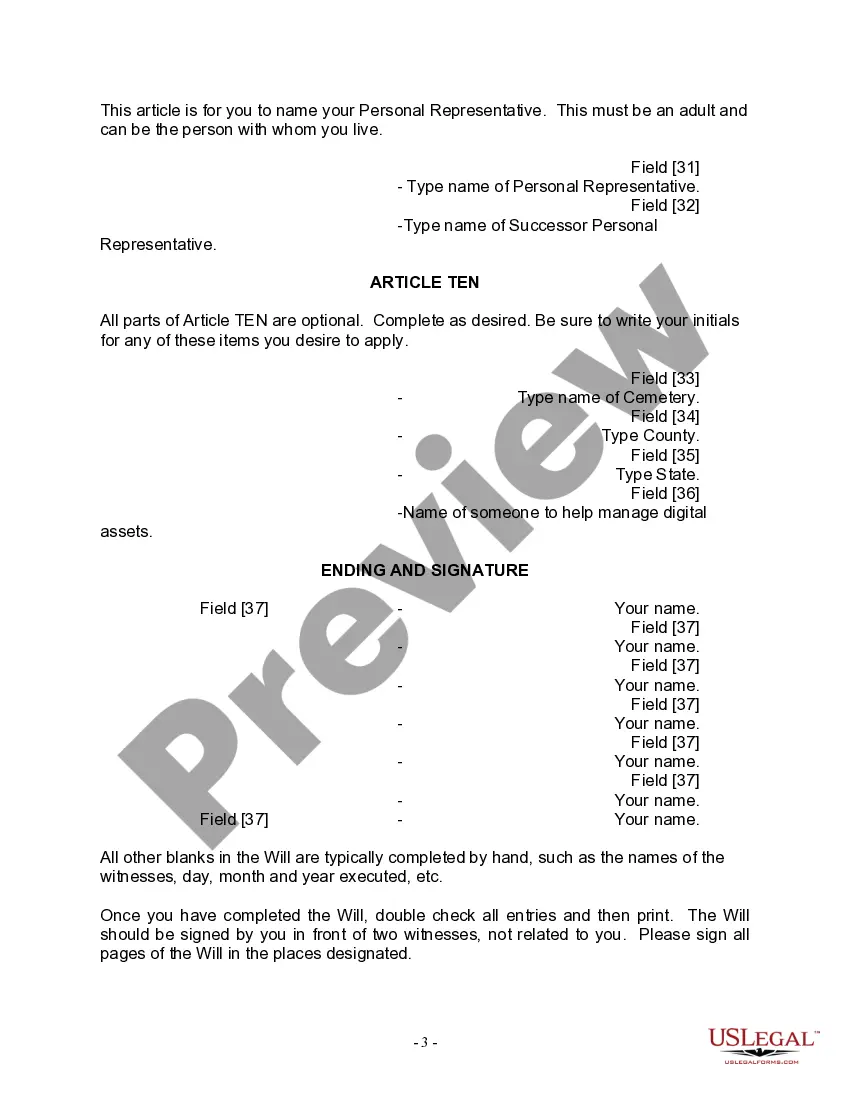
- Appoint a personal representative who will manage your estate, along with a successor if necessary.
- Ensure the form is signed in front of two witnesses, who should not be related to you or named in the will.
Notarization guidance
Yes, this form must be notarized to be legally valid. This ensures that your Last Will and Testament is recognized during the probate process. US Legal Forms offers integrated online notarization services, allowing you to securely complete the process via video call without the need to travel.
Get your form ready online
Our built-in tools help you complete, sign, share, and store your documents in one place.
Make edits, fill in missing information, and update formatting in US Legal Forms—just like you would in MS Word.
Download a copy, print it, send it by email, or mail it via USPS—whatever works best for your next step.
Sign and collect signatures with our SignNow integration. Send to multiple recipients, set reminders, and more. Go Premium to unlock E-Sign.
If this form requires notarization, complete it online through a secure video call—no need to meet a notary in person or wait for an appointment.
We protect your documents and personal data by following strict security and privacy standards.

Make edits, fill in missing information, and update formatting in US Legal Forms—just like you would in MS Word.

Download a copy, print it, send it by email, or mail it via USPS—whatever works best for your next step.

Sign and collect signatures with our SignNow integration. Send to multiple recipients, set reminders, and more. Go Premium to unlock E-Sign.

If this form requires notarization, complete it online through a secure video call—no need to meet a notary in person or wait for an appointment.

We protect your documents and personal data by following strict security and privacy standards.
Common mistakes to avoid
- Failing to have the will witnessed properly, which could invalidate it.
- Not specifying who will inherit specified personal items, leading to confusion.
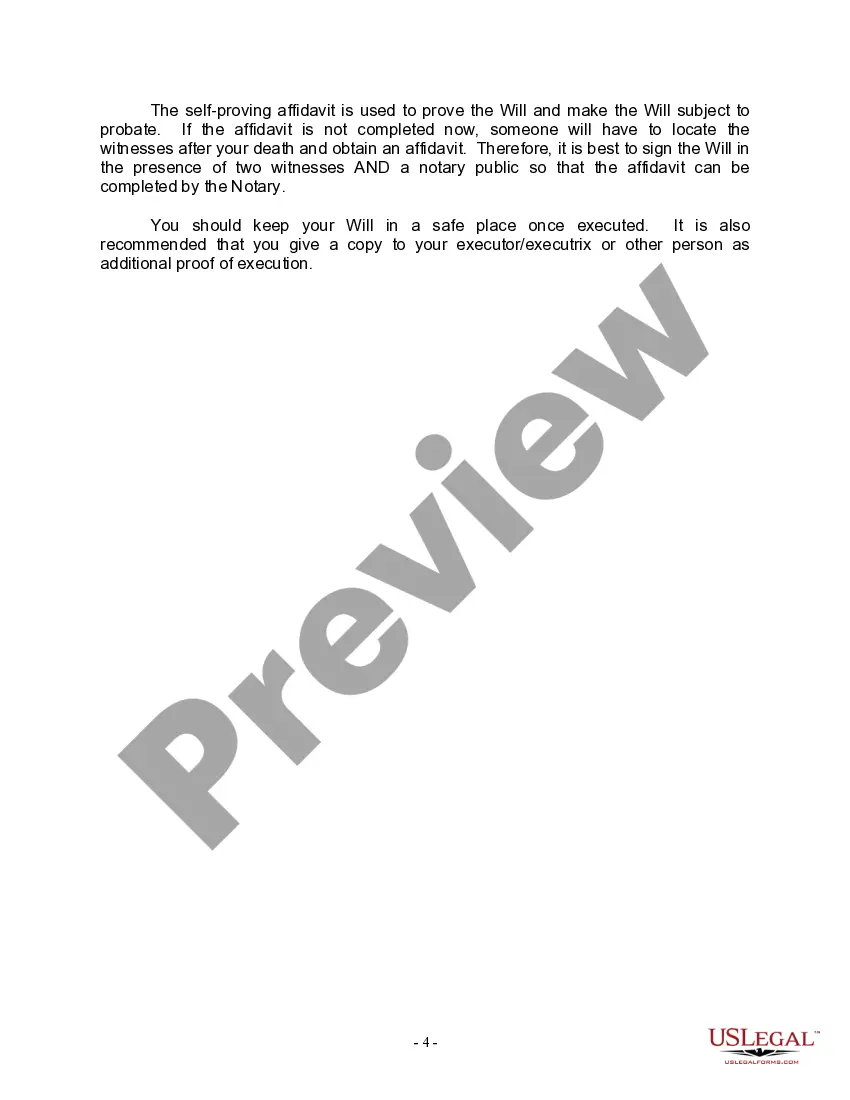
- Forgetting to include a self-proving affidavit, making the probate process more complicated.
Why use this form online
- Convenience of filling out the form digitally and saving it for future reference.
- Editability allows you to make changes easily before finalizing the document.
- Access to professionally drafted templates that meet legal standards, reducing the risk of errors.
Key takeaways
- This will is specifically designed for widows or widowers with adult children.
- Filling out this form ensures that the testatorâs wishes regarding property distribution are legally documented.
- It's crucial to adhere to the state-specific signing and witnessing requirements for legal validity.
- Integrating notarization could significantly streamline the probate process for the deceased's estate.
Looking for another form?
Form popularity
FAQ
To claim the estate of a deceased, one must first file the will for probate at the local probate court, especially if it includes the Alabama Last Will and Testament for a Widow or Widower with Adult Children. This process will involve submitting the appropriate forms and paying necessary fees. If you need guidance, platforms like uslegalforms can assist you in navigating the probate process effectively.
Under Alabama law, a valid will must be in writing, signed by the testator, and witnessed by at least two individuals who are present at the same time. It's also crucial that the testator has the mental capacity to create the Alabama Last Will and Testament for a Widow or Widower with Adult Children. Ensuring these elements are met can help avoid potential disputes and ensure the will is honored.
The person appointed as the executor of a will is often a trusted friend or family member, such as the surviving spouse or an adult child. In the Alabama Last Will and Testament for a Widow or Widower with Adult Children, it is essential to choose someone capable of managing the estate's affairs. If the named executor cannot serve, the court may appoint an alternate executor based on the state laws.
Typically, the surviving spouse will be the executor if the Alabama Last Will and Testament for a Widow or Widower with Adult Children designates them for this role. If no executor is named, the court will appoint someone, often a close family member or friend. It's important to select an executor who can handle the responsibilities involved in managing an estate effectively.
Yes, a surviving spouse can serve as the executor of the estate if named in the Alabama Last Will and Testament for a Widow or Widower with Adult Children. This role allows them to manage the estate's assets and ensure that the deceased's wishes are carried out. Choosing a spouse as executor can simplify the process, as they are often most familiar with the deceased's wishes and estate.
Absolutely, a spouse can change a will before death, allowing for adjustments that reflect their current wishes and relationships. As the legal owner of their estate plan, they maintain control over it as long as they comply with state laws. This includes properly executing any changes according to Alabama regulations. For those looking to create or modify their will effectively, resources like USLegalForms can facilitate access to necessary legal documents and guidance.
Yes, your husband can change his will without informing you. Wills are private documents, and unless there are specific legal requirements for disclosure, he may alter it without notifying anyone. This can lead to surprises, especially regarding the Alabama Last Will and Testament for a Widow or Widower with Adult Children specifically tailored to protect his intentions. It may be beneficial to have open discussions about estate plans to ensure clarity and understanding.
Yes, a will can be changed prior to death, allowing individuals to update their wishes as life circumstances evolve. The person who created the will, known as the testator, has the right to make modifications or draft a completely new will. It is important to follow Alabama laws regarding will modifications to ensure validity. Utilizing a reliable resource like USLegalForms can simplify the process and provide necessary legal forms.
Yes, a widow can change her husband's will, but certain legal conditions must be met. If the husband’s will does not explicitly prevent changes, the widow may modify it. However, if the will includes specific provisions or if the widow is named in a trust, the process may require legal guidance. Consulting a professional familiar with the Alabama Last Will and Testament for a Widow or Widower with Adult Children can provide clarity.
Several conditions can render a will invalid in Alabama, affecting an Alabama Last Will and Testament for a Widow or Widower with Adult Children. The absence of the required signatures, lack of witnesses, or failure to meet the mental capacity criteria at the signing can invalidate a will. Additionally, if the testator was under undue influence or coercion, this could also lead to disputes regarding the will's validity.