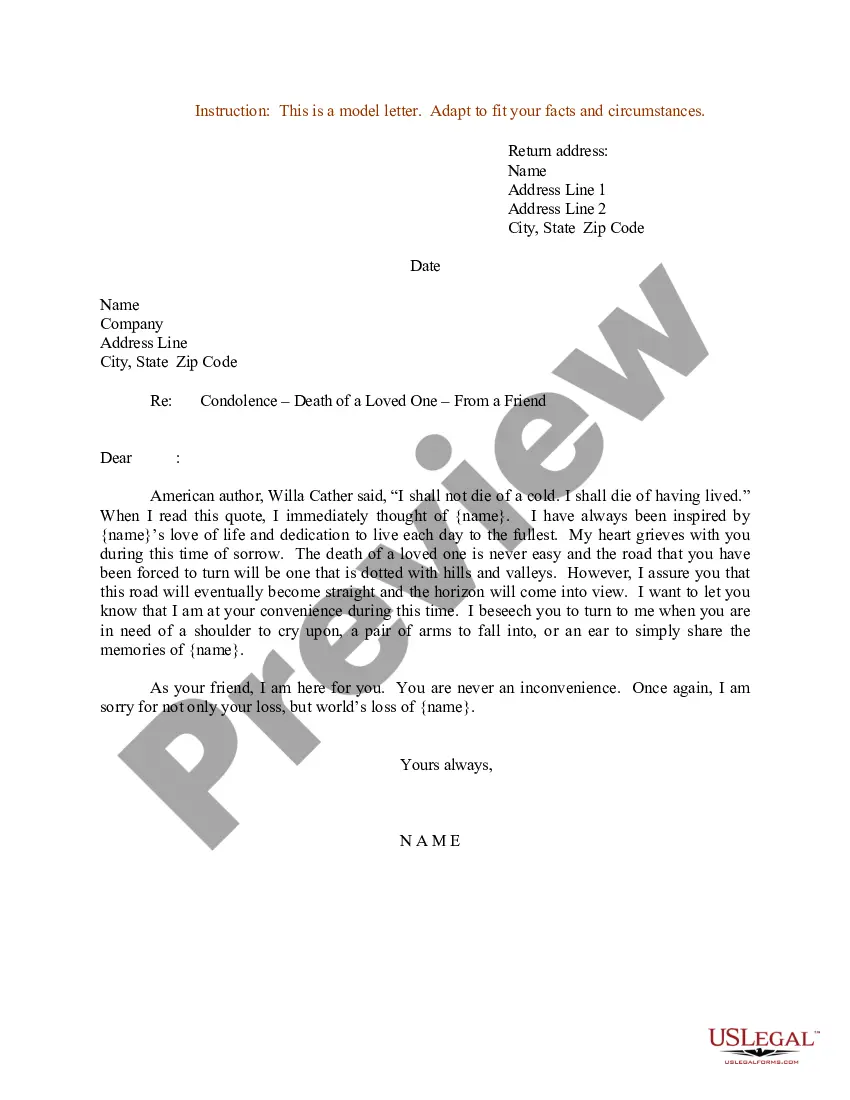
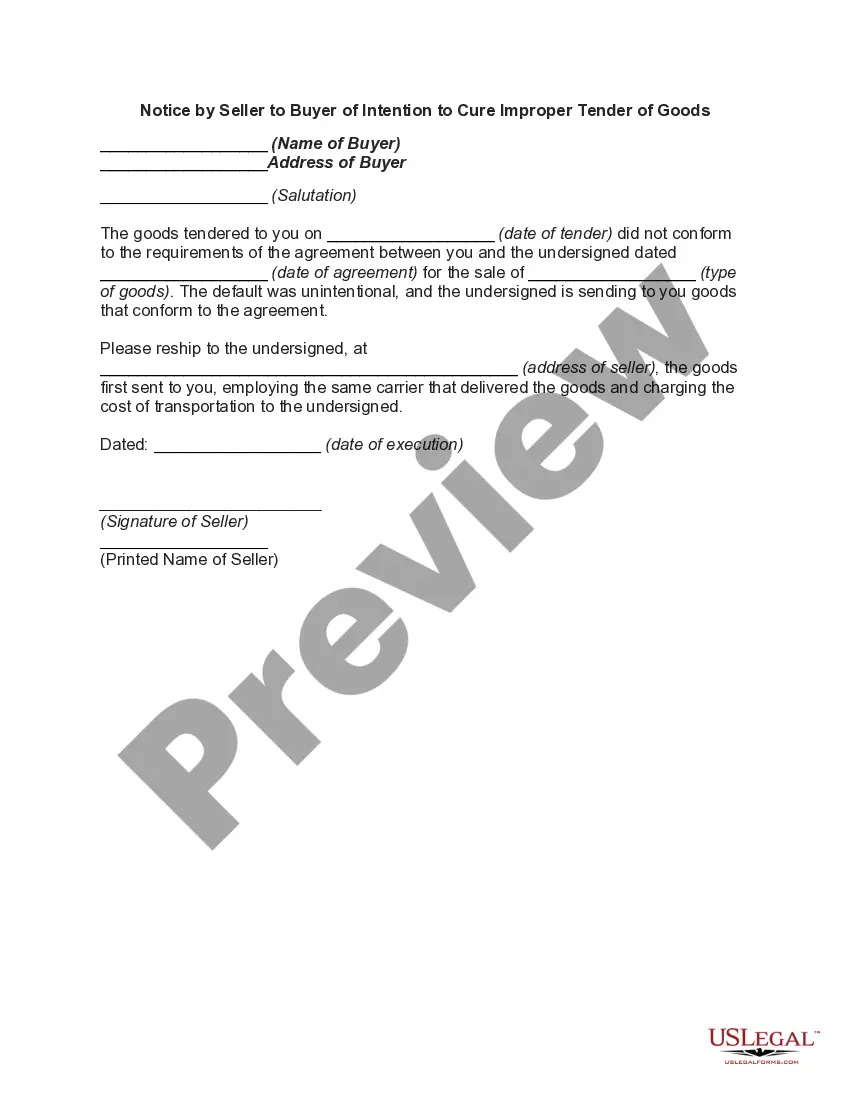
Alabama Notice by Seller to Buyer of Intention to Cure Improper Tender of Goods
Description
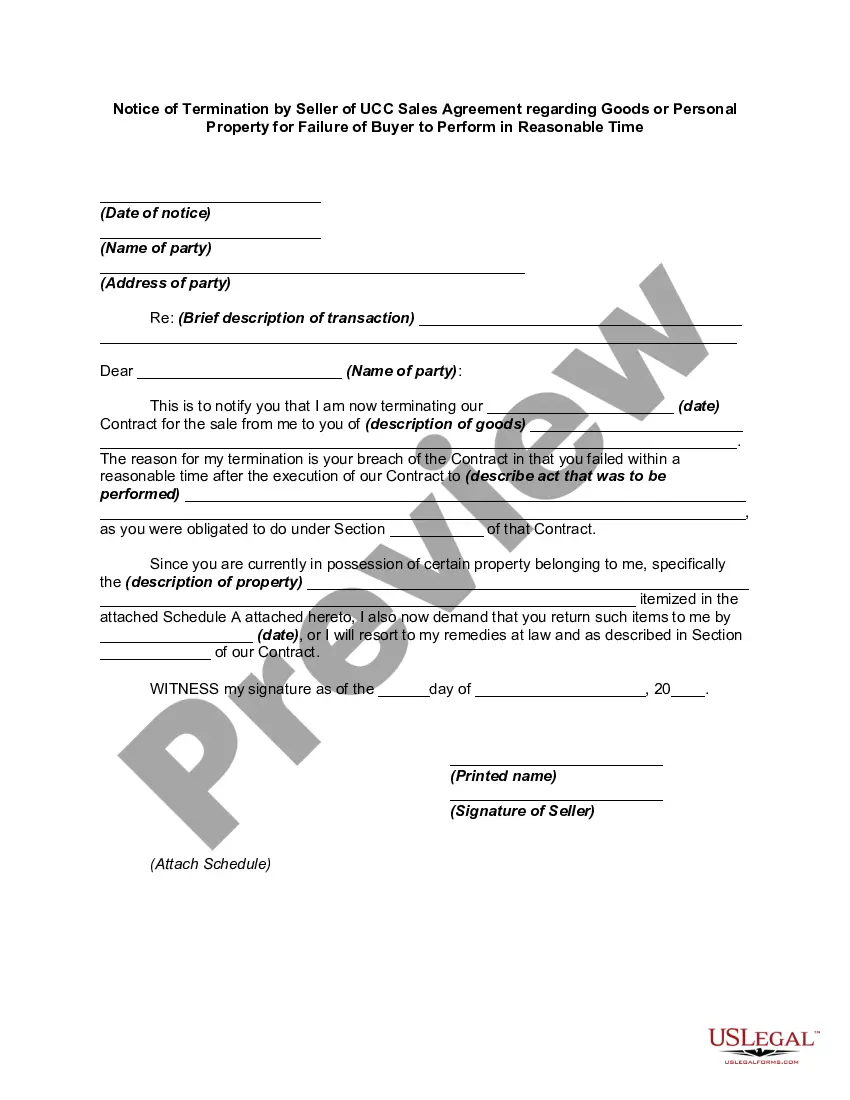
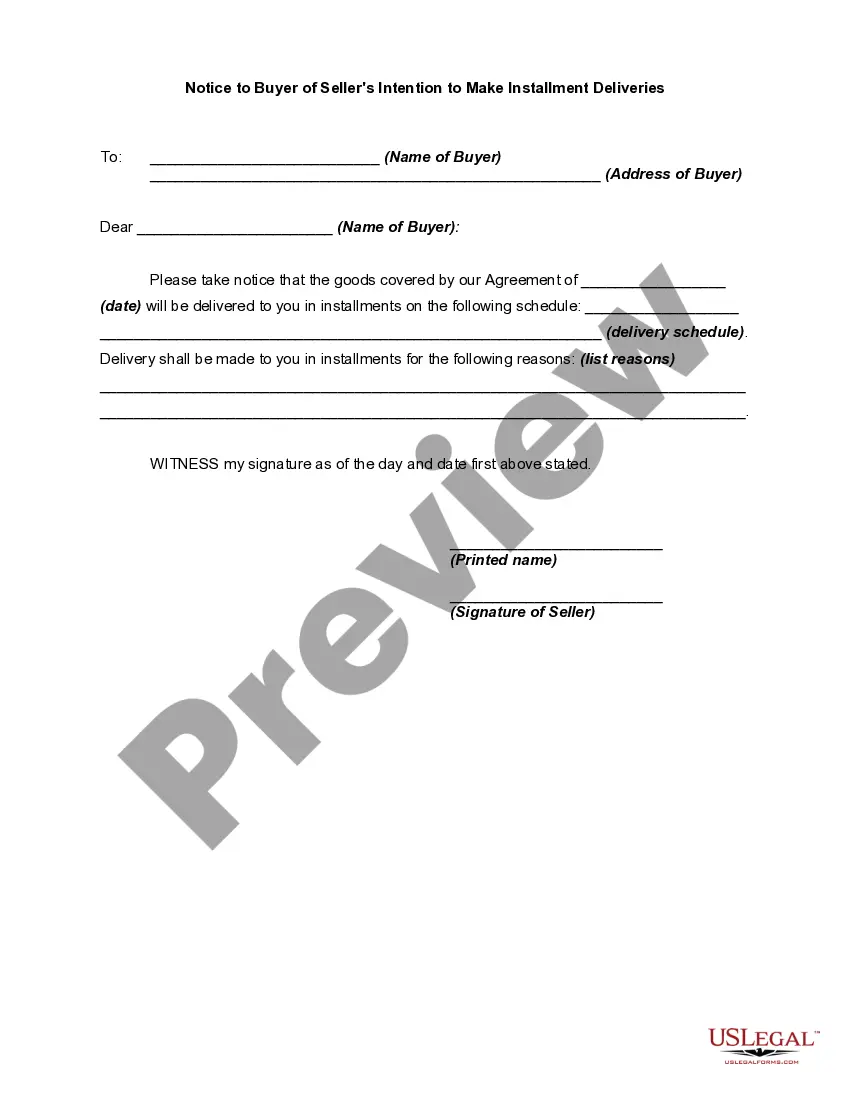
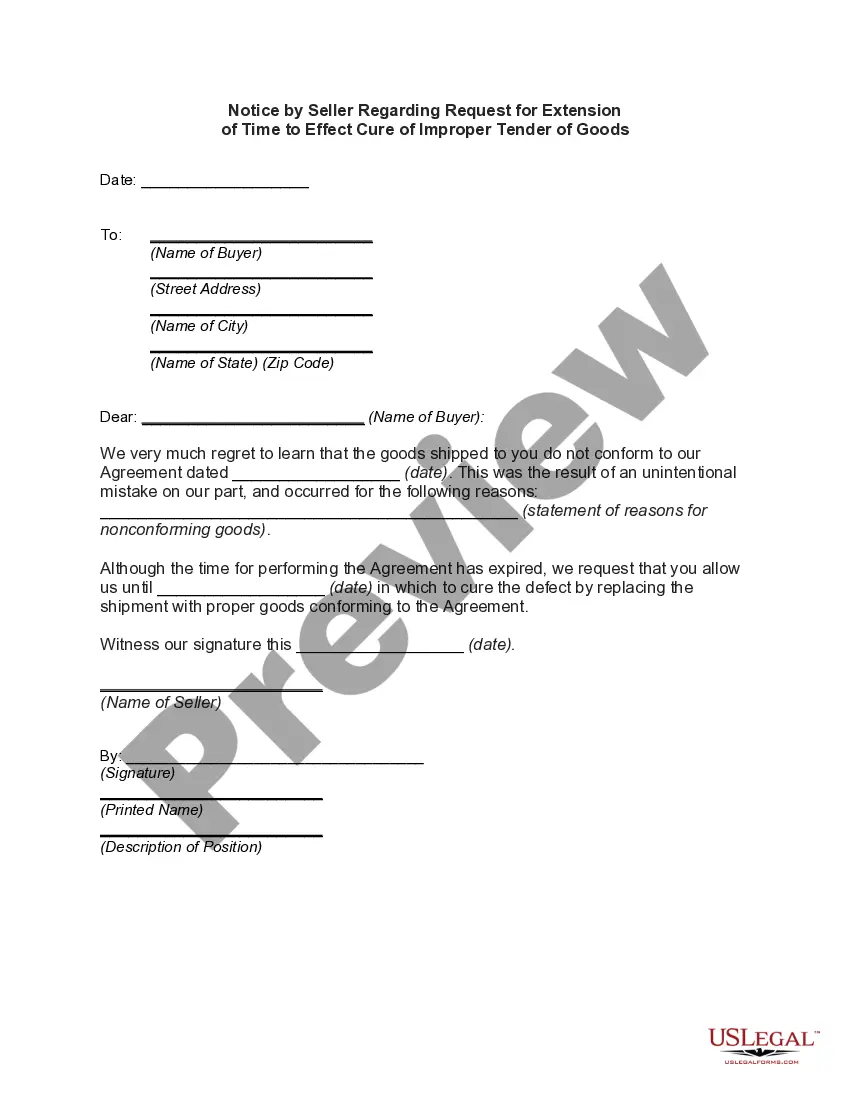
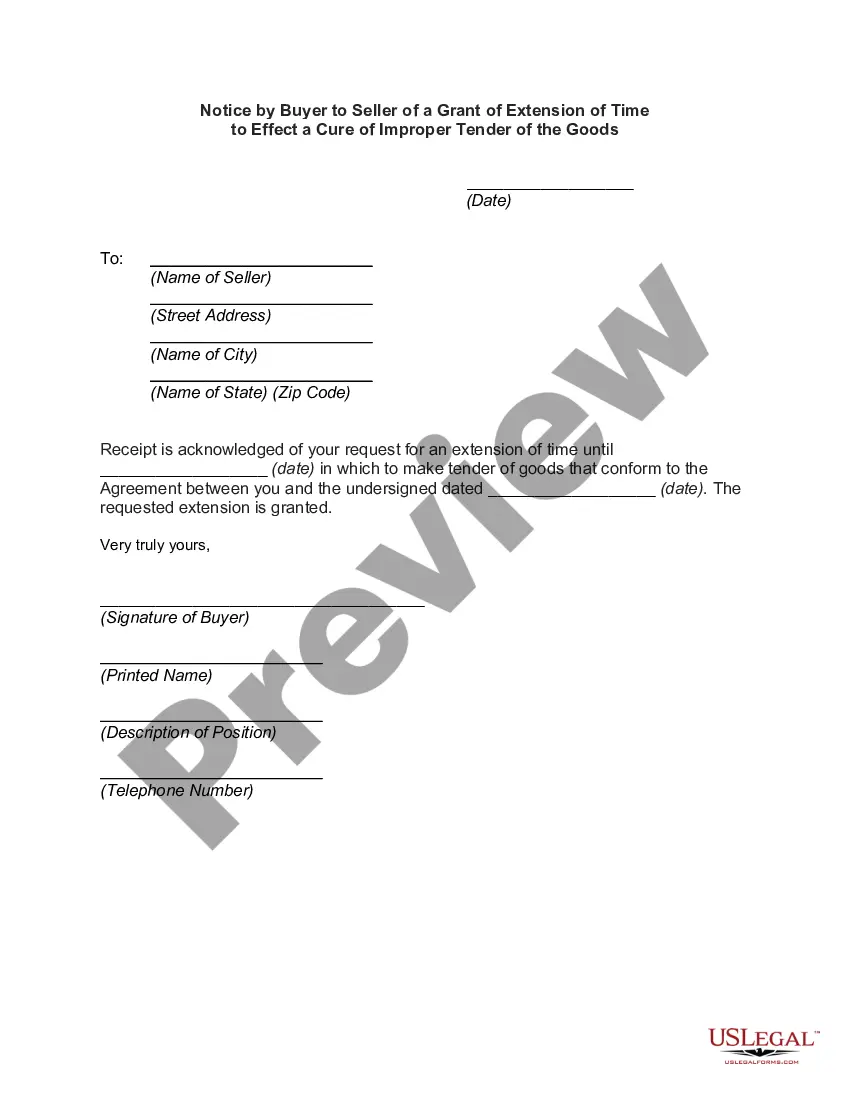
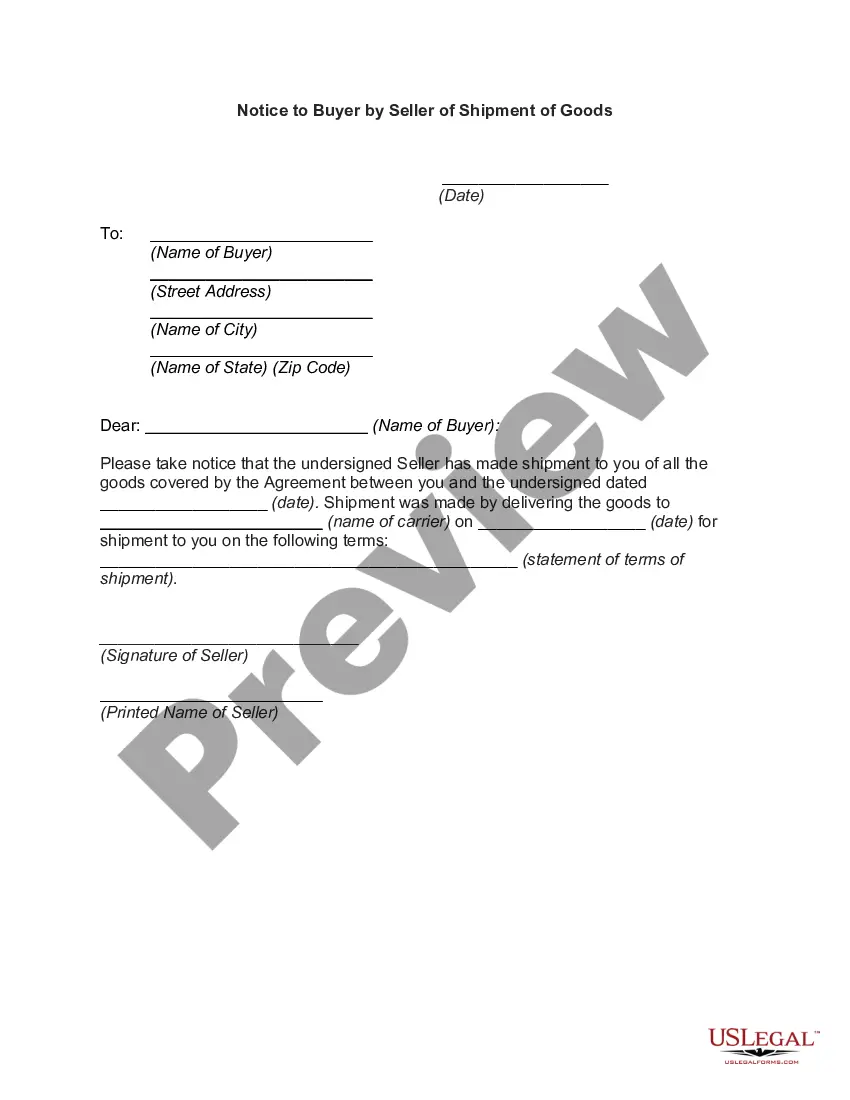



How to fill out Notice By Seller To Buyer Of Intention To Cure Improper Tender Of Goods?
You can dedicate hours online searching for the legal document template that fulfills the state and federal criteria you require.
US Legal Forms offers a vast array of legal forms that are reviewed by experts.
You can conveniently download or print the Alabama Notice by Seller to Buyer of Intention to Cure Improper Tender of Goods from their service.
First, ensure that you have selected the correct document template for the county/city of your preference. Read the form description to confirm you have chosen the right form. If available, use the Preview button to view the document template as well.
- If you already possess a US Legal Forms account, you can Log In and click the Download button.
- After that, you can complete, modify, print, or sign the Alabama Notice by Seller to Buyer of Intention to Cure Improper Tender of Goods.
- Every legal document template you purchase is yours indefinitely.
- To obtain another copy of any acquired form, visit the My documents section and click the relevant button.
- If you are using the US Legal Forms website for the first time, follow the simple instructions below.
Form popularity
FAQ
Yes, when a buyer rejects nonconforming goods, they must notify the seller within a reasonable time. This notification allows the seller to address the issues and potentially remedy the situation. Utilizing the framework of the Alabama Notice by Seller to Buyer of Intention to Cure Improper Tender of Goods can streamline this communication process.
When a seller delivers nonconforming goods, the buyer has the right to accept all, reject all, or accept part of the goods. The choice made by the buyer should be clearly communicated to the seller in accordance with the guidelines established in the Alabama Notice by Seller to Buyer of Intention to Cure Improper Tender of Goods. This flexibility allows buyers to maintain control over the transaction.
A Seller's right to cure does not mean that the Seller must cure any defects uncovered during a home inspection. Rather, a Seller's right to cure means that the Seller simply has the option to cure a defect once the Buyer notifies the Seller that there are defects to which the Buyer objects.
Although colleges never like to do it, and thankfully don't have to do it very often, it is possible for a college to revoke or rescind its offer of admission after the letter of acceptance has been sent.
When a buyer breaches, and the seller is still in possession of the goods, the seller can resell or dispose of the goods. The seller can retain any profits made as a result of the sale and can hold the buyer liable for any loss.
If the buyer repudiates the contract before the delivery date of the goods the seller can still sue for damages. Such a contract is considered as a rescinded contract, and so the seller can sue for breach of contract. This is covered in the Indian Contract Act and is known as Anticipatory Breach of Contract.
One of the most common remedies chosen by buyers after a breach of contract by the seller is a lawsuit for damages for nondelivery. These suits occur if the seller fails or simply refuses to deliver the goods that were promised in the contract.
(2) The buyer may recover from the seller as damages the difference between the cost of cover and the contract price together with any incidental or consequential damages as hereinafter defined (Section 2-715), but less expenses saved in consequence of the seller's breach.
A key section of the UCC gives a seller the right to cure goods delivered to a buyer that are defective or non-conforming. In other words, if a seller delivers goods that don't match the contract, and the buyer rejects those goods, the UCC gives the seller an opportunity to fix the problem.
The most common material breach by buyers in real estate contracts is failing to follow through with a closing and not actually paying for and taking possession of the property as agreed to in the contract. When a buyer breaches a real estate contract, the seller may be entitled to monetary damages.