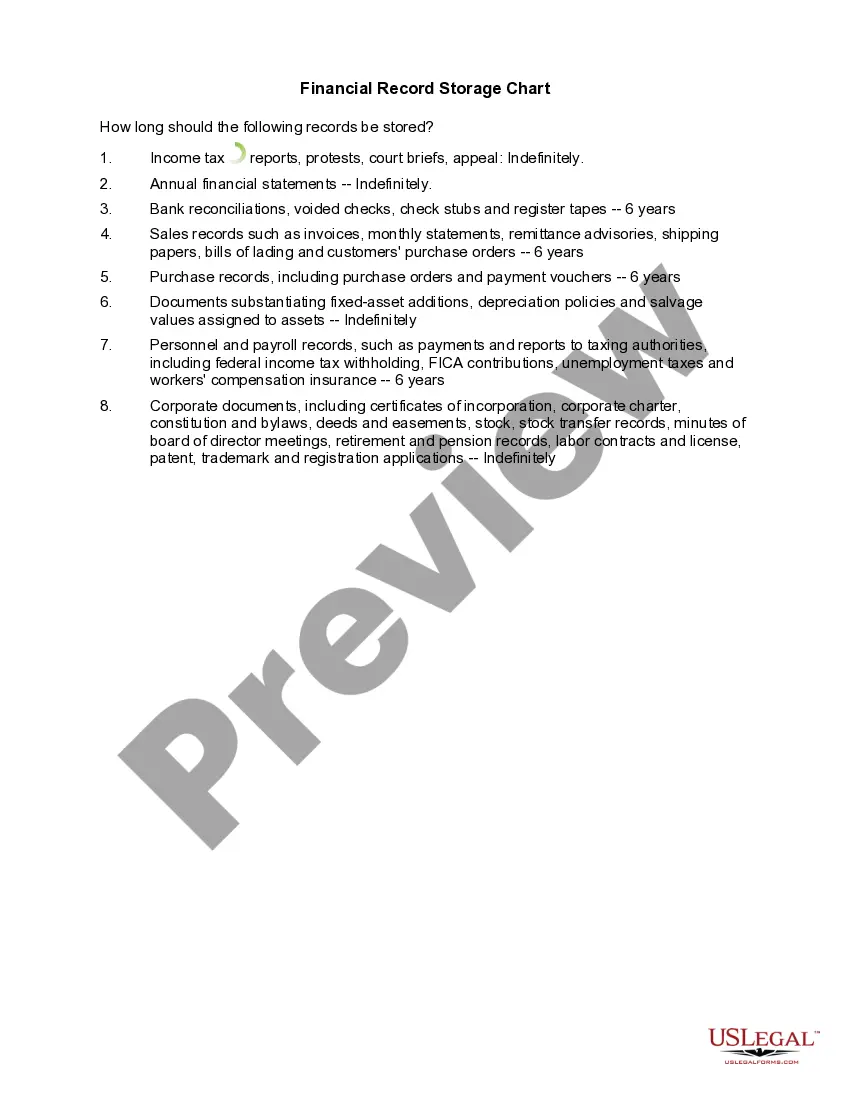
Alabama Financial Record Storage Chart
Description
Get your form ready online
Our built-in tools help you complete, sign, share, and store your documents in one place.
Make edits, fill in missing information, and update formatting in US Legal Forms—just like you would in MS Word.
Download a copy, print it, send it by email, or mail it via USPS—whatever works best for your next step.
Sign and collect signatures with our SignNow integration. Send to multiple recipients, set reminders, and more. Go Premium to unlock E-Sign.
If this form requires notarization, complete it online through a secure video call—no need to meet a notary in person or wait for an appointment.
We protect your documents and personal data by following strict security and privacy standards.

Make edits, fill in missing information, and update formatting in US Legal Forms—just like you would in MS Word.

Download a copy, print it, send it by email, or mail it via USPS—whatever works best for your next step.

Sign and collect signatures with our SignNow integration. Send to multiple recipients, set reminders, and more. Go Premium to unlock E-Sign.

If this form requires notarization, complete it online through a secure video call—no need to meet a notary in person or wait for an appointment.

We protect your documents and personal data by following strict security and privacy standards.
Looking for another form?



How to fill out Financial Record Storage Chart?
US Legal Forms - one of the premier repositories of legal documents in the USA - offers a broad selection of legal template forms you can download or print.
While navigating the website, you can access thousands of forms for business and personal purposes, categorized by groups, states, or keywords. You can discover the latest versions of forms such as the Alabama Financial Record Storage Chart in moments.
If you already hold a subscription, Log In to retrieve the Alabama Financial Record Storage Chart from the US Legal Forms library. The Download option will appear for every form you examine. You have access to all forms you have previously downloaded via the My documents section of your account.
Complete the transaction. Use your credit card or PayPal account to finish the payment.
Choose the format and download the form to your device. Make modifications. Fill out, edit, print, and sign the downloaded Alabama Financial Record Storage Chart. Each design you have added to your account has no expiration date and is yours permanently. Therefore, if you need to download or print another copy, just navigate to the My documents section and click on the form you need. Access the Alabama Financial Record Storage Chart with US Legal Forms, the most extensive collection of legal document templates. Utilize thousands of professional and state-specific forms that cater to your business or personal requirements.
- If you are utilizing US Legal Forms for the first time, here are some straightforward instructions to assist you.
- Verify that you have selected the correct form for your region/state.
- Choose the Preview option to review the content of the form.
- Examine the form description to ensure you have selected the appropriate form.
- If the form does not suit your requirements, use the Search area at the top of the screen to find one that does.
- If you are satisfied with the form, confirm your choice by clicking the Download Now option.
- Then, select the pricing plan you prefer and provide your details to register for an account.
Form popularity
FAQ
OSHA mandates that employers keep injury and illness records for a minimum of five years. This requirement helps ensure that you can provide accurate information about workplace safety incidents when necessary. For comprehensive management, refer to the Alabama Financial Record Storage Chart, which outlines state-specific retention guidelines. Tools like USLegalForms can assist you in efficiently storing and managing these vital records.
Typically, Human Resources should retain employee records for six years post-termination for legal compliance. However, some records may need to be kept longer based on specific state laws or business needs. Referring to the Alabama Financial Record Storage Chart can help you align with both state and federal record retention regulations. Consider using platforms like USLegalForms to maintain organized, accessible records that support your compliance efforts.
The IRS generally requires you to keep employee records for at least four years after the tax due date or the date you filed your tax return, whichever is later. This period is crucial to ensure you can provide necessary information during an audit or if any discrepancies arise. It's also advisable to consult the Alabama Financial Record Storage Chart for state-specific requirements. Using effective record storage systems can streamline this process and minimize risk.
The IRS generally requires you to keep records for at least three to seven years, depending on the type of record and circumstances. For example, if you file a claim for a loss from worthless securities or bad debt deduction, you must keep records for seven years. It is essential to consult the Alabama Financial Record Storage Chart for clarity on IRS requirements. Leveraging our platform can help ensure you are meeting all necessary record-keeping obligations.
Certain employee records, such as payroll records, performance reviews, and termination documents, should be retained for seven years. This ensures you have the necessary information available in case of any disputes or claims. The Alabama Financial Record Storage Chart provides specific guidance on what to keep and for how long. For additional support and resources, explore our solutions designed to simplify your record-keeping process.
The Alabama Financial Record Storage Chart identifies various records that should be maintained for seven years. These include tax returns, bank statements, and receipts related to your financial transactions. Retaining these documents helps protect you in case of audits or disputes. For a comprehensive list, consider utilizing our platform to navigate the complexities of record retention.
According to the Alabama Financial Record Storage Chart, most records should be retained for a minimum of three to seven years. The specific duration may depend on the type of record. For instance, tax records typically require seven years of retention. To stay compliant, it is best to consult the Alabama Financial Record Storage Chart for detailed guidance.
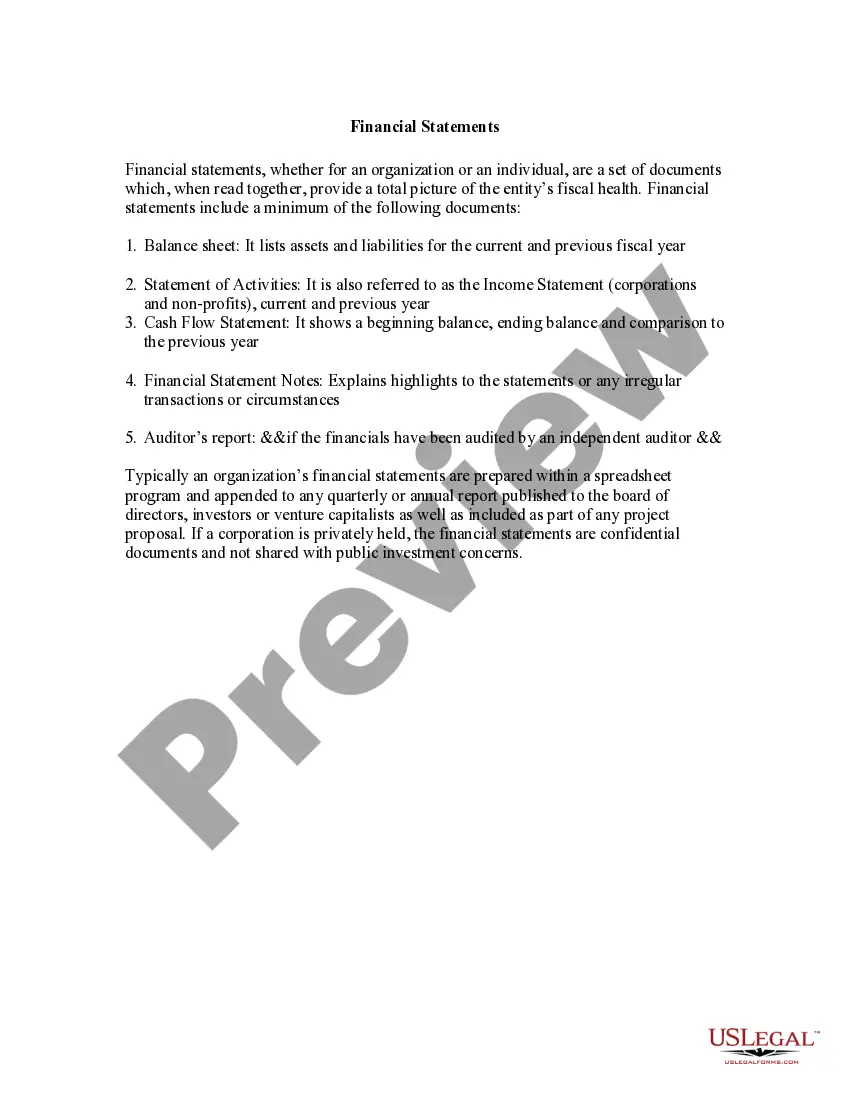
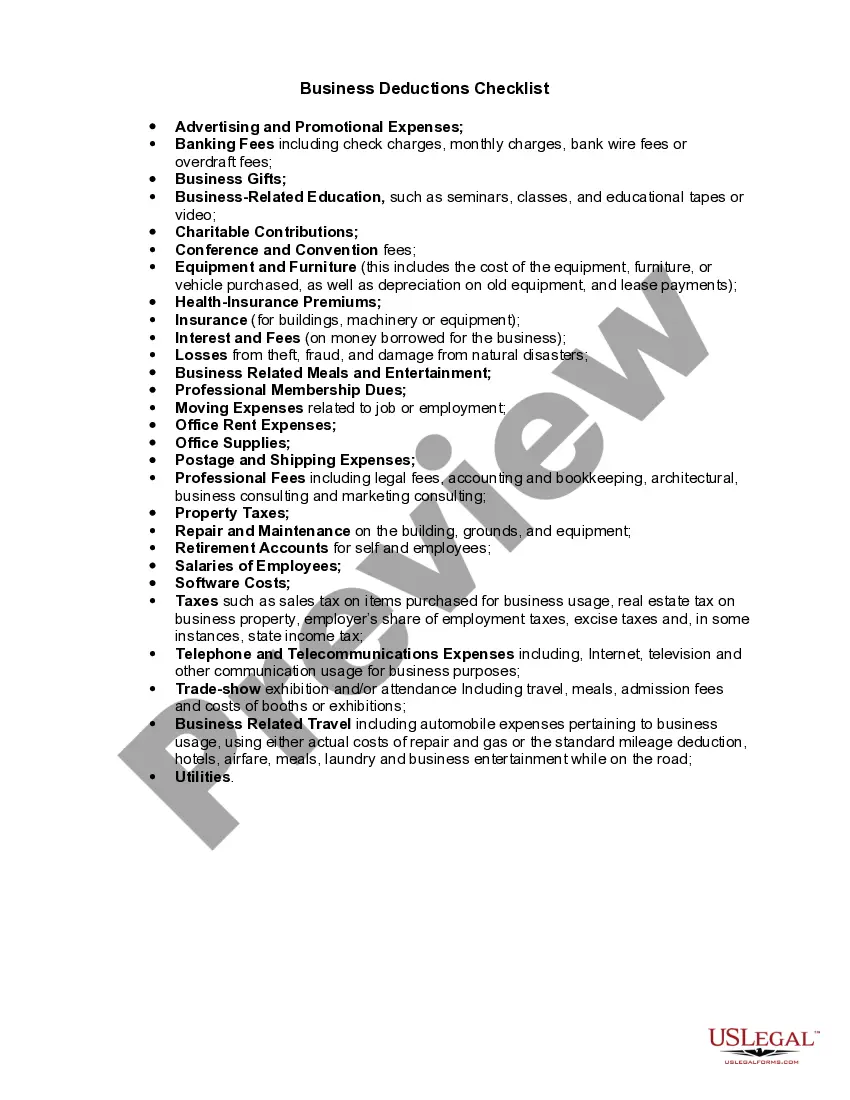
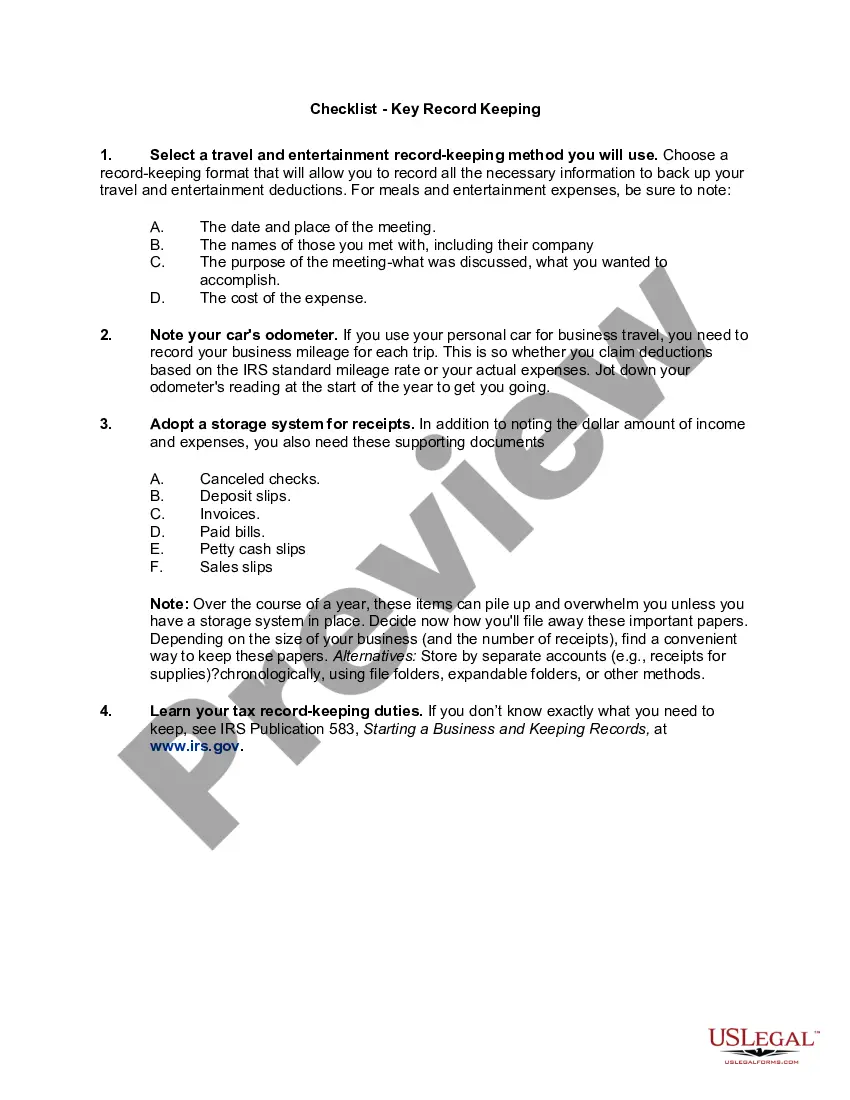
Generally, it is advisable to keep records related to taxes, such as income statements and deductions, for at least seven years. This is crucial in case of an audit or discrepancies. The Alabama Financial Record Storage Chart provides insight into various types of documents that should be retained during this period. By maintaining these records, you can protect yourself and your financial position.
To request public records in Alabama, begin by identifying the specific records you need. You can visit the Alabama Secretary of State's website or the local courthouse where the records are kept. Utilize the Alabama Financial Record Storage Chart as a guide to understand the timeframes and types of records available. This tool can help streamline your request process and ensure you receive accurate information.
The 7 year retention rule refers to the guideline that suggests keeping certain financial and tax records for seven years to prepare for potential audits or legal issues. This period is often recommended due to the IRS's policies and provides a safety net for businesses. The Alabama Financial Record Storage Chart serves as an instructive tool in understanding this rule in depth.