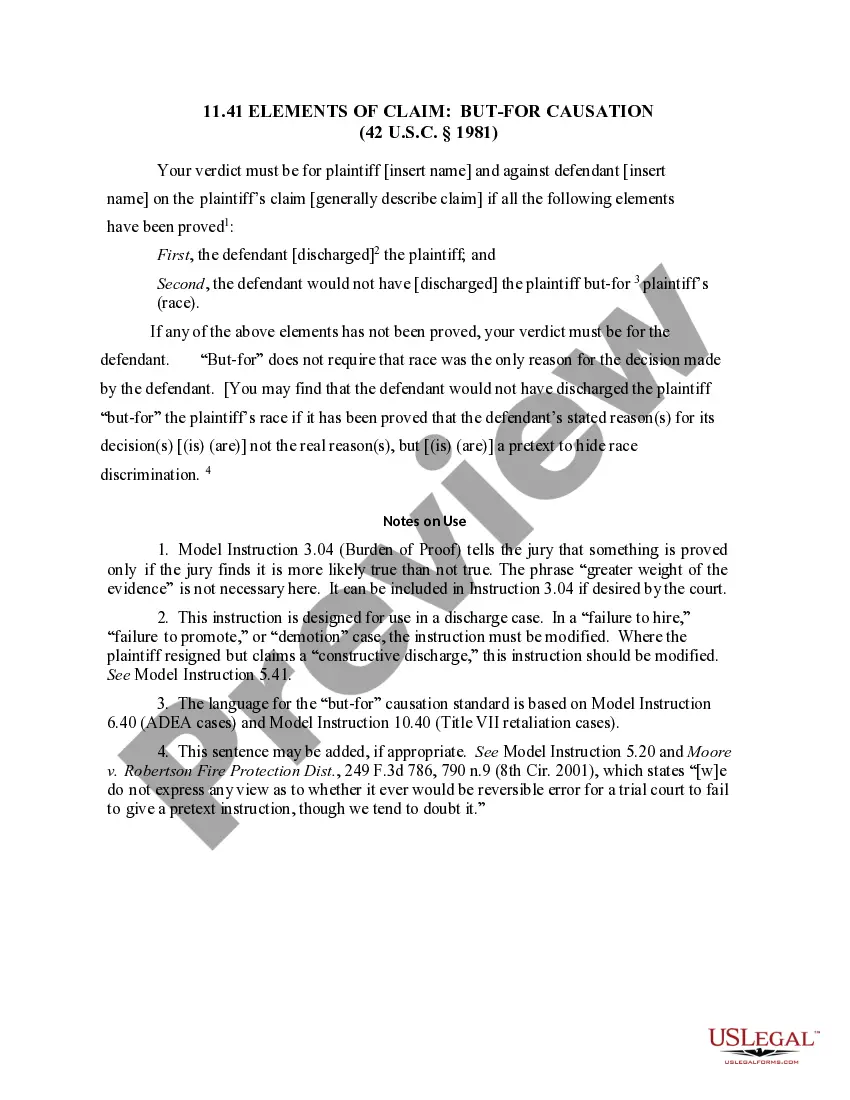
Alabama Complaint in Federal Court for Violation of Civil Rights Act Denial of Necessary and Adequate Medical Care and Treatment for a State Inmate
Description
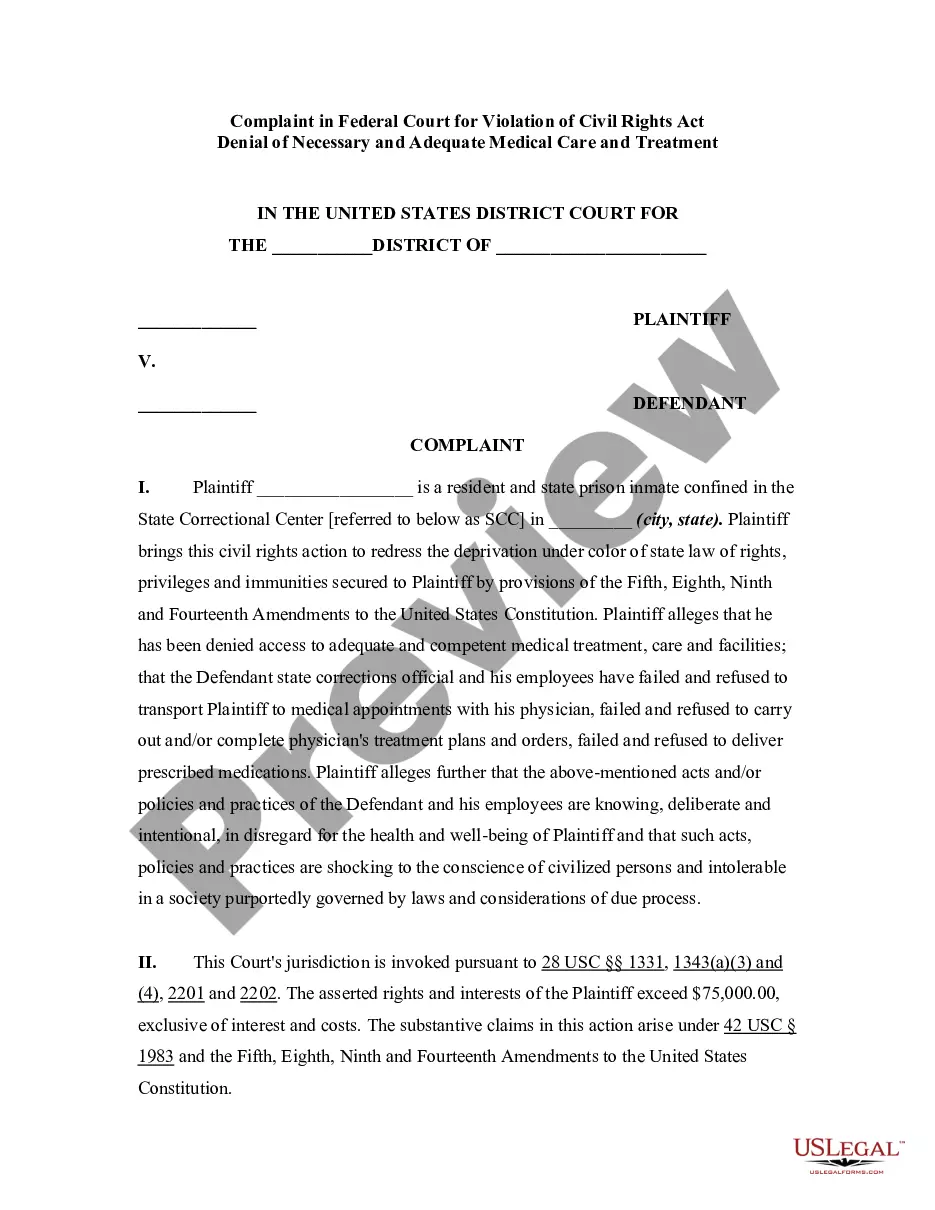
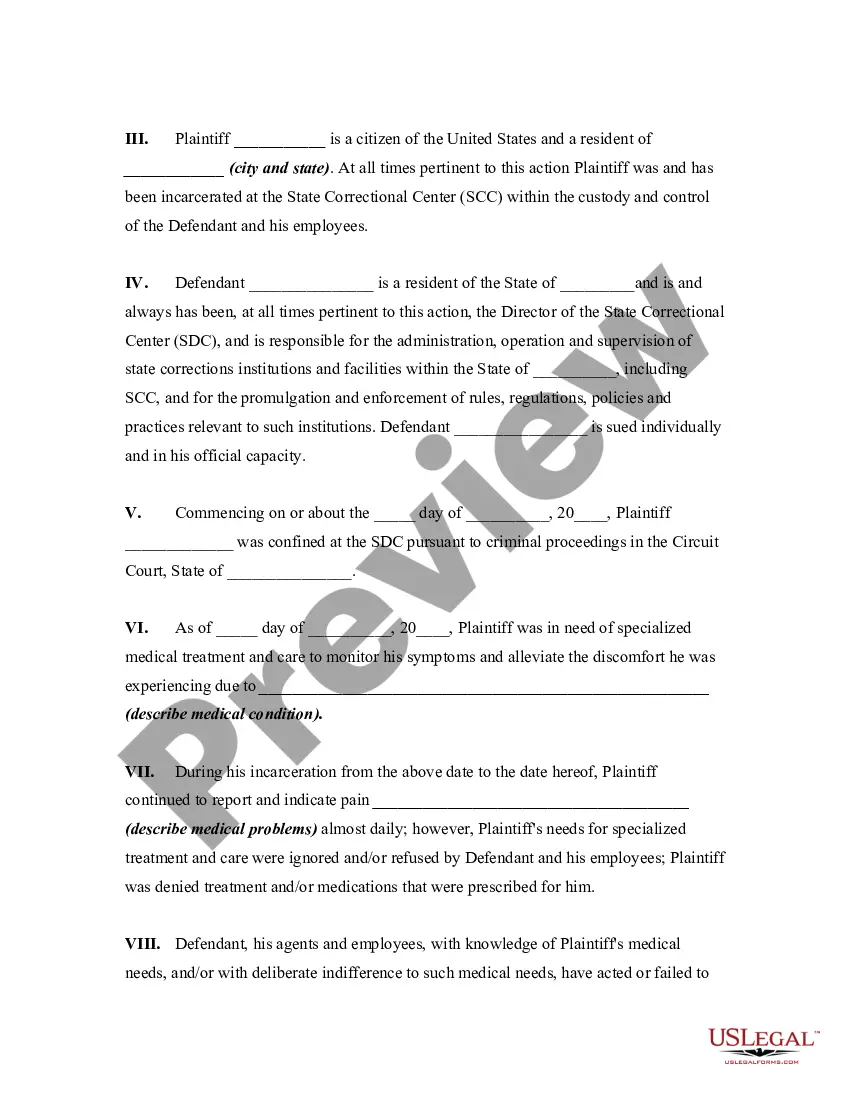
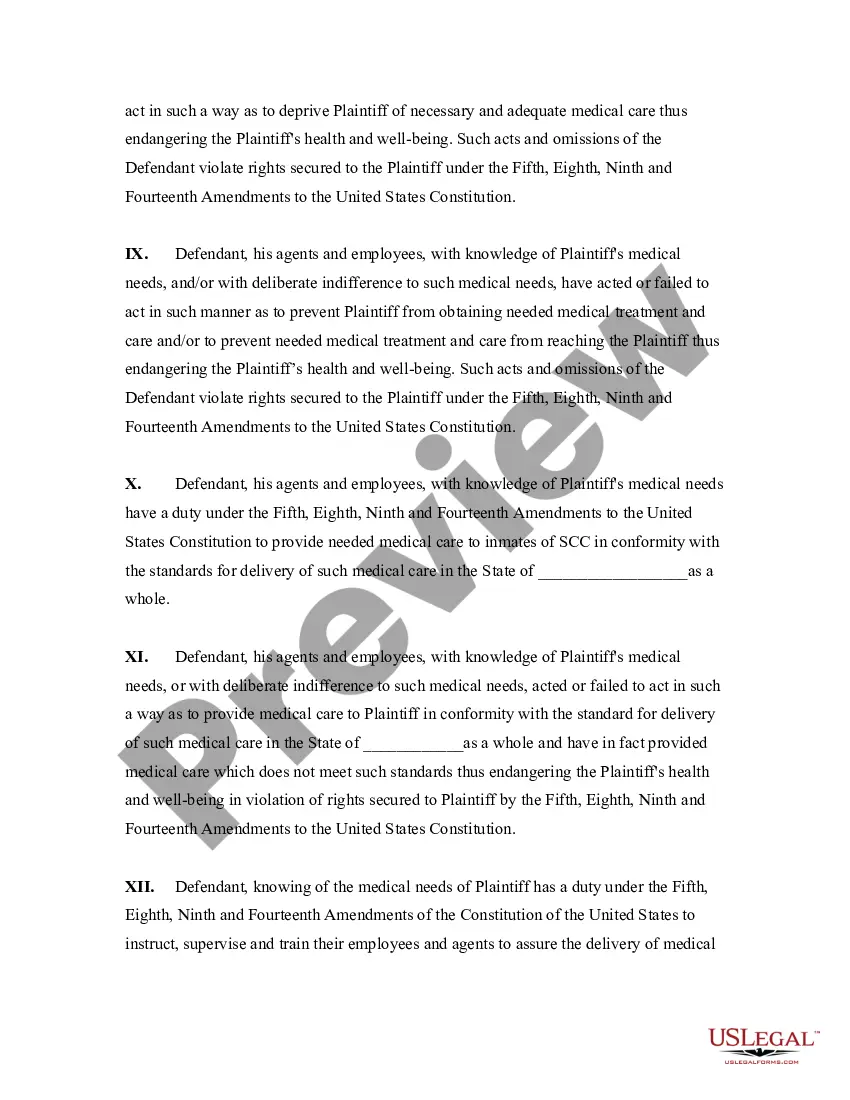
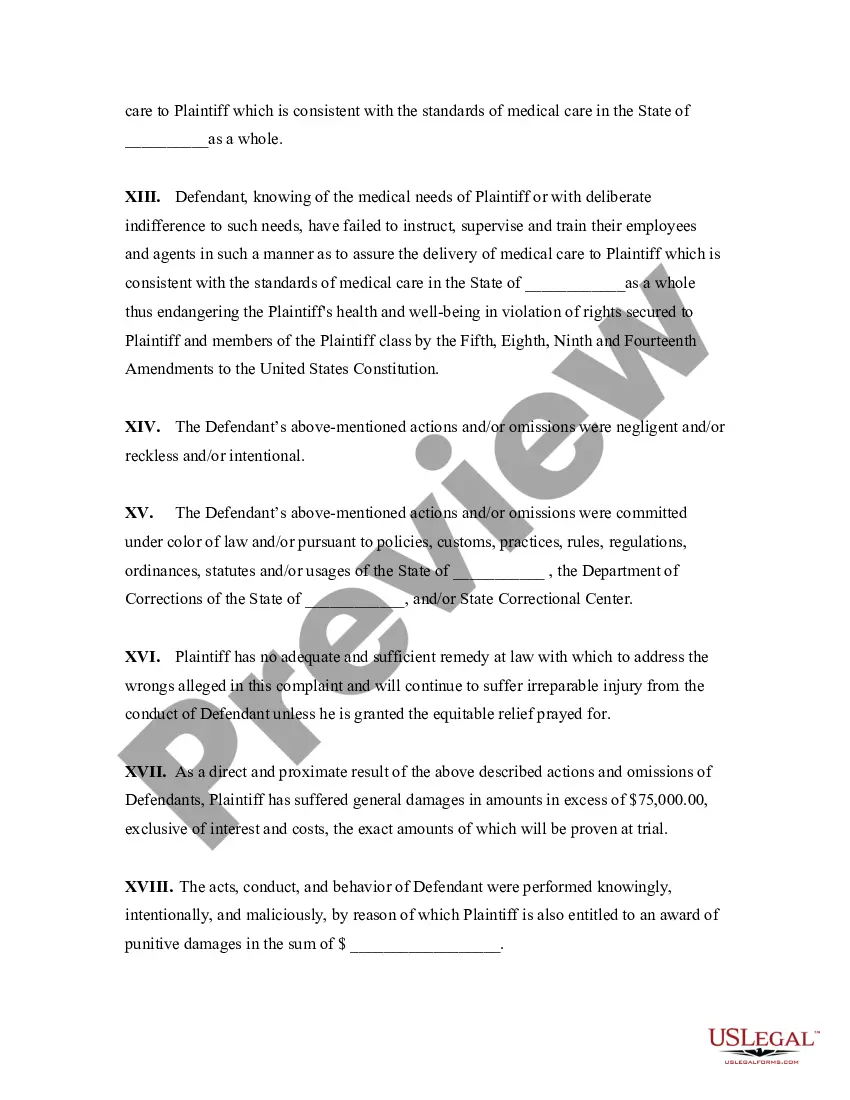
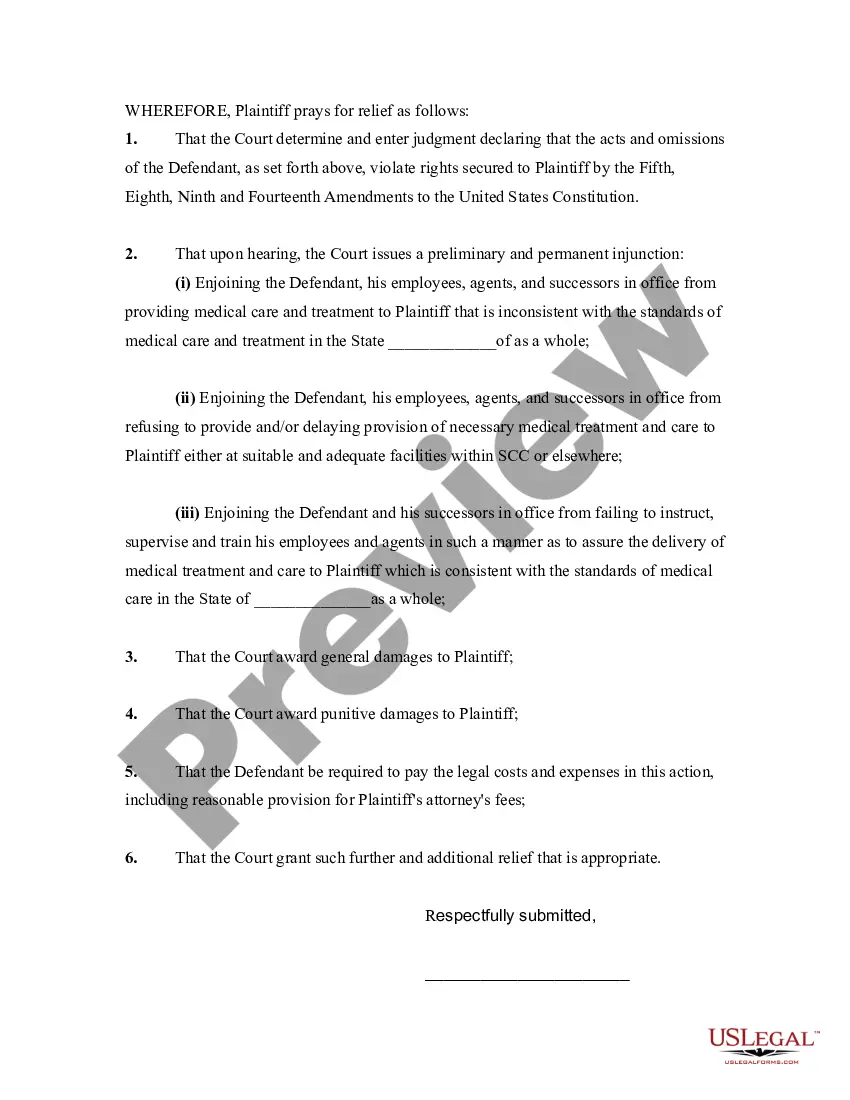
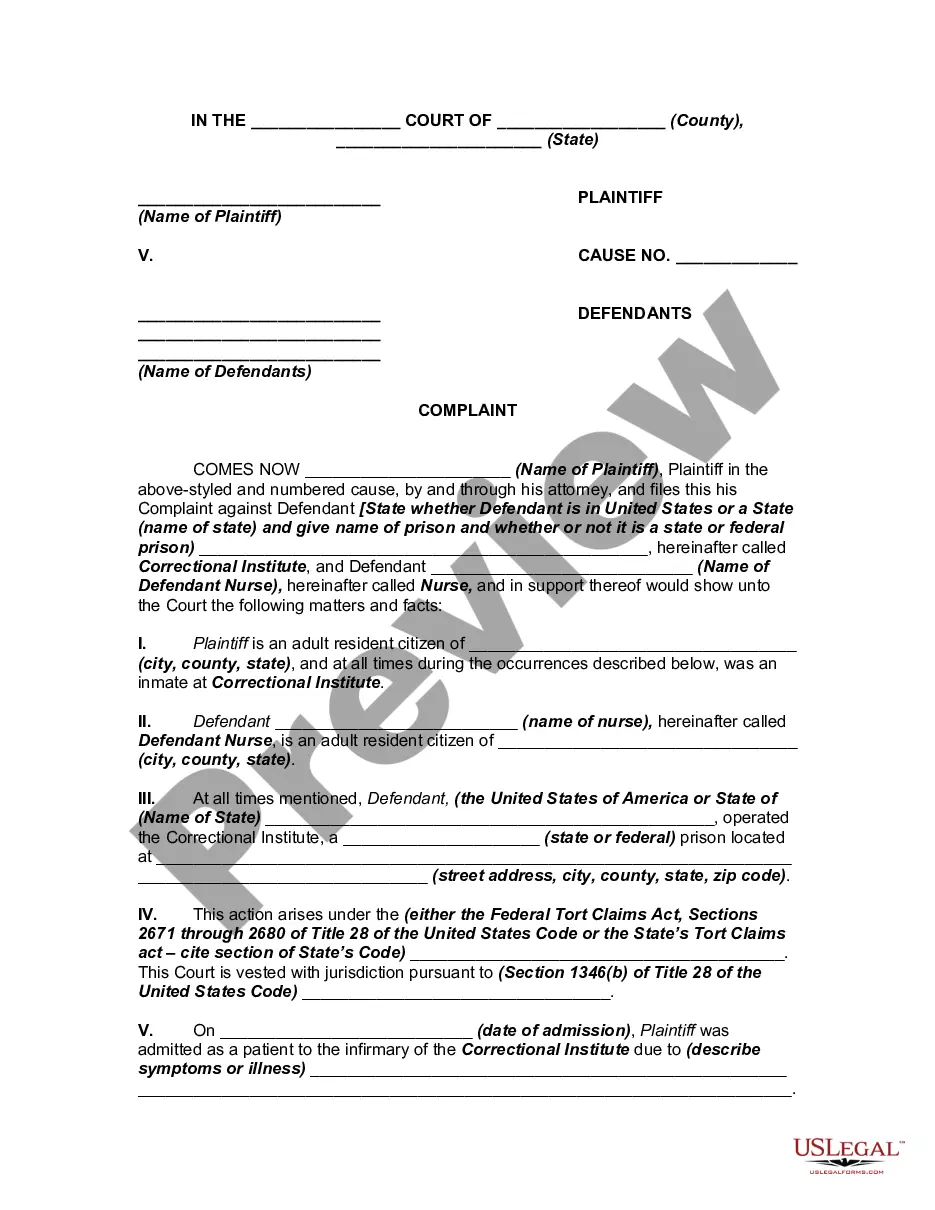




How to fill out Complaint In Federal Court For Violation Of Civil Rights Act Denial Of Necessary And Adequate Medical Care And Treatment For A State Inmate?
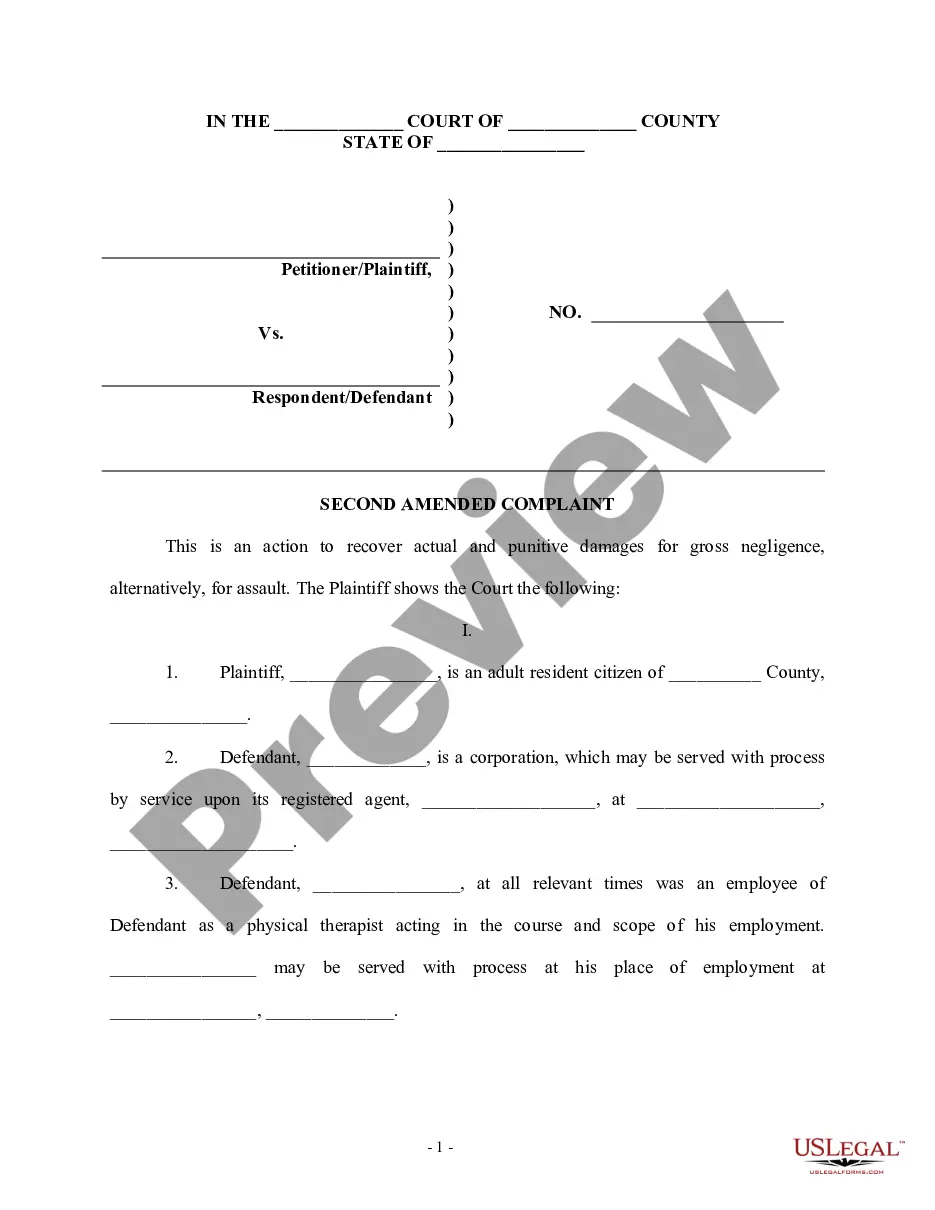
US Legal Forms - one of several most significant libraries of legitimate types in America - delivers a variety of legitimate papers templates you can obtain or printing. Using the internet site, you will get a huge number of types for business and person purposes, categorized by categories, states, or keywords and phrases.You will find the newest types of types such as the Alabama Complaint in Federal Court for Violation of Civil Rights Act Denial of Necessary and Adequate Medical Care and Treatment for a State Inmate within minutes.
If you currently have a subscription, log in and obtain Alabama Complaint in Federal Court for Violation of Civil Rights Act Denial of Necessary and Adequate Medical Care and Treatment for a State Inmate from your US Legal Forms catalogue. The Acquire option can look on every type you perspective. You gain access to all in the past acquired types within the My Forms tab of your respective bank account.
If you wish to use US Legal Forms initially, listed here are basic instructions to help you started out:
- Be sure to have selected the best type to your town/state. Go through the Review option to examine the form`s information. See the type description to ensure that you have chosen the right type.
- In the event the type doesn`t satisfy your needs, use the Research area near the top of the monitor to obtain the the one that does.
- In case you are content with the shape, affirm your choice by visiting the Acquire now option. Then, pick the prices strategy you favor and offer your credentials to register on an bank account.
- Approach the purchase. Make use of your charge card or PayPal bank account to accomplish the purchase.
- Find the file format and obtain the shape on your gadget.
- Make modifications. Fill up, revise and printing and indicator the acquired Alabama Complaint in Federal Court for Violation of Civil Rights Act Denial of Necessary and Adequate Medical Care and Treatment for a State Inmate.
Every template you put into your account lacks an expiration date which is the one you have eternally. So, if you would like obtain or printing yet another duplicate, just proceed to the My Forms segment and then click on the type you will need.
Obtain access to the Alabama Complaint in Federal Court for Violation of Civil Rights Act Denial of Necessary and Adequate Medical Care and Treatment for a State Inmate with US Legal Forms, the most considerable catalogue of legitimate papers templates. Use a huge number of skilled and state-specific templates that meet up with your organization or person requires and needs.
Form popularity
FAQ
In short, this means that the authorities knew about the problem or knew that a problem most likely existed, recognized it as potentially serious, but failed to act. Ignorance, poor judgement, or medical malpractice are serious charges, but not sufficient to warrant deliberate indifference.
Landmark Cases and Laws Gamble, which held that failure to provide adequate medical care to incarcerated people as a result of deliberate indifference violates the Eighth Amendment's prohibition against cruel and unusual punishment.
The Supreme Court has held that the Eighth Amendment's prohibition against cruel and unusual punishment requires the government to provide health care to prisoners,2 but has clarified that officials may be held liable for failing to provide adequate health care only if they are aware of, yet disregard, a ?substantial ...
Forbidden by the Eighth Amendment. 7 Therefore, if prison officials treated your serious medical needs with ?deliberate indifference,? they violated your constitutional right to be free from cruel and unusual punishment.
Yes. Under T.C.A. § 41-4-115(a), all counties are required to provide medical care to prisoners incarcerated in the county jail. Also, the United States Supreme Court has held that prisoners have a constitutional right to receive necessary medical care while in custody.
The U.S. Constitution requires prison officials to provide all state and federal prisoners as well as pretrial detainees (people in jail waiting for trial) with adequate medical care.
Additionally, the Equal Protection Clause of the Fourteenth Amendment applies to incarcerated individuals, protecting them against unequal treatment on the basis of race, sex, and creed, and the Model Sentencing and Corrections Act, created by the Uniform Law Commission in 1978, provides that a confined person has a ...