Alabama Federal Court Brief
Overview of this form
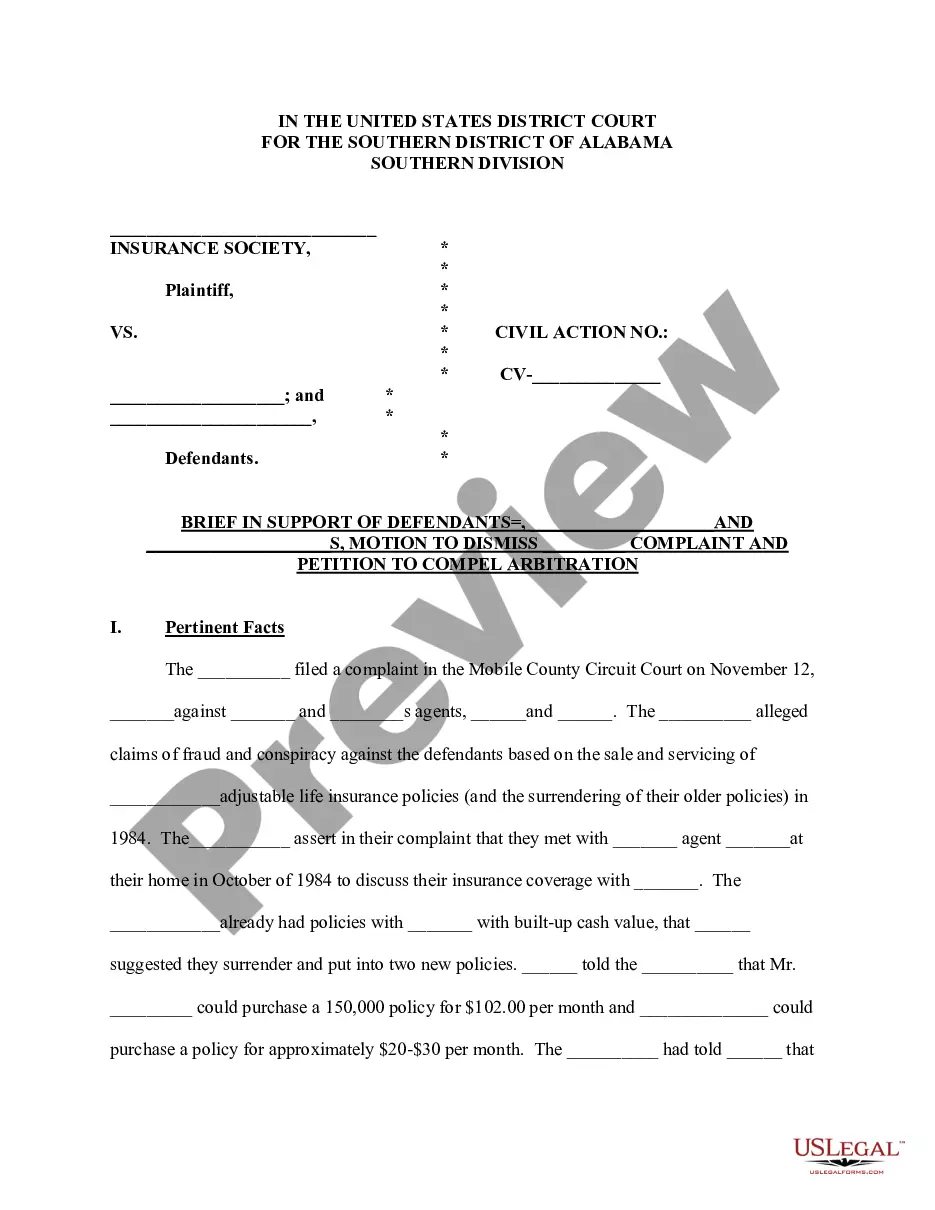
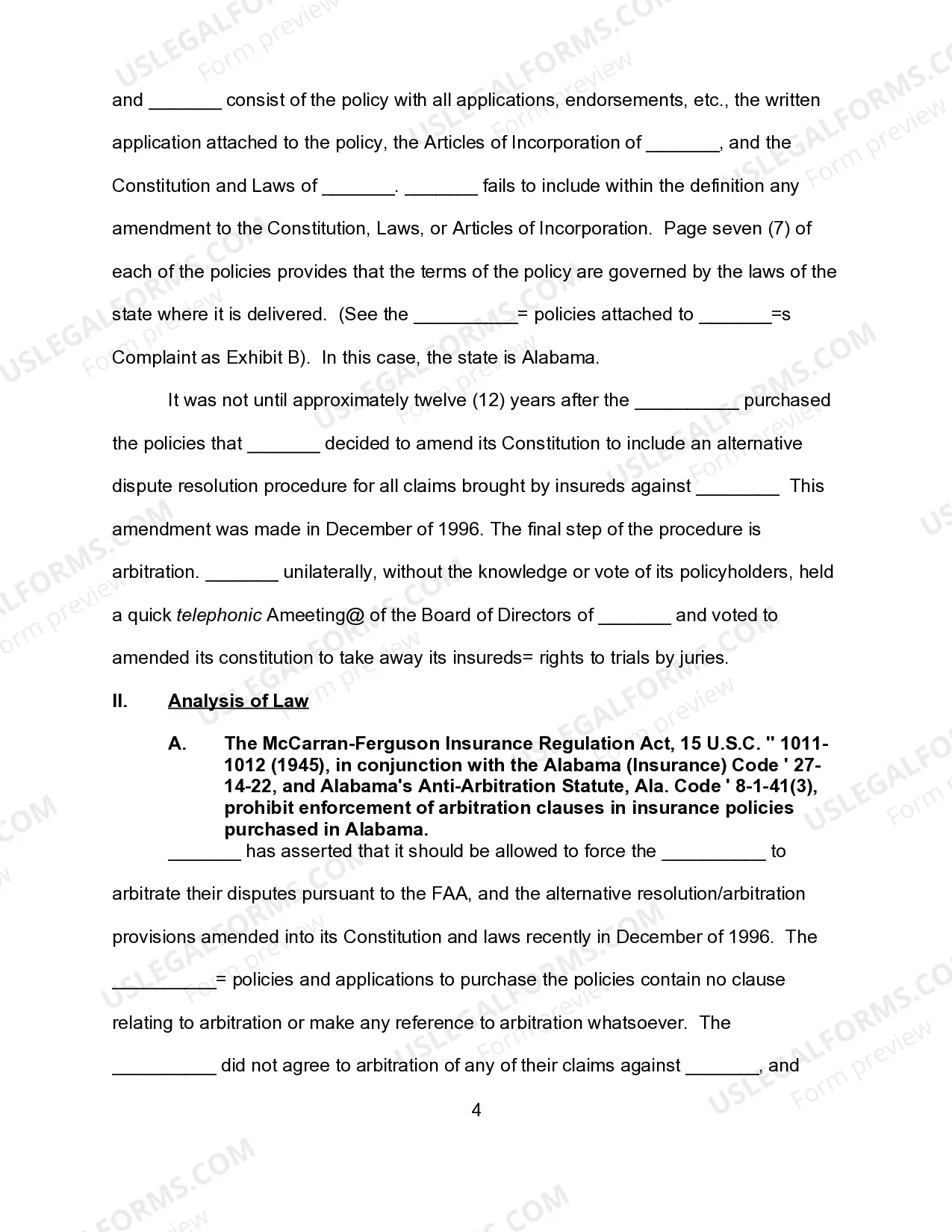
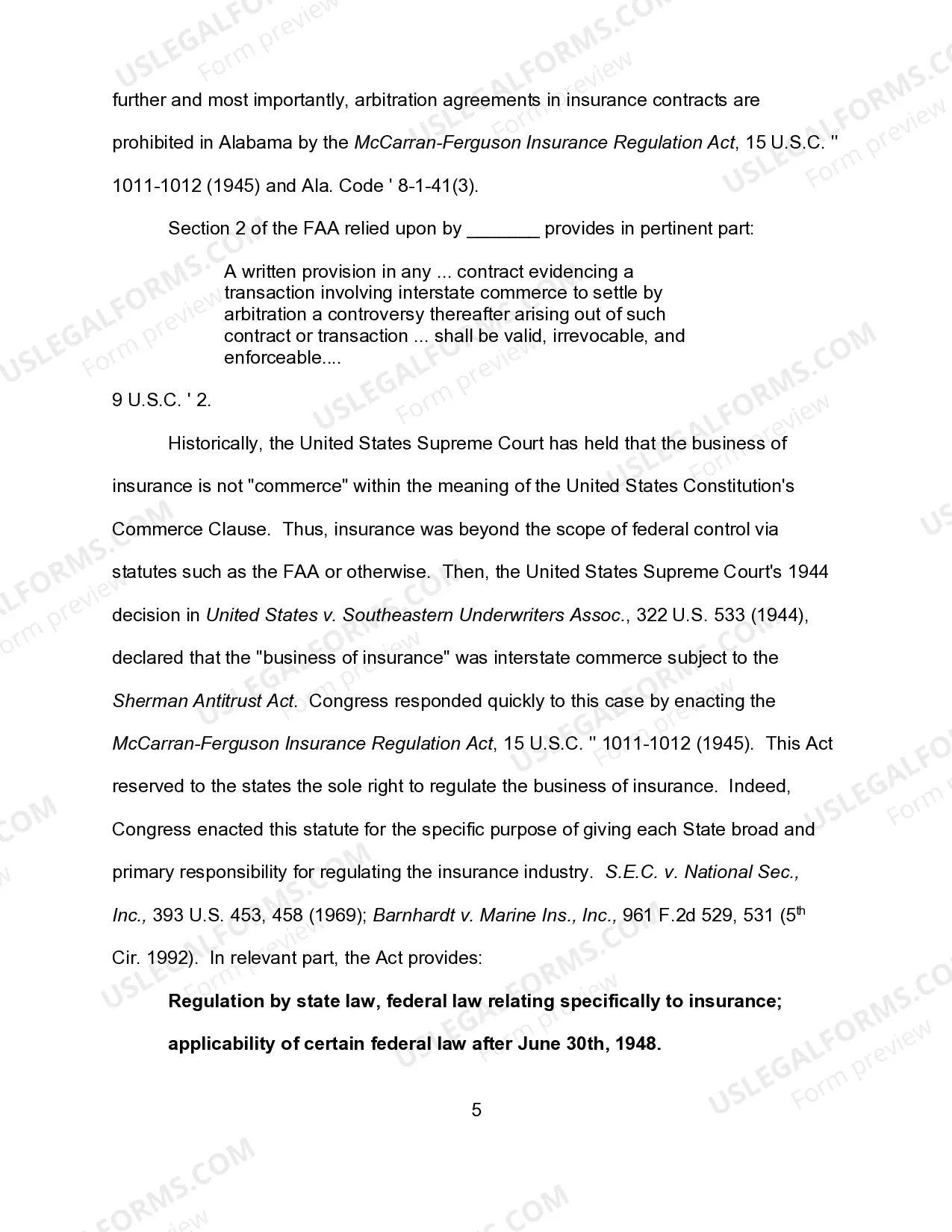
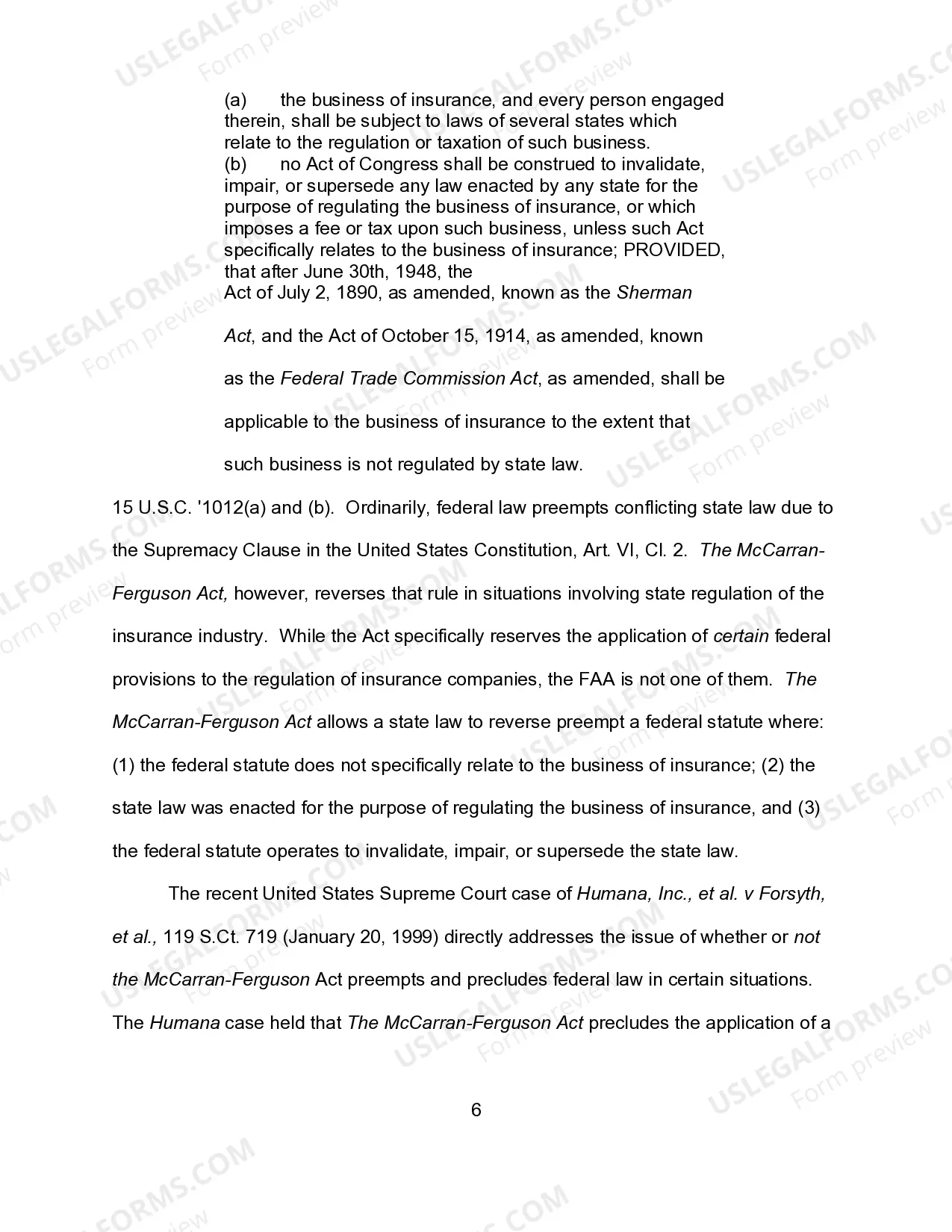
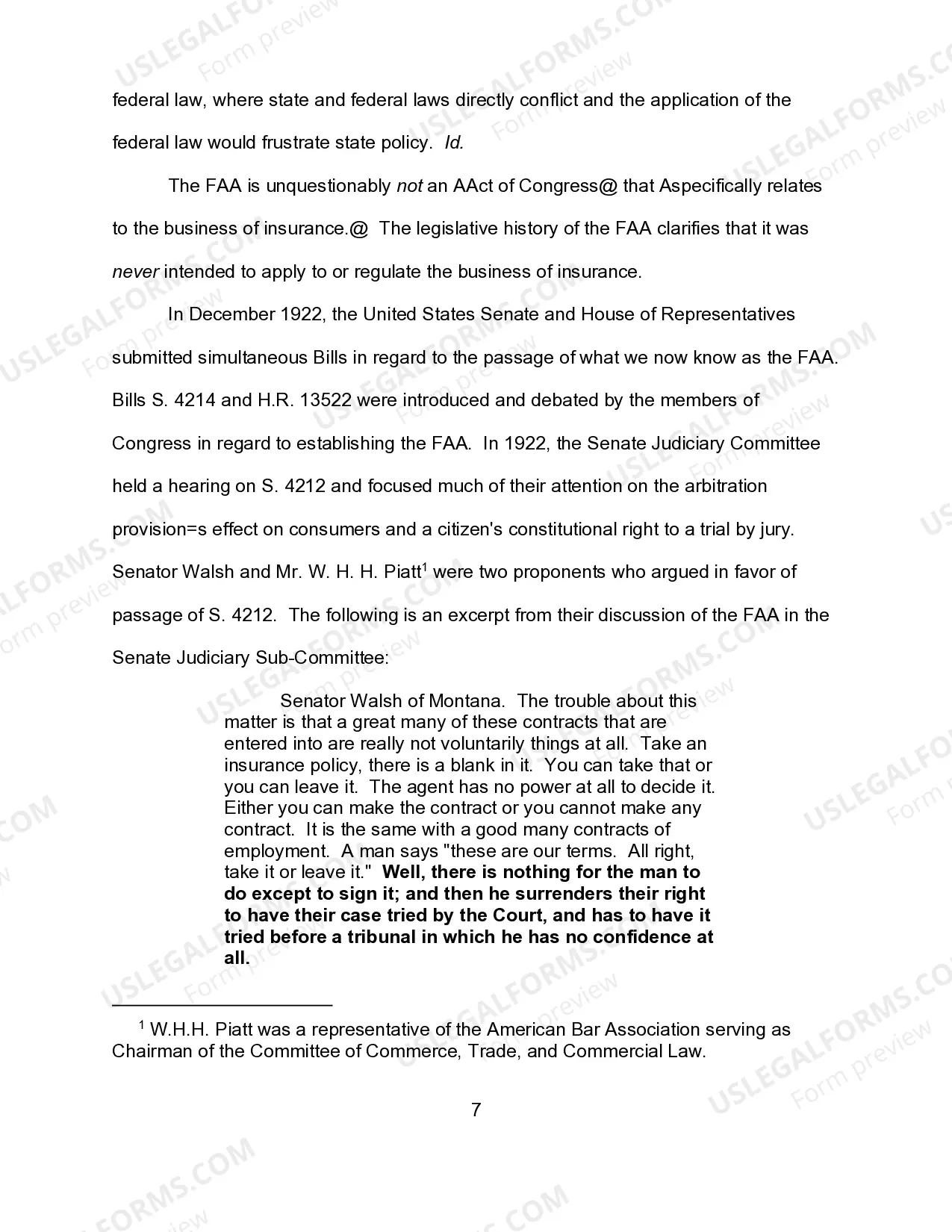
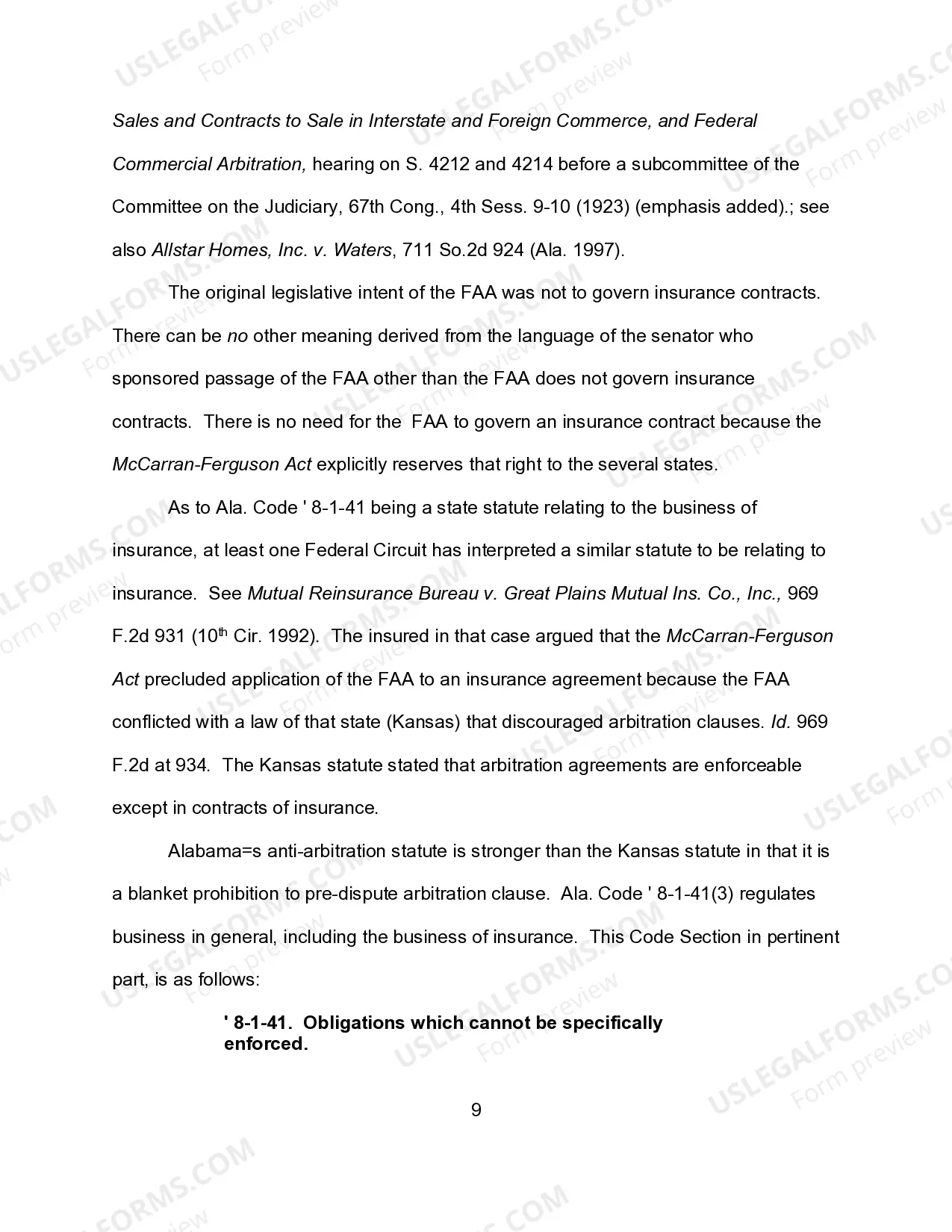
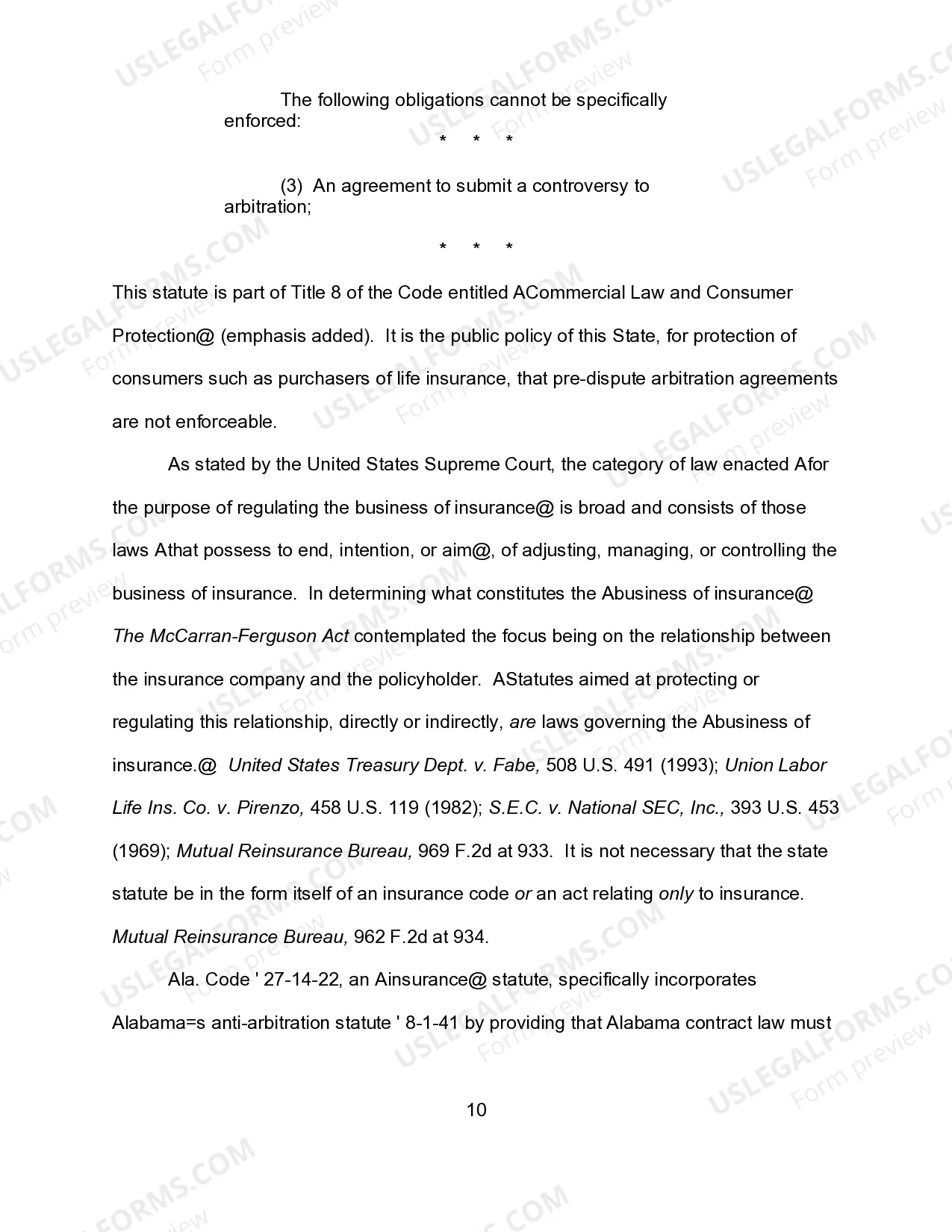
The Federal Court Brief is a legal document used in civil procedures in federal court. It is typically filed in support of a motion to dismiss a complaint and petition to compel arbitration. This form is designed to outline the pertinent facts and legal arguments surrounding the case, differentiating it from other general complaint forms by its specific purpose related to federal arbitration issues and the claims made under the McCarran-Ferguson Insurance Regulation Act.
What’s included in this form
- Heading: Clearly identifies the court and involved parties.
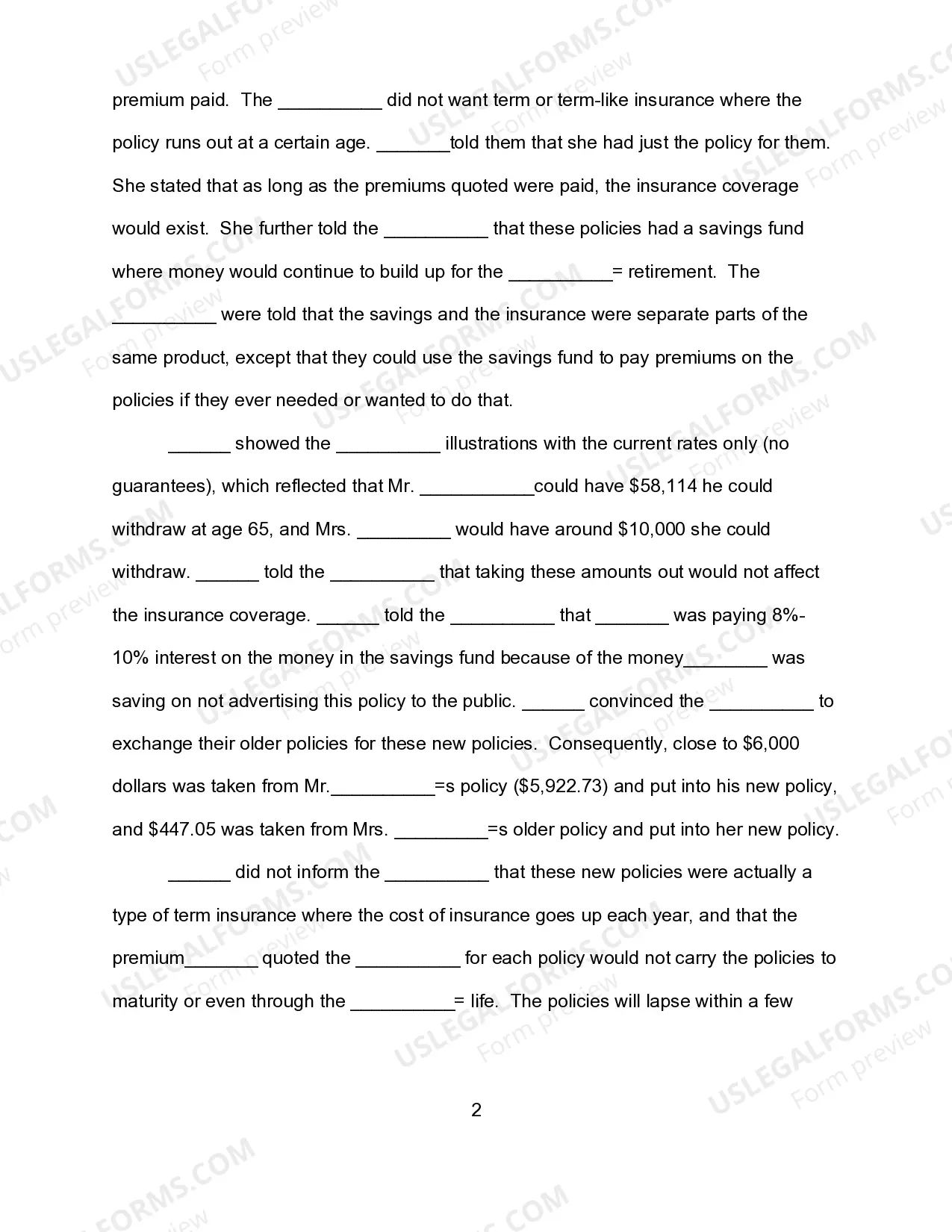
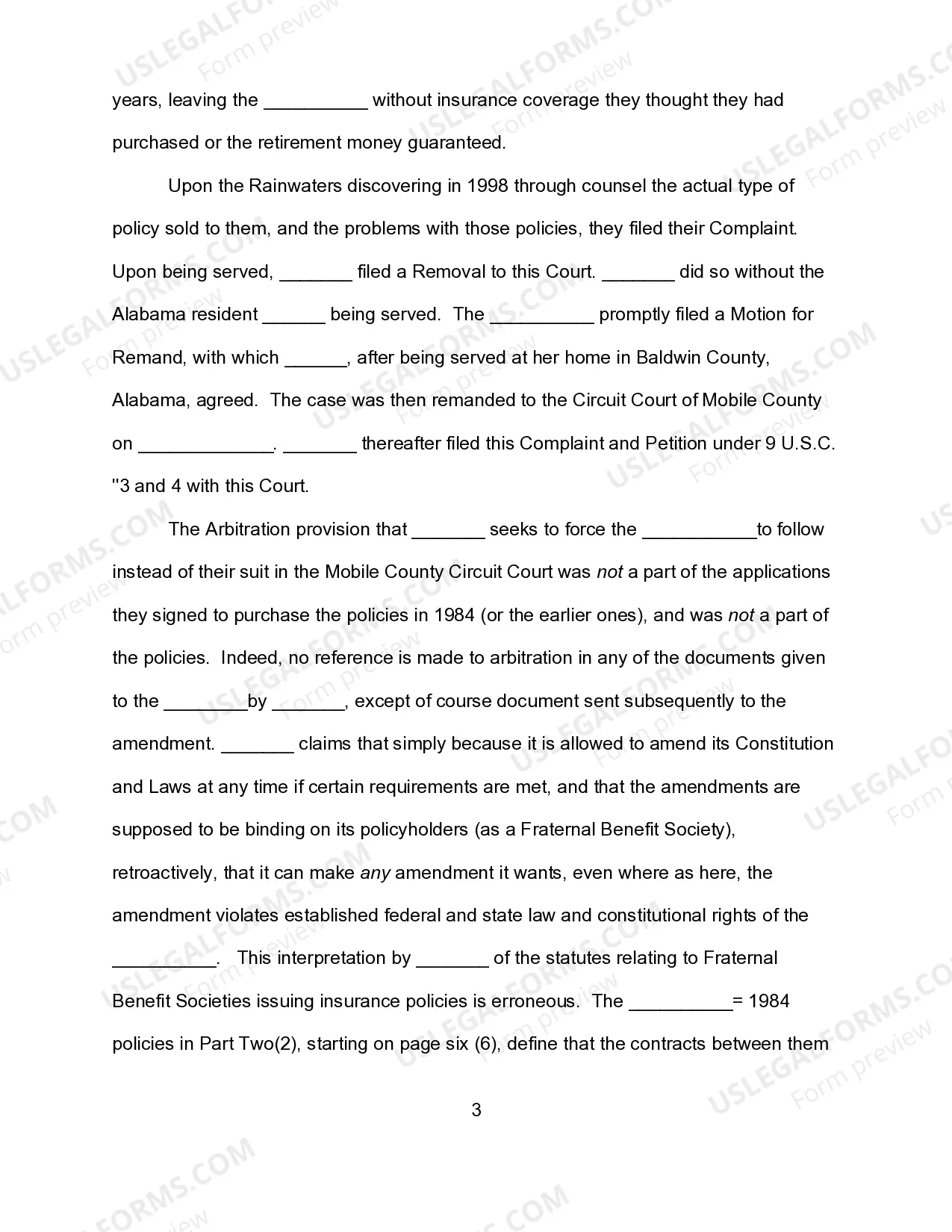
- Pertinent facts: Summarizes the case background and the claims in dispute.
- Legal analysis: Discusses relevant laws and legal precedents supporting the arguments.
- Conclusion and prayer for relief: Final requests to the court regarding the relief sought by the defendants.
- Certificate of service: Confirms that copies of the brief were sent to all relevant parties.


Common use cases
This form is typically used when a defendant in a civil case wants to file a brief to support a motion to dismiss the complaint against them or to compel arbitration as a part of the legal process in federal court. It should be used in cases involving disputes related to insurance agreements, particularly those that may include claims of fraud or misrepresentation.
Who this form is for
- Defendants in a federal civil case involving disputes over insurance contracts.
- Legal representatives or attorneys representing clients in related matters.
- Parties involved in arbitration disputes connected to insurance policies.
Completing this form step by step
- Identify the parties involved in the case, including the plaintiff and defendants.
- Gather all pertinent facts related to the claims and the background of the case.
- Analyze the applicable laws and legal principles to support the arguments presented.
- Clearly state the conclusion and relief sought from the court.
- Complete the certificate of service to ensure all parties receive copies of the document.
Notarization requirements for this form
Notarization is generally not required for this form. However, certain states or situations might demand it. You can complete notarization online through US Legal Forms, powered by Notarize, using a verified video call available anytime.
Get your form ready online
Our built-in tools help you complete, sign, share, and store your documents in one place.
Make edits, fill in missing information, and update formatting in US Legal Forms—just like you would in MS Word.
Download a copy, print it, send it by email, or mail it via USPS—whatever works best for your next step.
Sign and collect signatures with our SignNow integration. Send to multiple recipients, set reminders, and more. Go Premium to unlock E-Sign.
If this form requires notarization, complete it online through a secure video call—no need to meet a notary in person or wait for an appointment.
We protect your documents and personal data by following strict security and privacy standards.

Make edits, fill in missing information, and update formatting in US Legal Forms—just like you would in MS Word.

Download a copy, print it, send it by email, or mail it via USPS—whatever works best for your next step.

Sign and collect signatures with our SignNow integration. Send to multiple recipients, set reminders, and more. Go Premium to unlock E-Sign.

If this form requires notarization, complete it online through a secure video call—no need to meet a notary in person or wait for an appointment.

We protect your documents and personal data by following strict security and privacy standards.
Common mistakes to avoid
- Failing to include all relevant parties in the certificate of service.
- Neglecting to clearly articulate the legal basis for the motion to dismiss or compel arbitration.
- Inaccurate or incomplete presentation of facts related to the case.
Advantages of online completion
- Convenient access to legal templates whenever needed.
- Editable to suit specific cases and requirements.
- Ensures compliance with necessary legal standards and formats.
Legal use & context
- This form can be used to effectively communicate legal arguments in federal court.
- It helps to establish a comprehensive record of the case facts and applicable laws.
- Properly completing this form can enhance the chances of attaining the desired legal outcome.
Quick recap
- The Federal Court Brief is essential for responding to legal complaints in federal court.
- Understanding how to structure the brief and present arguments is crucial for success.
- Users must adhere to state-specific rules and requirements, particularly in Alabama.
Looking for another form?

Form popularity
FAQ
If you have been served with a summons and complaint, you have twenty-one (21) days to file an answer. The United States government, its agencies, and employees have sixty (60) days to file an answer. See Rule 12 of the Federal Rules of Civil Procedure.
This cost must be specifically permitted under a rule or statute, such as Federal Rule of Civil Procedure 54 or 28 U.S.C. § 1920. Initial Filing Fee The fee for initiating a case in federal court. This fee is currently $400.
District Court in the county in which the defendant lives or has an office. File a Statement of Claim (Complaint) form with the Clerk. A filing fee must be paid at the time of filing. Contact the Clerk for the amount of the filing fee.
Does a verification have to be served with discovery responses in Federal Court?In California court you have to include a verification with discovery responses.
When drafting an answer, one must: (1) follow the local, state, and federal court rules; (2) research the legal claims in the adversary's complaint; (3) respond to the adversary's factual allegations; and (4) assert affirmative defenses, counterclaims, cross-claims, or third-party claims, if applicable.
The fee to file a complaint in Federal Court is $400.00. There are no additional fees involved in the act of filing the case. If you cannot afford to pay the filing fee, you may apply to have the filing fee "waived," which means that your case may proceed without paying the filing fee.
You write your motion. You file your motion with the court clerk. The court clerk inserts the date and time your motion will be heard by the judge. You serve (mail) your motion to the other side.
Anyone in the United States has the right to represent themselves in court and file a lawsuit without an attorney.