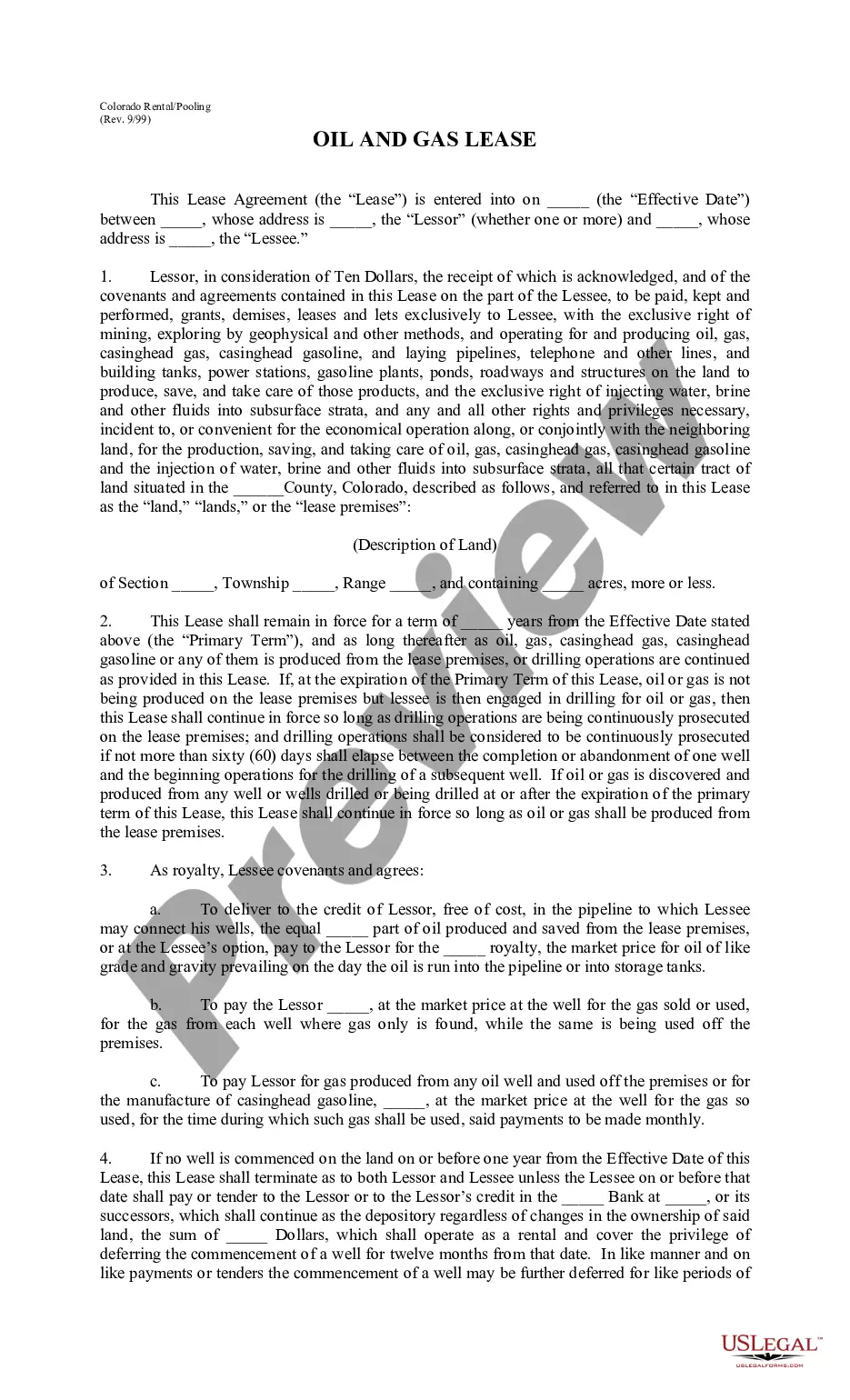
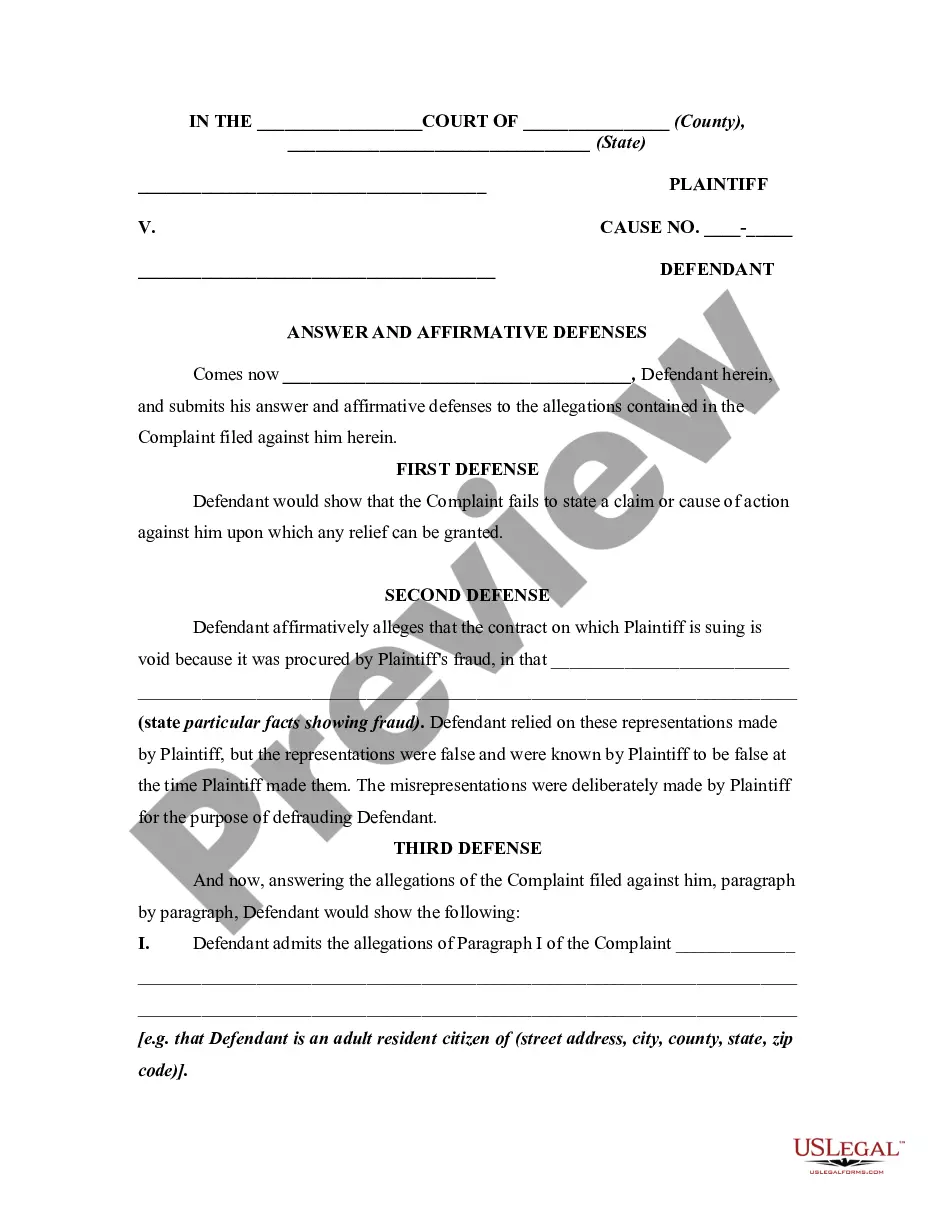
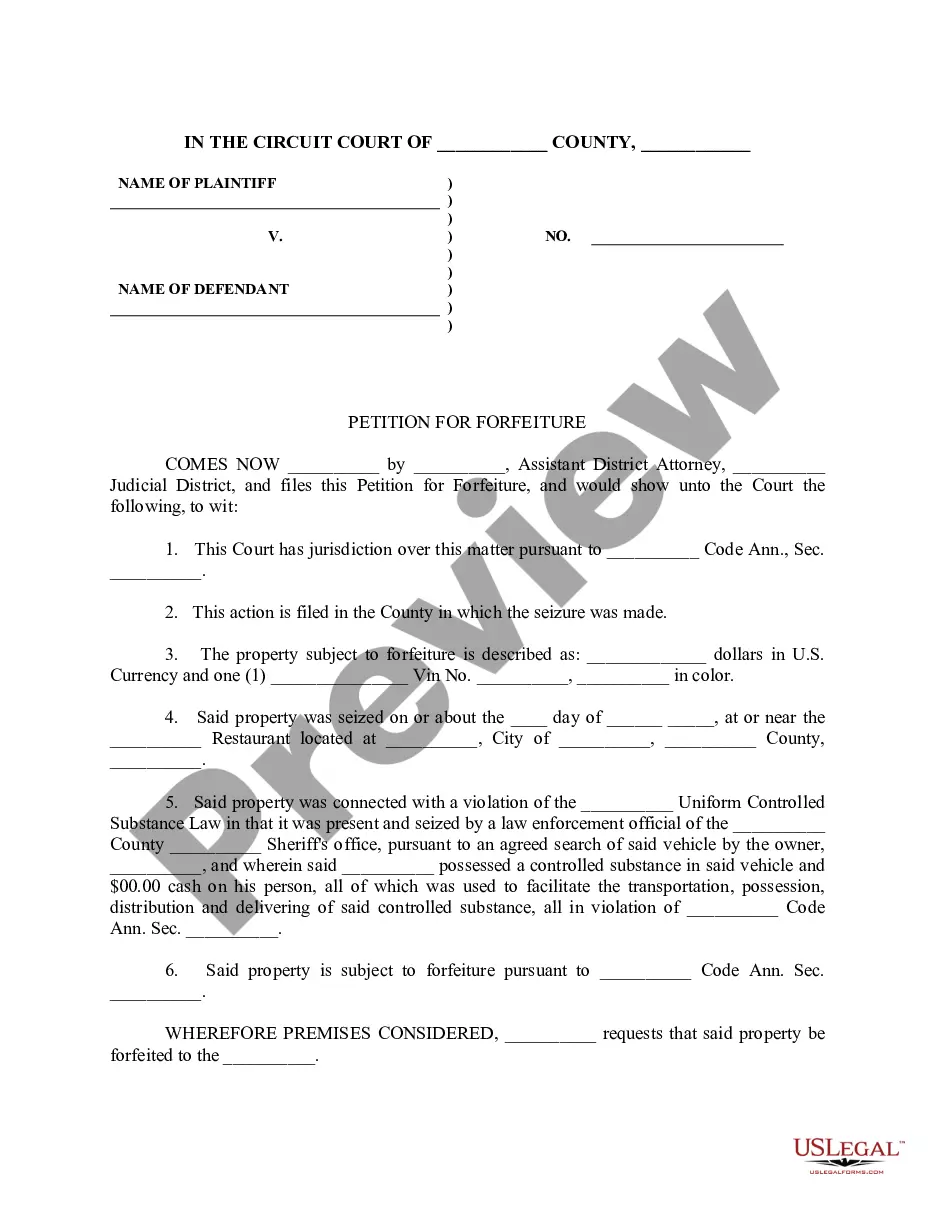
This form is an answer to the Complaint for Forfeiture and Seizure of Property under the Drug Profits Forfeiture Act. By completing this form the defendant admits the allegations of the Complaint and stipulates for entry of Judgment as requested by the Plaintiff, which will effect a forfeiture of the property which was seized in connection with the arrest for violation of the Controlled Substances Law of the State of Alabama.
Alabama Answer of Defendant to the Complaint for Forfeiture and Seizure of Property
Instant download
Description
Free preview
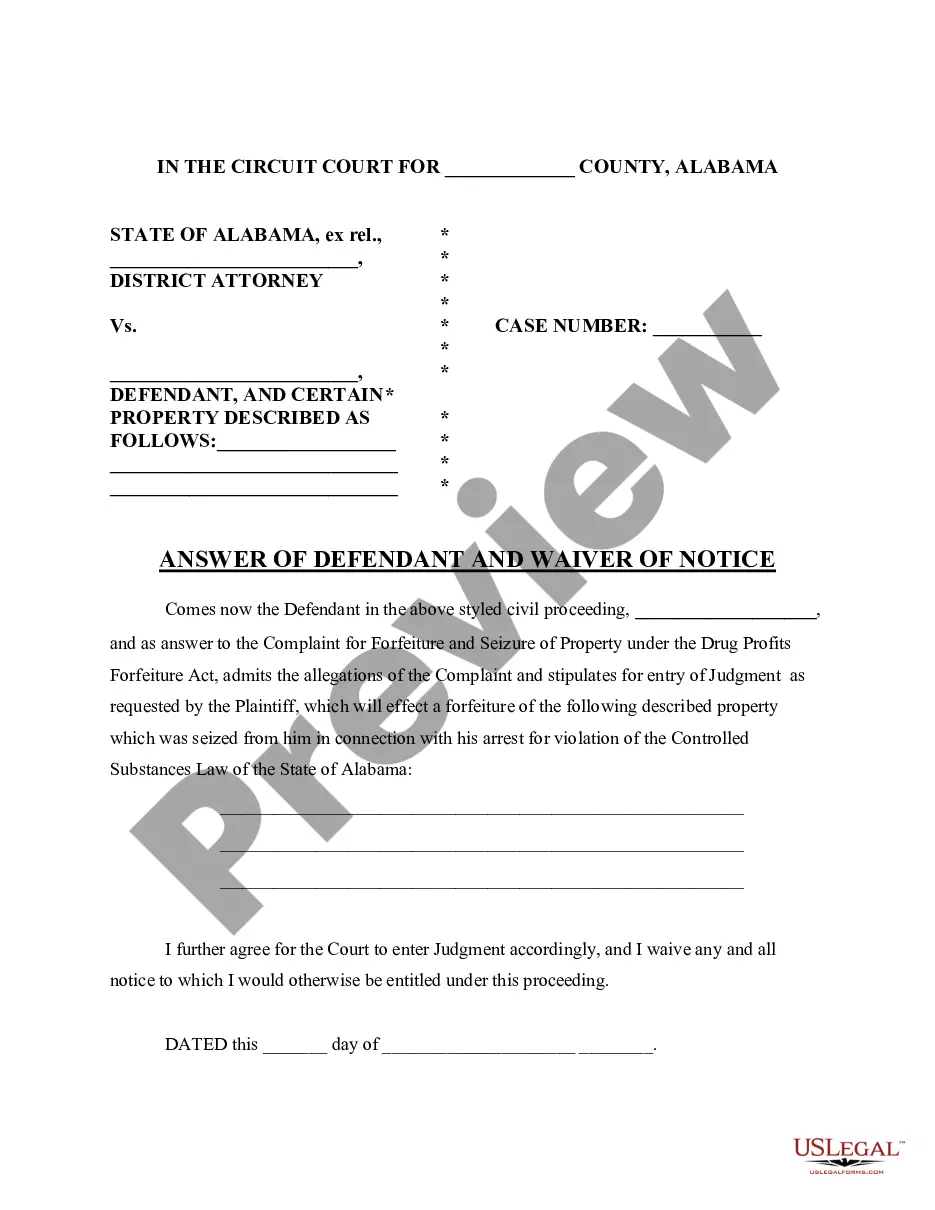
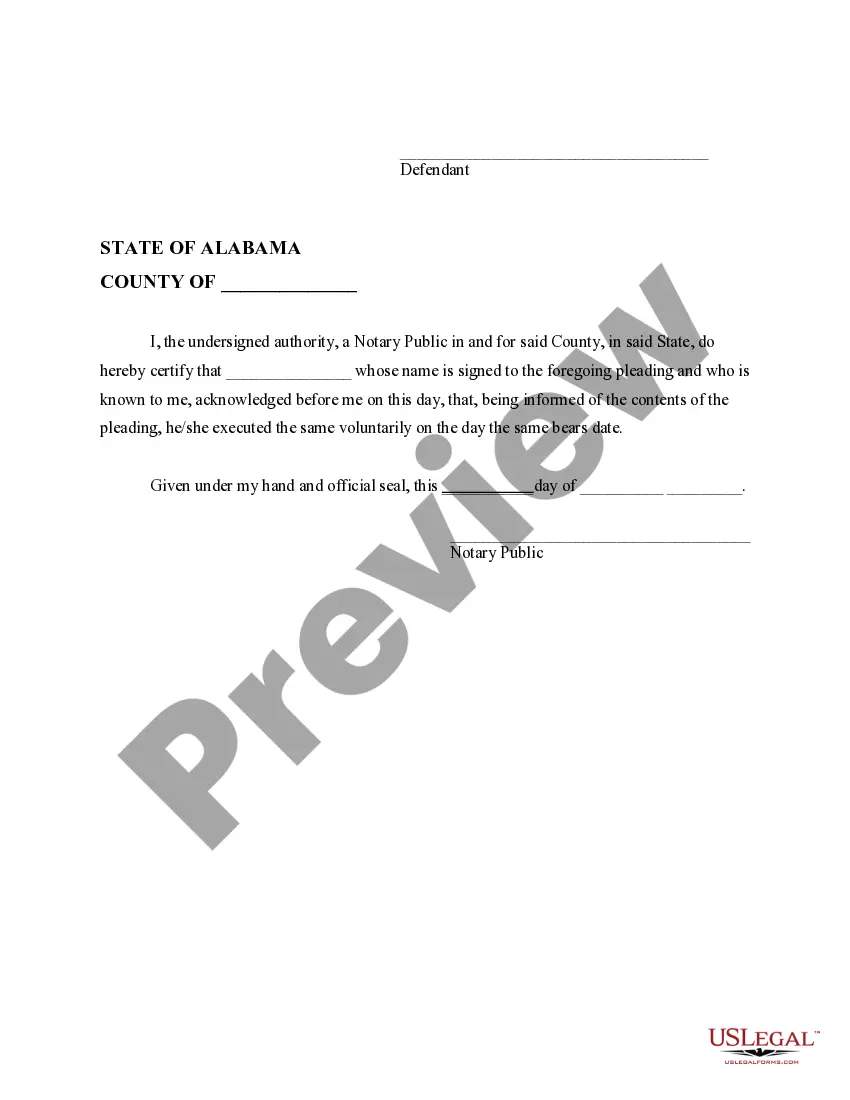
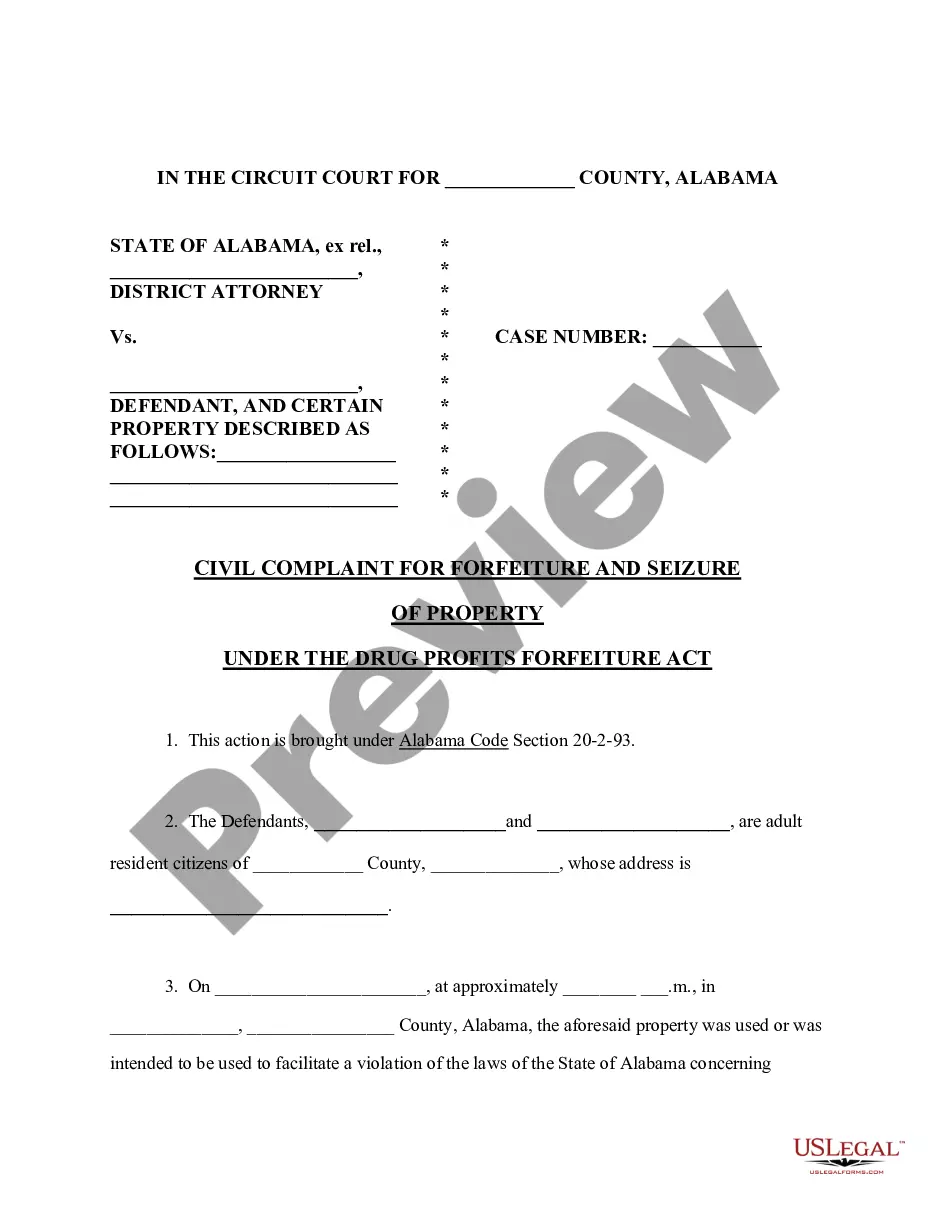

How to fill out Alabama Answer Of Defendant To The Complaint For Forfeiture And Seizure Of Property?
Utilizing Alabama Response of Defendant to the Lawsuit for the Confiscation and Seizure of Assets examples crafted by experienced attorneys helps you avert frustrations when completing forms.
Simply download the example from our site, complete it, and ask an attorney to verify it.
Doing so will save you significantly more time and effort than seeking legal advice to tailor a document according to your requirements.
Recheck and confirm that you’re downloading the correct state-specific form. Utilize the Preview feature and read the details (if available) to determine if this specific sample is necessary, and if it is, just click Buy Now. If needed, search for another sample using the Search field. Choose a subscription that caters to your needs. Start using your credit card or PayPal. Select a file format and download your document. Once you have completed all the steps above, you will be able to fill out, print, and sign the Alabama Response of Defendant to the Lawsuit for the Confiscation and Seizure of Assets sample. Remember to double-check all entered information for accuracy before submitting it or mailing it. Reduce the time you spend on completing documents with US Legal Forms!
- If you have a US Legal Forms membership, just sign in to your account and revisit the samples page.
- Locate the Download button near the templates you are reviewing.
- After you download a template, you will find your saved examples in the My documents section.
- If you lack a membership, that’s not a concern at all.
- Just follow the step-by-step instructions below to register for your online account, obtain, and complete your Alabama Response of Defendant to the Lawsuit for the Confiscation and Seizure of Assets template.
Form popularity
FAQ
Updated October 16, 2020 Asset forfeiture is when the government takes a person's property because it suspects the property was used in committing a crime or was obtained by way of criminal activity. California's asset forfeiture laws can be used to seize most types of property, including: houses, boats, cars, and
United States. There are two types of forfeiture (confiscation) cases, criminal and civil.
Whereas restitution is measured by the losses to victims and forfeiture is measured by the proceeds of a criminal offense, both amounts frequently turn out to be the same--especially in financial fraud cases.
Seizure is the act of taking property.Forfeiture occurs when your rights to the seized property are permanently lost through a court order or judgment. Forfeiture occurs after seizure, and seizure does not always end in forfeiture. In our example, the seizure takes place when Officer Potts takes the money from Steve.
Forfeiture refers to a loss of any property, money, or assets without consideration or compensation in return. A forfeiture generally occurs due to default in complying with repayment obligations under a contract. It can also be used as a penalty for an illegal way of conducting business.
Criminal forfeiture is an action brought as a part of the criminal prosecution of a defendant.Civil judicial forfeiture is an in rem (against the property) action brought in court against the property. The property is the defendant and no criminal charge against the owner is necessary.
Your Claim Opposing Forfeiture (MC-200) must be filed in the county where the property was seized. If you have received a notice, you can find the address of the court on that notice. Within 30 days after filing your claim, you must serve a copy on the District Attorney.
The involuntary relinquishment of money or property without compensation as a consequence of a breach or nonperformance of some legal obligation or the commission of a crime. The loss of a corporate charter or franchise as a result of illegality, malfeasance, or Nonfeasance.
It is an in personam (against the person) action and requires that the government indict (charge) the property used or derived from the crime along with the defendant. If the jury finds the property forfeitable, the court issues an order of forfeiture.