Alabama Mobile Home Park Lease Agreement
What this document covers
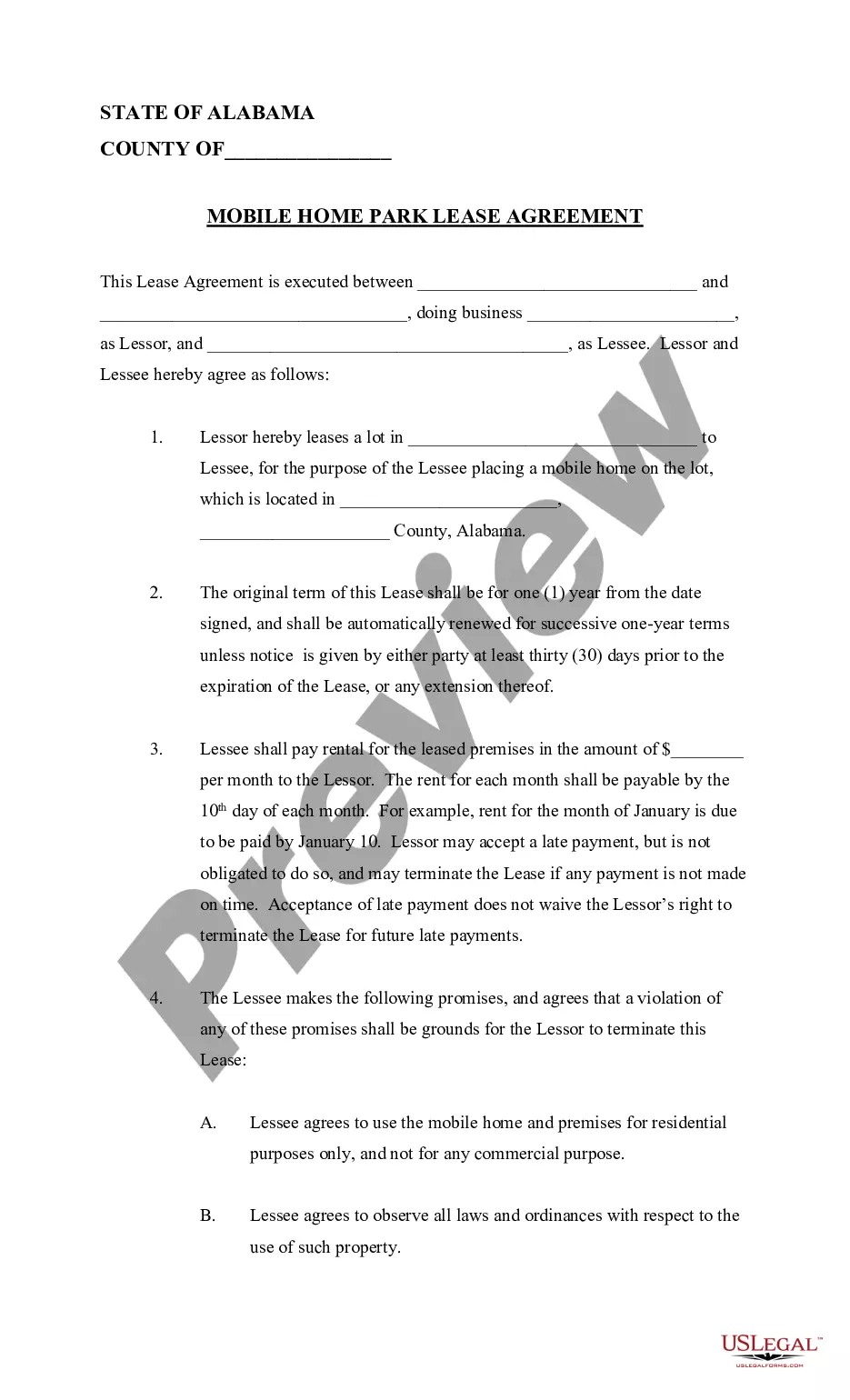
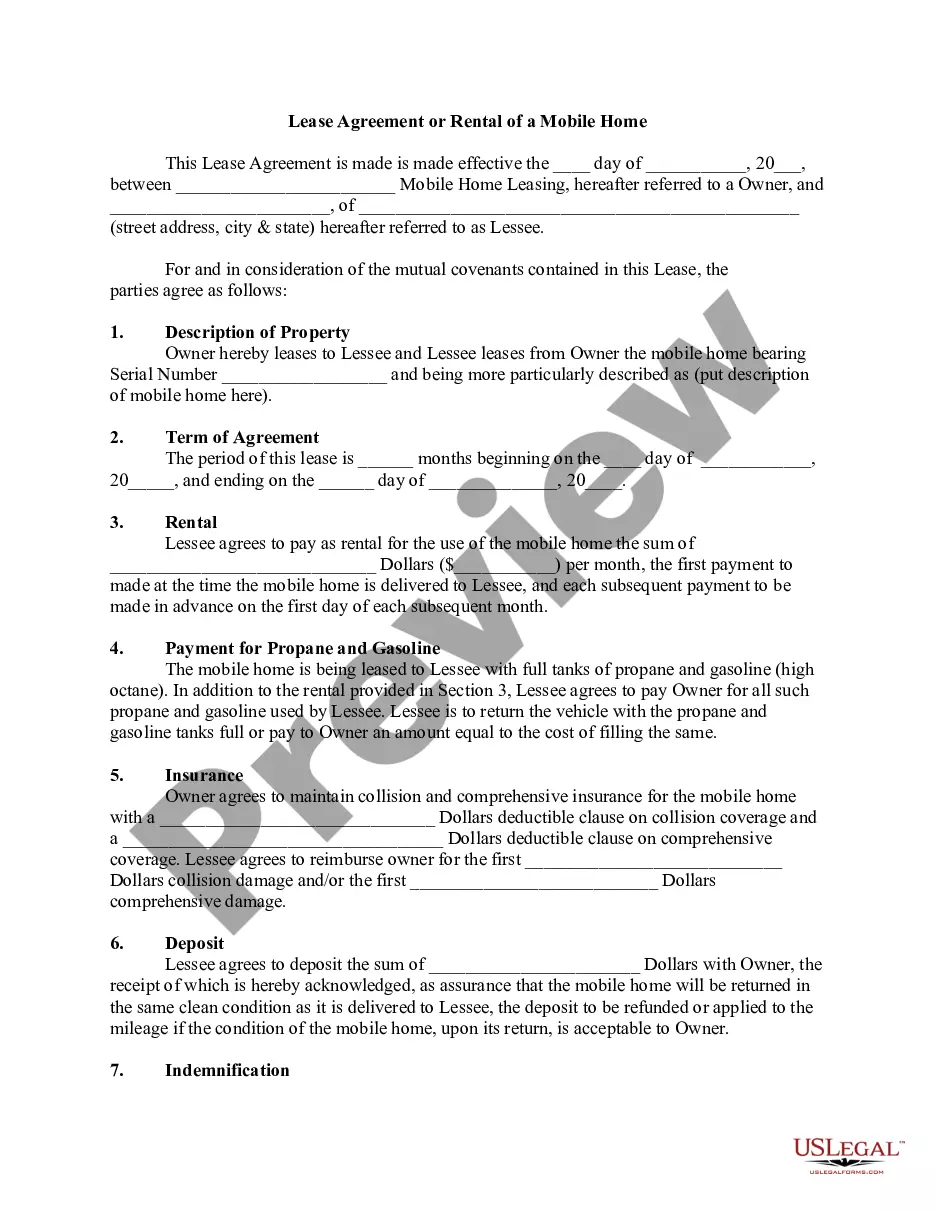
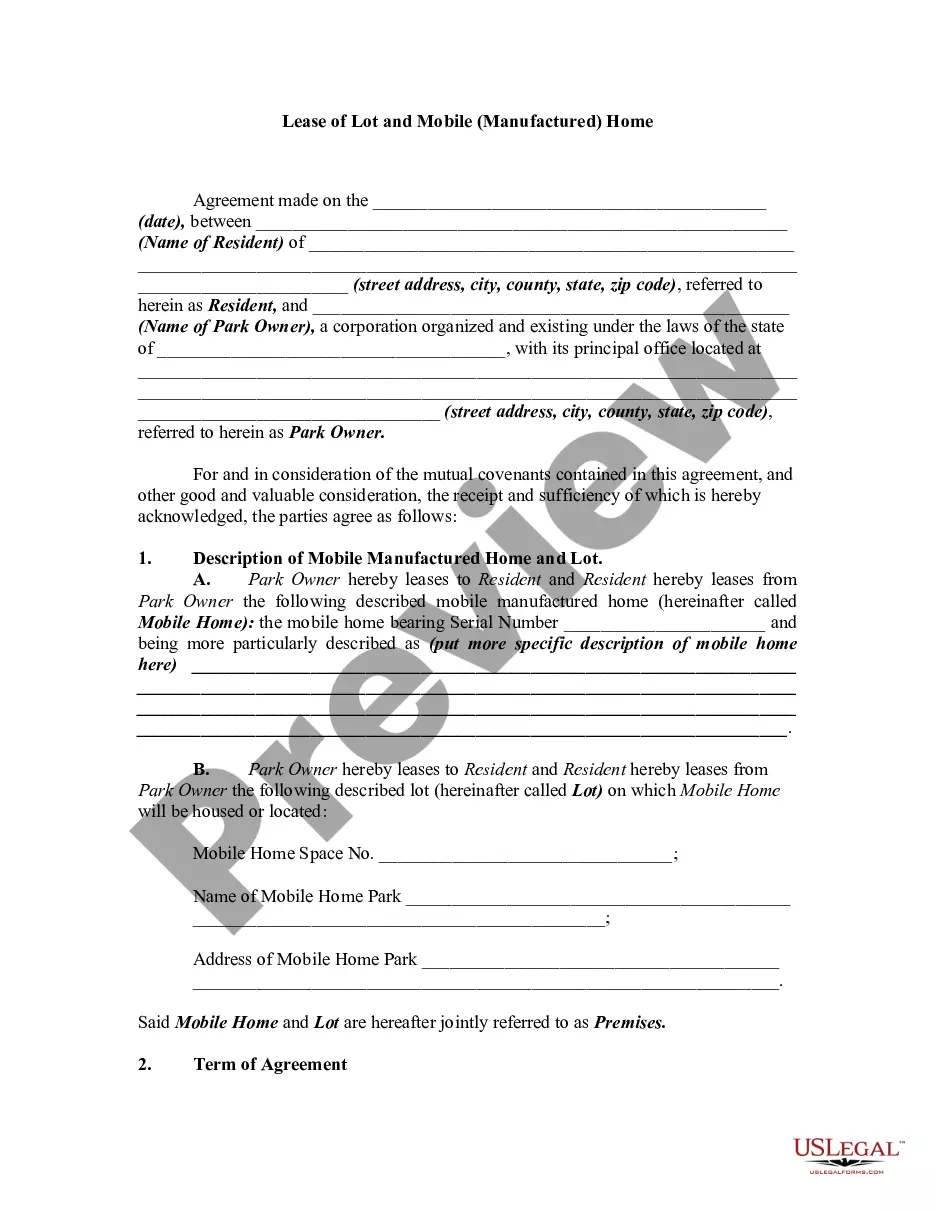
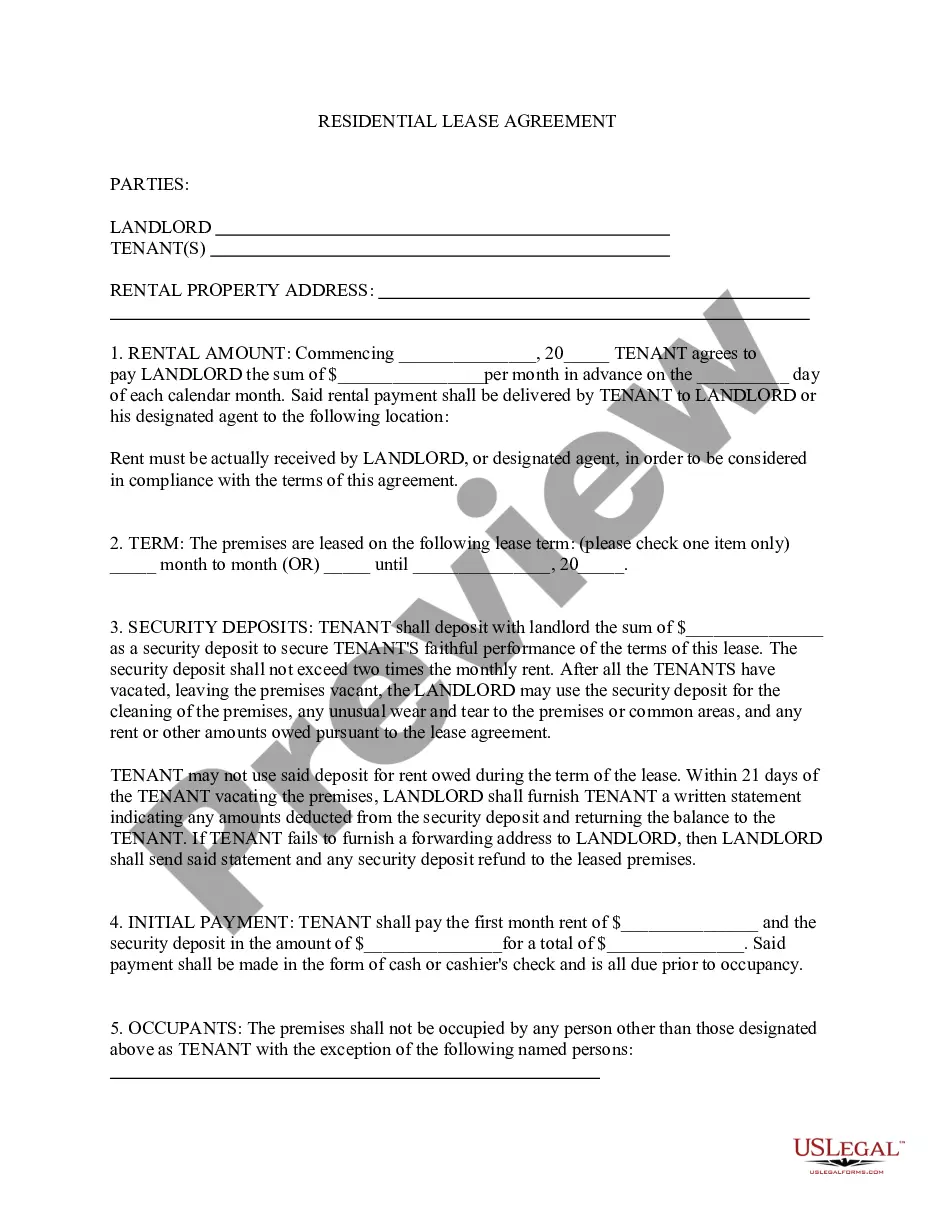
The Mobile Home Park Lease Agreement is a legal contract that outlines the terms for leasing a lot in a mobile home park. This agreement allows the lessee (tenant) to place a mobile home on the leased land in exchange for rental payments. Unlike general lease agreements, this form specifically addresses the unique aspects of leasing mobile home lots, such as utility responsibilities and conduct during the lease term.
Main sections of this form
- Identification of the lessor and lessee, along with their business details.
- Description of the leased property and its intended use.
- Duration of the lease term and conditions for renewal.
- Monthly rent details and payment schedule.
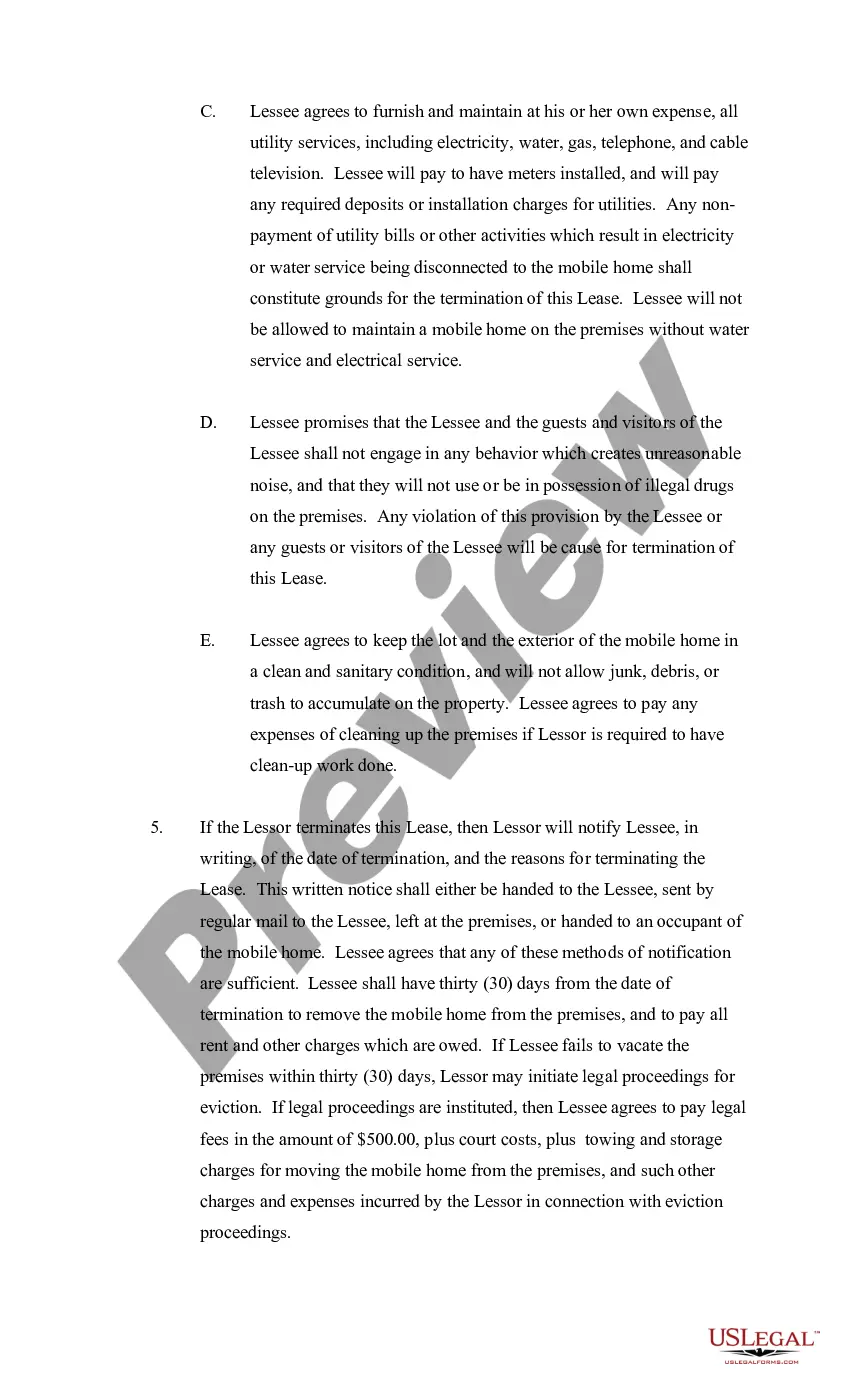
- Lessee's responsibilities for utilities and property maintenance.
- Termination clauses and procedures for ending the lease.
When this form is needed
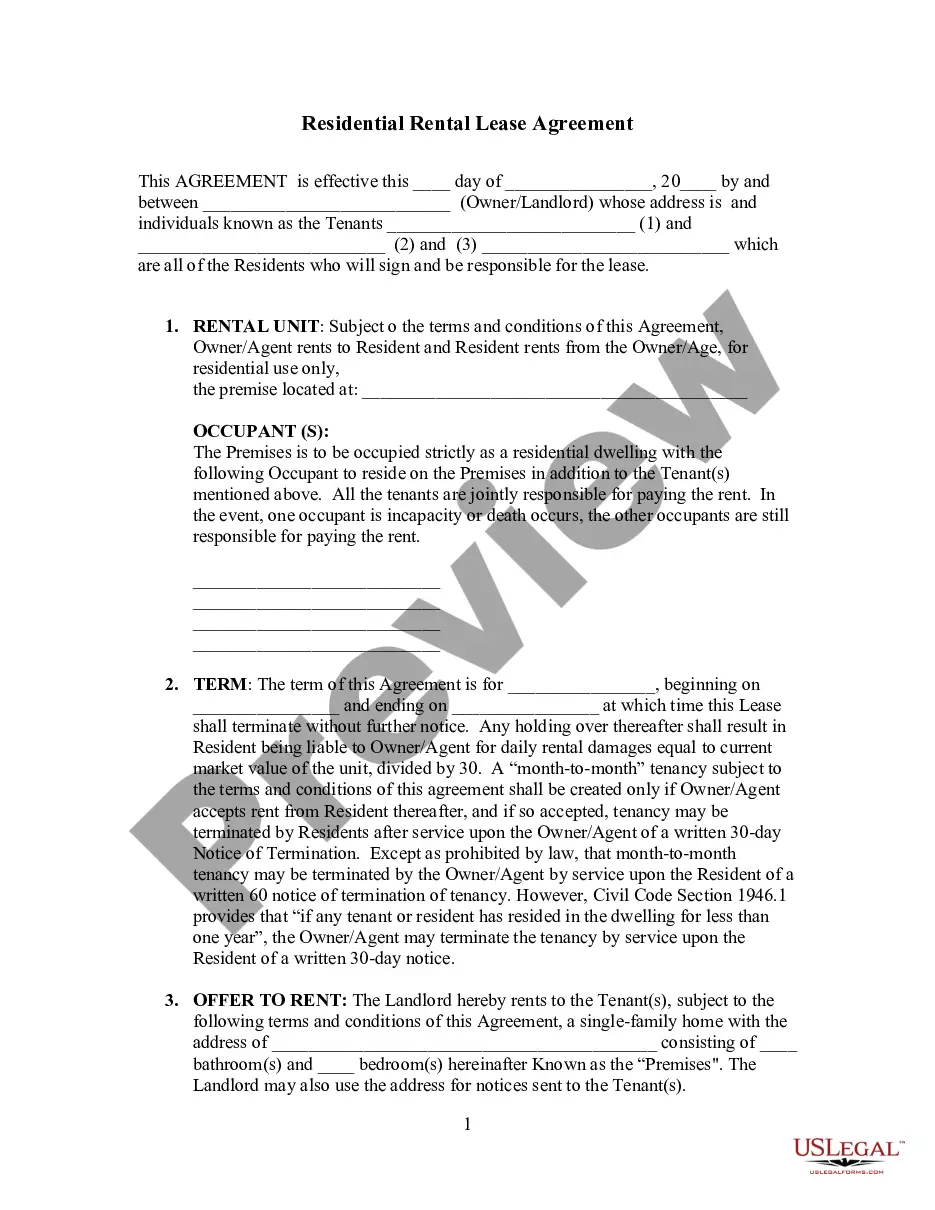
This form should be used when a property owner (lessor) wants to lease a lot in a mobile home park to a tenant (lessee). It is particularly useful in scenarios where the parties need to clearly define their rights and obligations regarding the mobile home, rental payments, and property upkeep. You may need this lease if you are establishing a new rental agreement or renewing an existing one for a mobile home lot.
Who this form is for
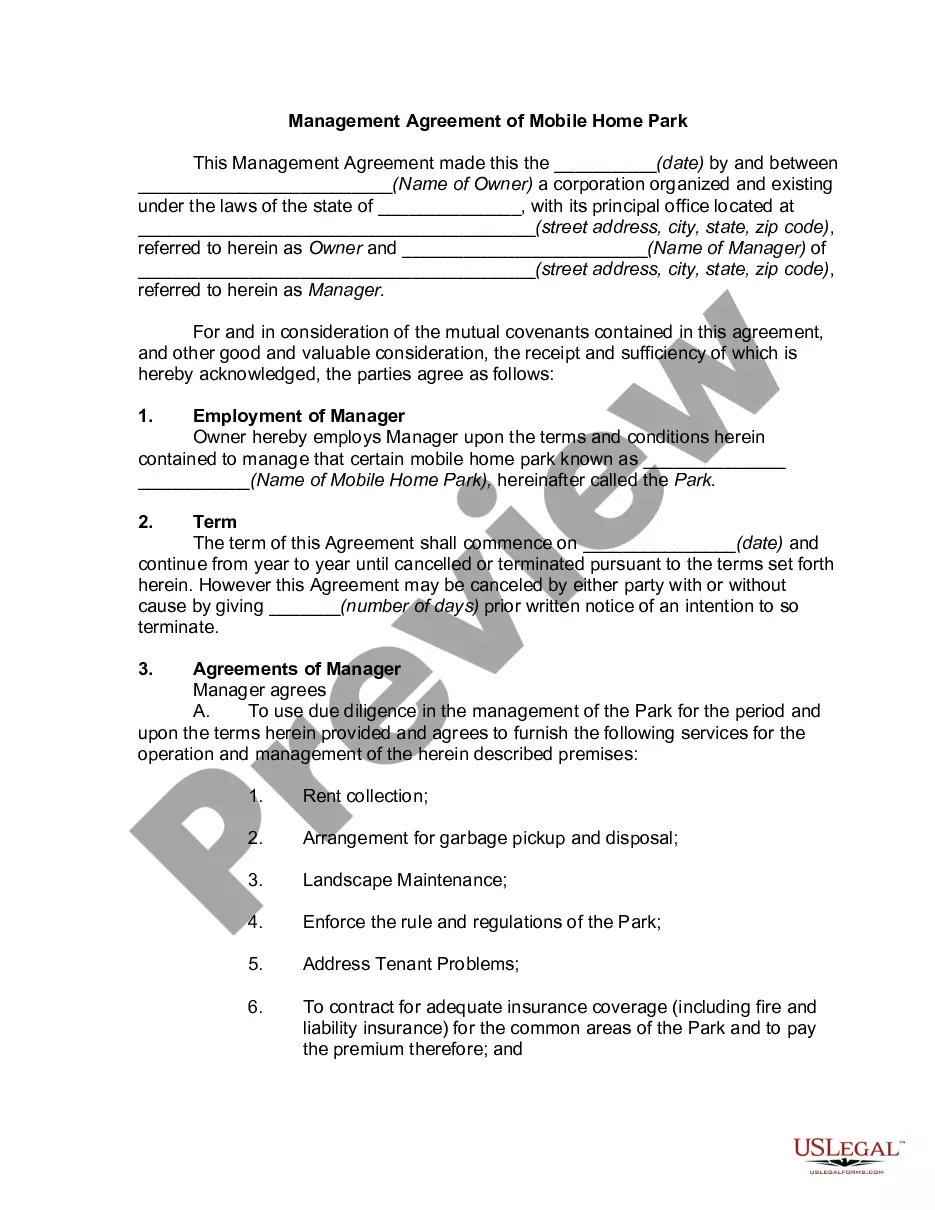
- Landlords or lessors who own a mobile home park and wish to establish legal rental agreements.
- Tenants or lessees looking to move a mobile home onto a leased lot.
- Property managers overseeing mobile home parks and needing to standardize lease agreements.
- Legal professionals assisting clients with mobile home park leasing matters.
Steps to complete this form
- Identify the parties involved: enter the names and business details of the lessor and lessee.
- Specify the property: clearly detail the location of the mobile home lot being leased.
- Define the lease term: indicate the length of the lease and conditions for renewal.
- Enter rental amounts: state the monthly rent due and payment date.
- Include utility responsibilities: outline which utilities the lessee must maintain.
- Provide for lease termination: detail notification procedures and conditions under which the lease can be ended.
Notarization guidance
Notarization is not commonly needed for this form. However, certain documents or local rules may make it necessary. Our notarization service, powered by Notarize, allows you to finalize it securely online anytime, day or night.
Get your form ready online
Our built-in tools help you complete, sign, share, and store your documents in one place.
Make edits, fill in missing information, and update formatting in US Legal Forms—just like you would in MS Word.
Download a copy, print it, send it by email, or mail it via USPS—whatever works best for your next step.
Sign and collect signatures with our SignNow integration. Send to multiple recipients, set reminders, and more. Go Premium to unlock E-Sign.
If this form requires notarization, complete it online through a secure video call—no need to meet a notary in person or wait for an appointment.
We protect your documents and personal data by following strict security and privacy standards.

Make edits, fill in missing information, and update formatting in US Legal Forms—just like you would in MS Word.

Download a copy, print it, send it by email, or mail it via USPS—whatever works best for your next step.

Sign and collect signatures with our SignNow integration. Send to multiple recipients, set reminders, and more. Go Premium to unlock E-Sign.

If this form requires notarization, complete it online through a secure video call—no need to meet a notary in person or wait for an appointment.

We protect your documents and personal data by following strict security and privacy standards.
Common mistakes
- Failing to include the full names and contact information of both parties.
- Not clearly specifying the payment due date, leading to potential disputes.
- Omitting utility responsibilities, which can result in misunderstandings.
- Neglecting to define the lease termination process and notice period.
Benefits of completing this form online
- Convenience of downloading and printing the form at your convenience.
- Editability allows customization to meet specific needs before finalizing.
- Reliability, as forms are drafted by licensed attorneys to ensure legal compliance.
- Accessible guidance can help in understanding each section of the lease agreement.
Looking for another form?
Form popularity
FAQ
A written agreement can act as a roadmap for the landlord-tenant relationship, especially if a dispute arises. Also, real estate (land) leases for more than one year must be in writing. If a lease for over one year is not in writing, it will generally not be enforceable in court.
Your landlord can change a rental agreement at any time during the term of the agreement, with or without your consent. Changes must be made with adequate notice; notice periods are 30 days in most states. Changing a lease is harder because both parties must consent to almost any change.
The lease becomes legally binding when all parties have signed: the landlord and all tenants living in the unit who are 18 and older. If you're worried about situations where a lease needs to end early, learn about breaking a lease and grounds for eviction.
If you are a leaseholder, you cannot change the lease terms without agreeing such change with your landlord. The reason for this is that as the lease is a contract between two parties, the leaseholder and the landlord, both parties must agree to change (referred to also as variation) of the terms of the lease.
The Lease Must be in Writing It does not matter if the lease is handwritten or typed.
A lease is automatically void when it is against the law, such as a lease for an illegal purpose. In other circumstances, like fraud or duress, a lease can be declared void at the request of one party but not the other.
With Tenant Consent. If the tenant and landlord both agree to the change, the parties can either (1) execute a new lease or rental agreement that includes the new clause, or (2) amend the existing lease or rental agreement. Without Tenant Consent.
The Lease Must be in Writing It does not matter if the lease is handwritten or typed. If the lease is for more than one year, it must be in written form and contain the following terms.
Collect each party's information. Include specifics about your property. Consider all of the property's utilities and services. Know the terms of your lease. Set the monthly rent amount and due date. Calculate any additional fees. Determine a payment method. Consider your rights and obligations.