Alaska Cable Consortium Cable Television Franchise Agreement
Description
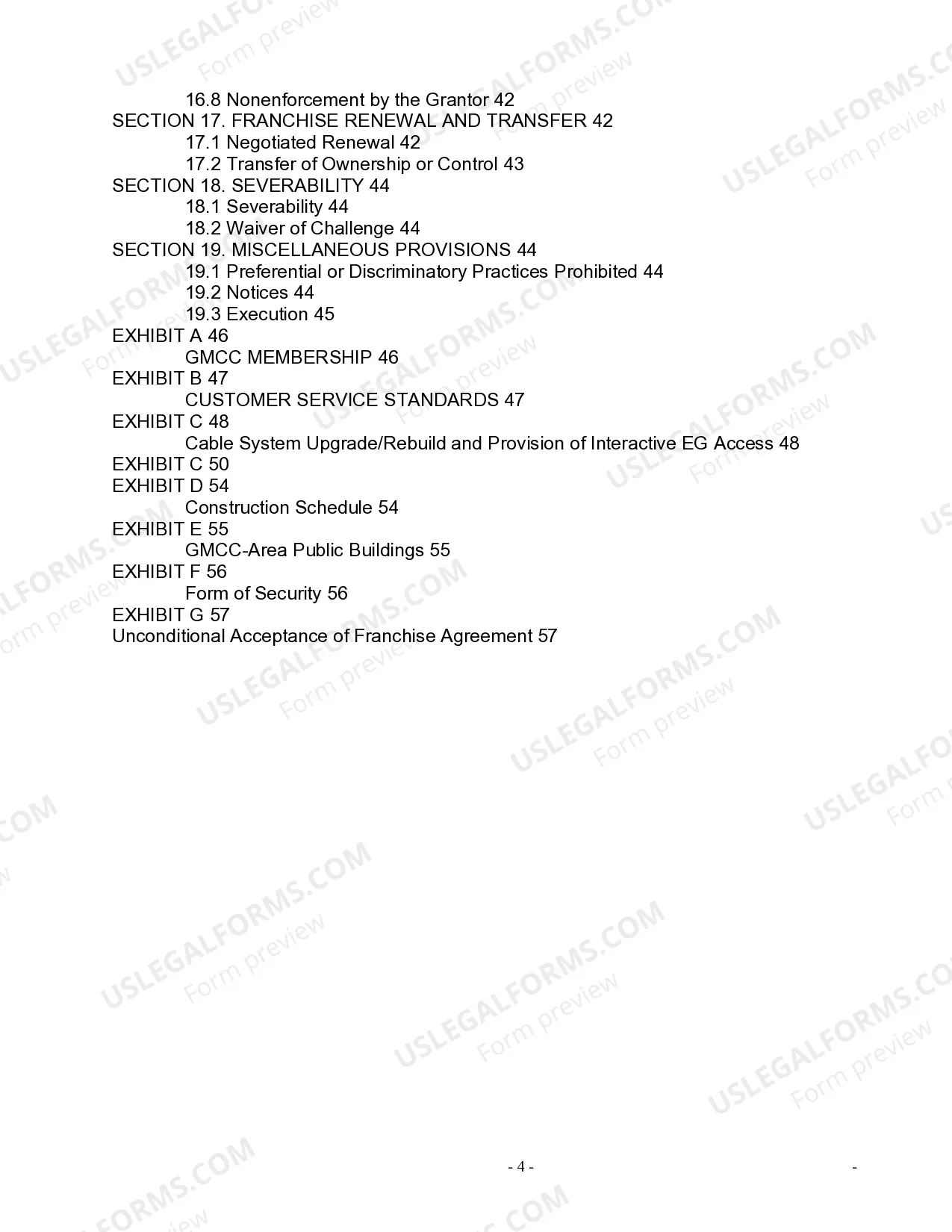
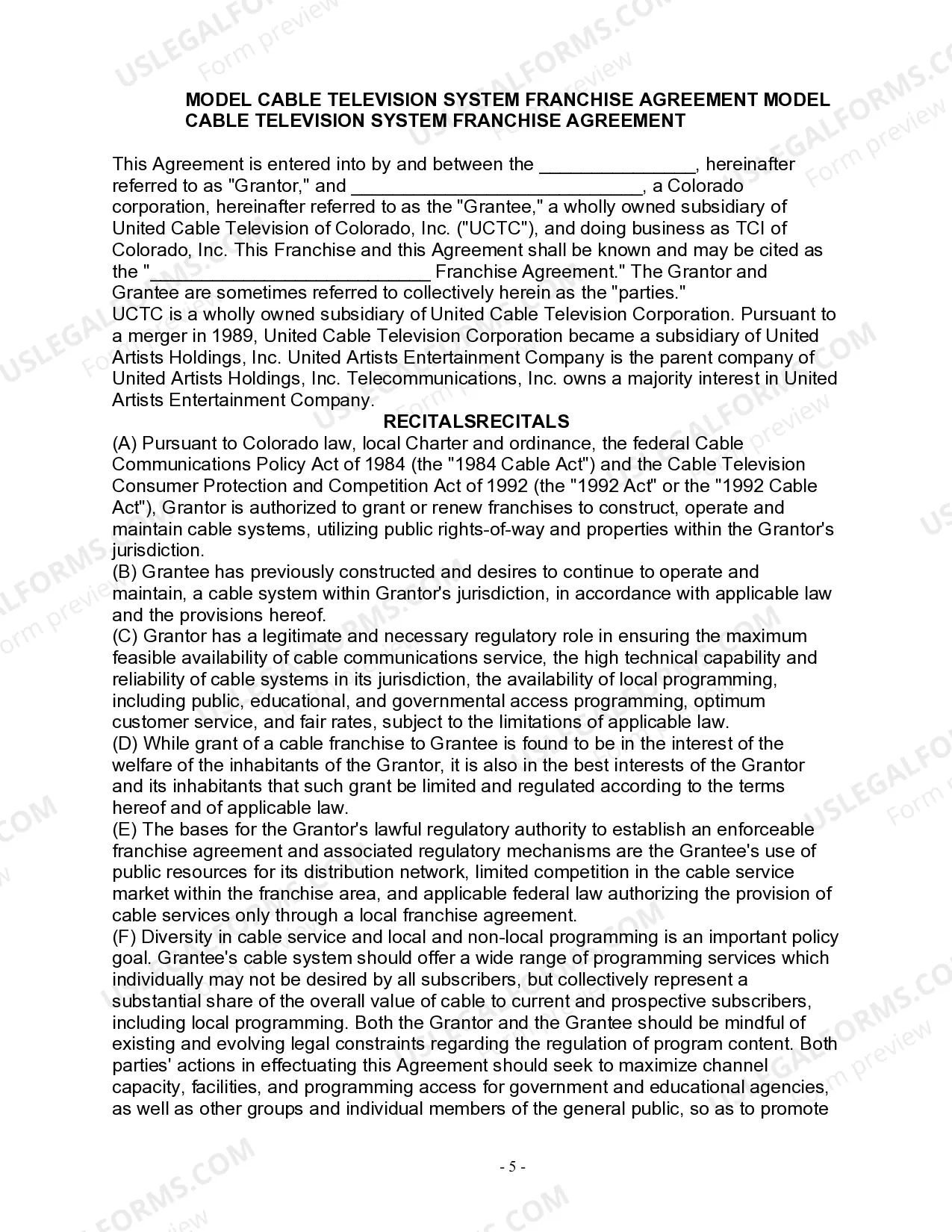
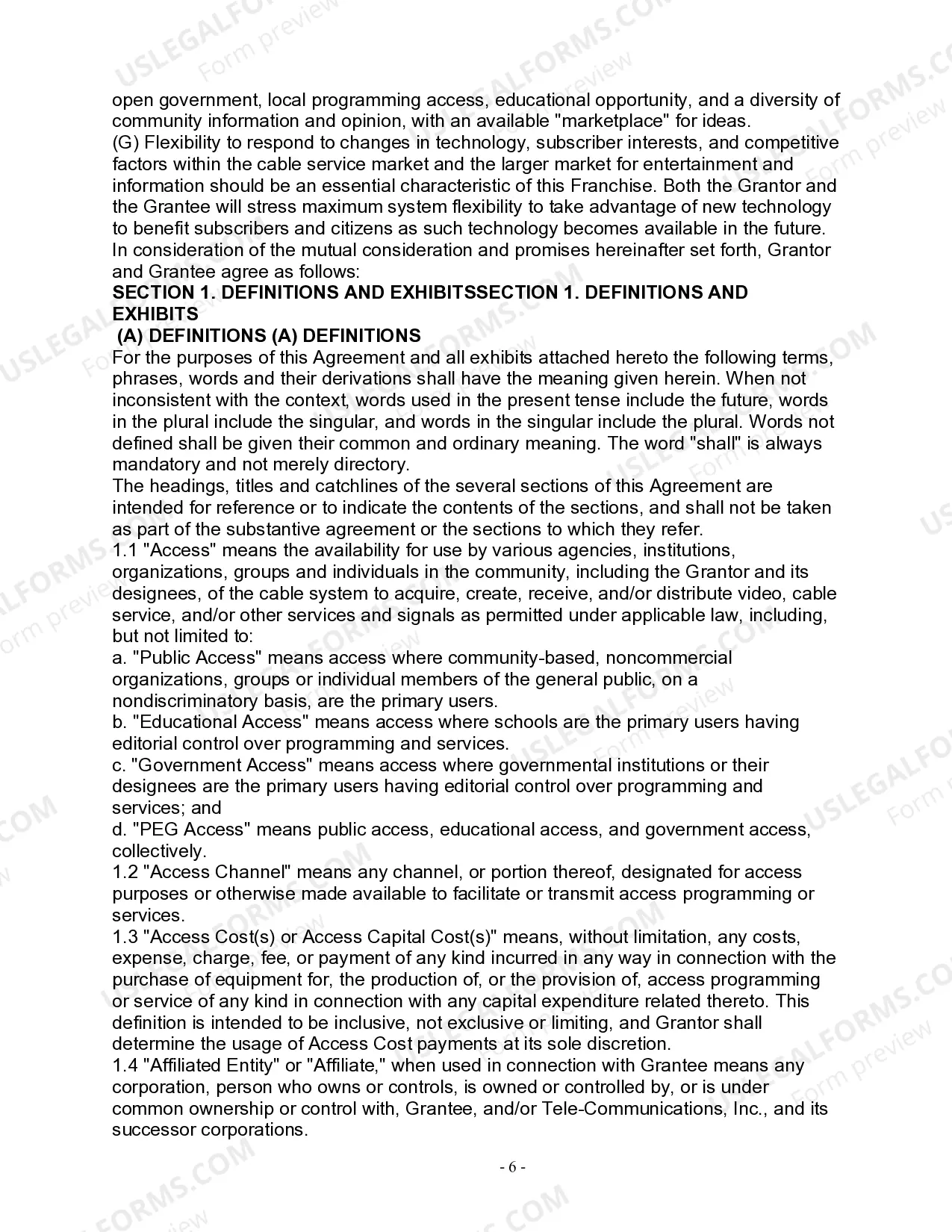
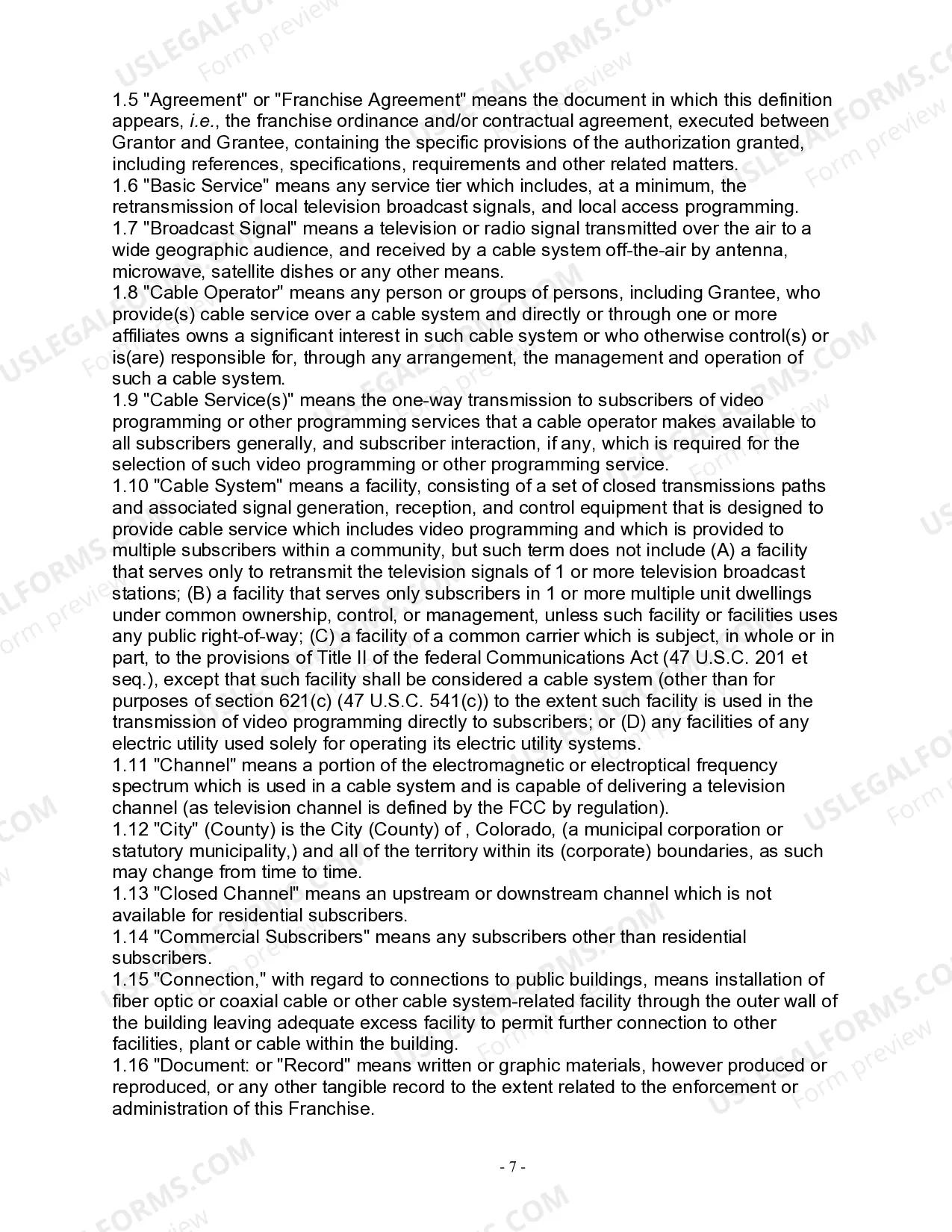


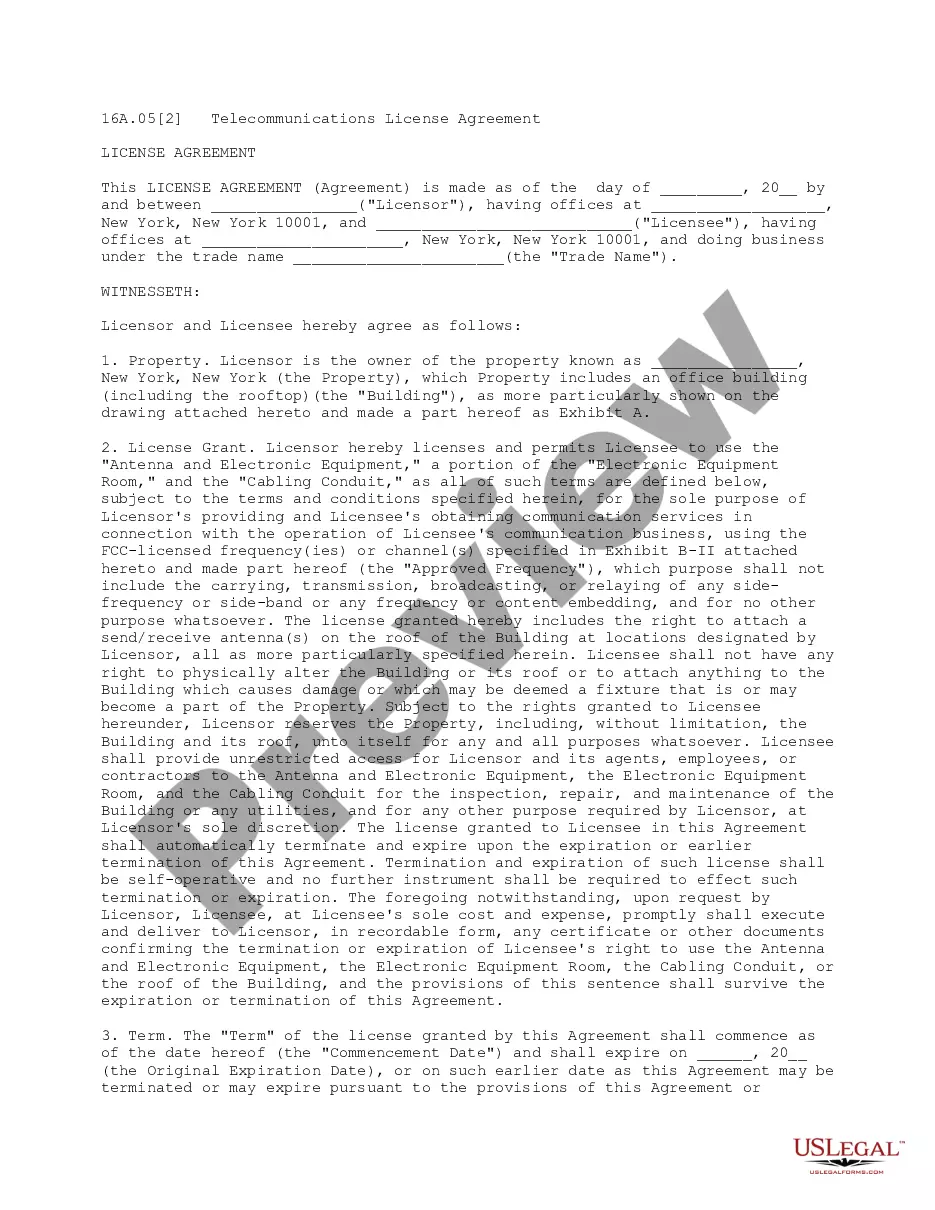



How to fill out Cable Consortium Cable Television Franchise Agreement?
If you want to obtain, acquire, or print legal document templates, utilize US Legal Forms, the largest repository of legal forms available online.
Employ the site's simple and user-friendly search to find the documents you require. Various templates for business and personal purposes are categorized by types and states, or keywords.
Use US Legal Forms to locate the Alaska Cable Consortium Cable Television Franchise Agreement in just a few clicks.
Step 5. Complete the transaction. You can use your Visa or Mastercard or PayPal account to finalize the transaction.
Step 6. Select the format of the legal form and download it to your device. Step 7. Fill out, edit, and print or sign the Alaska Cable Consortium Cable Television Franchise Agreement. Each legal document template you purchase is yours forever. You have access to every form you acquired within your account. Click on the My documents section and select a form to print or download again. Stay competitive and download, and print the Alaska Cable Consortium Cable Television Franchise Agreement with US Legal Forms. There are thousands of professional and state-specific forms you can use for your personal or business needs.
- If you are already a US Legal Forms customer, Log In to your account and click on the Download option to obtain the Alaska Cable Consortium Cable Television Franchise Agreement.
- You can also access forms you previously downloaded in the My documents tab of your account.
- If you are using US Legal Forms for the first time, follow the instructions below.
- Step 1. Ensure you have selected the form for the correct city/state.
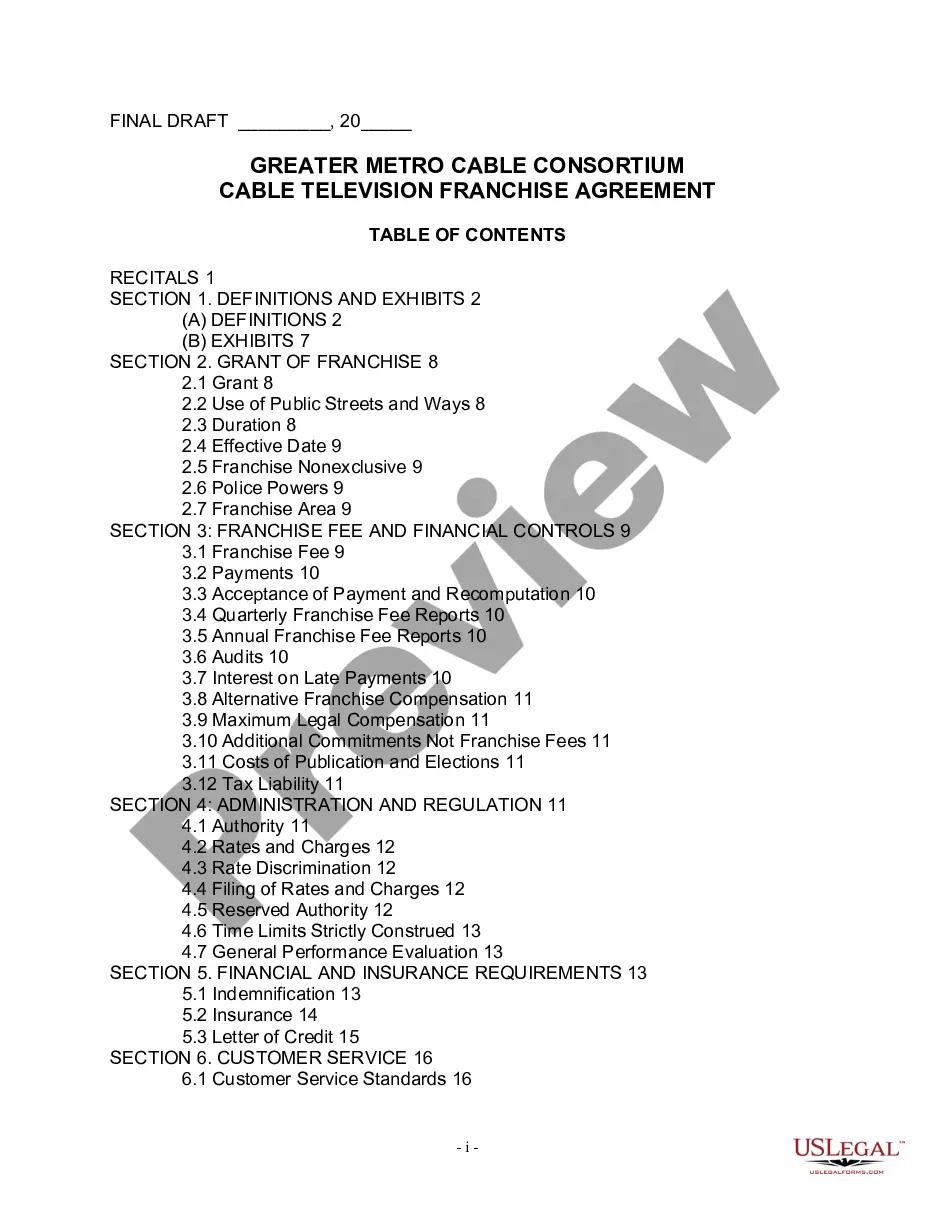
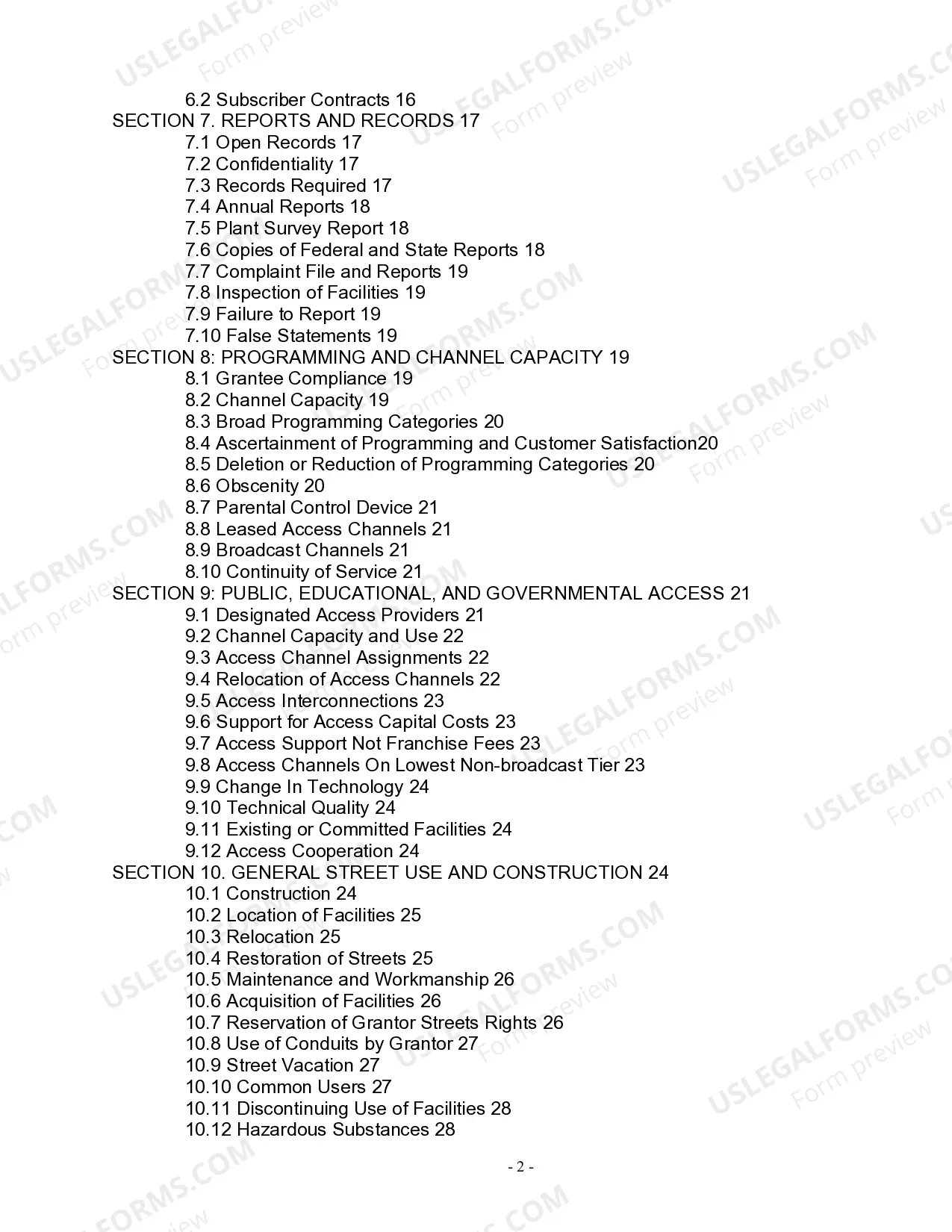
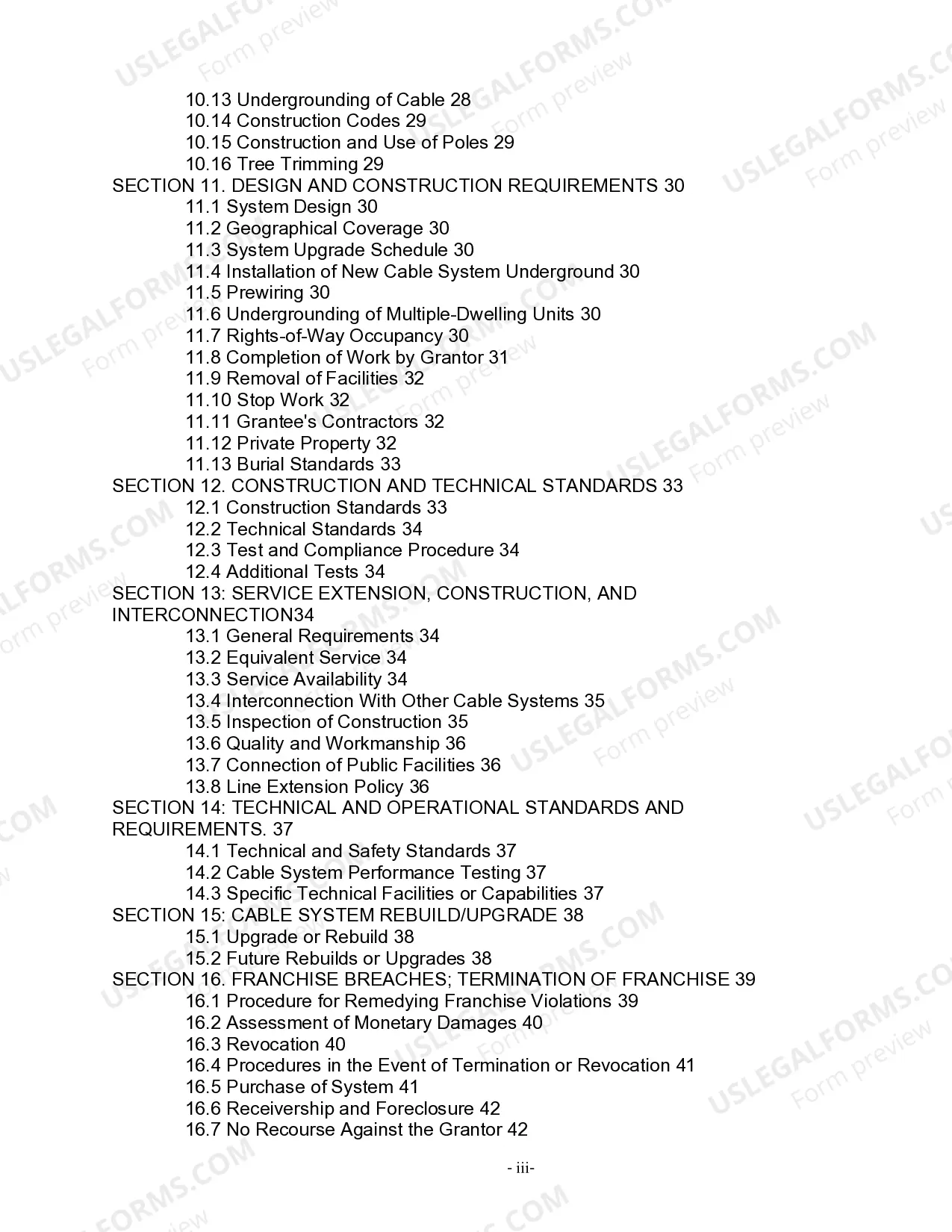
- Step 2. Use the Review option to browse the form's content. Be sure to read the information.
- Step 3. If you are dissatisfied with the form, utilize the Search field at the top of the screen to find other variations of the legal form template.
- Step 4. Once you have found the form you want, click on the Buy now option. Choose the pricing plan you prefer and enter your credentials to register for the account.
Form popularity
FAQ
A franchise agreement, such as the Alaska Cable Consortium Cable Television Franchise Agreement, serves as a legal framework governing the relationship between cable providers and local governments. This agreement outlines the rights and obligations of each party, ensuring fair access to services for consumers. It also establishes terms for service quality, rates, and operational standards, promoting accountability. By reviewing these agreements, you can gain insight into your rights as a consumer.
Cable TV is facing challenges due to the rise of streaming services and on-demand content. With more viewers opting for flexible viewing options, traditional cable subscriptions are declining. The Alaska Cable Consortium Cable Television Franchise Agreement highlights the need for these services to adapt and innovate to retain audience interest. Understanding this shift can help you navigate your entertainment options more effectively.
Cable franchise fees, established under agreements like the Alaska Cable Consortium Cable Television Franchise Agreement, can fund various community projects. These fees often support local public, educational, and governmental access channels. Additionally, they may help improve broadband infrastructure and enhance community services. By understanding how these fees work, you can better appreciate their impact on your community.
Cable franchises, including the Alaska Cable Consortium Cable Television Franchise Agreement, are often awarded for a period ranging from 5 to 15 years. This duration allows companies to establish a reliable service while providing stability for both the provider and the community. Moreover, some agreements may include renewal options, which can extend the relationship between the franchise and the community. If you need more information on navigating cable franchise agreements, consider using the resources available on the US Legal Forms platform.
Section 622 of the Federal Cable Act addresses the franchising process and fees that local governments can impose on cable operators. It establishes guidelines to ensure fair competition and economic balance in the cable industry. The Alaska Cable Consortium Cable Television Franchise Agreement is influenced by this section, which helps create a framework for cable services in your area. Knowing about Section 622 can empower you as a consumer to make informed decisions regarding your cable service.
The FCC must carry rule mandates that cable operators must carry local broadcast stations on their cable systems. This rule ensures that viewers have access to important local programming, including news and public affairs. Under the Alaska Cable Consortium Cable Television Franchise Agreement, compliance with this rule helps promote local content and fosters community engagement. Familiarizing yourself with this regulation can enhance your understanding of your rights as a viewer.
Yes, cable channels typically require a broadcast license to operate legally. This requirement ensures that they comply with federal regulations and standards. The Alaska Cable Consortium Cable Television Franchise Agreement outlines specific terms regarding licensing, which helps maintain quality service for viewers. Understanding these requirements can help you navigate the complexities of cable television regulations.